
Functionalism A Macro Sociological Theory Macro Sociological Theories
- Slides: 9
Functionalism A Macro Sociological Theory
Macro Sociological Theories �These theories view society as having an influence on the individual. �They look at structures within society and how they influence people within society. � Eg what is the function of education for people in society?
Key Features of functionalism; Consensus on norms, values and roles. In order for society to function effectively we must all abide by expected norms. When we don’t follow the rules, there is a negative impact on society. Eg The Riots- “Liverpool riots cost £ 2 m to police”
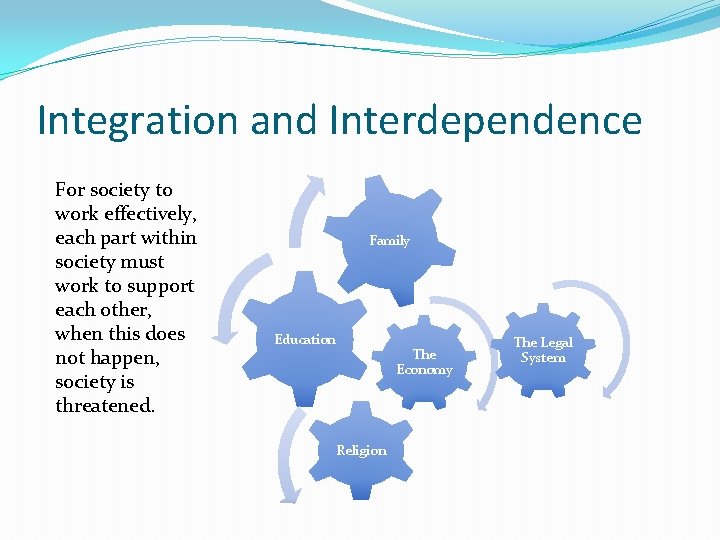
Integration and Interdependence For society to work effectively, each part within society must work to support each other, when this does not happen, society is threatened. Family Education The Economy Religion The Legal System
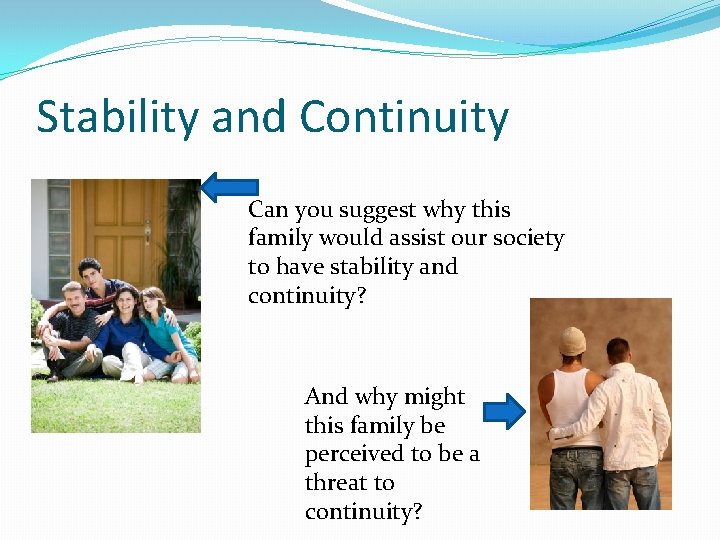
Stability and Continuity Can you suggest why this family would assist our society to have stability and continuity? And why might this family be perceived to be a threat to continuity?
Dysfuctionality �Can you think of dysfunctional behaviour in �A family �Education �The Economy
Talcott Parsons �Parsons (1902 -79) – there are two basic crucial functions of the family • Primary socialisation – through which children learn to accept the value the norms and values of society • The stabilisation of adult personalities – the family gives adults the emotional support necessary to cope with the stresses of everyday life �If we don’t have families providing this function, how do we ensure children have the support networks they need.
�The isolated and ‘private’ nuclear family �The functionalist view suggests that the nuclear family has become �Socially isolated from extended kin �More reliant on the Welfare State �Geographically separated from wider kin �The family is self-contained, inward looking with little contact with neighbours and community. Home leisure via TV, Video, Internet etc. have made the family more home-centred.
� Criticisms 1. Functionalists have been accused of idealising the family. 2. Ignoring conflict and abuse within families 3. Ignoring gender inequality within families 4. Ignoring the rising divorce rates 5. Ignoring growing family diversity