
Functional Units Functional Units Arithmetic and logic Input
- Slides: 15
Functional Units
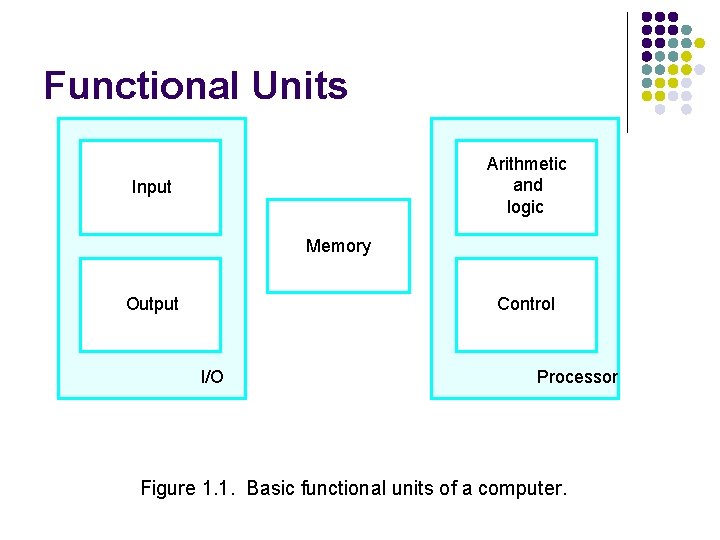
Functional Units Arithmetic and logic Input Memory Output Control I/O Processor Figure 1. 1. Basic functional units of a computer.
Information Handled by a Computer l Instructions/machine instructions Ø Ø Govern the transfer of information within a computer as well as between the computer and its I/O devices Specify the arithmetic and logic operations to be performed Program l Data Ø Ø Used as operands by the instructions Source program l Encoded in binary code – 0 and 1 Ø
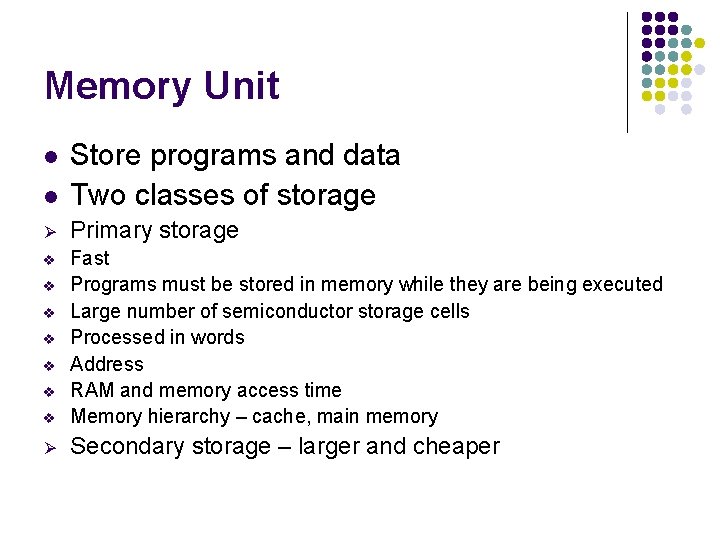
Memory Unit l Store programs and data Two classes of storage Ø Primary storage v v Fast Programs must be stored in memory while they are being executed Large number of semiconductor storage cells Processed in words Address RAM and memory access time Memory hierarchy – cache, main memory Ø Secondary storage – larger and cheaper l v v v
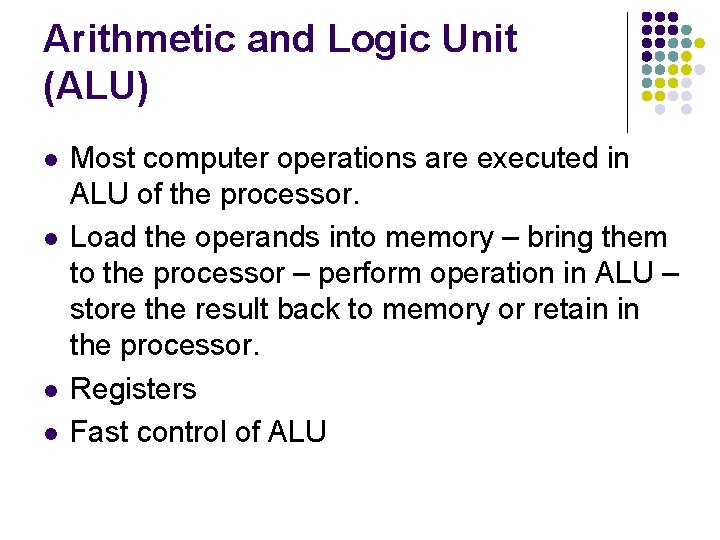
Arithmetic and Logic Unit (ALU) l l Most computer operations are executed in ALU of the processor. Load the operands into memory – bring them to the processor – perform operation in ALU – store the result back to memory or retain in the processor. Registers Fast control of ALU
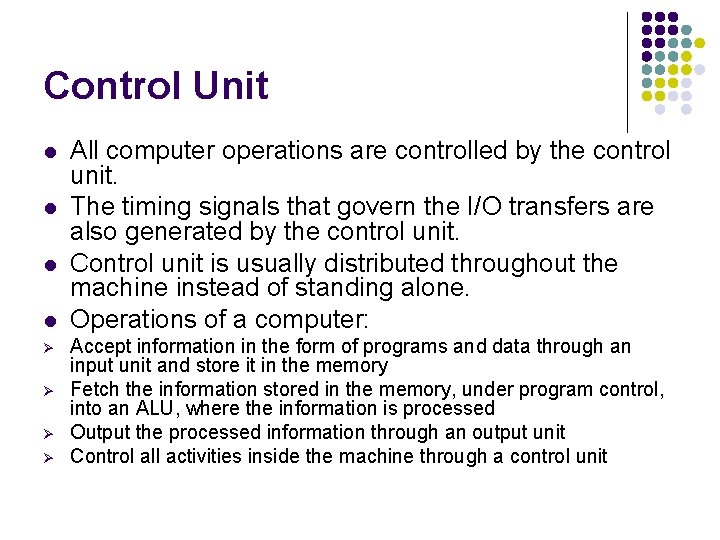
Control Unit l l Ø Ø All computer operations are controlled by the control unit. The timing signals that govern the I/O transfers are also generated by the control unit. Control unit is usually distributed throughout the machine instead of standing alone. Operations of a computer: Accept information in the form of programs and data through an input unit and store it in the memory Fetch the information stored in the memory, under program control, into an ALU, where the information is processed Output the processed information through an output unit Control all activities inside the machine through a control unit
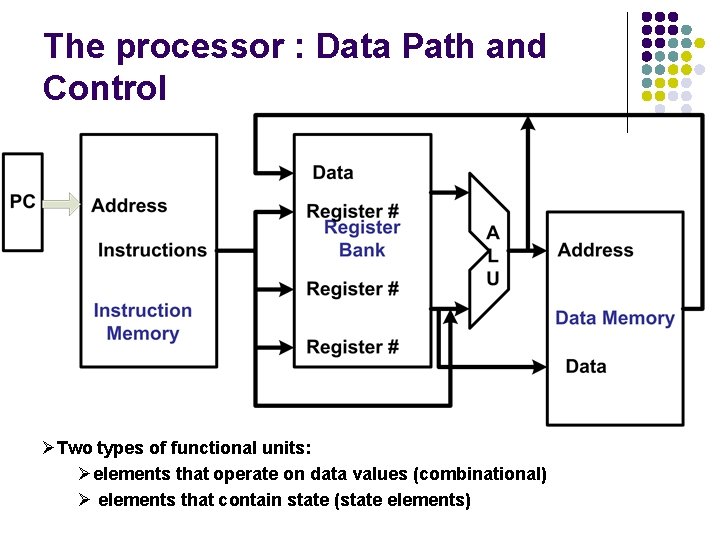
The processor : Data Path and Control ØTwo types of functional units: Øelements that operate on data values (combinational) Ø elements that contain state (state elements)
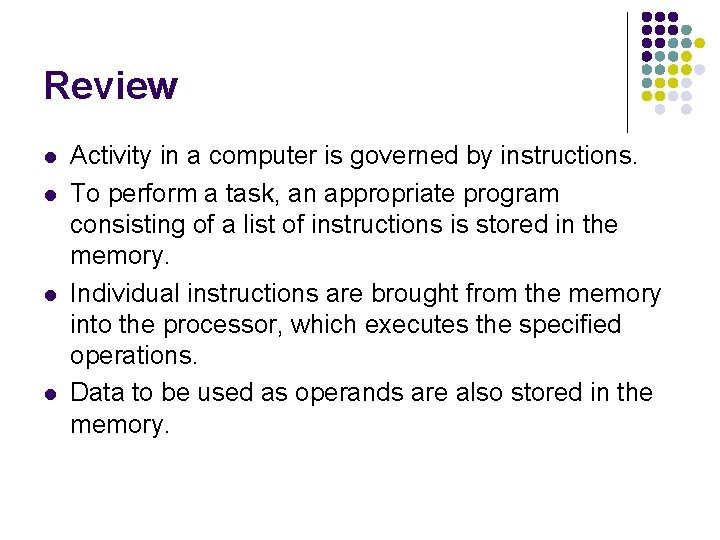
Review l l Activity in a computer is governed by instructions. To perform a task, an appropriate program consisting of a list of instructions is stored in the memory. Individual instructions are brought from the memory into the processor, which executes the specified operations. Data to be used as operands are also stored in the memory.
A Typical Instruction l l l Add LOCA, R 0 Add the operand at memory location LOCA to the operand in a register R 0 in the processor. Place the sum into register R 0. The original contents of LOCA are preserved. The original contents of R 0 is overwritten. Instruction is fetched from the memory into the processor – the operand at LOCA is fetched and added to the contents of R 0 – the resulting sum is stored in register R 0.
Separate Memory Access and ALU Operation l l l Load LOCA, R 1 Add R 1, R 0 Whose contents will be overwritten?
Connection Between the Processor and the Memory
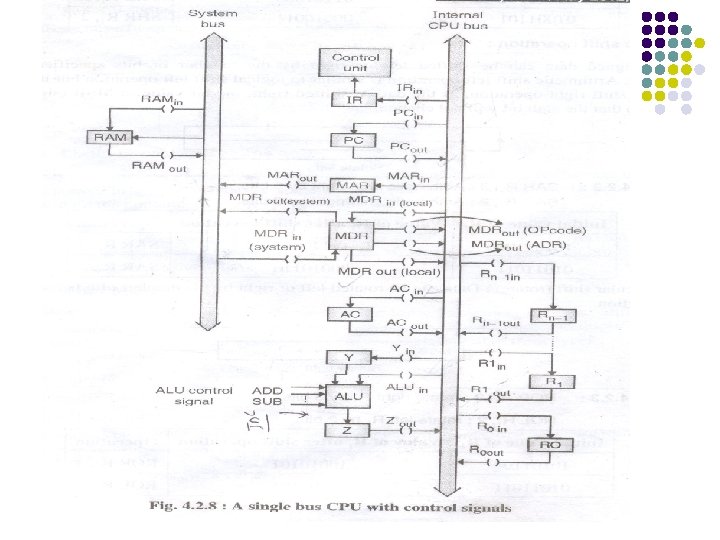
Registers l l l Instruction register (IR) Program counter (PC) General-purpose register (R 0 – Rn-1) Memory address register (MAR) Memory data register (MDR)
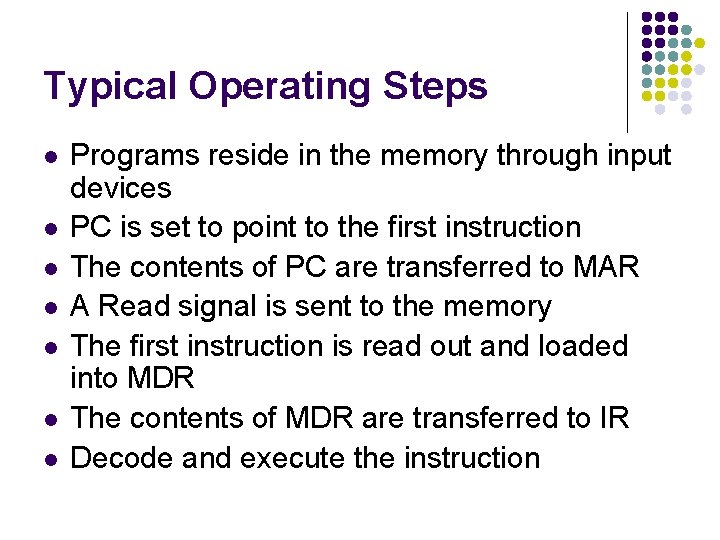
Typical Operating Steps l l l l Programs reside in the memory through input devices PC is set to point to the first instruction The contents of PC are transferred to MAR A Read signal is sent to the memory The first instruction is read out and loaded into MDR The contents of MDR are transferred to IR Decode and execute the instruction
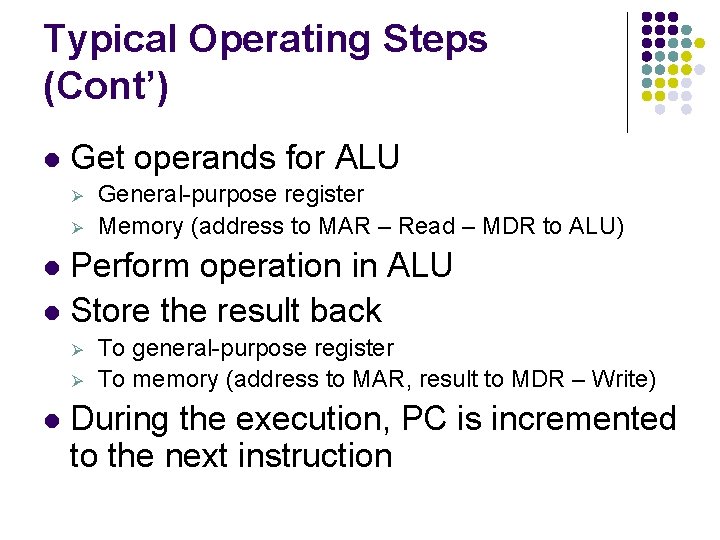
Typical Operating Steps (Cont’) l Get operands for ALU Ø Ø General-purpose register Memory (address to MAR – Read – MDR to ALU) Perform operation in ALU l Store the result back l Ø Ø l To general-purpose register To memory (address to MAR, result to MDR – Write) During the execution, PC is incremented to the next instruction