
Functional Syntax Score A Better Approach to MV
Functional Syntax Score: A Better Approach to MV PCI Morton J. Kern, MD Chief of Medicine, VA Long Beach HCS Professor of Medicine University California Irvine Orange, California 021817@1400 -1415

Disclosure: Morton J. Kern, MD Within the past 12 months, the presenter or their spouse/partner have had a financial interest/arrangement or affiliation with the organization listed below. Company Name Abbott Medical Inc. Philips Volcano Inc. Merit Medical Inc. Acist Medical Inc. Opsens, Inc. Heartflow Relationship Speakers’ Bureau Consultant
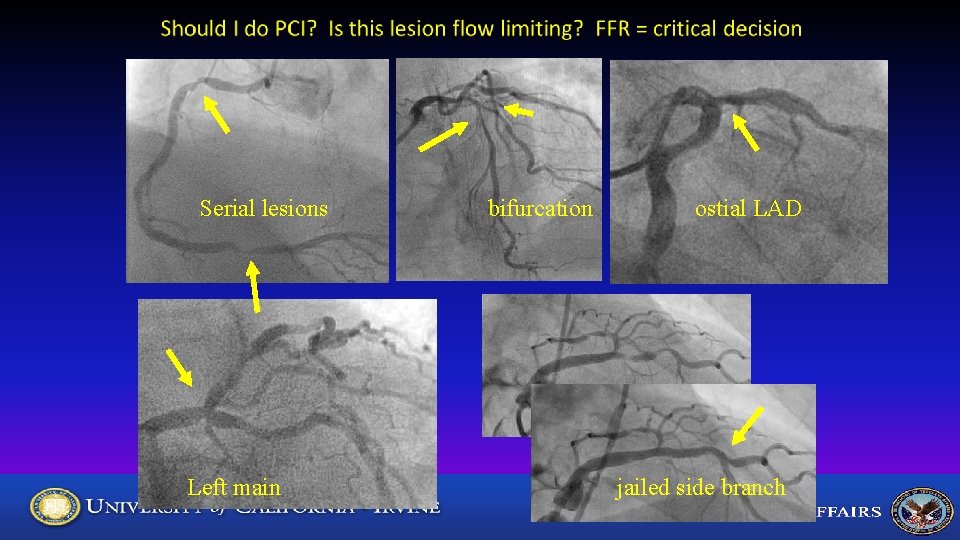
Serial lesions Left main bifurcation ostial LAD jailed side branch
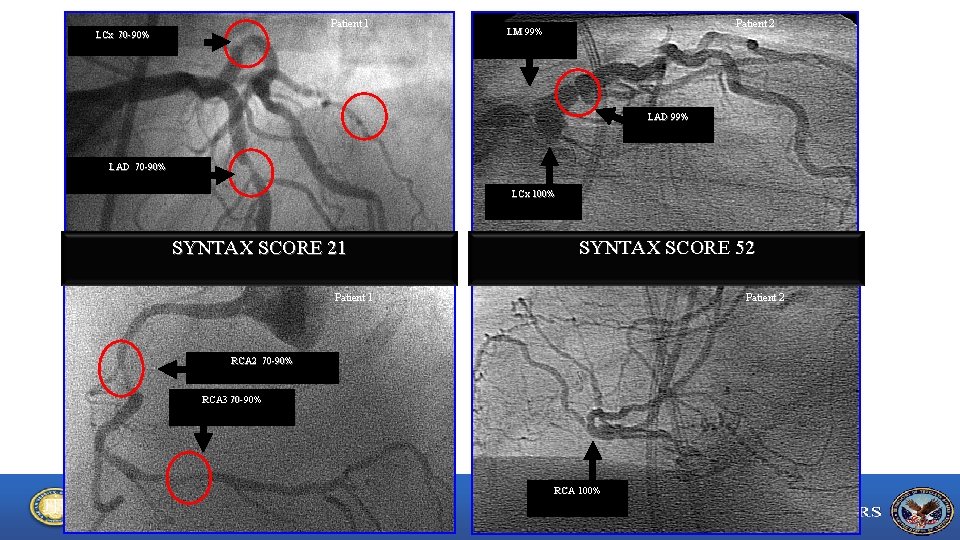
Patient 1 LCx 70 -90% Patient 2 LM 99% LAD 70 -90% LCx 100% SYNTAX SCORE 21 SYNTAX SCORE 52 Patient 1 Patient 2 RCA 2 70 -90% RCA 3 70 -90% RCA 100%
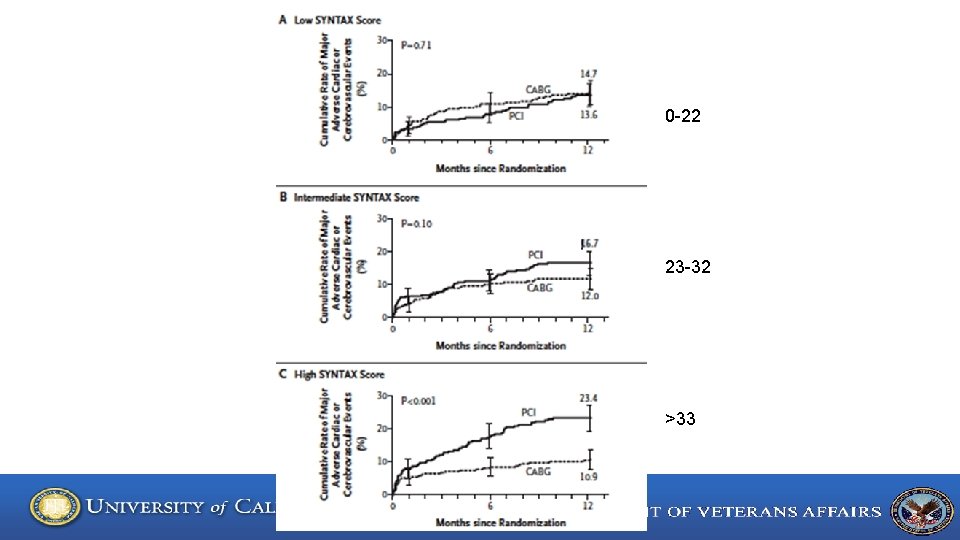
0 -22 23 -32 >33
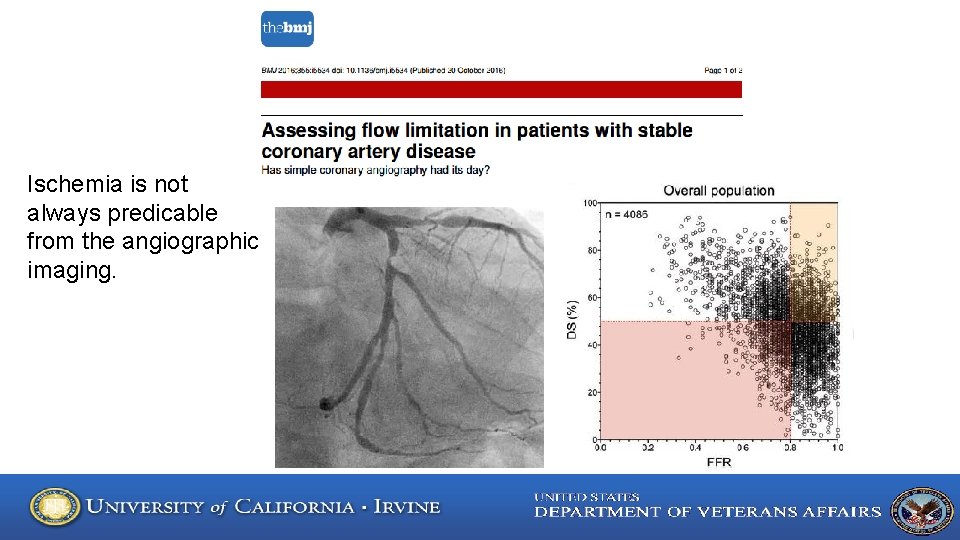
Ischemia is not always predicable from the angiographic imaging.
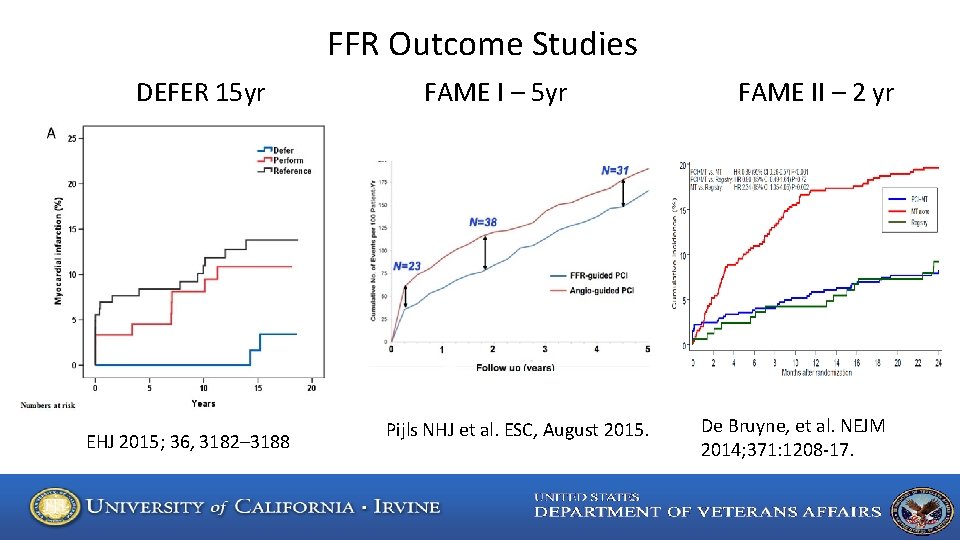
FFR Outcome Studies DEFER 15 yr EHJ 2015; 36, 3182– 3188 FAME I – 5 yr FAME II – 2 yr Pijls NHJ et al. ESC, August 2015. De Bruyne, et al. NEJM 2014; 371: 1208 -17.
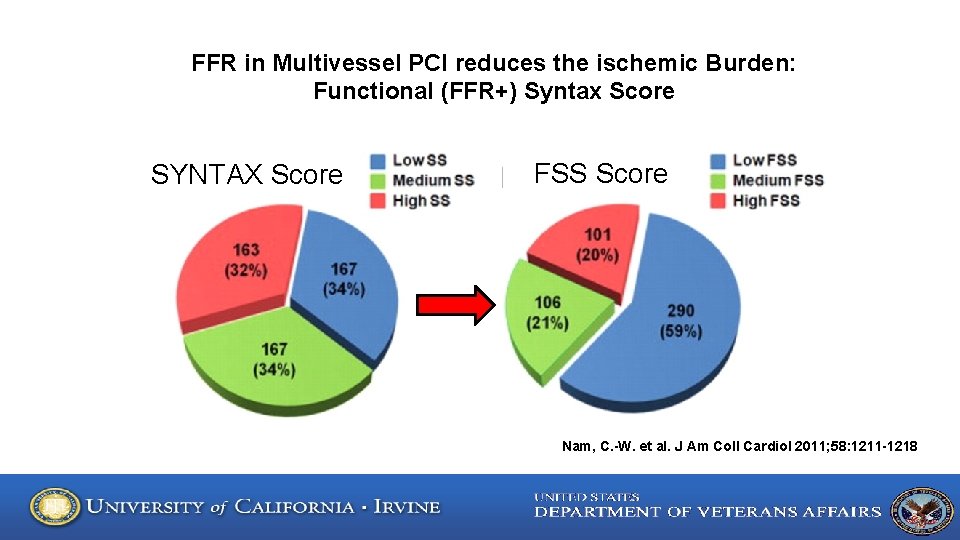
FFR in Multivessel PCI reduces the ischemic Burden: Functional (FFR+) Syntax Score SYNTAX Score FSS Score Nam, C. -W. et al. J Am Coll Cardiol 2011; 58: 1211 -1218
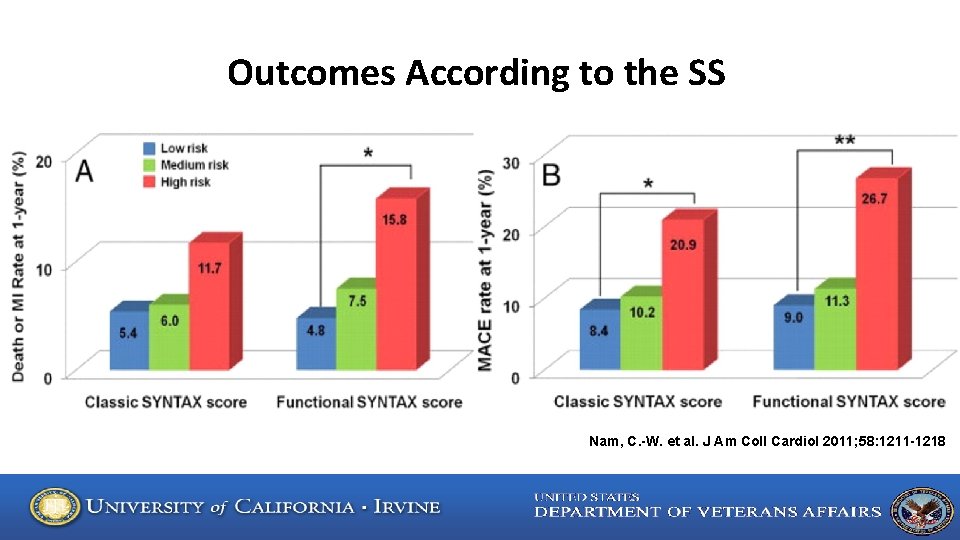
Outcomes According to the SS Nam, C. -W. et al. J Am Coll Cardiol 2011; 58: 1211 -1218
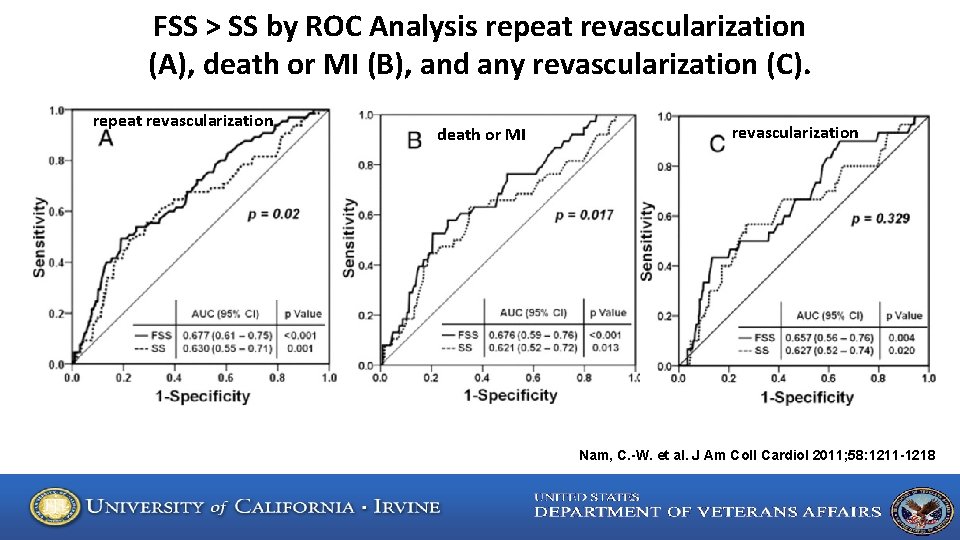
FSS > SS by ROC Analysis repeat revascularization (A), death or MI (B), and any revascularization (C). repeat revascularization death or MI revascularization Nam, C. -W. et al. J Am Coll Cardiol 2011; 58: 1211 -1218
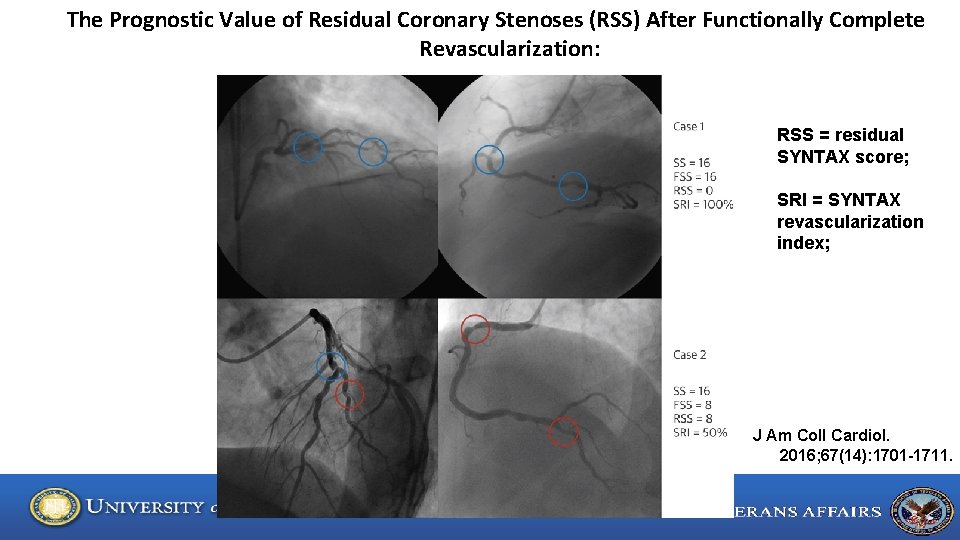
The Prognostic Value of Residual Coronary Stenoses (RSS) After Functionally Complete Revascularization: RSS = residual SYNTAX score; SRI = SYNTAX revascularization index; J Am Coll Cardiol. 2016; 67(14): 1701 -1711.
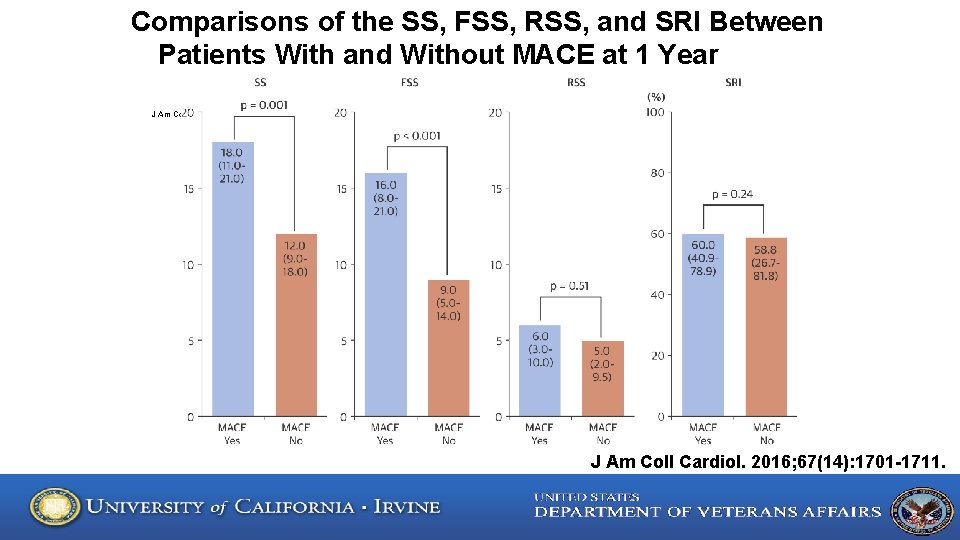
Comparisons of the SS, FSS, RSS, and SRI Between Patients With and Without MACE at 1 Year J Am Coll Cardiol. 2016; 67(14): 1701 -1711. doi: 10. 1016/j. jacc. 2016. 01. 056 J Am Coll Cardiol. 2016; 67(14): 1701 -1711.
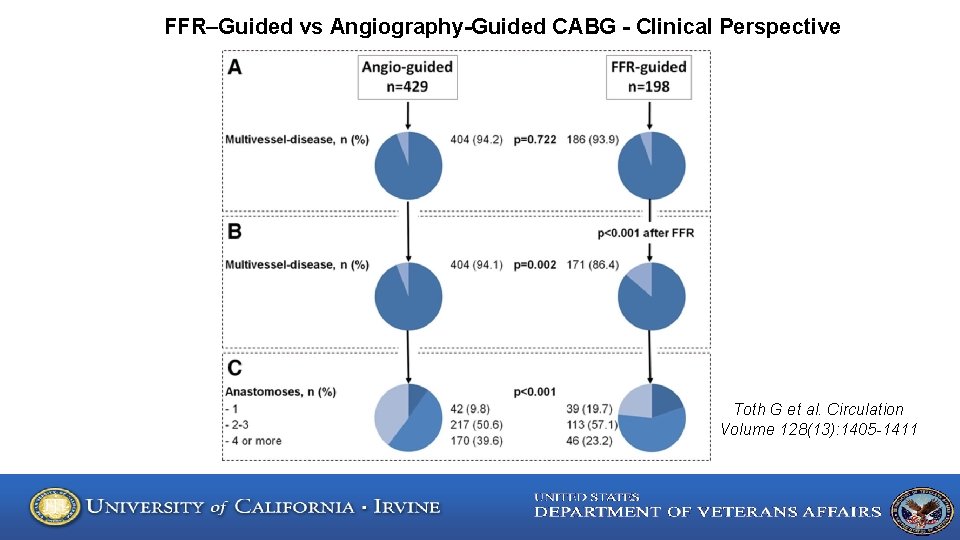
FFR–Guided vs Angiography-Guided CABG - Clinical Perspective Toth G et al. Circulation Volume 128(13): 1405 -1411
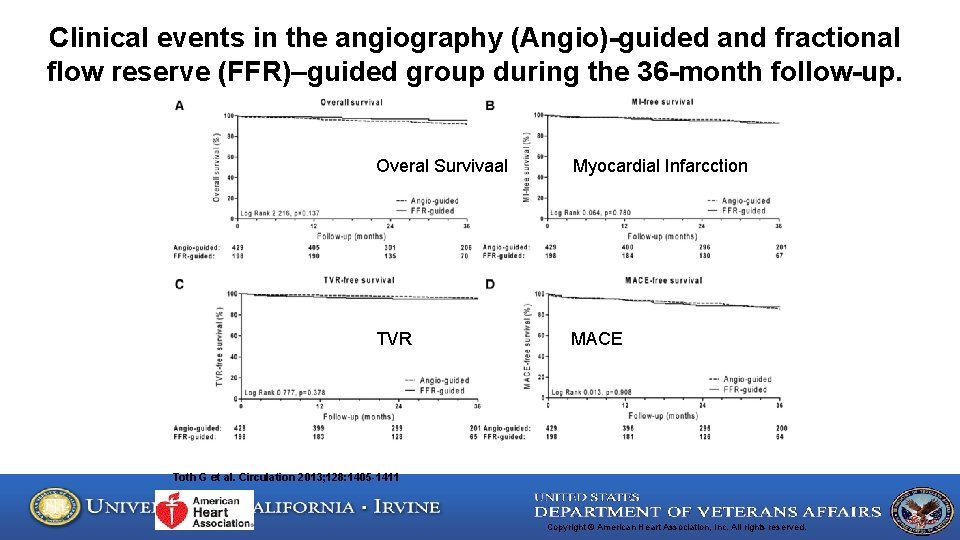
Clinical events in the angiography (Angio)-guided and fractional flow reserve (FFR)–guided group during the 36 -month follow-up. Overal Survivaal Myocardial Infarcction TVR MACE Toth G et al. Circulation 2013; 128: 1405 -1411 Copyright © American Heart Association, Inc. All rights reserved.
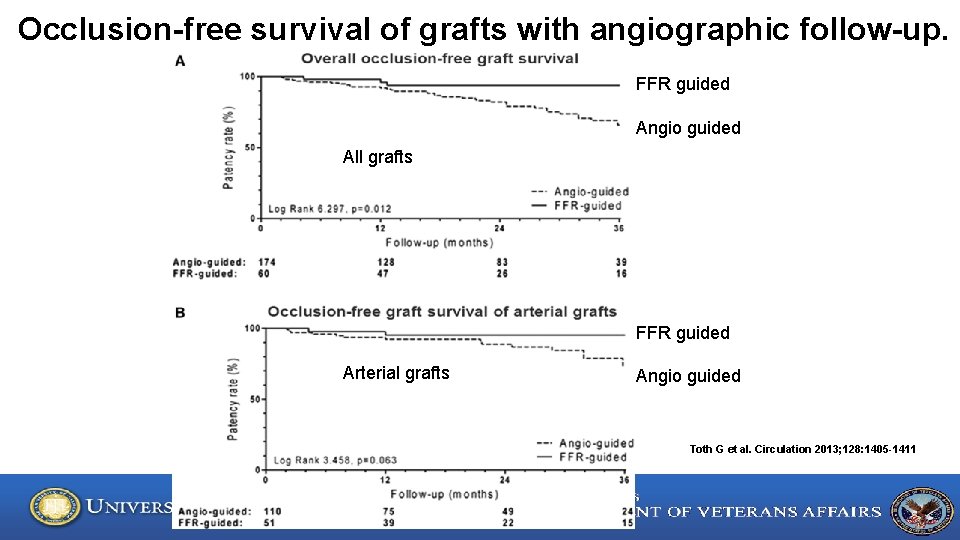
Occlusion-free survival of grafts with angiographic follow-up. FFR guided Angio guided All grafts FFR guided Arterial grafts Angio guided Toth G et al. Circulation 2013; 128: 1405 -1411
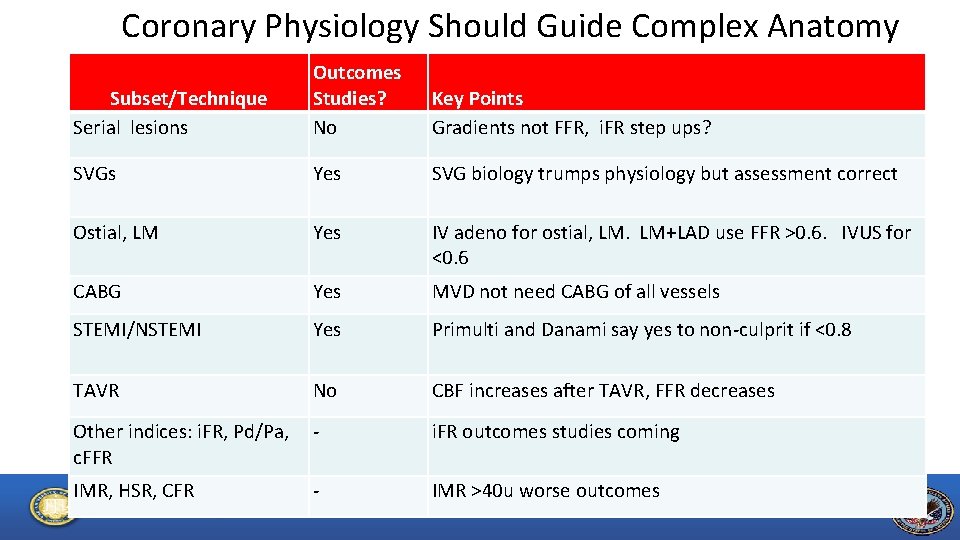
Coronary Physiology Should Guide Complex Anatomy Subset/Technique Serial lesions Outcomes Studies? No Key Points Gradients not FFR, i. FR step ups? SVGs Yes SVG biology trumps physiology but assessment correct Ostial, LM Yes IV adeno for ostial, LM. LM+LAD use FFR >0. 6. IVUS for <0. 6 CABG Yes MVD not need CABG of all vessels STEMI/NSTEMI Yes Primulti and Danami say yes to non-culprit if <0. 8 TAVR No CBF increases after TAVR, FFR decreases Other indices: i. FR, Pd/Pa, c. FFR i. FR outcomes studies coming IMR, HSR, CFR IMR >40 u worse outcomes -
Functional Syntax Score: A Better Approach to MV PCI • In multivessel CAD, FFR can reduce/increase number of vessels needing rx– CABG vs PCI vs Med rx as indicated by ischemia. • Complex Anatomy can be simplified by FFR • Treating ischemia with OMT and revascularization better than OMT alone (FAME II).
- Slides: 18