
Functional Status Transitions of Care Focused Use Case


- Slides: 33
Functional Status Transitions of Care Focused Use Case Scenario PACIO PROJECT
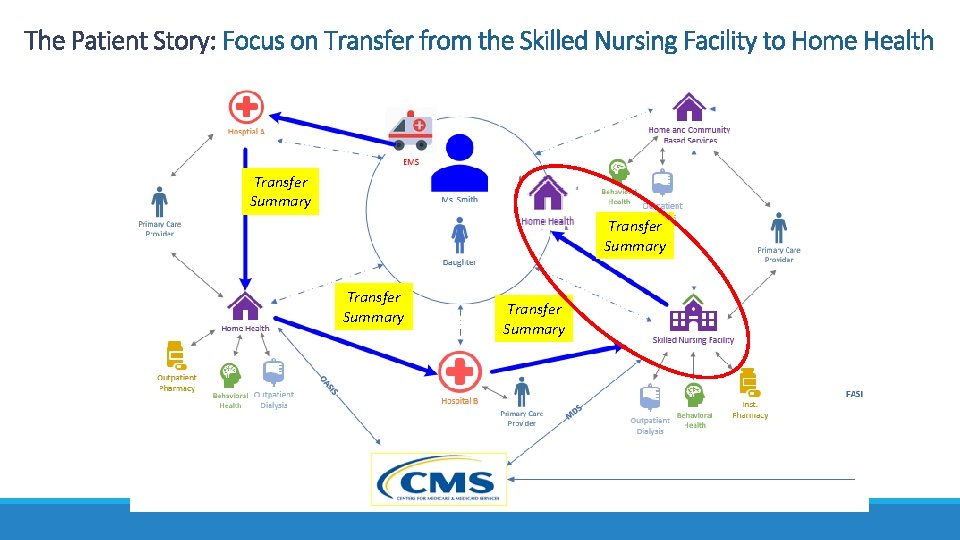
The Patient Story: Focus on Transfer from the Skilled Nursing Facility to Home Health Transfer Summary
Patient MS. SMITH AND HER PERSPECTIVE
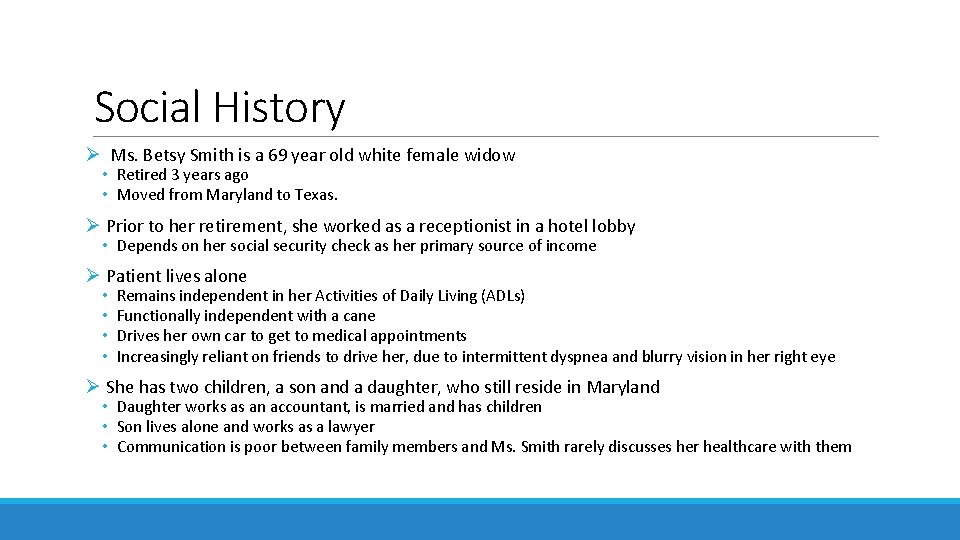
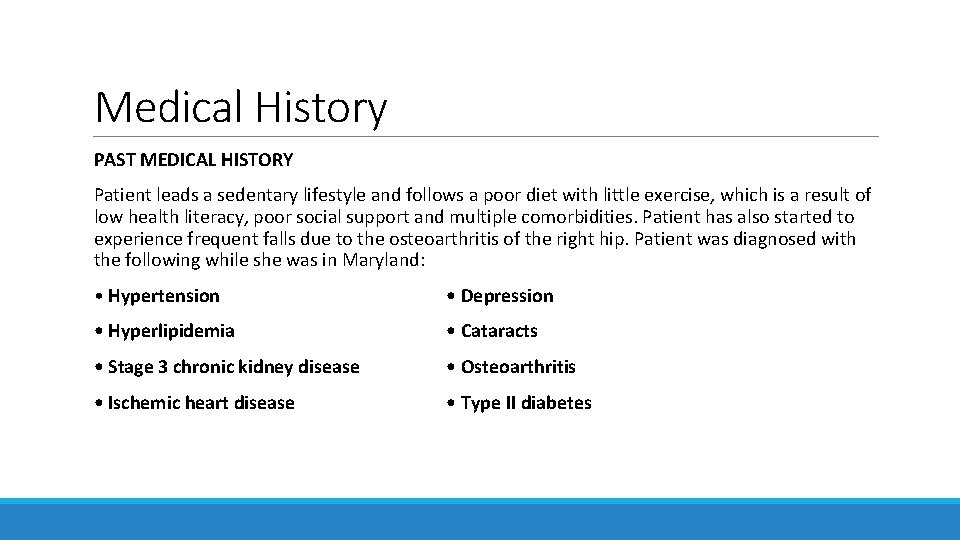
Social History Ø Ms. Betsy Smith is a 69 year old white female widow • Retired 3 years ago • Moved from Maryland to Texas. Ø Prior to her retirement, she worked as a receptionist in a hotel lobby • Depends on her social security check as her primary source of income Ø Patient lives alone • • Remains independent in her Activities of Daily Living (ADLs) Functionally independent with a cane Drives her own car to get to medical appointments Increasingly reliant on friends to drive her, due to intermittent dyspnea and blurry vision in her right eye Ø She has two children, a son and a daughter, who still reside in Maryland • Daughter works as an accountant, is married and has children • Son lives alone and works as a lawyer • Communication is poor between family members and Ms. Smith rarely discusses her healthcare with them
Medical History PAST MEDICAL HISTORY Patient leads a sedentary lifestyle and follows a poor diet with little exercise, which is a result of low health literacy, poor social support and multiple comorbidities. Patient has also started to experience frequent falls due to the osteoarthritis of the right hip. Patient was diagnosed with the following while she was in Maryland: • Hypertension • Depression • Hyperlipidemia • Cataracts • Stage 3 chronic kidney disease • Osteoarthritis • Ischemic heart disease • Type II diabetes
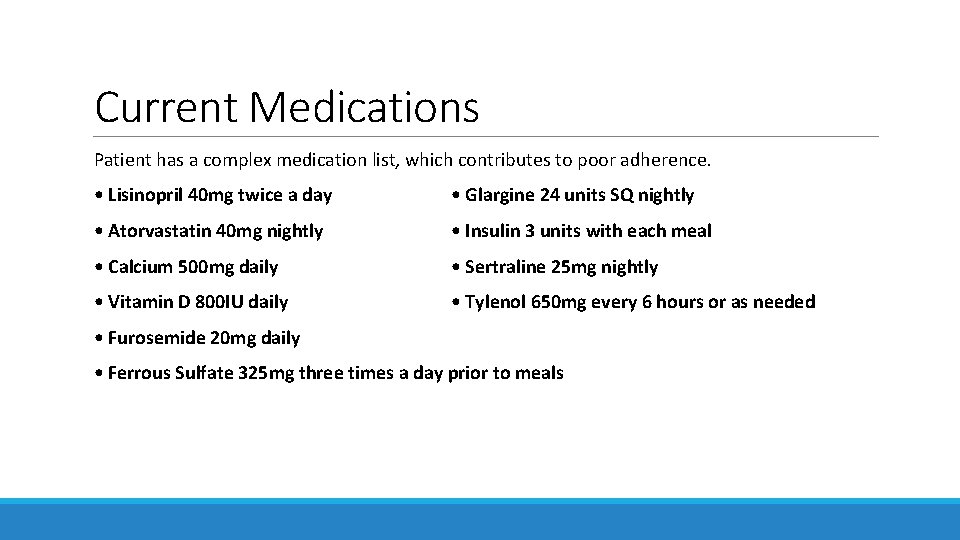
Current Medications Patient has a complex medication list, which contributes to poor adherence. • Lisinopril 40 mg twice a day • Glargine 24 units SQ nightly • Atorvastatin 40 mg nightly • Insulin 3 units with each meal • Calcium 500 mg daily • Sertraline 25 mg nightly • Vitamin D 800 IU daily • Tylenol 650 mg every 6 hours or as needed • Furosemide 20 mg daily • Ferrous Sulfate 325 mg three times a day prior to meals
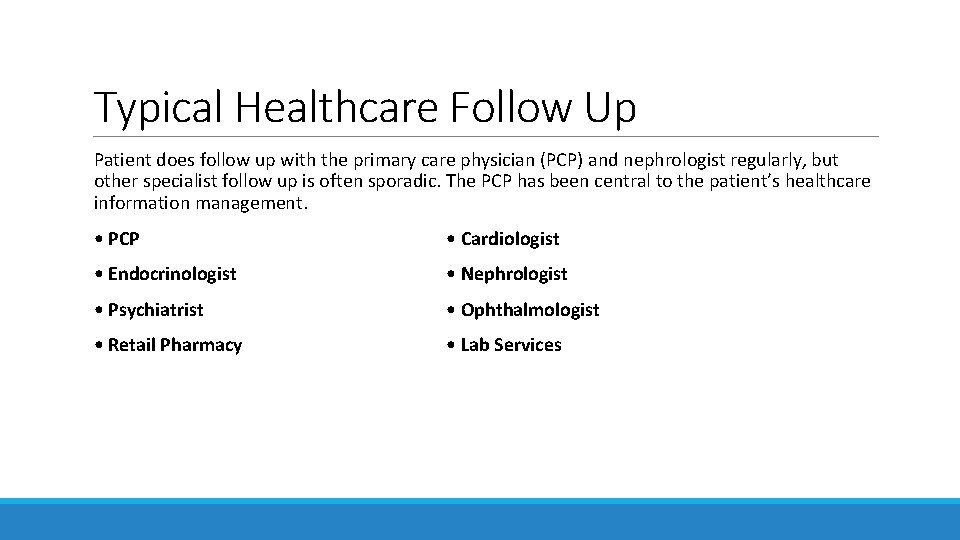
Typical Healthcare Follow Up Patient does follow up with the primary care physician (PCP) and nephrologist regularly, but other specialist follow up is often sporadic. The PCP has been central to the patient’s healthcare information management. • PCP • Cardiologist • Endocrinologist • Nephrologist • Psychiatrist • Ophthalmologist • Retail Pharmacy • Lab Services
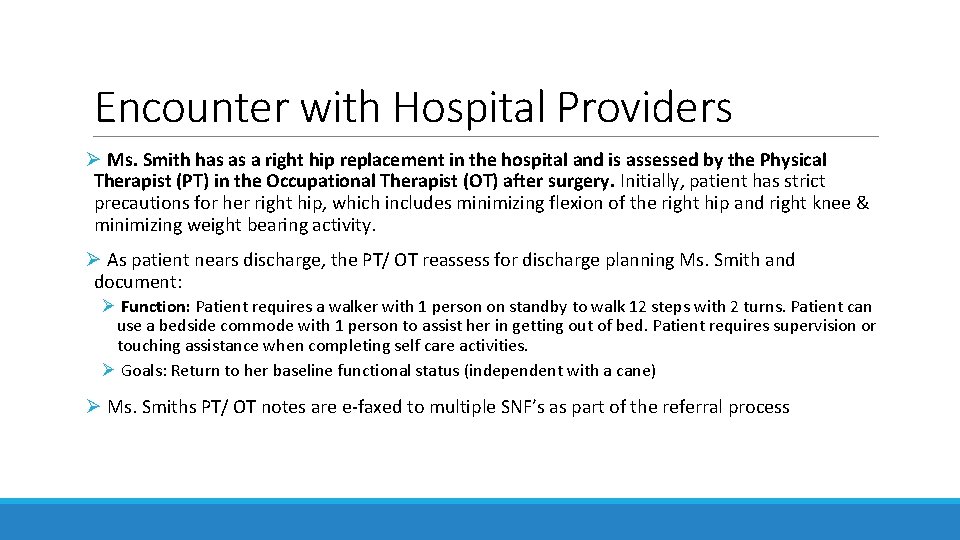
Encounter with Hospital Providers Ø Ms. Smith has as a right hip replacement in the hospital and is assessed by the Physical Therapist (PT) in the Occupational Therapist (OT) after surgery. Initially, patient has strict precautions for her right hip, which includes minimizing flexion of the right hip and right knee & minimizing weight bearing activity. Ø As patient nears discharge, the PT/ OT reassess for discharge planning Ms. Smith and document: Ø Function: Patient requires a walker with 1 person on standby to walk 12 steps with 2 turns. Patient can use a bedside commode with 1 person to assist her in getting out of bed. Patient requires supervision or touching assistance when completing self care activities. Ø Goals: Return to her baseline functional status (independent with a cane) Ø Ms. Smiths PT/ OT notes are e-faxed to multiple SNF’s as part of the referral process
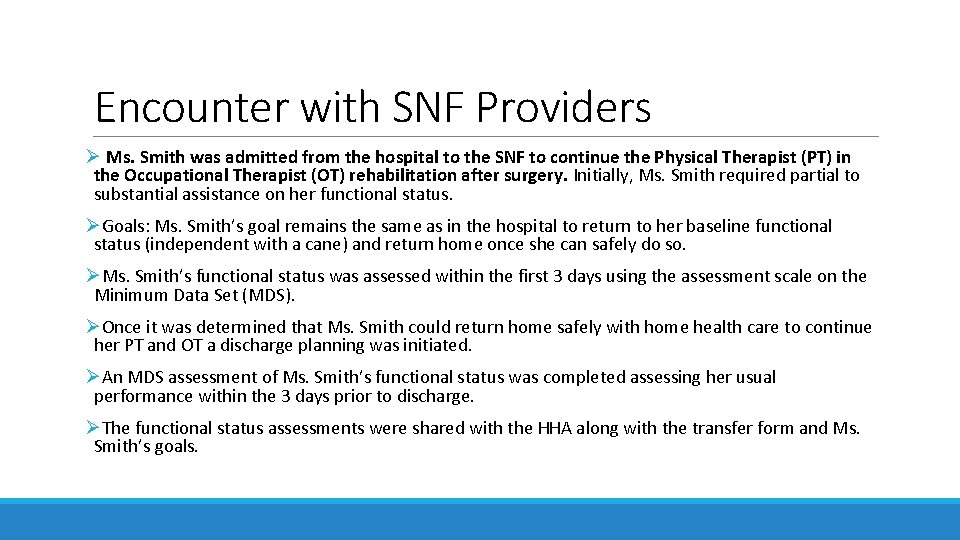
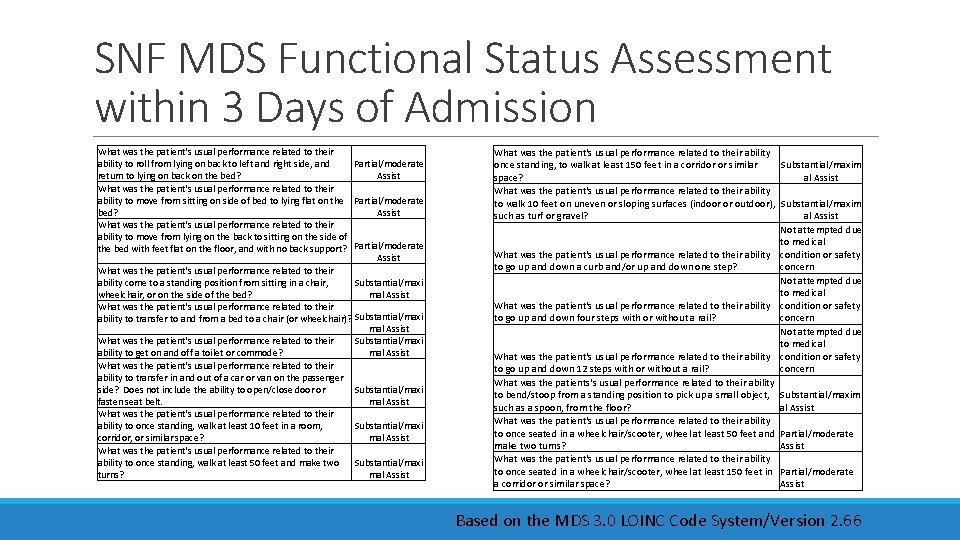
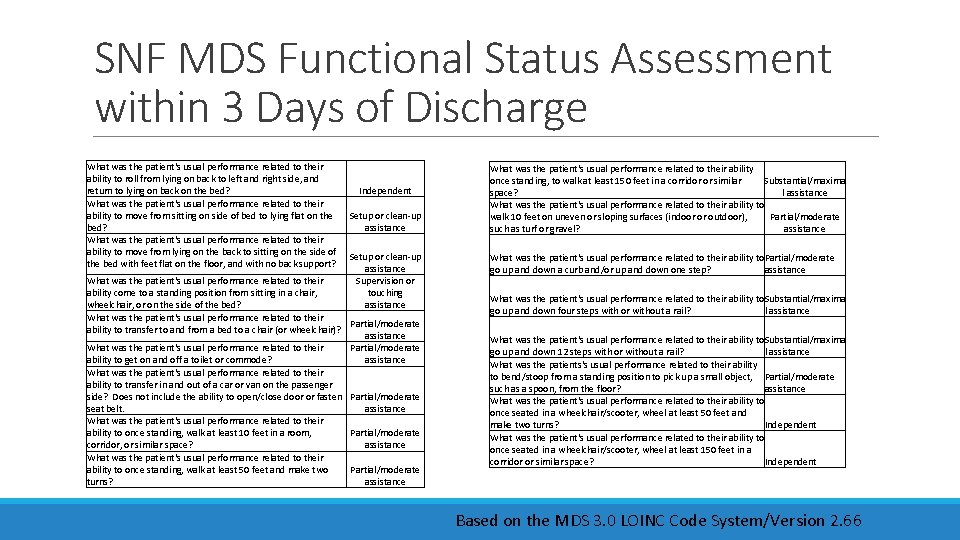
Encounter with SNF Providers Ø Ms. Smith was admitted from the hospital to the SNF to continue the Physical Therapist (PT) in the Occupational Therapist (OT) rehabilitation after surgery. Initially, Ms. Smith required partial to substantial assistance on her functional status. ØGoals: Ms. Smith’s goal remains the same as in the hospital to return to her baseline functional status (independent with a cane) and return home once she can safely do so. ØMs. Smith’s functional status was assessed within the first 3 days using the assessment scale on the Minimum Data Set (MDS). ØOnce it was determined that Ms. Smith could return home safely with home health care to continue her PT and OT a discharge planning was initiated. ØAn MDS assessment of Ms. Smith’s functional status was completed assessing her usual performance within the 3 days prior to discharge. ØThe functional status assessments were shared with the HHA along with the transfer form and Ms. Smith’s goals.
SNF MDS Functional Status Assessment within 3 Days of Admission What was the patient's usual performance related to their ability to roll from lying on back to left and right side, and Partial/moderate return to lying on back on the bed? Assist What was the patient's usual performance related to their ability to move from sitting on side of bed to lying flat on the Partial/moderate bed? Assist What was the patient's usual performance related to their ability to move from lying on the back to sitting on the side of the bed with feet flat on the floor, and with no back support? Partial/moderate Assist What was the patient's usual performance related to their ability come to a standing position from sitting in a chair, Substantial/maxi wheelchair, or on the side of the bed? mal Assist What was the patient's usual performance related to their ability to transfer to and from a bed to a chair (or wheelchair)? Substantial/maxi mal Assist What was the patient's usual performance related to their Substantial/maxi ability to get on and off a toilet or commode? mal Assist What was the patient's usual performance related to their ability to transfer in and out of a car or van on the passenger side? Does not include the ability to open/close door or Substantial/maxi fasten seat belt. mal Assist What was the patient's usual performance related to their ability to once standing, walk at least 10 feet in a room, Substantial/maxi corridor, or similar space? mal Assist What was the patient's usual performance related to their ability to once standing, walk at least 50 feet and make two Substantial/maxi turns? mal Assist What was the patient's usual performance related to their ability Substantial/maxim once standing, to walk at least 150 feet in a corridor or similar space? al Assist What was the patient's usual performance related to their ability to walk 10 feet on uneven or sloping surfaces (indoor or outdoor), Substantial/maxim such as turf or gravel? al Assist Not attempted due to medical What was the patient's usual performance related to their ability condition or safety to go up and down a curb and/or up and down one step? concern Not attempted due to medical What was the patient's usual performance related to their ability condition or safety to go up and down four steps with or without a rail? concern Not attempted due to medical What was the patient's usual performance related to their ability condition or safety to go up and down 12 steps with or without a rail? concern What was the patients's usual performance related to their ability to bend/stoop from a standing position to pick up a small object, Substantial/maxim such as a spoon, from the floor? al Assist What was the patient's usual performance related to their ability to once seated in a wheelchair/scooter, wheel at least 50 feet and Partial/moderate make two turns? Assist What was the patient's usual performance related to their ability to once seated in a wheelchair/scooter, wheel at least 150 feet in Partial/moderate a corridor or similar space? Assist Based on the MDS 3. 0 LOINC Code System/Version 2. 66
SNF MDS Functional Status Assessment within 3 Days of Discharge What was the patient's usual performance related to their ability to roll from lying on back to left and right side, and return to lying on back on the bed? What was the patient's usual performance related to their ability to move from sitting on side of bed to lying flat on the bed? What was the patient's usual performance related to their ability to move from lying on the back to sitting on the side of the bed with feet flat on the floor, and with no back support? Independent Setup or clean-up assistance Supervision or touching assistance What was the patient's usual performance related to their ability come to a standing position from sitting in a chair, wheelchair, or on the side of the bed? What was the patient's usual performance related to their Partial/moderate ability to transfer to and from a bed to a chair (or wheelchair)? assistance What was the patient's usual performance related to their Partial/moderate ability to get on and off a toilet or commode? assistance What was the patient's usual performance related to their ability to transfer in and out of a car or van on the passenger side? Does not include the ability to open/close door or fasten Partial/moderate seat belt. assistance What was the patient's usual performance related to their ability to once standing, walk at least 10 feet in a room, Partial/moderate corridor, or similar space? assistance What was the patient's usual performance related to their ability to once standing, walk at least 50 feet and make two Partial/moderate turns? assistance What was the patient's usual performance related to their ability once standing, to walk at least 150 feet in a corridor or similar Substantial/maxima space? l assistance What was the patient's usual performance related to their ability to walk 10 feet on uneven or sloping surfaces (indoor or outdoor), Partial/moderate such as turf or gravel? assistance What was the patient's usual performance related to their ability to. Partial/moderate go up and down a curb and/or up and down one step? assistance What was the patient's usual performance related to their ability to. Substantial/maxima go up and down four steps with or without a rail? l assistance What was the patient's usual performance related to their ability to. Substantial/maxima go up and down 12 steps with or without a rail? l assistance What was the patients's usual performance related to their ability to bend/stoop from a standing position to pick up a small object, Partial/moderate such as a spoon, from the floor? assistance What was the patient's usual performance related to their ability to once seated in a wheelchair/scooter, wheel at least 50 feet and make two turns? Independent What was the patient's usual performance related to their ability to once seated in a wheelchair/scooter, wheel at least 150 feet in a corridor or similar space? Independent Based on the MDS 3. 0 LOINC Code System/Version 2. 66
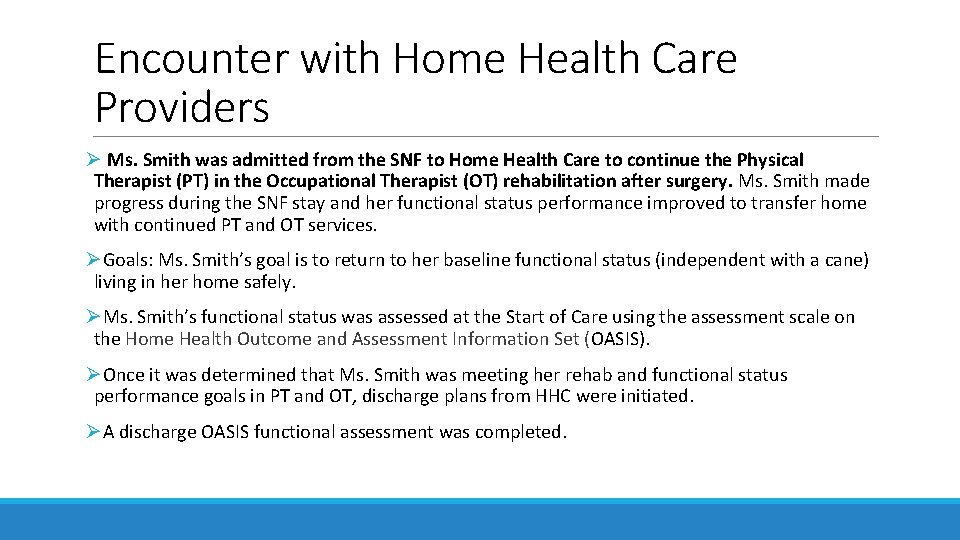
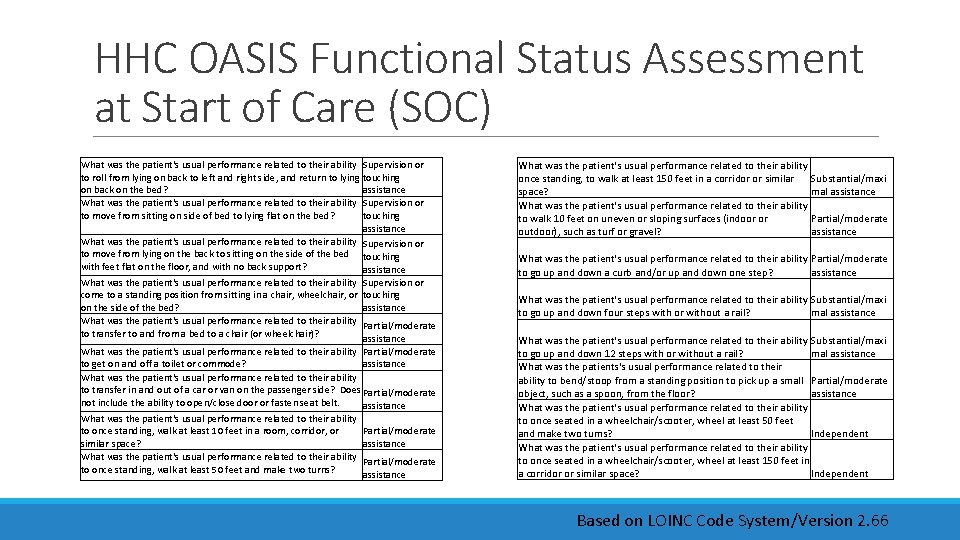
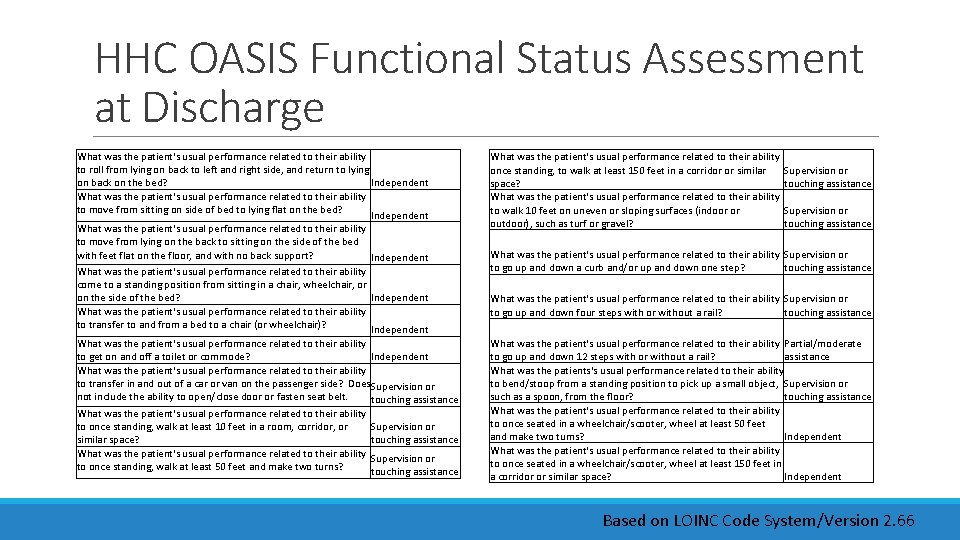
Encounter with Home Health Care Providers Ø Ms. Smith was admitted from the SNF to Home Health Care to continue the Physical Therapist (PT) in the Occupational Therapist (OT) rehabilitation after surgery. Ms. Smith made progress during the SNF stay and her functional status performance improved to transfer home with continued PT and OT services. ØGoals: Ms. Smith’s goal is to return to her baseline functional status (independent with a cane) living in her home safely. ØMs. Smith’s functional status was assessed at the Start of Care using the assessment scale on the Home Health Outcome and Assessment Information Set (OASIS). ØOnce it was determined that Ms. Smith was meeting her rehab and functional status performance goals in PT and OT, discharge plans from HHC were initiated. ØA discharge OASIS functional assessment was completed.
HHC OASIS Functional Status Assessment at Start of Care (SOC) What was the patient's usual performance related to their ability Supervision or to roll from lying on back to left and right side, and return to lying touching on back on the bed? assistance What was the patient's usual performance related to their ability Supervision or to move from sitting on side of bed to lying flat on the bed? touching assistance What was the patient's usual performance related to their ability Supervision or to move from lying on the back to sitting on the side of the bed touching with feet flat on the floor, and with no back support? assistance What was the patient's usual performance related to their ability Supervision or come to a standing position from sitting in a chair, wheelchair, or touching on the side of the bed? assistance What was the patient's usual performance related to their ability Partial/moderate to transfer to and from a bed to a chair (or wheelchair)? assistance What was the patient's usual performance related to their ability Partial/moderate to get on and off a toilet or commode? assistance What was the patient's usual performance related to their ability to transfer in and out of a car or van on the passenger side? Does Partial/moderate not include the ability to open/close door or fasten seat belt. assistance What was the patient's usual performance related to their ability Partial/moderate to once standing, walk at least 10 feet in a room, corridor, or similar space? assistance What was the patient's usual performance related to their ability Partial/moderate to once standing, walk at least 50 feet and make two turns? assistance What was the patient's usual performance related to their ability once standing, to walk at least 150 feet in a corridor or similar Substantial/maxi space? mal assistance What was the patient's usual performance related to their ability to walk 10 feet on uneven or sloping surfaces (indoor or Partial/moderate outdoor), such as turf or gravel? assistance What was the patient's usual performance related to their ability Partial/moderate to go up and down a curb and/or up and down one step? assistance What was the patient's usual performance related to their ability Substantial/maxi to go up and down four steps with or without a rail? mal assistance What was the patient's usual performance related to their ability Substantial/maxi to go up and down 12 steps with or without a rail? mal assistance What was the patients's usual performance related to their ability to bend/stoop from a standing position to pick up a small Partial/moderate object, such as a spoon, from the floor? assistance What was the patient's usual performance related to their ability to once seated in a wheelchair/scooter, wheel at least 50 feet and make two turns? Independent What was the patient's usual performance related to their ability to once seated in a wheelchair/scooter, wheel at least 150 feet in a corridor or similar space? Independent Based on LOINC Code System/Version 2. 66
HHC OASIS Functional Status Assessment at Discharge What was the patient's usual performance related to their ability to roll from lying on back to left and right side, and return to lying on back on the bed? Independent What was the patient's usual performance related to their ability to move from sitting on side of bed to lying flat on the bed? Independent What was the patient's usual performance related to their ability to move from lying on the back to sitting on the side of the bed with feet flat on the floor, and with no back support? Independent What was the patient's usual performance related to their ability come to a standing position from sitting in a chair, wheelchair, or on the side of the bed? Independent What was the patient's usual performance related to their ability to transfer to and from a bed to a chair (or wheelchair)? Independent What was the patient's usual performance related to their ability to get on and off a toilet or commode? Independent What was the patient's usual performance related to their ability to transfer in and out of a car or van on the passenger side? Does Supervision or not include the ability to open/close door or fasten seat belt. touching assistance What was the patient's usual performance related to their ability to once standing, walk at least 10 feet in a room, corridor, or Supervision or similar space? touching assistance What was the patient's usual performance related to their ability Supervision or to once standing, walk at least 50 feet and make two turns? touching assistance What was the patient's usual performance related to their ability once standing, to walk at least 150 feet in a corridor or similar space? What was the patient's usual performance related to their ability to walk 10 feet on uneven or sloping surfaces (indoor or outdoor), such as turf or gravel? Supervision or touching assistance What was the patient's usual performance related to their ability Supervision or to go up and down a curb and/or up and down one step? touching assistance What was the patient's usual performance related to their ability Supervision or to go up and down four steps with or without a rail? touching assistance What was the patient's usual performance related to their ability Partial/moderate to go up and down 12 steps with or without a rail? assistance What was the patients's usual performance related to their ability to bend/stoop from a standing position to pick up a small object, Supervision or such as a spoon, from the floor? touching assistance What was the patient's usual performance related to their ability to once seated in a wheelchair/scooter, wheel at least 50 feet and make two turns? Independent What was the patient's usual performance related to their ability to once seated in a wheelchair/scooter, wheel at least 150 feet in a corridor or similar space? Independent Based on LOINC Code System/Version 2. 66
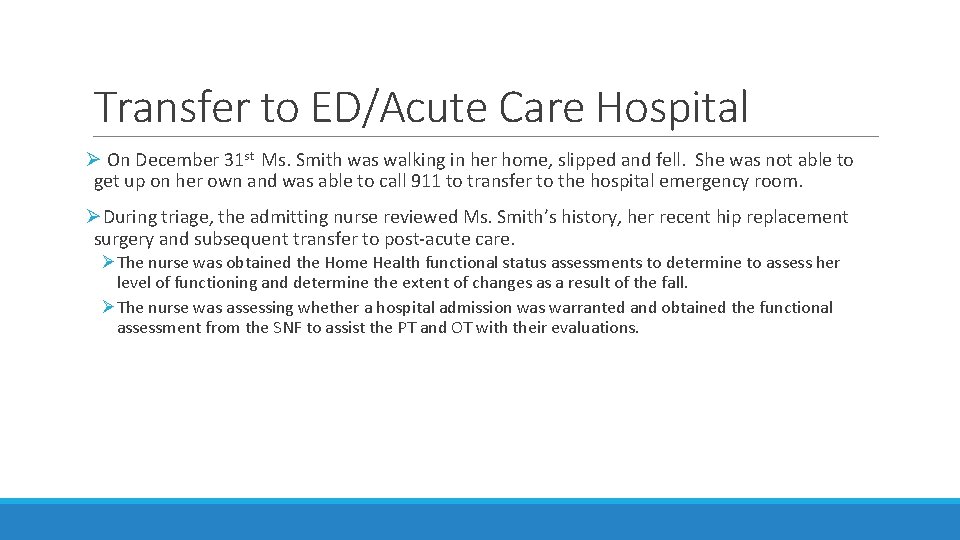
Transfer to ED/Acute Care Hospital Ø On December 31 st Ms. Smith was walking in her home, slipped and fell. She was not able to get up on her own and was able to call 911 to transfer to the hospital emergency room. ØDuring triage, the admitting nurse reviewed Ms. Smith’s history, her recent hip replacement surgery and subsequent transfer to post-acute care. ØThe nurse was obtained the Home Health functional status assessments to determine to assess her level of functioning and determine the extent of changes as a result of the fall. ØThe nurse was assessing whether a hospital admission was warranted and obtained the functional assessment from the SNF to assist the PT and OT with their evaluations.
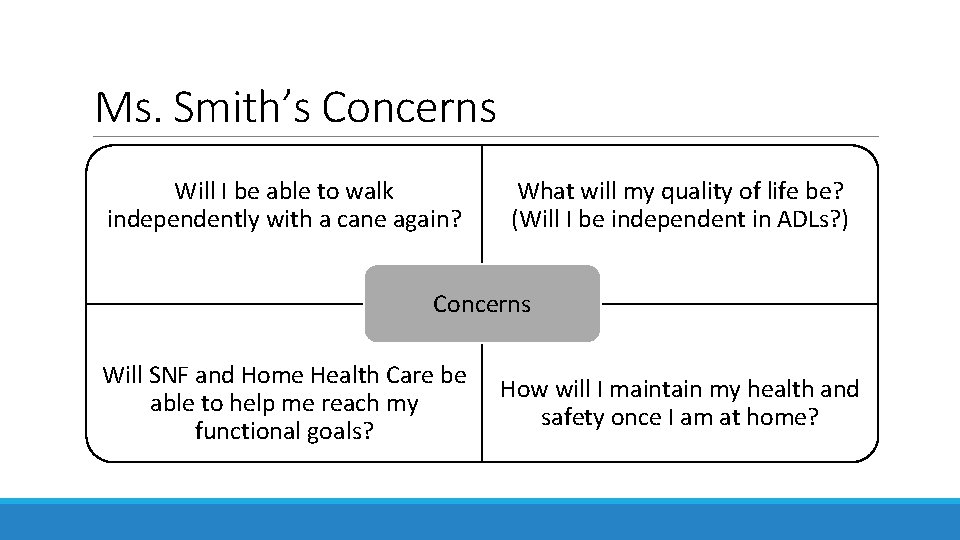
Ms. Smith’s Concerns Will I be able to walk independently with a cane again? What will my quality of life be? (Will I be independent in ADLs? ) Concerns Will SNF and Home Health Care be able to help me reach my functional goals? How will I maintain my health and safety once I am at home?
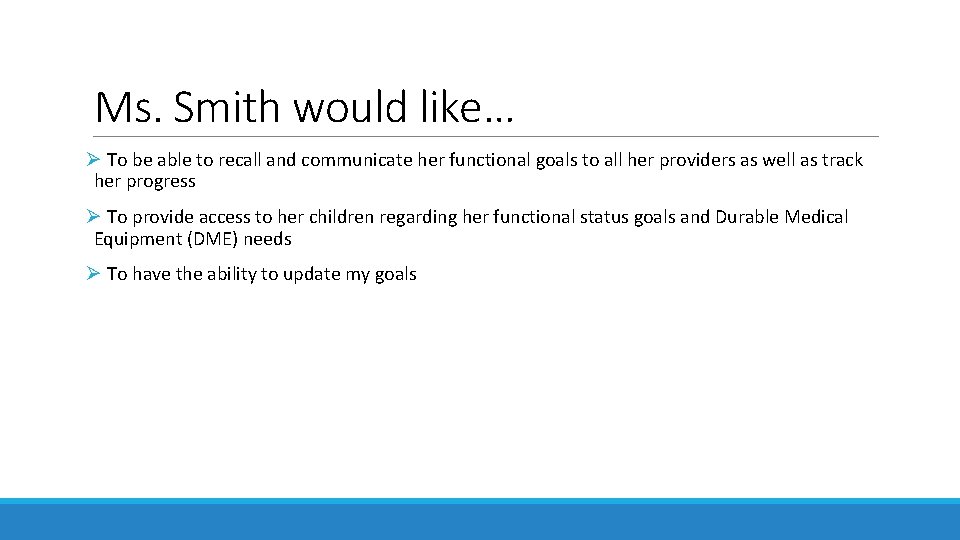
Ms. Smith would like… Ø To be able to recall and communicate her functional goals to all her providers as well as track her progress Ø To provide access to her children regarding her functional status goals and Durable Medical Equipment (DME) needs Ø To have the ability to update my goals
Daughter THE PERSPECTIVE FROM THE PATIENT’S DAUGHTER
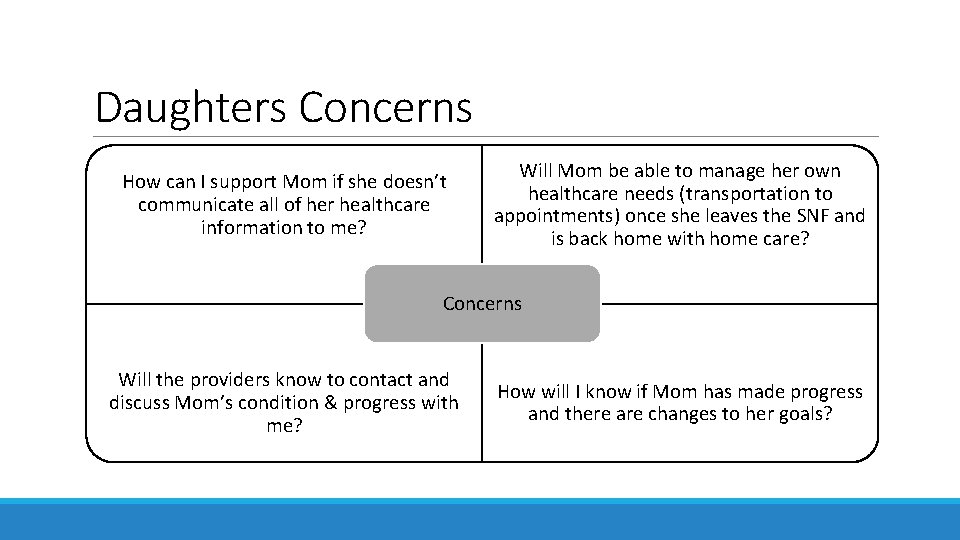
Daughters Concerns How can I support Mom if she doesn’t communicate all of her healthcare information to me? Will Mom be able to manage her own healthcare needs (transportation to appointments) once she leaves the SNF and is back home with home care? Concerns Will the providers know to contact and discuss Mom’s condition & progress with me? How will I know if Mom has made progress and there are changes to her goals?
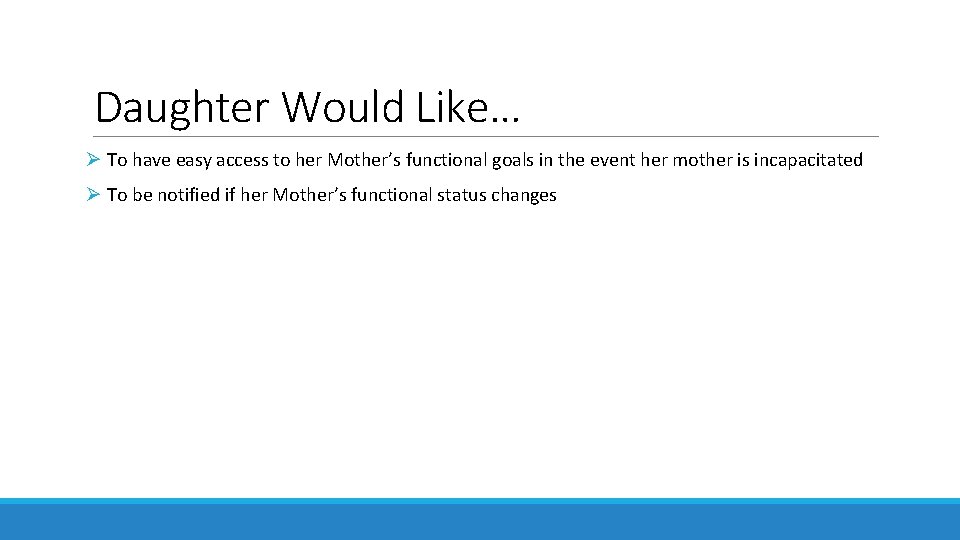
Daughter Would Like… Ø To have easy access to her Mother’s functional goals in the event her mother is incapacitated Ø To be notified if her Mother’s functional status changes
Case Manager/ Social Worker (CM/ SW) CARE COORDINATION PERSPECTIVE (HOSPITAL, SNF AND HOME HEALTH CARE)
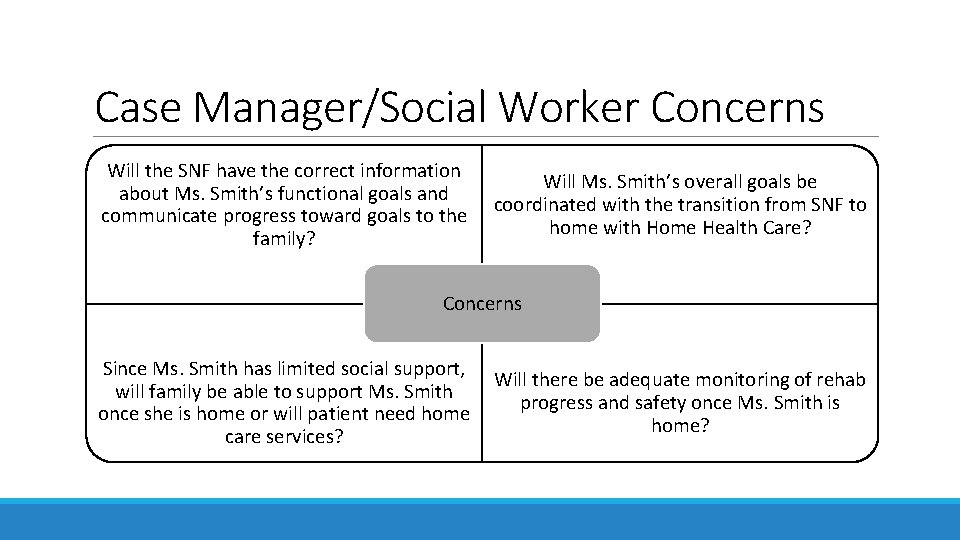
Case Manager/Social Worker Concerns Will the SNF have the correct information about Ms. Smith’s functional goals and communicate progress toward goals to the family? Will Ms. Smith’s overall goals be coordinated with the transition from SNF to home with Home Health Care? Concerns Since Ms. Smith has limited social support, will family be able to support Ms. Smith once she is home or will patient need home care services? Will there be adequate monitoring of rehab progress and safety once Ms. Smith is home?
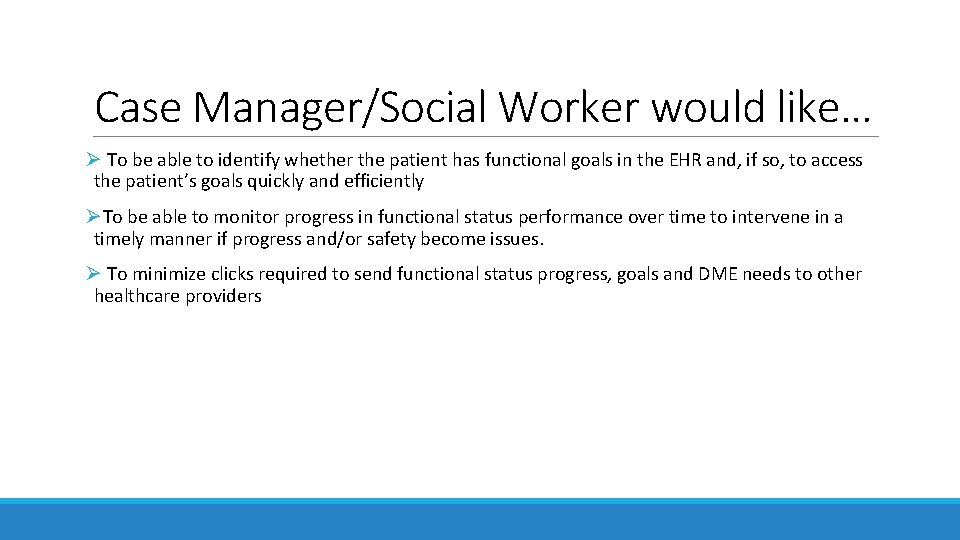
Case Manager/Social Worker would like… Ø To be able to identify whether the patient has functional goals in the EHR and, if so, to access the patient’s goals quickly and efficiently ØTo be able to monitor progress in functional status performance over time to intervene in a timely manner if progress and/or safety become issues. Ø To minimize clicks required to send functional status progress, goals and DME needs to other healthcare providers
Provider Persona PROVIDER PERSPECTIVES
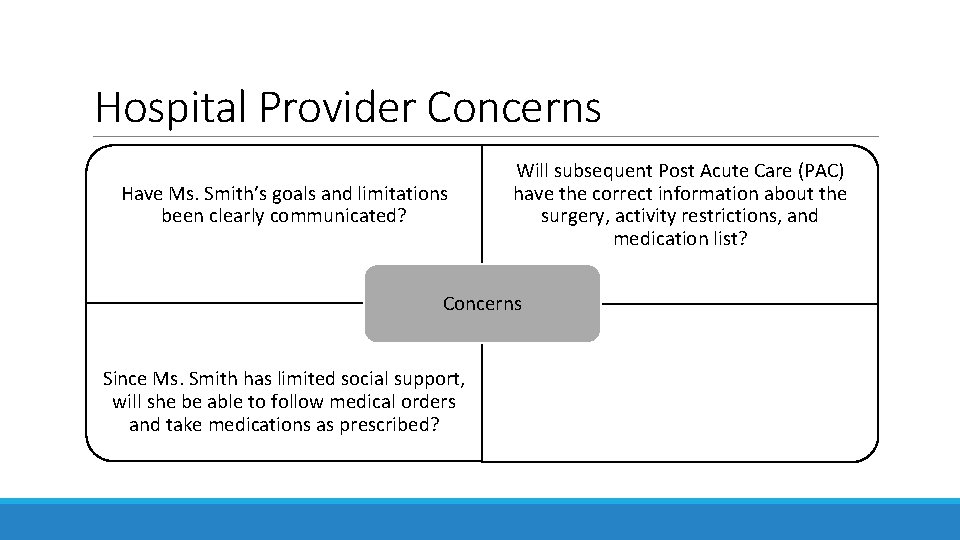
Hospital Provider Concerns Have Ms. Smith’s goals and limitations been clearly communicated? Will subsequent Post Acute Care (PAC) have the correct information about the surgery, activity restrictions, and medication list? Concerns Since Ms. Smith has limited social support, will she be able to follow medical orders and take medications as prescribed?
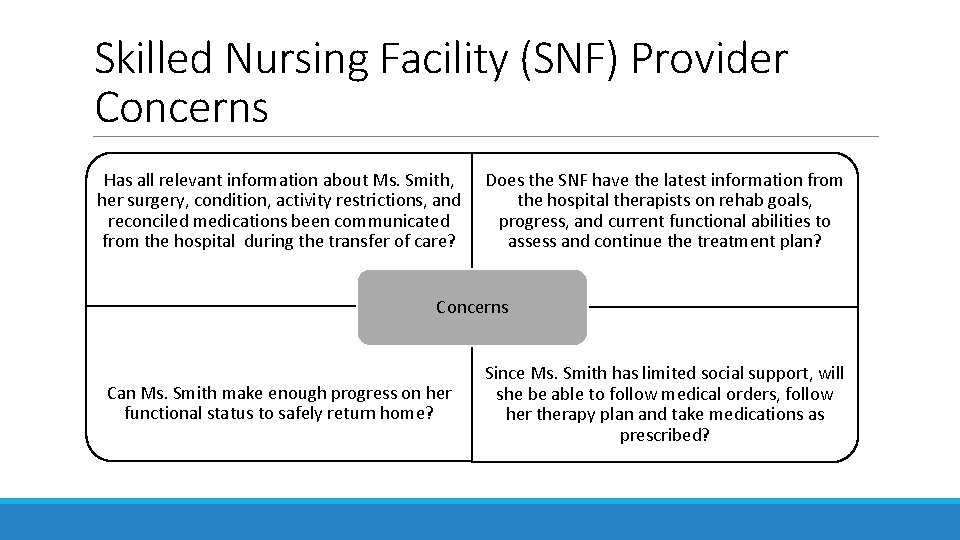
Skilled Nursing Facility (SNF) Provider Concerns Has all relevant information about Ms. Smith, her surgery, condition, activity restrictions, and reconciled medications been communicated from the hospital during the transfer of care? Does the SNF have the latest information from the hospital therapists on rehab goals, progress, and current functional abilities to assess and continue the treatment plan? Concerns Can Ms. Smith make enough progress on her functional status to safely return home? Since Ms. Smith has limited social support, will she be able to follow medical orders, follow her therapy plan and take medications as prescribed?
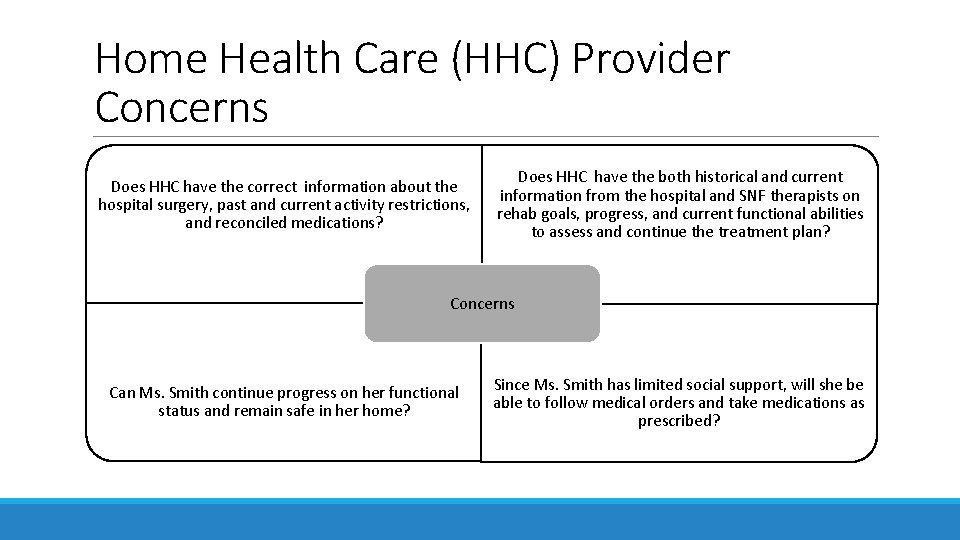
Home Health Care (HHC) Provider Concerns Does HHC have the correct information about the hospital surgery, past and current activity restrictions, and reconciled medications? Does HHC have the both historical and current information from the hospital and SNF therapists on rehab goals, progress, and current functional abilities to assess and continue the treatment plan? Concerns Can Ms. Smith continue progress on her functional status and remain safe in her home? Since Ms. Smith has limited social support, will she be able to follow medical orders and take medications as prescribed?
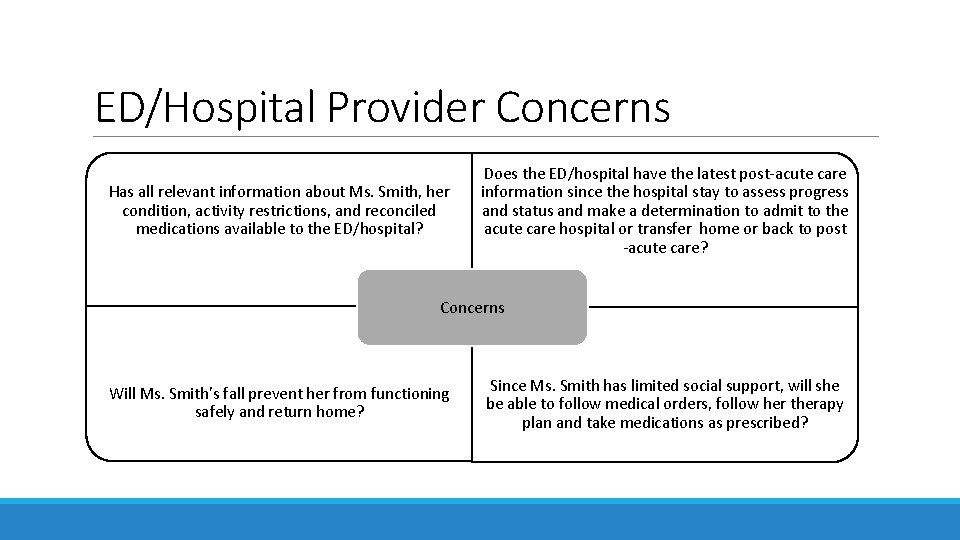
ED/Hospital Provider Concerns Has all relevant information about Ms. Smith, her condition, activity restrictions, and reconciled medications available to the ED/hospital? Does the ED/hospital have the latest post-acute care information since the hospital stay to assess progress and status and make a determination to admit to the acute care hospital or transfer home or back to post -acute care? Concerns Will Ms. Smith’s fall prevent her from functioning safely and return home? Since Ms. Smith has limited social support, will she be able to follow medical orders, follow her therapy plan and take medications as prescribed?
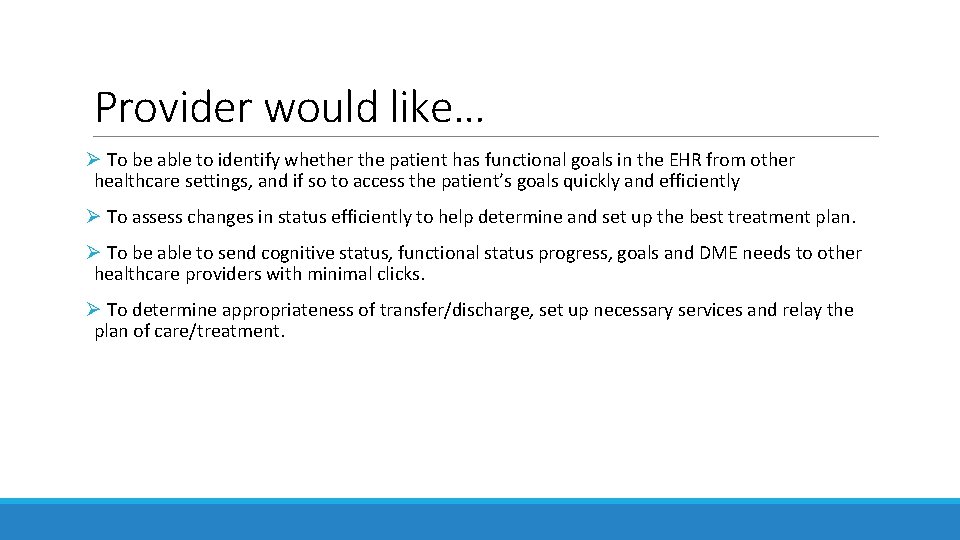
Provider would like… Ø To be able to identify whether the patient has functional goals in the EHR from other healthcare settings, and if so to access the patient’s goals quickly and efficiently Ø To assess changes in status efficiently to help determine and set up the best treatment plan. Ø To be able to send cognitive status, functional status progress, goals and DME needs to other healthcare providers with minimal clicks. Ø To determine appropriateness of transfer/discharge, set up necessary services and relay the plan of care/treatment.
Payor THE PAYOR PERSPECTIVE
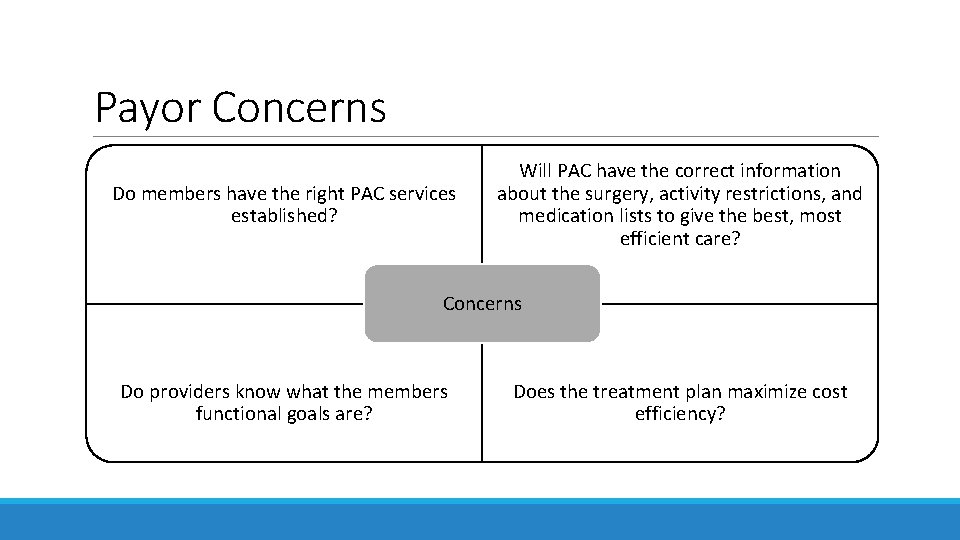
Payor Concerns Do members have the right PAC services established? Will PAC have the correct information about the surgery, activity restrictions, and medication lists to give the best, most efficient care? Concerns Do providers know what the members functional goals are? Does the treatment plan maximize cost efficiency?
Payor would like… Ø To engage members in their healthcare and goals
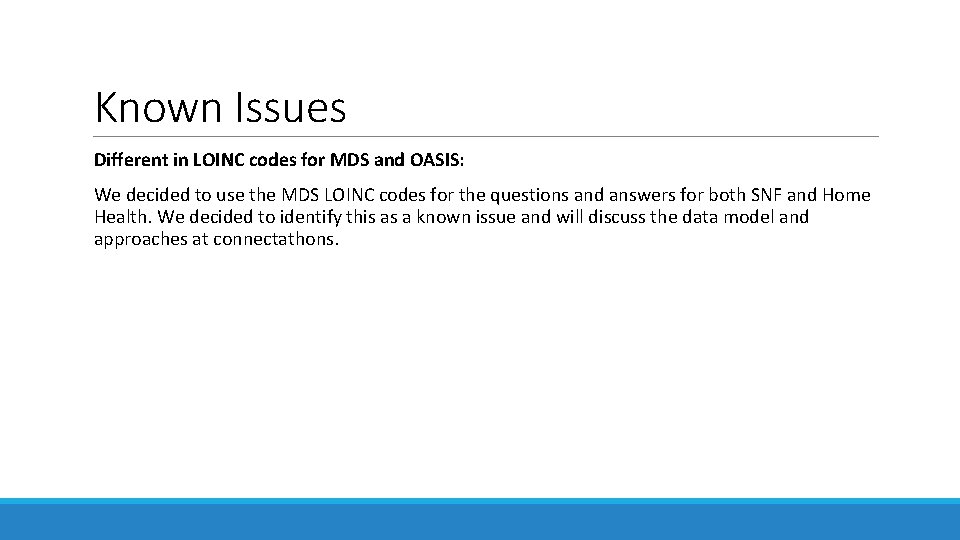
Known Issues Different in LOINC codes for MDS and OASIS: We decided to use the MDS LOINC codes for the questions and answers for both SNF and Home Health. We decided to identify this as a known issue and will discuss the data model and approaches at connectathons.