
Functional Plant Bioinformatics Orthologs paralogs phylogenetic trees 14
Functional Plant Bioinformatics Orthologs, paralogs & phylogenetic trees 14 -15 September, 2017 1 Klaas Vandepoele
Orthology and paralogy A major goal of sequence analysis is evolutionary reconstruction. It is critical to distinguish between two principal types of homologous relationships, which differ in their evolutionary history and functional implications. • Orthologs, defined as homologous genes evolved through speciation (~evolutionary counterparts derived from a single ancestral gene in the last common ancestor of the given two species) • Paralogs, which are homologous genes evolved through duplication within the same (perhaps ancestral) genome. These definitions were first introduced by Fitch (1970) 2
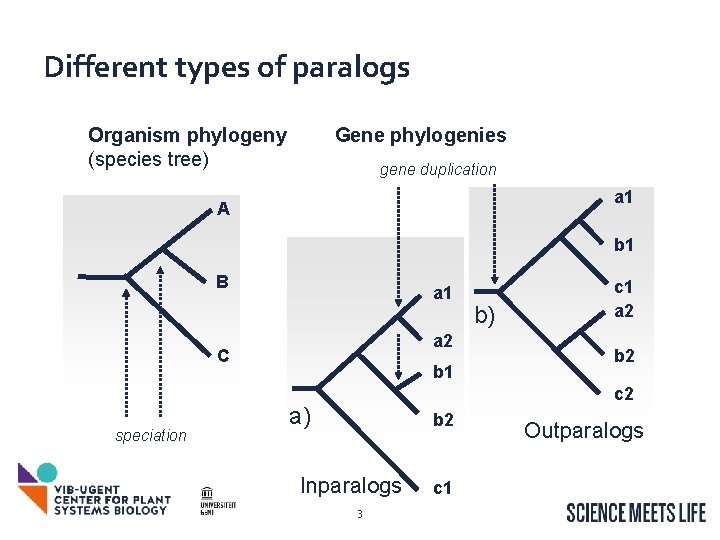
Different types of paralogs Gene phylogenies Organism phylogeny (species tree) gene duplication a 1 A b 1 B a 1 a 2 C speciation b 1 b) c 1 a 2 b 2 c 2 a) b 2 Inparalogs 3 c 1 Outparalogs
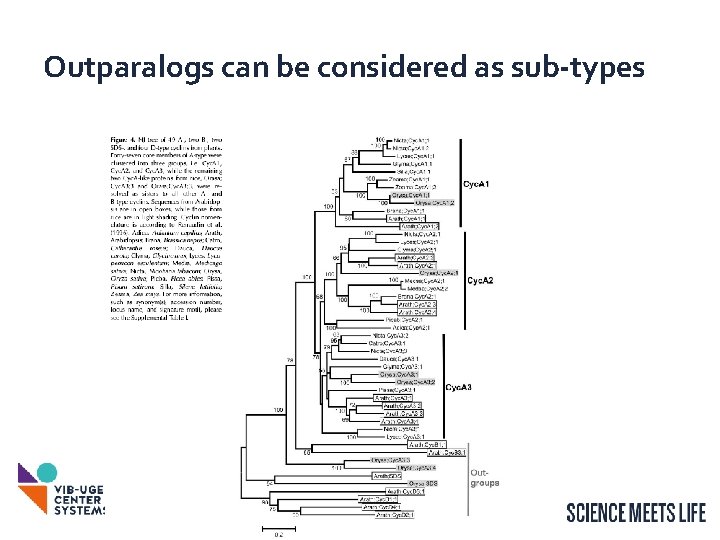
Outparalogs can be considered as sub-types 4
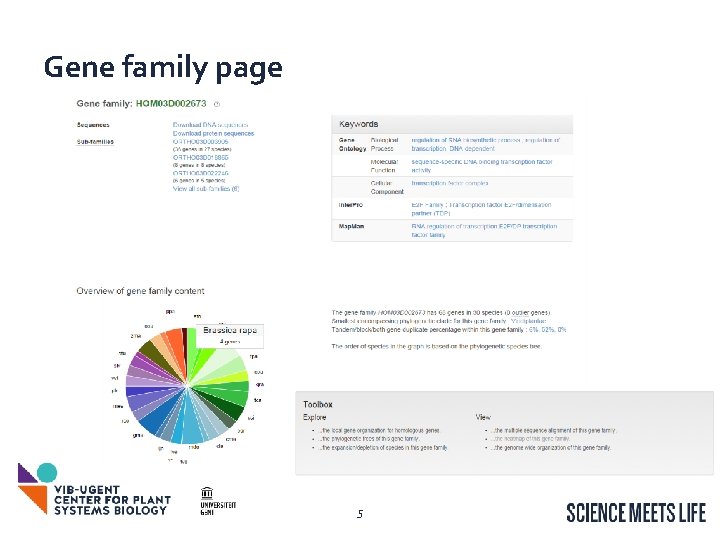
Gene family page 5
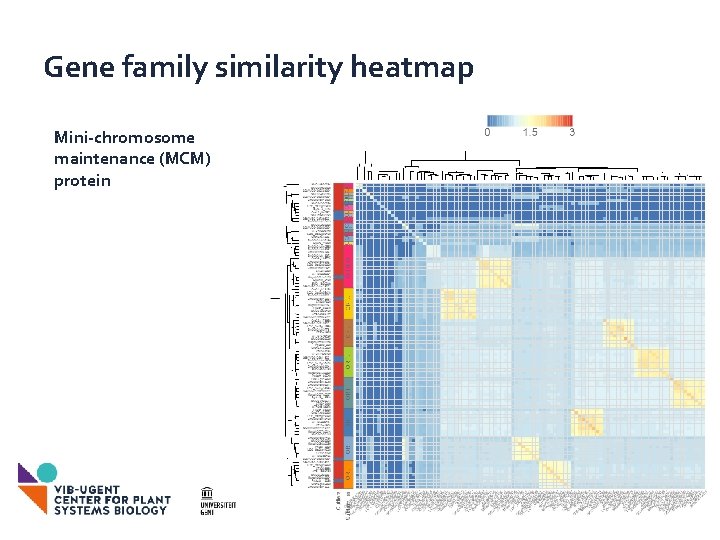
Gene family similarity heatmap Mini-chromosome maintenance (MCM) protein 6
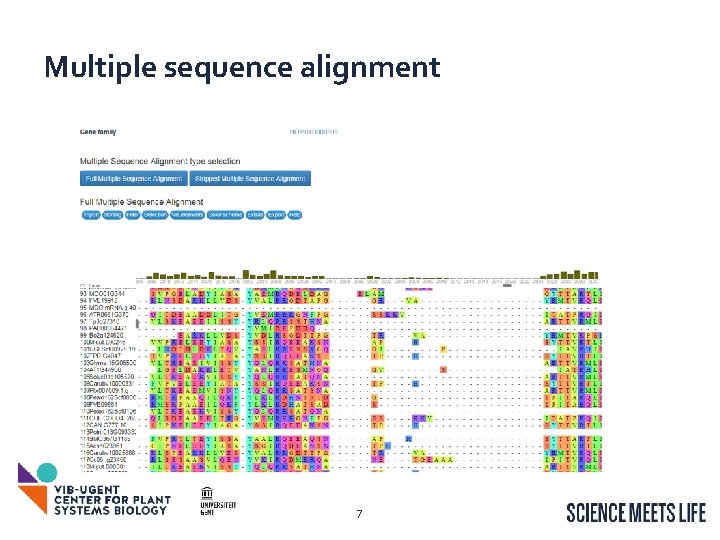
Multiple sequence alignment 7
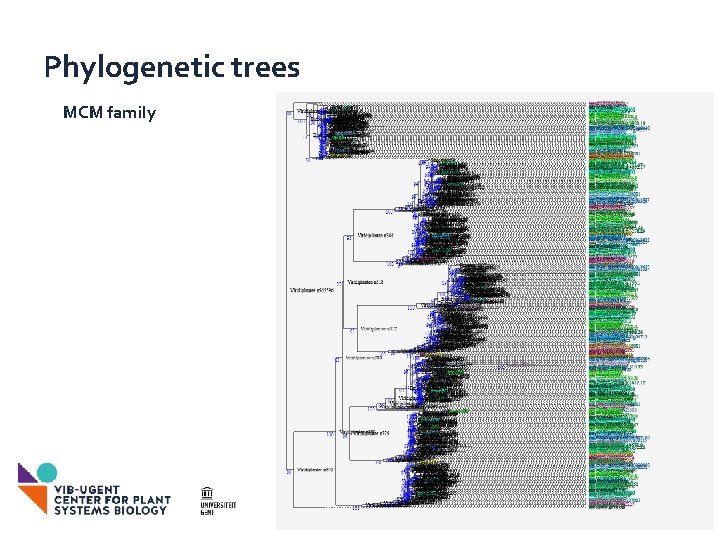
Phylogenetic trees MCM family 8
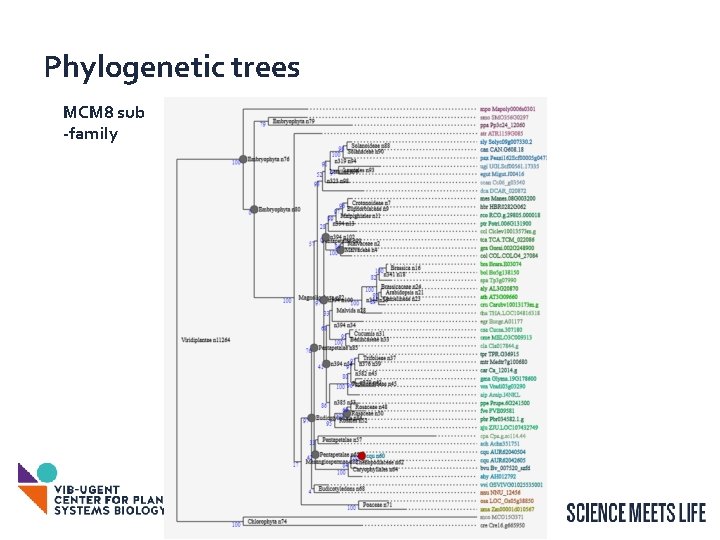
Phylogenetic trees MCM 8 sub -family 9

Tree reconciliation v The automatic detection of speciation and duplication events using a species tree and gene family tree 10
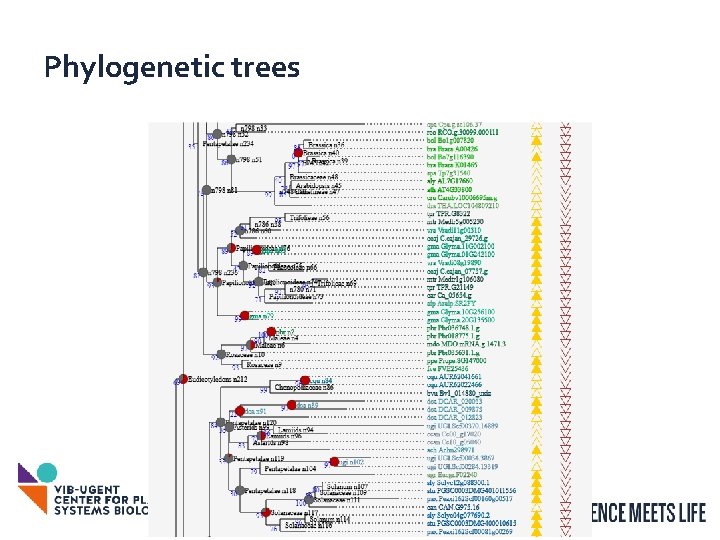
Phylogenetic trees 11
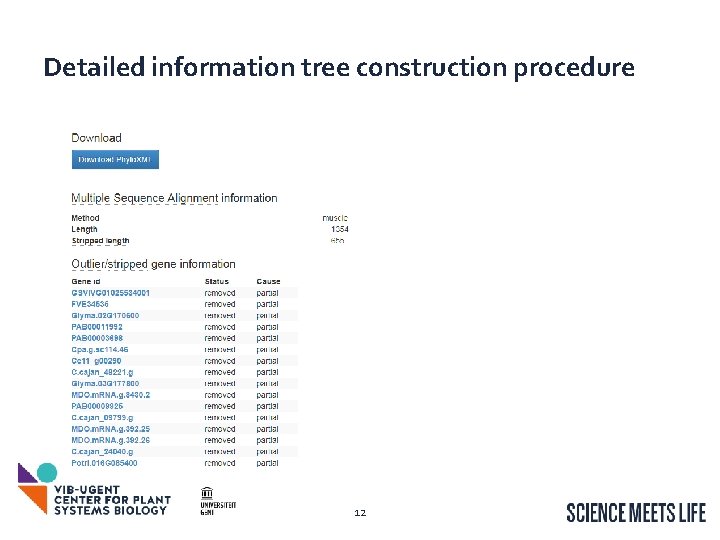
Detailed information tree construction procedure 12
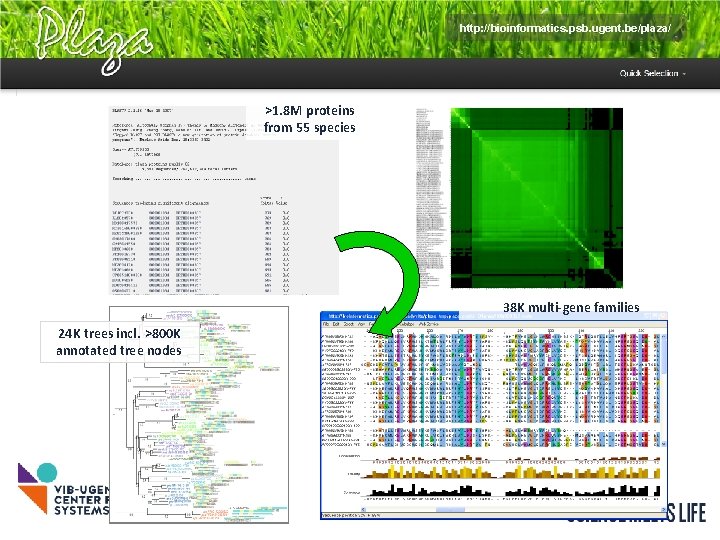
http: //bioinformatics. psb. ugent. be/plaza/ >1. 8 M proteins from 55 species 38 K multi-gene families 24 K trees incl. >800 K annotated tree nodes 13
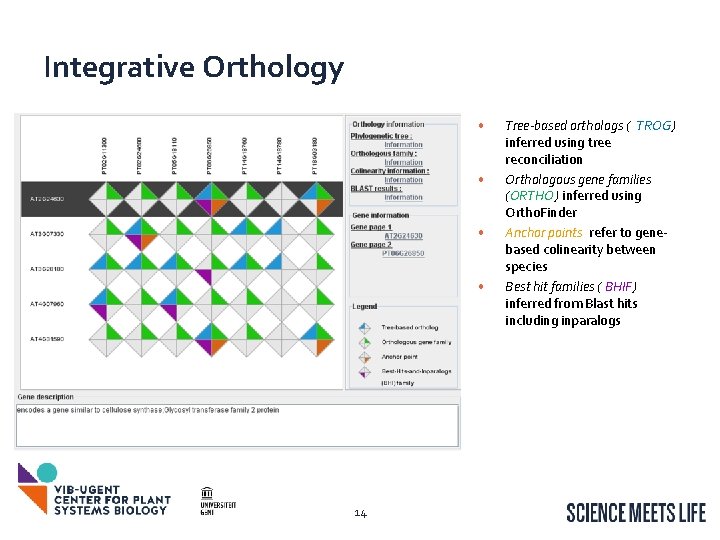
Integrative Orthology • • 14 Tree-based orthologs ( TROG) inferred using tree reconciliation Orthologous gene families (ORTHO ) inferred using Ortho. Finder Anchor points refer to genebased colinearity between species Best hit families ( BHIF) inferred from Blast hits including inparalogs
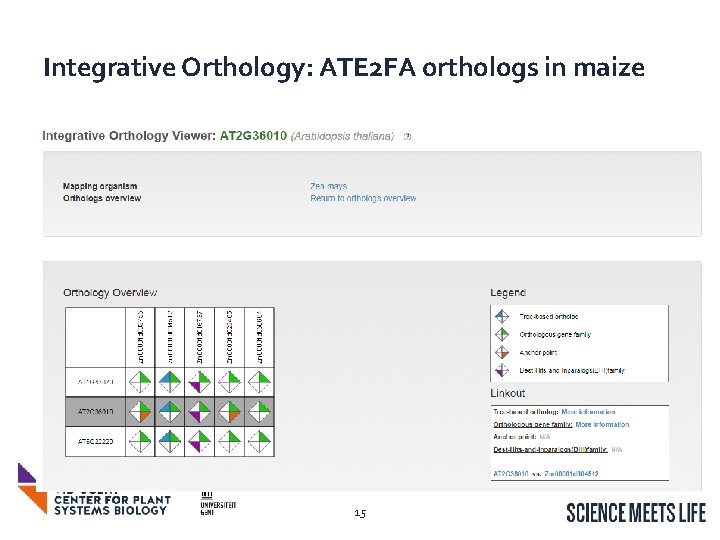
Integrative Orthology: ATE 2 FA orthologs in maize 15
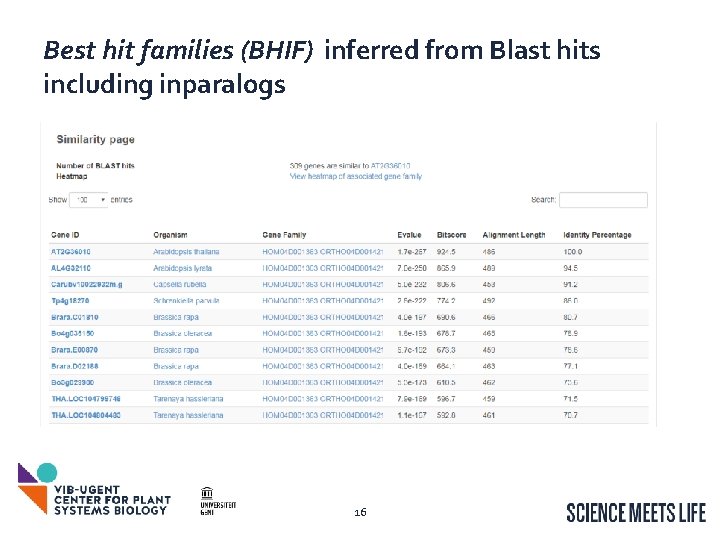
Best hit families (BHIF) inferred from Blast hits including inparalogs 16
Interactive Phylogenetics Module DEMO • Generate the phylogenetic tree of user-selected sequences. • Selection of sequences to be analyzed based on BLAST hits of the query gene Species of interest present in corresponding gene family • More extensive options available related to Multiple sequence alignment (MUSCLE or MAFFT) Editing alignment Phylogenetic tree construction (Phy. ML, Ra. XML, or IQ-TREE incl. model test) • Phy. D 3 is used to visualize the generated phylogenetic tree • All intermediate and final files can be downloaded from the Files tab. 17
- Slides: 17