
Functional neurological Symptoms Disorder FND Does the body
Functional neurological Symptoms Disorder (FND) Does the body rule the mind, or does the mind rule the body? I don’t know THE SMITHS Yunxia Wang, MD Neurohospitalist Vascular Neurologist

Objective • Make FND diagnosis based on the clinical presentation and positive neurological exam. • Reduce the risk of the patient with structural neurologic disease receiving the diagnosis of a functional disorder simply because they have psychiatric comorbidity or symptom onset coincides with recent stress
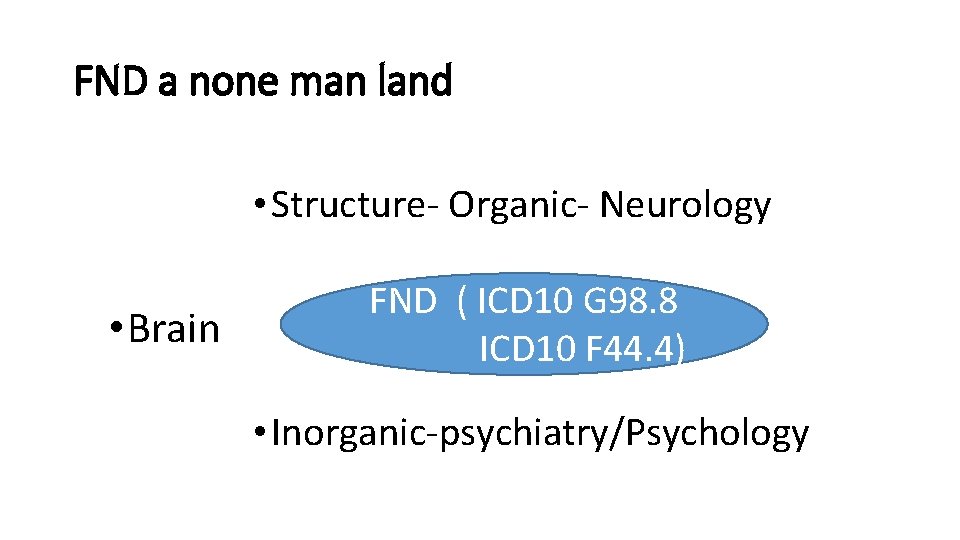
FND a none man land • Structure- Organic- Neurology • Brain FND ( ICD 10 G 98. 8 ICD 10 F 44. 4) • Inorganic-psychiatry/Psychology
Hysteria Ancient Greece: wandering womb Wandering womb is the cause of all female disorders
Thomas Willis (1622 to 1675), Performed autopsies on women who had been hysteric and demonstrated no uterine pathology. Proposed Mind and Body Concept Proposed that the brain and spinal cord were the sites of the disease, and theorized that excess “animal spirits” released from the brain traveled via the nerves to the abdomen, where they entered the blood, causing symptoms of hysteria. He also noted hysteria in men, but postulated that it was more common in women because they were weaker in the mind
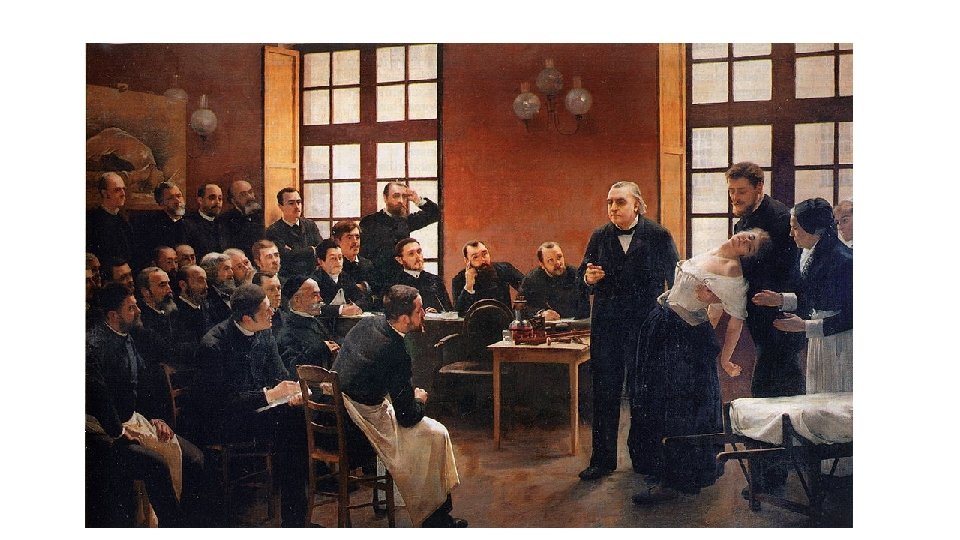
Charcot theory on “hysteria” “Hysteria” was the result of a “weak” neurological system which was hereditary. It could be set off by a traumatic event like an accident, but was then progressive and irreversible. He hypnotized his patients in order to induce and study their symptoms. Hysteria was not unique to female. It could occur in such models of masculinity as railway engineers or soldiers.
Le Log- Charco’s Trauma Hysteria pt • A florist’s delivery man in Paris. One evening, in October 1885, he was wheeling his barrow home through busy streets when it was hit from the side by a carriage which was being driven at great speed. Le Log, who had been holding the handles of his barrow tightly, was spun through the air and landed on the ground. He was picked up completely unconscious. He was then taken to the nearby Beaujon hospital where he remained unconscious for five or six days. Six months later he was transferred to La Salpêtrière. By this time the lower extremities of his body were almost completely paralyzed, there was a twitching or tremor in the corner of his mouth, he had a permanent headache and there were ‘blank spaces in the tablet of his memory’. In particular he could not remember the accident itself. • Because there had never been any signs of external injury, Charcot decided that Le Log––– was a victim of traumatic hysteria and that his symptoms had arisen as a result of the psychological trauma he had suffered. • Richard web: Freud, Charcot and hysteria: lost in the labyrinth
Charcot’s contribution to Hysteria • Hysteria as a condition which could be caused by trauma, paved the way for understanding neurological symptoms arising from industrialaccident or war-related traumas. • Many pts were wrongly labeled as Hysteria because of limitation of diagnostic technology.
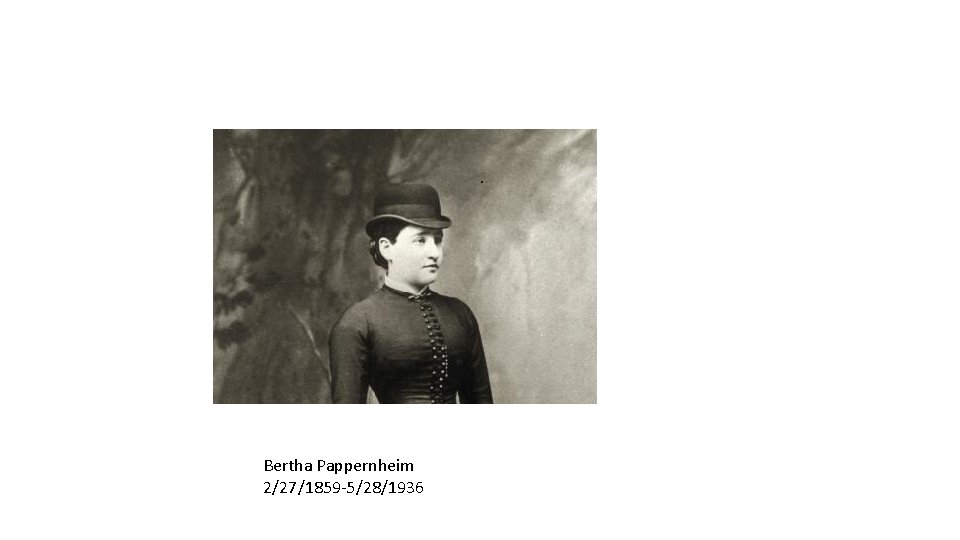
. Bertha Pappernheim 2/27/1859 -5/28/1936
Sigmund Freud on Anna O. Case • Dr. Breuer's patient was a girl of twenty-one, of high intellectual gifts. Her illness lasted for over two years, and in the course of it she developed a series of physical and psychological disturbances which decidedly deserved to be taken seriously. She suffered from a rigid paralysis, accompanied by loss of sensation, of both extremities on the right side of her body; and the same trouble from time to time affected her on her left side. Her eye movements were disturbed and her power of vision was subject to numerous restrictions. She had difficulty of the posture of her head, she had a severe nervous cough. She had an aversion to taking nourishment, and on one occasion she was for several weeks unable to drink in spite of a tormenting thirst. Her powers of speech were reduced, even to the point of her being unable to speak or understand her native language. Finally, she was subject to conditions of 'absence', (1) of confusion, of delirium, and of alteration of her whole personality, to which we shall have presently to turn our attention.
Frued and Breuers’ Hysteria. Theory • Hysterical symptoms derive from undischarged "memories" connected to "psychical traumas. " These memories originated when the nervous system was in a special physiological condition or "hypnoid state"; they then remained cut off from consciousness. Hysterical symptoms resulted from the "intrusion of this second state into the somatic innervation, " a mind-to-body process Freud and Breuer called "conversion. “ • Freud and Breuer collaboration ended later because their different approach to hysteria • Freud became the father of psychoanalysis
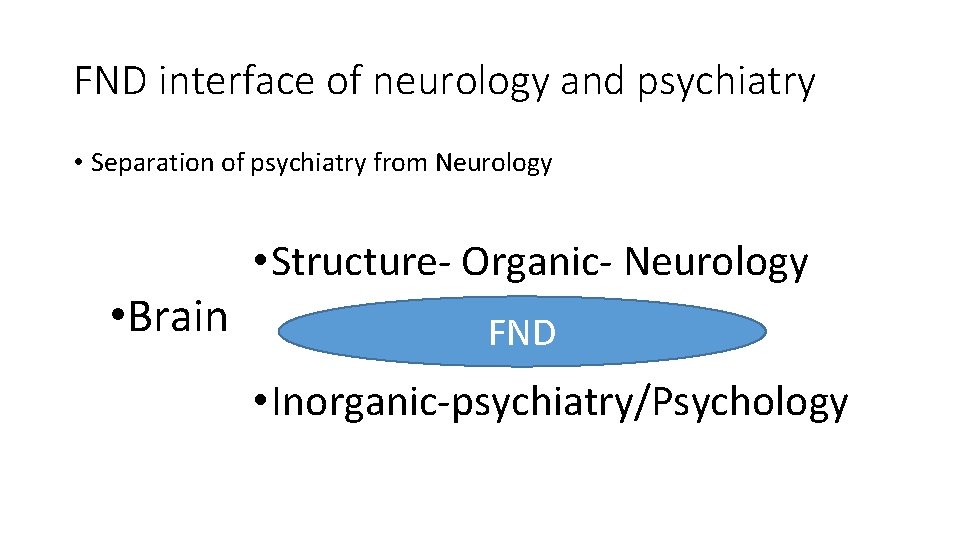
FND interface of neurology and psychiatry • Separation of psychiatry from Neurology • Brain • Structure- Organic- Neurology FND • Inorganic-psychiatry/Psychology
Functional neurological symptom disorder (hysteria, conversion) • Neurologists are uncomfortable with psychological side • Psychologist are concerned with the overwhelmed neurological symptoms and tests performed by neurologists • It is not a topic we learned or were taught formally during our training • FND pts were biased by medical community • Disparity in the care of pts
Functional Neurological Symptom Disorders • Symptoms arise from abnormal central nerves system function in the absence structural function • Not tumor, stroke, infection or other known structural neurological condition • It is involuntary • It is a software problem, not a hard ware issues • Pts are not feigning symptoms • Will we see more pts with functional symptoms with social media?
DSM-5 criteria for the diagnosis of conversion disorder (functional neurological symptom disorder) • A. The patient has ≥ 1 symptoms of altered voluntary motor or sensory function. • B. Clinical findings provide evidence of incompatibility between the symptom and recognized neurological or medical conditions. • C. The symptom or deficit is not better explained by another medical or mental disorder. • D. The symptom or deficit causes clinically significant distress or impairment in social, occupational, or other important areas of functioning or warrants medical evaluation
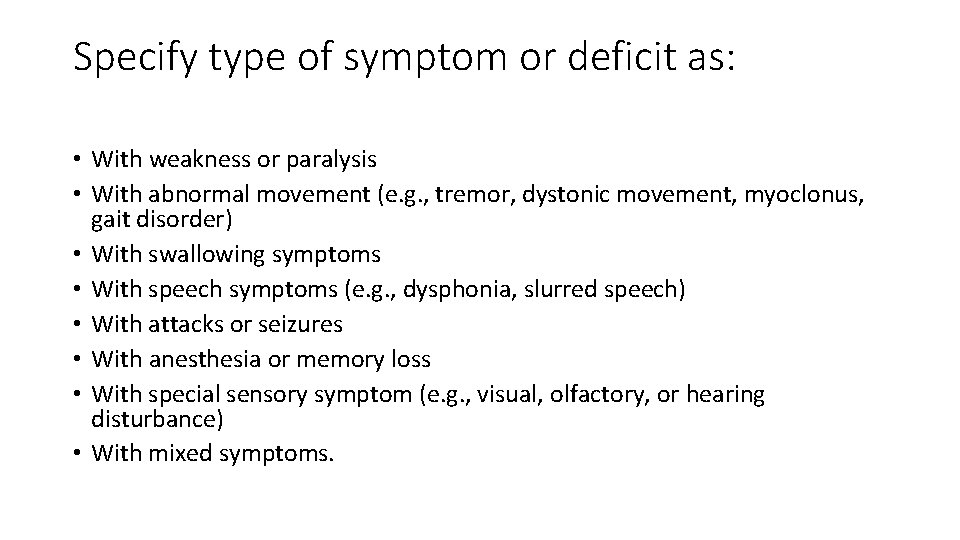
Specify type of symptom or deficit as: • With weakness or paralysis • With abnormal movement (e. g. , tremor, dystonic movement, myoclonus, gait disorder) • With swallowing symptoms • With speech symptoms (e. g. , dysphonia, slurred speech) • With attacks or seizures • With anesthesia or memory loss • With special sensory symptom (e. g. , visual, olfactory, or hearing disturbance) • With mixed symptoms.
DSMV • Emphasized the importance of the neurological examination, • Recognition that relevant psychological factors may not be demonstrable at the time of diagnosis. • Neurologist plays an important role to make the diagnosis. • Conversion Disorder is more specific for those patients who can clearly define a psychological connection, which they are “converting” to their physical symptom. The majority of our Functional members do not relate to the “conversion theory”.
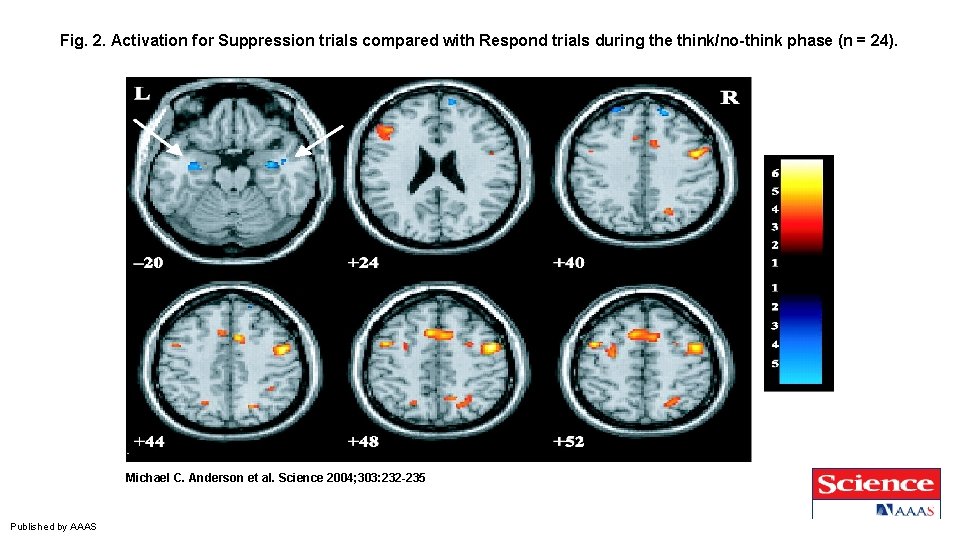
Fig. 2. Activation for Suppression trials compared with Respond trials during the think/no-think phase (n = 24). Michael C. Anderson et al. Science 2004; 303: 232 -235 Published by AAAS
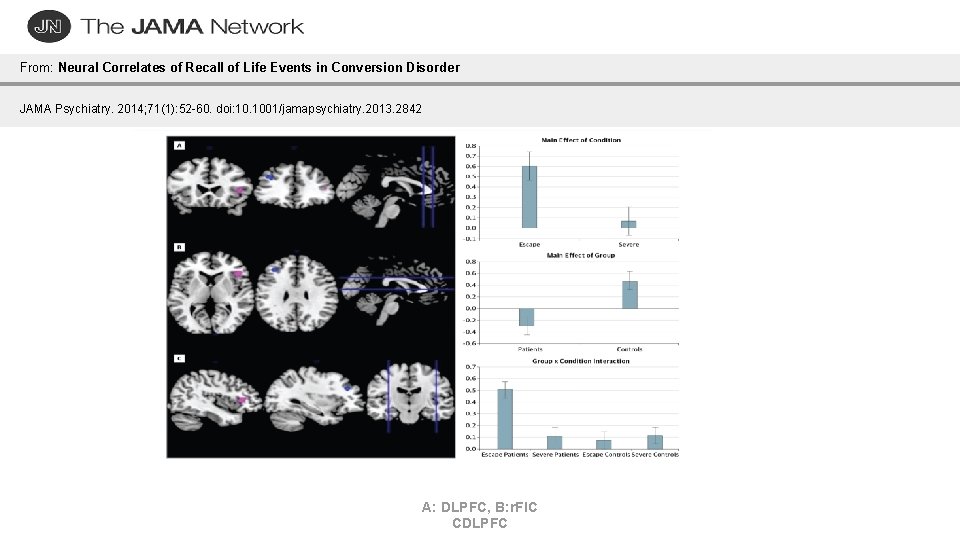
From: Neural Correlates of Recall of Life Events in Conversion Disorder JAMA Psychiatry. 2014; 71(1): 52 -60. doi: 10. 1001/jamapsychiatry. 2013. 2842 A: DLPFC, B: r. FIC CDLPFC
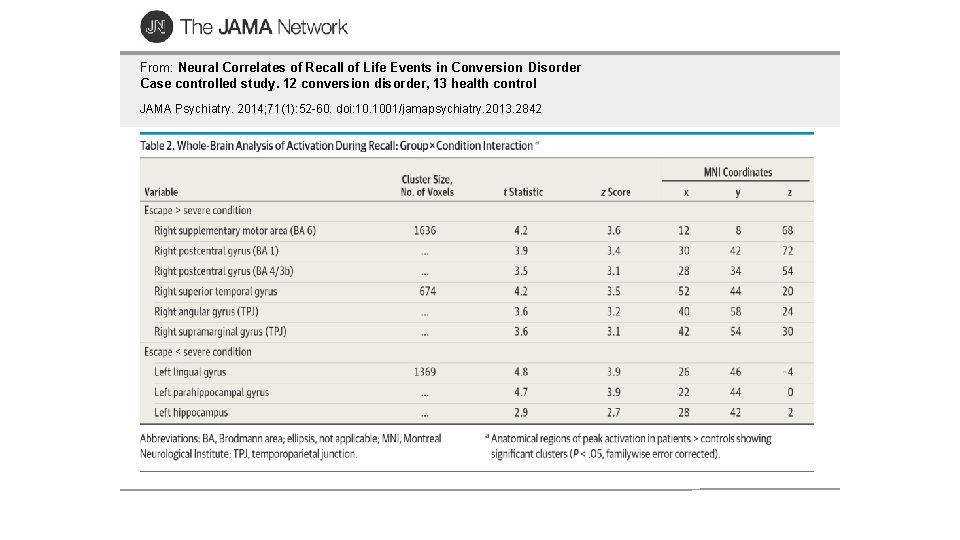
From: Neural Correlates of Recall of Life Events in Conversion Disorder Case controlled study. 12 conversion disorder, 13 health control JAMA Psychiatry. 2014; 71(1): 52 -60. doi: 10. 1001/jamapsychiatry. 2013. 2842
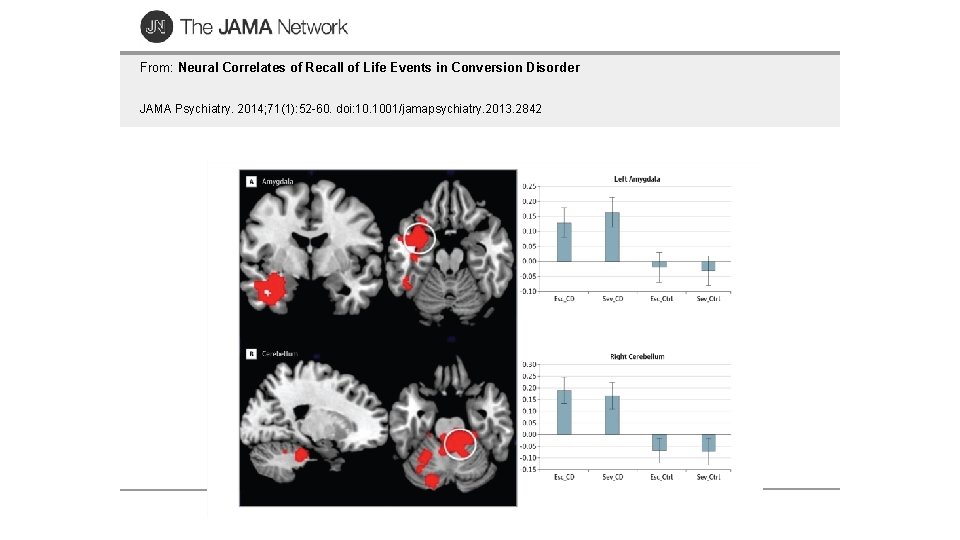
From: Neural Correlates of Recall of Life Events in Conversion Disorder JAMA Psychiatry. 2014; 71(1): 52 -60. doi: 10. 1001/jamapsychiatry. 2013. 2842
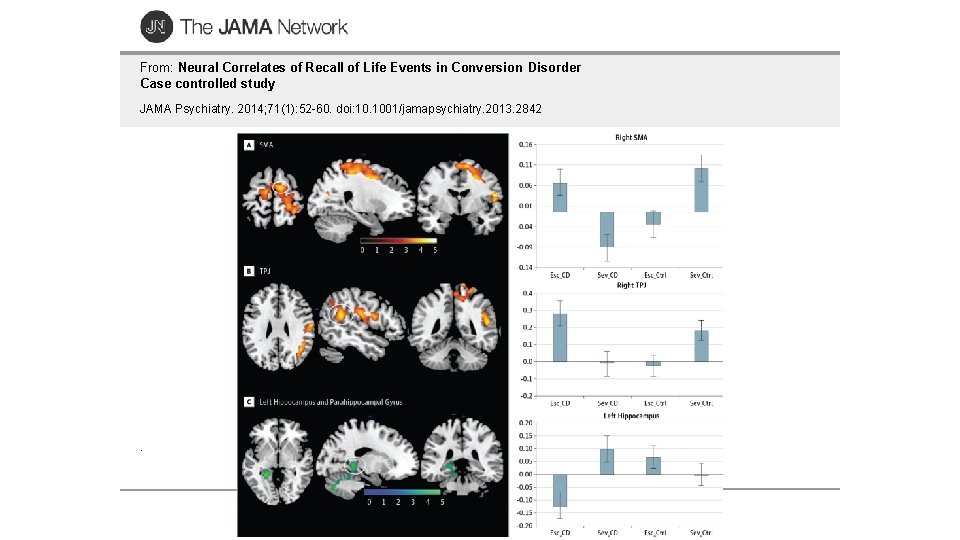
From: Neural Correlates of Recall of Life Events in Conversion Disorder Case controlled study JAMA Psychiatry. 2014; 71(1): 52 -60. doi: 10. 1001/jamapsychiatry. 2013. 2842 .
Neural Correlates of Recall of Life Events in Conversion Disorder • Relative to controls, patients showed significantly increased left dorsolateral prefrontal cortex and decreased left hippocampus activity during the escape vs severe condition, accompanied by increased right supplementary motor area and temporoparietal junction activity. Relative to controls, patients failed to activate the right inferior frontal cortex during both conditions, and connectivity between amygdala and motor areas (supplementary motor area and cerebellum) was enhanced.
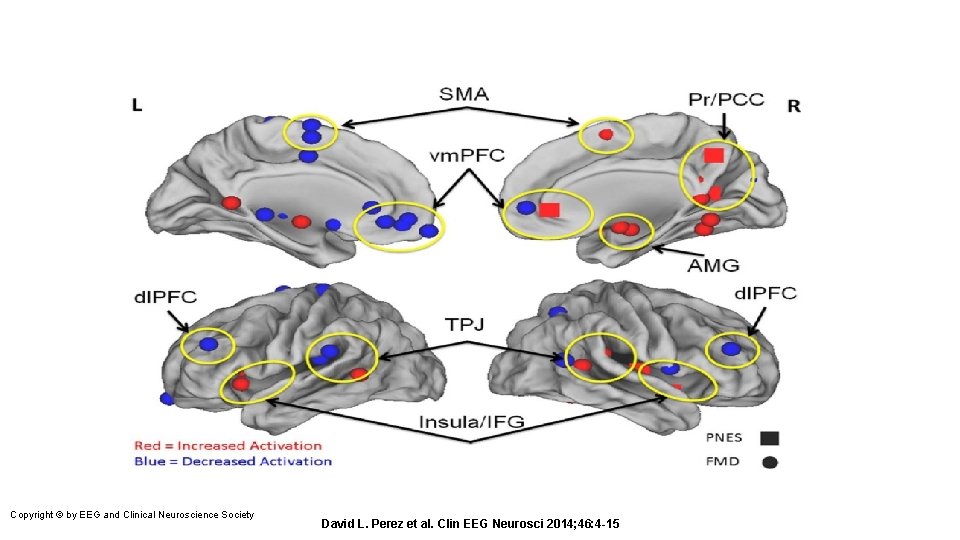
Copyright © by EEG and Clinical Neuroscience Society David L. Perez et al. Clin EEG Neurosci 2014; 46: 4 -15
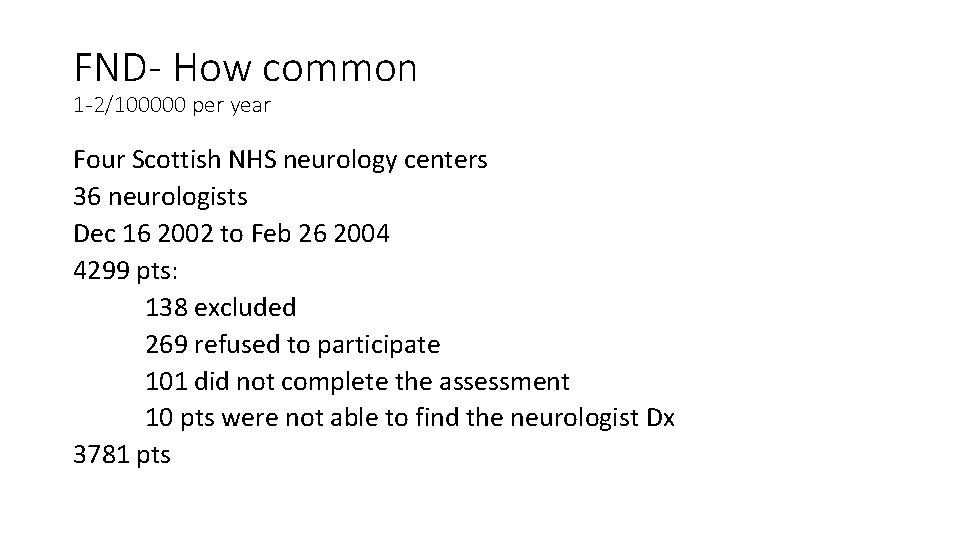
FND- How common 1 -2/100000 per year Four Scottish NHS neurology centers 36 neurologists Dec 16 2002 to Feb 26 2004 4299 pts: 138 excluded 269 refused to participate 101 did not complete the assessment 10 pts were not able to find the neurologist Dx 3781 pts
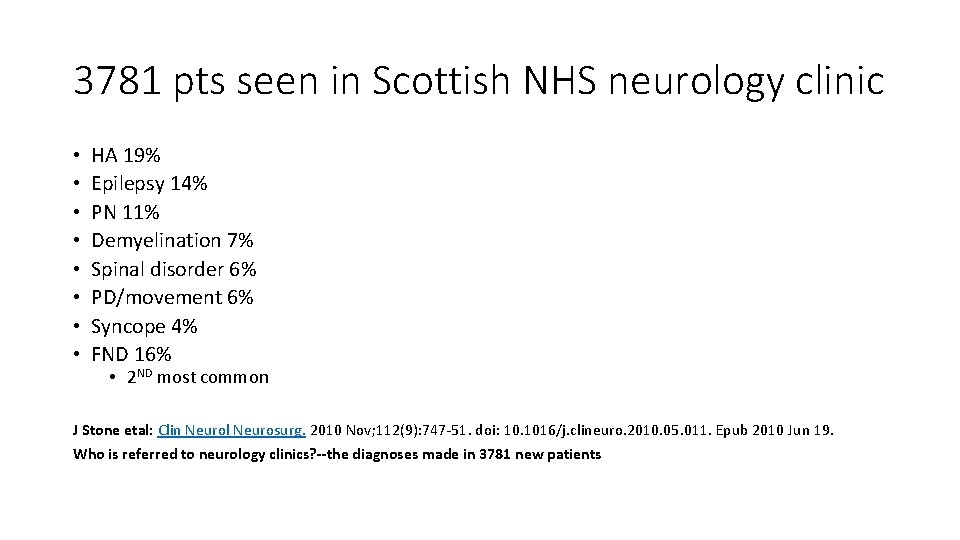
3781 pts seen in Scottish NHS neurology clinic • • HA 19% Epilepsy 14% PN 11% Demyelination 7% Spinal disorder 6% PD/movement 6% Syncope 4% FND 16% • 2 ND most common J Stone etal: Clin Neurol Neurosurg. 2010 Nov; 112(9): 747 -51. doi: 10. 1016/j. clineuro. 2010. 05. 011. Epub 2010 Jun 19. Who is referred to neurology clinics? --the diagnoses made in 3781 new patients
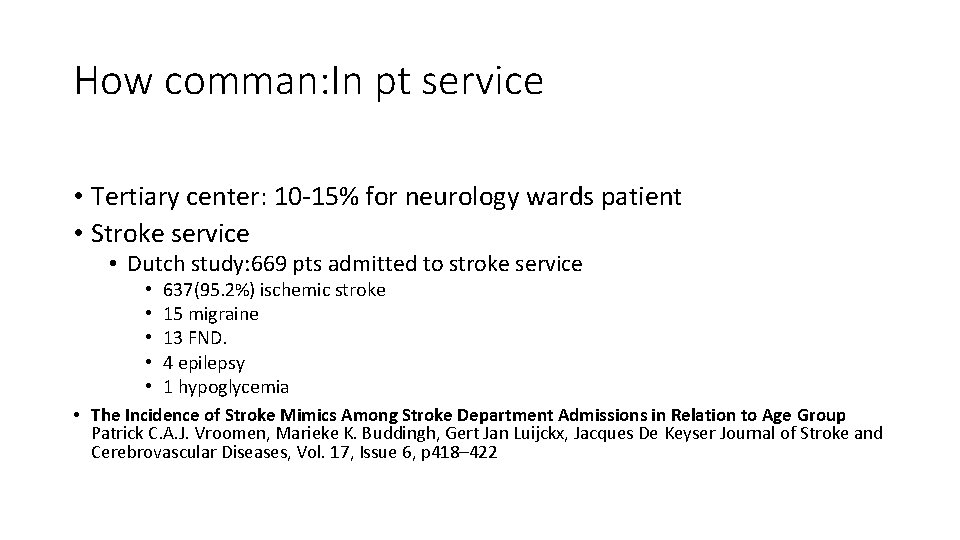
How comman: In pt service • Tertiary center: 10 -15% for neurology wards patient • Stroke service • Dutch study: 669 pts admitted to stroke service • • • 637(95. 2%) ischemic stroke 15 migraine 13 FND. 4 epilepsy 1 hypoglycemia • The Incidence of Stroke Mimics Among Stroke Department Admissions in Relation to Age Group Patrick C. A. J. Vroomen, Marieke K. Buddingh, Gert Jan Luijckx, Jacques De Keyser Journal of Stroke and Cerebrovascular Diseases, Vol. 17, Issue 6, p 418– 422
Diagnostic accuracy • 30% pt with hysteria was misdiagnosed prior to 1974 • Meta analysis 4% pt with hysteria was misdiagnosed since 1980 • Dr J Stone
Three Key steps to make the right dx • Hx • Neurological exam • Necessary diagnostic studies
Hx • Demographic features • Younger patients. Less than 50 yo. Possible more common in woman • Compared to control group, FND more likely to have • • Mood disorder( depression, anxiety, panic) Personality disorder( boardline, histrionic, narcissistic) Family hx of medical illness Hx of physical and sexual abuse, some time it is difficult to discuss during the initial visit. • Compare to pt with symptoms from a clear structural neurological cause, FND Pts are less likely to accept that stress could be the main contributing factors. • Dissociation symptoms: • I could not see, but I can hear and can not response to other people • I was there and not there, I was outside of my body • My body did not feel like myself
Functional neurological symptoms • May present with sudden onset • Stroke mimic • Seizure mimic • Subacute • MS mimic • Infectious mimic • autoimmune • Chronic • ROS 12/12 positive, The more physical symptoms a patient presents with the more likely it is that the primary presenting symptom will not be explained by disease. A long list of symptoms should therefore be a “red flag” that the main symptom is functional
Examinations • Give away weakness: • Hoover signs. • Whispering voice • Blindness • Functional gait • Aphasia with normal hand writing communication. • Teddy Bear sign

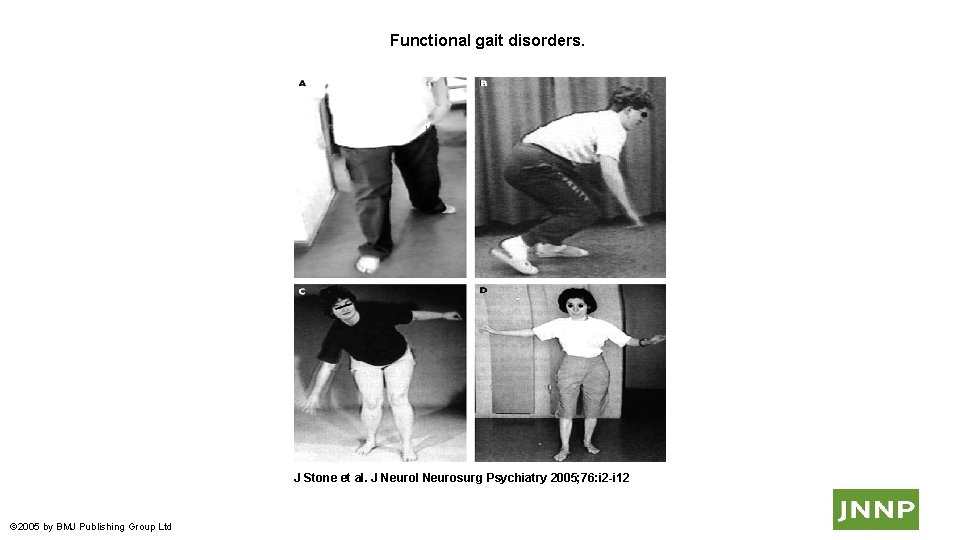
Functional gait disorders. J Stone et al. J Neurol Neurosurg Psychiatry 2005; 76: i 2 -i 12 © 2005 by BMJ Publishing Group Ltd

Caveat Clinical signs are relatively low sensitivity Babinski sign: 107 neurology Pt sensitivity 50%( CI 47 to 60%) Incongruent with anatomy and physiology Be aware of unusual disease and unusual presentation Posterior circulation stroke, infarcts involving different territory. frontal lobe epilepsy, RMCA culture difference. “walking on the moon”
Caveat Functional overlay 30% pt with a neurological condition may exaggerate their symptoms. Do not think you are wise than you are It is easy to be fooled by uncommon neurological symptoms RMCA stroke, frontal lobe epilepsy, autoimmune encephalitis, certain movement disorder. You see what you know
FND is Clinical dx • Not a rule out Dx • Detailed hx take, neurological exam, ancillary studies • EEG/VEEG for spell classification • MRI for stroke, MS or other intracranial lesions. • Consider repeat MRI if the initial imaging study was normal. • LP for inflammatory/autoimmune/infectious etiology • FND should not be dxed because of pt has a dx of psychiatric disorders or Drug abuser • Stroke may mimic FND, Especially right MCA, posterior circulation stroke, error to side of stroke. • Age and risk factors.
29 yo hx of depression presented with numbness • 29 yo woman hx of depression presented to ER for numbness in right side and neck pain. • CT of c spine was normal. Pt discharged home with muscle relaxer. • Returned later that day with worsening symptoms. Husband carried her to the ER waiting area since she was unable to work. • Exam showed midline splitting loss sensation to LT, PP • What is the Dx?
• FND should not be dxed because of pt has a dx of psychiatric disorders or Drug abuser
Management of FND Emergency Setting: stroke mimic Neurology wards: MS/seizure mimic Out pt clinic: muscle weakness, numbness, dysphagia.
Emergency room • 46 y. o. male with h/o CAD s/p CABG, tobaccoism, HTN, HLD, presented with slurred speech and left sided weakness concerning for acute stroke. Last known normal was 3: 00 am, pt arrived to ER 6: 40 am • Exam showed deliberated slow speech. psychomotor slowness. Unable to move his left side. Positive Hoover’s sign. Normal reflexes. Toes down going. NIHSS 10 • CT of head negative
What do you do MRI to rule out stroke Or t. PA Why not t. PA?
Stroke mimics • 3 -14% of pts treated with t. PA are actually stroke mimics • Complex Migraine • Seizure • Conversion disorder • Global aphasia most common symptom of mimics Winkler DT. Thrombolysis in Stroke Mimics: Frequency, Clinical Characteristics, and Outcome. Stroke 2009: 40: 1522 -25 Chernyshev OY. Safety of t. PA in stroke mimics and neuroimaging-negative cerebral ischemia. Neurology 2010; 74: 1340 - 1345.
Stroke Mimics Treated with Thrombolysis: Further Evidence on Safety and Distinctive Clinical Feature • Prospective Registry; Jan 2004 to Dec 2011; 621 were treated with t. PA • 606 were ischemic stroke(97. 5%) • 15 were stroke Mimic(2. 4%) • 5 FND • No ICH or disability in FND pt received t. PA • The use of intravenous thrombolysis appears to be safe in stroke mimic patients, The safety of thrombolysis in stroke mimic suggests that delaying or withholding treatment may be inappropriate. • Cullin M etal Cerebrovasc Dis 2012; 34: 115– 120, Midrid Spain
How to manage the pt • Tell the Dx • With detailed hx, neurological exam and necessary neurological test FND is a diagnostic consideration, not a rule out dx. • Helpful to show the pt the signs of FND( Hoover Signs) • Tell them that it is not in their mind • Some pts have stress and some of them do not • Unrelated to their social economic status • Plan to continue to care the pt.
Common pitfalls • Great news, you do not have a stroke/seizure and we do not know what going on with you • These are all stress related • It always gets better • It is all in your head and you are faking.
• What we know It is not dangerous, pt can be disabled just as stroke, MS pts Share other pt’s story; search for a diagnosis, misunderstood by family and Common features of other pt; disassociation symptoms. Reassure them they are not alone, your pts are from high function pt, lawyers, business man, • It is not uncommon. • • • Avoid to tell pt what you do not know
Management: challenges • Lack of literature, • Not well studied • Pathophysiology was not well understood • Heterogeneous symptoms presentation make a randomized trial very difficult • Very difficulty to study medical intervention
Pt with clear Stress/trauma inducers • Referral to Psychologist • Trauma Release Excise • Mindful stress reduction • CBT • Physical Therapy • Processing need remains for prospective interventional study/ies
Prognosis • 1/3 better • 1/3 improve • 1/3 stay the same or worse • Pt with acute onset may response better than chronic
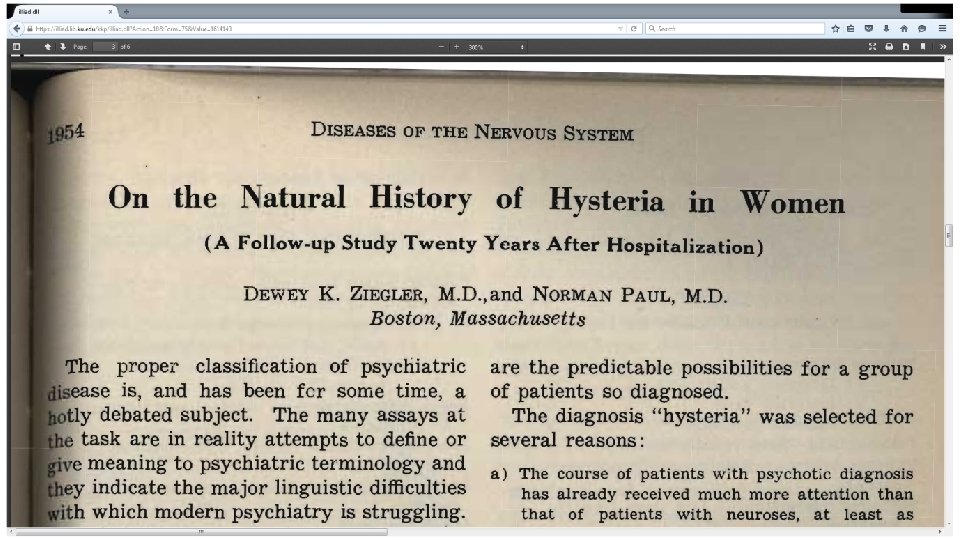
Summary • FND will be here to stay and it should not be a dx of exclusion • Neurologist plays an important role in making the Dx • Pt should not be Dxed with FND solely because of psychiatric hx. • f. MRI provides a tool to understand this condition better • Understanding neurobiology of FND could open the window for us to understand management structural neurological condition such as RMCA stroke • Neurological symptoms do not change with time; our understanding changes • Dewey Ziegler 1920 -2012

Reference • www. neurosymptoms. org
- Slides: 55