
Functional MR When to Intervene An Interventional Cardiologists
- Slides: 27
Functional MR: When to Intervene? An Interventional Cardiologist’s Perspective. Marvin H. Eng MD FACC FSCAI Structural Heart Disease Fellowship and Research Director Henry Ford Hospital Detroit, MI
DISCLOSURES § Proctor for Edwards Lifesciences
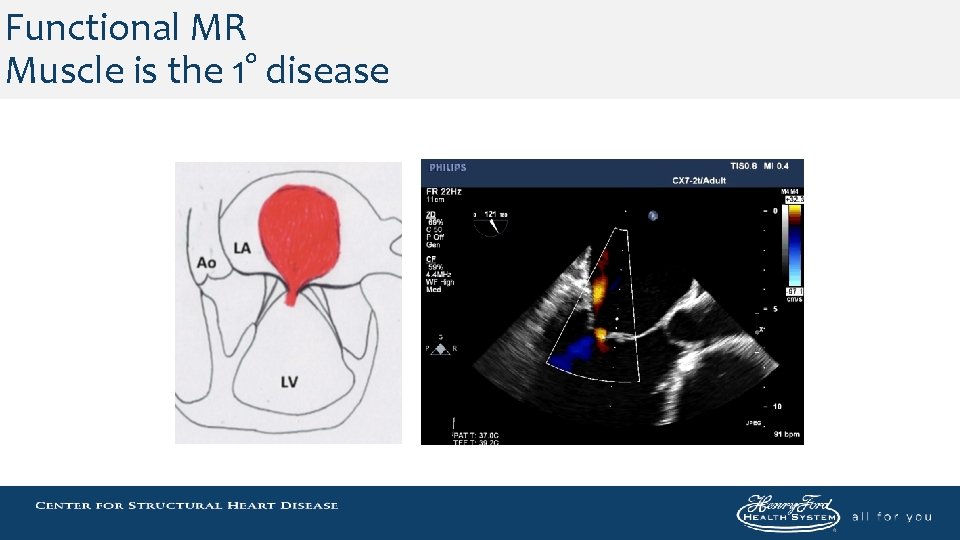
Functional MR Muscle is the 1° disease
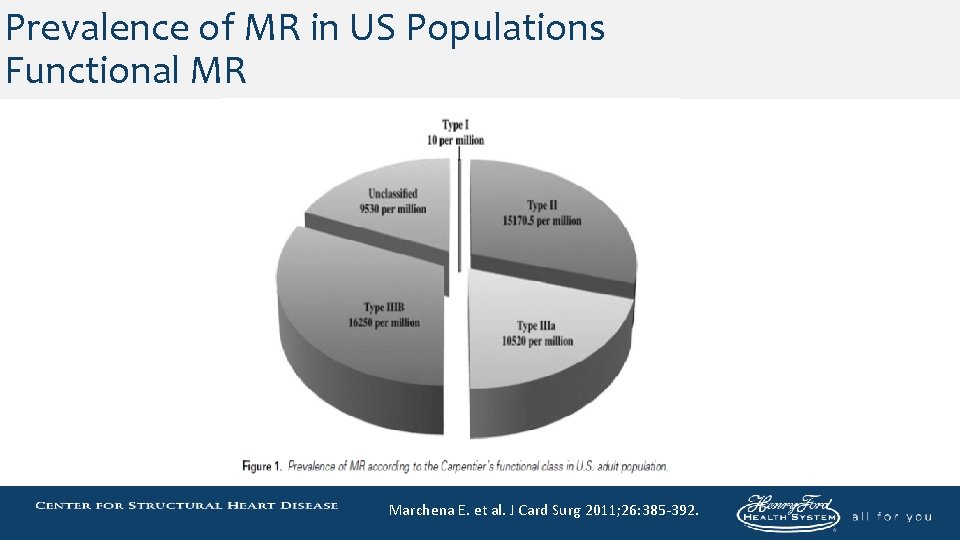
Prevalence of MR in US Populations Functional MR Marchena E. et al. J Card Surg 2011; 26: 385 -392.
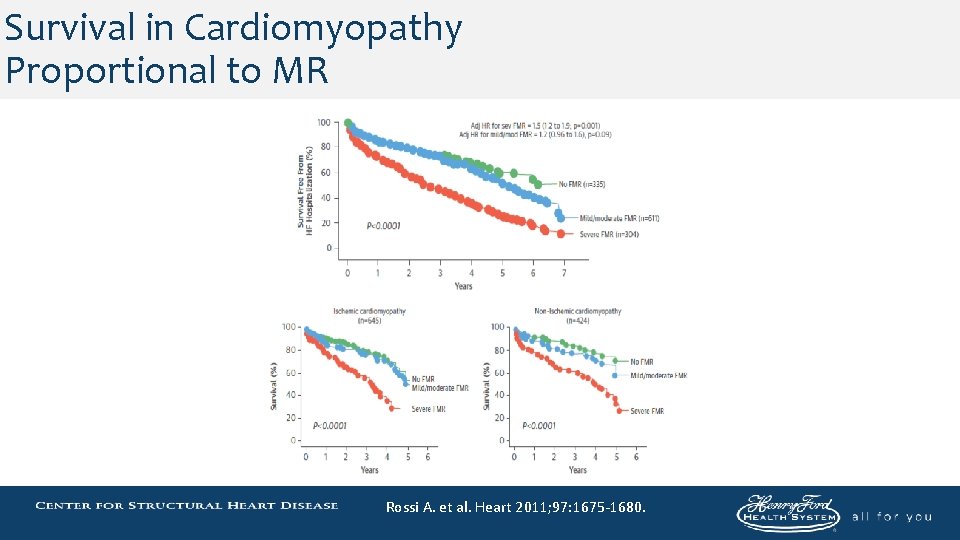
Survival in Cardiomyopathy Proportional to MR Rossi A. et al. Heart 2011; 97: 1675 -1680.
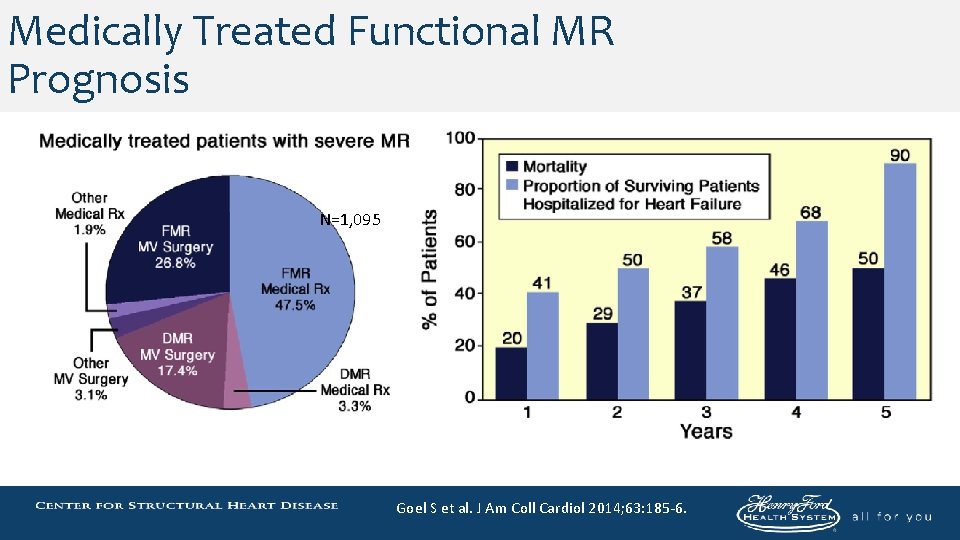
Medically Treated Functional MR Prognosis N=1, 095 Goel S et al. J Am Coll Cardiol 2014; 63: 185 -6.
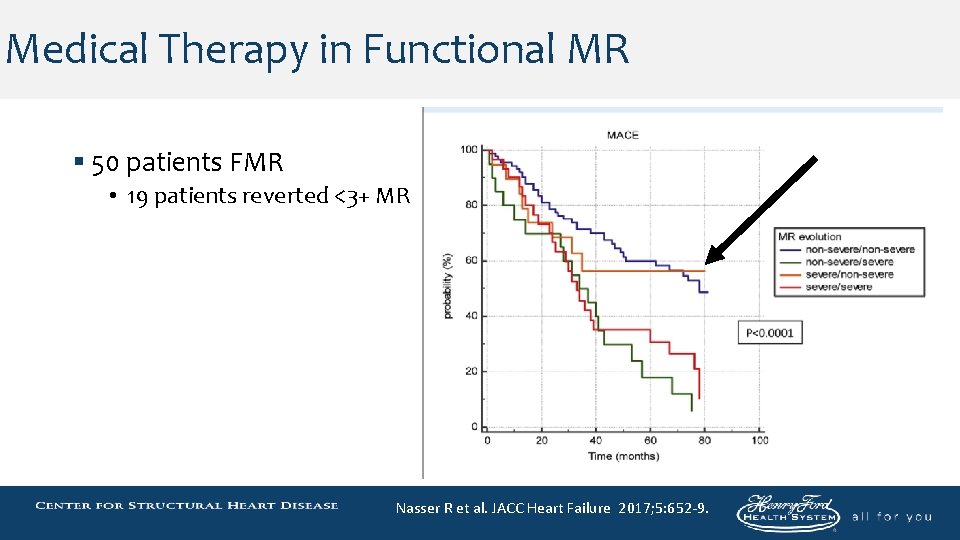
Medical Therapy in Functional MR § 50 patients FMR • 19 patients reverted <3+ MR Nasser R et al. JACC Heart Failure 2017; 5: 652 -9.
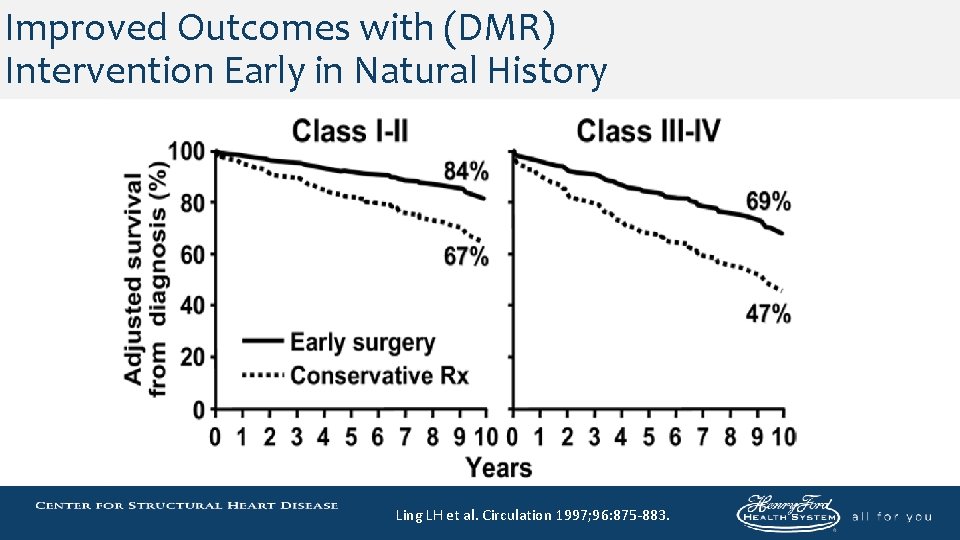
Improved Outcomes with (DMR) Intervention Early in Natural History Ling LH et al. Circulation 1997; 96: 875 -883.
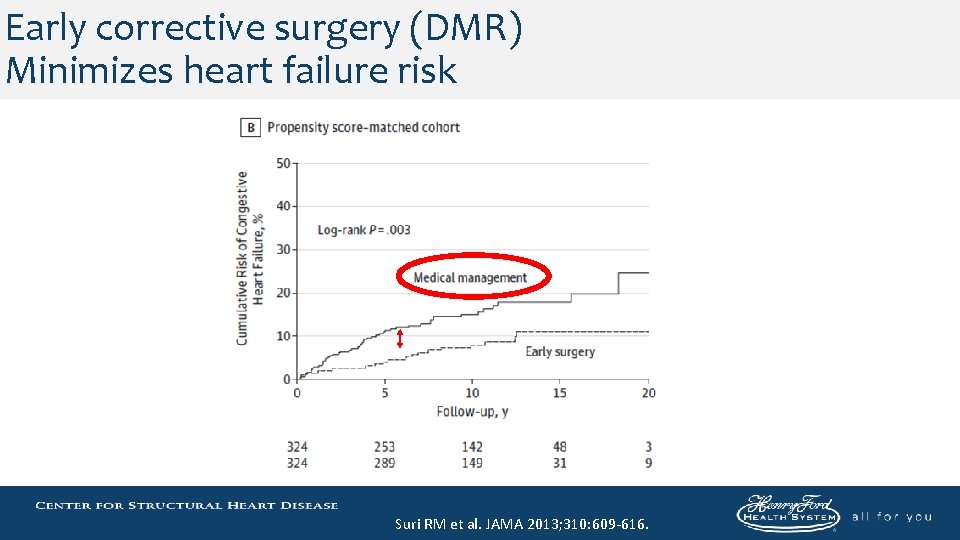
Early corrective surgery (DMR) Minimizes heart failure risk Suri RM et al. JAMA 2013; 310: 609 -616.
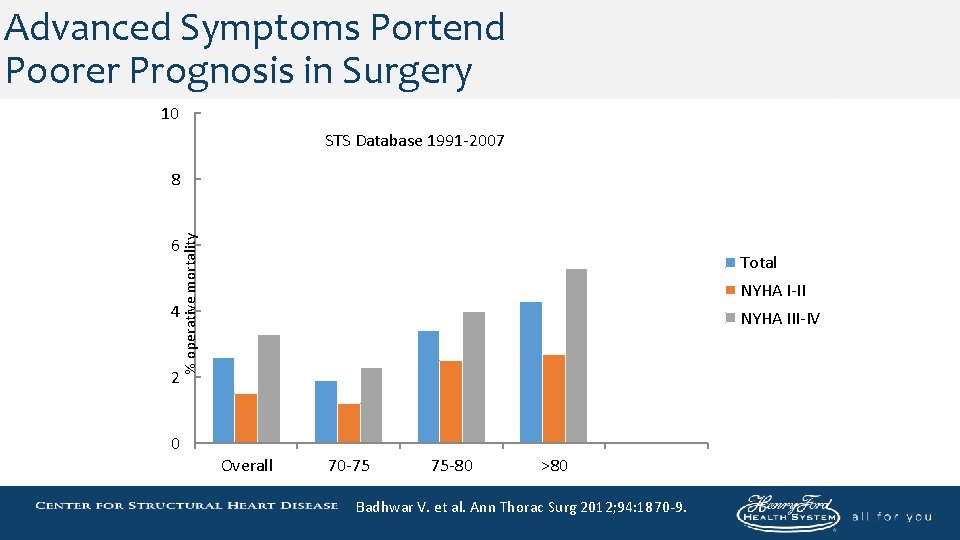
Advanced Symptoms Portend Poorer Prognosis in Surgery 10 STS Database 1991 -2007 % operative mortality 8 6 Total NYHA I-II 4 NYHA III-IV 2 0 Overall 70 -75 75 -80 >80 Badhwar V. et al. Ann Thorac Surg 2012; 94: 1870 -9.
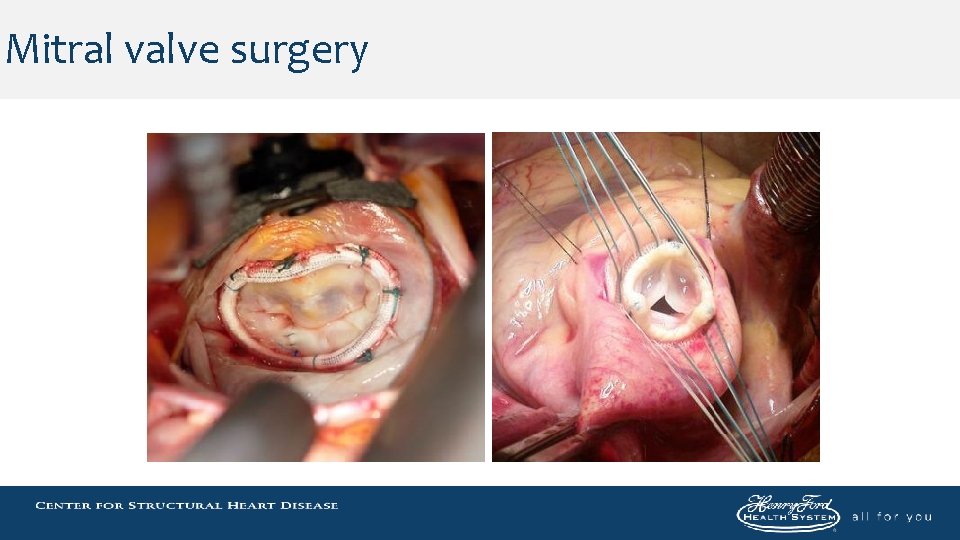
Mitral valve surgery
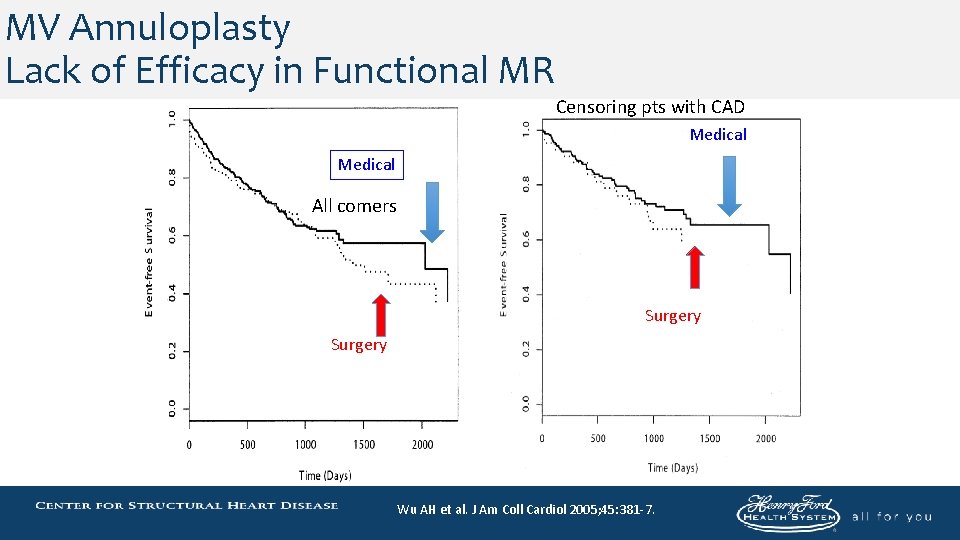
MV Annuloplasty Lack of Efficacy in Functional MR Censoring pts with CAD Medical All comers Surgery Wu AH et al. J Am Coll Cardiol 2005; 45: 381 -7.
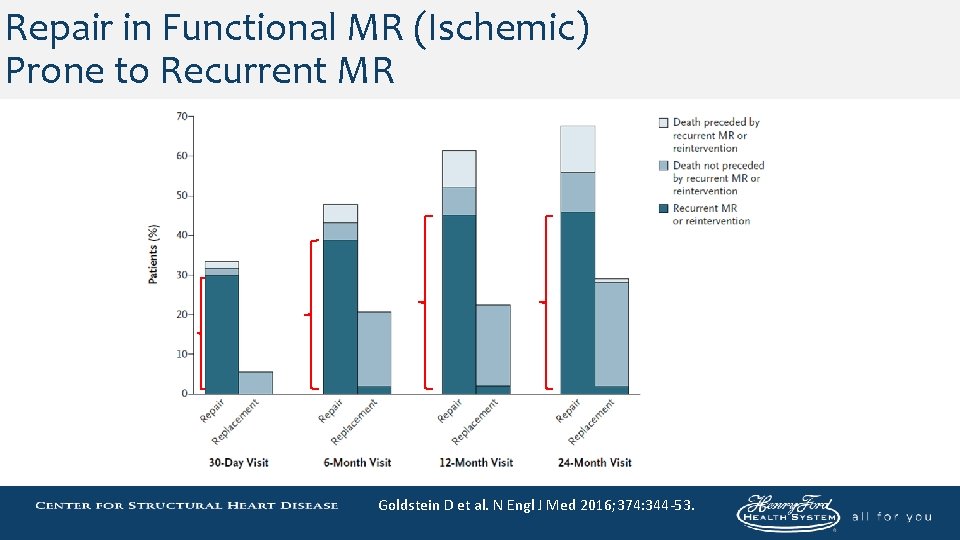
Repair in Functional MR (Ischemic) Prone to Recurrent MR Goldstein D et al. N Engl J Med 2016; 374: 344 -53.
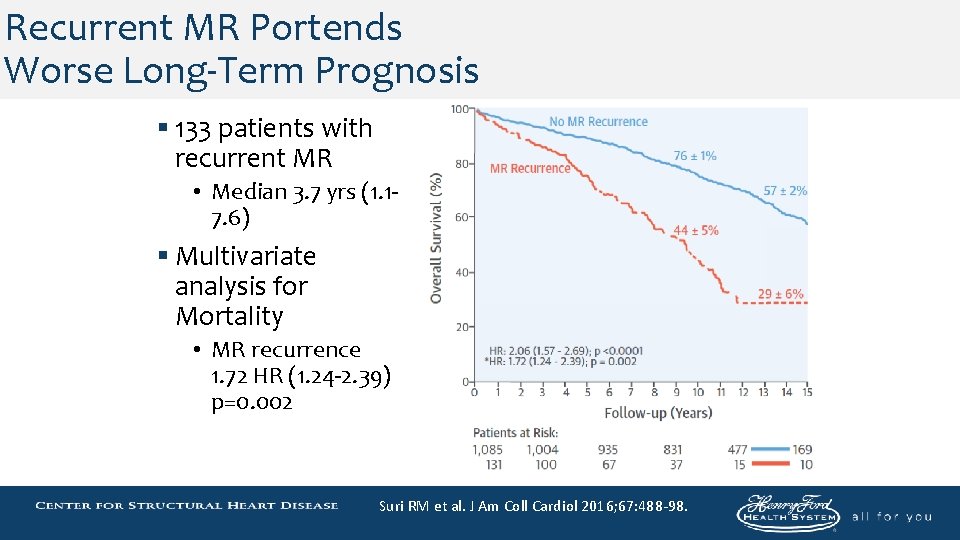
Recurrent MR Portends Worse Long-Term Prognosis § 133 patients with recurrent MR • Median 3. 7 yrs (1. 17. 6) § Multivariate analysis for Mortality • MR recurrence 1. 72 HR (1. 24 -2. 39) p=0. 002 Suri RM et al. J Am Coll Cardiol 2016; 67: 488 -98.
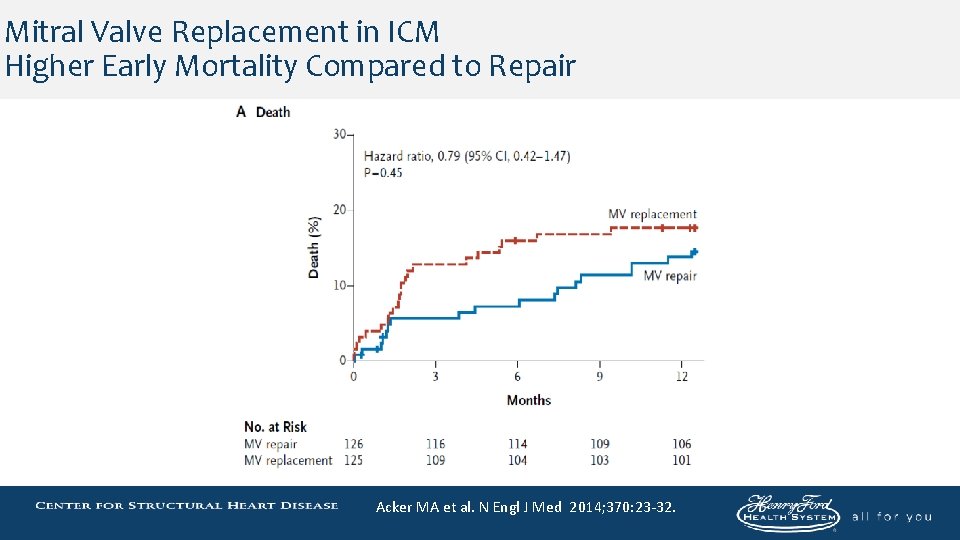
Mitral Valve Replacement in ICM Higher Early Mortality Compared to Repair Acker MA et al. N Engl J Med 2014; 370: 23 -32.
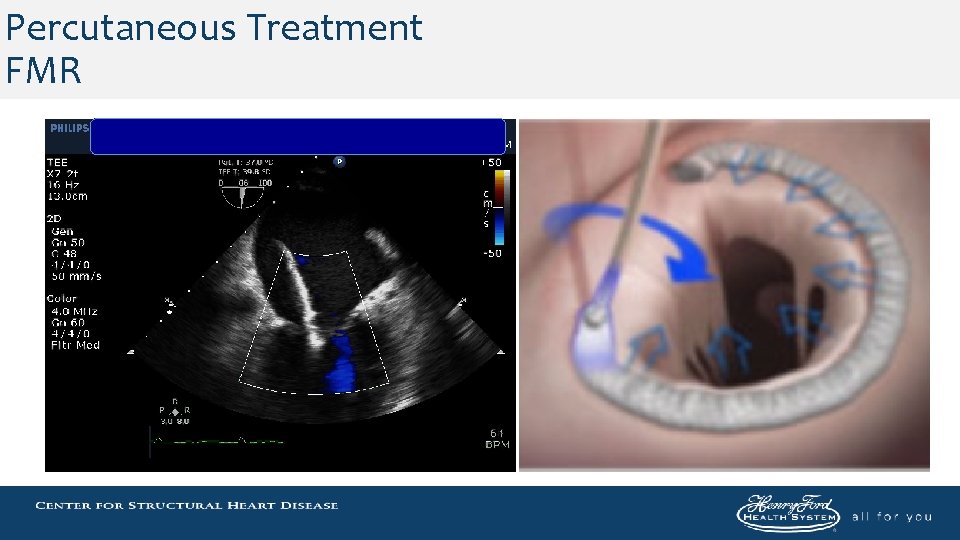
Percutaneous Treatment FMR
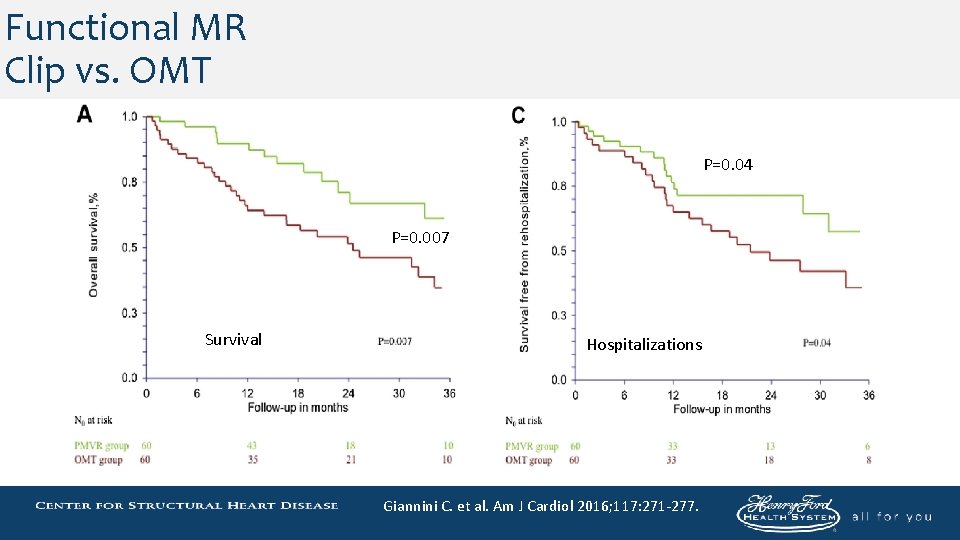
Functional MR Clip vs. OMT P=0. 04 P=0. 007 Survival Hospitalizations Giannini C. et al. Am J Cardiol 2016; 117: 271 -277.
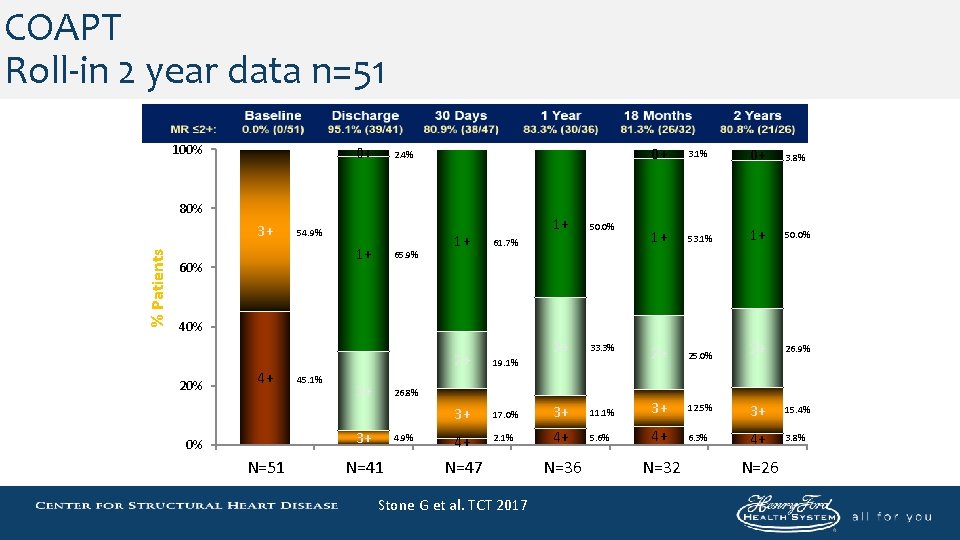
COAPT Roll-in 2 year data n=51 100% 0+ 2. 4% 80% % Patients 3+ 54. 9% 1+ 60% 65. 9% 1+ 1+ 50. 0% 2+ 33. 3% 61. 7% 0+ 3. 1% 0+ 3. 8% 1+ 53. 1% 1+ 50. 0% 2+ 25. 0% 2+ 26. 9% 40% 20% 4+ 45. 1% 2+ N=51 19. 1% 3+ 17. 0% 3+ 11. 1% 3+ 12. 5% 3+ 15. 4% 4+ 2. 1% 4+ 5. 6% 4+ 6. 3% 4+ 3. 8% 26. 8% 3+ 0% 2+ 4. 9% N=41 N=47 Stone G et al. TCT 2017 N=36 N=32 N=26
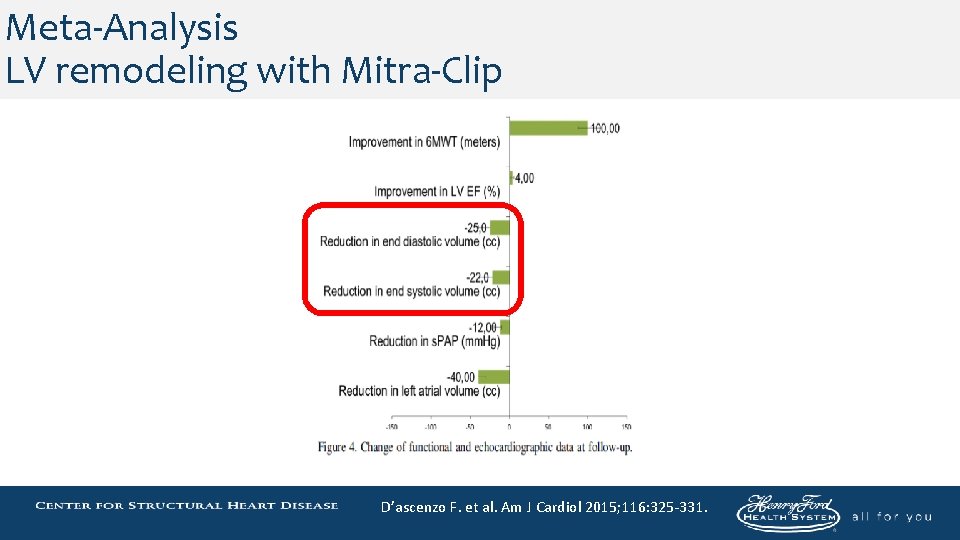
Meta-Analysis LV remodeling with Mitra-Clip D’ascenzo F. et al. Am J Cardiol 2015; 116: 325 -331.
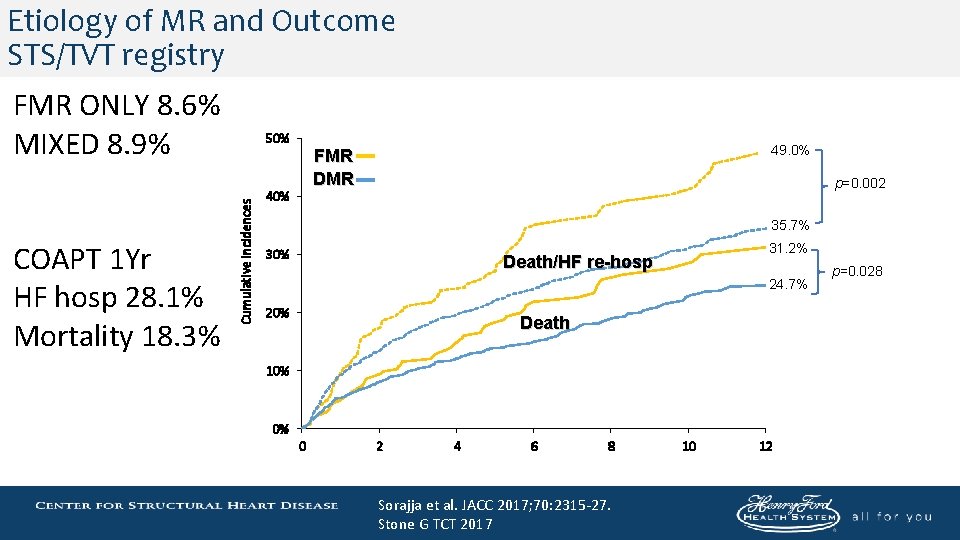
Etiology of MR and Outcome STS/TVT registry FMR ONLY 8. 6% MIXED 8. 9% Cumulative incidences COAPT 1 Yr HF hosp 28. 1% Mortality 18. 3% 50% 49. 0% FMR DMR 40% p=0. 002 35. 7% 30% 31. 2% Death/HF re-hosp 24. 7% 20% Death 10% 0% 0 2 4 6 8 Sorajja et al. JACC 2017; 70: 2315 -27. Stone G TCT 2017 10 12 p=0. 028
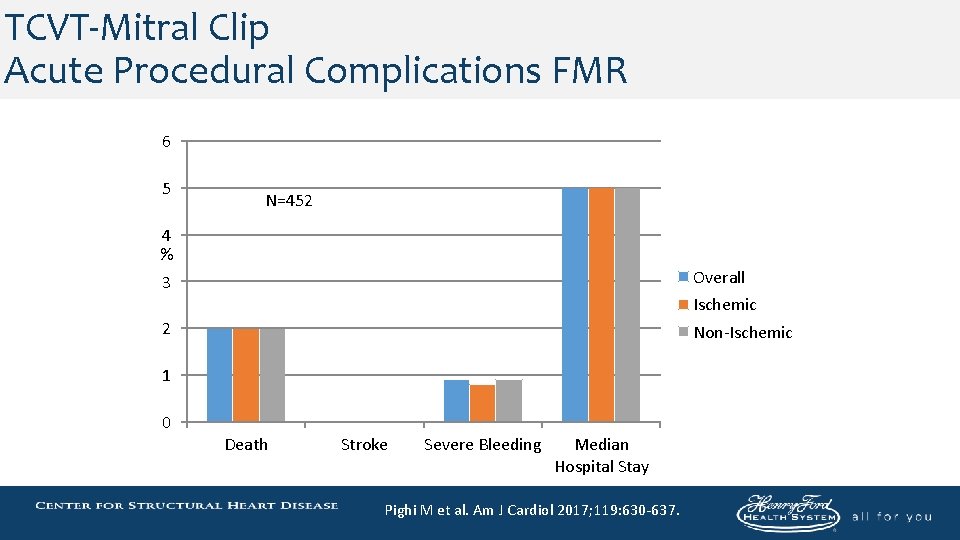
TCVT-Mitral Clip Acute Procedural Complications FMR 6 5 N=452 4 % Overall 3 Ischemic 2 Non-Ischemic 1 0 Death Stroke Severe Bleeding Median Hospital Stay Pighi M et al. Am J Cardiol 2017; 119: 630 -637.
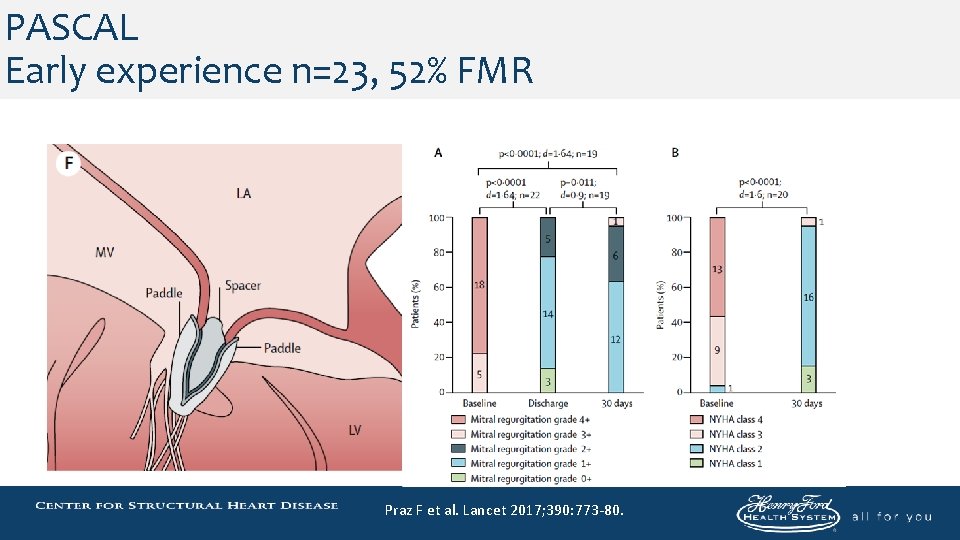
PASCAL Early experience n=23, 52% FMR Praz F et al. Lancet 2017; 390: 773 -80.
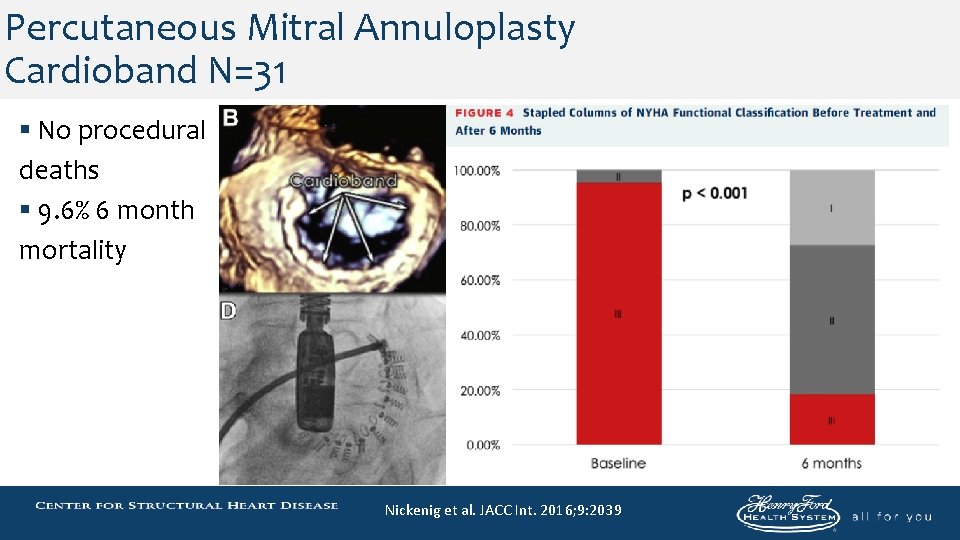
Percutaneous Mitral Annuloplasty Cardioband N=31 § No procedural deaths § 9. 6% 6 month mortality Nickenig et al. JACC Int. 2016; 9: 2039
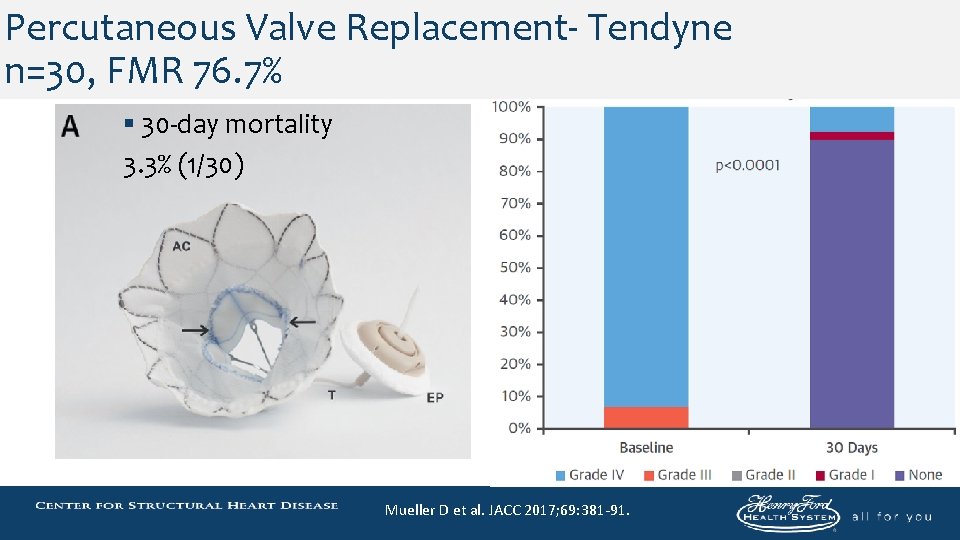
Percutaneous Valve Replacement- Tendyne n=30, FMR 76. 7% § 30 -day mortality 3. 3% (1/30) Mueller D et al. JACC 2017; 69: 381 -91.
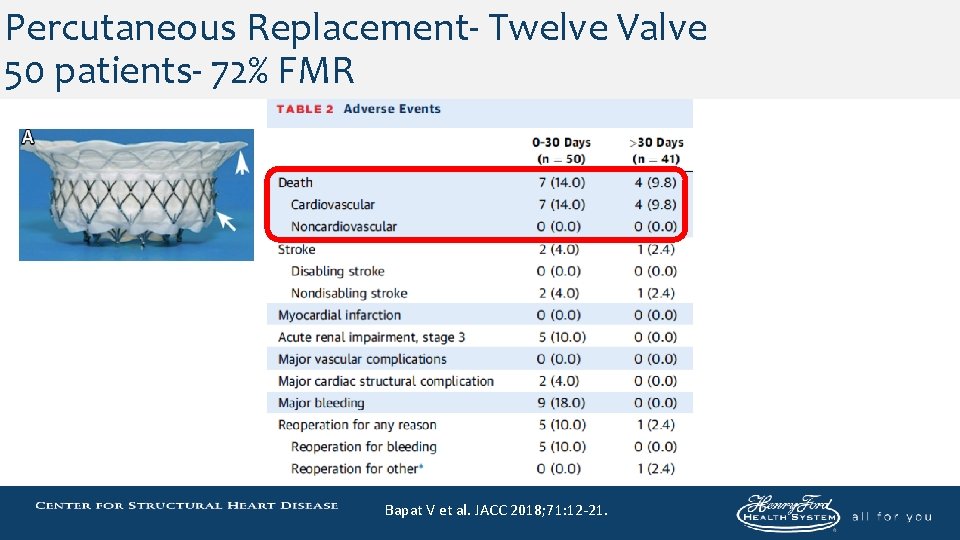
Percutaneous Replacement- Twelve Valve 50 patients- 72% FMR Bapat V et al. JACC 2018; 71: 12 -21.
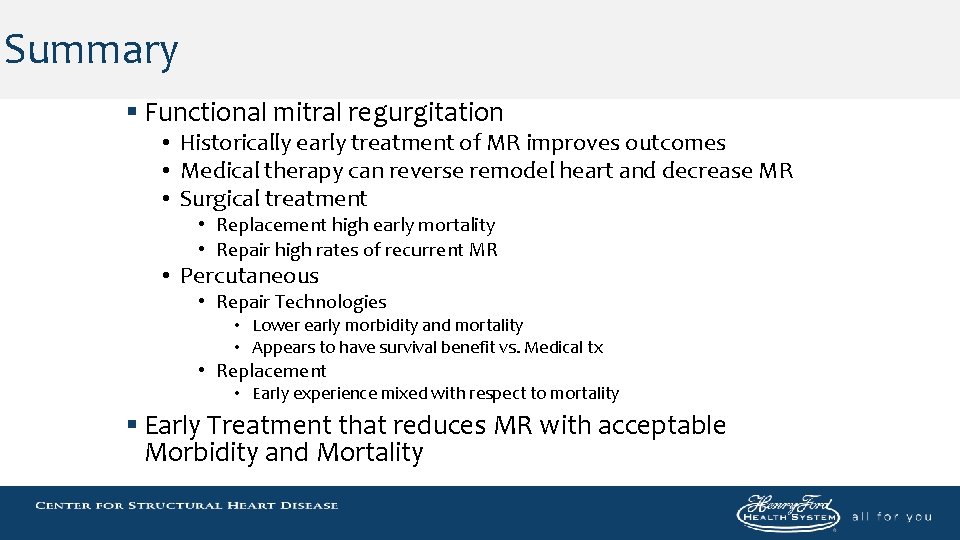
Summary § Functional mitral regurgitation • Historically early treatment of MR improves outcomes • Medical therapy can reverse remodel heart and decrease MR • Surgical treatment • Replacement high early mortality • Repair high rates of recurrent MR • Percutaneous • Repair Technologies • Lower early morbidity and mortality • Appears to have survival benefit vs. Medical tx • Replacement • Early experience mixed with respect to mortality § Early Treatment that reduces MR with acceptable Morbidity and Mortality
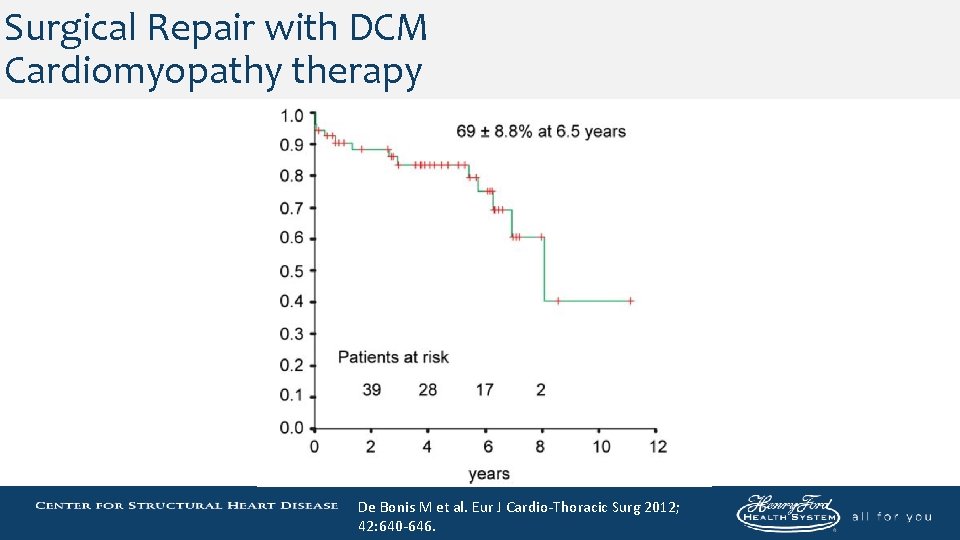
Surgical Repair with DCM Cardiomyopathy therapy De Bonis M et al. Eur J Cardio-Thoracic Surg 2012; 42: 640 -646.