
Functional Glycobiology Course Outline Structure of Glycoconjugates sugar

Functional Glycobiology Course Outline • Structure of Glycoconjugates • sugar residues, linkage, sequence, conformation • types of glycoconjugate, protein and lipid • Biosynthesis • N- and O-linked Glycosylation, GP� Is, PGs, GSLs • molecular biology of enzymes • Determination of Structure • sugar sequencing, HPLC, MS, NMR • endo- and exo-glycosidases • Function of Glycoconjugates • glycoproteins and glycolipids in biology • metabolic diseases
Functional Glycobiology Revision Topics Function of Glycoconjugates • Structure of Glycoconjugates • Determination of Structure • Biosynthesis Carbohydrate/protein interactions • Intracellular functions - protein folding pathways • Extracellular functions - leukocyte surveillance
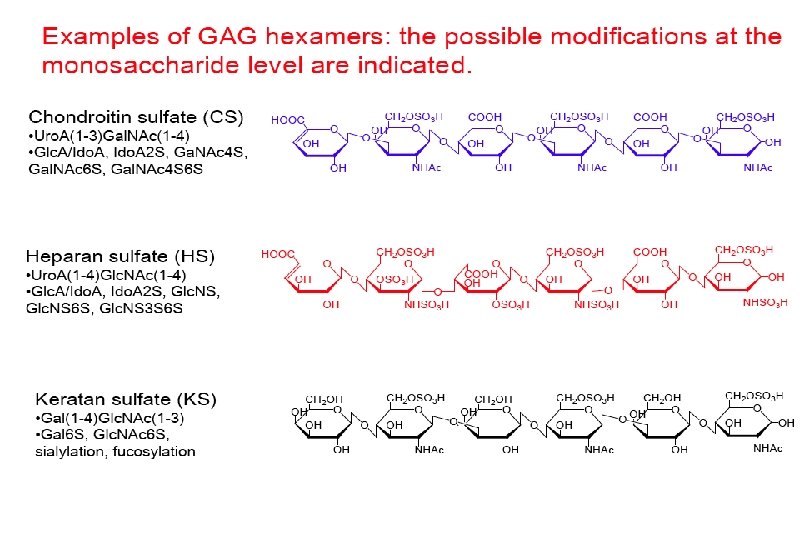
Lessons from Gene Manipulation or Mutations N-Linked Glycosylation • GPT KO in mouse • Glc. NAc. T KO in mouse • CDG GSLs • Glc. Cer, Neu. Ac & Gal. NAc transferase KO in mouse • lysosomal storage disorders PGs • Inhibition of CS synthesis using RNAi • Hyaluronan synthase disruption GPIs • Paroxysmal nocturnal haemoglobinurea
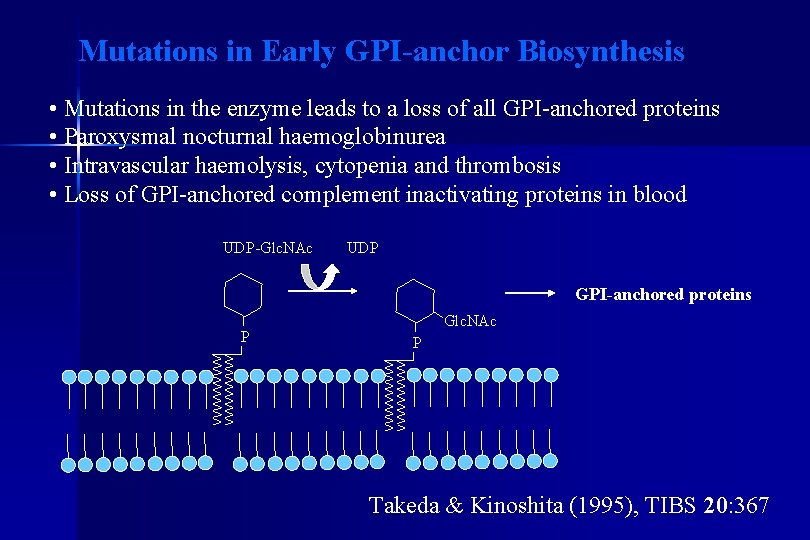
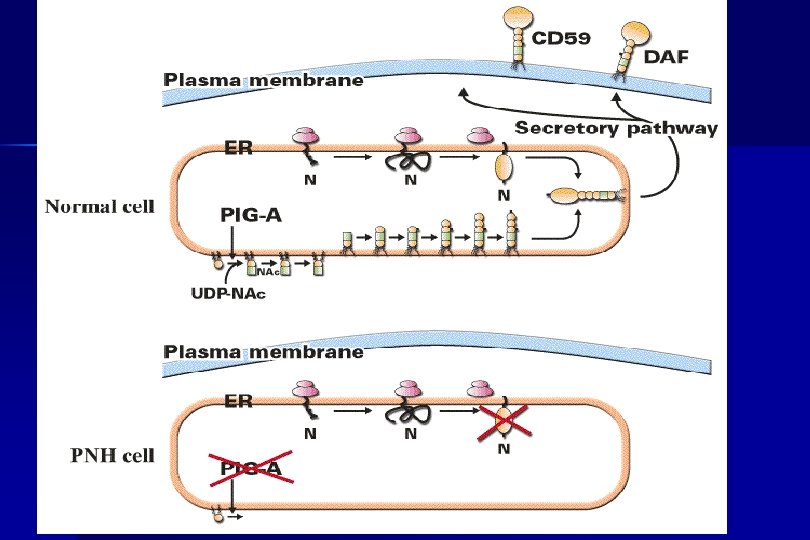
Mutations in Early GPI-anchor Biosynthesis • Mutations in the enzyme leads to a loss of all GPI-anchored proteins • Paroxysmal nocturnal haemoglobinurea • Intravascular haemolysis, cytopenia and thrombosis • Loss of GPI-anchored complement inactivating proteins in blood UDP-Glc. NAc UDP GPI-anchored proteins P Glc. NAc P Takeda & Kinoshita (1995), TIBS 20: 367
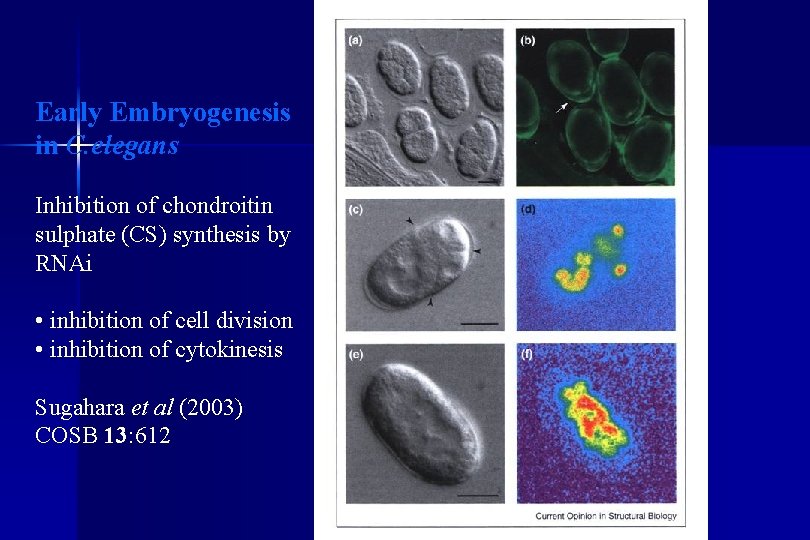
Early Embryogenesis in C. elegans Inhibition of chondroitin sulphate (CS) synthesis by RNAi • inhibition of cell division • inhibition of cytokinesis Sugahara et al (2003) COSB 13: 612
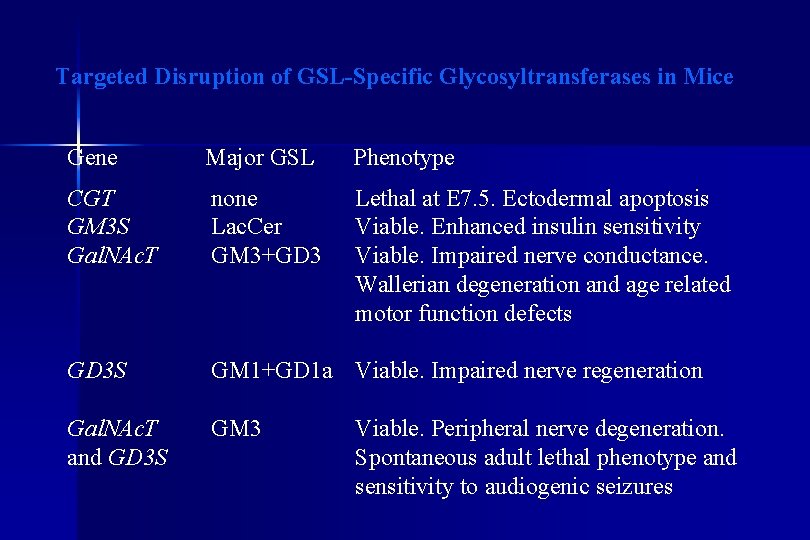
Targeted Disruption of GSL-Specific Glycosyltransferases in Mice Gene Major GSL Phenotype CGT GM 3 S Gal. NAc. T none Lac. Cer GM 3+GD 3 Lethal at E 7. 5. Ectodermal apoptosis Viable. Enhanced insulin sensitivity Viable. Impaired nerve conductance. Wallerian degeneration and age related motor function defects GD 3 S GM 1+GD 1 a Viable. Impaired nerve regeneration Gal. NAc. T and GD 3 S GM 3 Viable. Peripheral nerve degeneration. Spontaneous adult lethal phenotype and sensitivity to audiogenic seizures
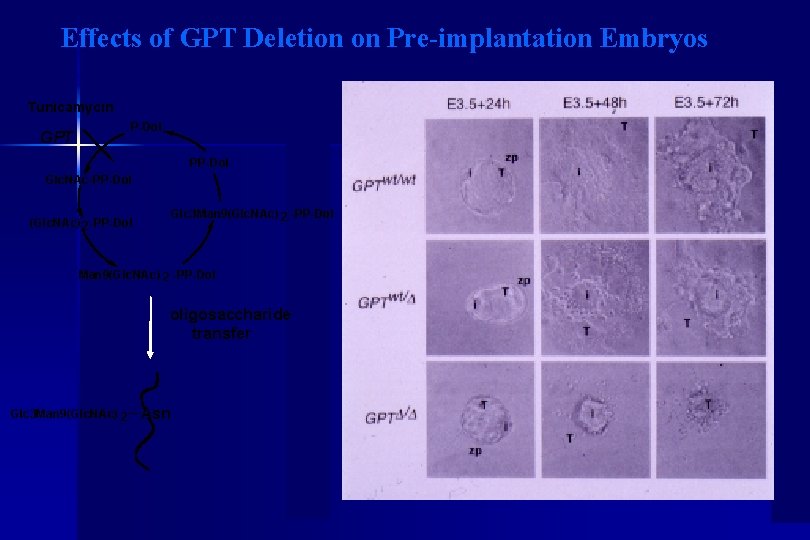
Effects of GPT Deletion on Pre-implantation Embryos Tunicamycin P-Dol GPT PP-Dol Glc. NAc-PP-Dol Glc 3 Man 9(Glc. NAc) 2 -PP-Dol oligosaccharide transfer Glc 3 Man 9(Glc. NAc) 2 Asn
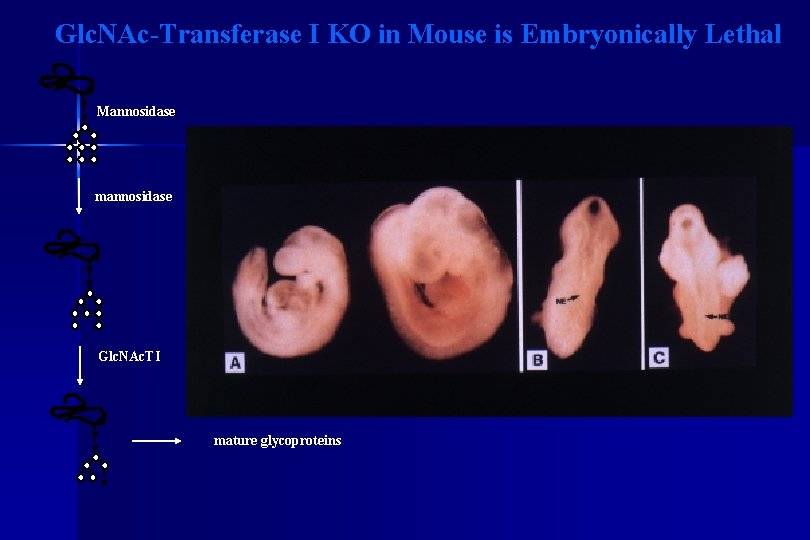
Glc. NAc-Transferase I KO in Mouse is Embryonically Lethal n Mannosidase n mannosidase n n Glc. NAc. TI n mature glycoproteins n n
Protein N-Glycosylation - why is it so critical? • Disruption of early events in lipid cycle (complete absence of N-glycans) ablates early differentiation processes. • Disruption of later events (lack of complex N-glycans) is embryonically lethal Points to early events in the ER as having important role Oligosaccharide sequences are recognised by ER resident chaperones calnexin and calreticulin
Quality Control in the Protein Folding Pathway • ER co-translational addition of N-linked oligosaccharides • Trimming with a-glucosidases • Recognition of monoglucosylated glycans by chaperones calnexin (membrane bound) careticulin (soluble) • Disulphide bond formation and folding • Glucosyltransferase ‘senses’ folded state • Re-glucosylation and chaperone binding • Elimination from the ER or maturation via Golgi
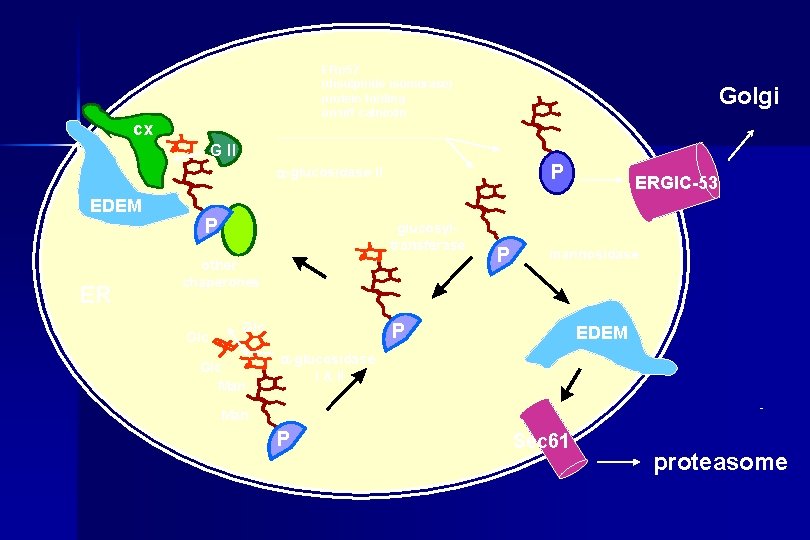
ERp 57 (disulphide isomerase) protein folding on/off calnexin cx Golgi G II P a-glucosidase II EDEM ER P glucosyltransferase other chaperones Glc Glc Man P ERGIC-53 mannosidase P EDEM a-glucosidase I & II Man P Sec 61 proteasome
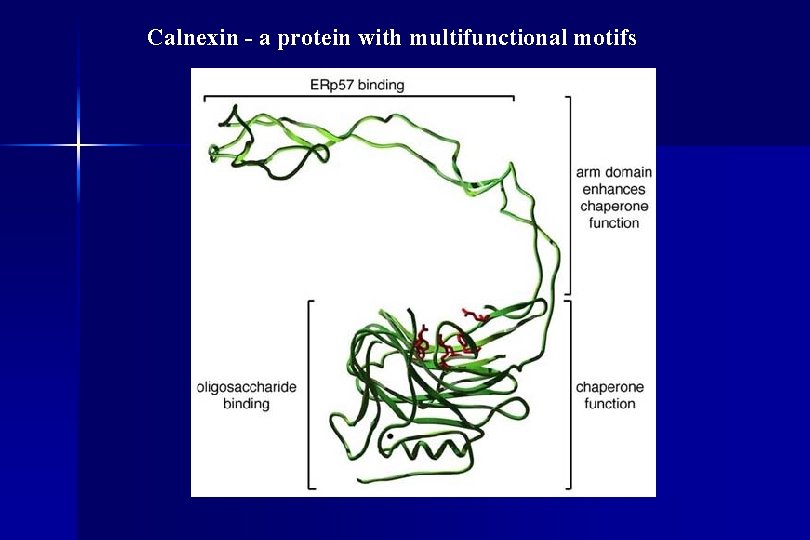
Calnexin - a protein with multifunctional motifs

The Glc 1 Man 9 Glc. NAc 2 Oligosaccharide Ligand for Calnexin a-Glucosidase II binding Calnexin binding
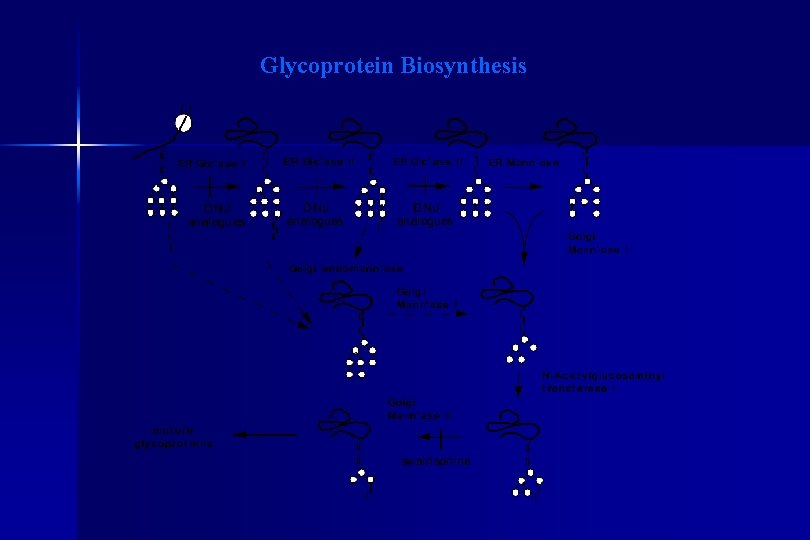
Glycoprotein Biosynthesis
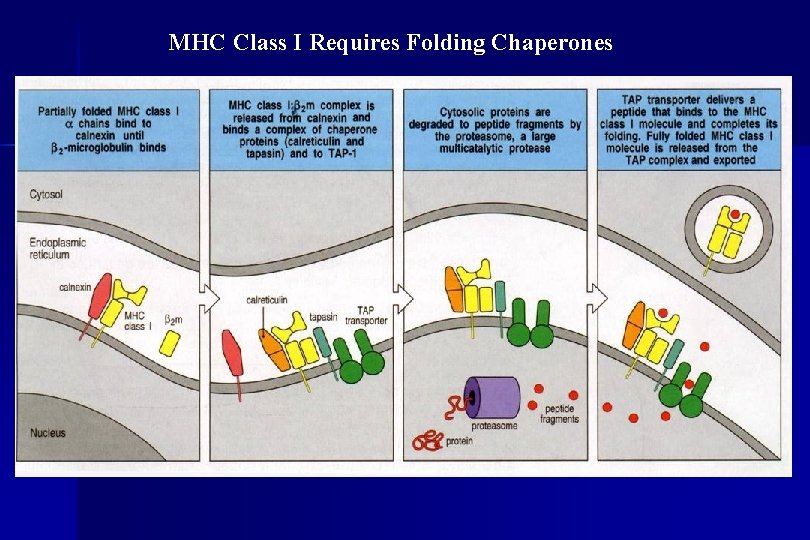
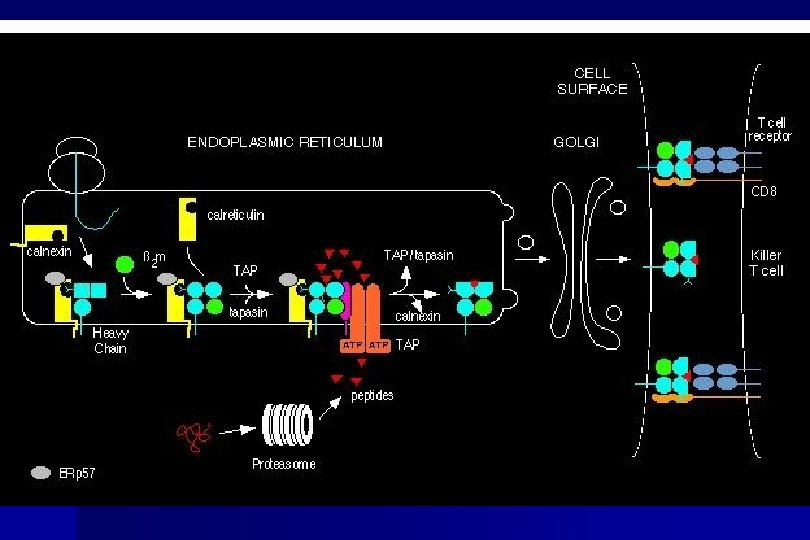
MHC Class I Requires Folding Chaperones
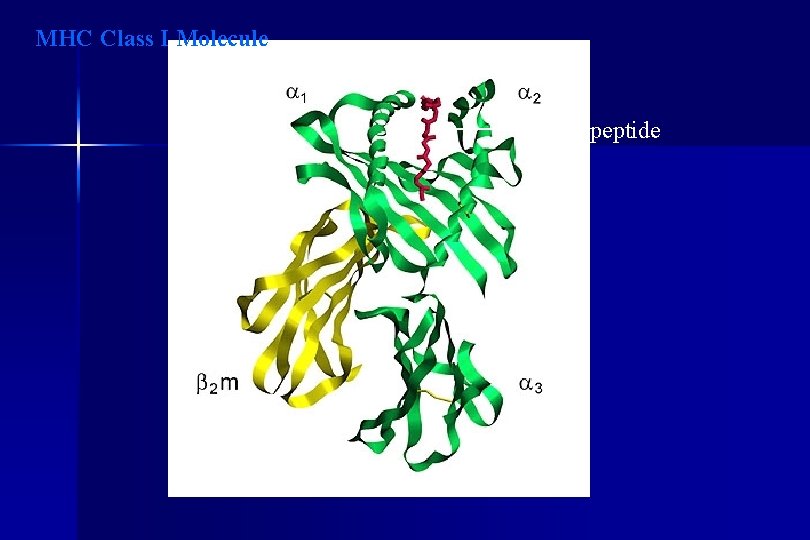
MHC Class I Molecule peptide
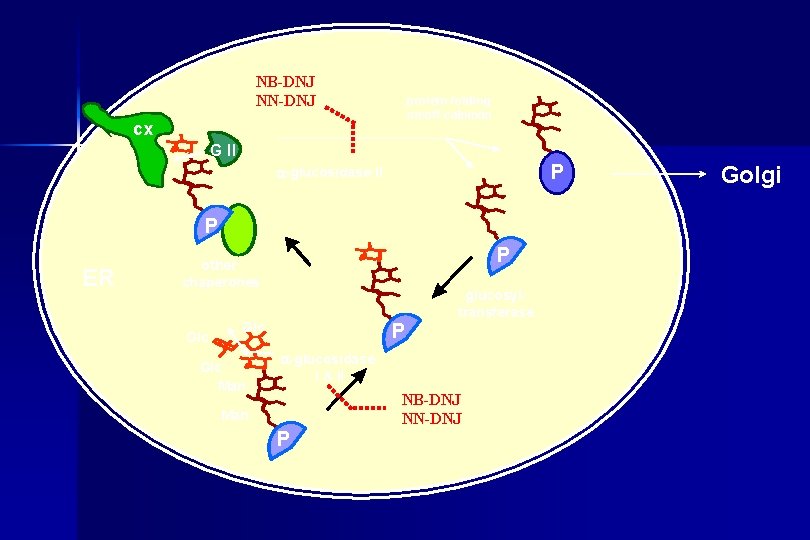
NB-DNJ NN-DNJ protein folding on/off calnexin cx G II P a-glucosidase II P ER P other chaperones Glc Glc Man P glucosyltransferase a-glucosidase I & II NB-DNJ NN-DNJ Man P Golgi
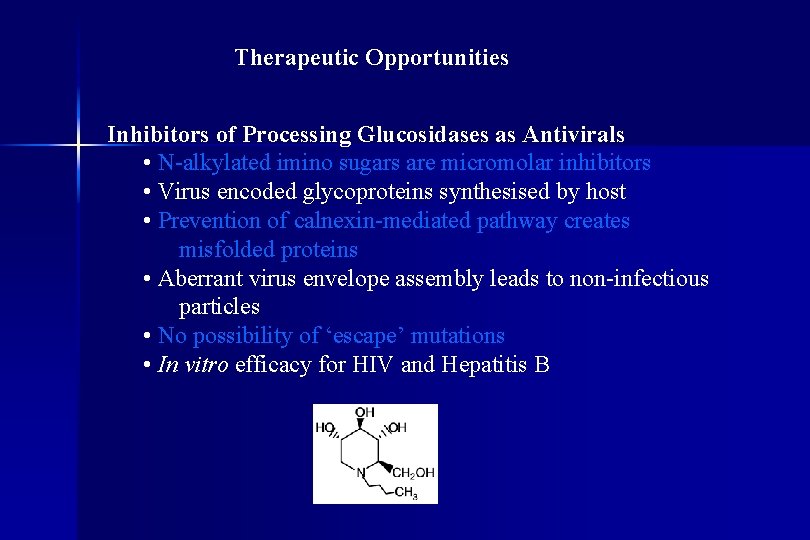
Therapeutic Opportunities Inhibitors of Processing Glucosidases as Antivirals • N-alkylated imino sugars are micromolar inhibitors • Virus encoded glycoproteins synthesised by host • Prevention of calnexin-mediated pathway creates misfolded proteins • Aberrant virus envelope assembly leads to non-infectious particles • No possibility of ‘escape’ mutations • In vitro efficacy for HIV and Hepatitis B
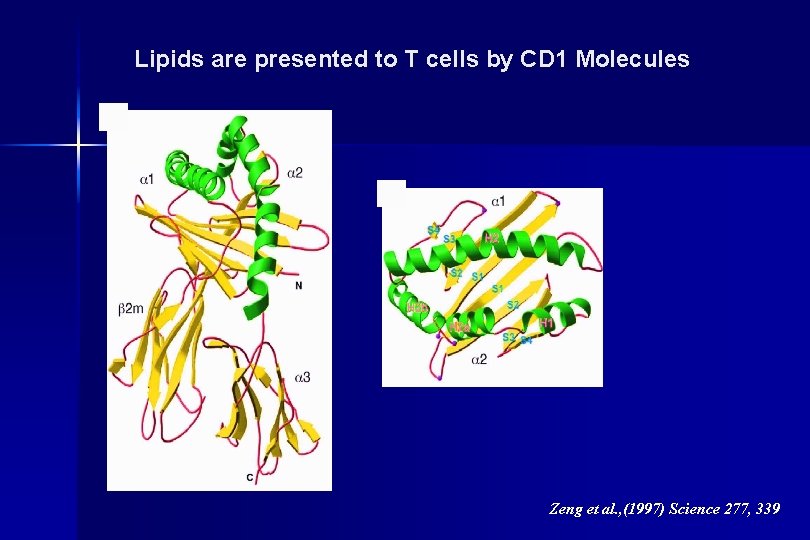
Lipids are presented to T cells by CD 1 Molecules Zeng et al. , (1997) Science 277, 339
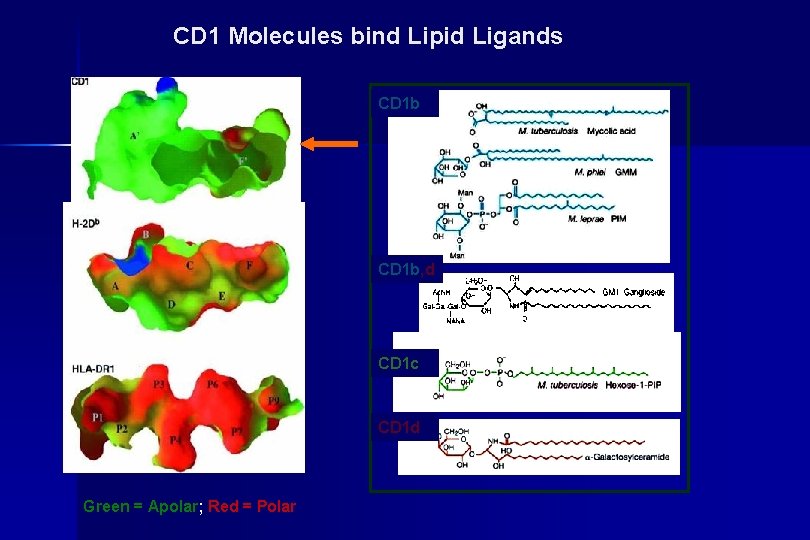
CD 1 Molecules bind Lipid Ligands CD 1 b, d CD 1 c CD 1 d Green = Apolar; Red = Polar
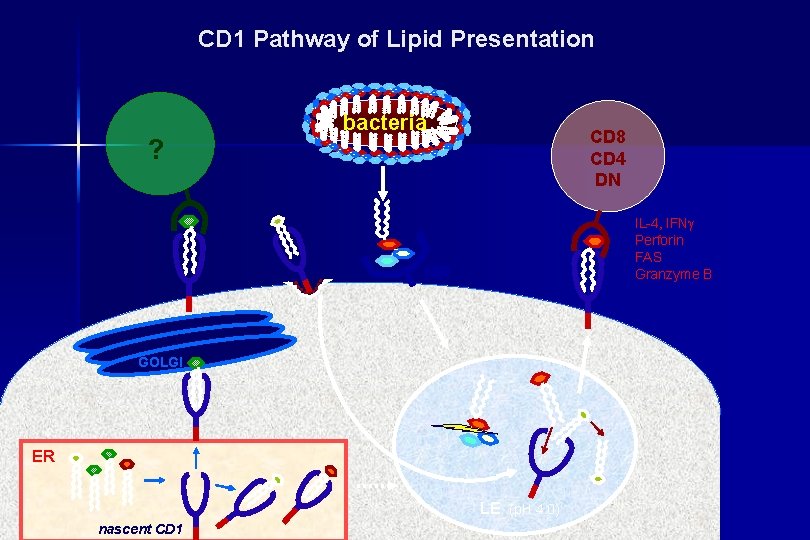
CD 1 Pathway of Lipid Presentation ? bacteria CD 8 CD 4 DN IL-4, IFNg Perforin FAS Granzyme B MR GOLGI ER LE (p. H 4. 0) nascent CD 1
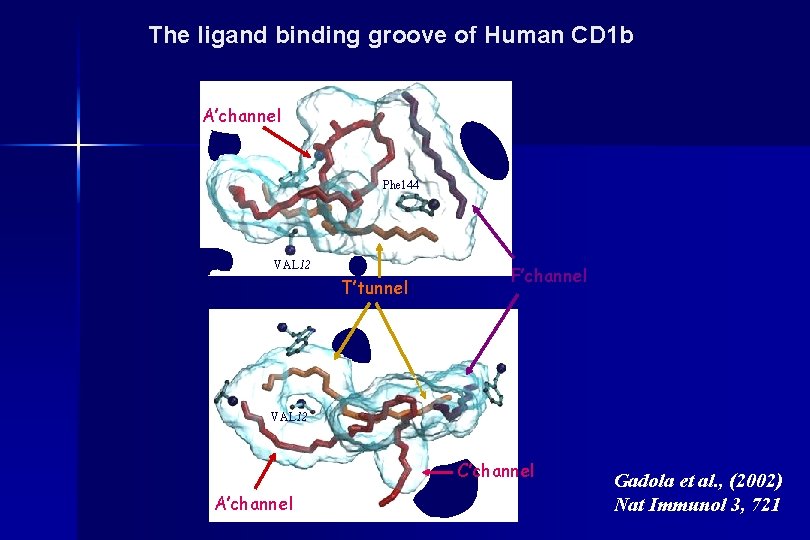
The ligand binding groove of Human CD 1 b A’channel Phe 144 VAL 12 T’tunnel F’channel VAL 12 C’channel A’channel Gadola et al. , (2002) Nat Immunol 3, 721
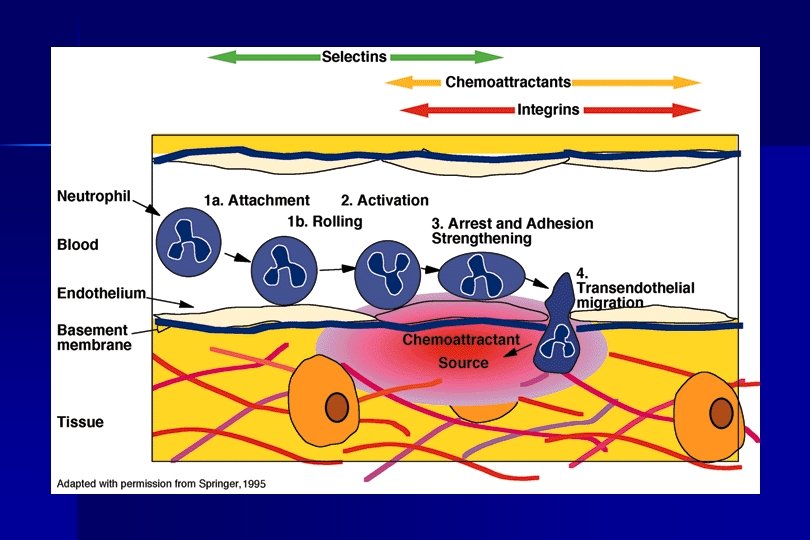
Extracellular Protein - Carbohydrate Interactions Transmigration of lymphocytes from lymph to blood HEV cells in lymph nodes Allows antigen-specific B and T cells to survey all possible sites of pathogen entry Leukocyte response to venous endothelial damage mechanical or chemical injury pathogen induced inflammation
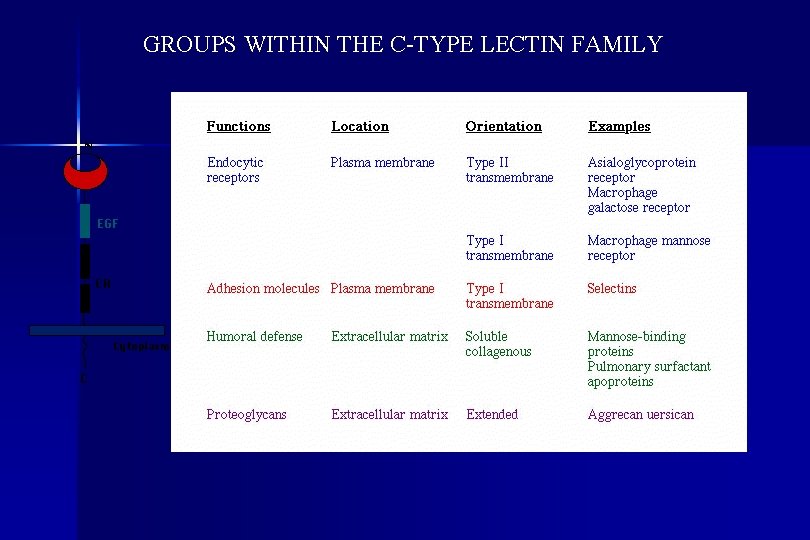
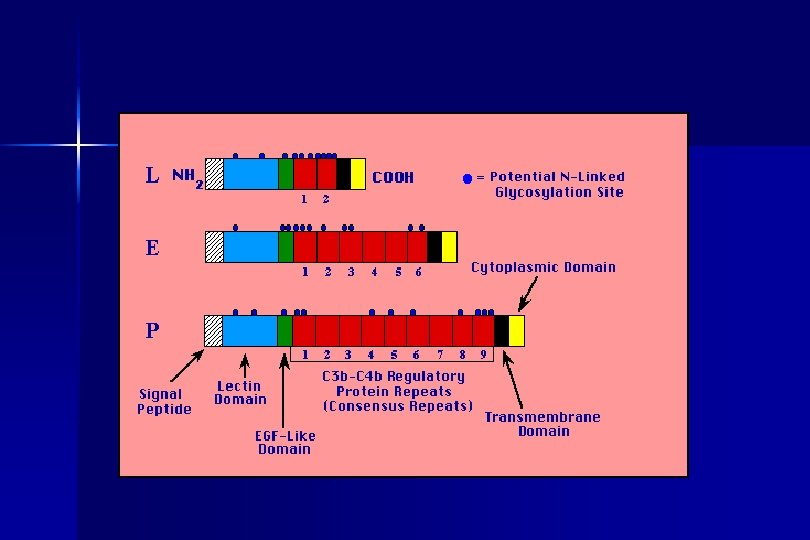
GROUPS WITHIN THE C-TYPE LECTIN FAMILY
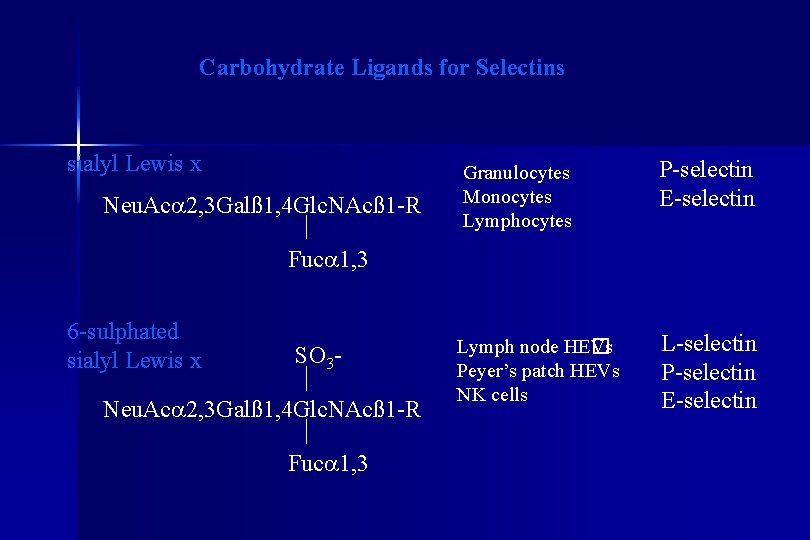
Carbohydrate Ligands for Selectins sialyl Lewis x Neu. Aca 2, 3 Galß 1, 4 Glc. NAcß 1 -R Granulocytes Monocytes Lymphocytes P-selectin E-selectin Lymph node HE� Vs Peyer’s patch HEVs NK cells L-selectin P-selectin E-selectin Fuca 1, 3 6 -sulphated sialyl Lewis x SO 3 - Neu. Aca 2, 3 Galß 1, 4 Glc. NAcß 1 -R Fuca 1, 3
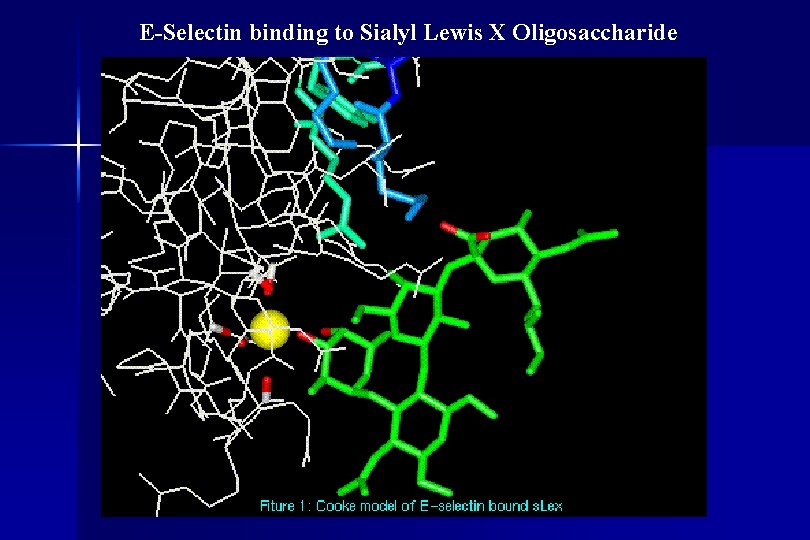
E-Selectin binding to Sialyl Lewis X Oligosaccharide
Cell Attachment and Rolling is Carbohydrate mediated • Requires expression of correct oligosaccharide • Terminal carbohydrate sequence found on protein and lipid • Weak monomeric affinity but fast Kon- and Koff-rates • Multimeric interactions increase affinity • Bonds have a low fractional spring slippage, which means that as the bond is subjected to strain it has a low tendency to break.
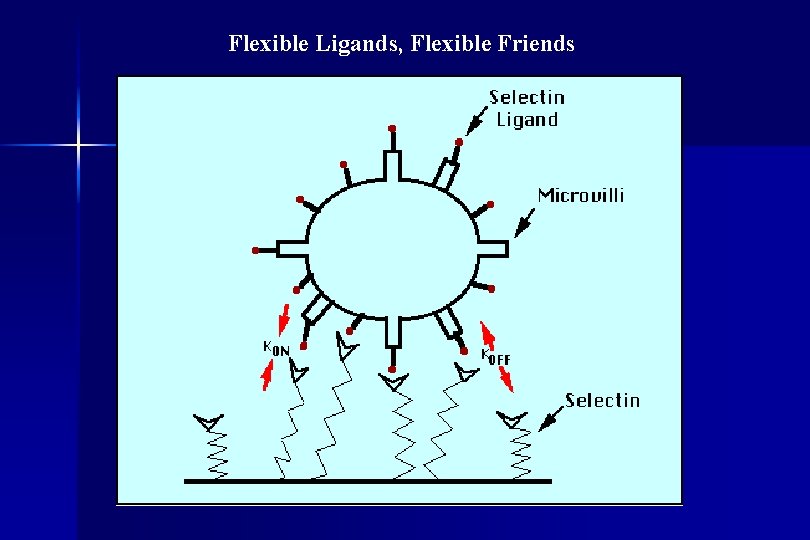
Flexible Ligands, Flexible Friends
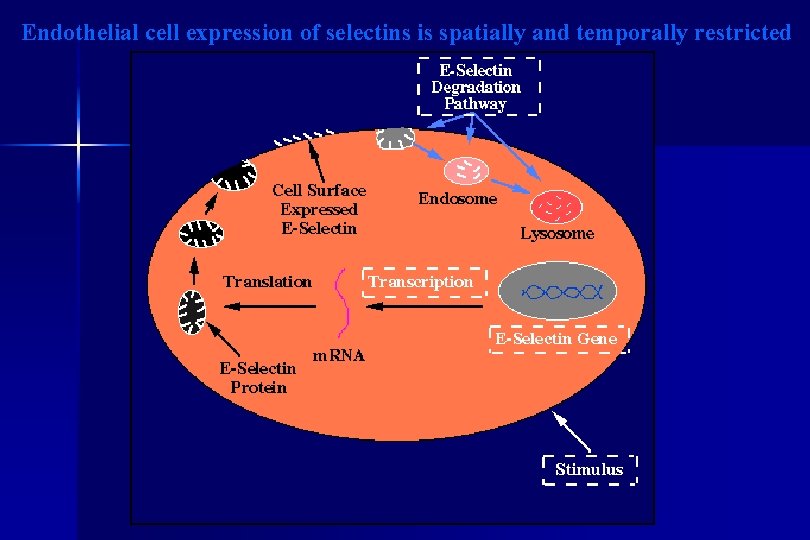
Endothelial cell expression of selectins is spatially and temporally restricted
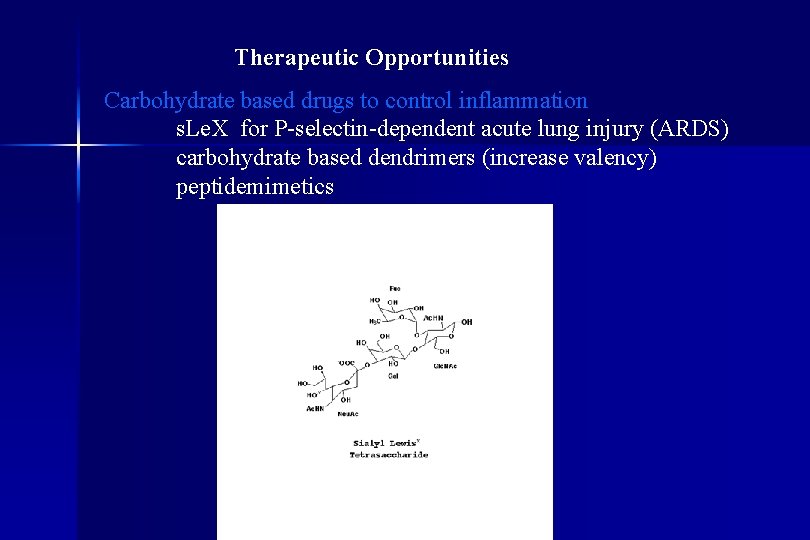
Therapeutic Opportunities Carbohydrate based drugs to control inflammation s. Le. X for P-selectin-dependent acute lung injury (ARDS) carbohydrate based dendrimers (increase valency) peptidemimetics
Glycosylation and Disease N-linked Glycosylation Biosynthesis Congenital Disorders of Glycosylation - 8 diseases rare (<500 cases) deficiencies in enzymes or proteins in ER/Golgi pathway multi-organ involvement, psychomotor retardation few therapies Glycolipid biosynthesis GM 3 synthase deficiency (Simpson et al. , 2004, Nat Gen 36, 1225) Cancer and Metastasis Changes in N-linked glycosylation and GSL expression secondary effects? glycosylation inhibitors reduce metastasis in some forms of disease Lysosomal Storage Disorders deficiencies in catabolic enzymes storage of GSL and glycoprotein relatively rare (1: 18000 live births ww) disease can be severe (infantile death) few therapies
Further Reading/Sources Control of protein folding Schrag et al. , (2003) TIBS 28, 49 Oda et al. , (2003) Science 299, 1394 Molinari et al. , (2003) Science 299, 1397 Selectins http: //hsc. virginia. edu/medicine/basic-sci/biomed/ley/index. html http: //lewis. sfsu. edu/glyco/Lsel. html CDG Grunewald et al. , (2002) Pediatric Res 52, 618 Lysosomal Storage Diseases Butters et al. , (2000) Chem Rev 100, 4683

Web-based resources Schwartz, Nancy B (December 1998 ) Proteoglycan. In: Nature Encyclopedia of Life Sciences. London: Nature Publishing Group. http: //www. els. net/ Sen–itiroh Hakomori and Ineo Ishizuka (September 2001 ) Glycolipids: Animal. In: Nature Encyclopedia of Life Sciences. London: Nature Publishing Group. http: //www. els. net/ Verbert, André ; Cacan, René and (July 2000 ) Cell Surface Glycoconjugates. In: Nature Encyclopedia of Life Sciences. London: Nature Publishing Group. http: //www. els. net/ Butters, Terry D (March 2001 ) Glycoproteins. In: Nature Encyclopedia of Life Sciences. London: Nature Publishing Group. http: //www. els. net/
- Slides: 38