
Functional Foods According to wikipedia com a functional


- Slides: 9
Functional Foods According to wikipedia. com, a functional food is any healthy food claimed to have a healthpromoting or disease-preventing property beyond the basic function of supplying nutrients.
Functional Foods may help to prevent some diseases, enhance health or reduce the risks of developing certain diseases.
What makes a food “functional” is it’s potential ability to positively affect one’s health.
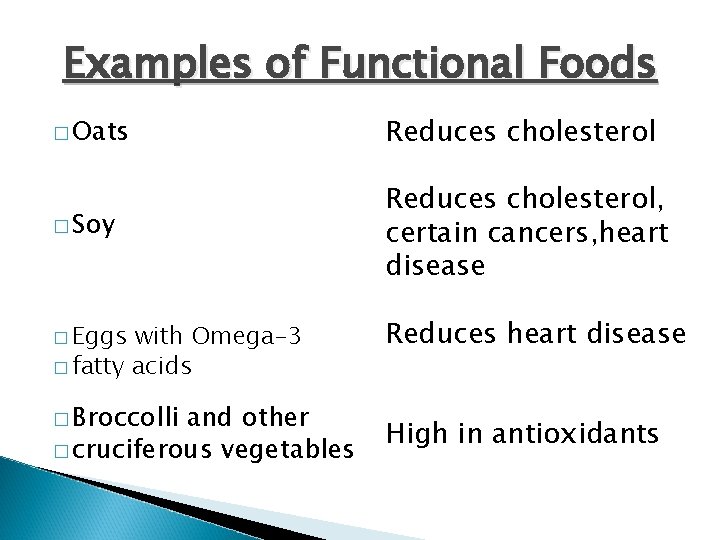
Examples of Functional Foods � Oats Reduces cholesterol � Soy Reduces cholesterol, certain cancers, heart disease � Eggs Reduces heart disease with Omega-3 � fatty acids � Broccolli and other � cruciferous vegetables High in antioxidants
FDA Guidelines for Labeling Functional Foods are of two types: �Those such as “supports the immune system” or promotes regularity”. These claims describe effects on normal functioning of the body. They do not claim that the food can prevent, treat, diagnose or cure a disease.
Structure and Function claims: �~ Do not require preapproval by the FDA (Food and Drug Administration). �~They cannot be false and misleading.
Disease-risk Reduction Claims: �~ Typically called “Health Claims” �~ Do require approval by the FDA (Food and Drug Administration) before they can be used on a product. �~ Must reflect scientific consensus.
The second type deals with disease-risk reduction claims, which imply a relationship between a disease or health condition and the dietary components of the food.
Examples of Disease-risk Reduction Claims: �Fruits/vegetables– reduced risk of cancer �Saturated fat- increased risk of heart disease �Sodium- increased hypertension �Folic acid- reduced risk of neural tube defects �Soy- reduced heart disease