
FUNCTIONAL DYSPEPSIA H Ali Djumhana DEFINITION Dyspepsia refers


- Slides: 22
FUNCTIONAL DYSPEPSIA H Ali Djumhana
DEFINITION Dyspepsia refers to pain or discomfort centered in the upper abdomen
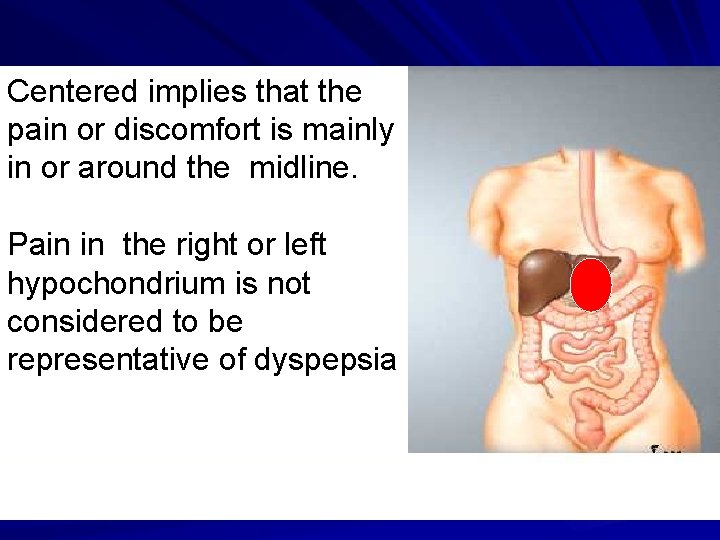
Centered implies that the pain or discomfort is mainly in or around the midline. Pain in the right or left hypochondrium is not considered to be representative of dyspepsia
Dyspepsia Discomfort may be characterized by or associated with upper abdominal fullness, early satiety, bloating , or nausea These symptoms typically are accompanied by a component of upper abdominal distress
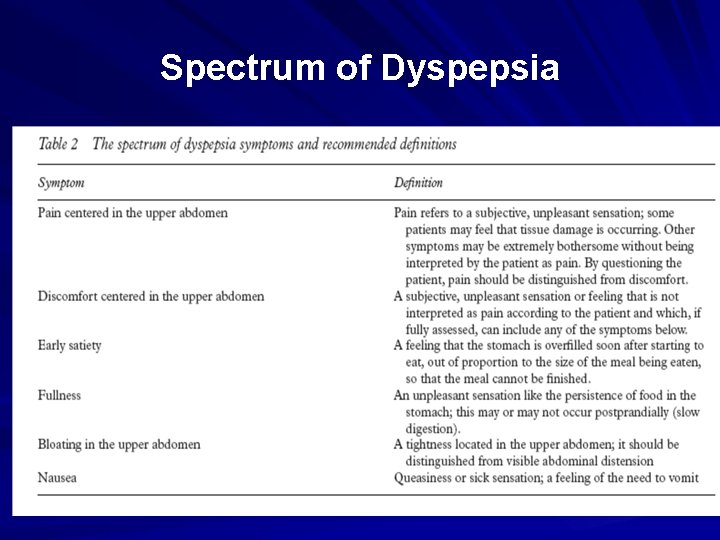
Spectrum of Dyspepsia
Dyspepsia The painful or uncomfortable symptoms may be intermittent or continuous , and may or may not be related to meals
Causes of dyspepsia Those with an identified cause for the symptoms Those with an identifiable of pathophysiological or microbiological abnormalities, however the clinical relevance is uncertain Those with no identifiable explanation for the symptoms
FUNCTIONAL DYSPEPSIA FD is a clinical syndrome which is defined by chronic or recurrent upper abdominal symptoms without a cause that is identifiable by conventional diagnostic means such as endoscopy, radiology or histology.
Diagnostic approach Symptom alone are unable to discriminate organic dyspepsia from non organic dyspepsia Patients need to have further examination to rule out relevant organic disease Functional dyspepsia is a diagnosis of exclusion
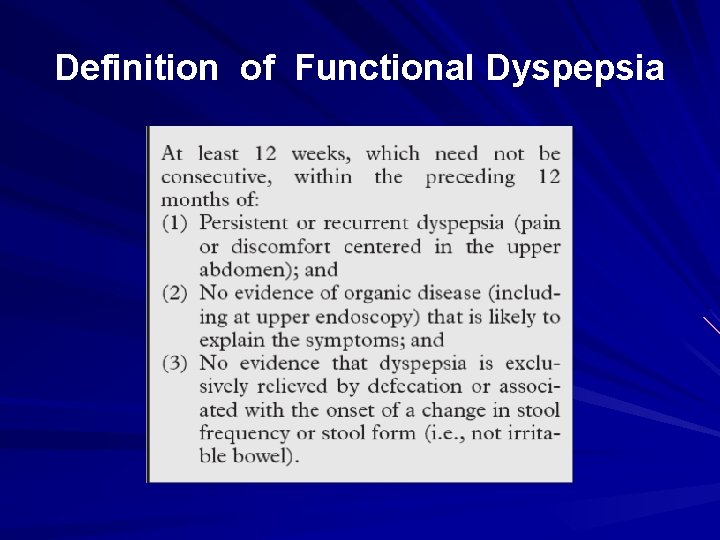
Definition of Functional Dyspepsia
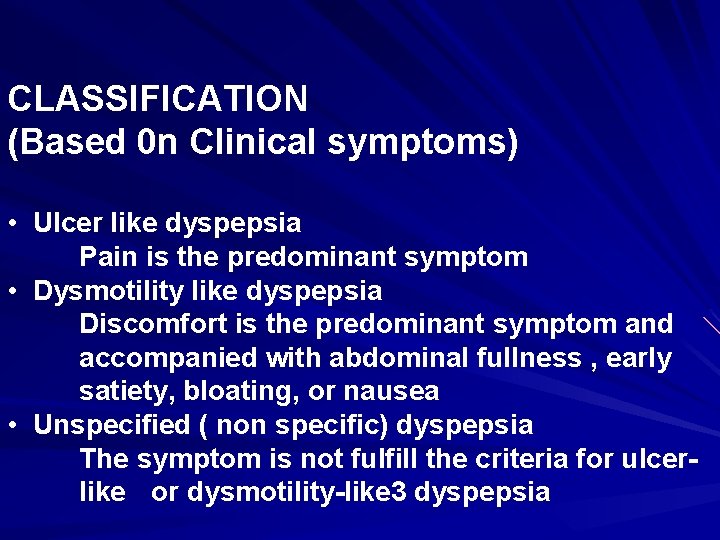
CLASSIFICATION (Based 0 n Clinical symptoms) • Ulcer like dyspepsia Pain is the predominant symptom • Dysmotility like dyspepsia Discomfort is the predominant symptom and accompanied with abdominal fullness , early satiety, bloating, or nausea • Unspecified ( non specific) dyspepsia The symptom is not fulfill the criteria for ulcerlike or dysmotility-like 3 dyspepsia
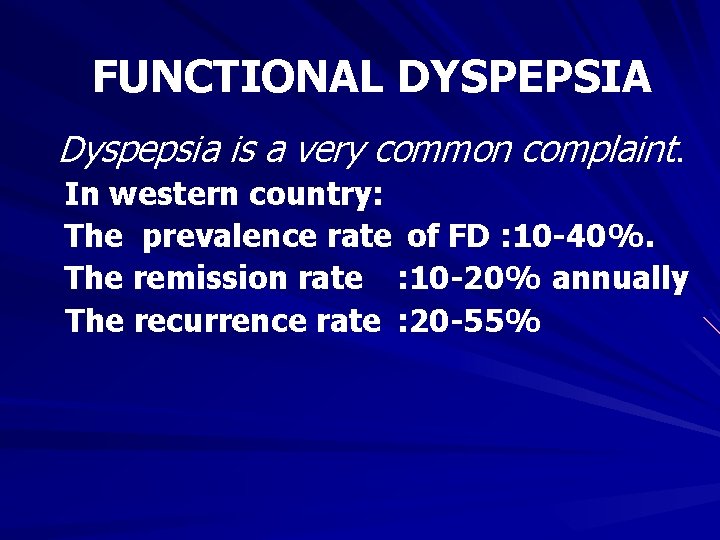
FUNCTIONAL DYSPEPSIA Dyspepsia is a very common complaint. In western country: The prevalence rate of FD : 10 -40%. The remission rate : 10 -20% annually The recurrence rate : 20 -55%
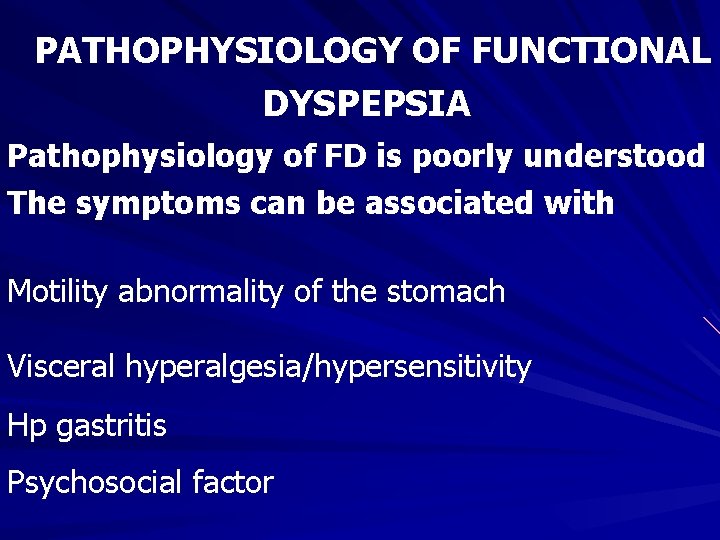
PATHOPHYSIOLOGY OF FUNCTIONAL DYSPEPSIA Pathophysiology of FD is poorly understood The symptoms can be associated with Motility abnormality of the stomach Visceral hyperalgesia/hypersensitivity Hp gastritis Psychosocial factor
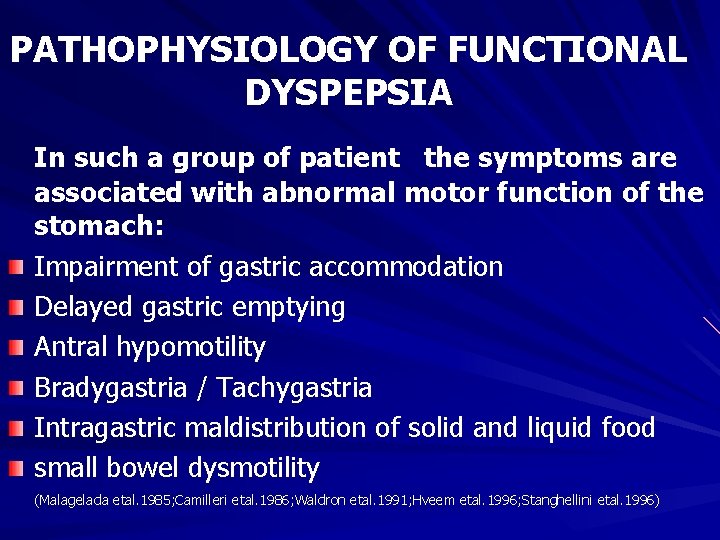
PATHOPHYSIOLOGY OF FUNCTIONAL DYSPEPSIA In such a group of patient the symptoms are associated with abnormal motor function of the stomach: Impairment of gastric accommodation Delayed gastric emptying Antral hypomotility Bradygastria / Tachygastria Intragastric maldistribution of solid and liquid food small bowel dysmotility (Malagelada etal. 1985; Camilleri etal. 1986; Waldron etal. 1991; Hveem etal. 1996; Stanghellini etal. 1996)
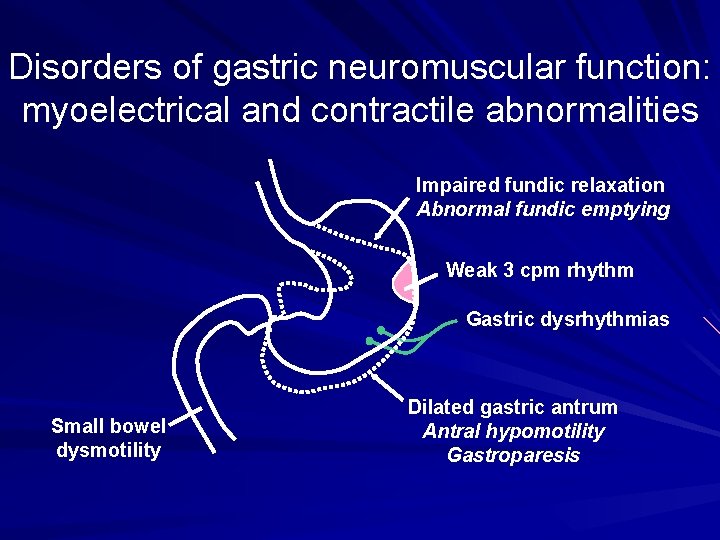
Disorders of gastric neuromuscular function: myoelectrical and contractile abnormalities Impaired fundic relaxation Abnormal fundic emptying Weak 3 cpm rhythm Gastric dysrhythmias Small bowel dysmotility Dilated gastric antrum Antral hypomotility Gastroparesis
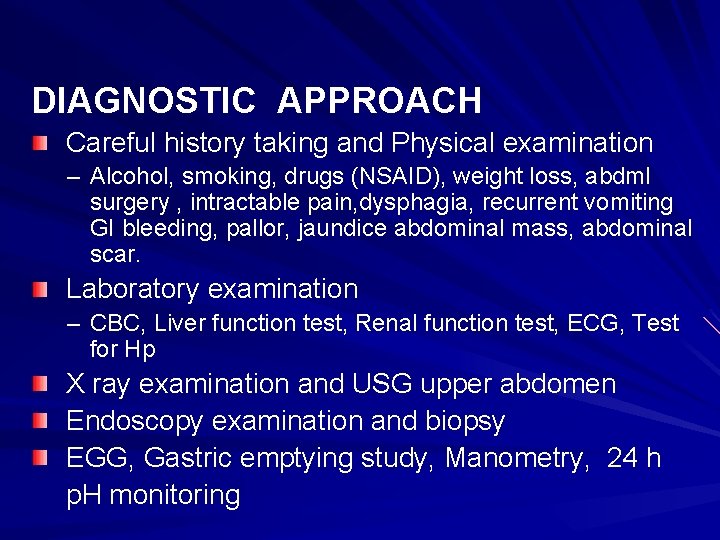
DIAGNOSTIC APPROACH Careful history taking and Physical examination – Alcohol, smoking, drugs (NSAID), weight loss, abdml surgery , intractable pain, dysphagia, recurrent vomiting GI bleeding, pallor, jaundice abdominal mass, abdominal scar. Laboratory examination – CBC, Liver function test, Renal function test, ECG, Test for Hp X ray examination and USG upper abdomen Endoscopy examination and biopsy EGG, Gastric emptying study, Manometry, 24 h p. H monitoring
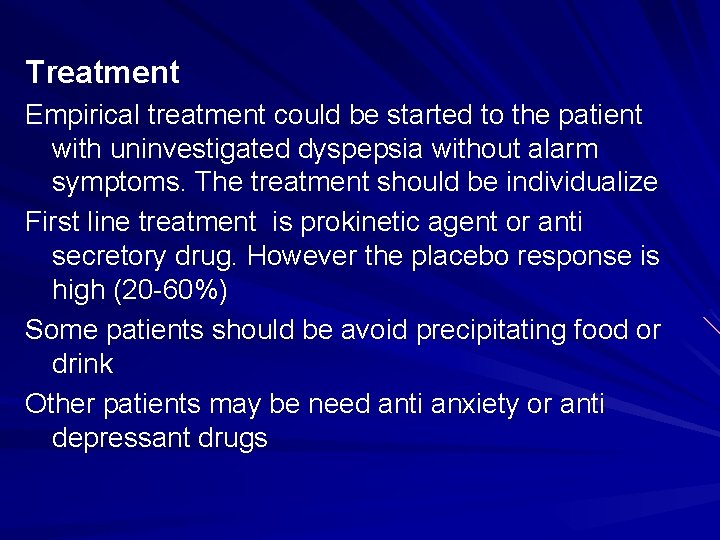
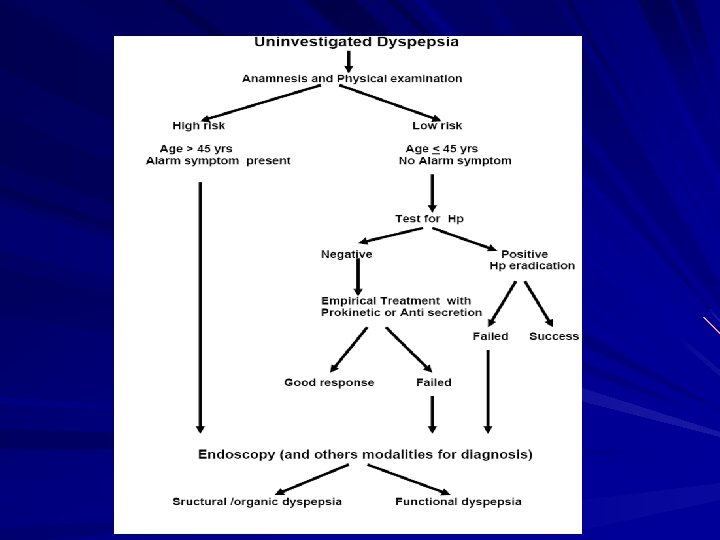
Treatment Empirical treatment could be started to the patient with uninvestigated dyspepsia without alarm symptoms. The treatment should be individualize First line treatment is prokinetic agent or anti secretory drug. However the placebo response is high (20 -60%) Some patients should be avoid precipitating food or drink Other patients may be need anti anxiety or anti depressant drugs
Uninvestigated vs Investigated Dyspepsia It is important to distinguish the patient who presents dyspepsia that has not been investigated (uninvestigated dyspepsia ) from patients with diagnostic label after investigation, with either a structural diagnosis ( such as Peptic ulcer or GERD) or Functional dyspepsia
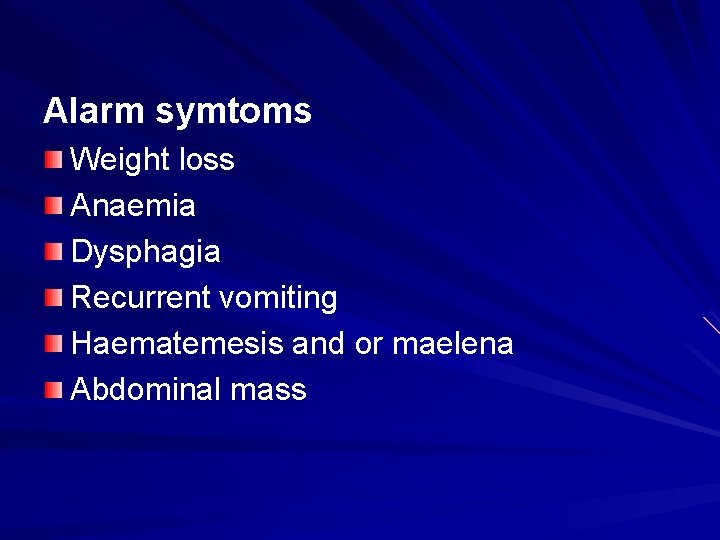
Alarm symtoms Weight loss Anaemia Dysphagia Recurrent vomiting Haematemesis and or maelena Abdominal mass
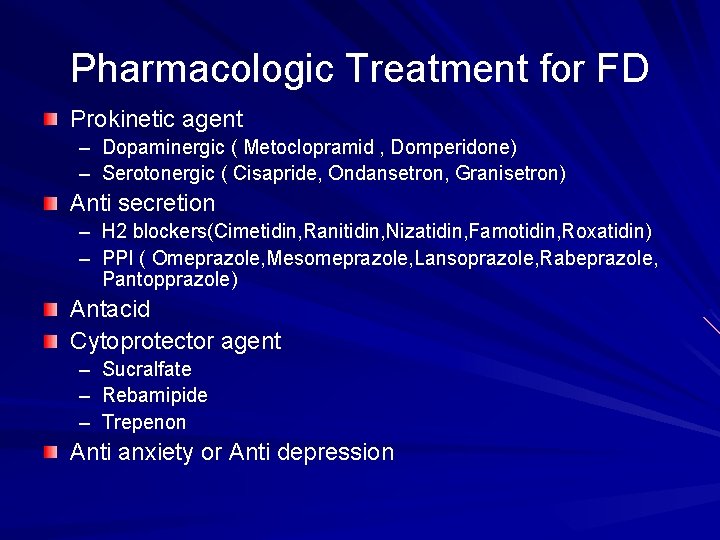
Pharmacologic Treatment for FD Prokinetic agent – Dopaminergic ( Metoclopramid , Domperidone) – Serotonergic ( Cisapride, Ondansetron, Granisetron) Anti secretion – H 2 blockers(Cimetidin, Ranitidin, Nizatidin, Famotidin, Roxatidin) – PPI ( Omeprazole, Mesomeprazole, Lansoprazole, Rabeprazole, Pantopprazole) Antacid Cytoprotector agent – Sucralfate – Rebamipide – Trepenon Anti anxiety or Anti depression