
Functional Discourse Grammar as a dualistic model of


- Slides: 38
Functional Discourse Grammar as a dualistic model of language Kees Hengeveld Amsterdam Center for Language and Communication
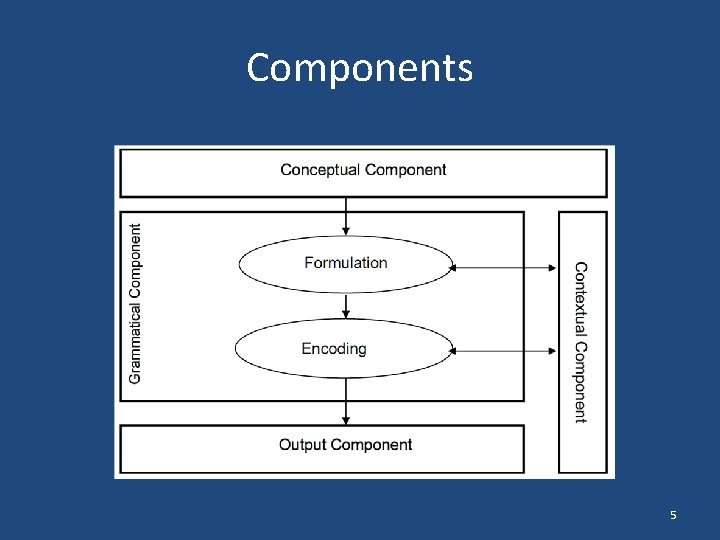
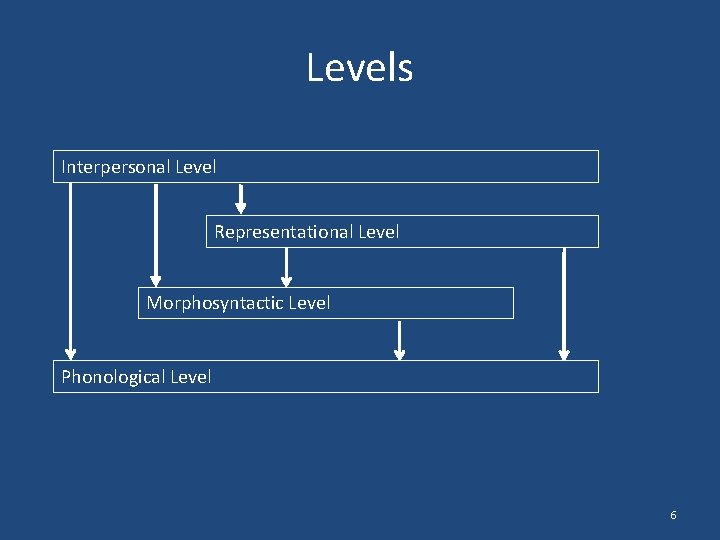
Introduction - Functional Discourse Grammar is a multi-level, hierarchically organized, grammatical theory. - The distinction it makes between an Interpersonal and a Representational Level, shows it is a dualistic model of language. - This kind of dualism comes close to, but is different from, the division of labour as defined in Discourse Grammar. - In this paper my aim is to present the FDG approach and compare it to the DG approach, and to show what the different predictions are that they generate. 2
Contents 1. Functional Discourse Grammar 2. The Interpersonal versus the Representational Level 3. Functional Discourse Grammar and Discourse Grammar 4. Conclusions 3
1. Functional Discourse Grammar
Components 5
Levels Interpersonal Level Representational Level Morphosyntactic Level Phonological Level 6
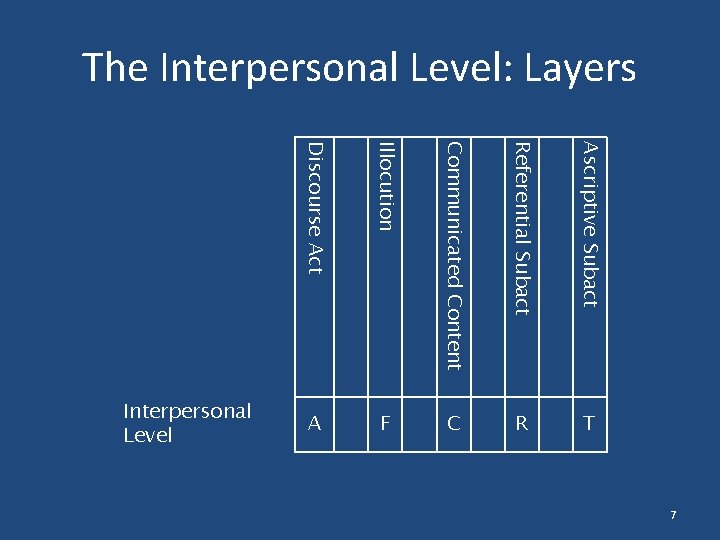
The Interpersonal Level: Layers Discourse Act Illocution Communicated Content Referential Subact Ascriptive Subact A F C R T Interpersonal Level 7
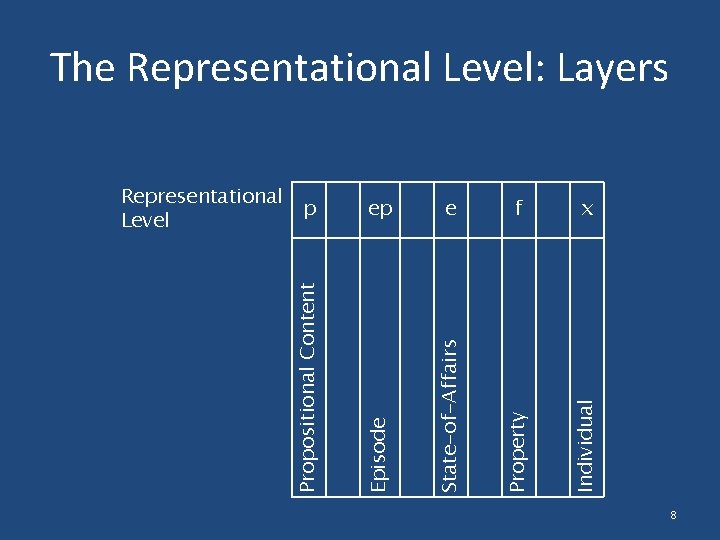
ep e f x State-of-Affairs Property Individual Propositional Content Representational p Level Episode The Representational Level: Layers 8
2. The Interpersonal versus the Representational Level
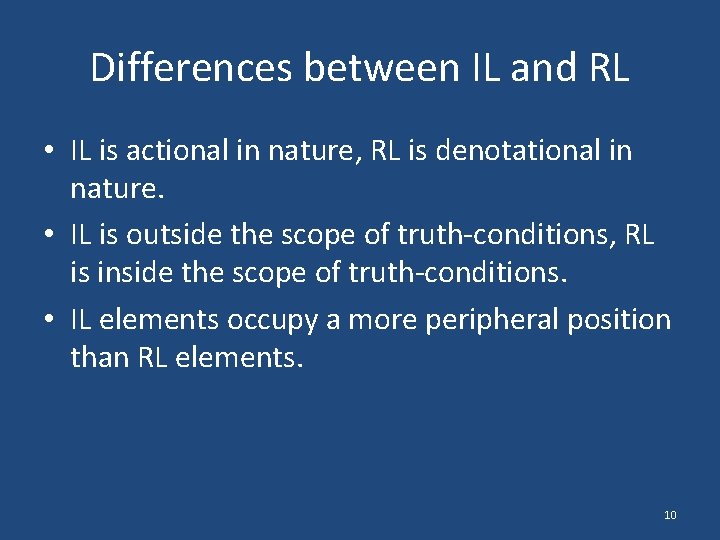
Differences between IL and RL • IL is actional in nature, RL is denotational in nature. • IL is outside the scope of truth-conditions, RL is inside the scope of truth-conditions. • IL elements occupy a more peripheral position than RL elements. 10
Differences between IL and RL: examples • Two domains: illocutionary expressions and noun phrases • Two phenomena: truth conditionality and order of modifiers 11
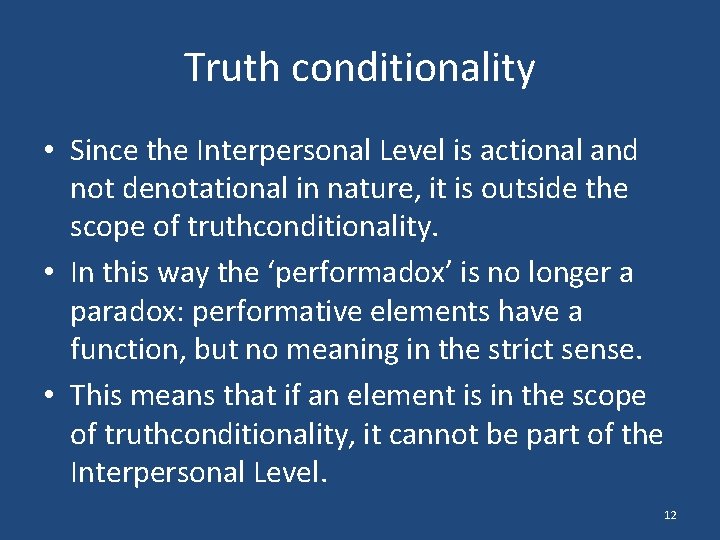
Truth conditionality • Since the Interpersonal Level is actional and not denotational in nature, it is outside the scope of truthconditionality. • In this way the ‘performadox’ is no longer a paradox: performative elements have a function, but no meaning in the strict sense. • This means that if an element is in the scope of truthconditionality, it cannot be part of the Interpersonal Level. 12
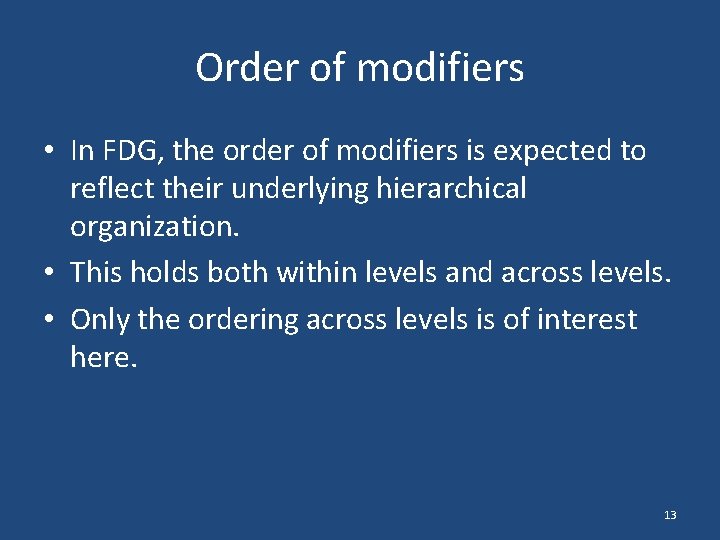
Order of modifiers • In FDG, the order of modifiers is expected to reflect their underlying hierarchical organization. • This holds both within levels and across levels. • Only the ordering across levels is of interest here. 13
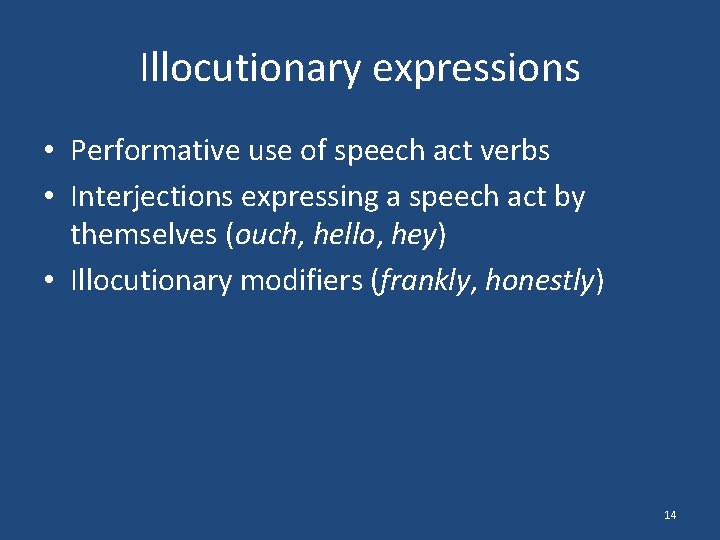
Illocutionary expressions • Performative use of speech act verbs • Interjections expressing a speech act by themselves (ouch, hello, hey) • Illocutionary modifiers (frankly, honestly) 14
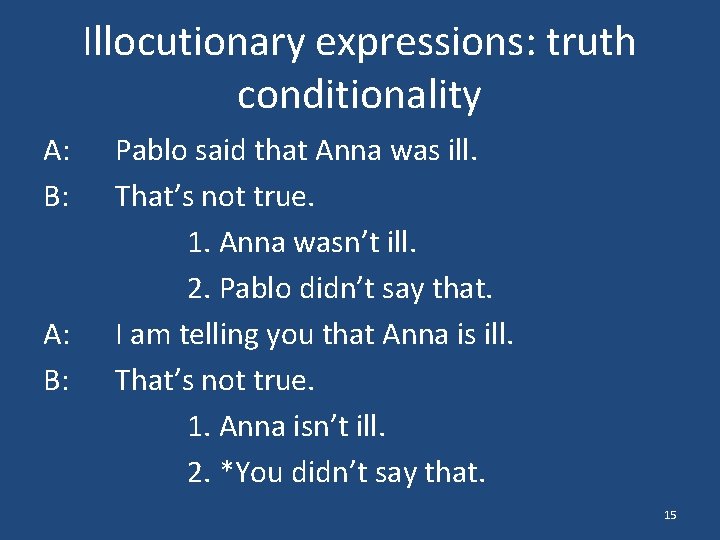
Illocutionary expressions: truth conditionality A: B: Pablo said that Anna was ill. That’s not true. 1. Anna wasn’t ill. 2. Pablo didn’t say that. I am telling you that Anna is ill. That’s not true. 1. Anna isn’t ill. 2. *You didn’t say that. 15
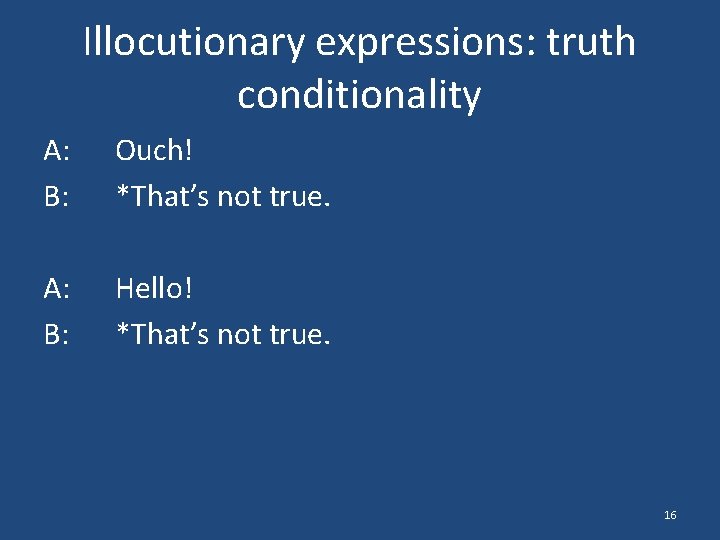
Illocutionary expressions: truth conditionality A: B: Ouch! *That’s not true. A: B: Hello! *That’s not true. 16
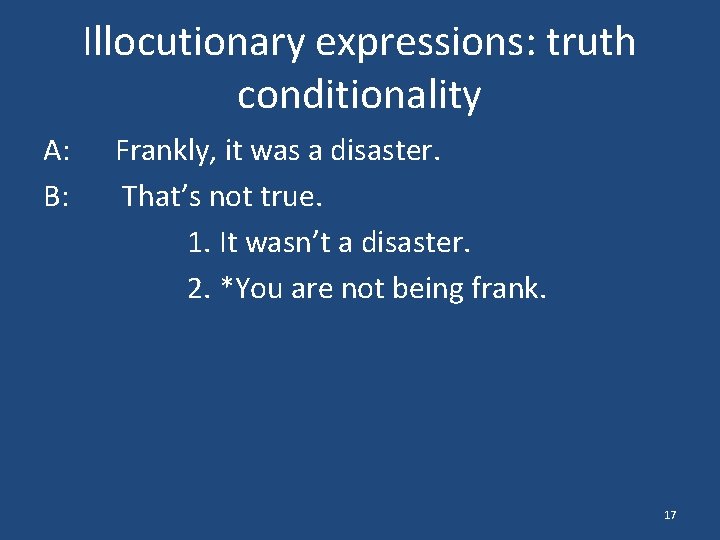
Illocutionary expressions: truth conditionality A: B: Frankly, it was a disaster. That’s not true. 1. It wasn’t a disaster. 2. *You are not being frank. 17
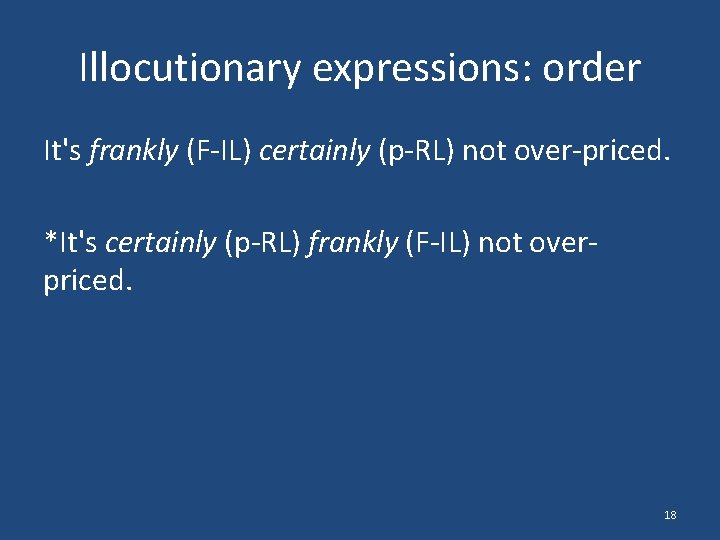
Illocutionary expressions: order It's frankly (F-IL) certainly (p-RL) not over-priced. *It's certainly (p-RL) frankly (F-IL) not overpriced. 18
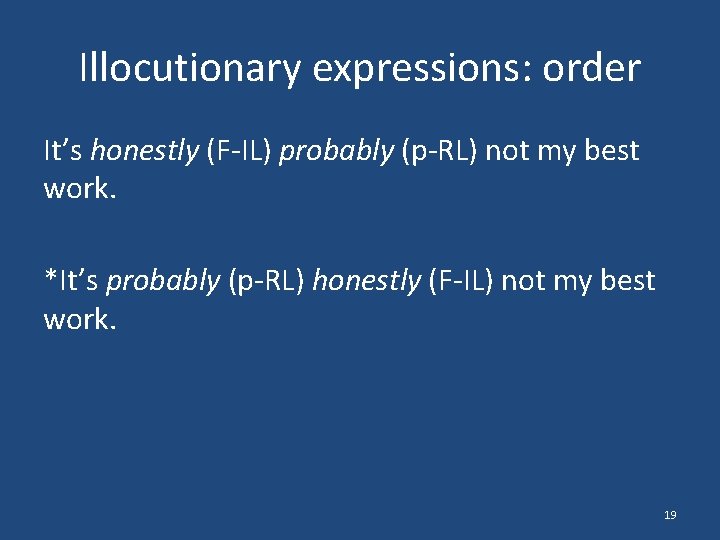
Illocutionary expressions: order It’s honestly (F-IL) probably (p-RL) not my best work. *It’s probably (p-RL) honestly (F-IL) not my best work. 19
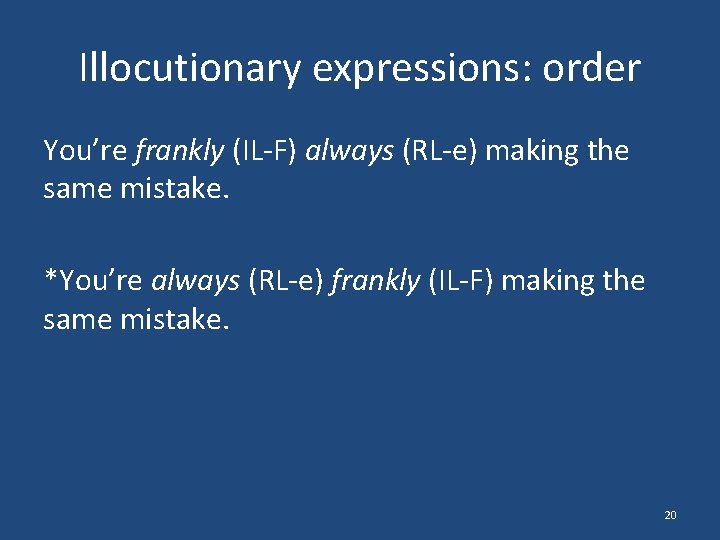
Illocutionary expressions: order You’re frankly (IL-F) always (RL-e) making the same mistake. *You’re always (RL-e) frankly (IL-F) making the same mistake. 20
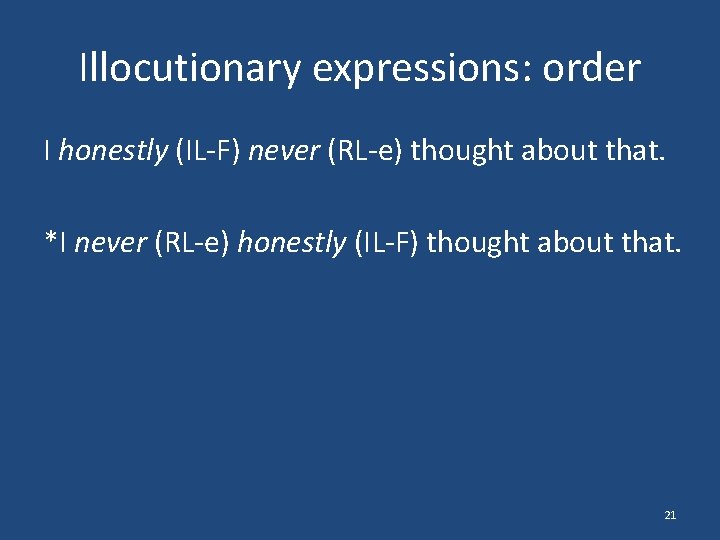
Illocutionary expressions: order I honestly (IL-F) never (RL-e) thought about that. *I never (RL-e) honestly (IL-F) thought about that. 21
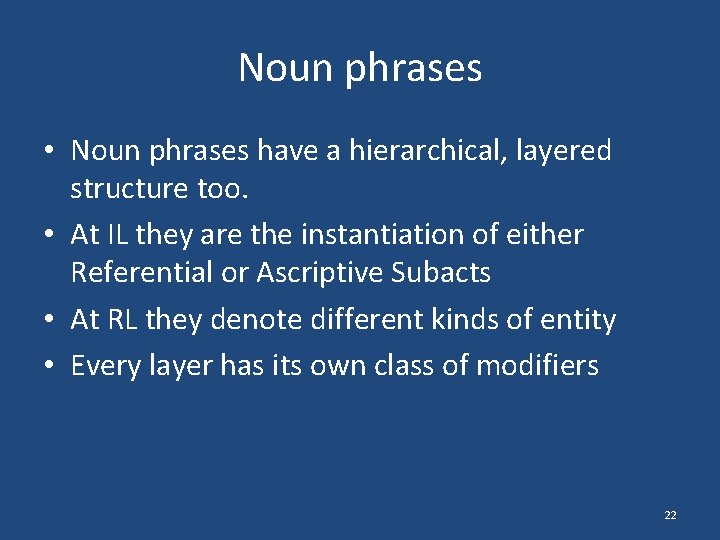
Noun phrases • Noun phrases have a hierarchical, layered structure too. • At IL they are the instantiation of either Referential or Ascriptive Subacts • At RL they denote different kinds of entity • Every layer has its own class of modifiers 22
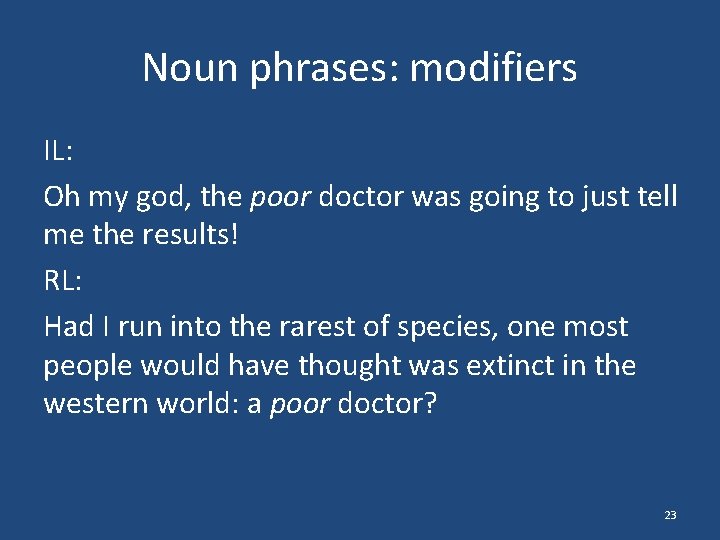
Noun phrases: modifiers IL: Oh my god, the poor doctor was going to just tell me the results! RL: Had I run into the rarest of species, one most people would have thought was extinct in the western world: a poor doctor? 23
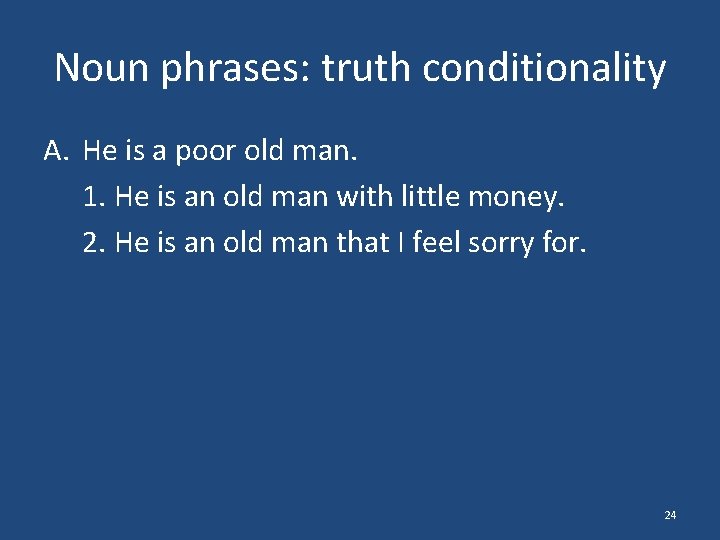
Noun phrases: truth conditionality A. He is a poor old man. 1. He is an old man with little money. 2. He is an old man that I feel sorry for. 24
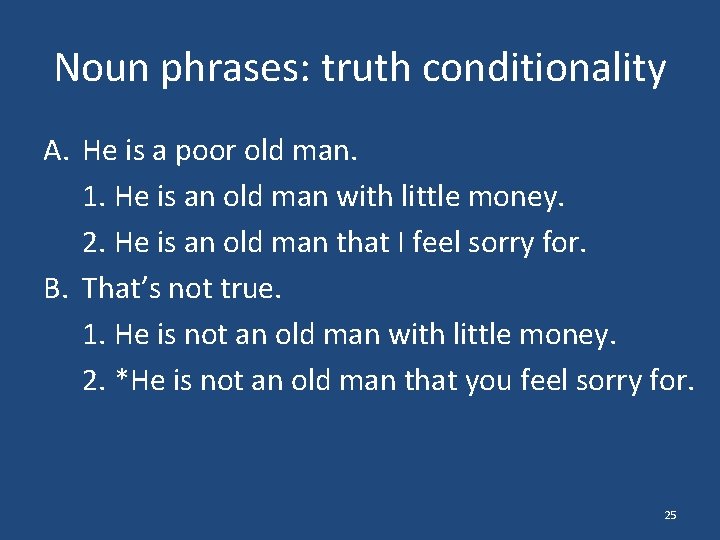
Noun phrases: truth conditionality A. He is a poor old man. 1. He is an old man with little money. 2. He is an old man that I feel sorry for. B. That’s not true. 1. He is not an old man with little money. 2. *He is not an old man that you feel sorry for. 25
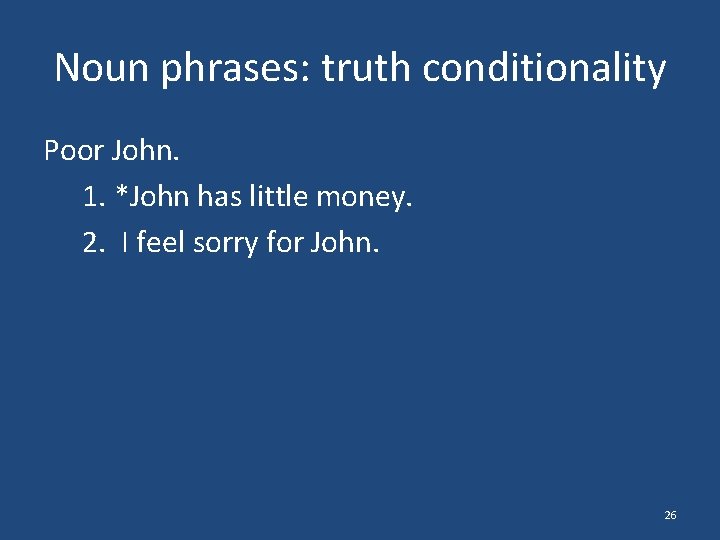
Noun phrases: truth conditionality Poor John. 1. *John has little money. 2. I feel sorry for John. 26
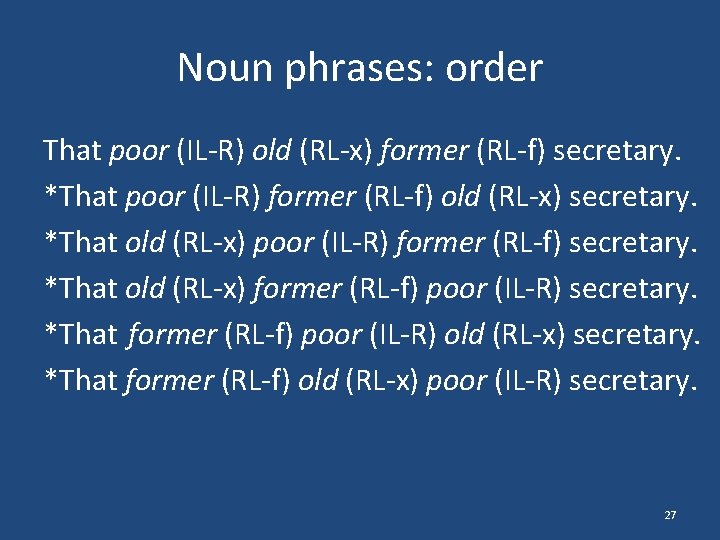
Noun phrases: order That poor (IL-R) old (RL-x) former (RL-f) secretary. *That poor (IL-R) former (RL-f) old (RL-x) secretary. *That old (RL-x) poor (IL-R) former (RL-f) secretary. *That old (RL-x) former (RL-f) poor (IL-R) secretary. *That former (RL-f) poor (IL-R) old (RL-x) secretary. *That former (RL-f) old (RL-x) poor (IL-R) secretary. 27
3. FDG and DG
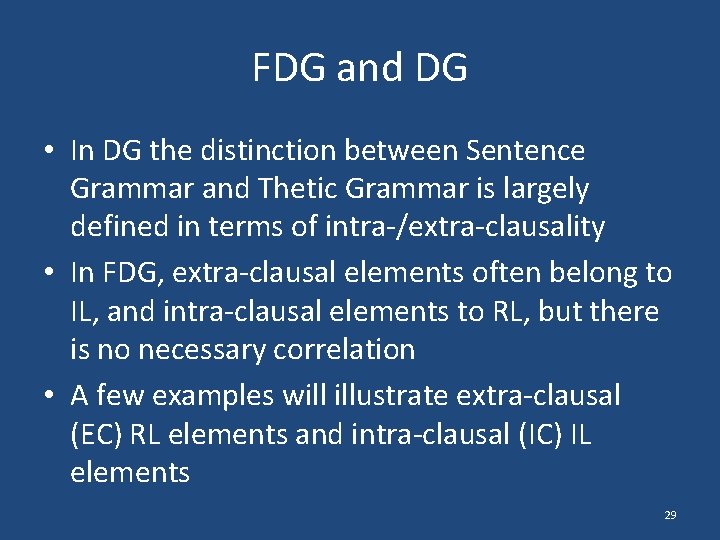
FDG and DG • In DG the distinction between Sentence Grammar and Thetic Grammar is largely defined in terms of intra-/extra-clausality • In FDG, extra-clausal elements often belong to IL, and intra-clausal elements to RL, but there is no necessary correlation • A few examples will illustrate extra-clausal (EC) RL elements and intra-clausal (IC) IL elements 29
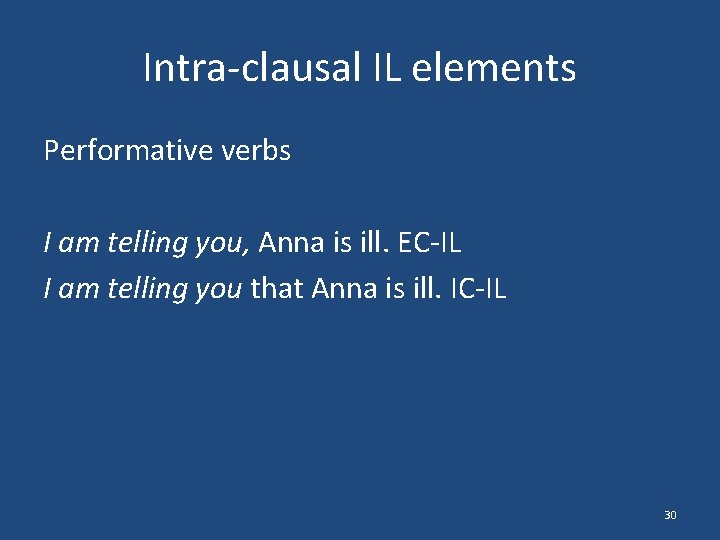
Intra-clausal IL elements Performative verbs I am telling you, Anna is ill. EC-IL I am telling you that Anna is ill. IC-IL 30
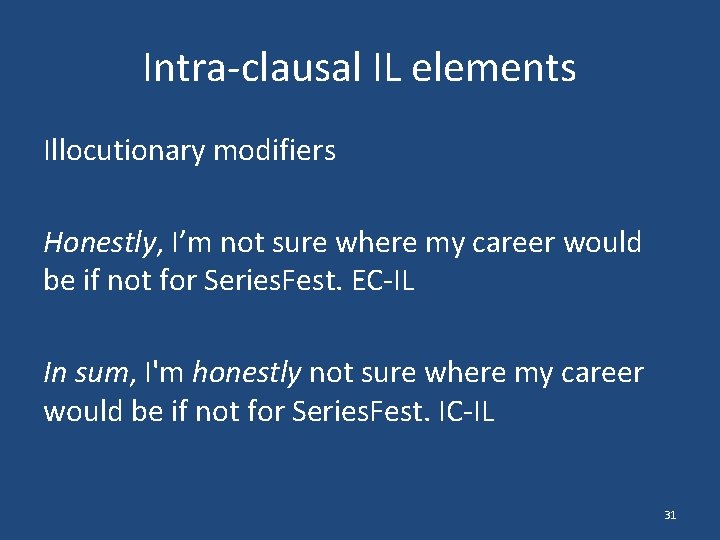
Intra-clausal IL elements Illocutionary modifiers Honestly, I’m not sure where my career would be if not for Series. Fest. EC-IL In sum, I'm honestly not sure where my career would be if not for Series. Fest. IC-IL 31
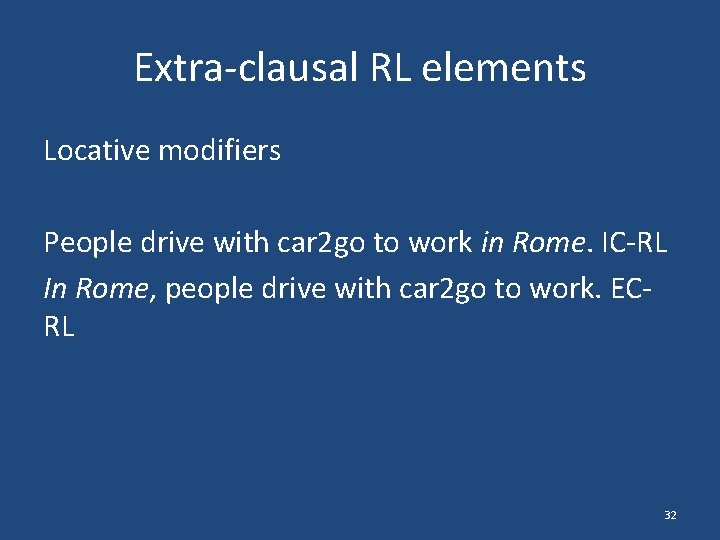
Extra-clausal RL elements Locative modifiers People drive with car 2 go to work in Rome. IC-RL In Rome, people drive with car 2 go to work. ECRL 32
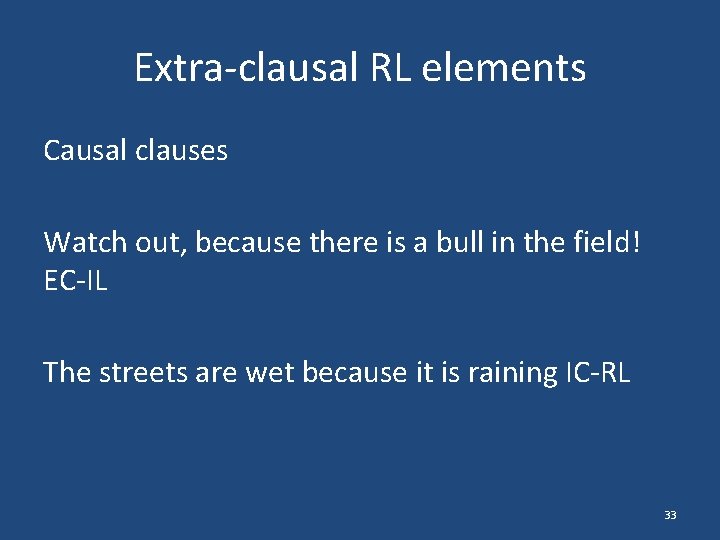
Extra-clausal RL elements Causal clauses Watch out, because there is a bull in the field! EC-IL The streets are wet because it is raining IC-RL 33
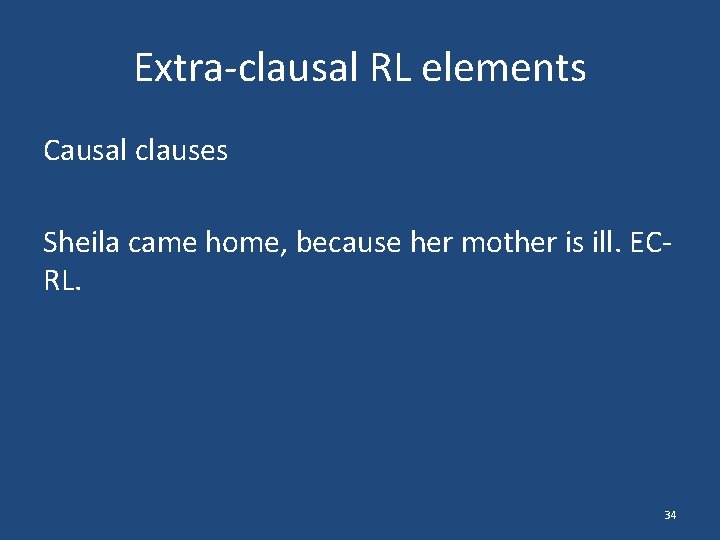
Extra-clausal RL elements Causal clauses Sheila came home, because her mother is ill. ECRL. 34
4. Discussion
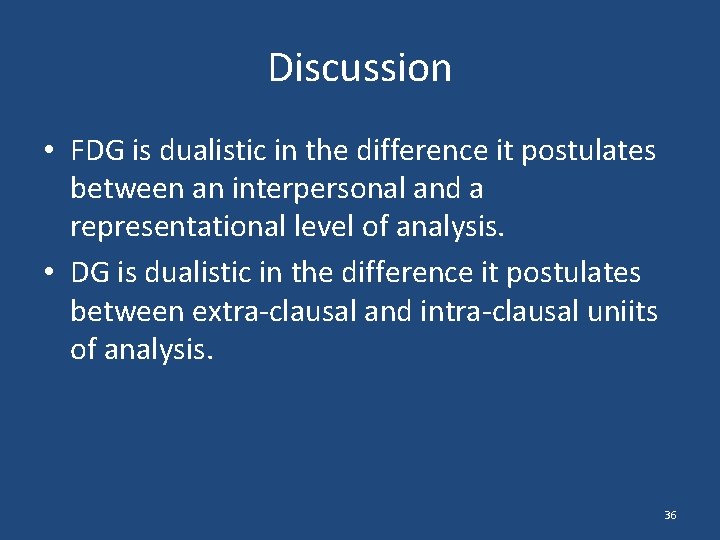
Discussion • FDG is dualistic in the difference it postulates between an interpersonal and a representational level of analysis. • DG is dualistic in the difference it postulates between extra-clausal and intra-clausal uniits of analysis. 36
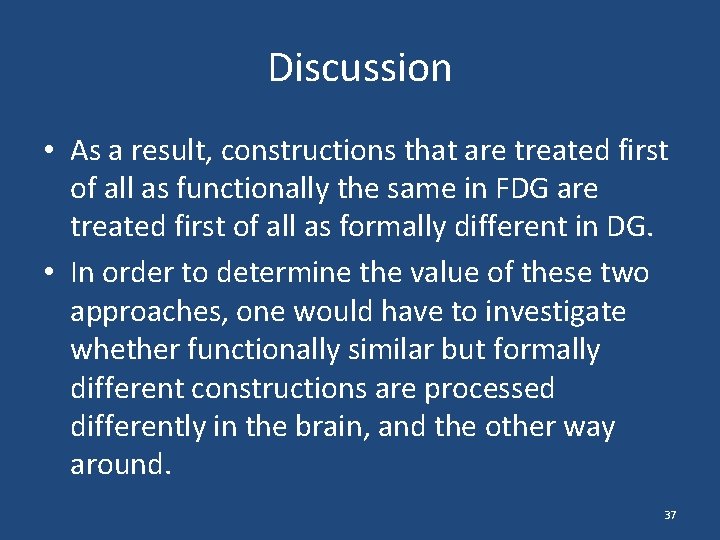
Discussion • As a result, constructions that are treated first of all as functionally the same in FDG are treated first of all as formally different in DG. • In order to determine the value of these two approaches, one would have to investigate whether functionally similar but formally different constructions are processed differently in the brain, and the other way around. 37
this presentation can be found at www. keeshengeveld. nl 38