
Functional brain systems as opposed to anatomical ones
Functional brain systems (as opposed to anatomical ones) Networks of distant neurons that function together Anatomy of nonspecific brain systems: reticular formation and limbic system. Features of blood supply to the brain and cerebrospinal fluid dynamics
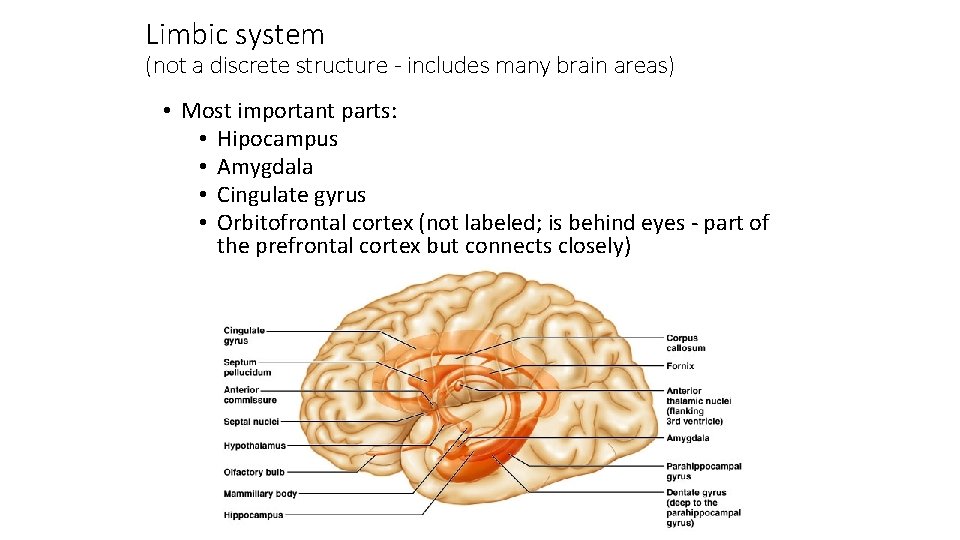
Limbic system (not a discrete structure - includes many brain areas) • Most important parts: • Hipocampus • Amygdala • Cingulate gyrus • Orbitofrontal cortex (not labeled; is behind eyes - part of the prefrontal cortex but connects closely)
Limbic system continued • Called the “emotional” brain • Is essential for flexible, stable, adaptive functioning • Links different areas so integration can occur • Integration: separate things are brought together as a whole • Processes emotions and allocates attentional resources • Necessary for emotional balance, adaptation to environmental demands (including fearful situations, etc. ), for creating meaningful connections with others (e. g. ability to interpret facial expressions and respond appropriately), and more…

Reticular formation Runs through central core of medulla, pons and midbrain • Reticular activating system (RAS): keeps the cerebral cortex alert and conscious • Some motor control
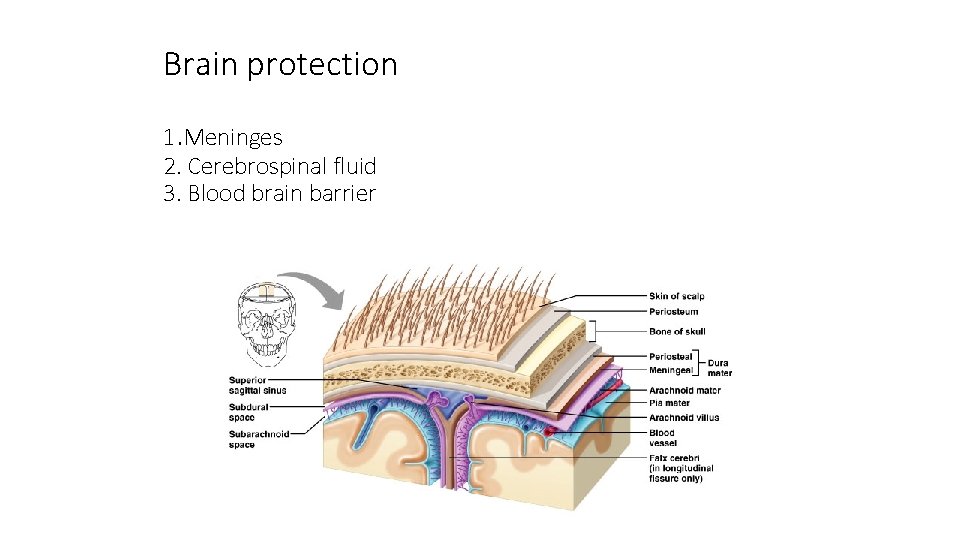
Brain protection 1. Meninges 2. Cerebrospinal fluid 3. Blood brain barrier

Meninges 1. Dura mater: 2 layers of fibrous connective tissue, fused except for dural sinuses • • Periosteal layer attached to bone Meningeal layer - proper brain covering 2. Arachnoid mater 3. Pia mater Note superior sagittal sinus
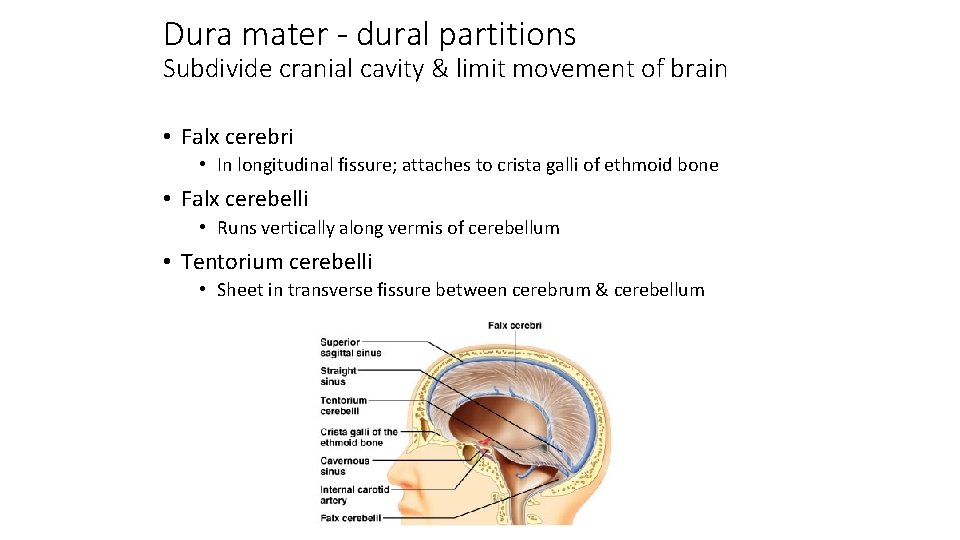
Dura mater - dural partitions Subdivide cranial cavity & limit movement of brain • Falx cerebri • In longitudinal fissure; attaches to crista galli of ethmoid bone • Falx cerebelli • Runs vertically along vermis of cerebellum • Tentorium cerebelli • Sheet in transverse fissure between cerebrum & cerebellum
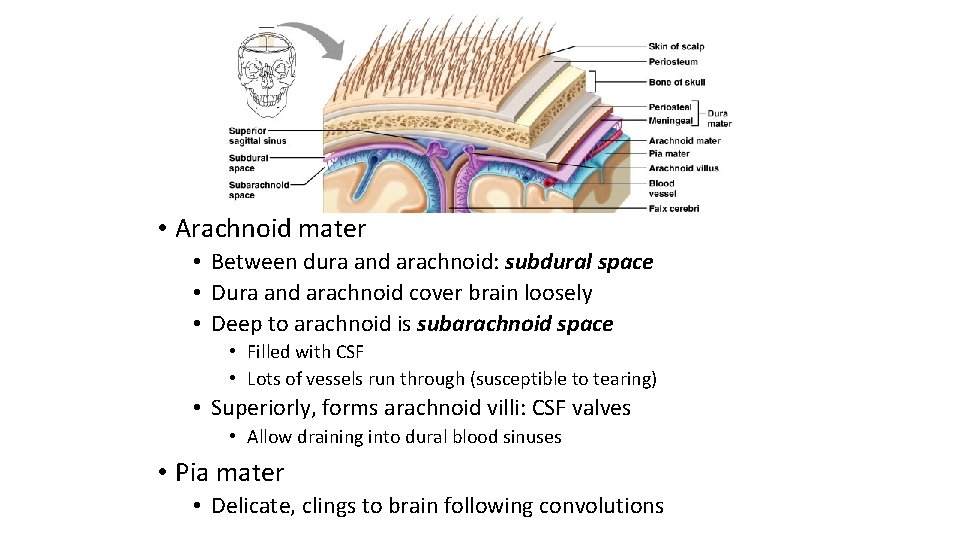
• Arachnoid mater • Between dura and arachnoid: subdural space • Dura and arachnoid cover brain loosely • Deep to arachnoid is subarachnoid space • Filled with CSF • Lots of vessels run through (susceptible to tearing) • Superiorly, forms arachnoid villi: CSF valves • Allow draining into dural blood sinuses • Pia mater • Delicate, clings to brain following convolutions
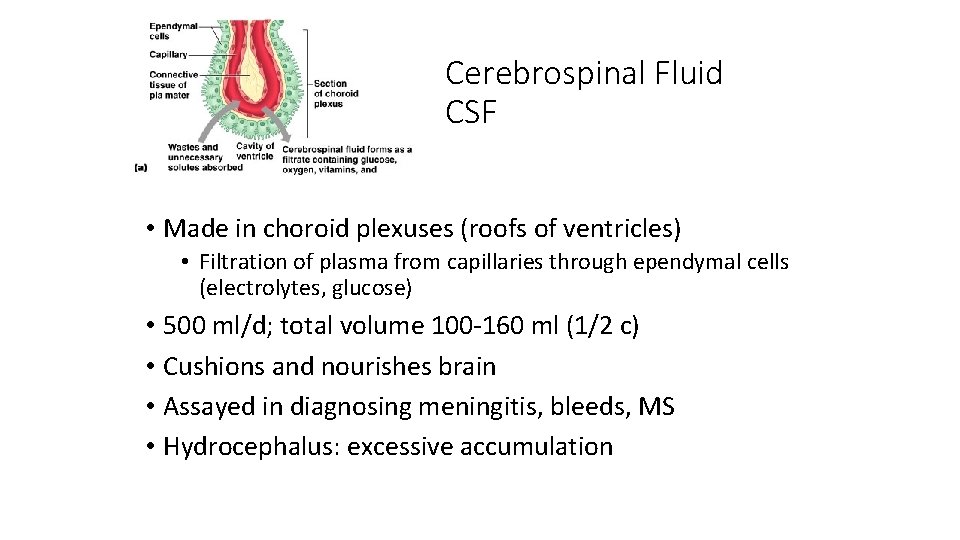
Cerebrospinal Fluid CSF • Made in choroid plexuses (roofs of ventricles) • Filtration of plasma from capillaries through ependymal cells (electrolytes, glucose) • 500 ml/d; total volume 100 -160 ml (1/2 c) • Cushions and nourishes brain • Assayed in diagnosing meningitis, bleeds, MS • Hydrocephalus: excessive accumulation
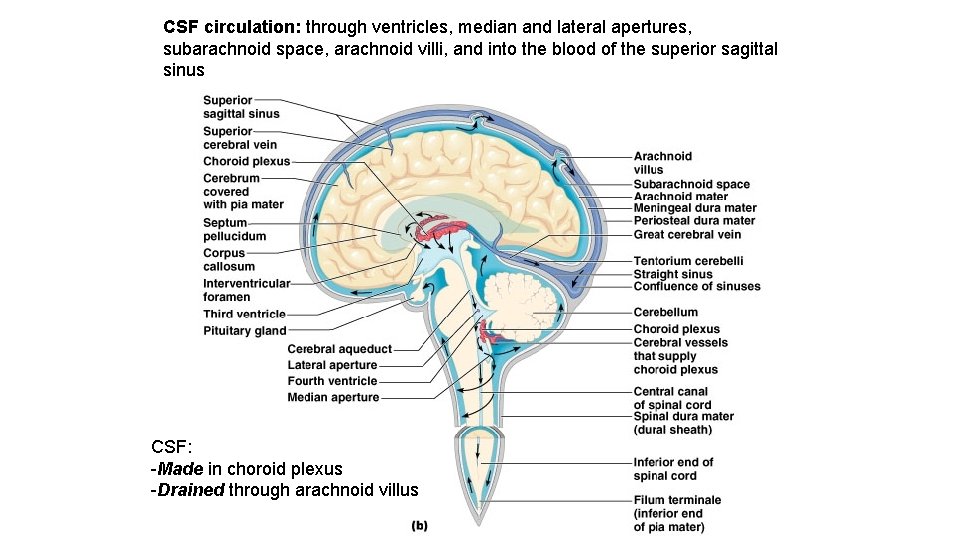
CSF circulation: through ventricles, median and lateral apertures, subarachnoid space, arachnoid villi, and into the blood of the superior sagittal sinus CSF: -Made in choroid plexus -Drained through arachnoid villus
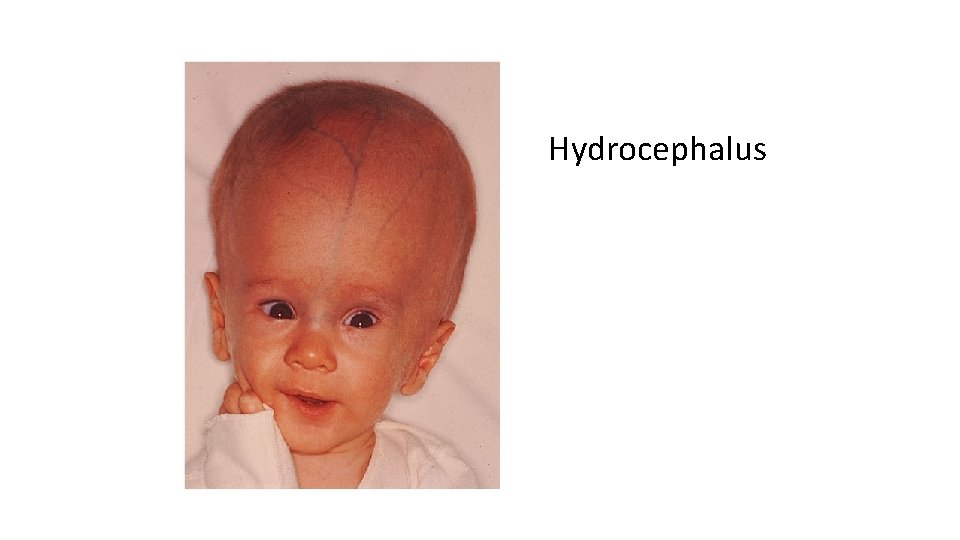
Hydrocephalus
Blood-Brain Barrier • Tight junctions between endothelial cells of brain capillaries, instead of the usual permeability • Highly selective transport mechanisms • Allows nutrients, O 2, CO 2 • Not a barrier against uncharged and lipid soluble molecules; allows alcohol, nicotine, and some drugs including anesthetics
- Slides: 12