
Functional Behavior Assessments FBA and Behavior Intervention Plans
Functional Behavior Assessments (FBA) and Behavior Intervention Plans (BIP) ELIZABETH BARNES
MTSS for Behavior: Positive Behavior Supports (PBS)
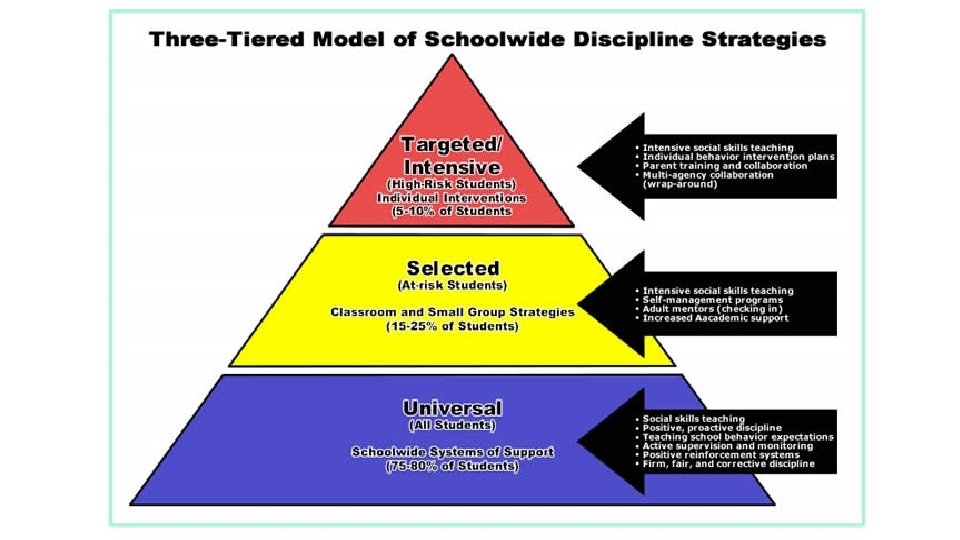

Tier 1 SCHOOL-WIDE SUPPORTS
Tier 1 Supports Set behavioral expectations and teach them in the general curriculum Model and rehearse examples and non-examples Acknowledge appropriate behavior on a regular basis using formal systems (e. g. , tickets, rewards) Establish clear procedures for providing information to students that their behavior was unacceptable.
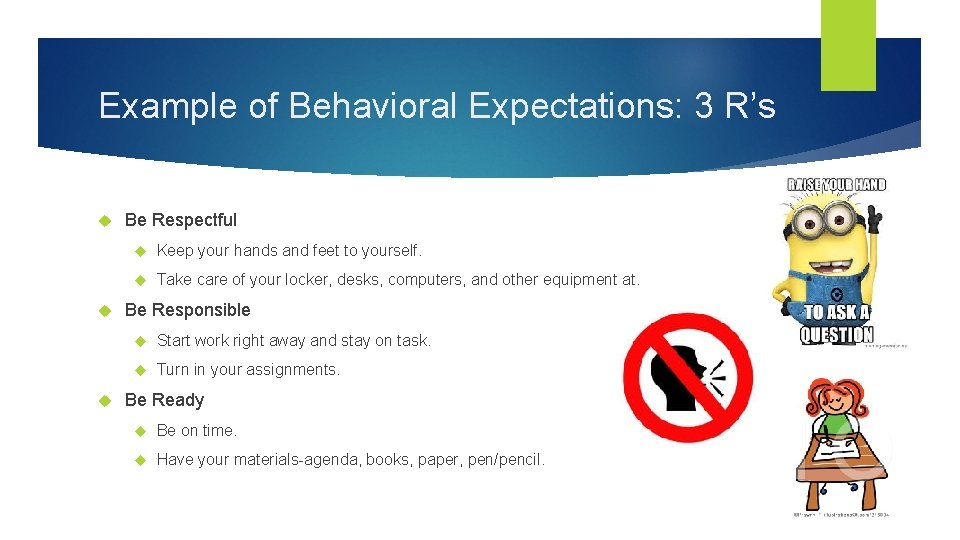
Example of Behavioral Expectations: 3 R’s Be Respectful Keep your hands and feet to yourself. Take care of your locker, desks, computers, and other equipment at. Be Responsible Start work right away and stay on task. Turn in your assignments. Be Ready Be on time. Have your materials-agenda, books, paper, pen/pencil.
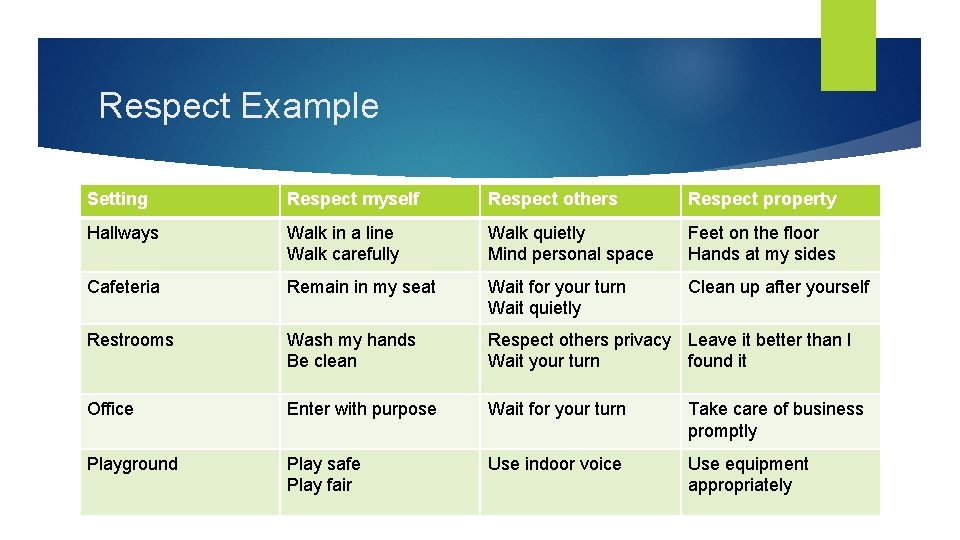
Respect Example Setting Respect myself Respect others Respect property Hallways Walk in a line Walk carefully Walk quietly Mind personal space Feet on the floor Hands at my sides Cafeteria Remain in my seat Wait for your turn Wait quietly Clean up after yourself Restrooms Wash my hands Be clean Respect others privacy Leave it better than I Wait your turn found it Office Enter with purpose Wait for your turn Take care of business promptly Playground Play safe Play fair Use indoor voice Use equipment appropriately

Sample Tier 1 Strategies Peer Tutoring Organized Classroom Established Routines and Procedures Positive Student-Teacher Rapport High Expectations Teacher Modeling of Positive Behaviors Clear Communication (e. g. , visual displays of instruction, step-by-step procedures) Positively Stated Rules
Praise to Reprimand Ratio Target ratio is 4: 1 – four praise statements to every one reprimand (Walker et al. , 1995)
Tier 2 SUPPORTS FOR AT RISK STUDENTS
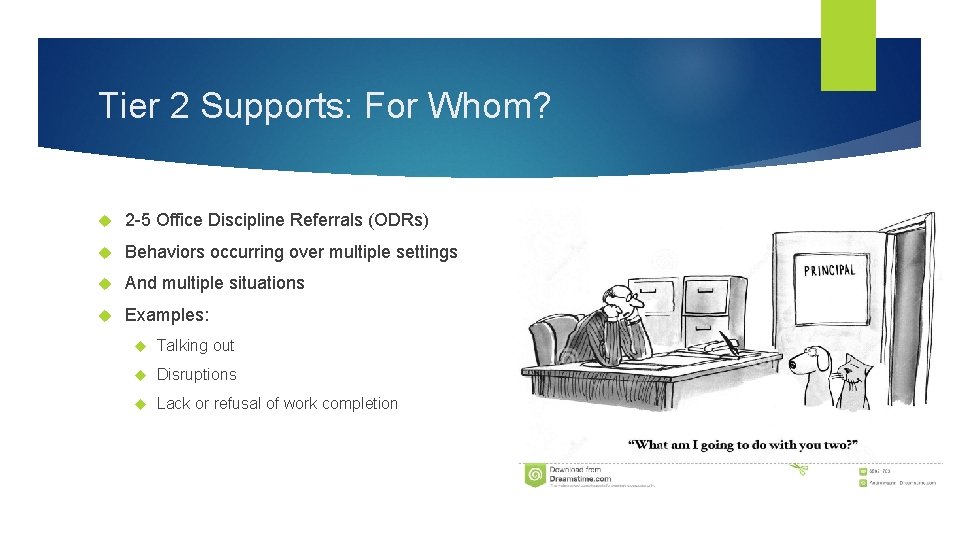
Tier 2 Supports: For Whom? 2 -5 Office Discipline Referrals (ODRs) Behaviors occurring over multiple settings And multiple situations Examples: Talking out Disruptions Lack or refusal of work completion
Tier 2 Supports Identify Target Behavior What do you want to change? Do you want to eliminate a behavior? Teach a missing appropriate behavior? Both? Determine if the target behavior is in the students’ repertoire: Is it a performance or skills deficit? Determine which intervention approach you need to take.
Behavior Contracts Between two individuals where one agrees to demonstrate certain behaviors. Behavior Reward Tracking Sheet Designed for performance deficits “won’t do” and fluency deficits “trouble doing” Not for acquisition deficits (don’t know how to do/can’t do) Middle and high school students Promise for elementary
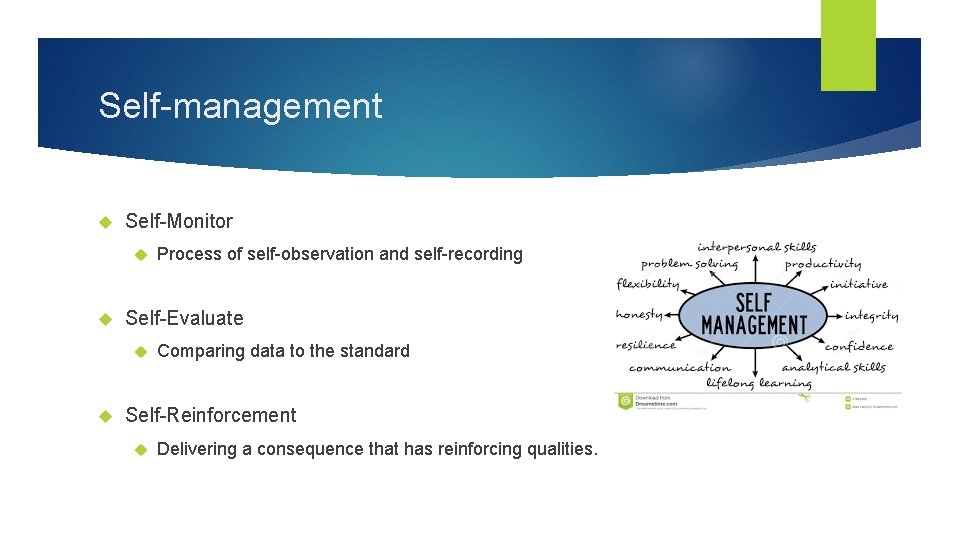
Self-management Self-Monitor Self-Evaluate Process of self-observation and self-recording Comparing data to the standard Self-Reinforcement Delivering a consequence that has reinforcing qualities.
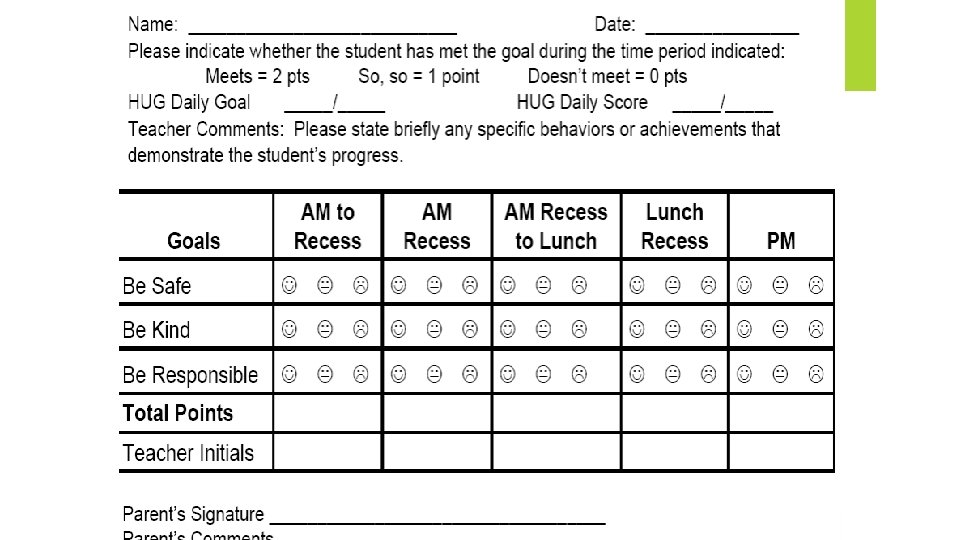
Other Programs Behavior Education Program “Check In, Check Out” (CICO) Crone, Horner, & Hawken (2004) Sugai, Horner, Lewis-Palmer, & Todd (2005)
Check In-Check Out https: //www. youtube. com/watch? v=My. PUY 38 bl. ZQ
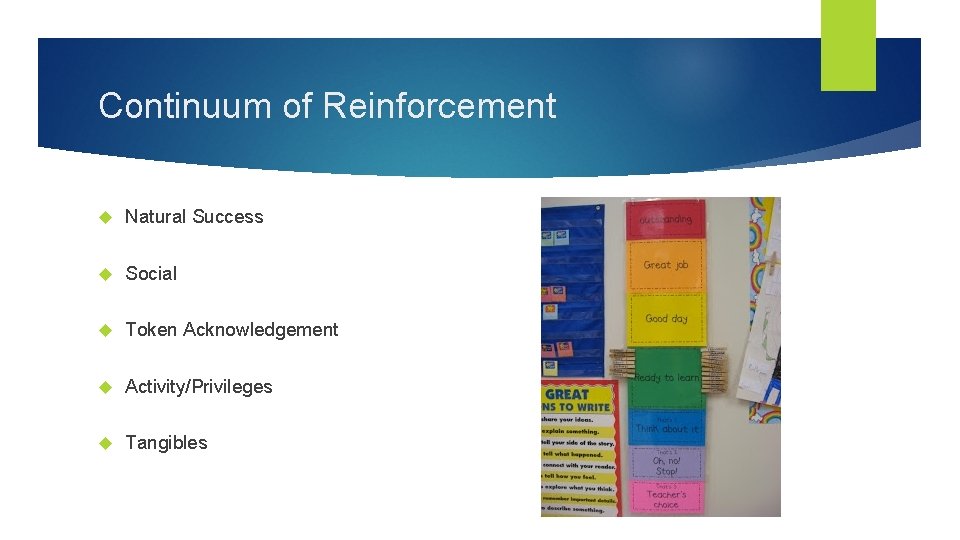
Continuum of Reinforcement Natural Success Social Token Acknowledgement Activity/Privileges Tangibles
For your reference www. Pbisworld. com
Tier 3 HIGH RISK STUDENTS
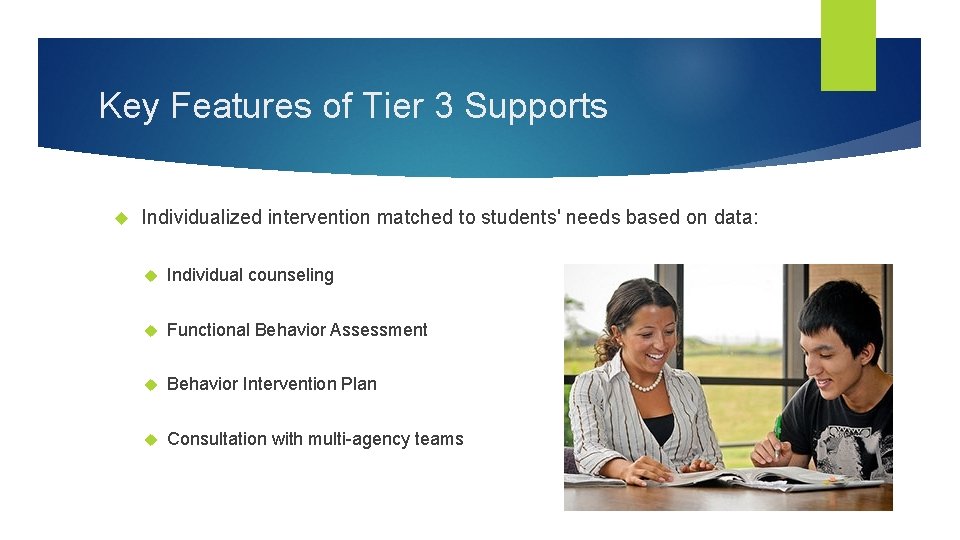
Key Features of Tier 3 Supports Individualized intervention matched to students' needs based on data: Individual counseling Functional Behavior Assessment Behavior Intervention Plan Consultation with multi-agency teams
FBA: Purpose & Process A multi-component assessment to determine the purpose (function) of target behaviors. Interview with teacher, parents, child Systematic Direct Observation (SDO) Seeks to answer the question WHY inappropriate behavior is occurring. Defines the target behavior. When does the behavior occur and does not occur. Generates hypotheses about possible functions. Manipulating the environment to reduce likelihood of the behavior occurring
Possible Functions of Behavior Attention Escape Access to Tangibles/Preferred Activities Sensory
FBA Requirements Should be conducted when: impedes his or her learning or that of others presents a danger to him/herself or others requires suspension or placement in an interim setting approaching 10 cumulative days Must be conducted when: If a manifestation determines the behavior was a manifestation of the child’s disability requires a change in placement involves drugs or weapons requires a due process hearing office to place a student in an alternative educational setting
How to conduct an FBA Brief FBA’s – most common in schools Practical FBA process: DASH D: Define behavior in observable and measurable terms A: Ask about behavior by interviewing staff & student Specify routines - where and when behaviors occur S: See the behavior Observe behavior during routines specified Observe to verify summary from interviews H: Hypothesis a final summary of where, when, and why behaviors occur
What is an FBA? 1. Informant methods Record review (always) Interviews: adults (always), student (sometimes) Checklists (sometimes) 2. Direct Observation ABC forms: Antecedent, Behavior, Consequence Systematic direct observation (SDO) Frequency, duration, etc.
Interview: Describe the behavior What are all the behaviors of concern (may need to prioritize) Operationally define those behaviors Do they occur together or in a sequence?
Interview: Setting Events 7 common ones to ask about Medication Medical/physical conditions Sleep Eating/diet Schedule (predictability, choice-making) Physical environment (noise, busy, etc. ) Staffing (number, social interactions)
Interview: Antecedents “Let’s talk about the last time you saw the behavior. What happened right before the behavior? What happened right after? “If you had to make the behavior happen, what would you do? Where/when would you do it? ”
Interview: Consequences This can be very tricky – don’t ask them to describe the function Ask what happens after the behavior Example, “So we already talked about how when Ed tantrums, you usually go over to him and remind him about his point system. Is that pretty consistent? ” Functional alternatives Once you have an idea of what the student is trying to get/escape, ask about alternative behaviors Example: “When Ed raises his hand, does he always get called on right away? ”
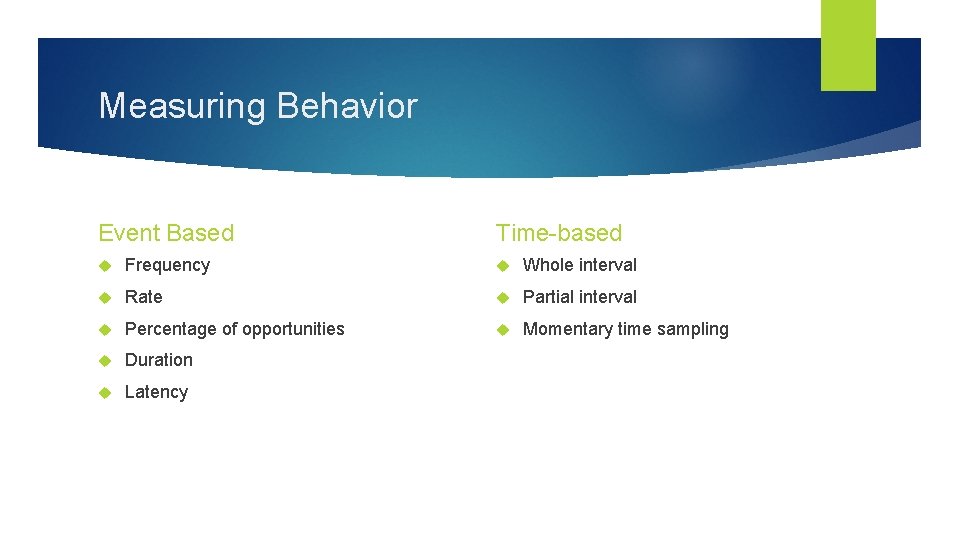
Measuring Behavior Event Based Time-based Frequency Whole interval Rate Partial interval Percentage of opportunities Momentary time sampling Duration Latency
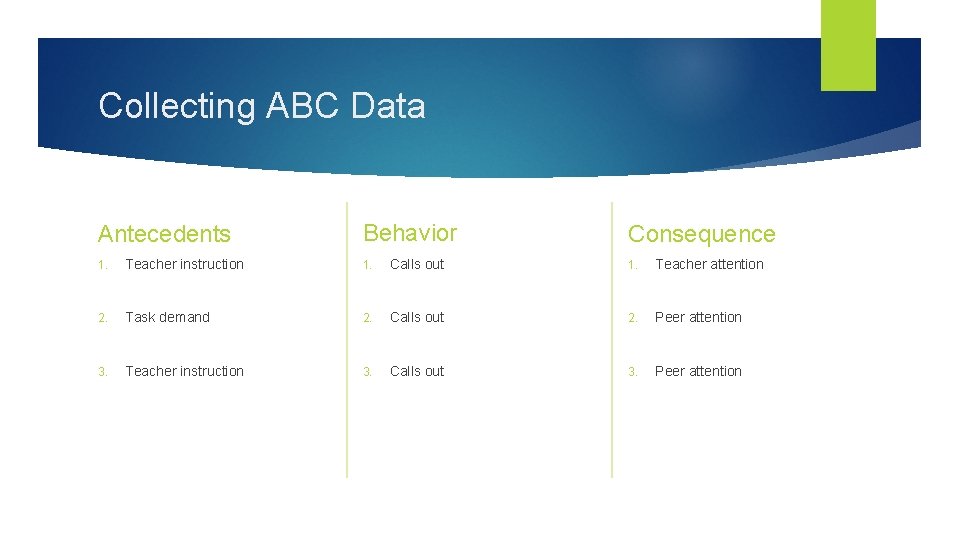
Collecting ABC Data Antecedents Behavior Consequence 1. Teacher instruction 1. Calls out 1. Teacher attention 2. Task demand 2. Calls out 2. Peer attention 3. Teacher instruction 3. Calls out 3. Peer attention
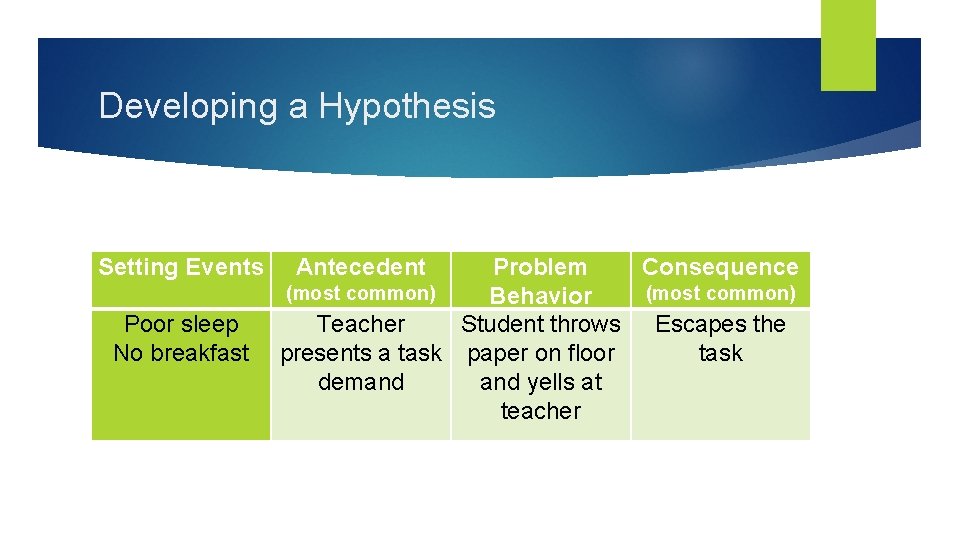
Developing a Hypothesis Setting Events Poor sleep No breakfast Antecedent Problem Consequence (most common) Behavior Teacher Student throws Escapes the presents a task paper on floor task demand yells at teacher
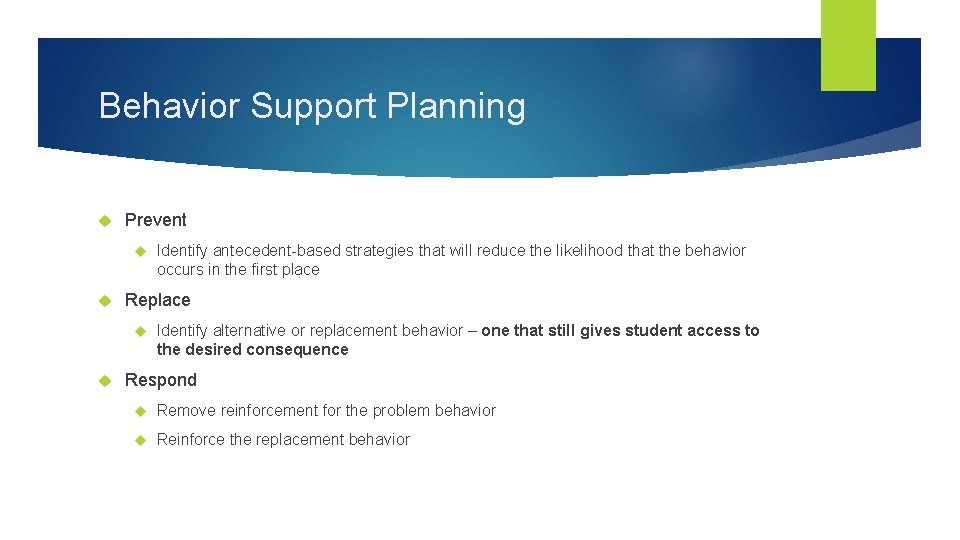
Behavior Support Planning Prevent Replace Identify antecedent-based strategies that will reduce the likelihood that the behavior occurs in the first place Identify alternative or replacement behavior – one that still gives student access to the desired consequence Respond Remove reinforcement for the problem behavior Reinforce the replacement behavior
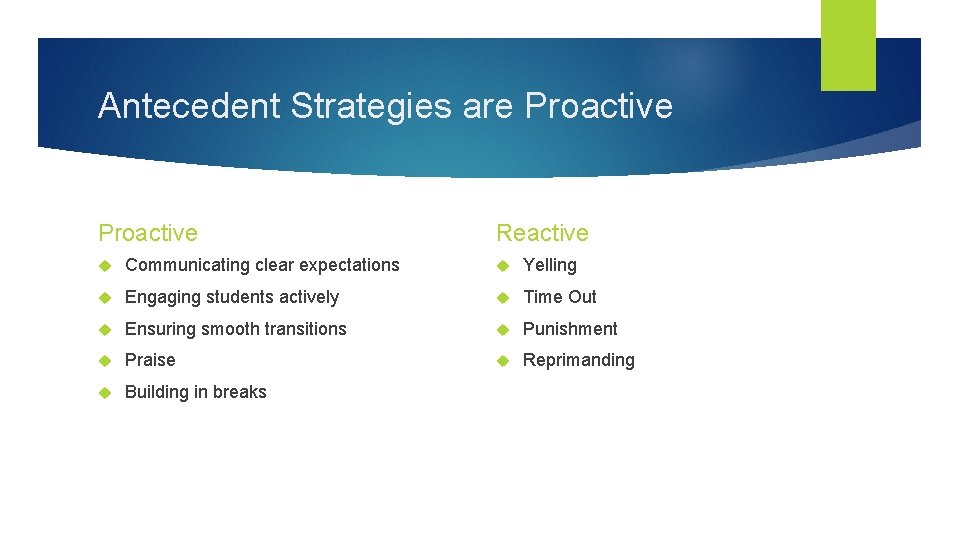
Antecedent Strategies are Proactive Reactive Communicating clear expectations Yelling Engaging students actively Time Out Ensuring smooth transitions Punishment Praise Reprimanding Building in breaks
Antecedent Strategies: more benefits Often change behavior quickly Focuses on mismatch between students and their environment Does the environment fit the student’s needs Are these demands and expectations unreasonable? Makes environment more pleasant and motivating, which enhances personal well -being and happiness (person-centered)
Example: Antecedent Interventions Example: When Mr. Bell has recess duty, he notices that when he announces, ”Recess is over; line up, ” Steven continues to play, which allows him to continue to access and enjoy recess. Antecedent Strategies: Gives transition warnings (e. g. , In 5 minutes, recess is over) Uses behavioral momentum with his class (e. g. , “Point to your line location. What is your line number? Tell me who you are behind. Get in line. ”) Pairs peers in line to give their activity more purpose Schedules a highly-preferred activity for after recess and reminds them of it
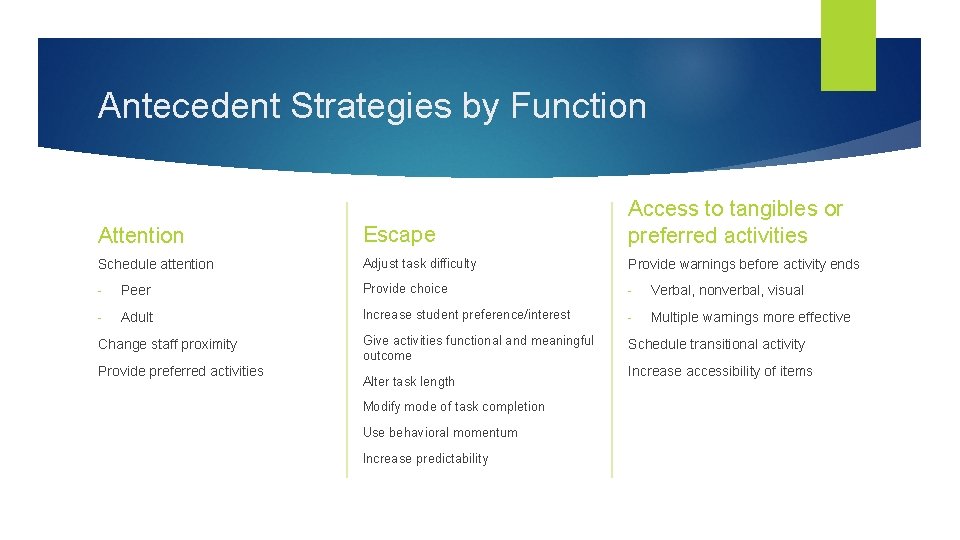
Antecedent Strategies by Function Attention Escape Access to tangibles or preferred activities Schedule attention Adjust task difficulty Provide warnings before activity ends - Peer Provide choice - Verbal, nonverbal, visual - Adult Increase student preference/interest - Multiple warnings more effective Give activities functional and meaningful outcome Schedule transitional activity Change staff proximity Provide preferred activities Alter task length Modify mode of task completion Use behavioral momentum Increase predictability Increase accessibility of items
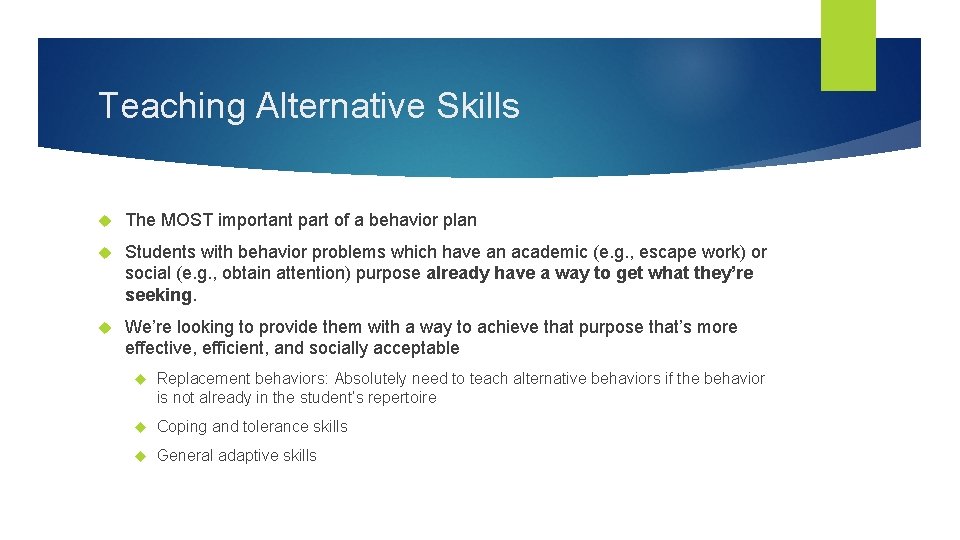
Teaching Alternative Skills The MOST important part of a behavior plan Students with behavior problems which have an academic (e. g. , escape work) or social (e. g. , obtain attention) purpose already have a way to get what they’re seeking. We’re looking to provide them with a way to achieve that purpose that’s more effective, efficient, and socially acceptable Replacement behaviors: Absolutely need to teach alternative behaviors if the behavior is not already in the student’s repertoire Coping and tolerance skills General adaptive skills
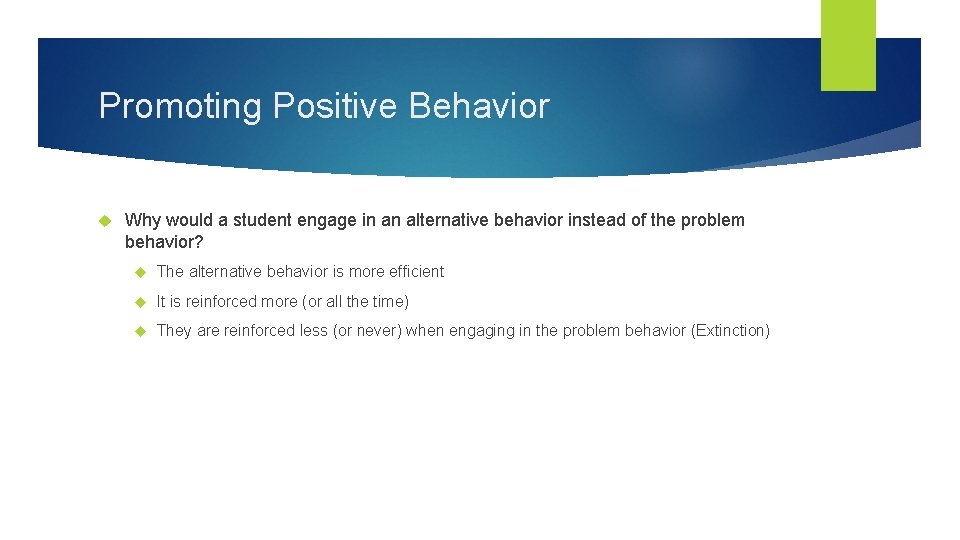
Promoting Positive Behavior Why would a student engage in an alternative behavior instead of the problem behavior? The alternative behavior is more efficient It is reinforced more (or all the time) They are reinforced less (or never) when engaging in the problem behavior (Extinction)
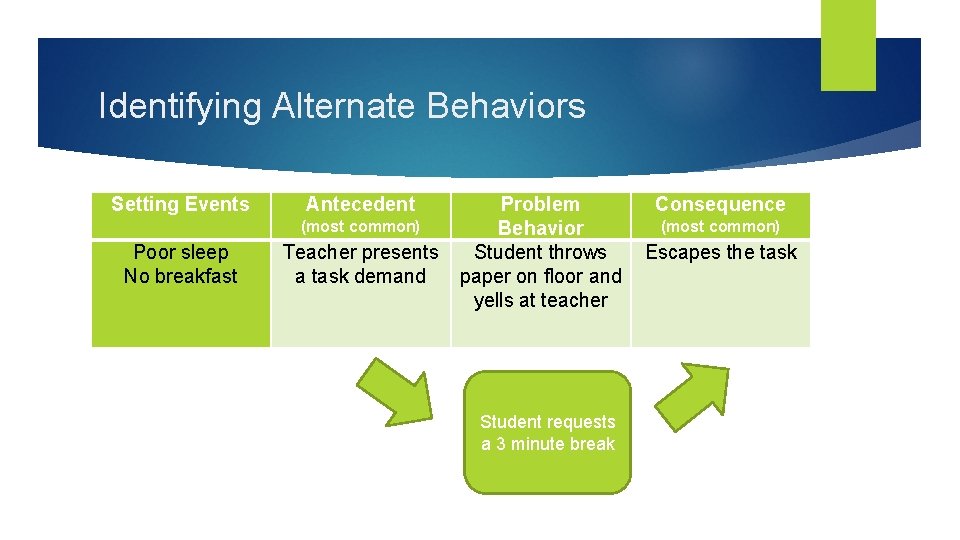
Identifying Alternate Behaviors Setting Events Antecedent (most common) Poor sleep No breakfast Teacher presents a task demand Problem Behavior Student throws paper on floor and yells at teacher Student requests a 3 minute break Consequence (most common) Escapes the task
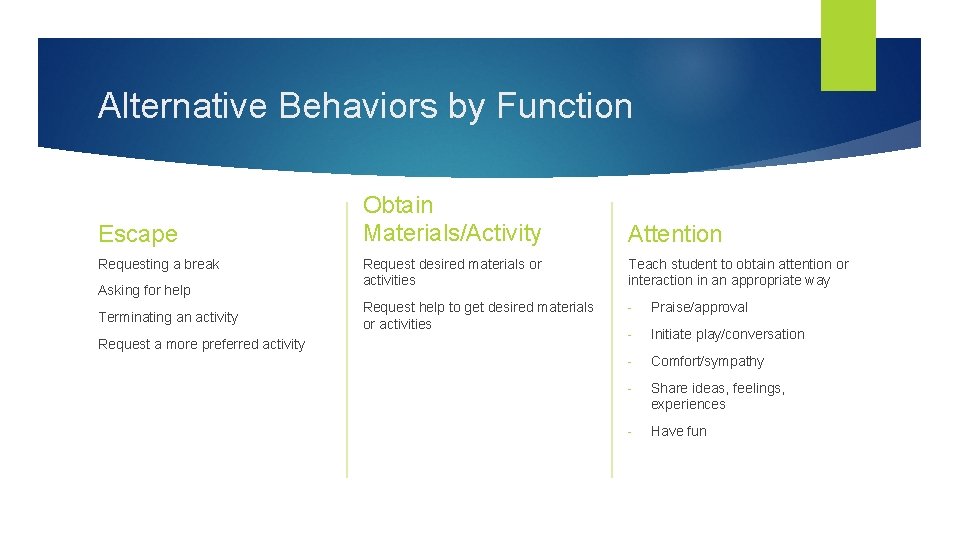
Alternative Behaviors by Function Escape Requesting a break Asking for help Terminating an activity Request a more preferred activity Obtain Materials/Activity Attention Request desired materials or activities Teach student to obtain attention or interaction in an appropriate way Request help to get desired materials or activities - Praise/approval - Initiate play/conversation - Comfort/sympathy - Share ideas, feelings, experiences - Have fun
Consequence Strategies We can prevent behavior (using antecedent strategies) We can teach alternative behaviors that will serve the same function But problem behaviors have usually been practiced and reinforced for a long time We need to have a plan for responding to problem behaviors
Punishment “Until we have: Defined Taught Modeled Practiced Reinforced Retaught It is UNETHICAL to punish. ” (Horner)
Removing Reinforcement for Problem Behavior Punishment is almost always unnecessary – we can extinguish behaviors by just removing reinforcement for the problem behavior Beware of extinction bursts It will get worse before it gets better
Choosing Reinforcements Reinforcement of alternative behaviors should allow students access to the same function as the problem behavior Rate of reinforcement is important and depends on the rate of the problem behavior Watch out for satiation Reinforcement menus allow for choice
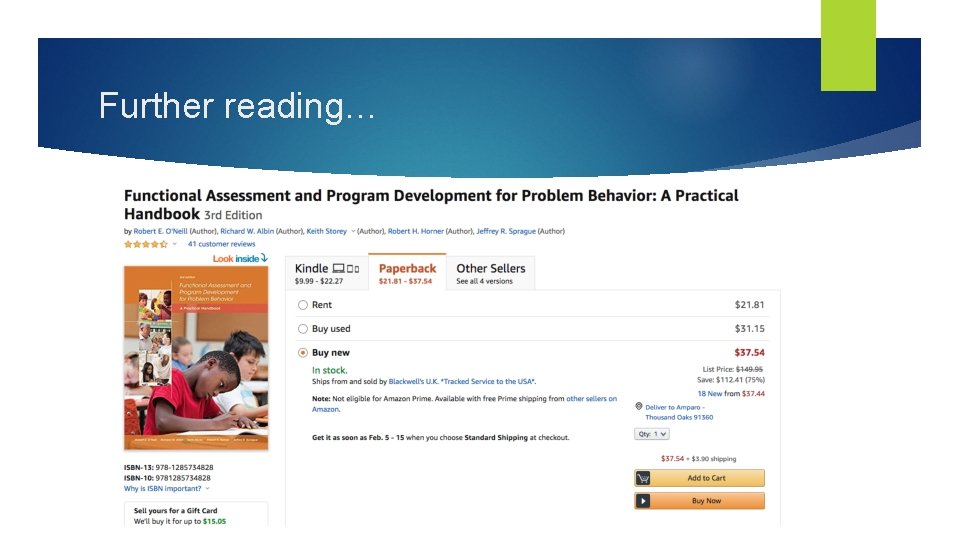
Further reading…
Take Away Remember that behavior is always communicating a student’s underlying human need Do not take behavior personally – it is how the student has learned to access what they need.
- Slides: 48