
Function of the Neuromuscular Junction Slide number 1
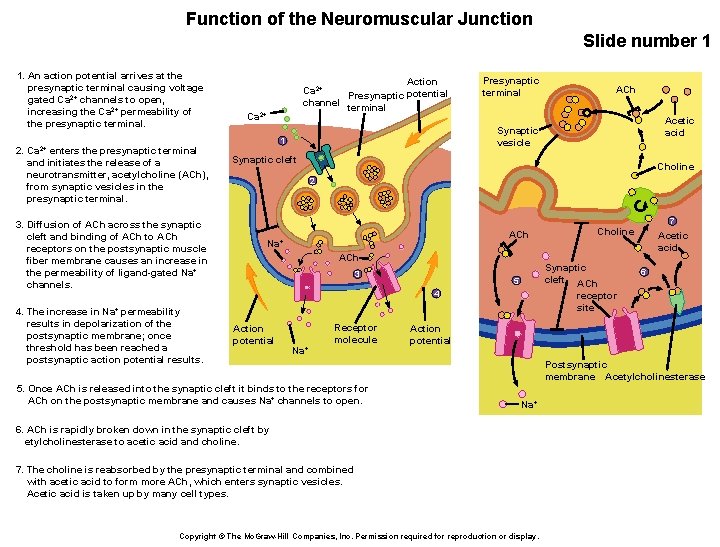
Function of the Neuromuscular Junction Slide number 1 1. An action potential arrives at the presynaptic terminal causing voltage gated Ca 2+ channels to open, increasing the Ca 2+ permeability of the presynaptic terminal. 2. Ca 2+ enters the presynaptic terminal and initiates the release of a neurotransmitter, acetylcholine (ACh), from synaptic vesicles in the presynaptic terminal. 3. Diffusion of ACh across the synaptic cleft and binding of ACh to ACh receptors on the postsynaptic muscle fiber membrane causes an increase in the permeability of ligand-gated Na+ channels. 4. The increase in permeability results in depolarization of the postsynaptic membrane; once threshold has been reached a postsynaptic action potential results. Action Ca 2+ Presynaptic potential channel terminal Ca 2+ Presynaptic terminal ACh Acetic acid Synaptic vesicle 1 Synaptic cleft Choline 2 ACh Na+ ACh 3 Synaptic cleft ACh 5 4 Na+ Receptor molecule 5. Once ACh is released into the synaptic cleft it binds to the receptors for ACh on the postsynaptic membrane and causes Na+ channels to open. Acetic acid 6 receptor site Na+ Action potential 7 Choline Action potential Postsynaptic membrane Acetylcholinesterase Na+ 6. ACh is rapidly broken down in the synaptic cleft by etylcholinesterase to acetic acid and choline. 7. The choline is reabsorbed by the presynaptic terminal and combined with acetic acid to form more ACh, which enters synaptic vesicles. Acetic acid is taken up by many cell types. Copyright © The Mc. Graw-Hill Companies, Inc. Permission required for reproduction or display.
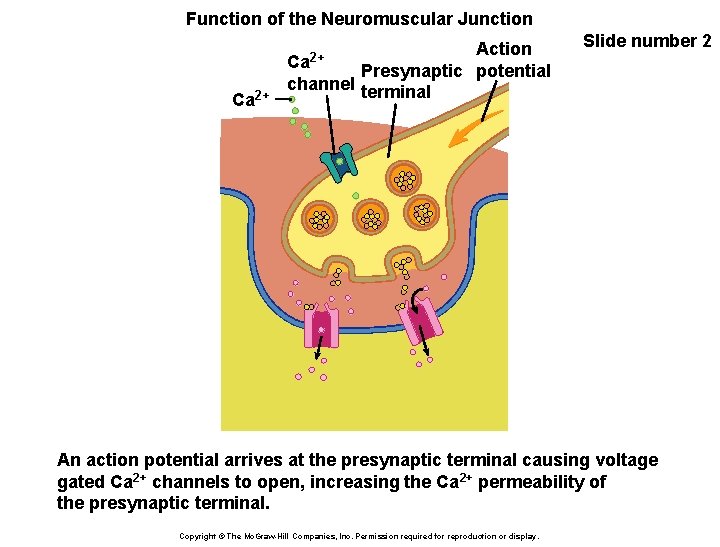
Function of the Neuromuscular Junction Ca 2+ Action 2+ Ca Presynaptic potential channel terminal Slide number 2 An action potential arrives at the presynaptic terminal causing voltage gated Ca 2+ channels to open, increasing the Ca 2+ permeability of the presynaptic terminal. Copyright © The Mc. Graw-Hill Companies, Inc. Permission required for reproduction or display.
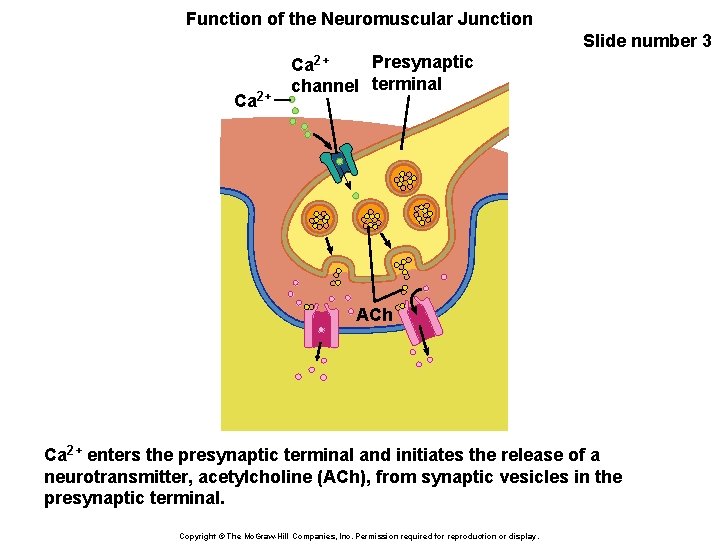
Function of the Neuromuscular Junction Slide number 3 Ca 2+ Presynaptic Ca 2+ channel terminal ACh Ca 2+ enters the presynaptic terminal and initiates the release of a neurotransmitter, acetylcholine (ACh), from synaptic vesicles in the presynaptic terminal. Copyright © The Mc. Graw-Hill Companies, Inc. Permission required for reproduction or display.

Function of the Neuromuscular Junction Slide number 4 Synaptic cleft Na+ ACh Na+ Receptor molecule Diffusion of ACh across the synaptic cleft and binding of ACh to ACh receptors on the postsynaptic muscle fiber membrane causes an increase in the permeability of ligand-gated Na+ channels. Copyright © The Mc. Graw-Hill Companies, Inc. Permission required for reproduction or display.
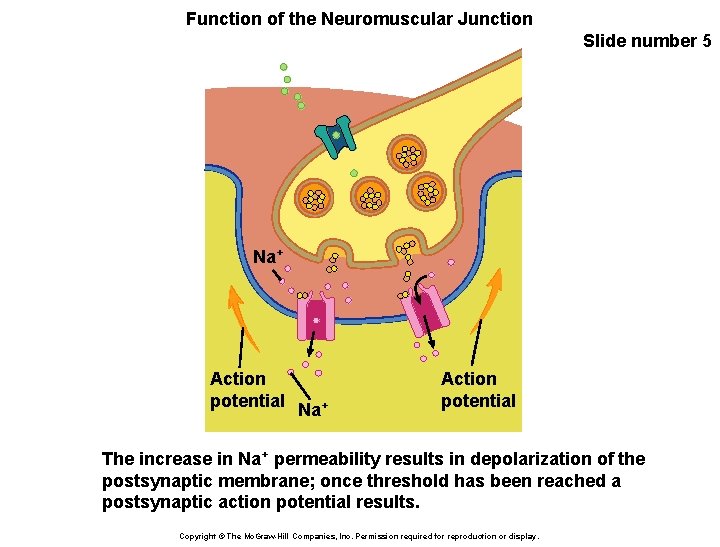
Function of the Neuromuscular Junction Slide number 5 Na+ Action potential The increase in Na+ permeability results in depolarization of the postsynaptic membrane; once threshold has been reached a postsynaptic action potential results. Copyright © The Mc. Graw-Hill Companies, Inc. Permission required for reproduction or display.
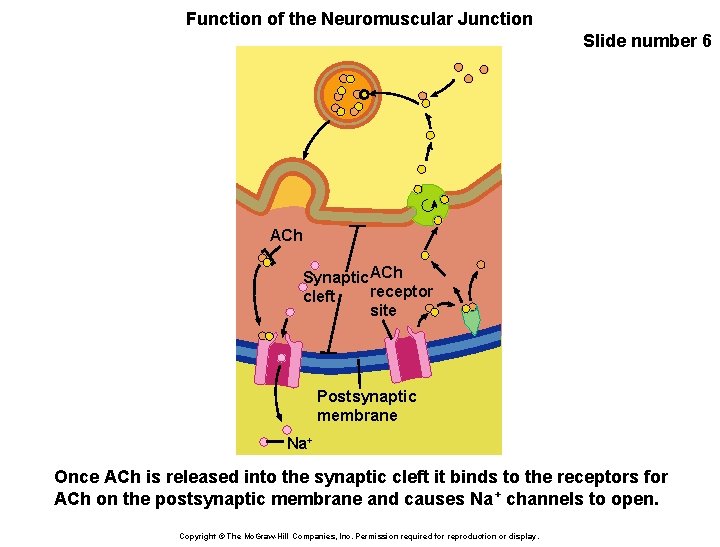
Function of the Neuromuscular Junction Slide number 6 ACh Synaptic. ACh receptor cleft site Postsynaptic membrane Na+ Once ACh is released into the synaptic cleft it binds to the receptors for ACh on the postsynaptic membrane and causes Na+ channels to open. Copyright © The Mc. Graw-Hill Companies, Inc. Permission required for reproduction or display.
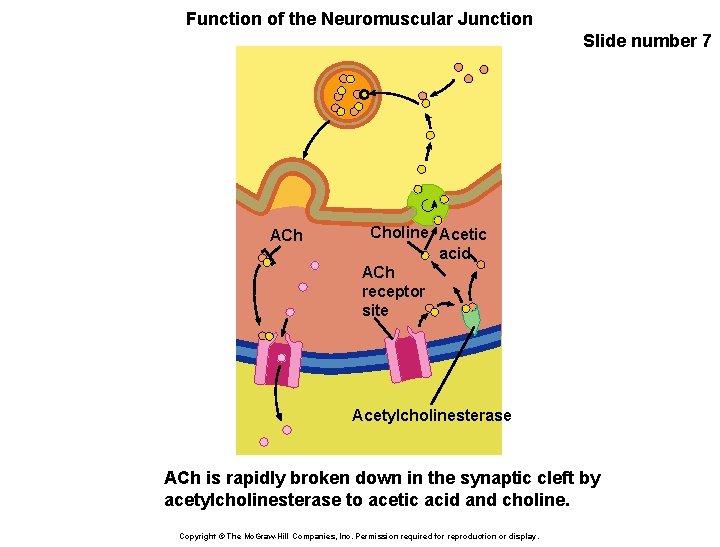
Function of the Neuromuscular Junction Slide number 7 ACh Choline Acetic acid ACh receptor site Acetylcholinesterase ACh is rapidly broken down in the synaptic cleft by acetylcholinesterase to acetic acid and choline. Copyright © The Mc. Graw-Hill Companies, Inc. Permission required for reproduction or display.
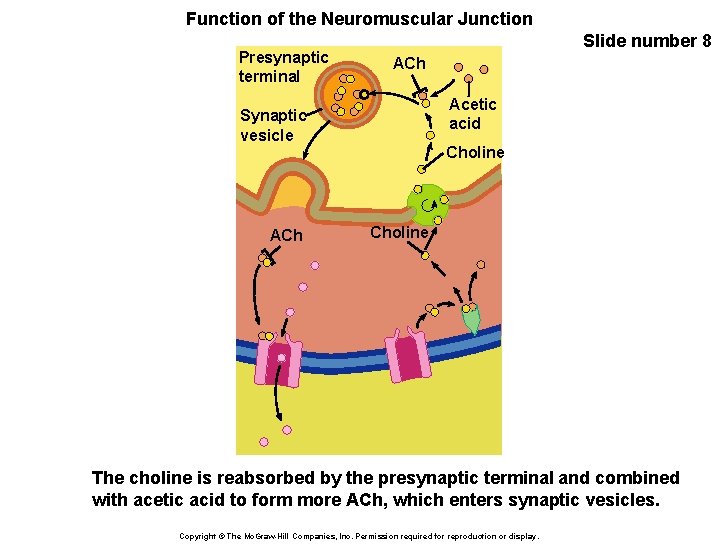
Function of the Neuromuscular Junction Presynaptic terminal Slide number 8 ACh Acetic acid Synaptic vesicle ACh Choline The choline is reabsorbed by the presynaptic terminal and combined with acetic acid to form more ACh, which enters synaptic vesicles. Copyright © The Mc. Graw-Hill Companies, Inc. Permission required for reproduction or display.
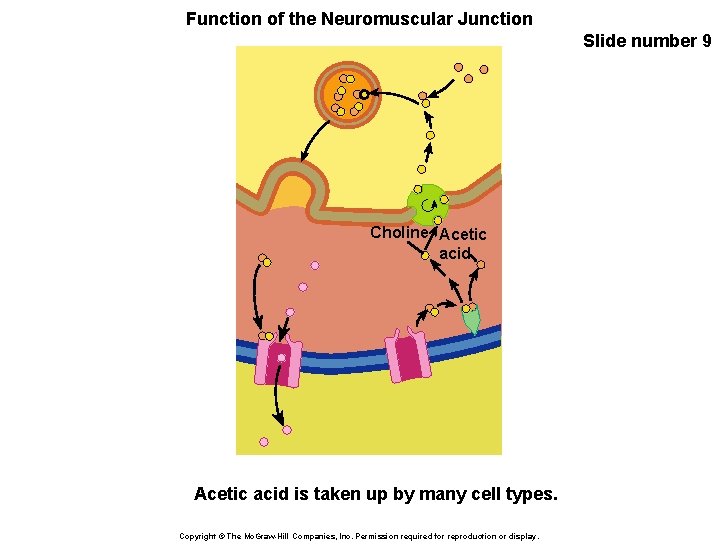
Function of the Neuromuscular Junction Slide number 9 Choline Acetic acid is taken up by many cell types. Copyright © The Mc. Graw-Hill Companies, Inc. Permission required for reproduction or display.
- Slides: 9