
Function of the Lymphatic System 1 It returns
- Slides: 11
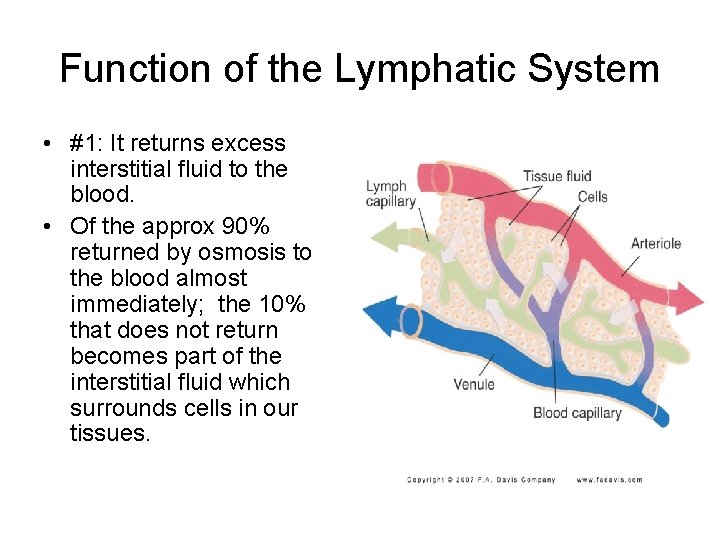
Function of the Lymphatic System • #1: It returns excess interstitial fluid to the blood. • Of the approx 90% returned by osmosis to the blood almost immediately; the 10% that does not return becomes part of the interstitial fluid which surrounds cells in our tissues.
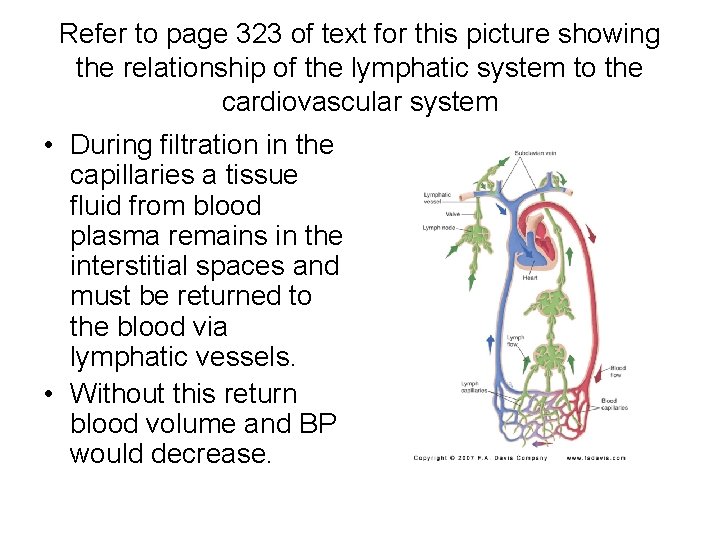
Refer to page 323 of text for this picture showing the relationship of the lymphatic system to the cardiovascular system • During filtration in the capillaries a tissue fluid from blood plasma remains in the interstitial spaces and must be returned to the blood via lymphatic vessels. • Without this return blood volume and BP would decrease.
• Function #2 of the lymphatic system is the absorption of fats and fat-soluble vitamins from the digestive system, and transport them to venous circulation. • Duodenum mucosa have fingerlike projections called Villi; • Here a specialized lymph capillaries called Lacteals that absorb fats, and the fat-soluble vitamins. • Vitamin A, D, E, and K.
• Function # 3 is to provide the bodies defense against invading microorganisms and disease processes. • Here complex lymphatic tissues (lymphocytes within connective tissue, that have been produced from stem cells in the red bone marrow, migrate to lymph nodes and nodules, lymph tissues, to the spleen, and thymus.
Definitions to know: • Lymph: a fluid similar to blood plasma and derived from blood plasma that accumulates as the blood passes through capillary walls near the arterial end. Here it is picked up and removed by microscopic lymphatic vessels and returned to the blood. As soon as this fluid enters lymph capillaries it is know as lymph. Returning fluid prevents edema and helps maintain normal blood volume and BP.
• Lymphatic Vessels: unlike blood vessels these carry fluid away from the tissues. Lymph capillaries are found in all regions of the body except bone marrow, CNS, and tissues like the epidermis which has no blood vessels. The are composed of endothelium, in which simple squamous cells overlap to form a simple one-way valve. *This valve permits fluid to enter but prevents it from leaving.
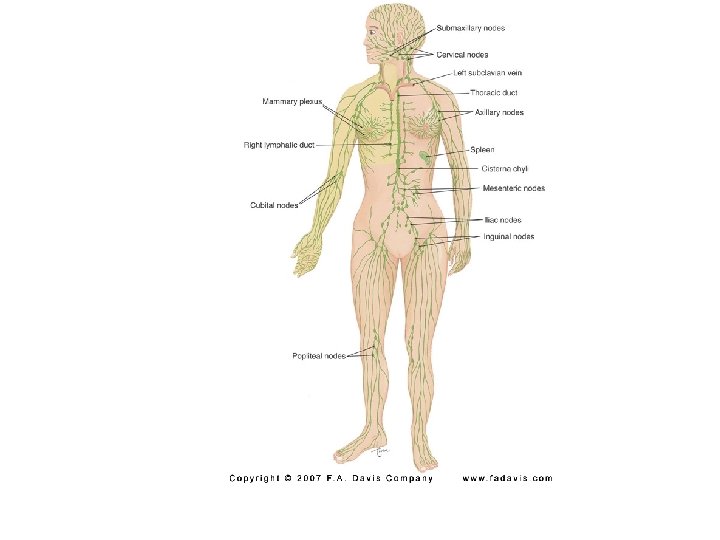
• Lymph capillaries become lymphatic vessels • small vessels become lymphatic trunks which • merge until lymph fluid enters 2 lymphatic ducts. • the right lymphatic duct drains lymph fluid from the RUQ of the body, and • thoracic duct drains all of the rest.
• The lymphatic system has no pump, it depends on pressure gradients to move the lymph through the vessels. This pressure comes from the skeletal muscle action, respiratory movement and the smooth muscle contraction of the vessel walls.
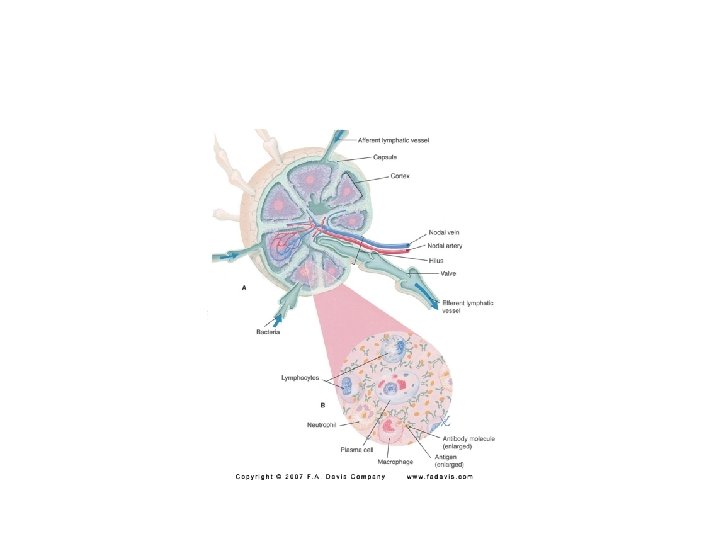
• Lymph enters a lymph node through • Afferent vessels, filter through the sinuses, and leaves the node through efferent vessels.