
Fun Facts About Food Irradiation Why do we
Fun Facts About Food Irradiation
Why do we preserve food? • Protect people from microorganisms, parasites, and other pests • Extend shelf-life, improve long-term quality • Make desirable alterations to food properties
History of Food Preservation Oldest Methods - Drying Fermenting Salting Smoking Newer Methods - Newest Method: Irradiation Freezing Canning Refrigeration Preservatives Pesticides
What is food irradiation? • Treatment of foods by subjecting them to ionizing radiation • Does not and cannot make foods radioactive
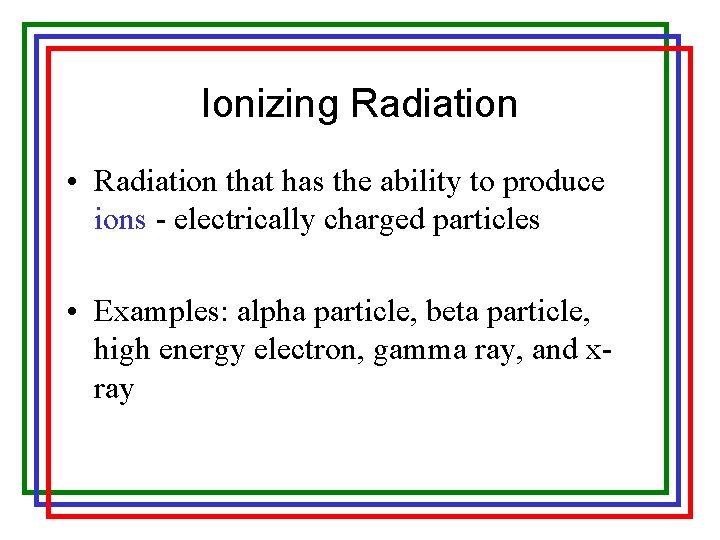
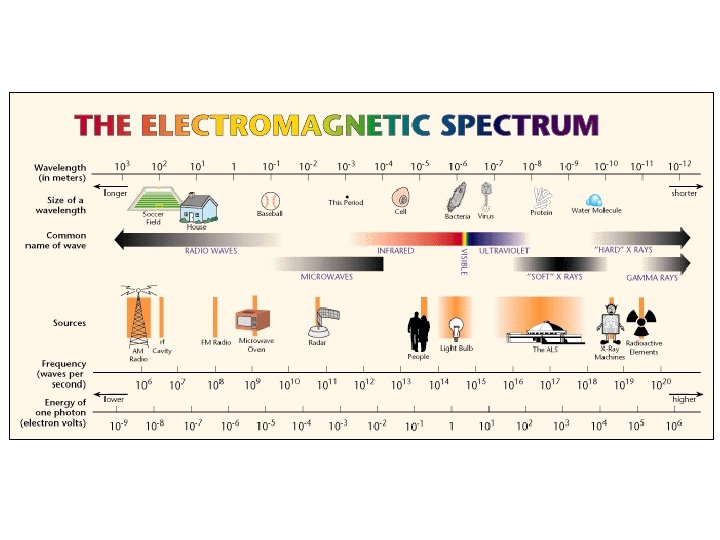
Ionizing Radiation • Radiation that has the ability to produce ions - electrically charged particles • Examples: alpha particle, beta particle, high energy electron, gamma ray, and xray
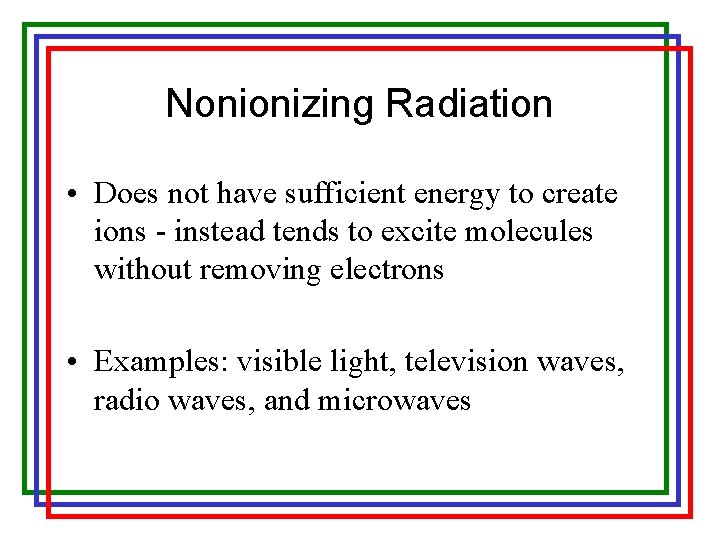
Nonionizing Radiation • Does not have sufficient energy to create ions - instead tends to excite molecules without removing electrons • Examples: visible light, television waves, radio waves, and microwaves
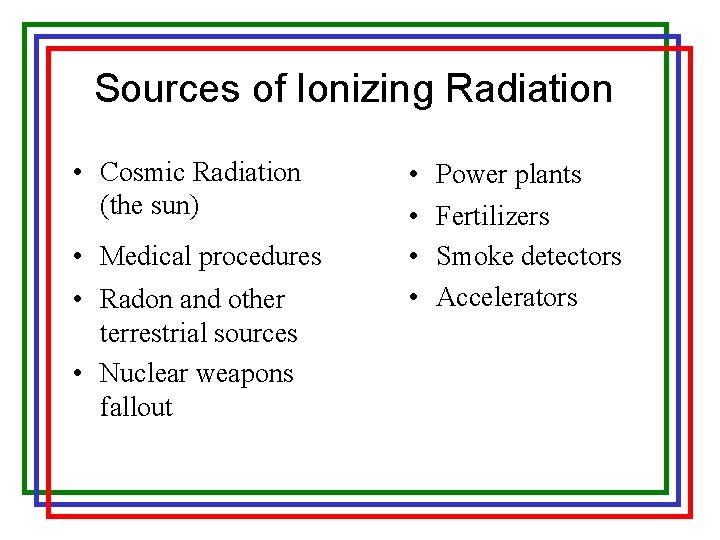
Sources of Ionizing Radiation • Cosmic Radiation (the sun) • Medical procedures • Radon and other terrestrial sources • Nuclear weapons fallout • • Power plants Fertilizers Smoke detectors Accelerators
Food Irradiator Sources • Cobalt-60 and Cesium-137 – Emit gamma rays – Sealed in container - never touches food – Can be recycled • Machine generated beta or x-rays – Produces no waste outside of the machine used to produce the radiation
Irradiation Processes • • • Sterilization Pasteurization Disinfestation Sprout Inhibition Delay of Ripening Physical Improvements
Irradiation Sterilization • Very high dose used to kill all organisms • Sterilization of > 50% disposable medical instruments • Food sterilization - NASA, military, transplant patients
Irradiation Pasteurization • Reduces remaining number of living organisms • Prevent growth of mold • Kill bacteria and parasites
Irradiation Disinfestation • Kills insects and parasites in grains and other stored foods • Fewer chemical residues on fruits and vegetables • Does not prevent against re-infestation
Physical Improvements • Inhibit sprouting of potatoes, onions, and garlic • Delay of ripening for strawberries, mangoes, bananas, tomatoes, etc. • Incidental improvement in fruit texture and meat color
How does irradiation do so many different things? • High doses damage or kills cells – Kills microorganisms or insects • Lower doses alter chemical reactions and interfere with cell division – Delay fruit ripening – Prevent sprouting or parasite reproduction
Are irradiated foods safe to eat? • Foods cannot become radioactive at energies used in irradiation • Below 10 k. Gy there are no known toxicological, microbiological, or nutritional problems
Foods Approved for Irradiation in the United States • • • Fresh fruits and vegetables Herbs and spices Pork Potatoes Poultry
Important Terminology Ion: Atom that has been made electrically charged by the removal or one or more electron. Gray: Unit of energy absorbed by a material. 1000 Gy = 1 k. Gy Radura: Official symbol or logo indicating that food has been irradiated.
Sources of Additional Information • American Council on Science and Health http: //www. acsh. org/food/index. html • World Health Organization Safety and Nutritional Adequacy of Irradiated Foods • Institute of Food Technologists Radiation Preservation of Foods
- Slides: 19