
Fun conjugating in the present subjunctive Its sooooooo
Fun conjugating in the present subjunctive! It’s sooooooo easy!
Here are the steps I follow to conjugate a verb in the present subjunctive: • 1) Start with the “yo” form of the verb • 2) Drop the “o” • 3) Add the opposite endings
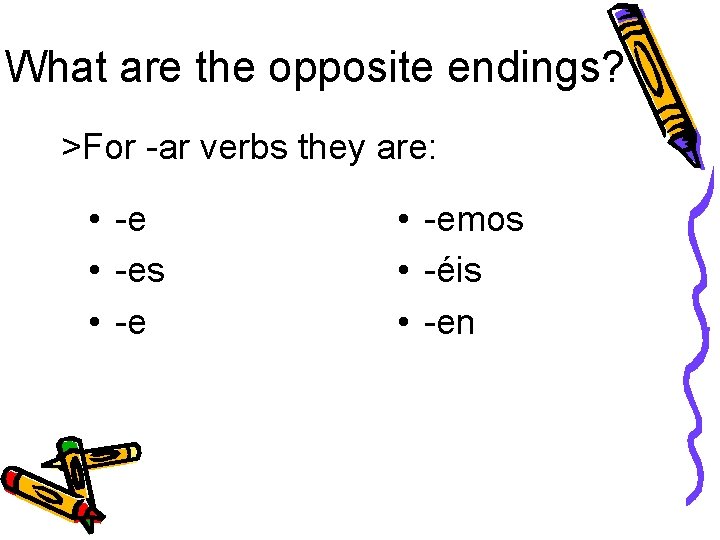
What are the opposite endings? >For -ar verbs they are: • -es • -emos • -éis • -en
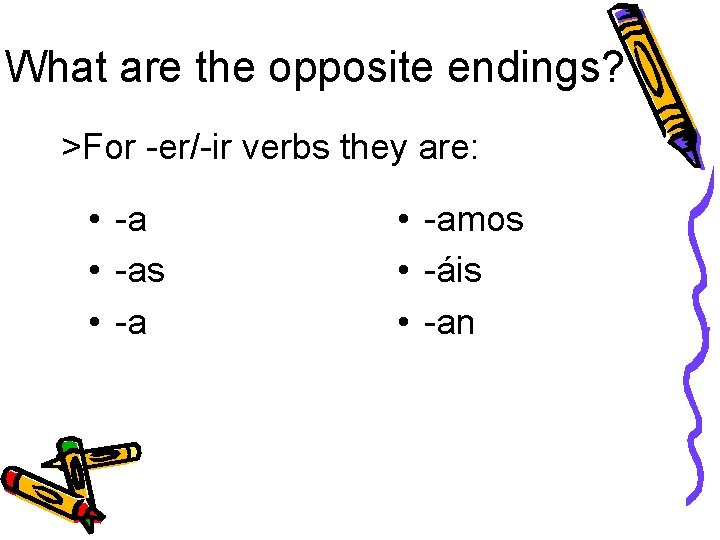
What are the opposite endings? >For -er/-ir verbs they are: • -as • -amos • -áis • -an
I just can’t wait to practice a few present subjunctive conjugations!
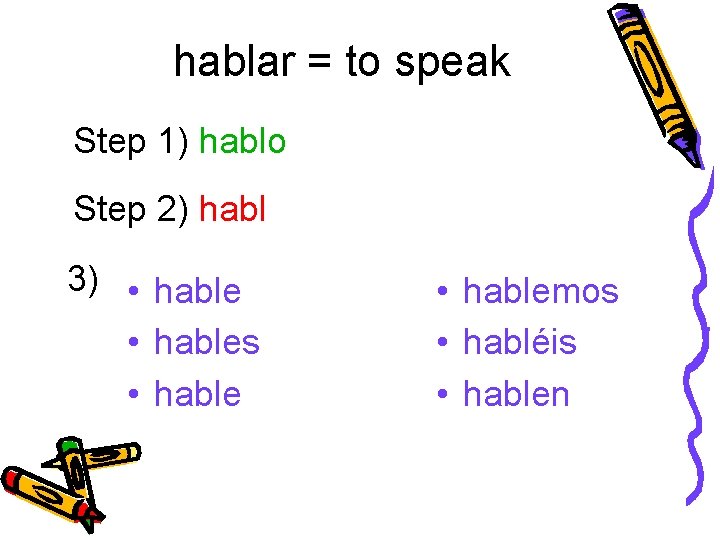
hablar = to speak Step 1) hablo Step 2) habl 3) • hables • hablemos • habléis • hablen
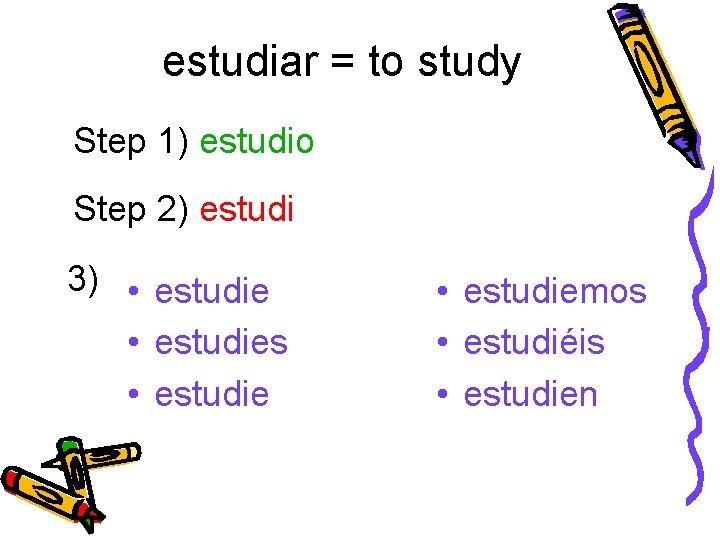
estudiar = to study Step 1) estudio Step 2) estudi 3) • estudies • estudiemos • estudiéis • estudien
That was fun! Now I’ll try an -er and an -ir verb!
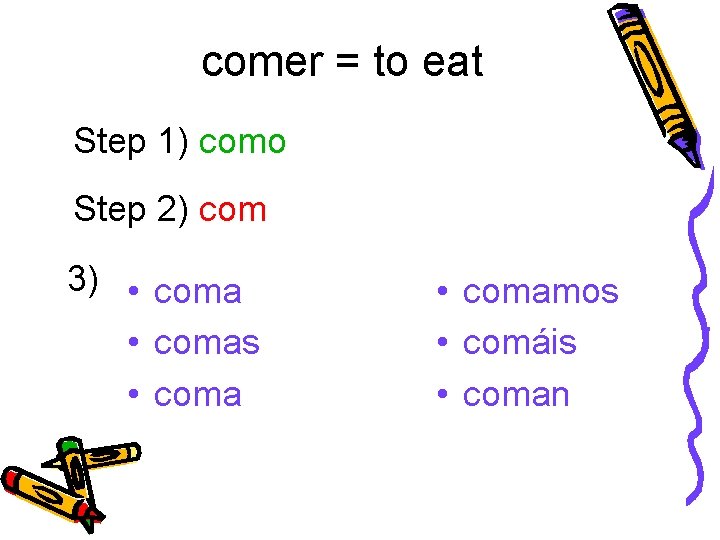
comer = to eat Step 1) como Step 2) com 3) • comas • comamos • comáis • coman
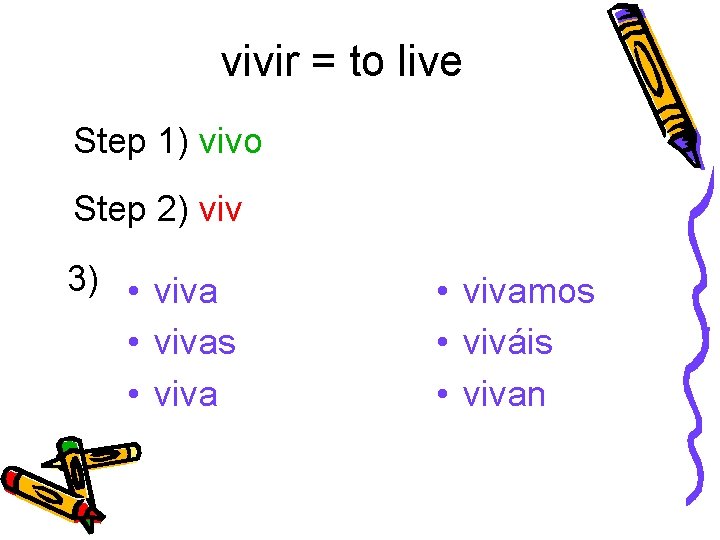
vivir = to live Step 1) vivo Step 2) viv 3) • vivas • vivamos • viváis • vivan
I wonder how I’ll do with irregulars or -car, -gar, -zar verbs!
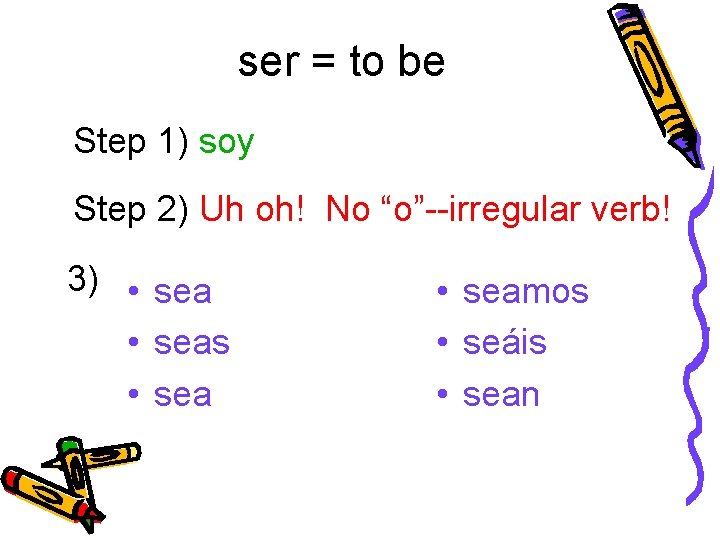
ser = to be Step 1) soy Step 2) Uh oh! No “o”--irregular verb! 3) • seas • seamos • seáis • sean
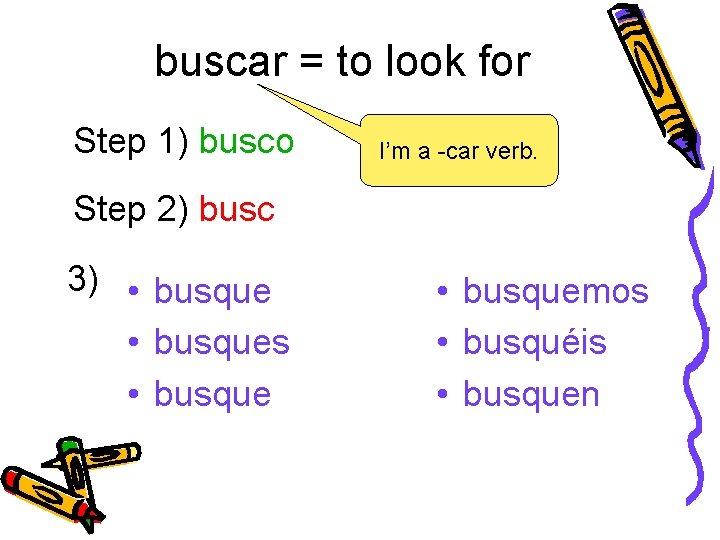
buscar = to look for Step 1) busco I’m a -car verb. Step 2) busc 3) • busques • busquemos • busquéis • busquen
Wow! I’m great! Now I’ll practice a “go” verb and a reflexive verb.
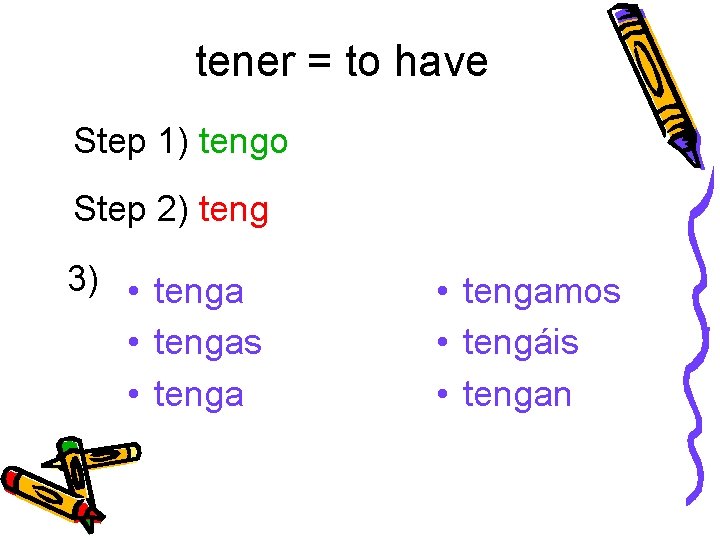
tener = to have Step 1) tengo Step 2) teng 3) • tengas • tengamos • tengáis • tengan
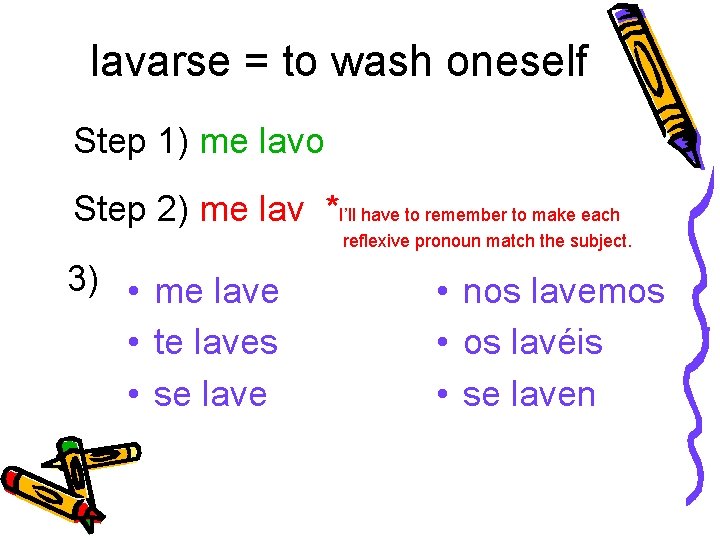
lavarse = to wash oneself Step 1) me lavo Step 2) me lav *I’ll have to remember to make each reflexive pronoun match the subject. 3) • me lave • te laves • se lave • nos lavemos • os lavéis • se laven

Okay, Profe, I understand how to form the present subjunctive. Now, when do I USE it? Stay tuned for more next class!
- Slides: 18