
Fun and Fear in Open Spaces Image from


- Slides: 43
Fun and Fear in Open Spaces Image from kurtxio Jon Dron and Terry Anderson Open Access Week 2011
agoraphobia the fear of open spaces 2
agoraphilia the love of open spaces 3
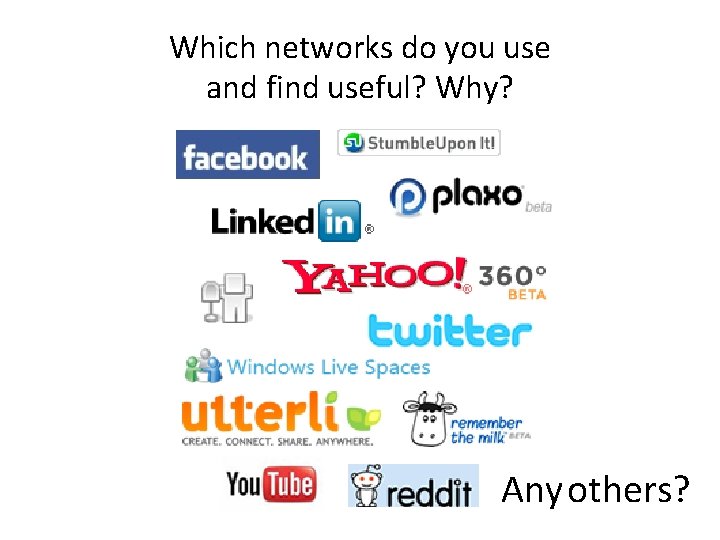
Which networks do you use and find useful? Why? Any others?
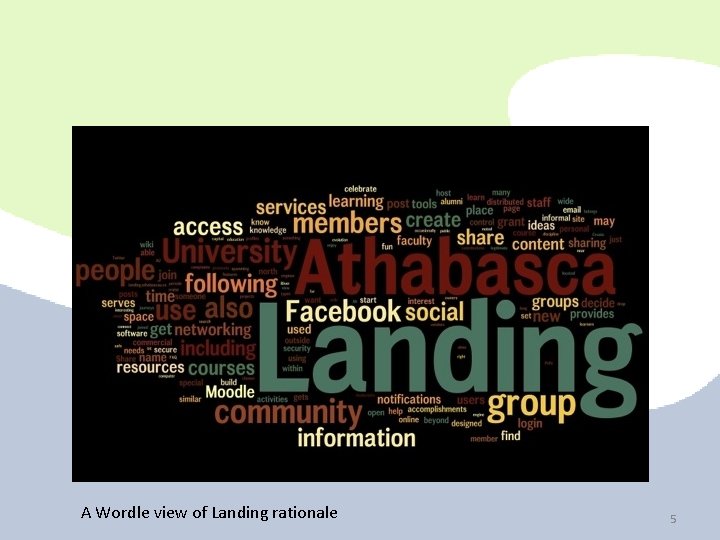
A Wordle view of Landing rationale 5
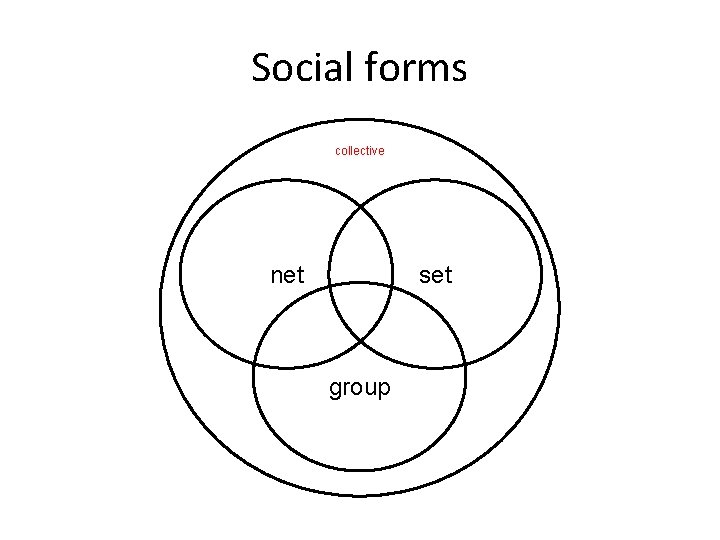
Social forms collective net set group
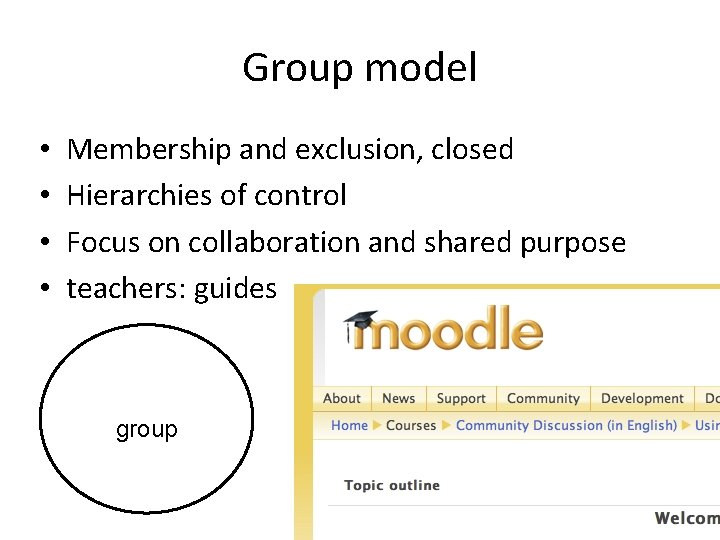
Group model • • Membership and exclusion, closed Hierarchies of control Focus on collaboration and shared purpose teachers: guides group 8
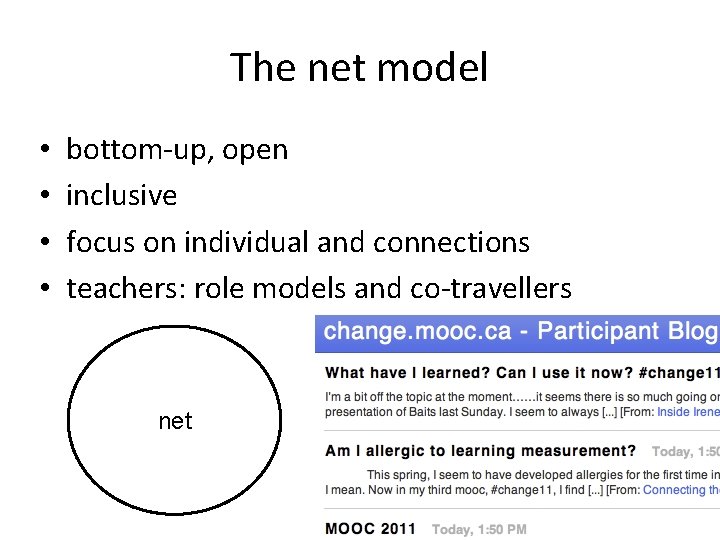
The net model • • bottom-up, open inclusive focus on individual and connections teachers: role models and co-travellers net 9
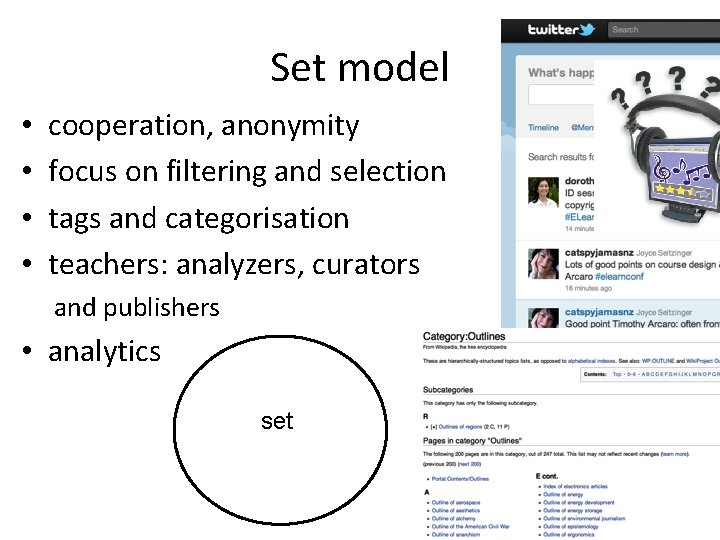
Set model • • cooperation, anonymity focus on filtering and selection tags and categorisation teachers: analyzers, curators and publishers • analytics set 10
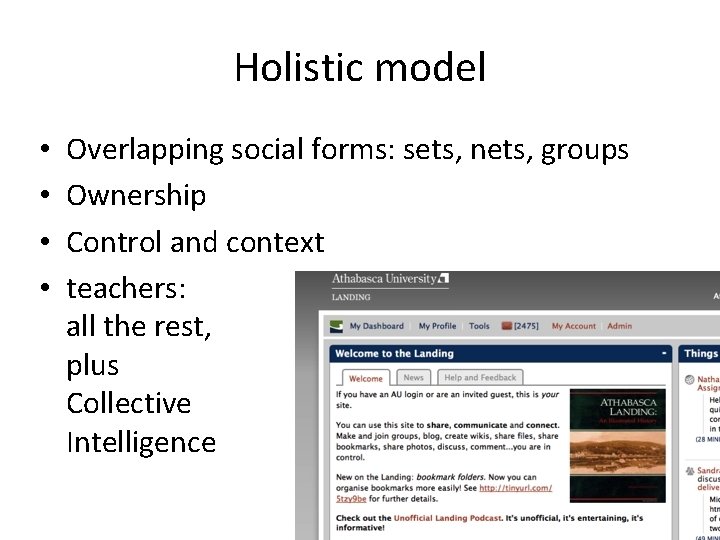
Holistic model • • Overlapping social forms: sets, nets, groups Ownership Control and context teachers: all the rest, plus Collective Intelligence 11
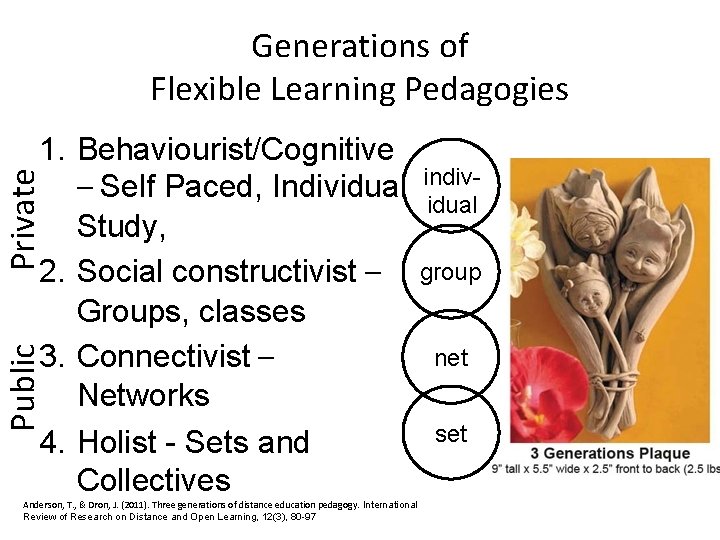
Generations of Flexible Learning Pedagogies Public Private 1. Behaviourist/Cognitive – Self Paced, Individual Study, 2. Social constructivist – Groups, classes 3. Connectivist – Networks 4. Holist - Sets and Collectives Anderson, T. , & Dron, J. (2011). Three generations of distance education pedagogy. International Review of Research on Distance and Open Learning, 12(3), 80 -97 individual group net set
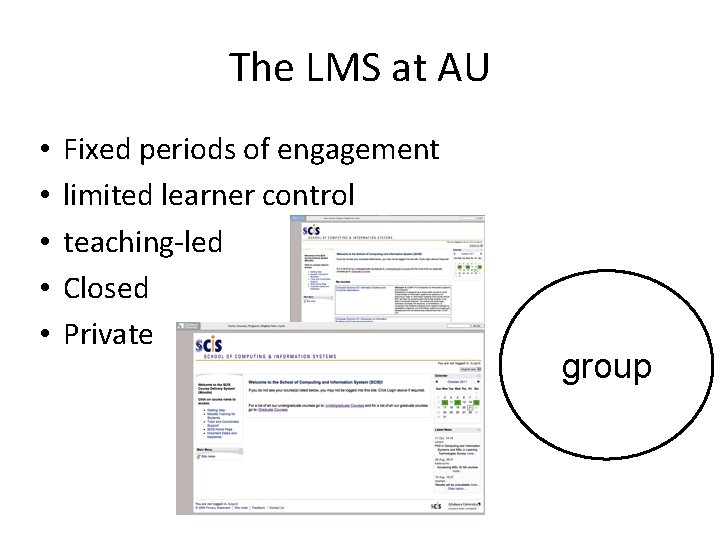
The LMS at AU • • • Fixed periods of engagement limited learner control teaching-led Closed Private group
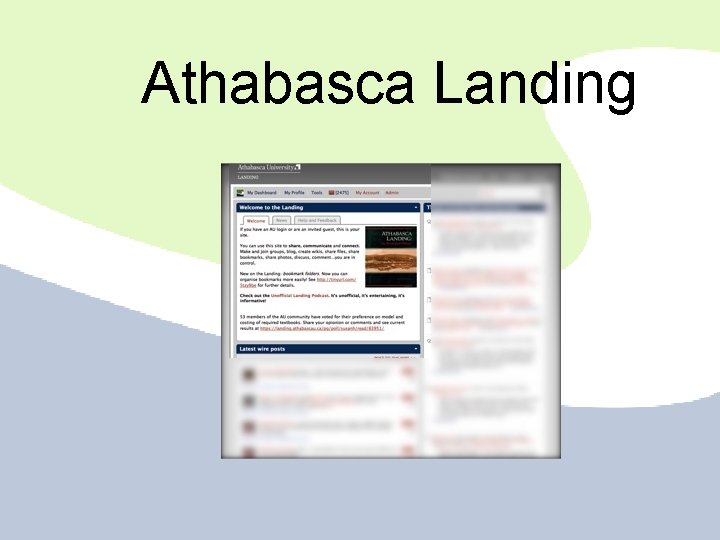
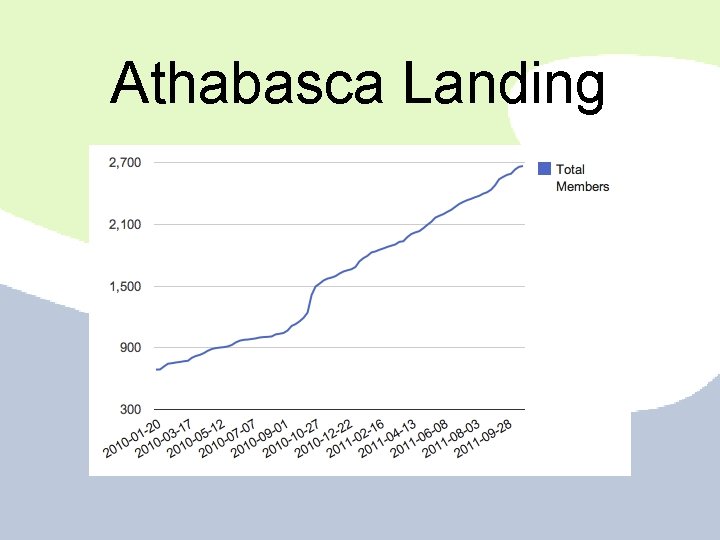
Athabasca Landing
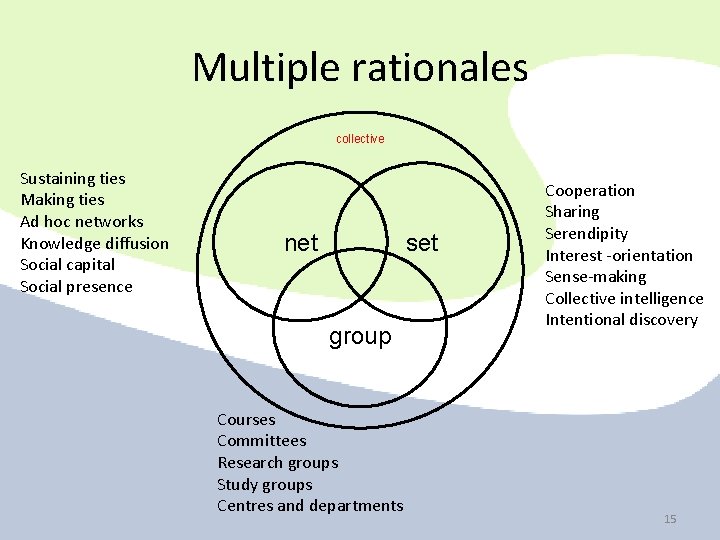
Multiple rationales collective Sustaining ties Making ties Ad hoc networks Knowledge diffusion Social capital Social presence net set group Courses Committees Research groups Study groups Centres and departments Cooperation Sharing Serendipity Interest -orientation Sense-making Collective intelligence Intentional discovery 15
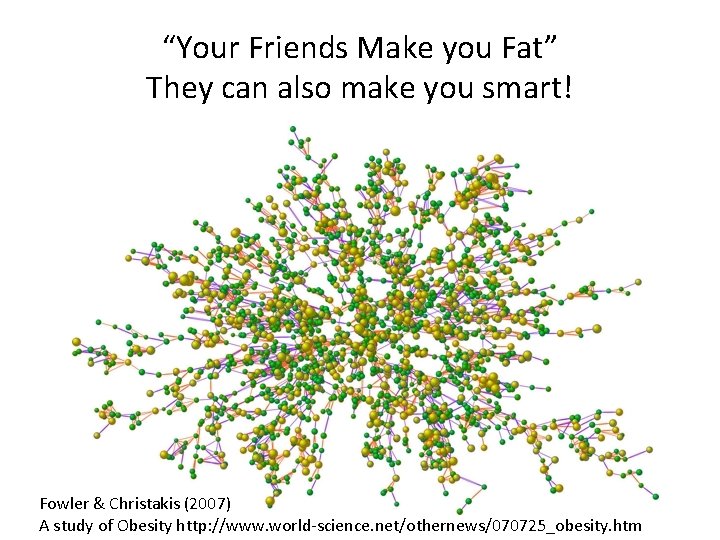
“Your Friends Make you Fat” They can also make you smart! Fowler & Christakis (2007) A study of Obesity http: //www. world-science. net/othernews/070725_obesity. htm
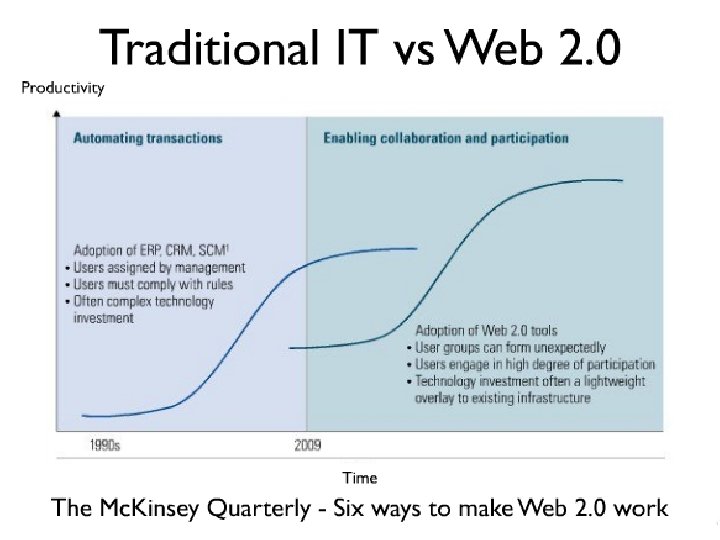
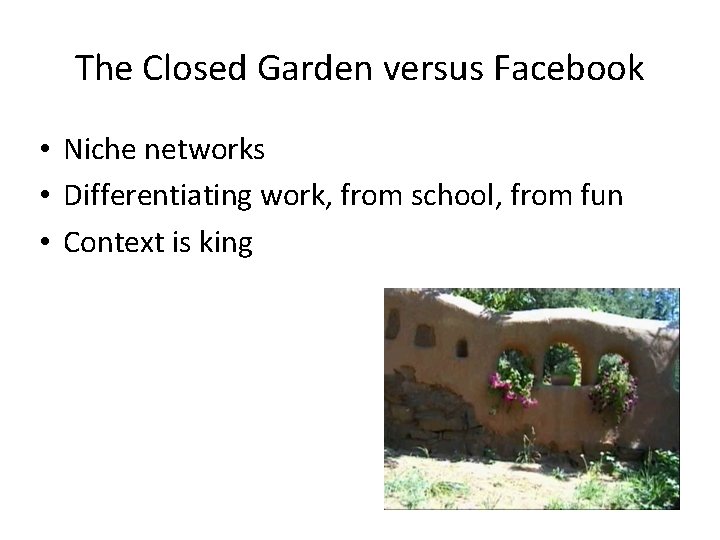
The Closed Garden versus Facebook • Niche networks • Differentiating work, from school, from fun • Context is king
A Guided Tour of the Landing https: //landing. athabascau. ca 18
Athabasca Landing
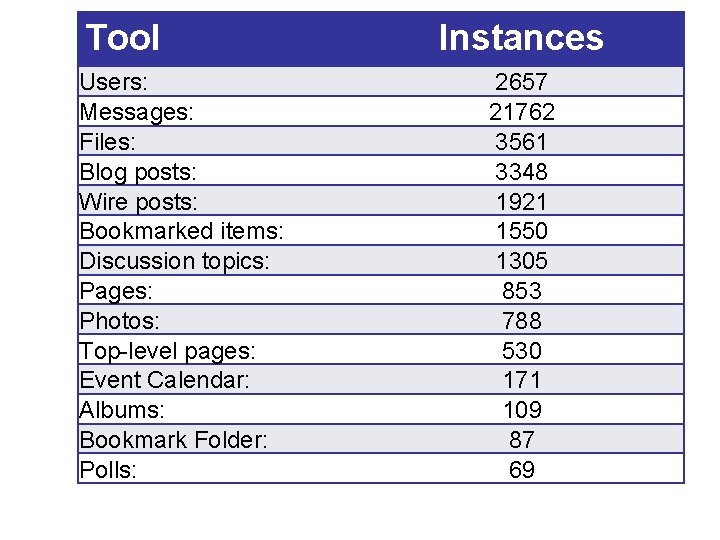
Tool Users: Messages: Files: Blog posts: Wire posts: Bookmarked items: Discussion topics: Pages: Photos: Top-level pages: Event Calendar: Albums: Bookmark Folder: Polls: Instances 2657 21762 3561 3348 1921 1550 1305 853 788 530 171 109 87 69
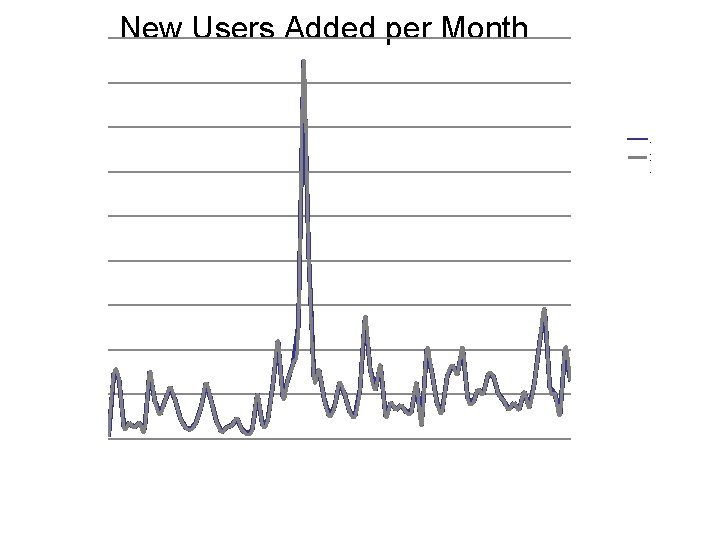
New Users Added per Month . . .
Monthly Blog Posts
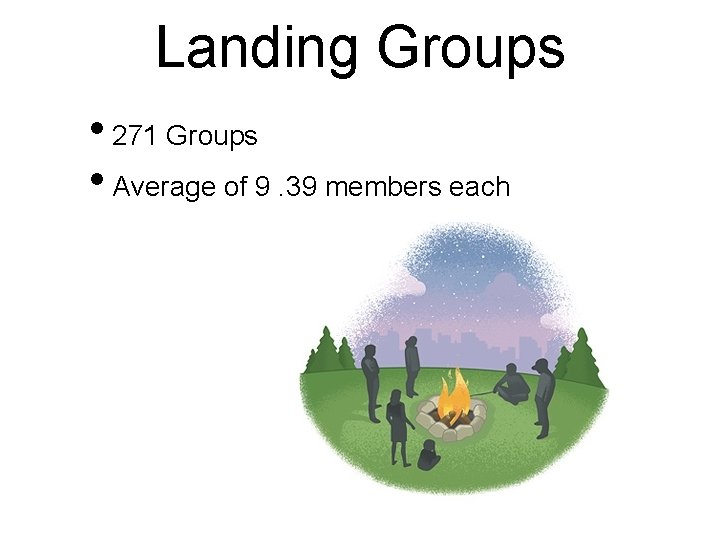
Landing Groups • 271 Groups • Average of 9. 39 members each
A soft space 24
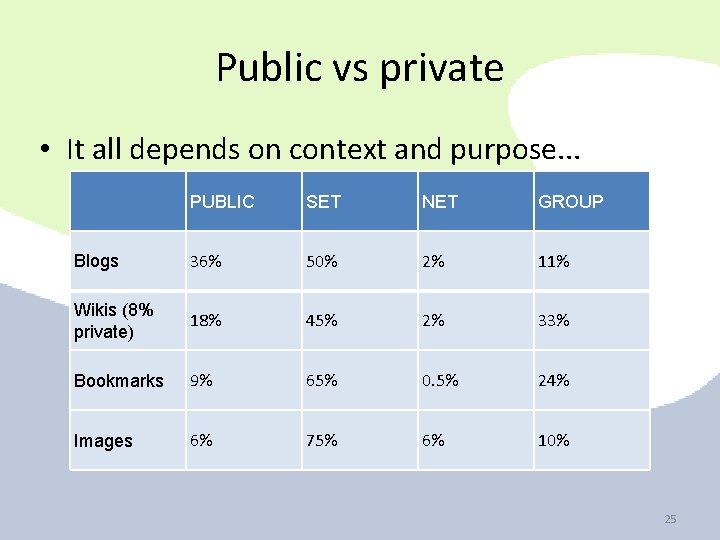
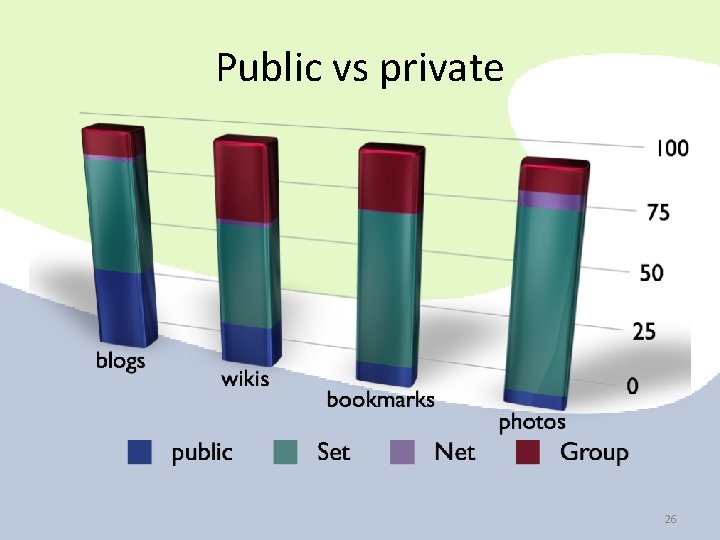
Public vs private • It all depends on context and purpose. . . PUBLIC SET NET GROUP Blogs 36% 50% 2% 11% Wikis (8% private) 18% 45% 2% 33% Bookmarks 9% 65% 0. 5% 24% Images 6% 75% 6% 10% 25
Public vs private 26
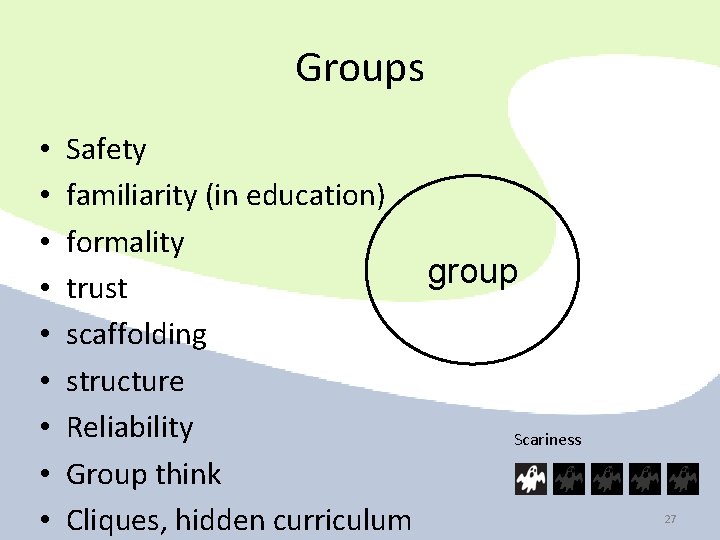
Groups • • • Safety familiarity (in education) formality group trust scaffolding structure Reliability Scariness Group think Cliques, hidden curriculum 27
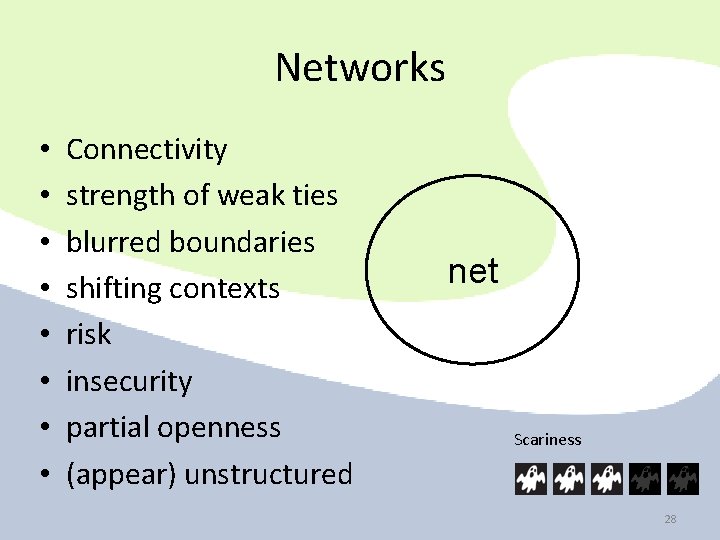
Networks • • Connectivity strength of weak ties blurred boundaries shifting contexts risk insecurity partial openness (appear) unstructured net Scariness 28
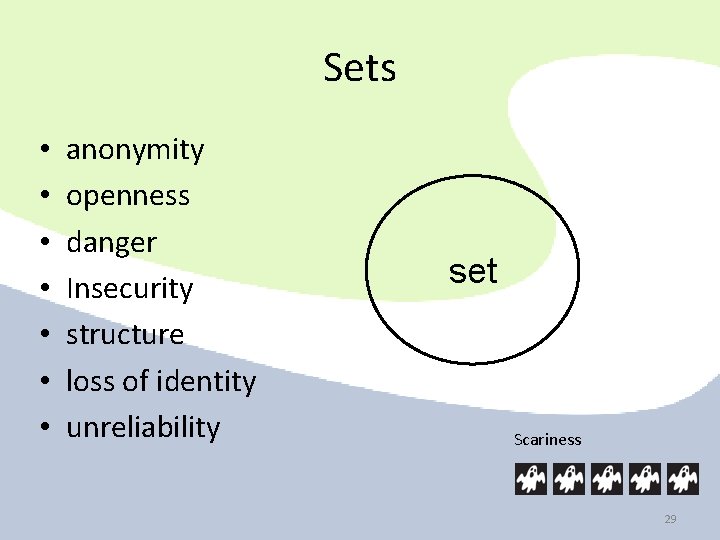
Sets • • anonymity openness danger Insecurity structure loss of identity unreliability set Scariness 29
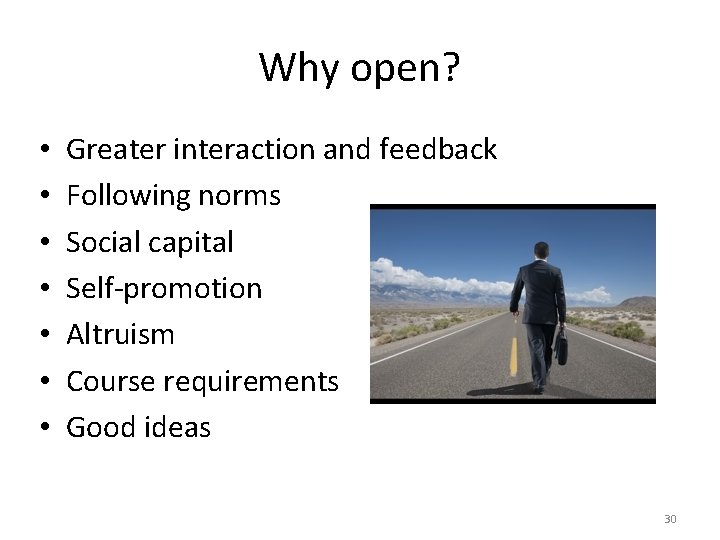
Why open? • • Greater interaction and feedback Following norms Social capital Self-promotion Altruism Course requirements Good ideas 30
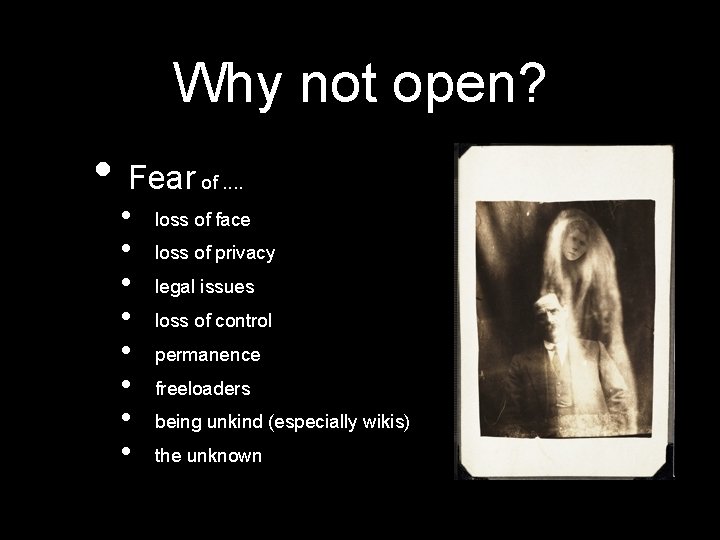
Why not open? • Fear • • of. . loss of face loss of privacy legal issues loss of control permanence freeloaders being unkind (especially wikis) the unknown
Why not re-use? 32
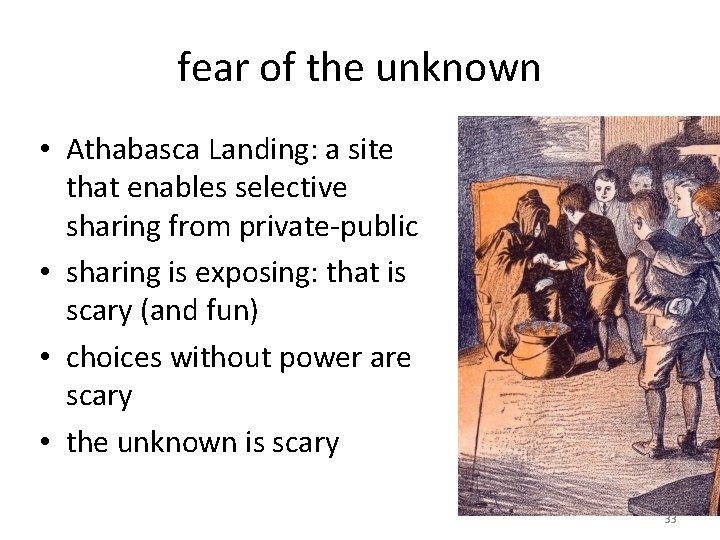
fear of the unknown • Athabasca Landing: a site that enables selective sharing from private-public • sharing is exposing: that is scary (and fun) • choices without power are scary • the unknown is scary 33
Open things in social space • accuracy/trustworthiness: issues of reputation. • validity and trustworthiness comes from the combined artefacts. • Matthew Principle • Group liability and guilt • Freeloading • Stupidity of Mobs, Group Think • legal fears
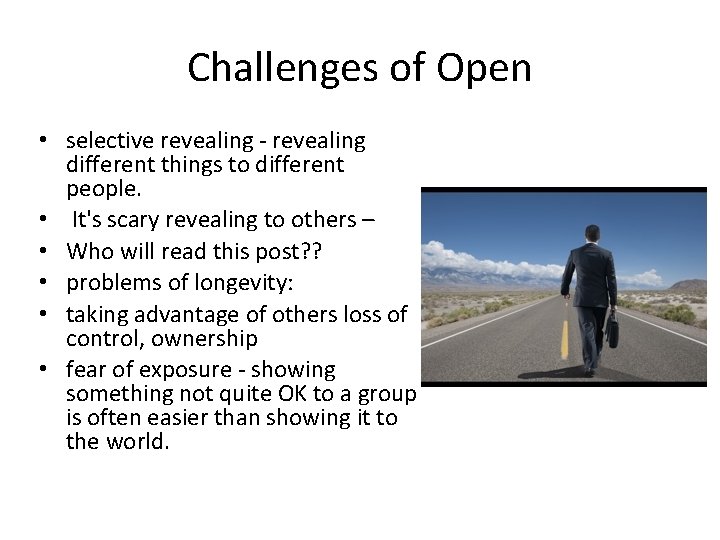
Challenges of Open • selective revealing - revealing different things to different people. • It's scary revealing to others – • Who will read this post? ? • problems of longevity: • taking advantage of others loss of control, ownership • fear of exposure - showing something not quite OK to a group is often easier than showing it to the world.
Teaching Presence in Social Spaces • Network Leadership is not the same as group leadership • Role models, co-travellers • Valuing leadership beyond ‘contact hours’
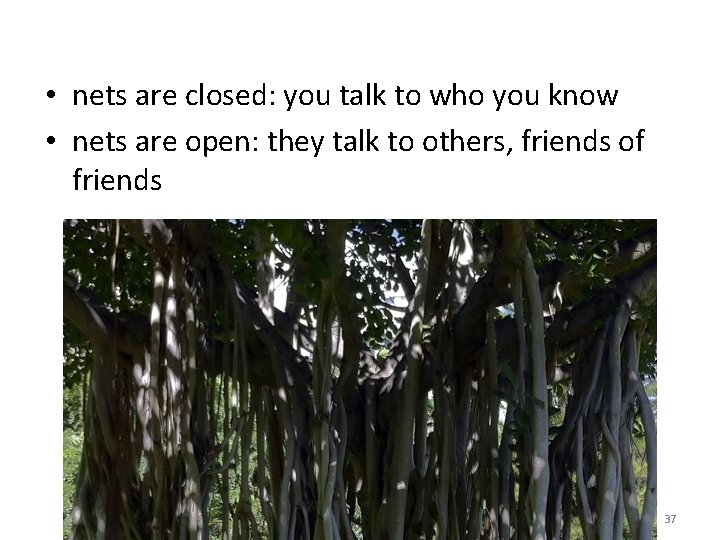
• nets are closed: you talk to who you know • nets are open: they talk to others, friends of friends 37
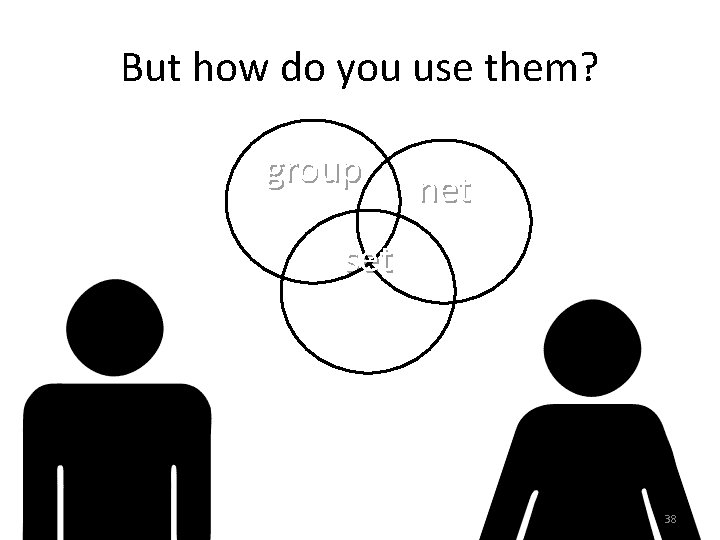
But how do you use them? group net set 38
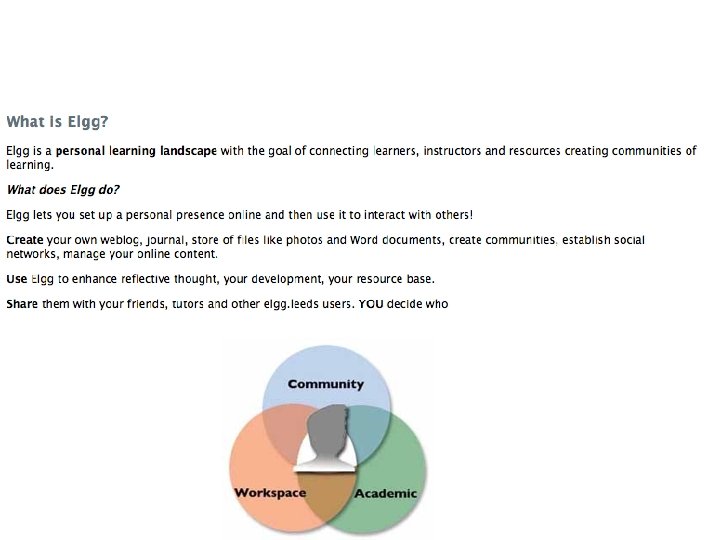
The elgg solution elgg. org
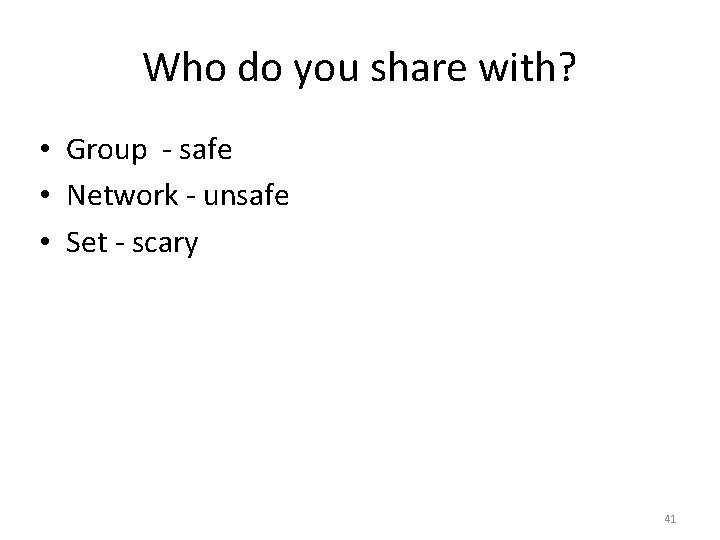
Who do you share with? • Group - safe • Network - unsafe • Set - scary 41
Practical Rationale • Communications is a continuing challenge in our workplaces. • Too many of our faculty and staff are disengaged from our community • We lack any sort of knowledge management system- all knowledge explicit, little connected • It’s hard to get to know people at Athabasca. 42
43