
FULL LIST OF PREPOSITIONS IN ENGLISH WITH EXAMPLES

- Slides: 36
FULL LIST OF PREPOSITIONS IN ENGLISH WITH EXAMPLES
PREPOSITION LIST (FROM A TO Z)
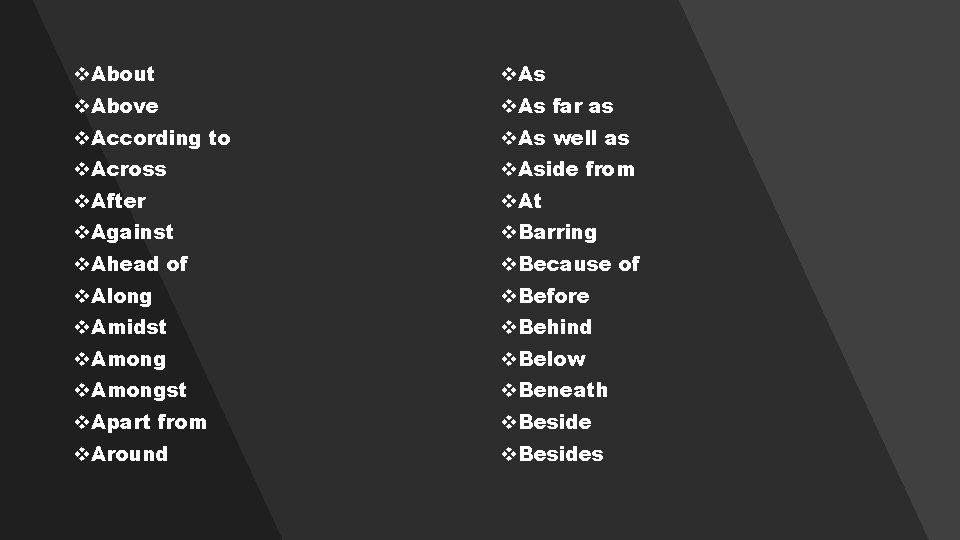
v. About v. As v. Above v. As far as v. According to v. As well as v. Across v. Aside from v. After v. At v. Against v. Barring v. Ahead of v. Because of v. Along v. Before v. Amidst v. Behind v. Among v. Below v. Amongst v. Beneath v. Apart from v. Beside v. Around v. Besides
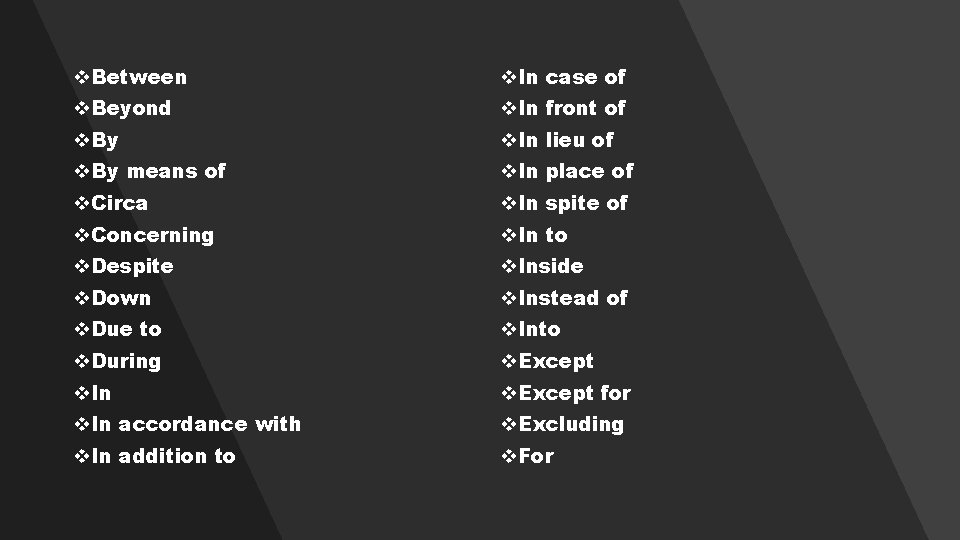
v. Between v. In case of v. Beyond v. In front of v. By v. In lieu of v. By means of v. In place of v. Circa v. In spite of v. Concerning v. In to v. Despite v. Inside v. Down v. Instead of v. Due to v. Into v. During v. Except v. In v. Except for v. In accordance with v. Excluding v. In addition to v. For
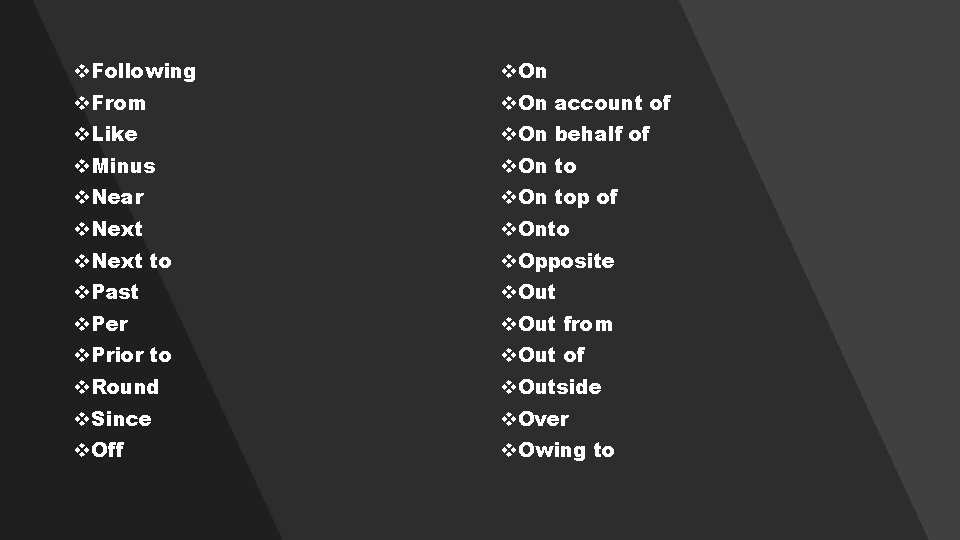
v. Following v. On v. From v. On account of v. Like v. On behalf of v. Minus v. On to v. Near v. On top of v. Next v. Onto v. Next to v. Opposite v. Past v. Out v. Per v. Out from v. Prior to v. Out of v. Round v. Outside v. Since v. Over v. Off v. Owing to
v. Plus v. Unto v. Than v. Up v. Through v. Upon v. Throughout v. Via v. Till v. With v. Times v. With a view to v. To v. Within v. Toward v. Without v. Towards v. Underneath v. Unlike v. Until
PREPOSITIONS OF PLACE (PREPOSITION OF LOCATION) A Preposition of Place (or Prepositions of Location) ocation is a preposition which is used to refer to a place where something or someone is located.
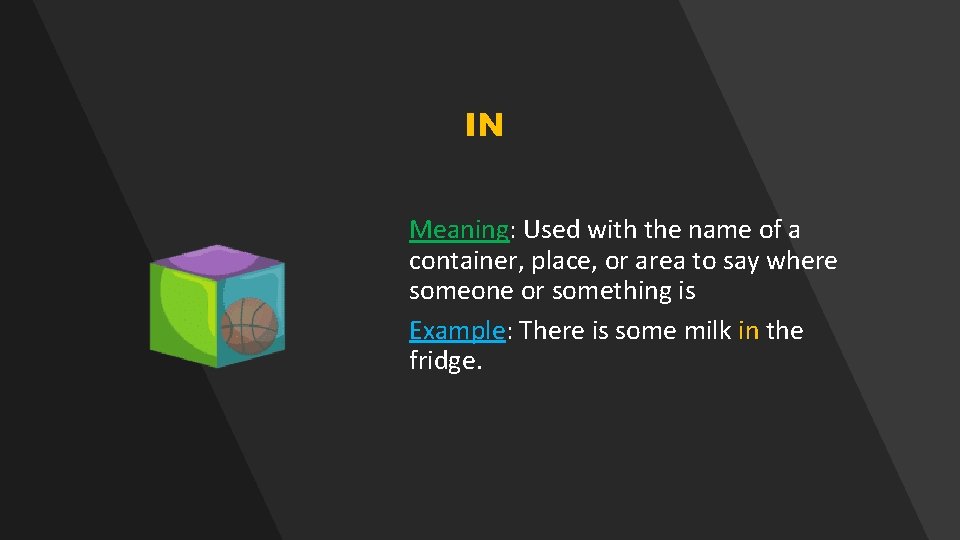
IN Meaning: Used with the name of a container, place, or area to say where someone or something is Example: There is some milk in the fridge.
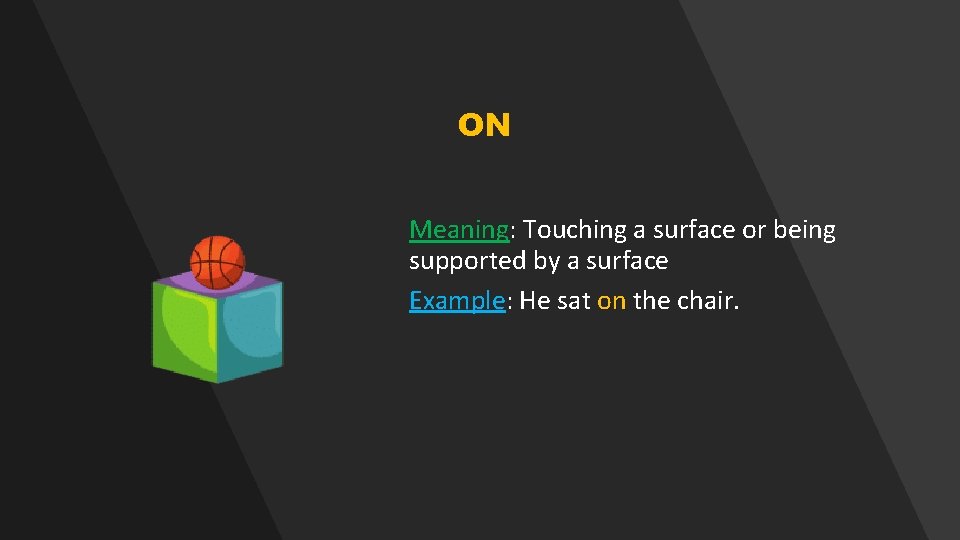
ON Meaning: Touching a surface or being supported by a surface Example: He sat on the chair.
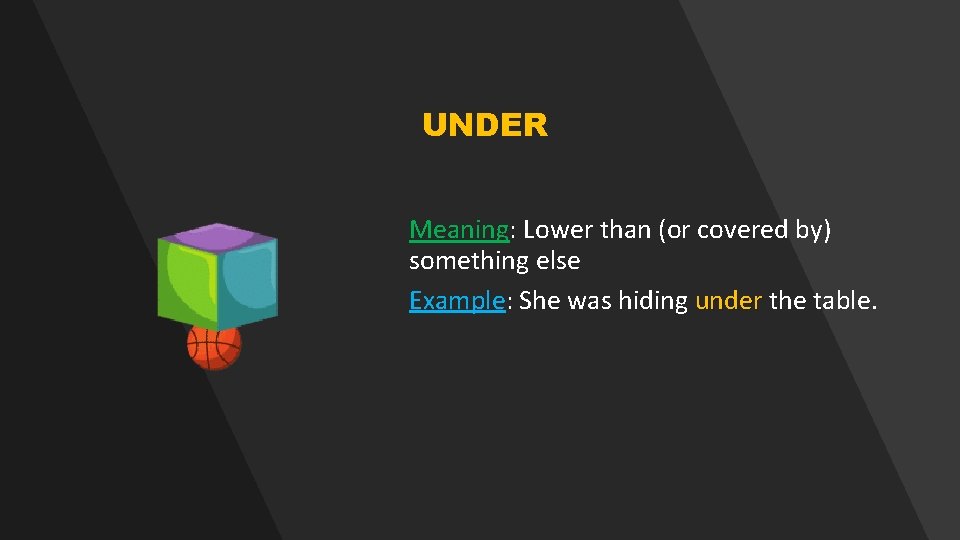
UNDER Meaning: Lower than (or covered by) something else Example: She was hiding under the table.
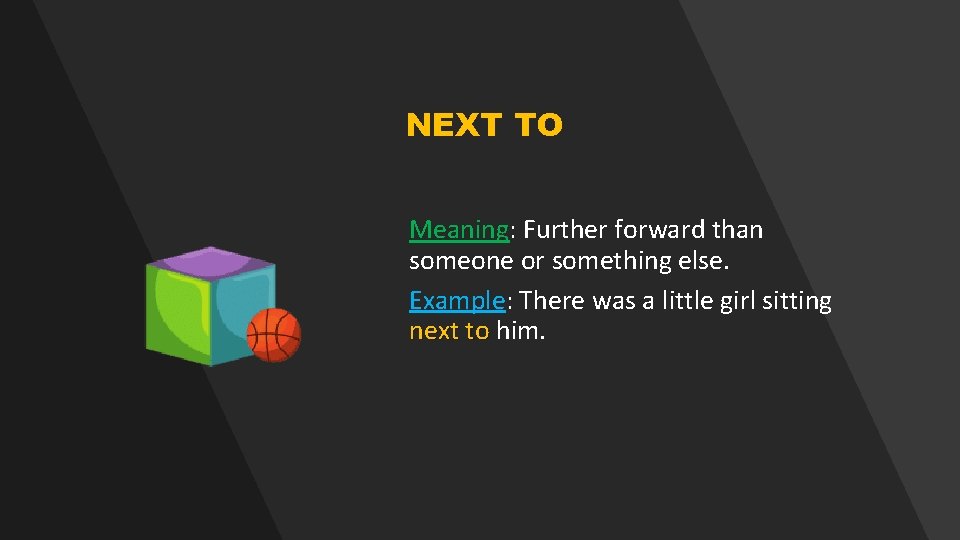
NEXT TO Meaning: Further forward than someone or something else. Example: There was a little girl sitting next to him.
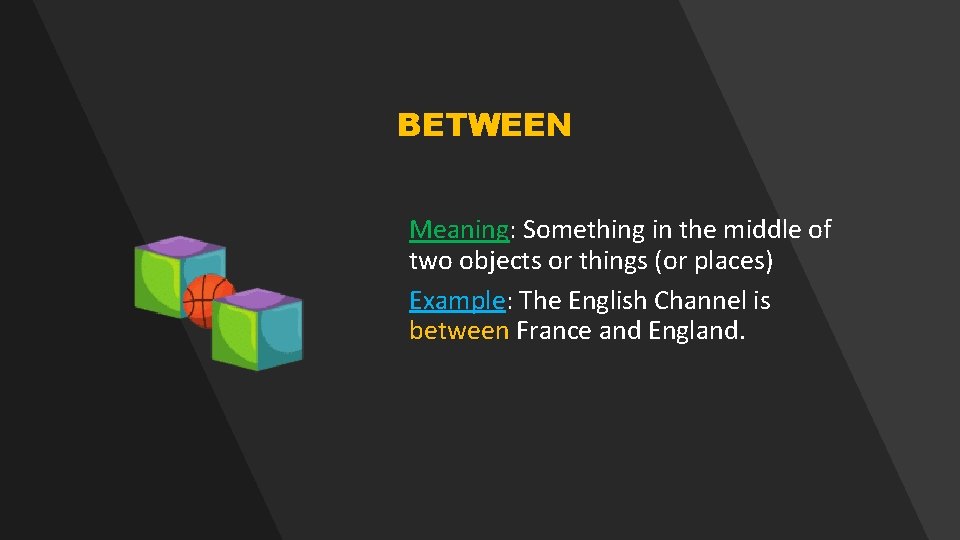
BETWEEN Meaning: Something in the middle of two objects or things (or places) Example: The English Channel is between France and England.
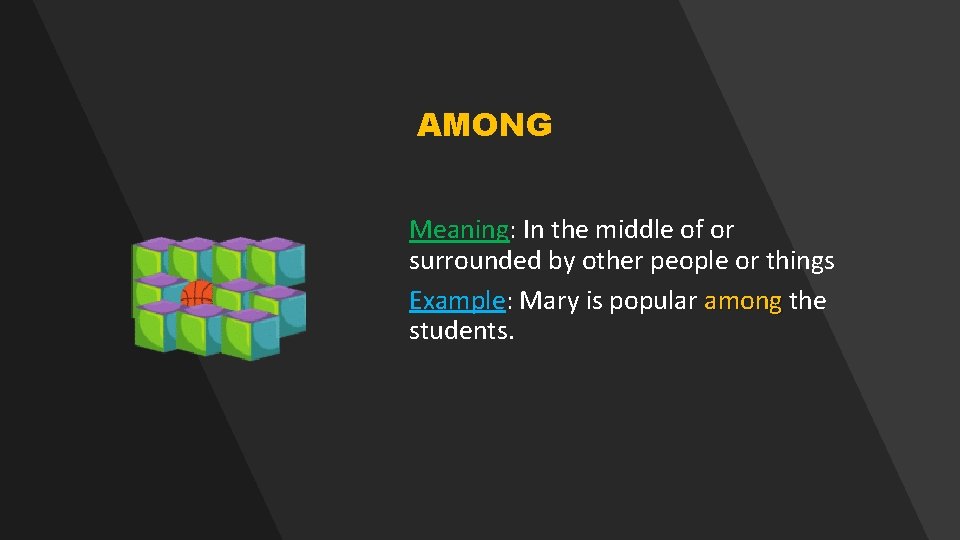
AMONG Meaning: In the middle of or surrounded by other people or things Example: Mary is popular among the students.
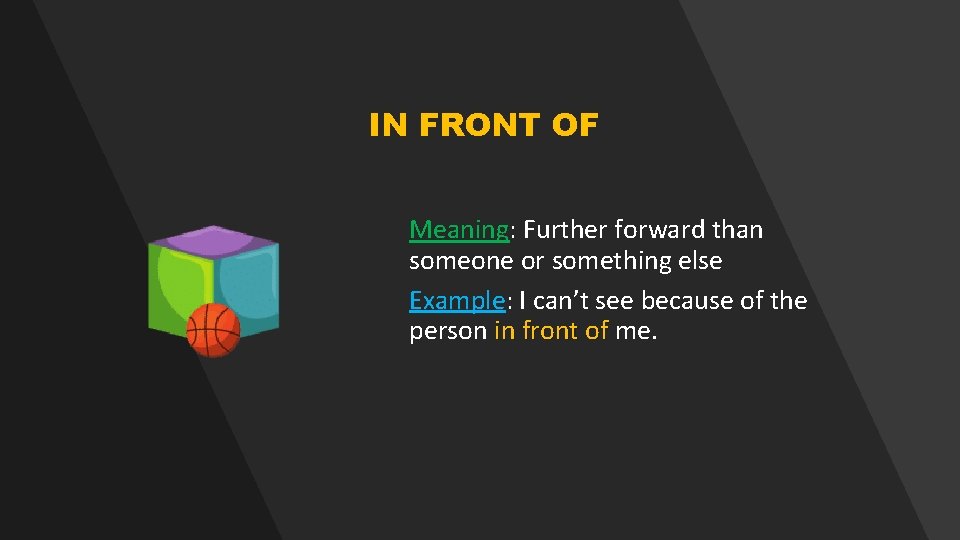
IN FRONT OF Meaning: Further forward than someone or something else Example: I can’t see because of the person in front of me.
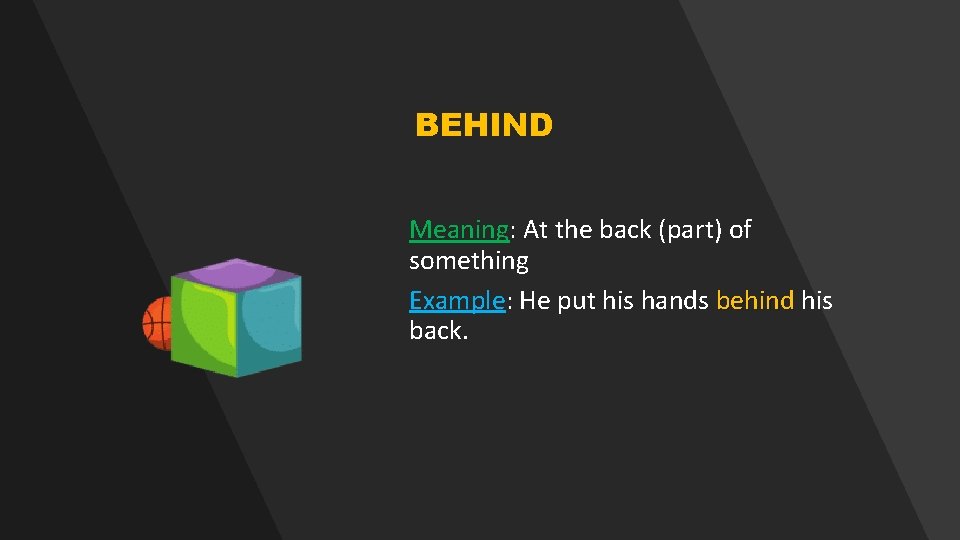
BEHIND Meaning: At the back (part) of something Example: He put his hands behind his back.
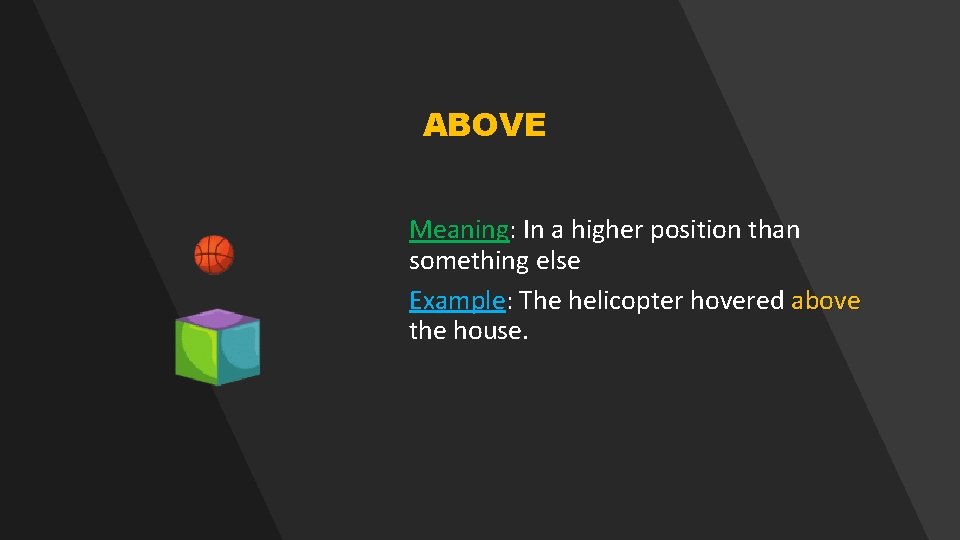
ABOVE Meaning: In a higher position than something else Example: The helicopter hovered above the house.
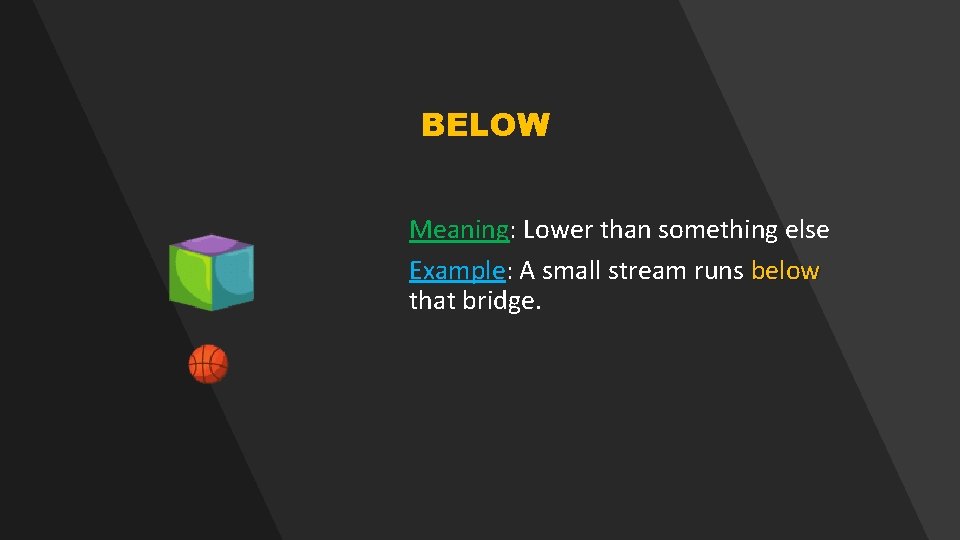
BELOW Meaning: Lower than something else Example: A small stream runs below that bridge.
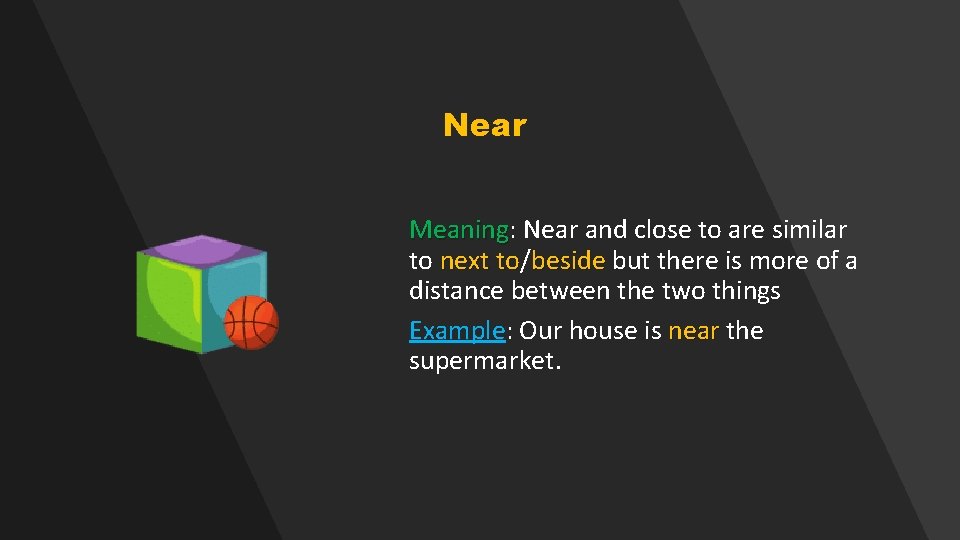
Near Meaning: Meaning Near and close to are similar to next to/ to beside but there is more of a distance between the two things Example: Our house is near the supermarket.
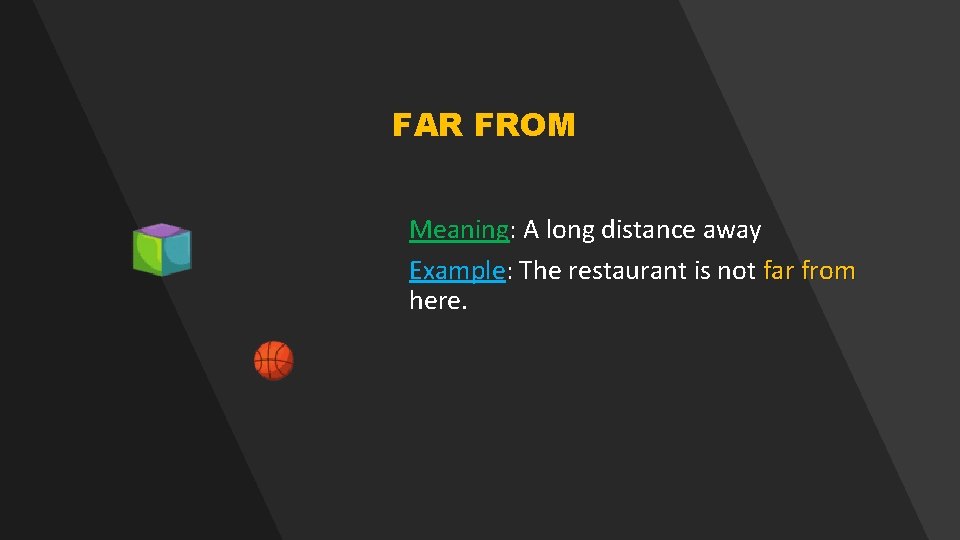
FAR FROM Meaning: A long distance away Example: The restaurant is not far from here.
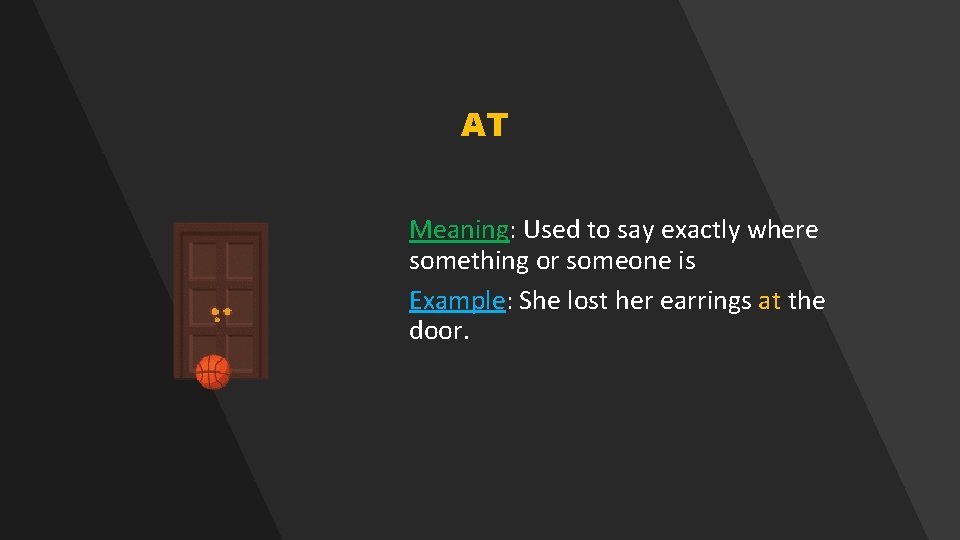
AT Meaning: Used to say exactly where something or someone is Example: She lost her earrings at the door.
PREPOSITIONS OF DIRECTION (PREPOSITIONS OF MOVEMENT) Prepositions of Direction (or Prepositions of Movement) Movement are used to show movement from one place to another. These prepositions are most often used with verbs of motion and are found after the verb.
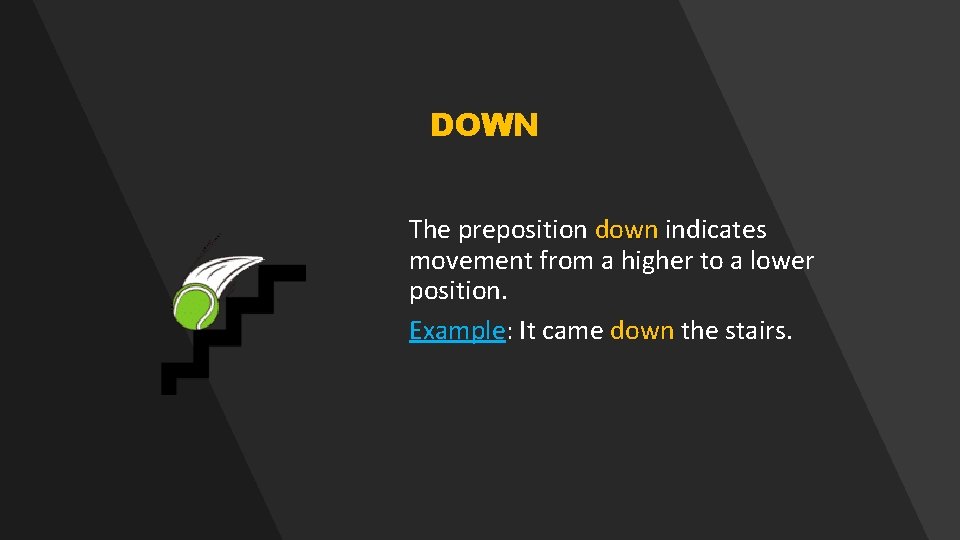
DOWN The preposition down indicates movement from a higher to a lower position. Example: It came down the stairs.
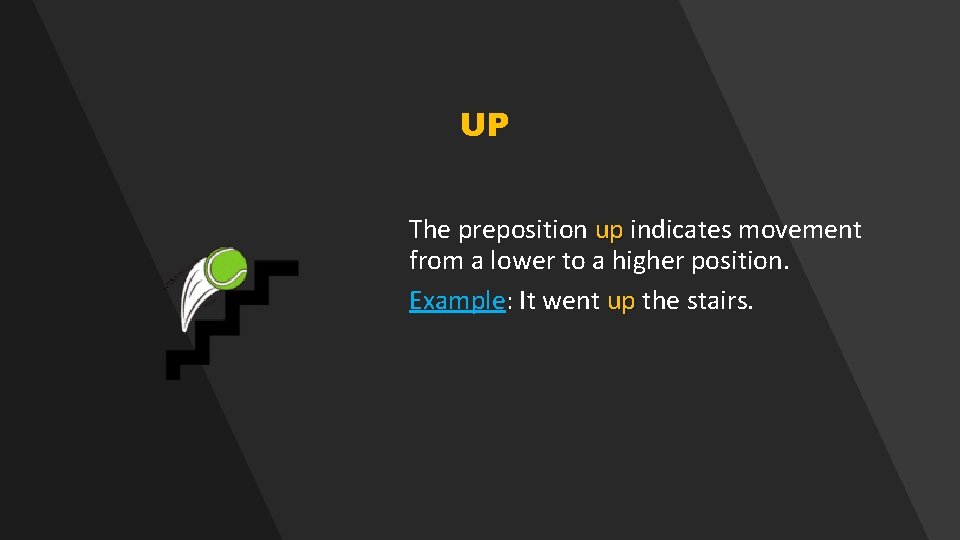
UP The preposition up indicates movement from a lower to a higher position. Example: It went up the stairs.
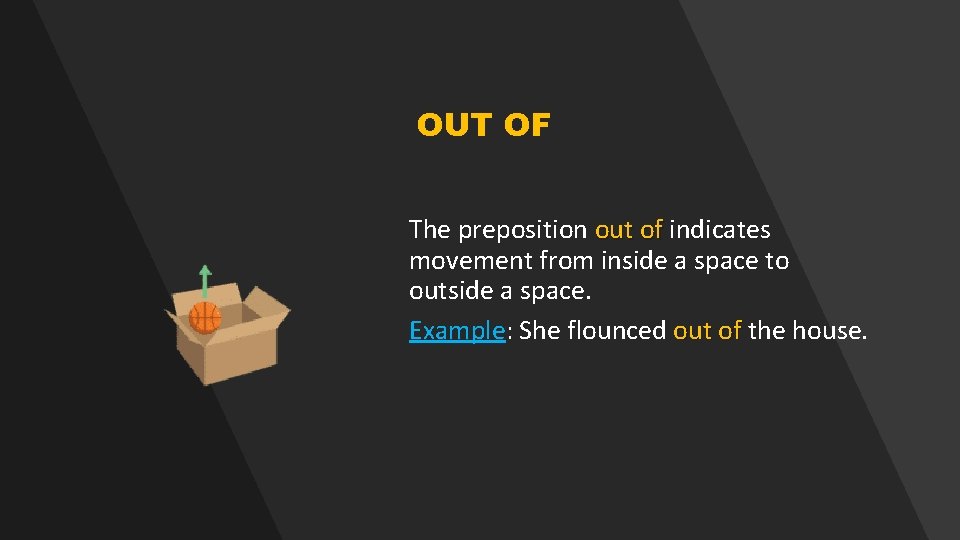
OUT OF The preposition out of indicates movement from inside a space to outside a space. Example: She flounced out of the house.
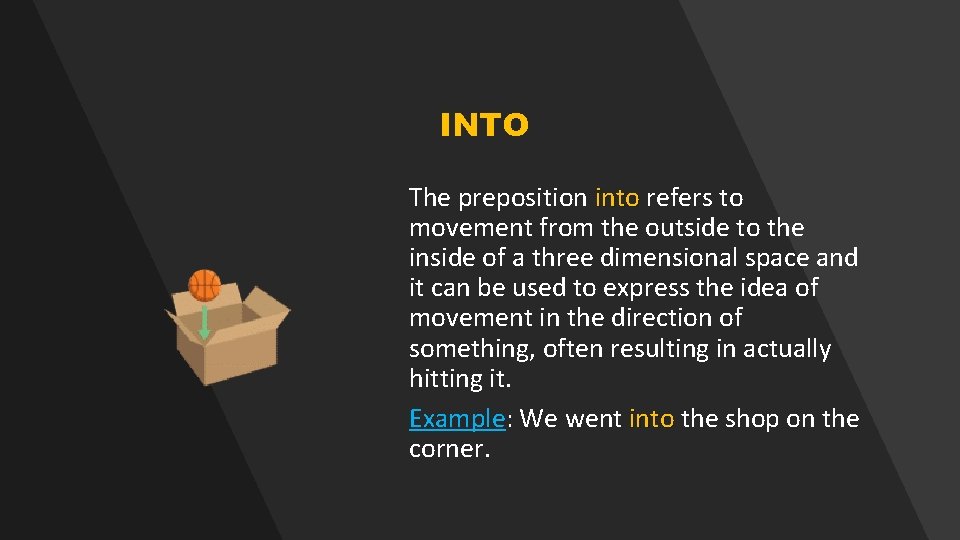
INTO The preposition into refers to movement from the outside to the inside of a three dimensional space and it can be used to express the idea of movement in the direction of something, often resulting in actually hitting it. Example: We went into the shop on the corner.
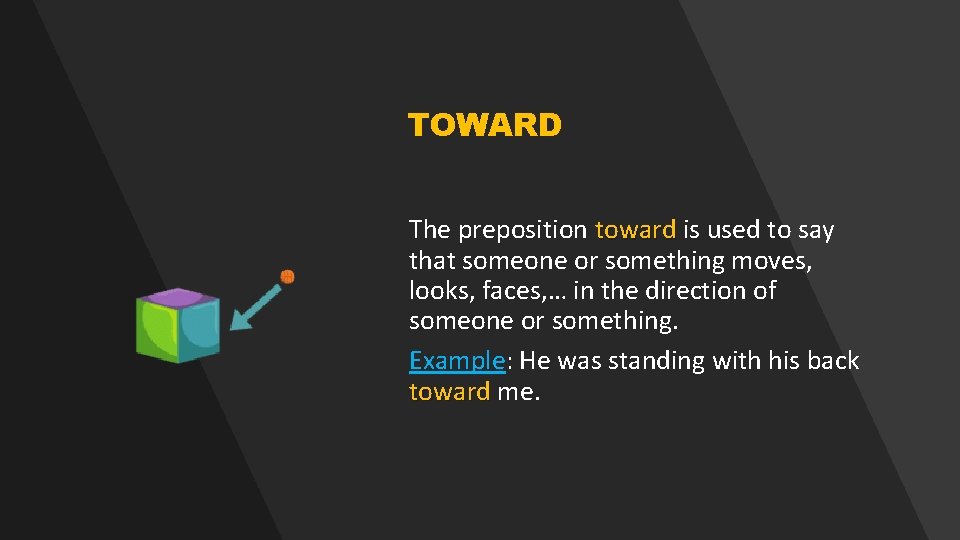
TOWARD The preposition toward is used to say that someone or something moves, looks, faces, … in the direction of someone or something. Example: He was standing with his back toward me.
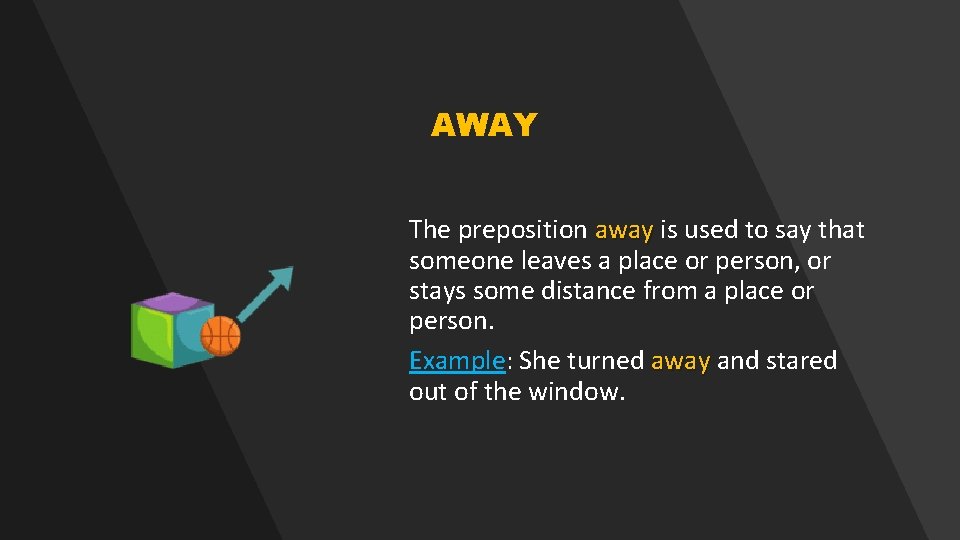
AWAY The preposition away is used to say that someone leaves a place or person, or stays some distance from a place or person. Example: She turned away and stared out of the window.
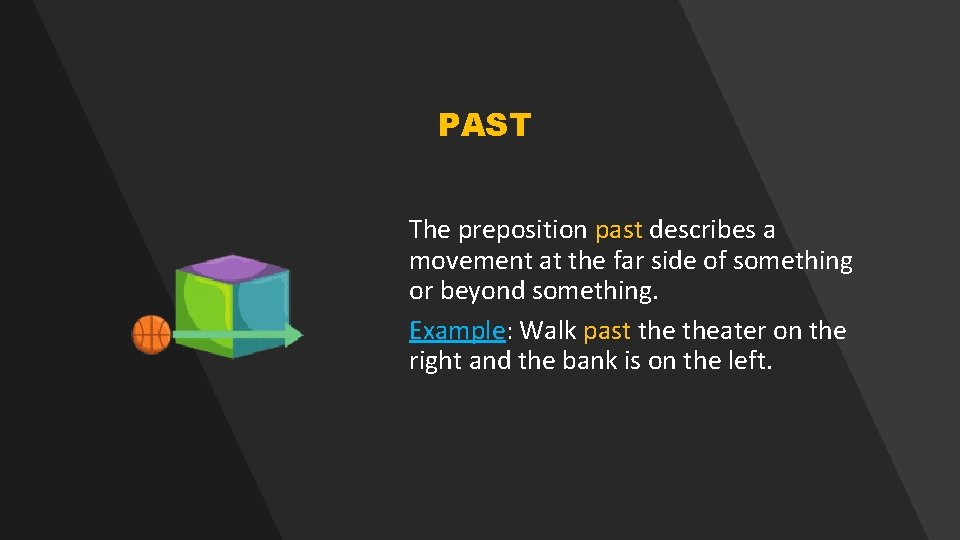
PAST The preposition past describes a movement at the far side of something or beyond something. Example: Walk past theater on the right and the bank is on the left.
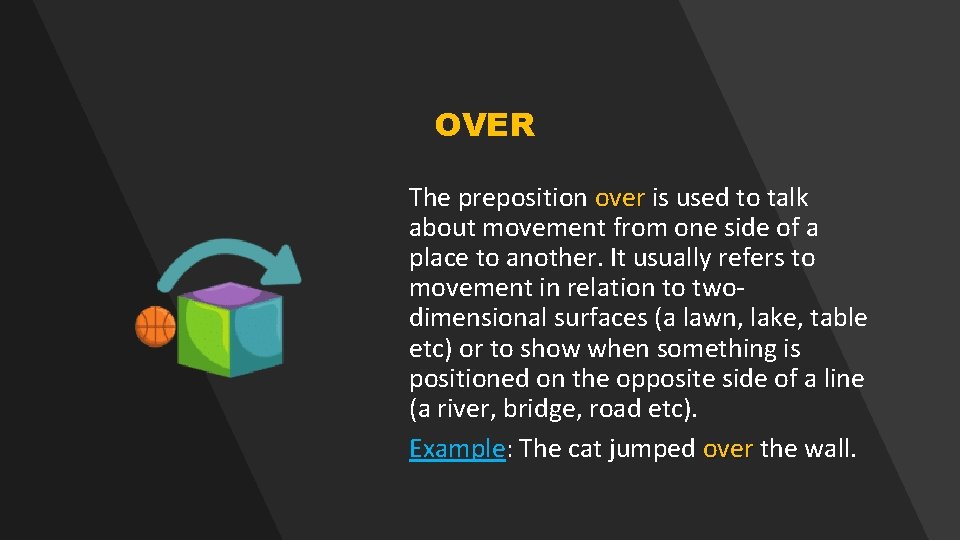
OVER The preposition over is used to talk about movement from one side of a place to another. It usually refers to movement in relation to twodimensional surfaces (a lawn, lake, table etc) or to show when something is positioned on the opposite side of a line (a river, bridge, road etc). Example: The cat jumped over the wall.
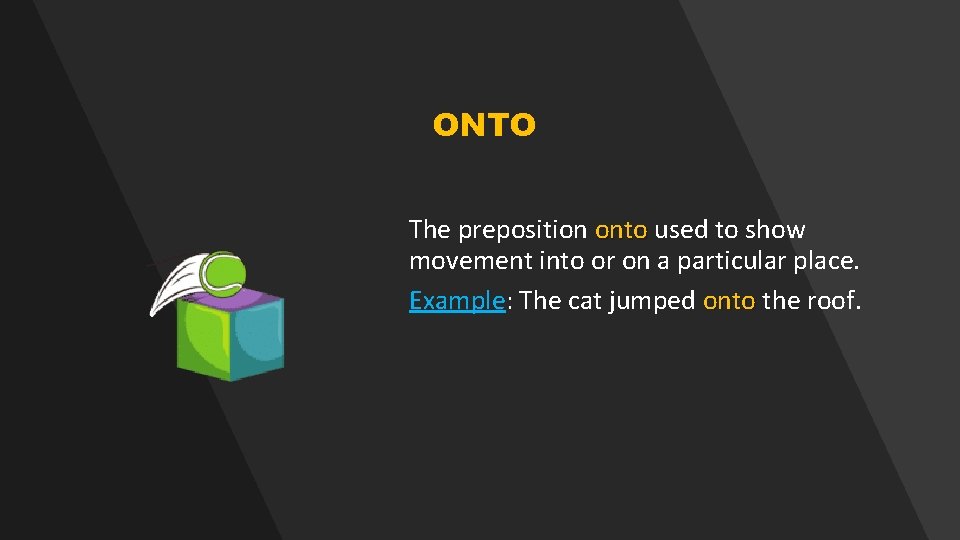
ONTO The preposition onto used to show movement into or on a particular place. Example: The cat jumped onto the roof.
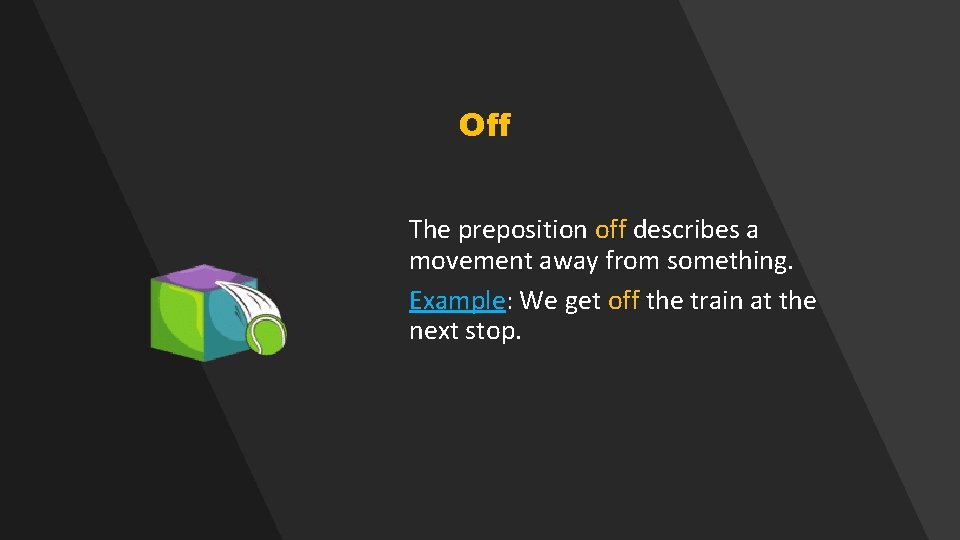
Off The preposition off describes a movement away from something. Example: We get off the train at the next stop.
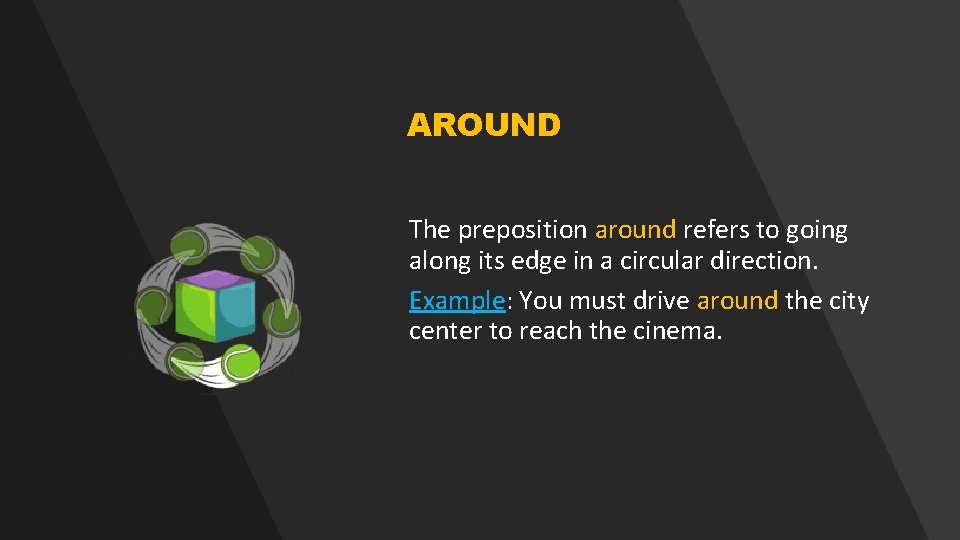
AROUND The preposition around refers to going along its edge in a circular direction. Example: You must drive around the city center to reach the cinema.
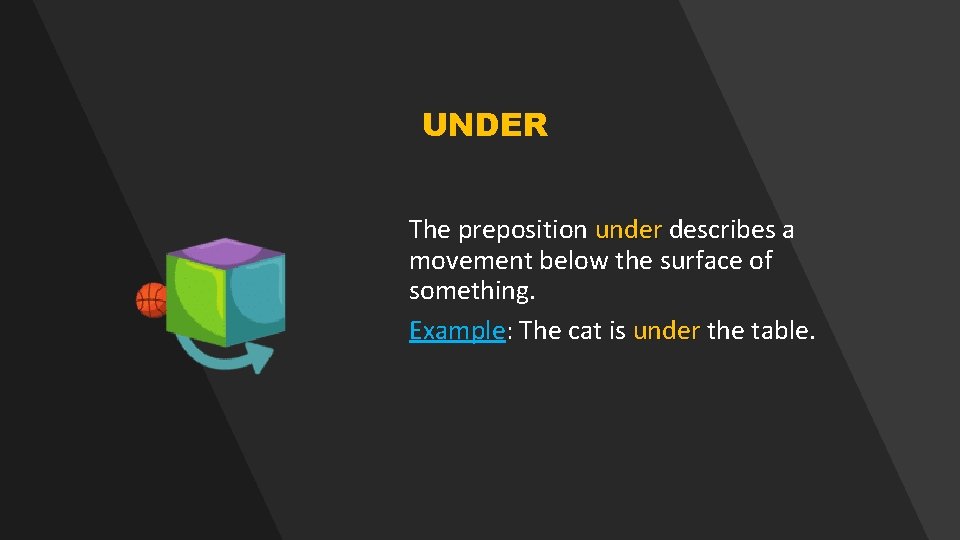
UNDER The preposition under describes a movement below the surface of something. Example: The cat is under the table.
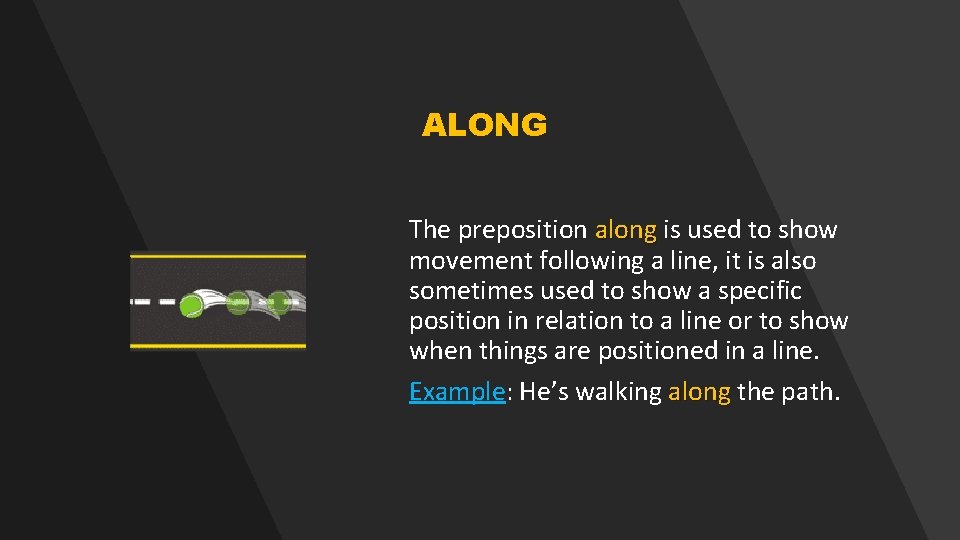
ALONG The preposition along is used to show movement following a line, it is also sometimes used to show a specific position in relation to a line or to show when things are positioned in a line. Example: He’s walking along the path.
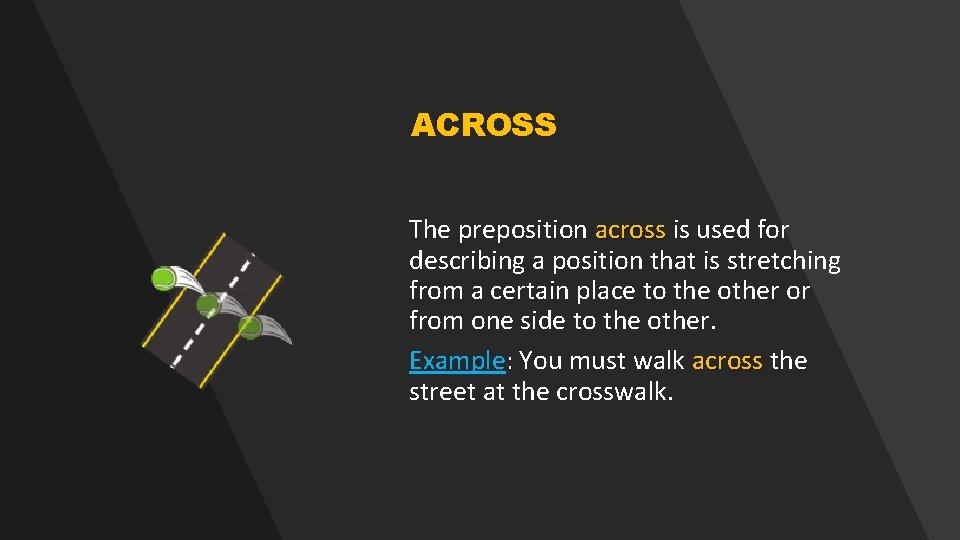
ACROSS The preposition across is used for describing a position that is stretching from a certain place to the other or from one side to the other. Example: You must walk across the street at the crosswalk.
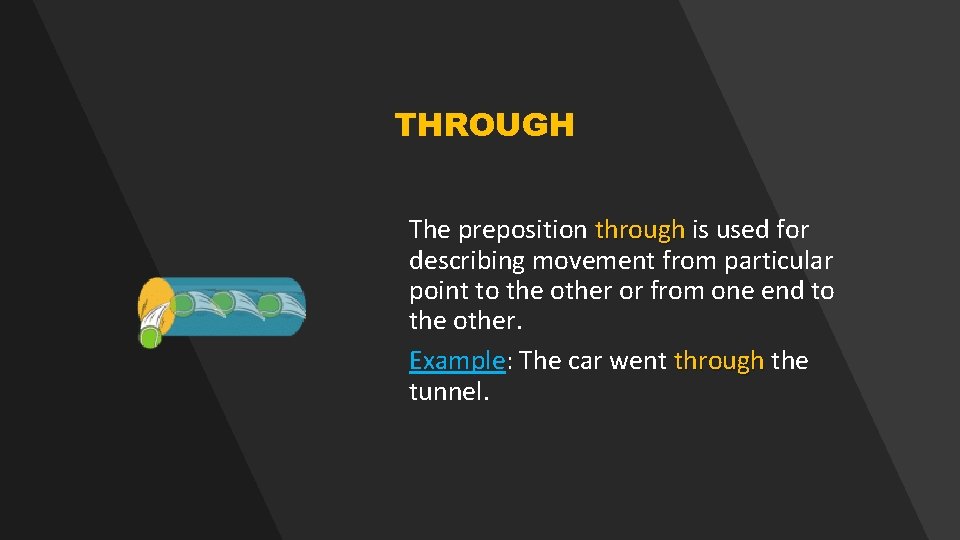
THROUGH The preposition through is used for describing movement from particular point to the other or from one end to the other. Example: The car went through the tunnel.