
Fueling the Future with Imidazole Fueling the Future
- Slides: 21
Fueling the Future with Imidazole Fueling the Future With Imidazole Ar-predissociation spectroscopy of Protonated Imidazole clusters in the NH- and CH-stretching region George H. Gardenier, Joseph R. Roscioli, Laura R. Mc. Cunn, and Mark A. Johnson Sterling Chemistry Laboratory, Yale University, New Haven, CT 06520 Anne B. Mc. Coy Department of Chemistry, The Ohio State University, Columbus, Ohio 43210 The 64 th OSU International Symposium on Molecular Spectroscopy The Ohio State University June 25, 2009
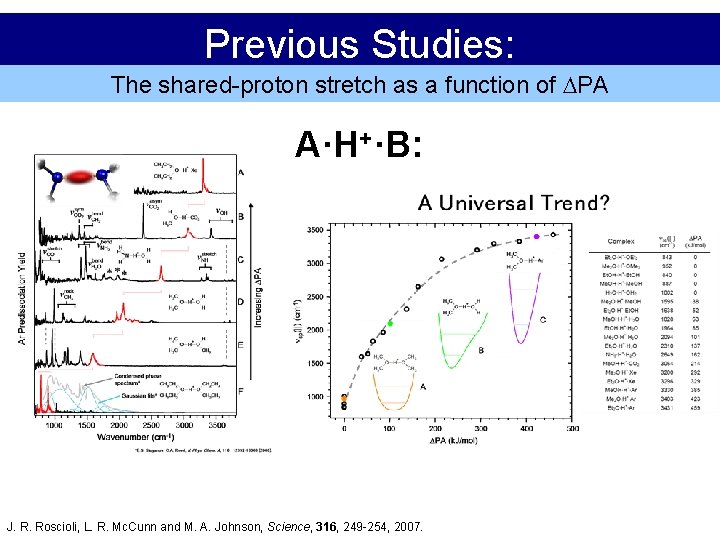
Previous Studies: The shared-proton stretch as a function of DPA A·H+·B: J. R. Roscioli, L. R. Mc. Cunn and M. A. Johnson, Science, 316, 249 -254, 2007.
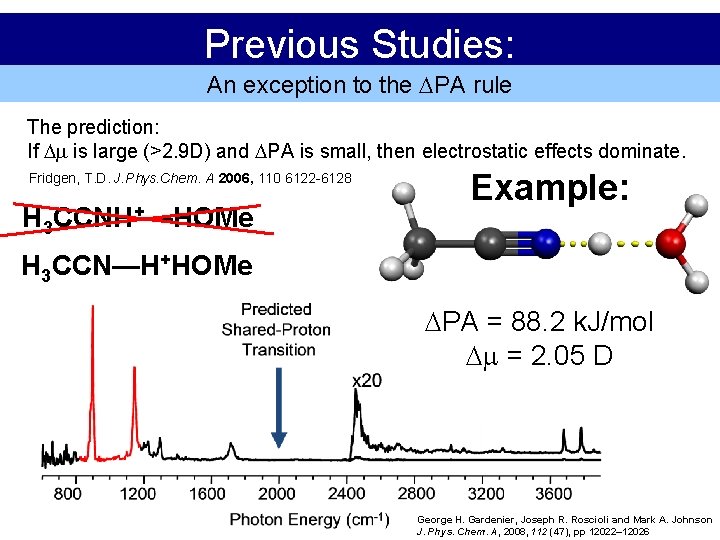
Previous Studies: An exception to the DPA rule The prediction: If Dm is large (>2. 9 D) and DPA is small, then electrostatic effects dominate. Fridgen, T. D. J. Phys. Chem. A 2006, 110 6122 -6128 H 3 CCNH+—HOMe Example: H 3 CCN—H+HOMe DPA = 88. 2 k. J/mol Dm = 2. 05 D George H. Gardenier, Joseph R. Roscioli and Mark A. Johnson J. Phys. Chem. A, 2008, 112 (47), pp 12022– 12026
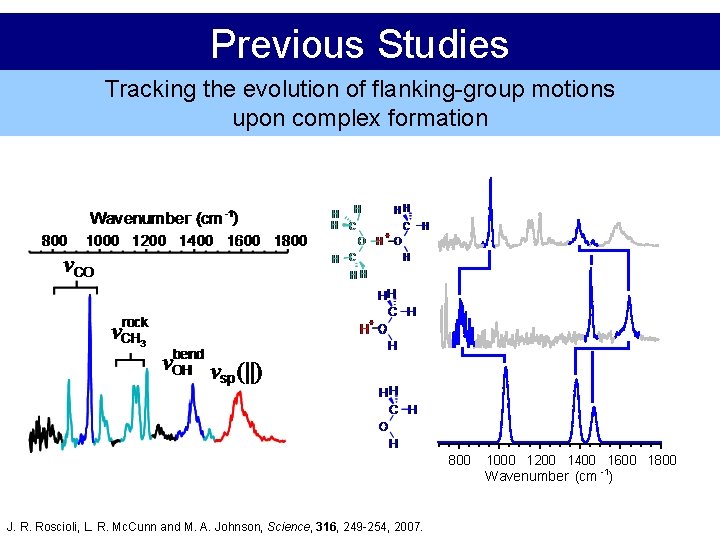
Previous Studies Tracking the evolution of flanking-group motions + upon complex formation 800 J. R. Roscioli, L. R. Mc. Cunn and M. A. Johnson, Science, 316, 249 -254, 2007. 1000 1200 1400 1600 1800 Wavenumber (cm -1)
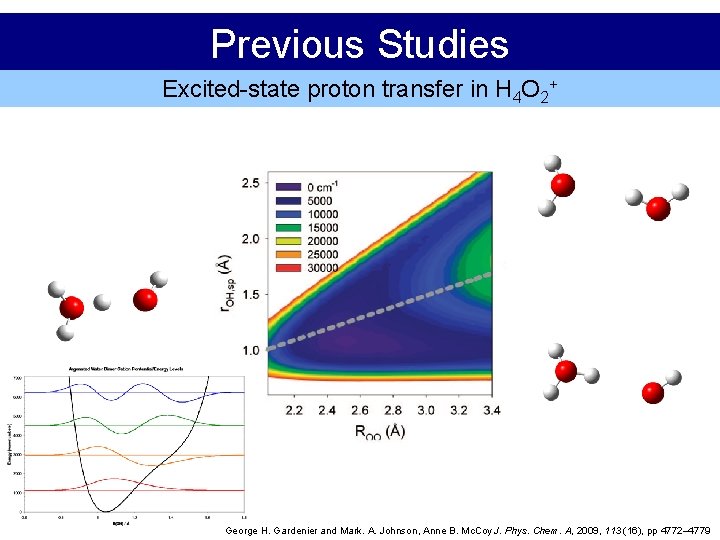
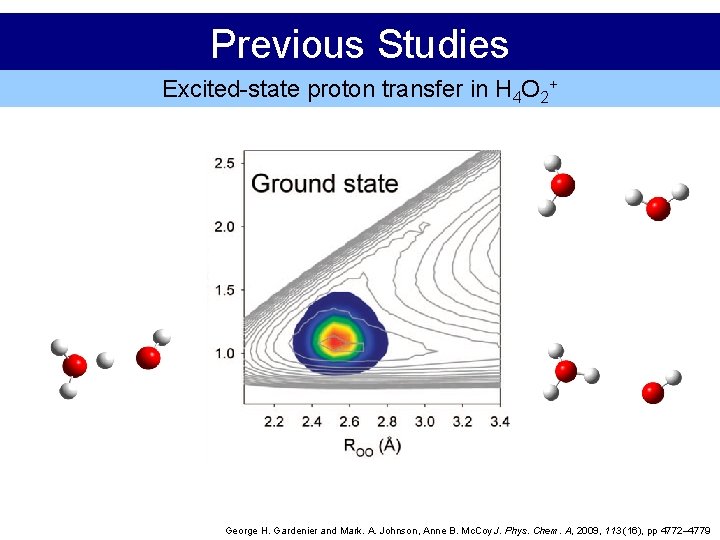
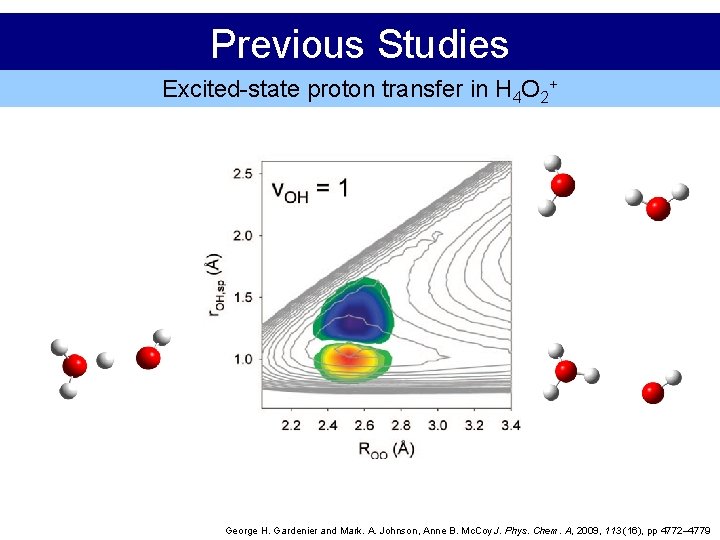
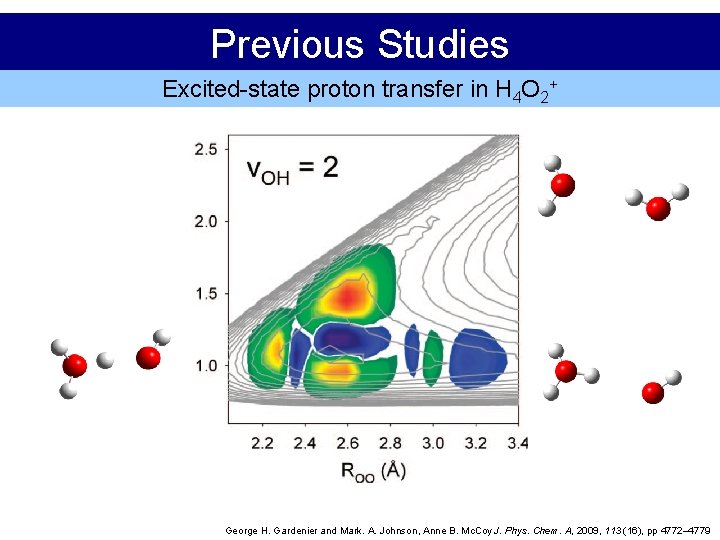
Previous Studies Excited-state proton transfer in H 4 O 2+ + George H. Gardenier and Mark. A. Johnson, Anne B. Mc. Coy J. Phys. Chem. A, 2009, 113 (16), pp 4772– 4779
Previous Studies Excited-state proton transfer in H 4 O 2+ + George H. Gardenier and Mark. A. Johnson, Anne B. Mc. Coy J. Phys. Chem. A, 2009, 113 (16), pp 4772– 4779
Previous Studies Excited-state proton transfer in H 4 O 2+ + George H. Gardenier and Mark. A. Johnson, Anne B. Mc. Coy J. Phys. Chem. A, 2009, 113 (16), pp 4772– 4779
Previous Studies Excited-state proton transfer in H 4 O 2+ + George H. Gardenier and Mark. A. Johnson, Anne B. Mc. Coy J. Phys. Chem. A, 2009, 113 (16), pp 4772– 4779
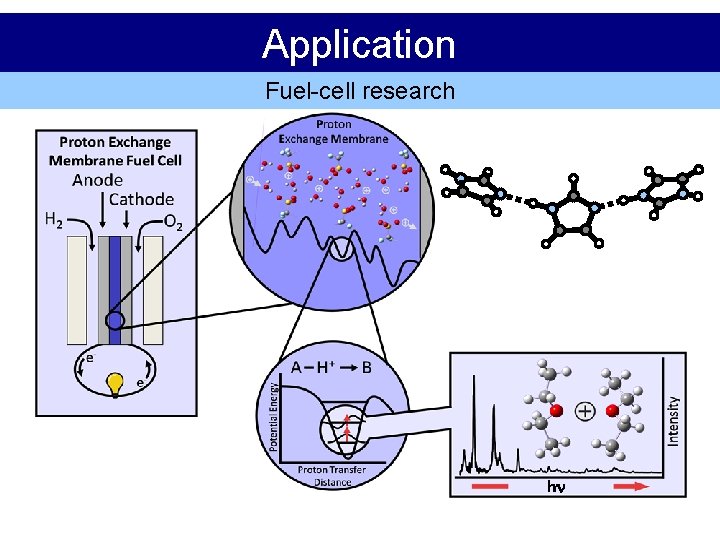
Application Fuel-cell research hn
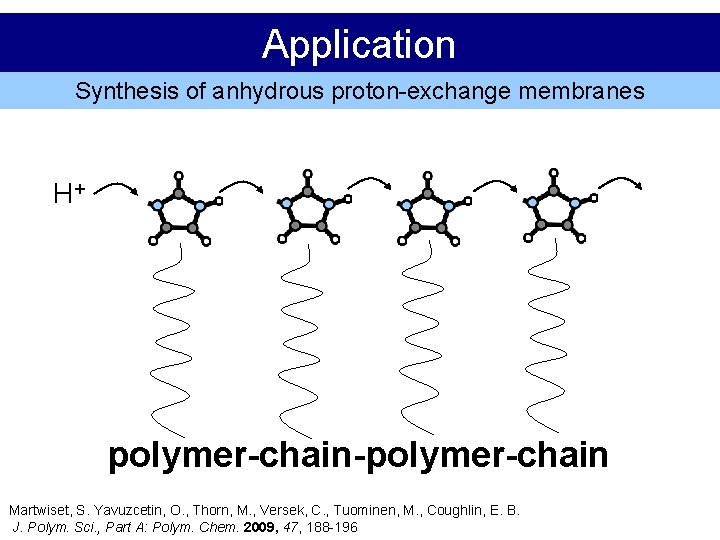
Application Synthesis of anhydrous proton-exchange membranes H+ polymer-chain-polymer-chain Martwiset, S. Yavuzcetin, O. , Thorn, M. , Versek, C. , Tuominen, M. , Coughlin, E. B. J. Polym. Sci. , Part A: Polym. Chem. 2009, 47, 188 -196
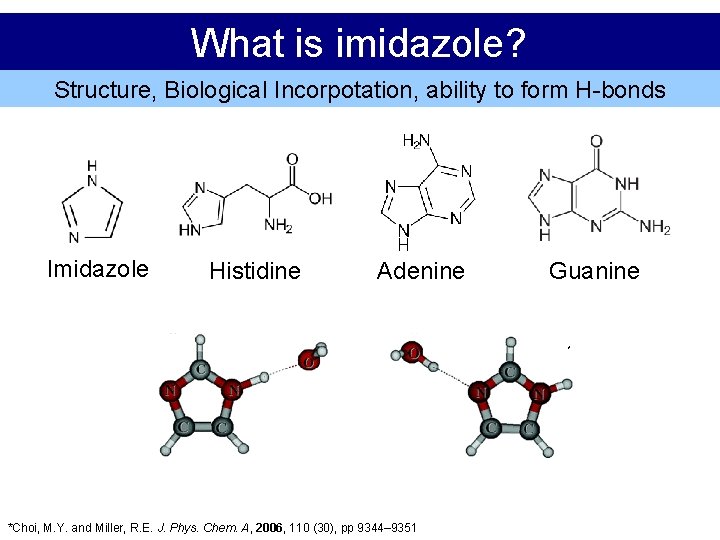
What is imidazole? Structure, Biological Incorpotation, ability to form H-bonds Imidazole Histidine Adenine Guanine * *Choi, M. Y. and Miller, R. E. J. Phys. Chem. A, 2006, 110 (30), pp 9344– 9351
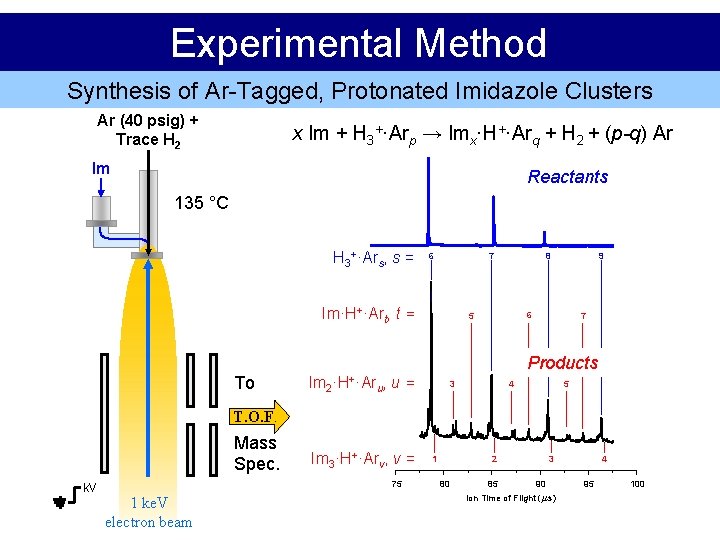
Experimental Method Synthesis of Ar-Tagged, Protonated Imidazole Clusters Ar (40 psig) + Trace H 2 x Im + H 3+·Arp → Imx·H+·Arq + H 2 + (p-q) Ar Im Reactants 135 °C H 3+·Ars, s = 6 7 Im·H+·Art, t = 8 9 6 5 7 Products To Im 2 ·H+·Ar u, u= 3 4 5 T. O. F. Mass Spec. k. V Im 3·H+·Arv, v = 75 1 ke. V electron beam 1 2 80 85 3 90 Ion Time of Flight (m s) 4 95 100
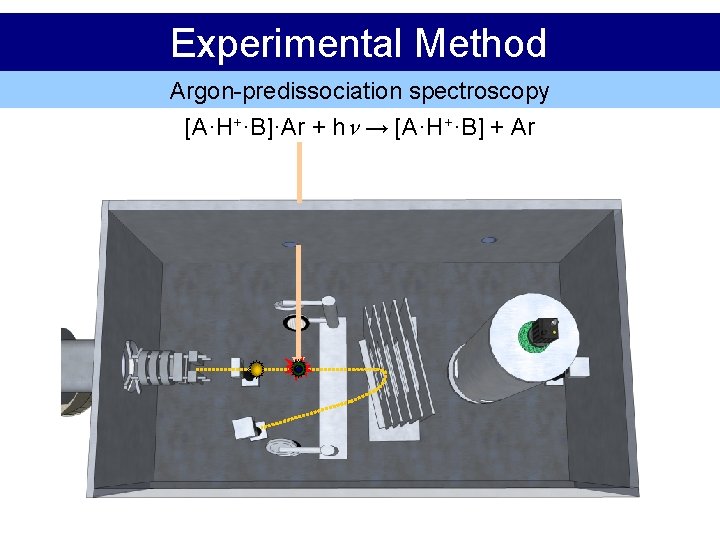
Experimental Method Argon-predissociation spectroscopy [A·H+·B]·Ar + h → [A·H+·B] + Ar
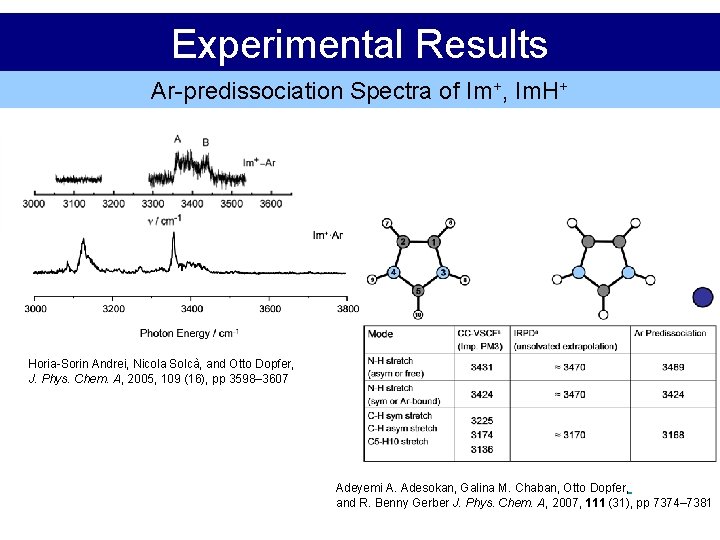
Experimental Results Ar-predissociation Spectra of Im+, Im. H+ Horia-Sorin Andrei, Nicola Solcà, and Otto Dopfer, J. Phys. Chem. A, 2005, 109 (16), pp 3598– 3607 Adeyemi A. Adesokan, Galina M. Chaban, Otto Dopfer, and R. Benny Gerber J. Phys. Chem. A, 2007, 111 (31), pp 7374– 7381
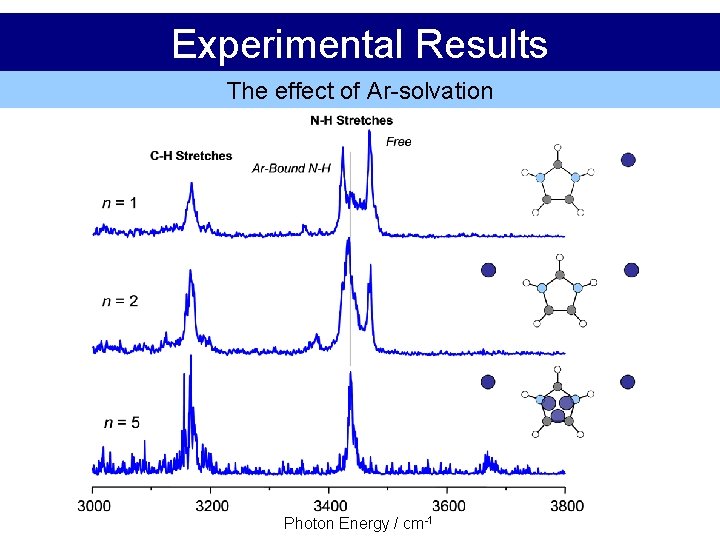
Experimental Results The effect of Ar-solvation Photon Energy / cm-1
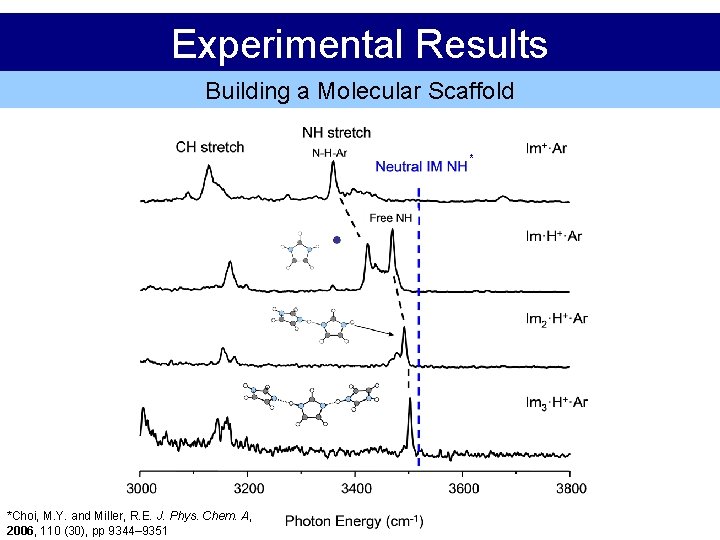
Experimental Results Building a Molecular Scaffold * *Choi, M. Y. and Miller, R. E. J. Phys. Chem. A, 2006, 110 (30), pp 9344– 9351
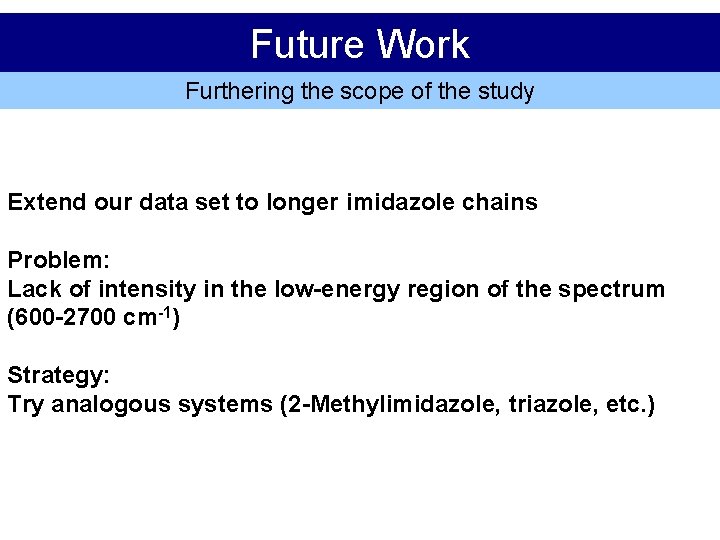
Future Work Furthering the scope of the study Extend our data set to longer imidazole chains Problem: Lack of intensity in the low-energy region of the spectrum (600 -2700 cm-1) Strategy: Try analogous systems (2 -Methylimidazole, triazole, etc. )
Acknowledgments Yale Prof Mark Johnson Prof Laura Mc. Cunn Prof Gary Weddle Dr. Joseph R Roscioli Helen Gerardi OSU Prof Anne Mc. Coy “Fueling the Future” NSF Center for Chemical Innovation Prof S. Thayumanavan Prof Scott Auerbach
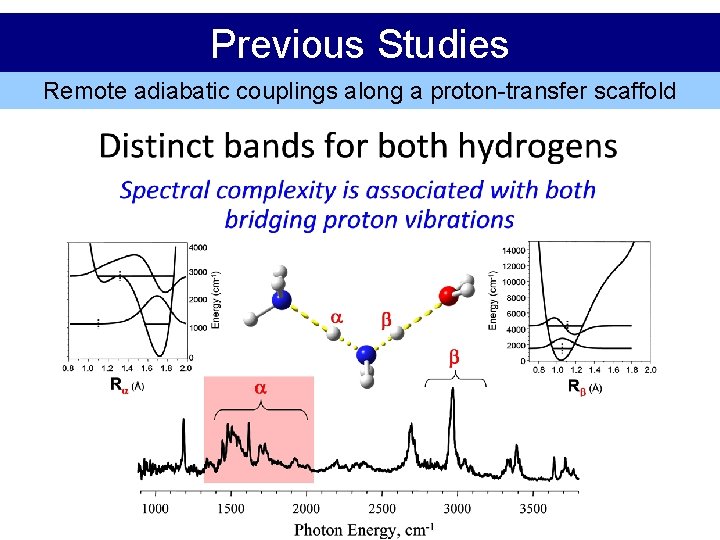
Previous Studies Remote adiabatic couplings along a proton-transfer scaffold
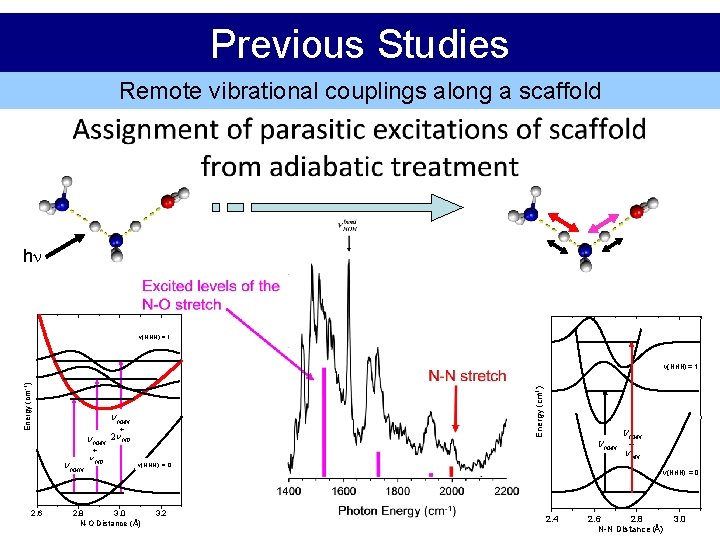
Previous Studies Remote vibrational couplings along a scaffold hn v(NHN ) = 1 Energy (cm-1) Energy (cm -1) v(NHN) = 1 NHN + NHN 2 NO NHN + NHN 2. 6 NO NHN + NN v(NHN ) = 0 2. 8 3. 0 N-O Distance (Å) v(NHN) = 0 3. 2 2. 4 2. 6 2. 8 N-N Distance (Å) 3. 0
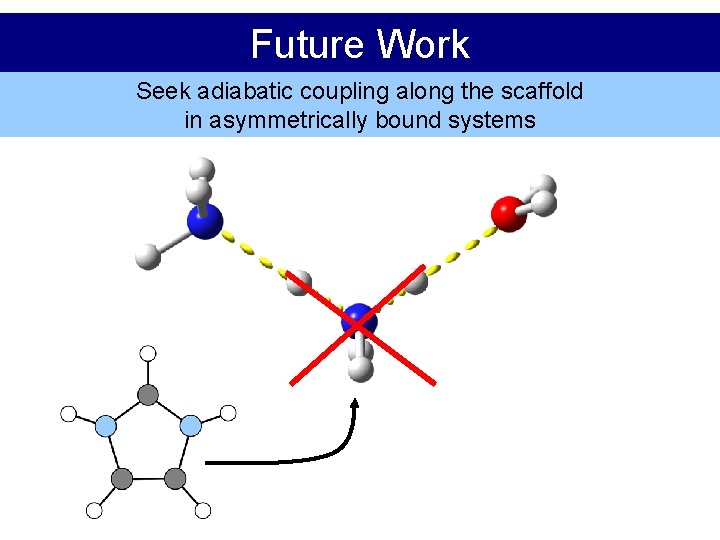
Future Work Seek adiabatic coupling along the scaffold in asymmetrically bound systems