
FUEL TANK EXPLOSION PROTECTION SYSTEM FTEPS based on
FUEL TANK EXPLOSION PROTECTION SYSTEM - FTEPS based on an On Board Inert Gas Generating System (OBIGGS) A low impact retrofit system for fuel tank inerting Mr. G. Iazzetta - Fuel System Dept. Mr. E. Riegel - Environmental Ctr. System Dept. International Aircraft System Fire Protection Working Group Meeting Atlantic City October 30 -31, 2002 G 222 1
G 222 Aircraft The G 222 Aircraft is a STOL, twin turboprop military aircraft for tactical transportation of cargo, and troops over short and medium ranges. The A/C has a MTOW of about 27. 000 Kg and it has 4 fuel tanks, 2 main and 2 auxiliary, with a total volume of about 13. 000 liters. The G 222 fuel tanks are vented by external air through a couple of NACA scoop. International Aircraft System Fire Protection Working Group Meeting Atlantic City October 30 -31, 2002 G 222 2
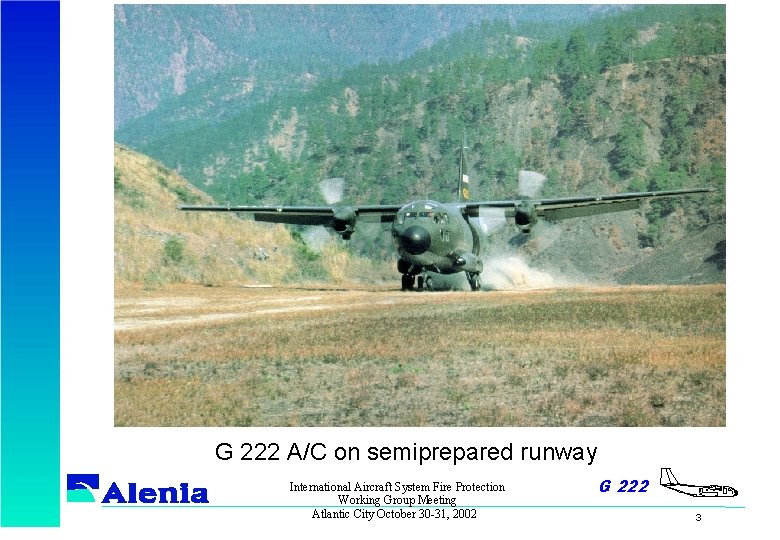
G 222 A/C on semiprepared runway International Aircraft System Fire Protection Working Group Meeting Atlantic City October 30 -31, 2002 G 222 3
CUSTOMER REQUIREMENT (IAF) Italian Air Force (IAF) requested : “. . . to protect fuel tanks against risks of fire and explosion caused by projectiles, sparking, etc. , and to assure protection from the threat of small fire from ground during operation in hostile regions”. International Aircraft System Fire Protection Working Group Meeting Atlantic City October 30 -31, 2002 G 222 4
FTEPS/OBIGGS TECHNICAL CONCEPT Basing on USAF* studies, ullage oxygen concentration less then 9% avoids the risk of fuel vapor burn (fuel type JP-4, JP-5, JP-8), consequently obtaining the protection of fuel tanks from explosions caused by projectiles 50 cal. API-M 8 or 20 mm HEIM 97. This value has been obtained by USAF testing commercial kerosene and JP-4, the latter considered worst case because of its high vapor pressure and flammability, covering all aeronautic used fuels. * SEE: WADC TECHNICAL REPORT 55 -418 - INERTING CONDITIONS FOR AIRCRAFT FUEL TANKS International Aircraft System Fire Protection Working Group Meeting Atlantic City October 30 -31, 2002 G 222 5
FUNCTIONAL DESCRIPTION FUNCTION AND PERFORMANCES The FUEL TANK EXPLOSION PROTECTION SYSTEM, realized with an OBIGGS, is a system that protects the fuel tanks from explosions caused by incendiary or explosive projectiles, sparks, fire, with a continuous “washing” of fuel tanks ullage with inert gas NEA (Nitrogen Enriched Air). International Aircraft System Fire Protection Working Group Meeting Atlantic City October 30 -31, 2002 G 222 6
FUNCTIONAL DESCRIPTION FUNCTIONS AND PERFORMANCES The OBIGGS, main component of Fuel Tank Explosion Protection System (FTEPS), is an equipment that produces NEA with an oxygen content down to 1% when fed in design conditions: • Feed air temperature = 60 ± 8 °C (140 ± 14 °F) • Feed air pressure = More than 20 Psig The machine is provided of two Air Separation Modules (ASM), realized with Hollow Fiber Membranes that separate nitrogen from air. International Aircraft System Fire Protection Working Group Meeting Atlantic City October 30 -31, 2002 G 222 7

FUNCTIONAL DESCRIPTION OBIGGS SCHEMATIC Shut Off and Pressure Regulator Box 28 VDC POWER SUPPLY 9% oxy. conc. input 28 VDC POWER SUPPLY Oxygen Concentration Control Box NITROGEN ENRICHED AIR OUTLET AIR INLET Filter OVER PRESS LOW PRESS OVER TEMP Air Separation Membranes Control Box Fault OXYGEN ENRICHED AIR OUTLET International Aircraft System Fire Protection Working Group Meeting Atlantic City October 30 -31, 2002 G 222 8

FUNCTIONAL DESCRIPTION FUNCTIONS AND PERFORMANCES FTEPS main characteristics are : • Non intrusive system – holding of useful volume of fuel tanks • Little weight increase (less than 100 kg) • No operations of logistic support on-ground • Previous operative experience on aircraft (L-159, Eurotiger) International Aircraft System Fire Protection Working Group Meeting Atlantic City October 30 -31, 2002 G 222 9
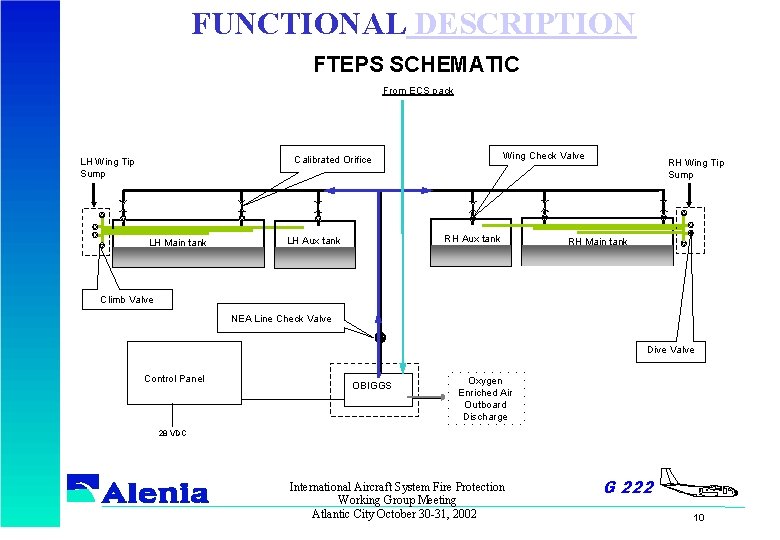
FUNCTIONAL DESCRIPTION FTEPS SCHEMATIC From ECS pack Wing Check Valve Calibrated Orifice LH Wing Tip Sump LH Main tank RH Aux tank LH Aux tank RH Wing Tip Sump RH Main tank Climb Valve NEA Line Check Valve Dive Valve Control Panel OBIGGS Oxygen Enriched Air Outboard Discharge 28 VDC International Aircraft System Fire Protection Working Group Meeting Atlantic City October 30 -31, 2002 G 222 10
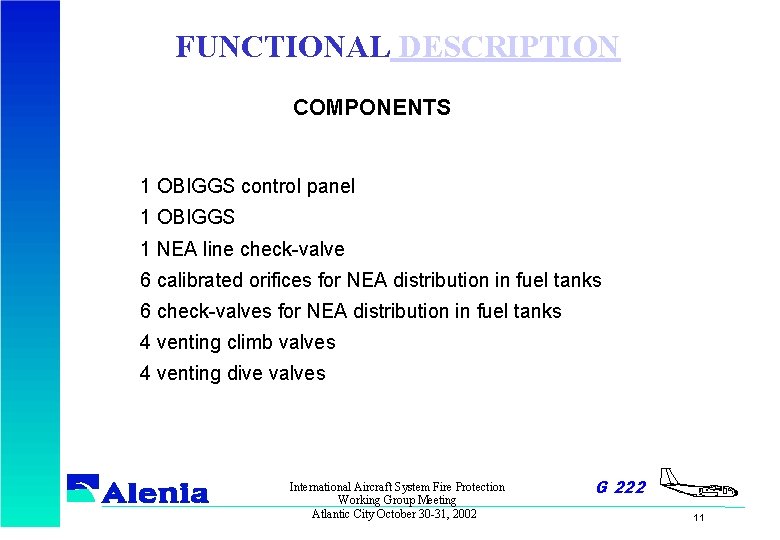
FUNCTIONAL DESCRIPTION COMPONENTS 1 OBIGGS control panel 1 OBIGGS 1 NEA line check-valve 6 calibrated orifices for NEA distribution in fuel tanks 6 check-valves for NEA distribution in fuel tanks 4 venting climb valves 4 venting dive valves International Aircraft System Fire Protection Working Group Meeting Atlantic City October 30 -31, 2002 G 222 11

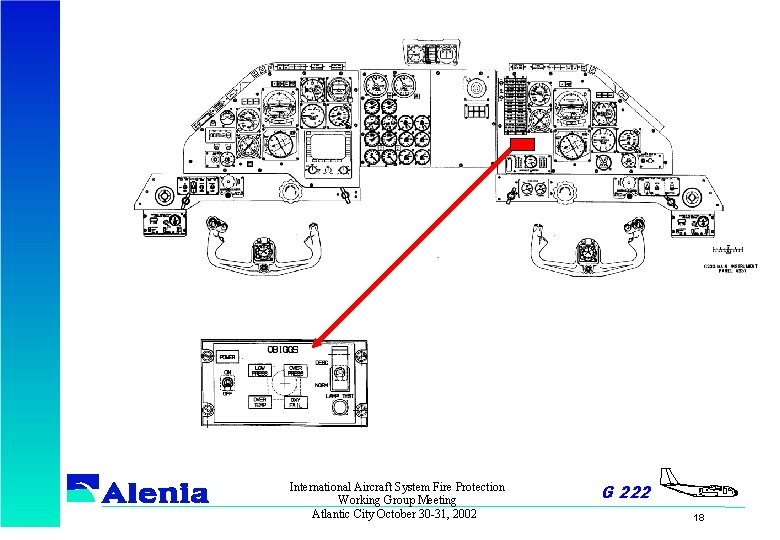
FUNCTIONAL DESCRIPTION FTEPS/OBIGGS CONTROL PANEL International Aircraft System Fire Protection Working Group Meeting Atlantic City October 30 -31, 2002 G 222 12

FUNCTIONAL DESCRIPTION FUNCTIONAL INTERFACES ECS Air Cycle Machine TURBINE From engines/APU bleed ports FAN Heat Exchanger Fluid Pressure, Servo Air, Regulating Valve Check Valve RAM AIR 115 VAC Heater Cuff and Automatic Drain Valve Low Temperature Trim Valve Pneumatic Temperature Sensor International Aircraft System Fire Protection Working Group Meeting Atlantic City October 30 -31, 2002 G 222 13
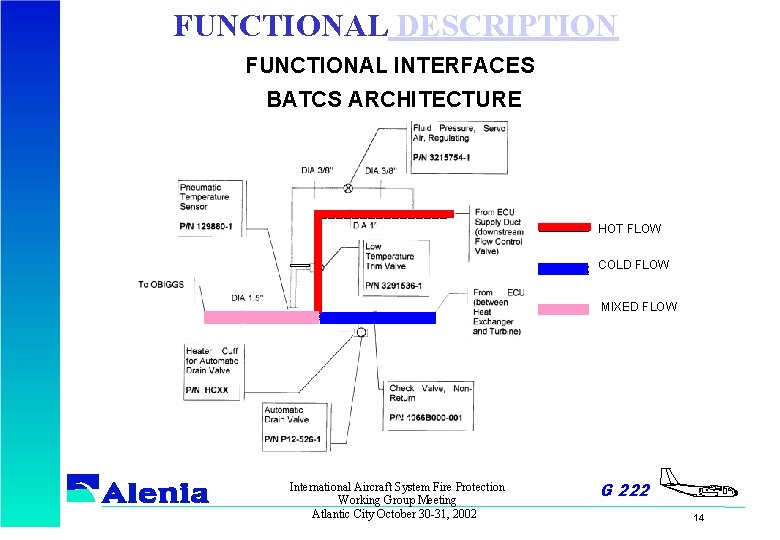
FUNCTIONAL DESCRIPTION FUNCTIONAL INTERFACES BATCS ARCHITECTURE HOT FLOW COLD FLOW MIXED FLOW International Aircraft System Fire Protection Working Group Meeting Atlantic City October 30 -31, 2002 G 222 14
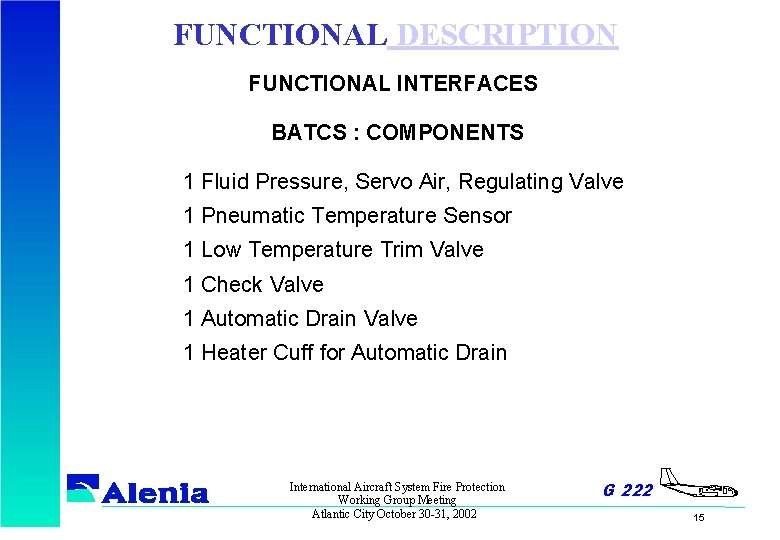
FUNCTIONAL DESCRIPTION FUNCTIONAL INTERFACES BATCS : COMPONENTS 1 Fluid Pressure, Servo Air, Regulating Valve 1 Pneumatic Temperature Sensor 1 Low Temperature Trim Valve 1 Check Valve 1 Automatic Drain Valve 1 Heater Cuff for Automatic Drain International Aircraft System Fire Protection Working Group Meeting Atlantic City October 30 -31, 2002 G 222 15
BATCS BENEFITS • No additional heat exchanger • No dedicated cooling fan • No ram air and exhaust for external air • Completely automatic system International Aircraft System Fire Protection Working Group Meeting Atlantic City October 30 -31, 2002 G 222 16
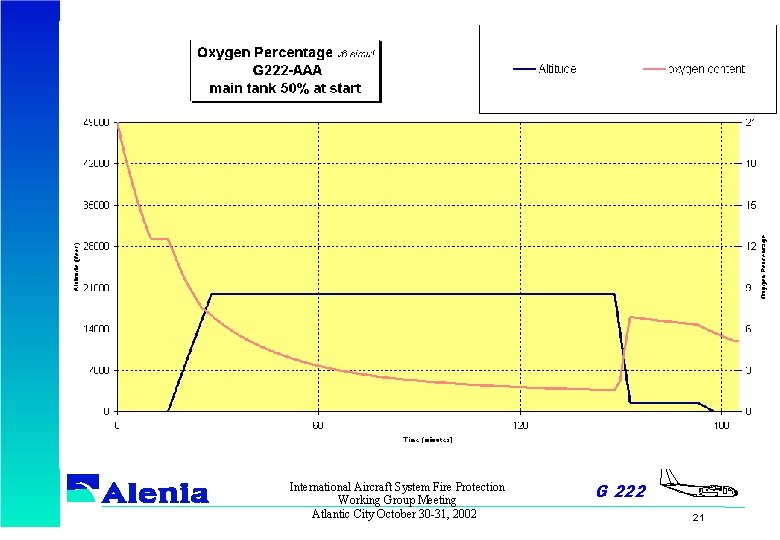
FUNCTIONAL DESCRIPTION OPERATIONAL MODES FTEPS working in “Normal” conditions allows to have : • NEA at 1% of O 2 if the inlet pressure is more than 20 psig; • NEA at 5% of O 2 if the inlet pressure is less than 20 psig. Operation in “Descent” condition allows: • To have NEA at 7% O 2 even if inlet pressures are less than 20 psig; International Aircraft System Fire Protection Working Group Meeting Atlantic City October 30 -31, 2002 G 222 17
International Aircraft System Fire Protection Working Group Meeting Atlantic City October 30 -31, 2002 G 222 18
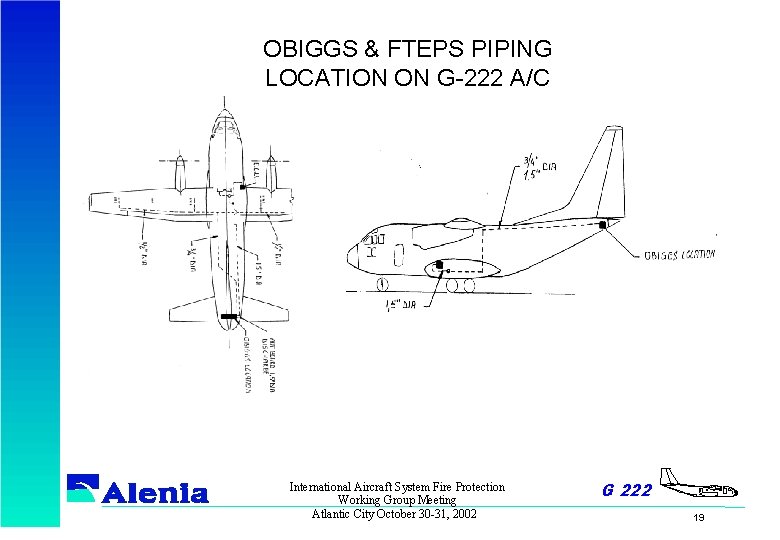
OBIGGS & FTEPS PIPING LOCATION ON G-222 A/C International Aircraft System Fire Protection Working Group Meeting Atlantic City October 30 -31, 2002 G 222 19

OBIGGS International Aircraft System Fire Protection Working Group Meeting Atlantic City October 30 -31, 2002 G 222 20
International Aircraft System Fire Protection Working Group Meeting Atlantic City October 30 -31, 2002 G 222 21
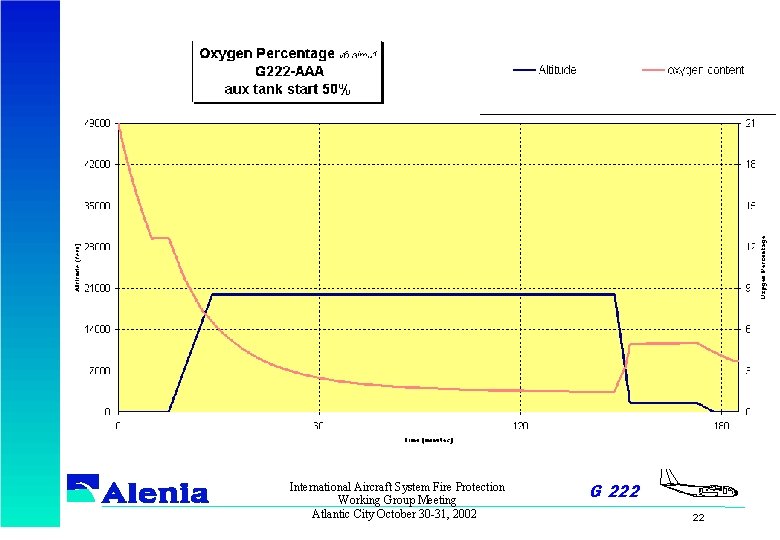
International Aircraft System Fire Protection Working Group Meeting Atlantic City October 30 -31, 2002 G 222 22
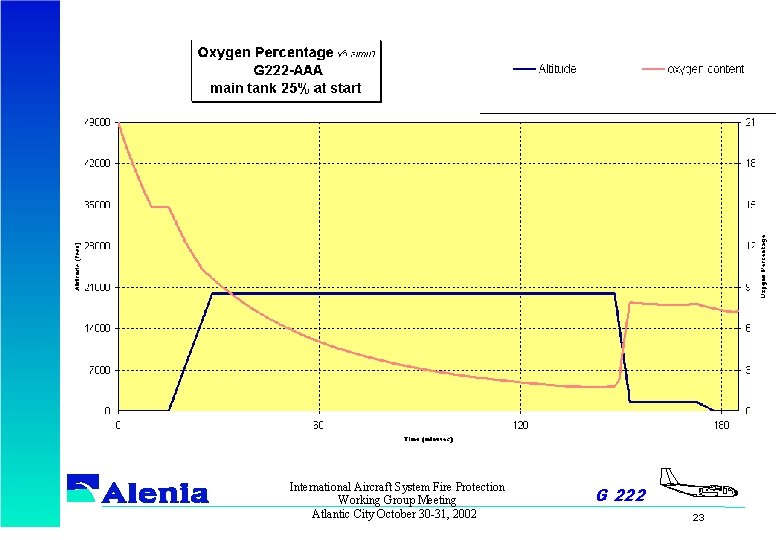
International Aircraft System Fire Protection Working Group Meeting Atlantic City October 30 -31, 2002 G 222 23
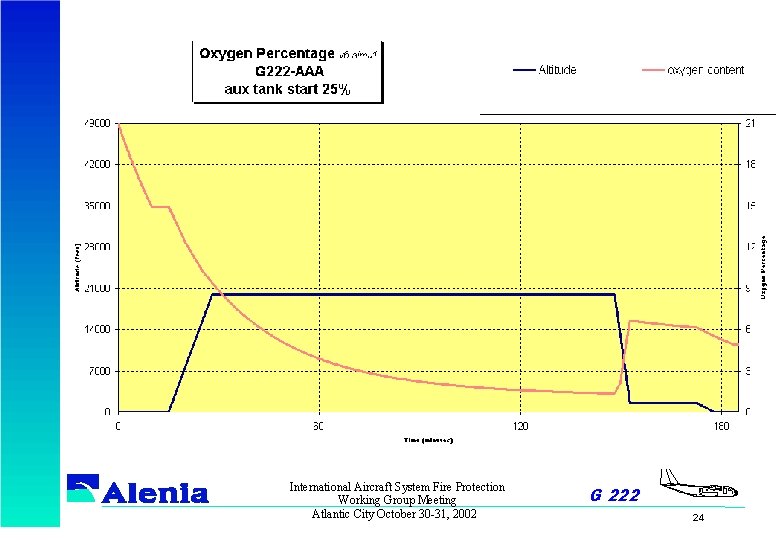
International Aircraft System Fire Protection Working Group Meeting Atlantic City October 30 -31, 2002 G 222 24
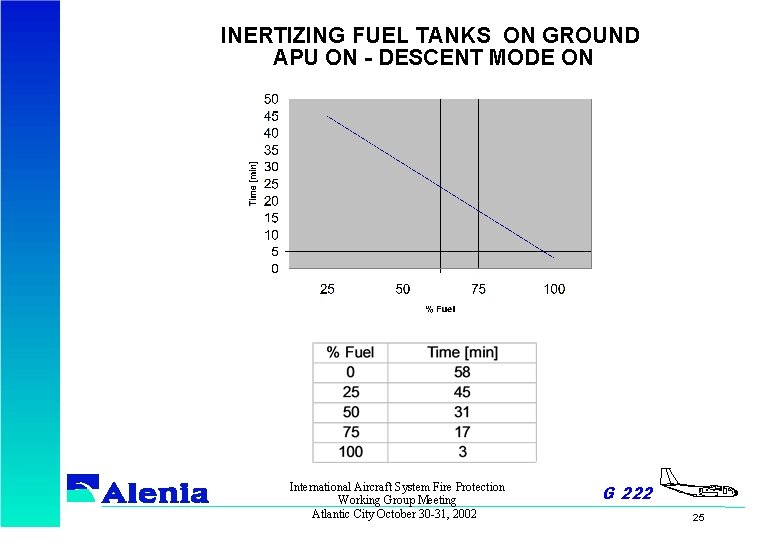
INERTIZING FUEL TANKS ON GROUND APU ON - DESCENT MODE ON International Aircraft System Fire Protection Working Group Meeting Atlantic City October 30 -31, 2002 G 222 25
- Slides: 25