
Fuel Cell Modeling In AMESim IMAGINE Specific Thermodynamic

- Slides: 26
Fuel Cell Modeling In AMESim IMAGINE Specific Thermodynamic Applications 04/2006 Cédric ROMAN – roman@amesim. com
2 Introduction § Fuel Cells are complex multi-domain dynamic systems § § § Electrical, electrochemical, fluidic, thermal phenomena are coupled Controlling such systems is a challenge to ensure efficiency and reliability Modelling fuel cells systems implies § § Interoperability Multi-disciplinary and dynamic simulation environment ROMAN Cédric – roman@amesim. com
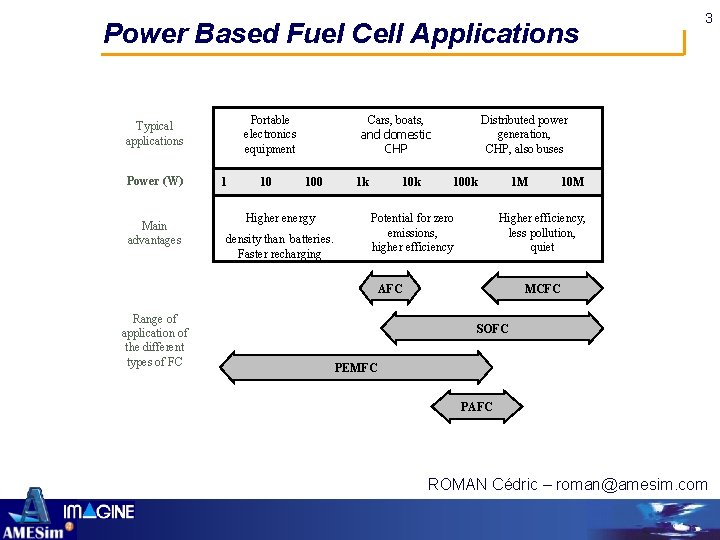
Power Based Fuel Cell Applications Portable electronics equipment Typical applications Power (W) Main advantages 1 10 Cars, boats, and domestic CHP 100 Higher energy density than batteries. Faster recharging 1 k 10 k Distributed power generation, CHP, also buses 100 k Potential for zero emissions, higher efficiency 1 M 10 M Higher efficiency, less pollution, quiet MCFC AFC Range of application of the different types of FC 3 SOFC PEMFC PAFC ROMAN Cédric – roman@amesim. com
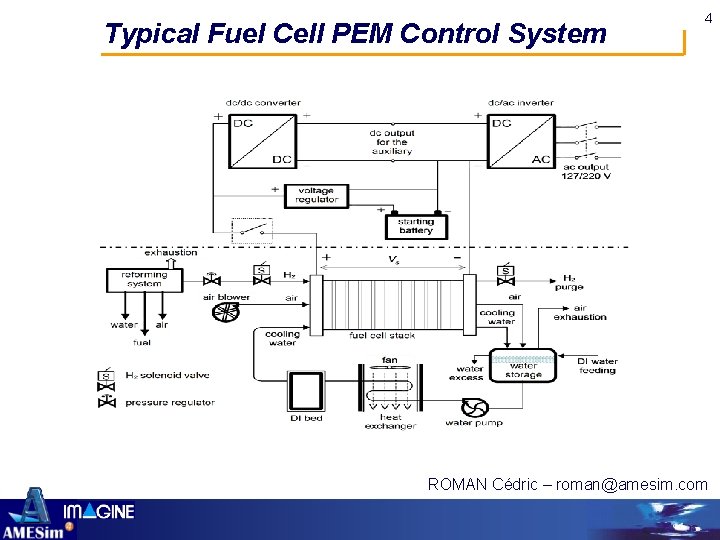
Typical Fuel Cell PEM Control System 4 ROMAN Cédric – roman@amesim. com
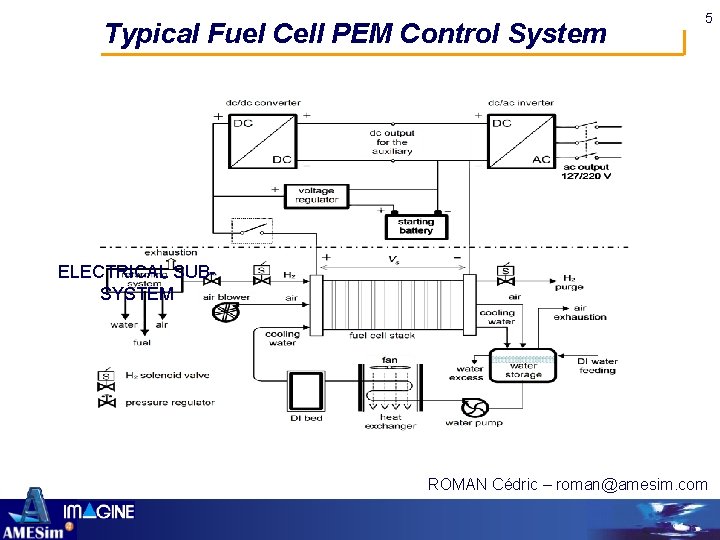
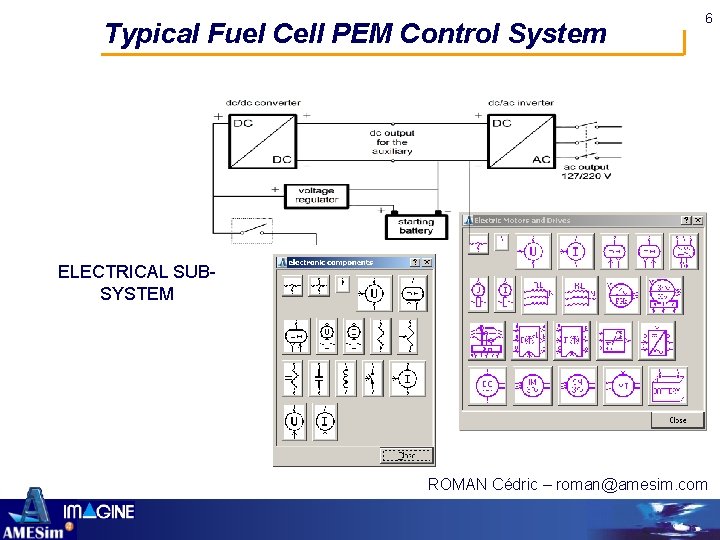
Typical Fuel Cell PEM Control System 5 ELECTRICAL SUBSYSTEM ROMAN Cédric – roman@amesim. com
Typical Fuel Cell PEM Control System 6 ELECTRICAL SUBSYSTEM ROMAN Cédric – roman@amesim. com
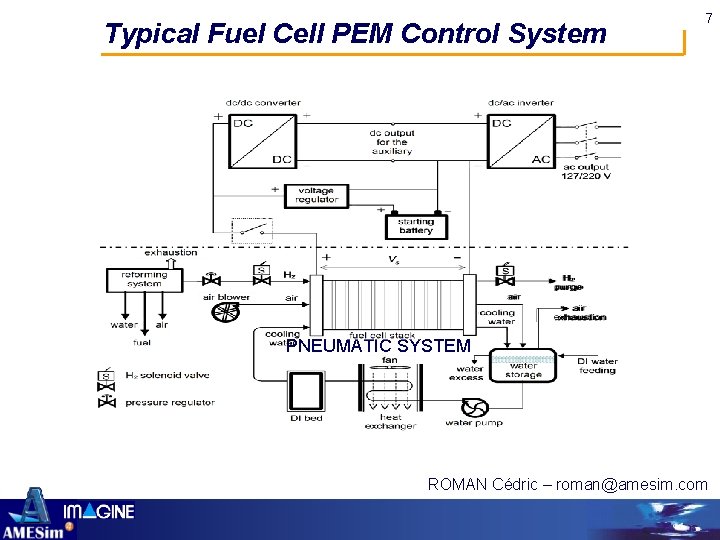
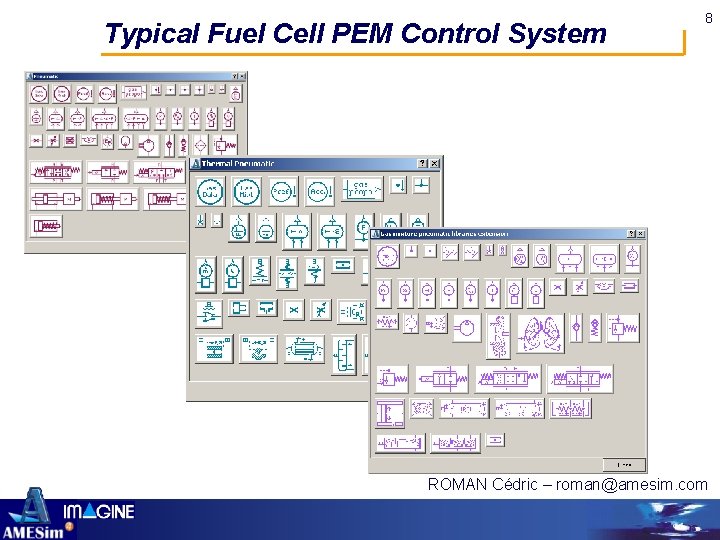
Typical Fuel Cell PEM Control System 7 PNEUMATIC SYSTEM ROMAN Cédric – roman@amesim. com
Typical Fuel Cell PEM Control System 8 PNEUMATIC SYSTEM ROMAN Cédric – roman@amesim. com
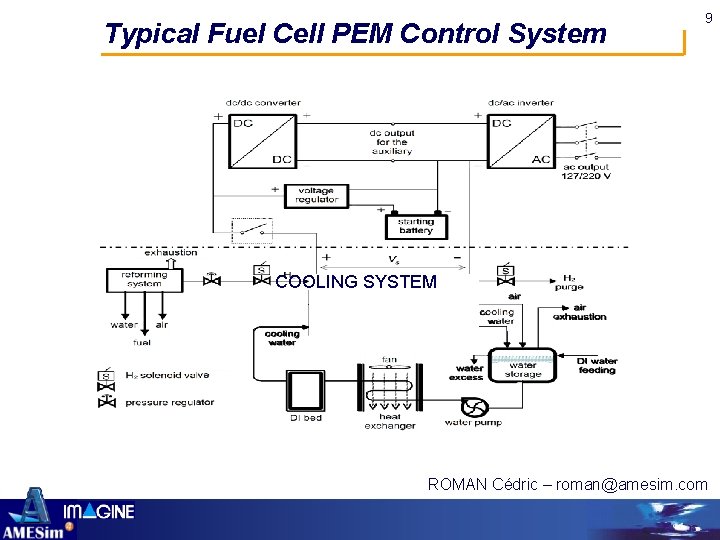
Typical Fuel Cell PEM Control System 9 COOLING SYSTEM ROMAN Cédric – roman@amesim. com
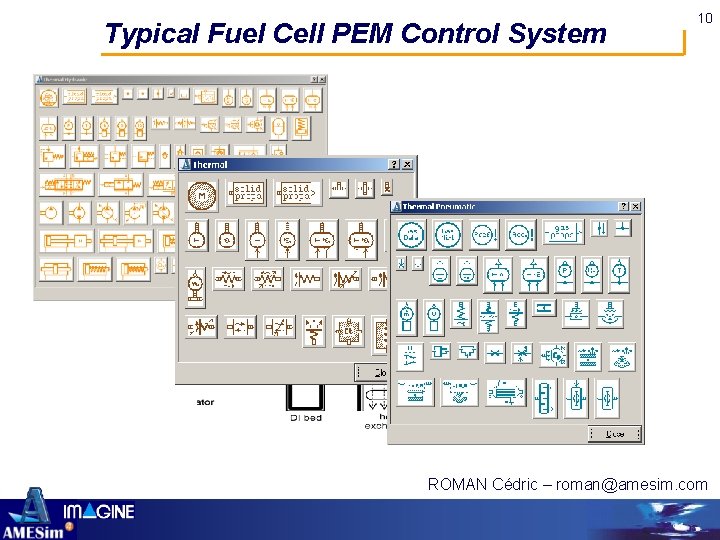
Typical Fuel Cell PEM Control System 10 COOLING SYSTEM ROMAN Cédric – roman@amesim. com
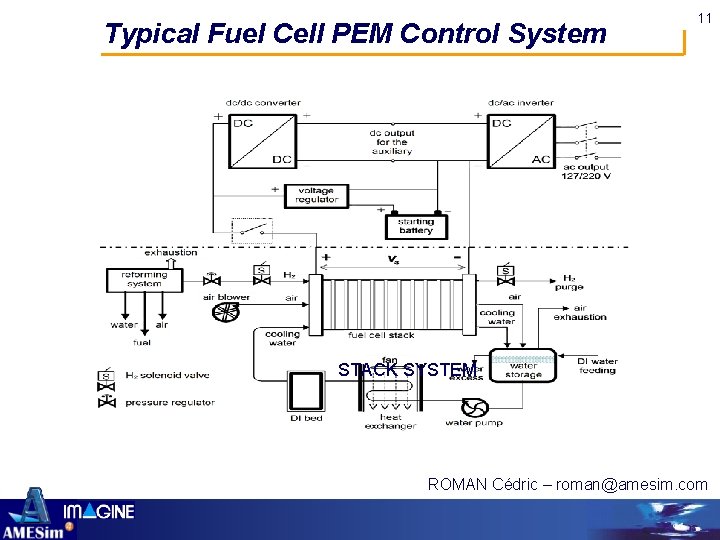
Typical Fuel Cell PEM Control System 11 STACK SYSTEM ROMAN Cédric – roman@amesim. com
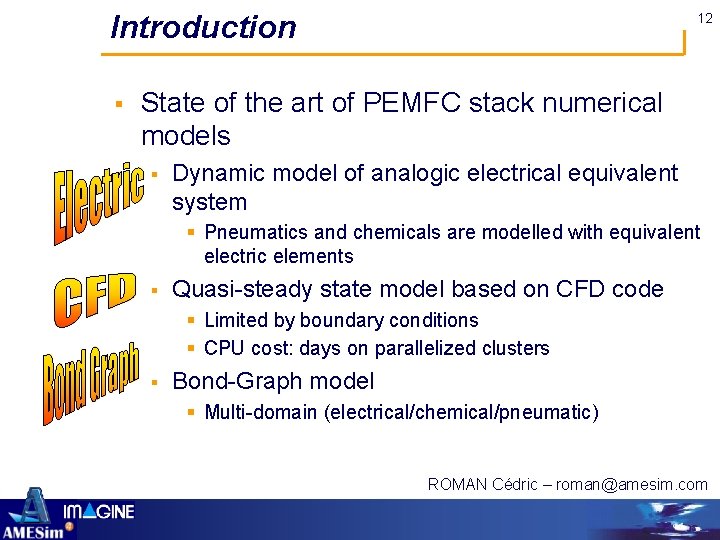
Introduction § 12 State of the art of PEMFC stack numerical models § Dynamic model of analogic electrical equivalent system § Pneumatics and chemicals are modelled with equivalent electric elements § Quasi-steady state model based on CFD code § Limited by boundary conditions § CPU cost: days on parallelized clusters § Bond-Graph model § Multi-domain (electrical/chemical/pneumatic) ROMAN Cédric – roman@amesim. com
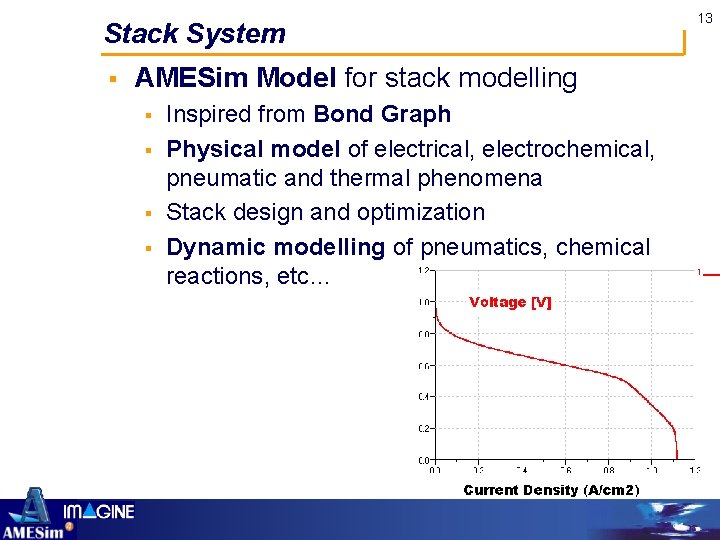
13 Stack System § AMESim Model for stack modelling § § Inspired from Bond Graph Physical model of electrical, electrochemical, pneumatic and thermal phenomena Stack design and optimization Dynamic modelling of pneumatics, chemical reactions, etc… ROMAN Cédric – roman@amesim. com
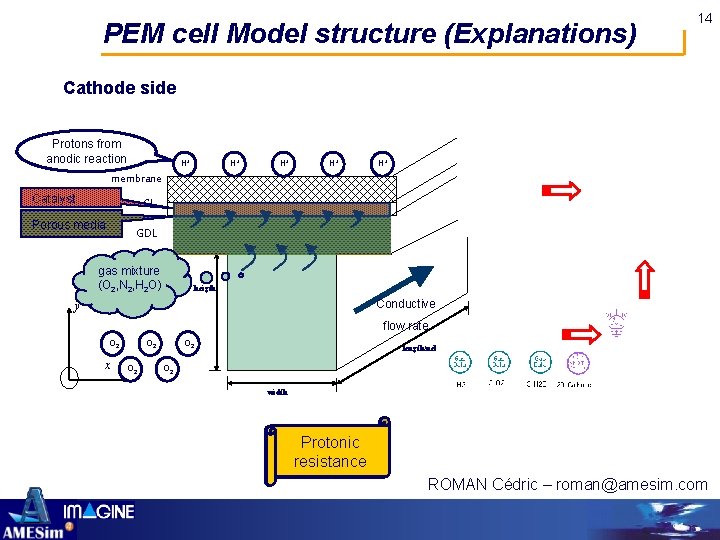
PEM cell Model structure (Explanations) 14 Cathode side Protons from anodic reaction H+ H+ H+ membrane Catalyst CL Porous media GDL gas mixture (O 2, N 2, H 2 O) heigth Conductive y flow rate O 2 x O 2 O 2 length/nel O 2 width Protonic Diffusion resistance ROMAN Cédric – roman@amesim. com
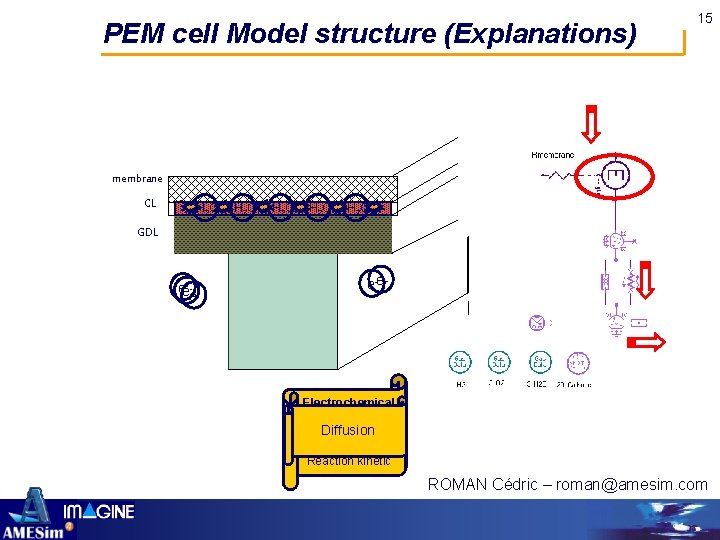
PEM cell Model structure (Explanations) 15 membrane CL H 2 O H 2 O GDL ee- - e e-e- Electrochemical Current reaction prediction Diffusion & Nernst equation Reaction kinetic Ohmic losses ROMAN Cédric – roman@amesim. com
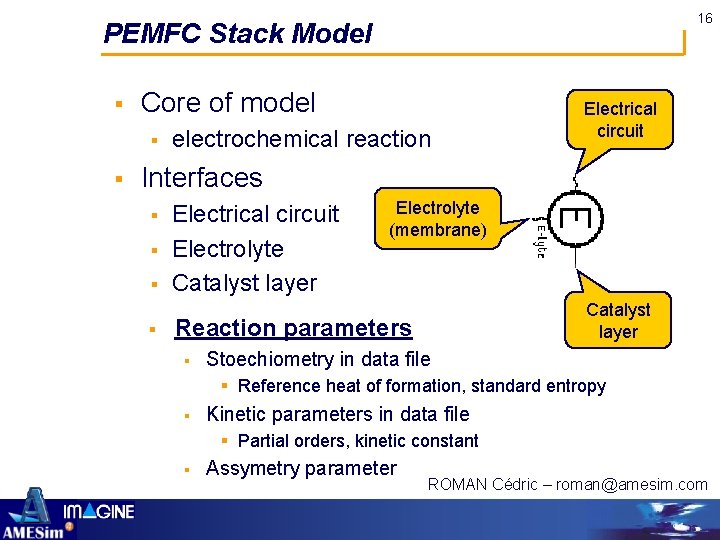
16 PEMFC Stack Model § Core of model § § electrochemical reaction Electrical circuit Interfaces § § Electrical circuit Electrolyte Catalyst layer Electrolyte (membrane) Catalyst layer Reaction parameters § Stoechiometry in data file § Reference heat of formation, standard entropy § Kinetic parameters in data file § Partial orders, kinetic constant § Assymetry parameter ROMAN Cédric – roman@amesim. com
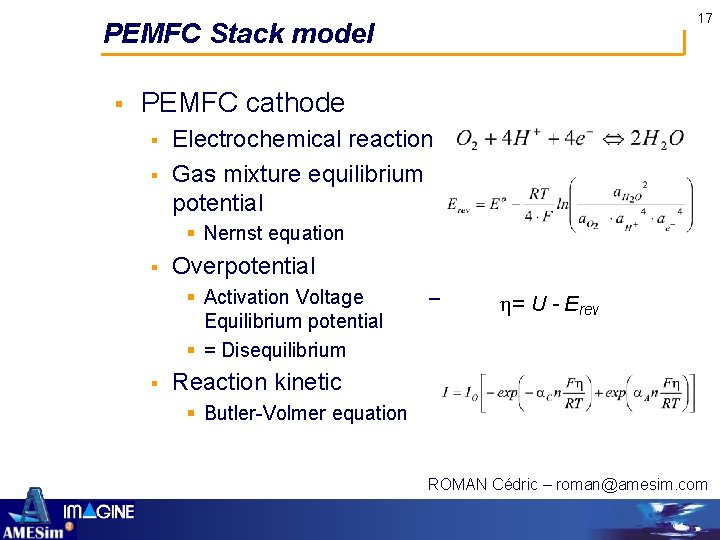
17 PEMFC Stack model § PEMFC cathode § § Electrochemical reaction Gas mixture equilibrium potential § Nernst equation § Overpotential § Activation Voltage Equilibrium potential § = Disequilibrium § – Reaction kinetic § Butler-Volmer equation ROMAN Cédric – roman@amesim. com
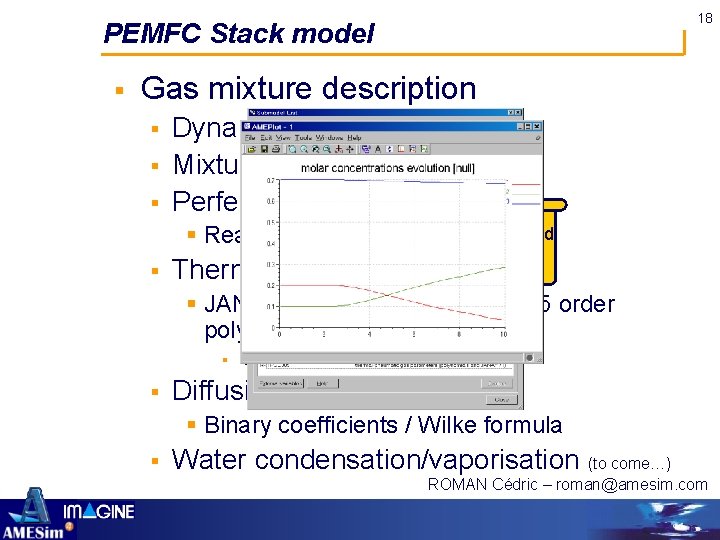
18 PEMFC Stack model § Gas mixture description § § § Dynamic description Mixture of N species Perfect gas equation of state § Real gas possible § Predefined species Thermodynamic description § JANAF 71: Cp, h, u, s given by 5 order polynomial of temperature § § Validity domain (200<->5000 K) Diffusion § Binary coefficients / Wilke formula § Water condensation/vaporisation (to come…) ROMAN Cédric – roman@amesim. com
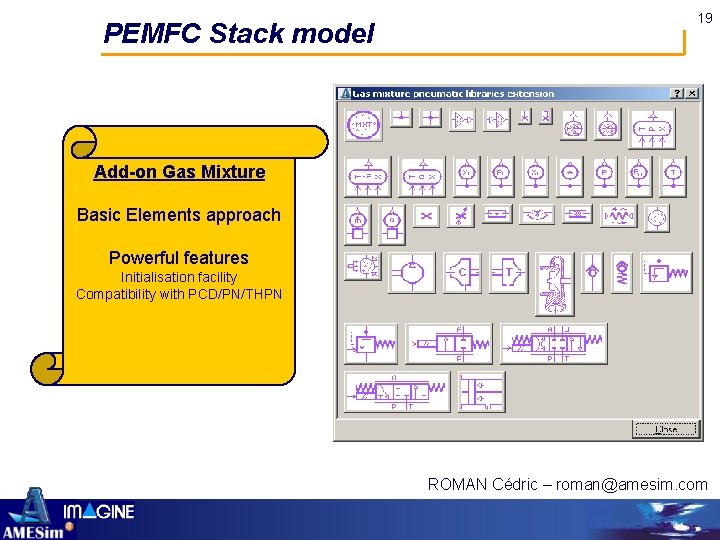
PEMFC Stack model 19 Add-on Gas Mixture Basic Elements approach Powerful features Initialisation facility Compatibility with PCD/PN/THPN ROMAN Cédric – roman@amesim. com
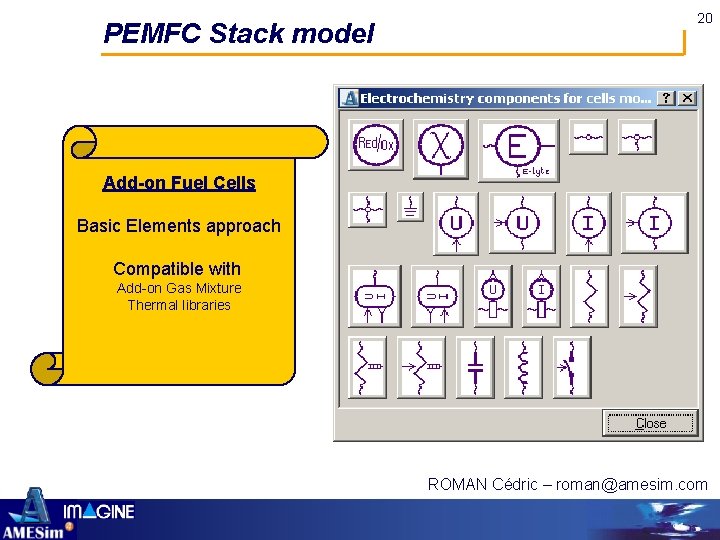
PEMFC Stack model 20 Add-on Fuel Cells Basic Elements approach Compatible with Add-on Gas Mixture Thermal libraries ROMAN Cédric – roman@amesim. com
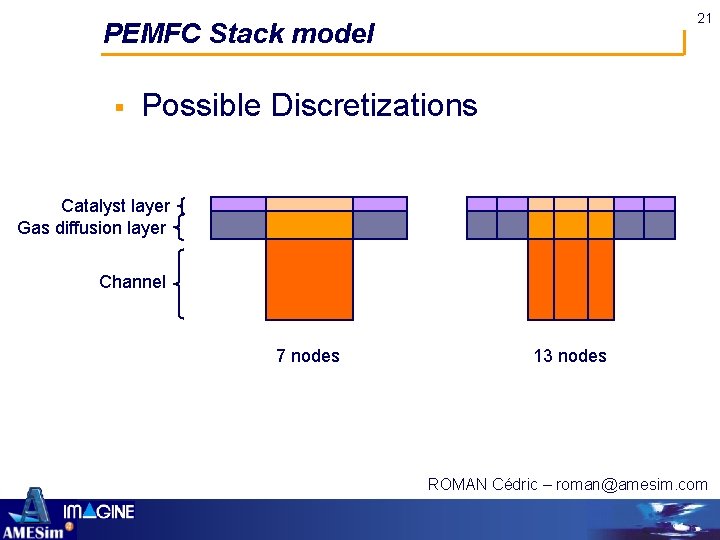
21 PEMFC Stack model § Possible Discretizations Catalyst layer Gas diffusion layer Channel 7 nodes 13 nodes ROMAN Cédric – roman@amesim. com
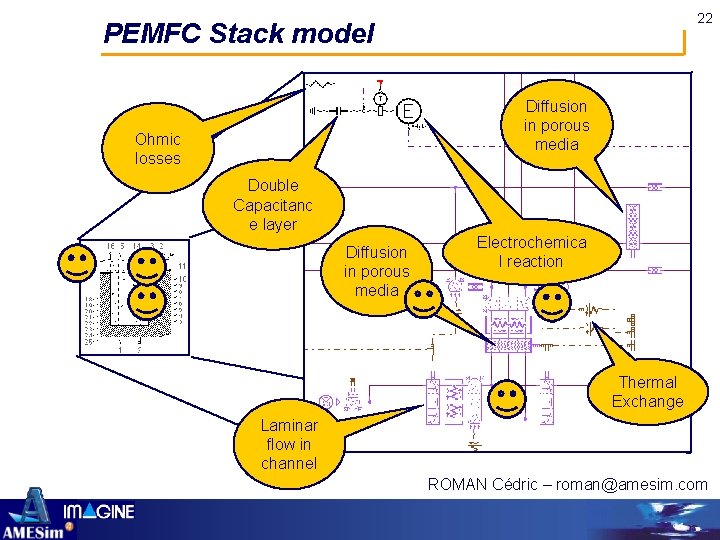
22 PEMFC Stack model Diffusion in porous media Ohmic losses Double Capacitanc e layer Diffusion in porous media Electrochemica l reaction Thermal Exchange Laminar flow in channel ROMAN Cédric – roman@amesim. com
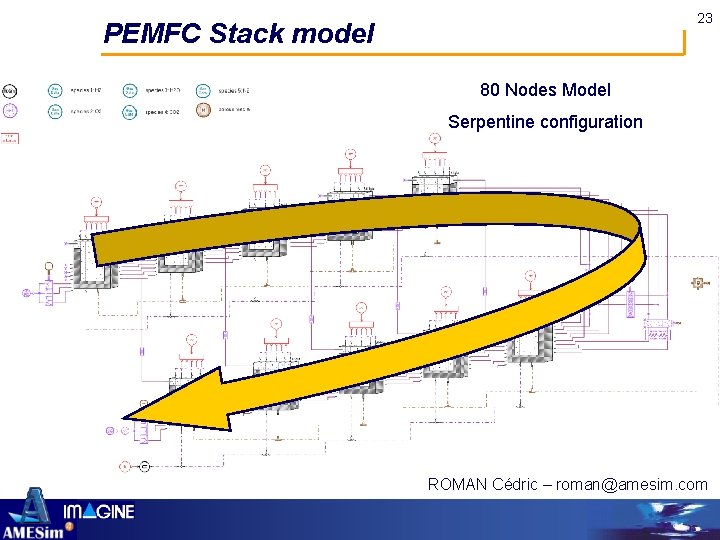
23 PEMFC Stack model 80 Nodes Model Serpentine configuration ROMAN Cédric – roman@amesim. com
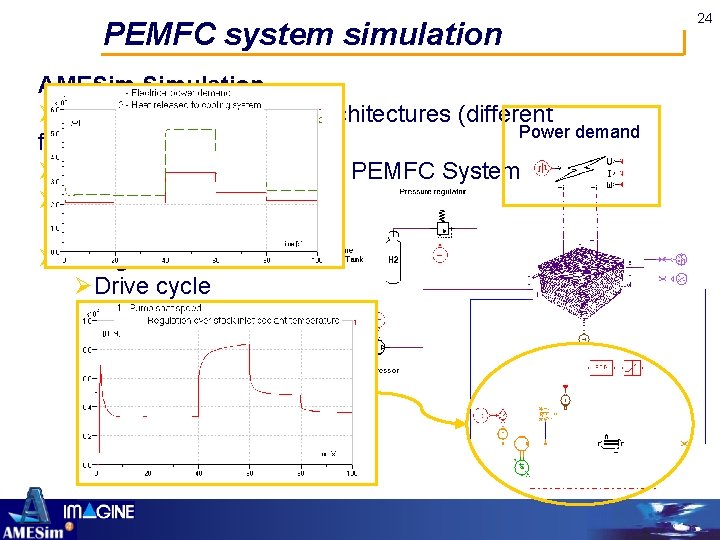
PEMFC system simulation 24 AMESim Simulation ØComparison of different architectures (different Power demand flowcharts) ØDesign of the control of the PEMFC System ØStart-up process Øfreeze start ØChange of load ØDrive cycle ØPower demand ROMAN Cédric – roman@amesim. com
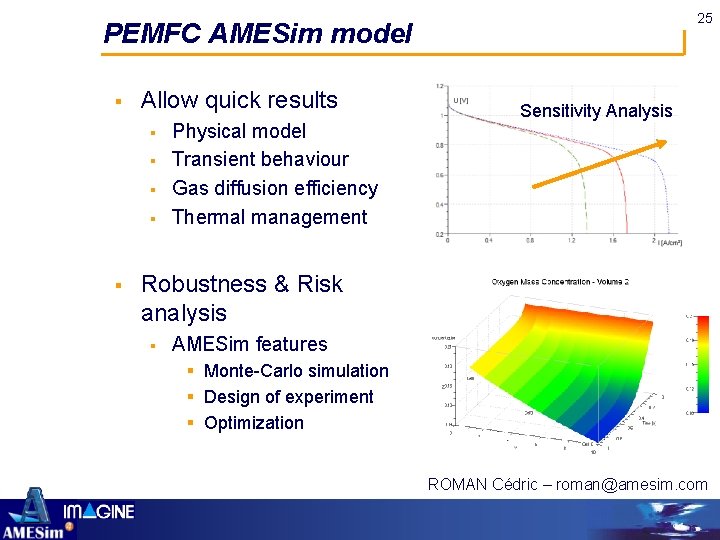
25 PEMFC AMESim model § Allow quick results § § § Physical model Transient behaviour Gas diffusion efficiency Thermal management Sensitivity Analysis Robustness & Risk analysis § AMESim features § Monte-Carlo simulation § Design of experiment § Optimization ROMAN Cédric – roman@amesim. com
26 PEMFC AMESim model § Gain Time & Performance § Have a better understanding of physics § Use all powerfuls AMESim applications § § § Compatible with standard libraries Activity index Linear analysis (Bode, Nyquist, Nichols, …) Design of Experiment / Optimization Real-time ROMAN Cédric – roman@amesim. com