
FSW Workshop 2015 Rob Chambers Lockheed Martin Orion
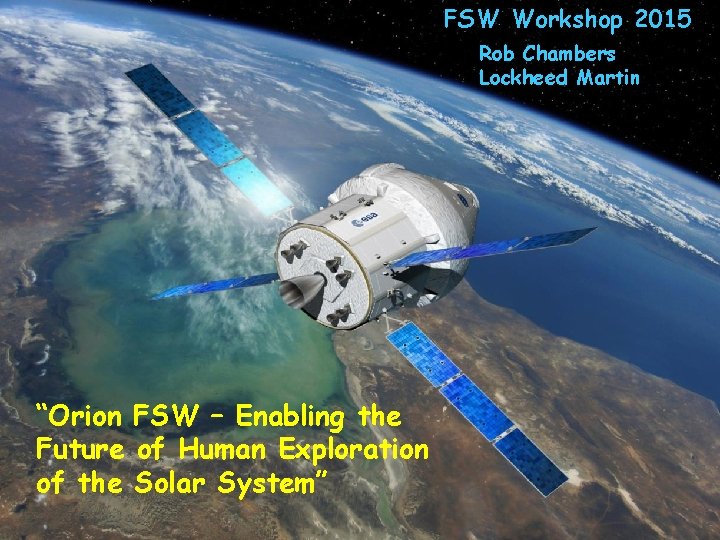
FSW Workshop 2015 Rob Chambers Lockheed Martin “Orion FSW – Enabling the Future of Human Exploration of the Solar System”
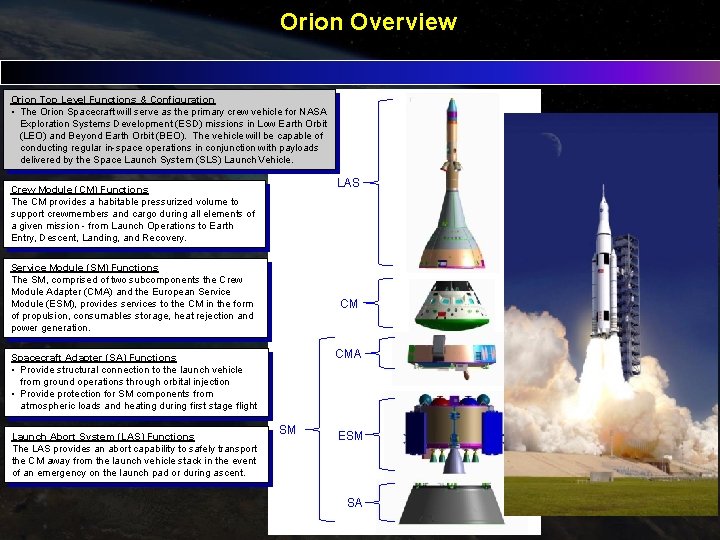
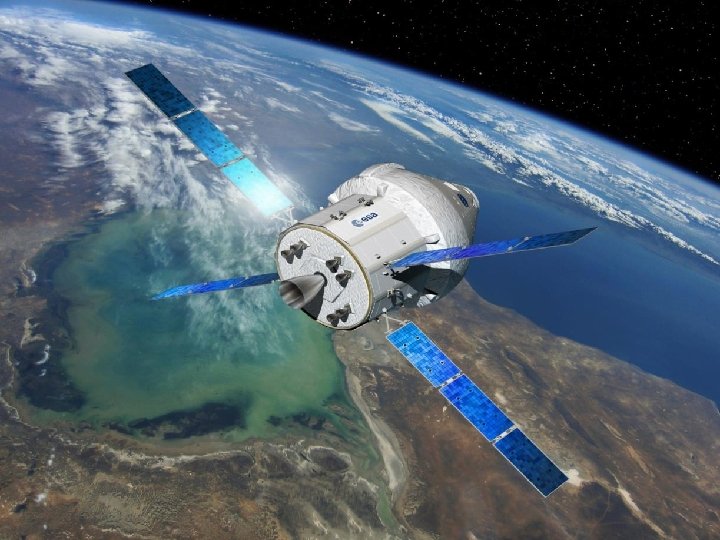
Orion Overview Orion Top Level Functions & Configuration • The Orion Spacecraft will serve as the primary crew vehicle for NASA Exploration Systems Development (ESD) missions in Low Earth Orbit (LEO) and Beyond Earth Orbit (BEO). The vehicle will be capable of conducting regular in-space operations in conjunction with payloads delivered by the Space Launch System (SLS) Launch Vehicle. LAS Crew Module (CM) Functions The CM provides a habitable pressurized volume to support crewmembers and cargo during all elements of a given mission - from Launch Operations to Earth Entry, Descent, Landing, and Recovery. Service Module (SM) Functions The SM, comprised of two subcomponents the Crew Module Adapter (CMA) and the European Service Module (ESM), provides services to the CM in the form of propulsion, consumables storage, heat rejection and power generation. CM CMA Spacecraft Adapter (SA) Functions • Provide structural connection to the launch vehicle from ground operations through orbital injection • Provide protection for SM components from atmospheric loads and heating during first stage flight Launch Abort System (LAS) Functions The LAS provides an abort capability to safely transport the CM away from the launch vehicle stack in the event of an emergency on the launch pad or during ascent. SM ESM SA CU CSO – 10/8/2015 2
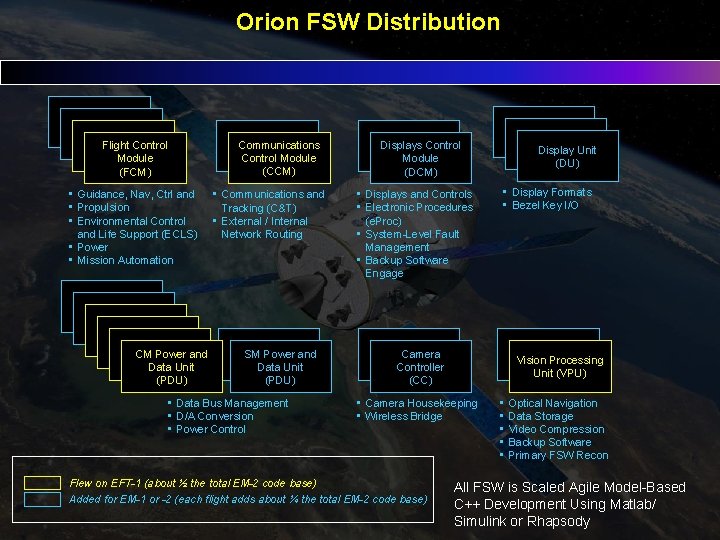
Orion FSW Distribution Flight Control Module (FCM) • Guidance, Nav, Ctrl and • Propulsion • Environmental Control and Life Support (ECLS) • Power • Mission Automation CM Power and Data Unit (PDU) Communications Control Module (CCM) • Communications and Tracking (C&T) • External / Internal Network Routing SM Power and Data Unit (PDU) • Data Bus Management • D/A Conversion • Power Control Displays Control Module (DCM) • Displays and Controls • Electronic Procedures (e. Proc) • System-Level Fault Management • Backup Software Engage • Display Formats • Bezel Key I/O Camera Controller (CC) Vision Processing Unit (VPU) • Camera Housekeeping • Wireless Bridge Flew on EFT-1 (about ½ the total EM-2 code base) Added for EM-1 or -2 (each flight adds about ¼ the total EM-2 code base) CU CSO – 10/8/2015 Display Unit (DU) • • • Optical Navigation Data Storage Video Compression Backup Software Primary FSW Recon All FSW is Scaled Agile Model-Based C++ Development Using Matlab/ Simulink or Rhapsody 3
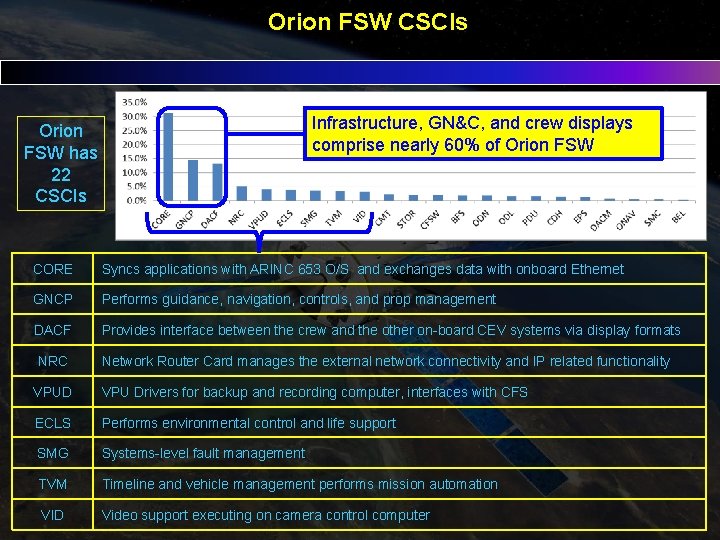
Orion FSW CSCIs Infrastructure, GN&C, and crew displays comprise nearly 60% of Orion FSW has 22 CSCIs CORE Syncs applications with ARINC 653 O/S and exchanges data with onboard Ethernet GNCP Performs guidance, navigation, controls, and prop management DACF Provides interface between the crew and the other on-board CEV systems via display formats NRC Network Router Card manages the external network connectivity and IP related functionality VPUD VPU Drivers for backup and recording computer, interfaces with CFS ECLS Performs environmental control and life support SMG Systems-level fault management TVM Timeline and vehicle management performs mission automation VID Video support executing on camera control computer CU CSO – 10/8/2015 4
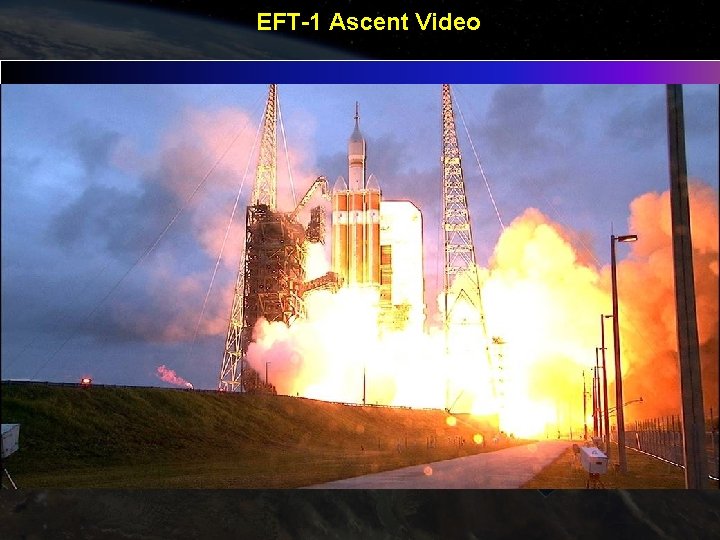
EFT-1 Ascent Video CU CSO – 10/8/2015 5
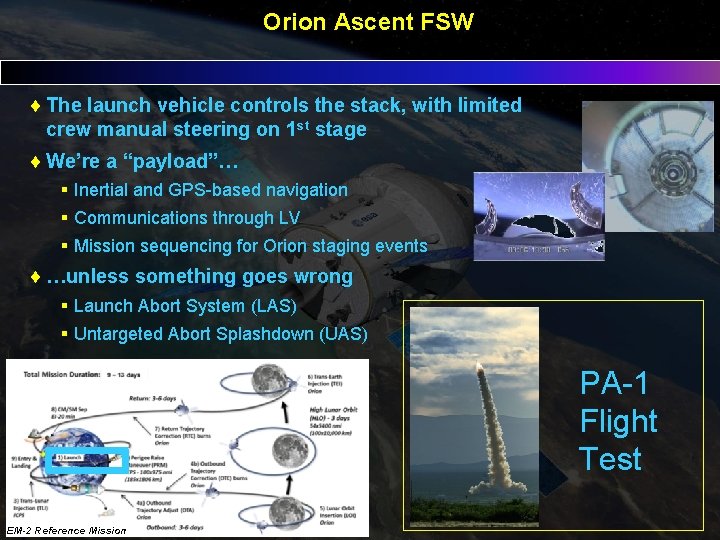
Orion Ascent FSW The launch vehicle controls the stack, with limited crew manual steering on 1 st stage We’re a “payload”… § Inertial and GPS-based navigation § Communications through LV § Mission sequencing for Orion staging events …unless something goes wrong § Launch Abort System (LAS) § Untargeted Abort Splashdown (UAS) PA-1 Flight Test CU CSO – 10/8/2015 EM-2 Reference Mission 6
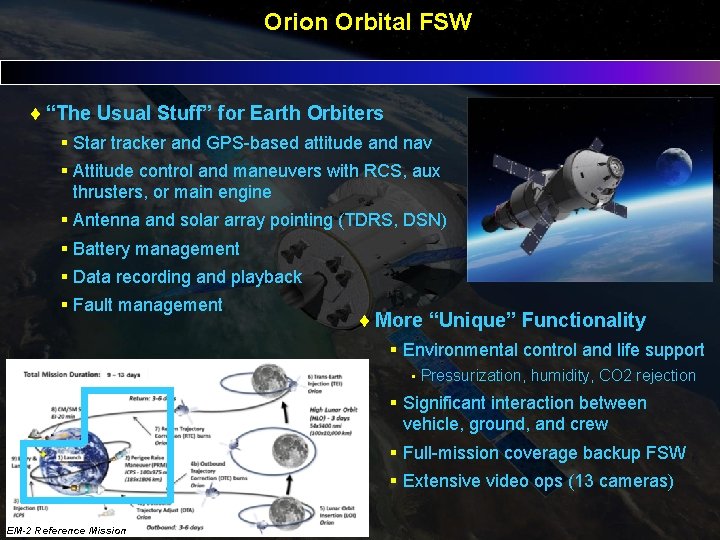
Orion Orbital FSW “The Usual Stuff” for Earth Orbiters § Star tracker and GPS-based attitude and nav § Attitude control and maneuvers with RCS, aux thrusters, or main engine § Antenna and solar array pointing (TDRS, DSN) § Battery management § Data recording and playback § Fault management More “Unique” Functionality § Environmental control and life support • Pressurization, humidity, CO 2 rejection § Significant interaction between vehicle, ground, and crew § Full-mission coverage backup FSW § Extensive video ops (13 cameras) CU CSO – 10/8/2015 EM-2 Reference Mission 7
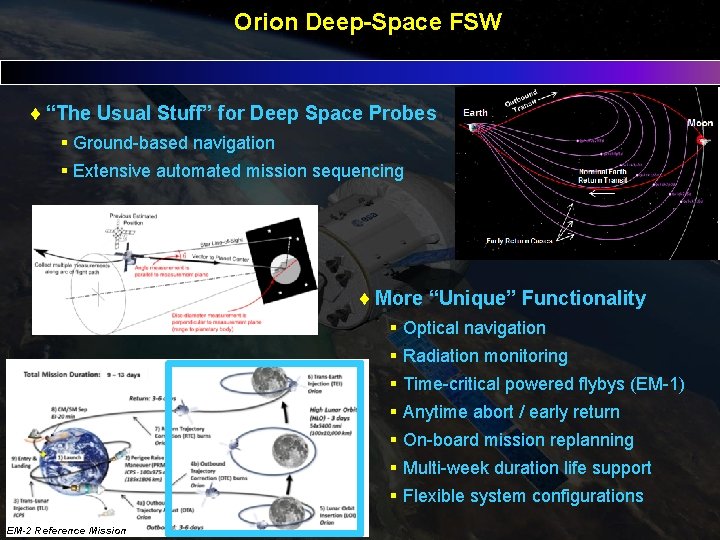
Orion Deep-Space FSW “The Usual Stuff” for Deep Space Probes § Ground-based navigation § Extensive automated mission sequencing More “Unique” Functionality § Optical navigation § Radiation monitoring § Time-critical powered flybys (EM-1) § Anytime abort / early return § On-board mission replanning § Multi-week duration life support § Flexible system configurations CU CSO – 10/8/2015 EM-2 Reference Mission 8
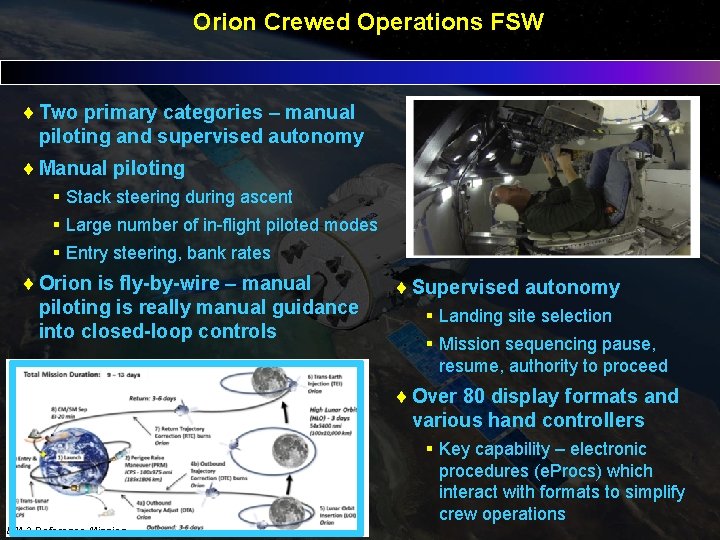
Orion Crewed Operations FSW Two primary categories – manual piloting and supervised autonomy Manual piloting § Stack steering during ascent § Large number of in-flight piloted modes § Entry steering, bank rates Orion is fly-by-wire – manual piloting is really manual guidance into closed-loop controls Supervised autonomy § Landing site selection § Mission sequencing pause, resume, authority to proceed Over 80 display formats and various hand controllers § Key capability – electronic procedures (e. Procs) which interact with formats to simplify crew operations CU CSO – 10/8/2015 EM-2 Reference Mission 9
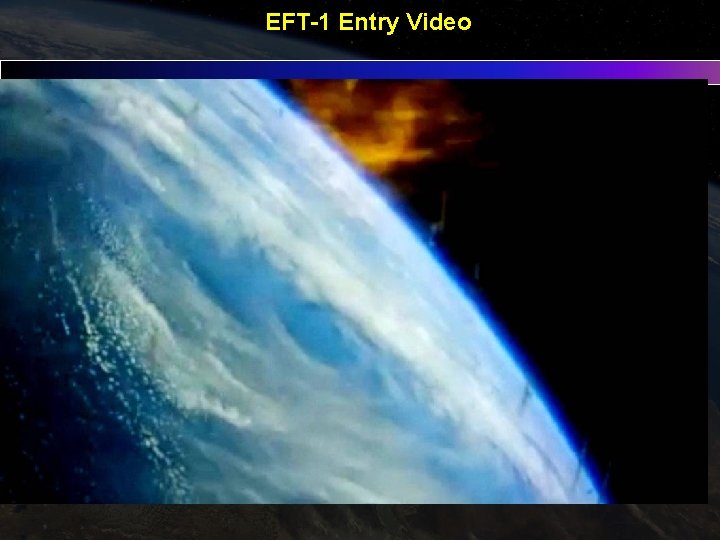
EFT-1 Entry Video CU CSO – 10/8/2015 10
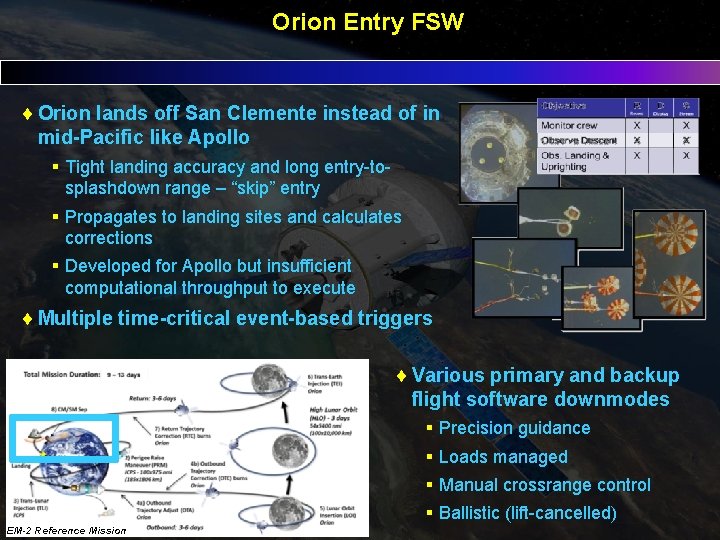
Orion Entry FSW Orion lands off San Clemente instead of in mid-Pacific like Apollo § Tight landing accuracy and long entry-tosplashdown range – “skip” entry § Propagates to landing sites and calculates corrections § Developed for Apollo but insufficient computational throughput to execute Multiple time-critical event-based triggers Various primary and backup flight software downmodes § Precision guidance § Loads managed § Manual crossrange control § Ballistic (lift-cancelled) CU CSO – 10/8/2015 EM-2 Reference Mission 11
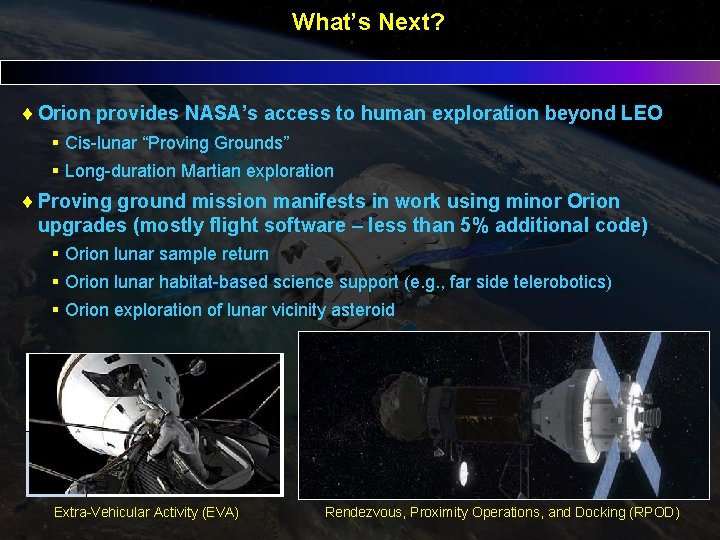
What’s Next? Orion provides NASA’s access to human exploration beyond LEO § Cis-lunar “Proving Grounds” § Long-duration Martian exploration Proving ground mission manifests in work using minor Orion upgrades (mostly flight software – less than 5% additional code) § Orion lunar sample return § Orion lunar habitat-based science support (e. g. , far side telerobotics) § Orion exploration of lunar vicinity asteroid Extra-Vehicular Activity (EVA) CU CSO – 10/8/2015 Rendezvous, Proximity Operations, and Docking (RPOD) 12
- Slides: 13