
FSMQ Additional Maths 6993 Additional topics added to
- Slides: 13
FSMQ Additional Maths (6993)
Additional topics added to Level 3 Free Assessment Standing Maths Qualification (FSMQ) Additional Maths (6993) Due to the increased content of our reformed GCSE in Mathematics, two new topics (Numerical Methods and Exponentials and Logarithms) have been added to make sure our Level 3 FSMQ - Additional Maths remains a valid stepping stone qualification between GCSE and A Level. The assessment sections A and B have been removed, providing a more traditional gradient of demand through the paper, which consists of a mixture of short and long questions (as at GCSE). Students are allowed to use a scientific or graphical calculator, subject to the rules published by the JCQ in the Instructions for Conducting Examinations document. Calculators can be used for any function they can perform, however questions will be set that require learners to provide detailed reasoning for their solutions so as to take into account the increased functionality of new calculator models. The new specification can be taught from September 2018, with first assessment summer 2019. Final assessment of the 2002 specification OCR FSMQ (Advanced): Additional Mathematics will be summer 2018.
Additional topics The new qualification contain some additional topics. Summary of the key content changes ● ● ‘Enumeration’ content, which expands the binomial distribution with permutations and combinations. The systematic listing content of the GCSE is built upon. ‘Numerical methods’ content, which expands upon the informal graphical approximations in GCSE and encourages more formal links graphs (with the algebra and calculus of Additional Maths). 'Exponentials and Logarithms’ content, which develops the growth and decay content and the graphs section of GCSE (this content was identified as one of the main gaps in knowledge that students not doing A Level Maths have when following other post-16 courses with a numerical aspect). Sequences using subscript notation have been included to support the iterative work on numerical methods and building upon new content in the reformed GCSE.
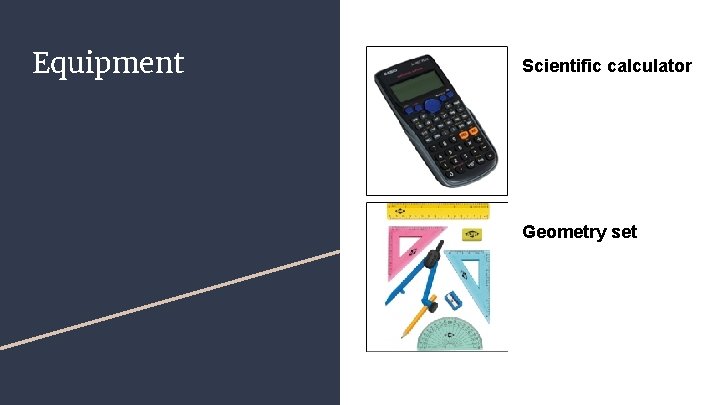
Equipment Scientific calculator Geometry set
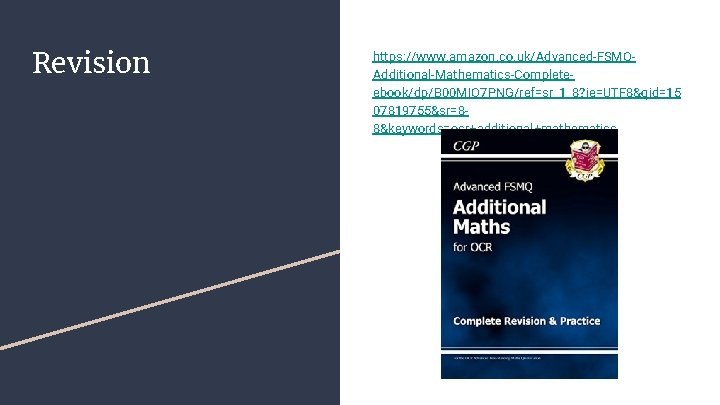
Revision https: //www. amazon. co. uk/Advanced-FSMQAdditional-Mathematics-Completeebook/dp/B 00 MIO 7 PNG/ref=sr_1_8? ie=UTF 8&qid=15 07819755&sr=88&keywords=ocr+additional+mathematics
Revision http: //www. ocr. org. uk/qualifications/free-standingmaths-qualification-fsmq-additional-mathematics 6993/ 10 years of past papers, mark schemes and examiner reports.
GCSE STATISTICS (8382)
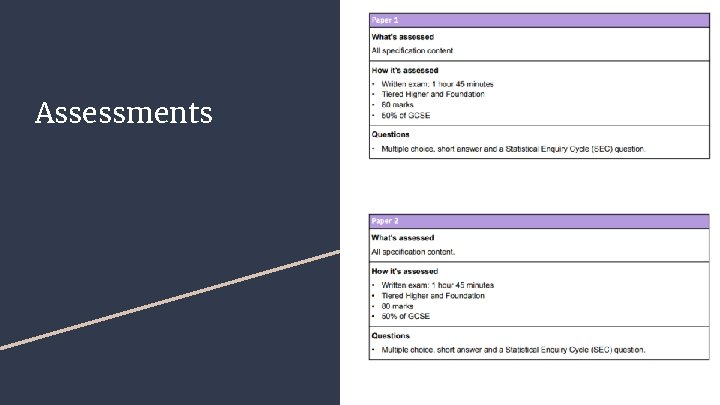
Assessments
Statistical Enquiry Cycle (SEC) Paper 1 and 2 Students need to be able to apply the knowledge and techniques The cycle covers five stages: • initial planning • data collection • data processing and presentation • interpretation of results • evaluation and review.
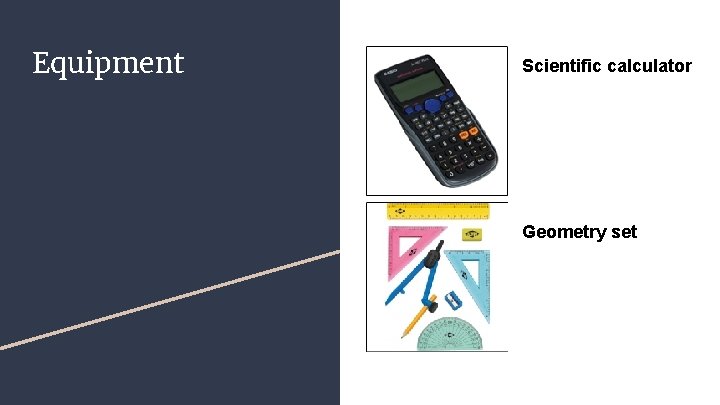
Equipment Scientific calculator Geometry set
Revision http: //www. aqa. org. uk/subjects/mathematics/gcse/s tatistics-8382/assessment-resources Link to past papers and markschemes.
Exam Dates and Revision Days
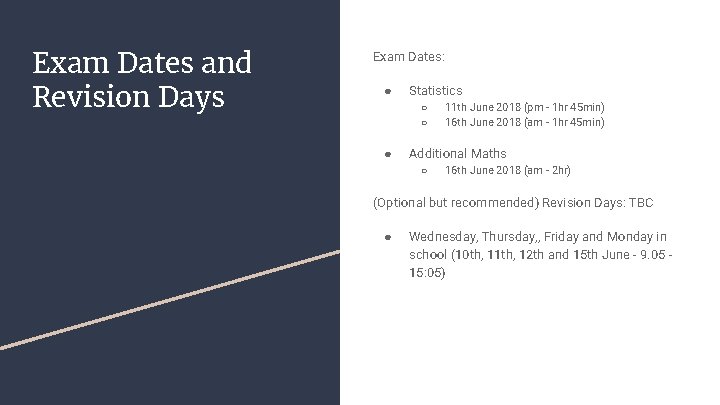
Exam Dates and Revision Days Exam Dates: ● Statistics ○ ○ ● 11 th June 2018 (pm - 1 hr 45 min) 16 th June 2018 (am - 1 hr 45 min) Additional Maths ○ 16 th June 2018 (am - 2 hr) (Optional but recommended) Revision Days: TBC ● Wednesday, Thursday, , Friday and Monday in school (10 th, 11 th, 12 th and 15 th June - 9. 05 15: 05)