
FSIs Arabic Speaking Test Model Choicebased approach ECOLT
FSI’s Arabic Speaking Test Model Choice-based approach ECOLT November 2 -3, 2012

FSI’s Examinee Population �Second language learners �Examinees who learned Arabic elsewhere �FSI-trained Examinees with language skills enhanced at post
FSI’s OLD Test Format Two Protocols �Interactive �Separate MSA test protocol �Separate dialect test protocol

OLD FSI’s Test Challenges �Define boundaries (MSA/Dialect) �Establish boundaries between various dialects �Establish a system of credits and penalties based on use of MSA or dialect
FSI’s NEW Test Format One Protocol �Interactive �Integrated but flexible �One protocol for both MSA and dialect �Based on examinee’s choice of dialect
Precepts of Arabic Use �Arabic: one continuum �Examinee: choice of dialect �Yardstick: highly articulate well-educated native speaker �Meaning: negotiated �Audience: defines language interaction
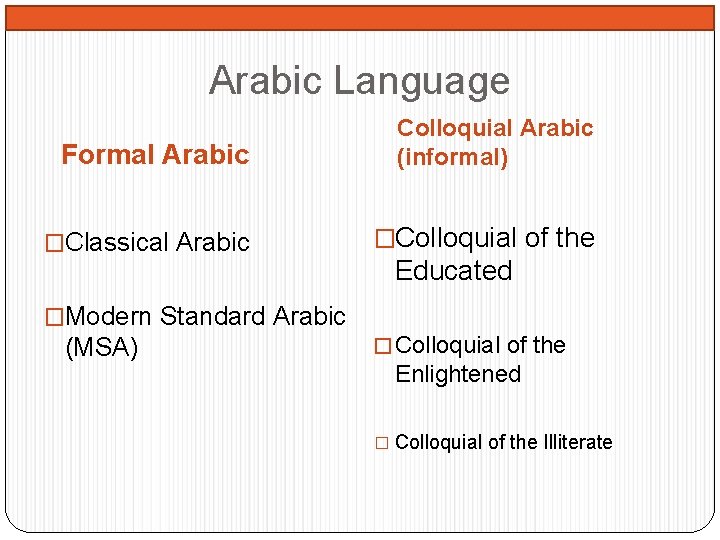
Arabic Language Formal Arabic Colloquial Arabic (informal) �Classical Arabic �Colloquial of the Educated �Modern Standard Arabic (MSA) � Colloquial of the Enlightened � Colloquial of the Illiterate
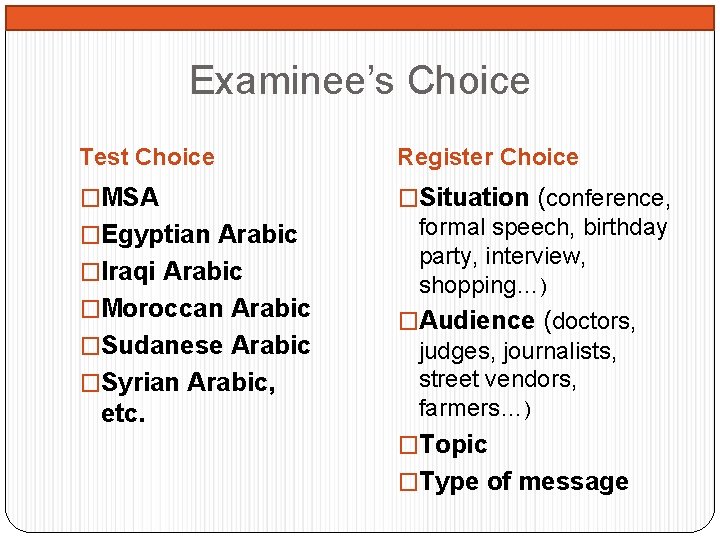
Examinee’s Choice Test Choice Register Choice �MSA �Situation (conference, �Egyptian Arabic �Iraqi Arabic �Moroccan Arabic �Sudanese Arabic �Syrian Arabic, etc. formal speech, birthday party, interview, shopping…) �Audience (doctors, judges, journalists, street vendors, farmers…) �Topic �Type of message
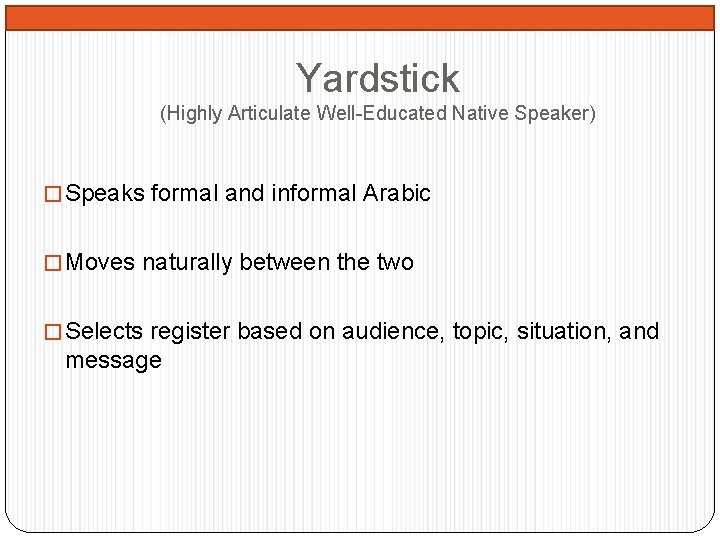
Yardstick (Highly Articulate Well-Educated Native Speaker) � Speaks formal and informal Arabic � Moves naturally between the two � Selects register based on audience, topic, situation, and message
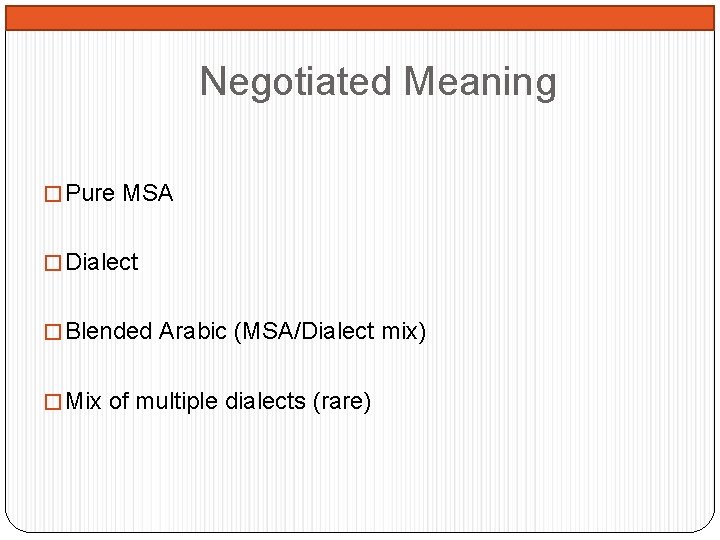
Negotiated Meaning � Pure MSA � Dialect � Blended Arabic (MSA/Dialect mix) � Mix of multiple dialects (rare)
Outcome Natural interaction regardless of the Arabic variant.
- Slides: 11