
FROZEN FISH PROCESSING Introduction The word fish is


- Slides: 25
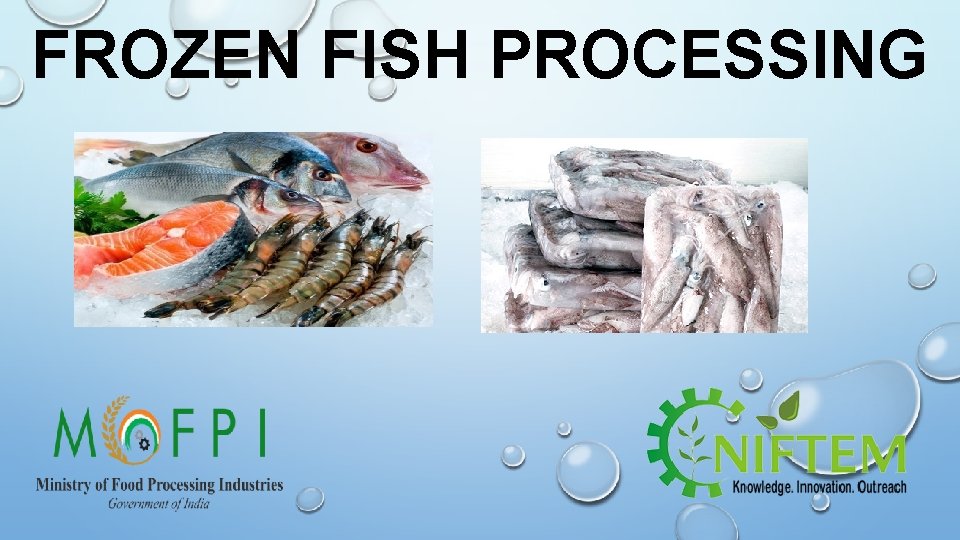
FROZEN FISH PROCESSING
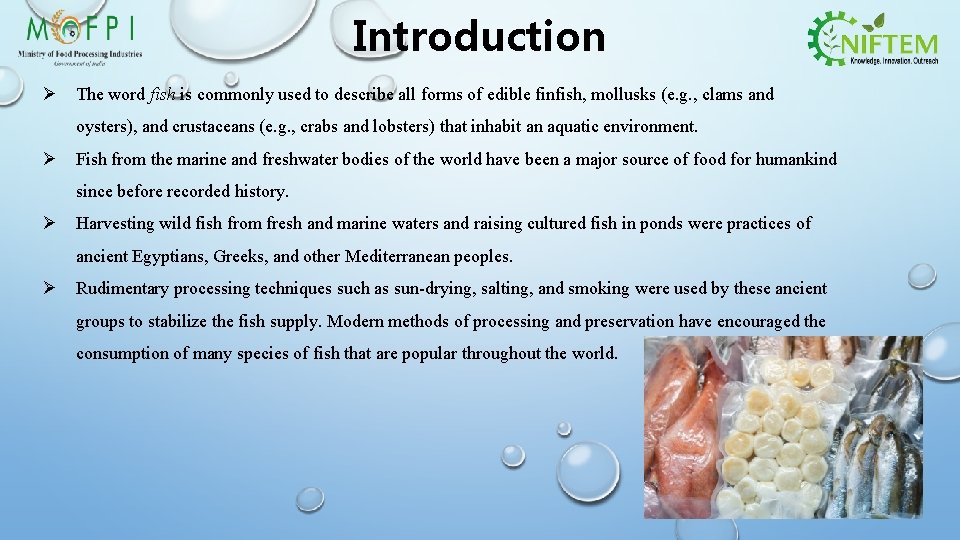
Introduction Ø The word fish is commonly used to describe all forms of edible finfish, mollusks (e. g. , clams and oysters), and crustaceans (e. g. , crabs and lobsters) that inhabit an aquatic environment. Ø Fish from the marine and freshwater bodies of the world have been a major source of food for humankind since before recorded history. Ø Harvesting wild fish from fresh and marine waters and raising cultured fish in ponds were practices of ancient Egyptians, Greeks, and other Mediterranean peoples. Ø Rudimentary processing techniques such as sun-drying, salting, and smoking were used by these ancient groups to stabilize the fish supply. Modern methods of processing and preservation have encouraged the consumption of many species of fish that are popular throughout the world.
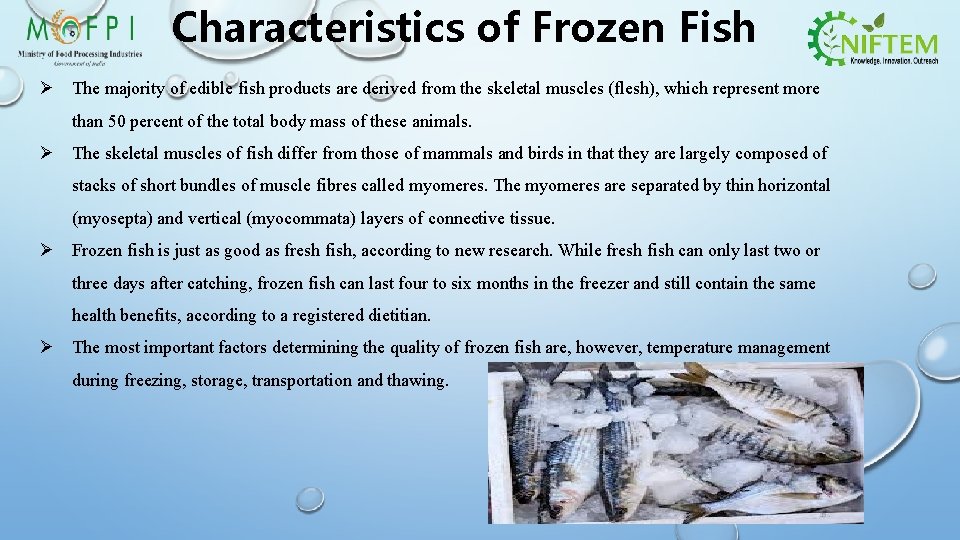
Characteristics of Frozen Fish Ø The majority of edible fish products are derived from the skeletal muscles (flesh), which represent more than 50 percent of the total body mass of these animals. Ø The skeletal muscles of fish differ from those of mammals and birds in that they are largely composed of stacks of short bundles of muscle fibres called myomeres. The myomeres are separated by thin horizontal (myosepta) and vertical (myocommata) layers of connective tissue. Ø Frozen fish is just as good as fresh fish, according to new research. While fresh fish can only last two or three days after catching, frozen fish can last four to six months in the freezer and still contain the same health benefits, according to a registered dietitian. Ø The most important factors determining the quality of frozen fish are, however, temperature management during freezing, storage, transportation and thawing.
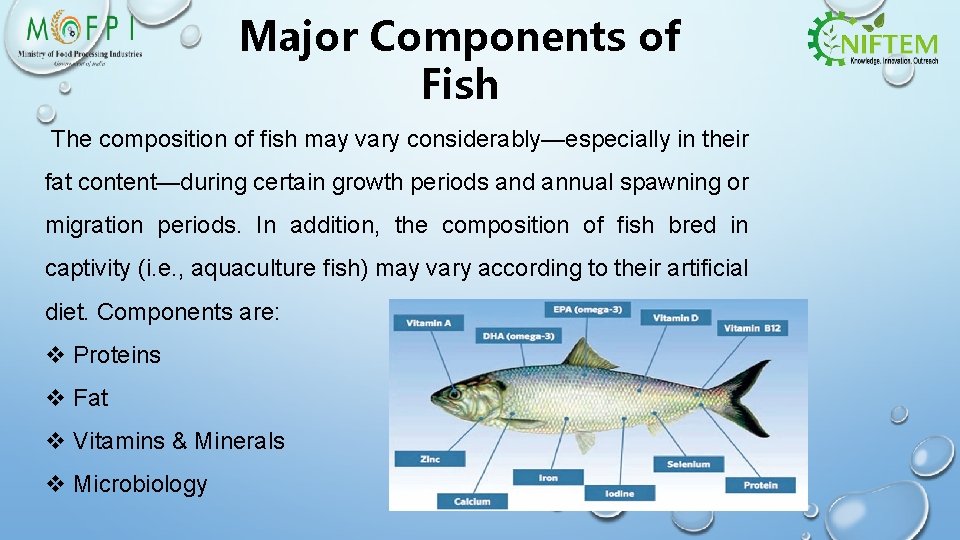
Major Components of Fish The composition of fish may vary considerably—especially in their fat content—during certain growth periods and annual spawning or migration periods. In addition, the composition of fish bred in captivity (i. e. , aquaculture fish) may vary according to their artificial diet. Components are: v Proteins v Fat v Vitamins & Minerals v Microbiology
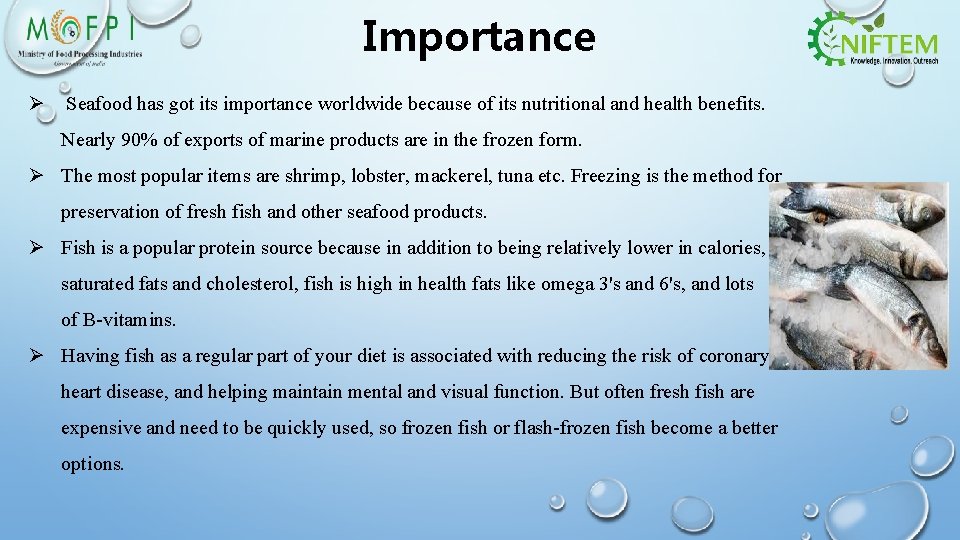
Importance Ø Seafood has got its importance worldwide because of its nutritional and health benefits. Nearly 90% of exports of marine products are in the frozen form. Ø The most popular items are shrimp, lobster, mackerel, tuna etc. Freezing is the method for preservation of fresh fish and other seafood products. Ø Fish is a popular protein source because in addition to being relatively lower in calories, saturated fats and cholesterol, fish is high in health fats like omega 3's and 6's, and lots of B-vitamins. Ø Having fish as a regular part of your diet is associated with reducing the risk of coronary heart disease, and helping maintain mental and visual function. But often fresh fish are expensive and need to be quickly used, so frozen fish or flash-frozen fish become a better options.
Market Potential ØThe frozen fish and seafood market size has the potential to grow by USD 31. 76 billion during 2020 -2024, and the market’s growth momentum will accelerate during the forecast period because of the steady increase in year-over-year growth. ØIndia, with a production of around 10. 8 million MT is the second largest fish producer in the world. Processing levels of marine food in India are currently at 23%. India is endowed with abundant geographical resources suited for both marine and inland fisheries, such as long coastline (7, 517 km), abundant rivers and canals, reservoirs, ponds and tanks, and brackish water. ØThe export market is currently valued at USD 5. 8 Bn/ 1 Mn MT. Most exports currently are in the frozen form and there is immense potential for exporting value added products. Table size rohu, catla, mrigal fish has 60 -70% edible portion while carps of above 3 kg size provide 75 -80% edible portion. ØThe top five states for fisheries production in India are Andhra Pradesh, West Bengal, Gujarat, Karnataka and Kerala with a combined share of around 50% of the total fish production. ØThe global Frozen Seafood Market is expected to register 5. 34% CAGR from 2019 to 2024 and reach USD 17. 29 billion by the end of 2024.
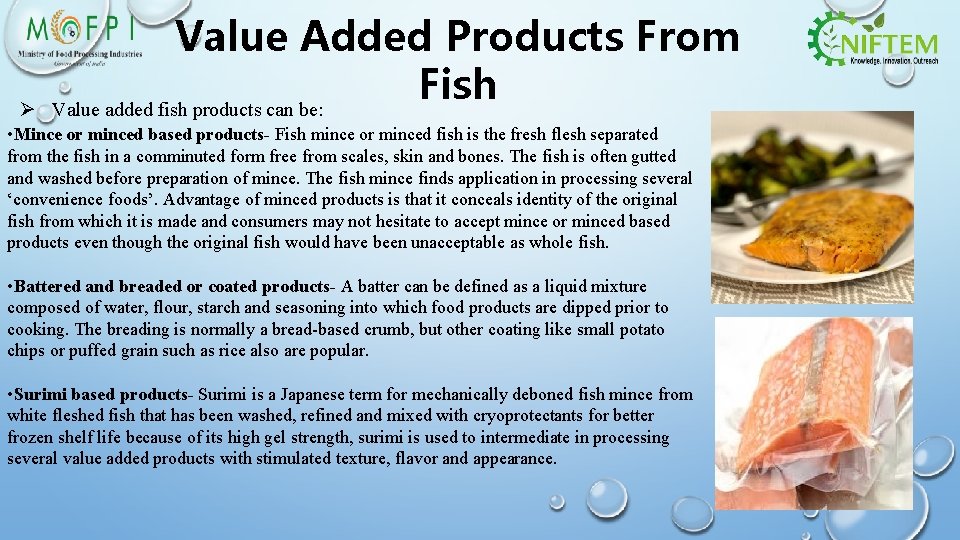
Ø Value Added Products From Fish Value added fish products can be: • Mince or minced based products- Fish mince or minced fish is the fresh flesh separated from the fish in a comminuted form free from scales, skin and bones. The fish is often gutted and washed before preparation of mince. The fish mince finds application in processing several ‘convenience foods’. Advantage of minced products is that it conceals identity of the original fish from which it is made and consumers may not hesitate to accept mince or minced based products even though the original fish would have been unacceptable as whole fish. • Battered and breaded or coated products- A batter can be defined as a liquid mixture composed of water, flour, starch and seasoning into which food products are dipped prior to cooking. The breading is normally a bread-based crumb, but other coating like small potato chips or puffed grain such as rice also are popular. • Surimi based products- Surimi is a Japanese term for mechanically deboned fish mince from white fleshed fish that has been washed, refined and mixed with cryoprotectants for better frozen shelf life because of its high gel strength, surimi is used to intermediate in processing several value added products with stimulated texture, flavor and appearance.
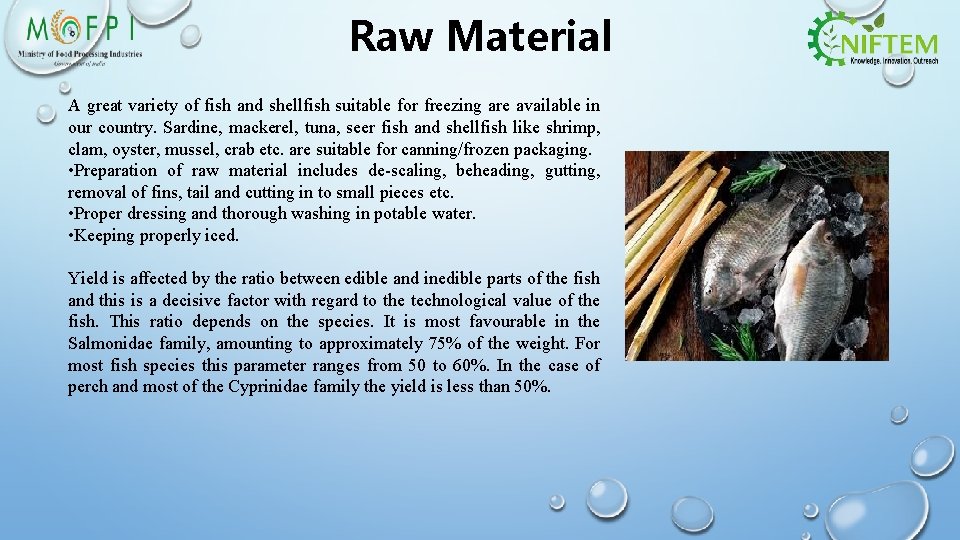
Raw Material A great variety of fish and shellfish suitable for freezing are available in our country. Sardine, mackerel, tuna, seer fish and shellfish like shrimp, clam, oyster, mussel, crab etc. are suitable for canning/frozen packaging. • Preparation of raw material includes de-scaling, beheading, gutting, removal of fins, tail and cutting in to small pieces etc. • Proper dressing and thorough washing in potable water. • Keeping properly iced. Yield is affected by the ratio between edible and inedible parts of the fish and this is a decisive factor with regard to the technological value of the fish. This ratio depends on the species. It is most favourable in the Salmonidae family, amounting to approximately 75% of the weight. For most fish species this parameter ranges from 50 to 60%. In the case of perch and most of the Cyprinidae family the yield is less than 50%.
PROCESSING OF FROZEN FISH 1. Handling of Harvested Fish The retention of nutritional properties and product quality of fish is dependent on proper handling of the catch after it has been harvested from its aquatic environment. i. Chilling ii. Preprocessing 2. Final Processing of Fish Due to its chemical composition, fish is a perishable raw material. Fish flavour and texture change rapidly during storage after death. It is thus advisable in freshwater fish processing to keep the fish alive as long as possible. Actions focusing on quality assurance also involve transport and storage/depuration of the fish waiting processing. In order to reduce the bacterial processes, immediately on death fish should be deheaded, gutted, washed and chilled in order to inhibit unfavourable enzymatic and microbiological processes. If fish is not sold fresh, preservations methods should be applied in order to extend shelf life. These could include i) Freezing ii) Immediate Cooling iii) Rapid Freezing iv) Freezer Chamber
PROCESSING OF FROZEN FISH 3. Storage: Types of storage are as follows: i) Chilled Storage ii) Chilled Sea Water (CSW) Storage iii) Refrigerated Sea Water (RSW) storage 4. Freezing Fish Water accounts for 75 -80% of the weight in most of the fish. This water contains several dissolved organic and inorganic substances like sugars, salts and other compounds. Besides more complex organic molecules like proteins are also present in colloidal suspension. Hence the water in fish is actually a suspension of solids which will have to be cooled down to a temperature at which the solute phase and the solvent phase will have the same vapour pressure. So the freezing begins in the fish usually at a temperature of -1 to -2 o. C. Methods & equipments for freezing are as follows: i)Direct & Direct System ii) Indirect Contact Freezing iii) Rotatory Drum Freezer iv)Immersion Freezing v) Freezing in Brine vi) Brine spray Freezing vii) Cryogenic Freezing viii)Freezing using Liquid nitrogen ix) Double Freezing x) Partial Freezing
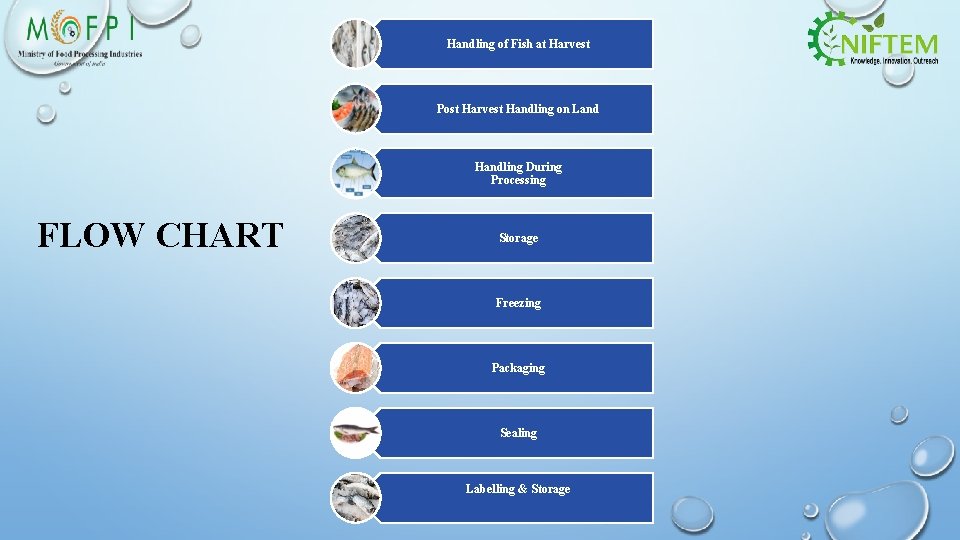
Handling of Fish at Harvest Post Harvest Handling on Land Handling During Processing FLOW CHART Storage Freezing Packaging Sealing Labelling & Storage
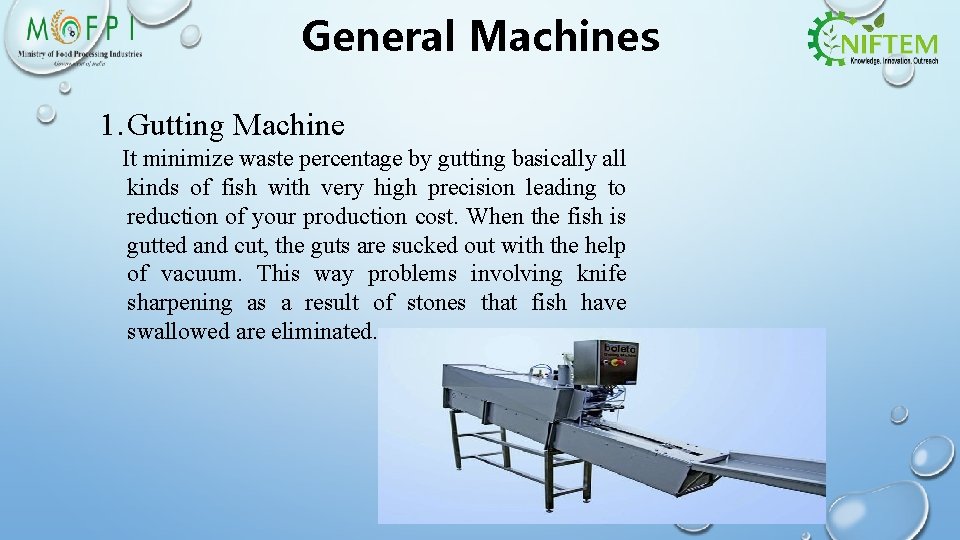
General Machines 1. Gutting Machine It minimize waste percentage by gutting basically all kinds of fish with very high precision leading to reduction of your production cost. When the fish is gutted and cut, the guts are sucked out with the help of vacuum. This way problems involving knife sharpening as a result of stones that fish have swallowed are eliminated.
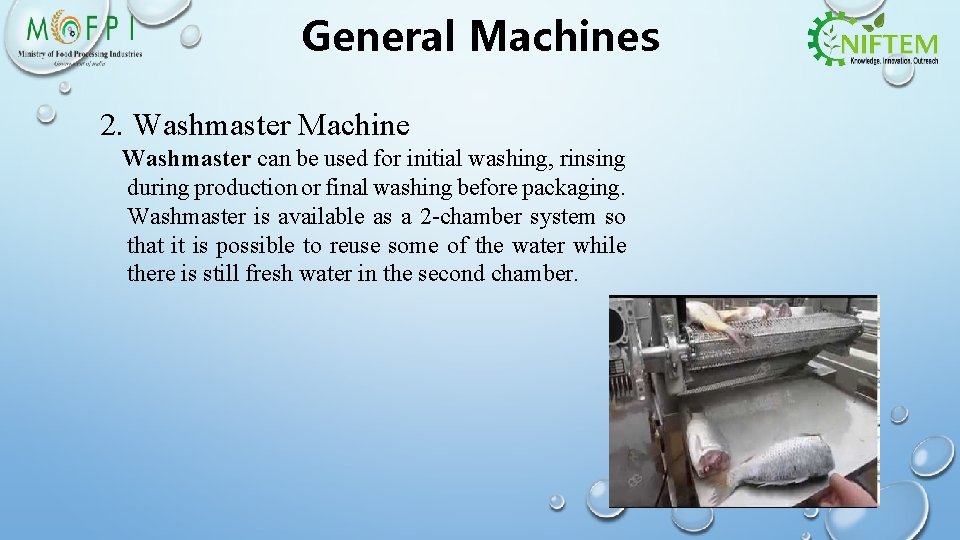
General Machines 2. Washmaster Machine Washmaster can be used for initial washing, rinsing during production or final washing before packaging. Washmaster is available as a 2 -chamber system so that it is possible to reuse some of the water while there is still fresh water in the second chamber.
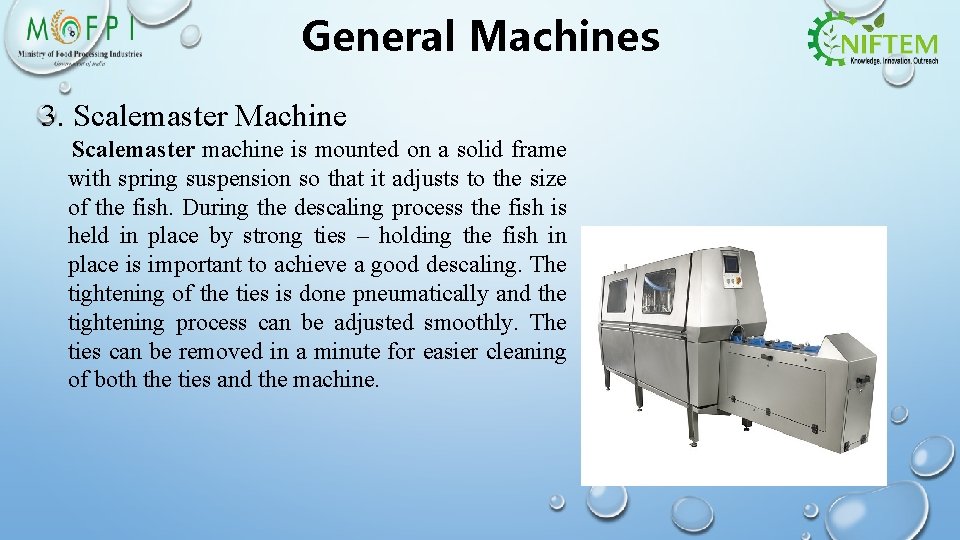
General Machines 3. Scalemaster Machine Scalemaster machine is mounted on a solid frame with spring suspension so that it adjusts to the size of the fish. During the descaling process the fish is held in place by strong ties – holding the fish in place is important to achieve a good descaling. The tightening of the ties is done pneumatically and the tightening process can be adjusted smoothly. The ties can be removed in a minute for easier cleaning of both the ties and the machine.
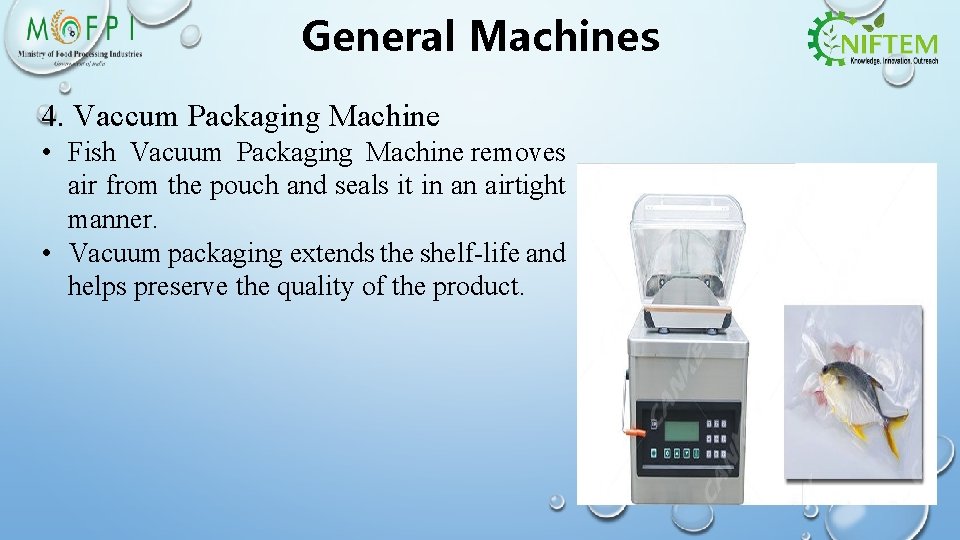
General Machines 4. Vaccum Packaging Machine • Fish Vacuum Packaging Machine removes air from the pouch and seals it in an airtight manner. • Vacuum packaging extends the shelf-life and helps preserve the quality of the product.
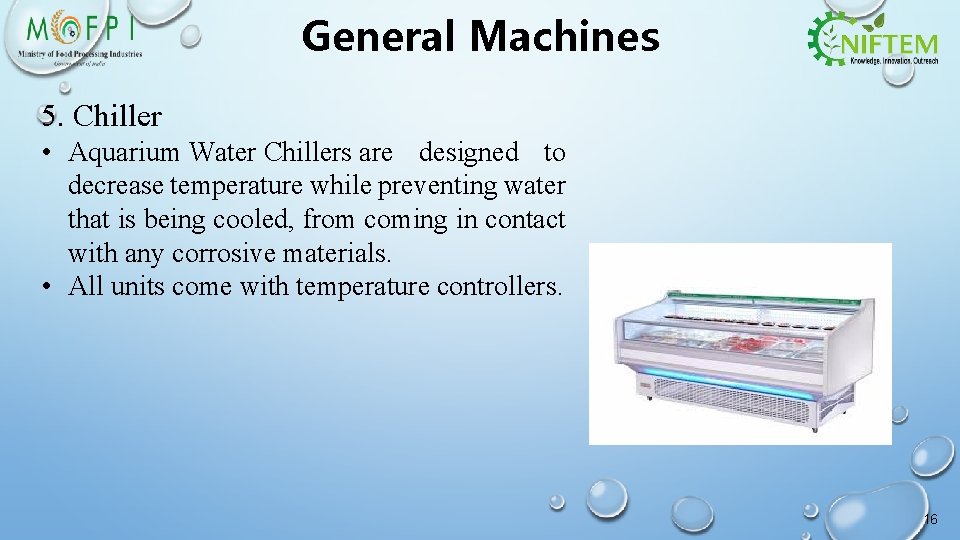
General Machines 5. Chiller • Aquarium Water Chillers are designed to decrease temperature while preventing water that is being cooled, from coming in contact with any corrosive materials. • All units come with temperature controllers. 16
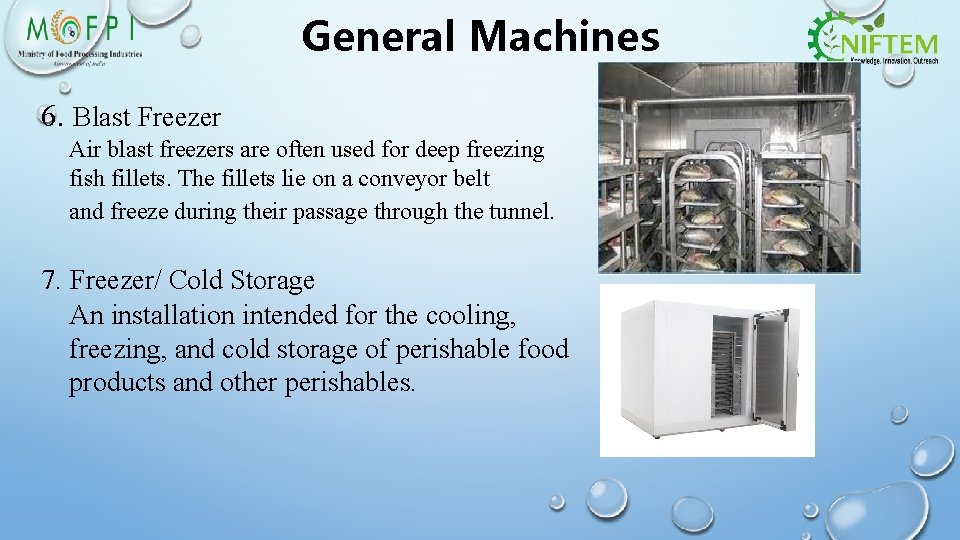
General Machines 6. Blast Freezer Air blast freezers are often used for deep freezing fish fillets. The fillets lie on a conveyor belt and freeze during their passage through the tunnel. 7. Freezer/ Cold Storage An installation intended for the cooling, freezing, and cold storage of perishable food products and other perishables.
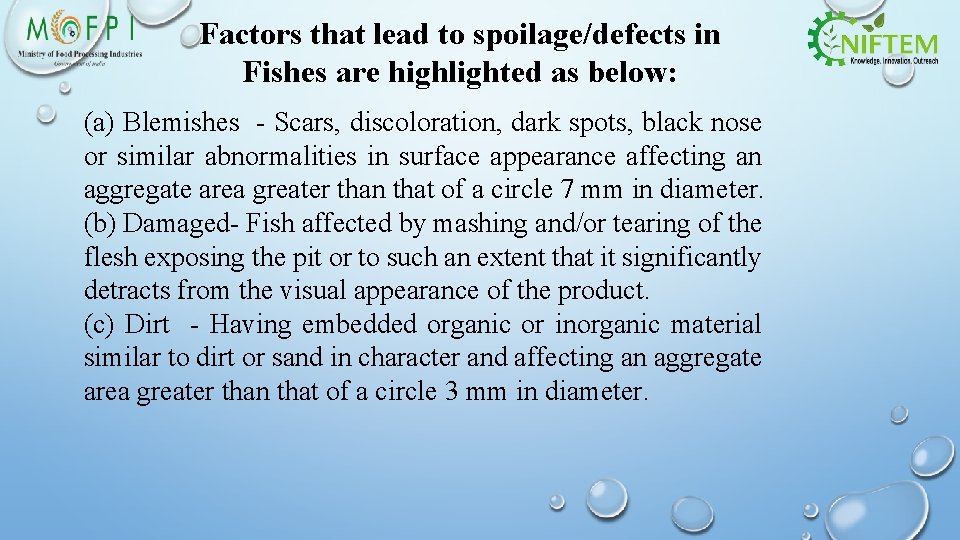
Factors that lead to spoilage/defects in Fishes are highlighted as below: (a) Blemishes - Scars, discoloration, dark spots, black nose or similar abnormalities in surface appearance affecting an aggregate area greater than that of a circle 7 mm in diameter. (b) Damaged- Fish affected by mashing and/or tearing of the flesh exposing the pit or to such an extent that it significantly detracts from the visual appearance of the product. (c) Dirt - Having embedded organic or inorganic material similar to dirt or sand in character and affecting an aggregate area greater than that of a circle 3 mm in diameter.
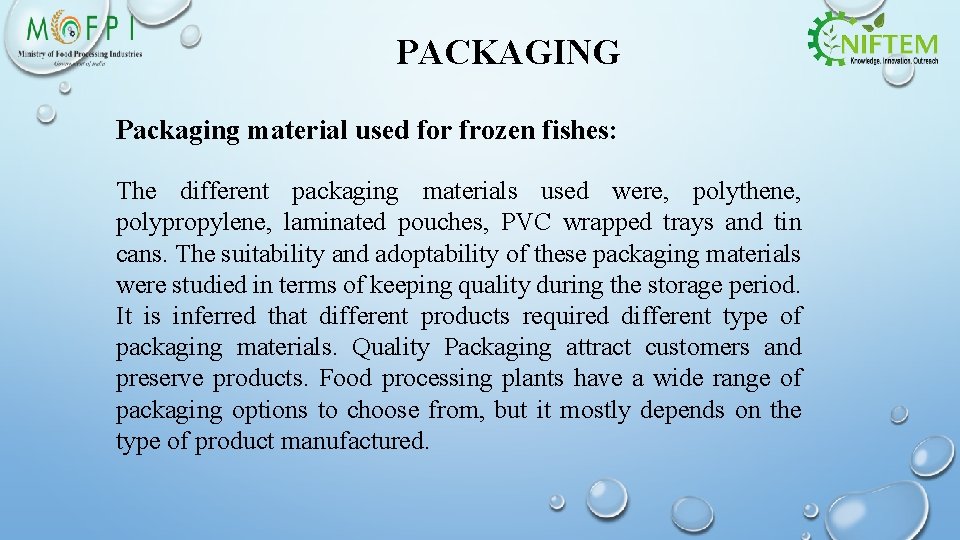
PACKAGING Packaging material used for frozen fishes: The different packaging materials used were, polythene, polypropylene, laminated pouches, PVC wrapped trays and tin cans. The suitability and adoptability of these packaging materials were studied in terms of keeping quality during the storage period. It is inferred that different products required different type of packaging materials. Quality Packaging attract customers and preserve products. Food processing plants have a wide range of packaging options to choose from, but it mostly depends on the type of product manufactured.
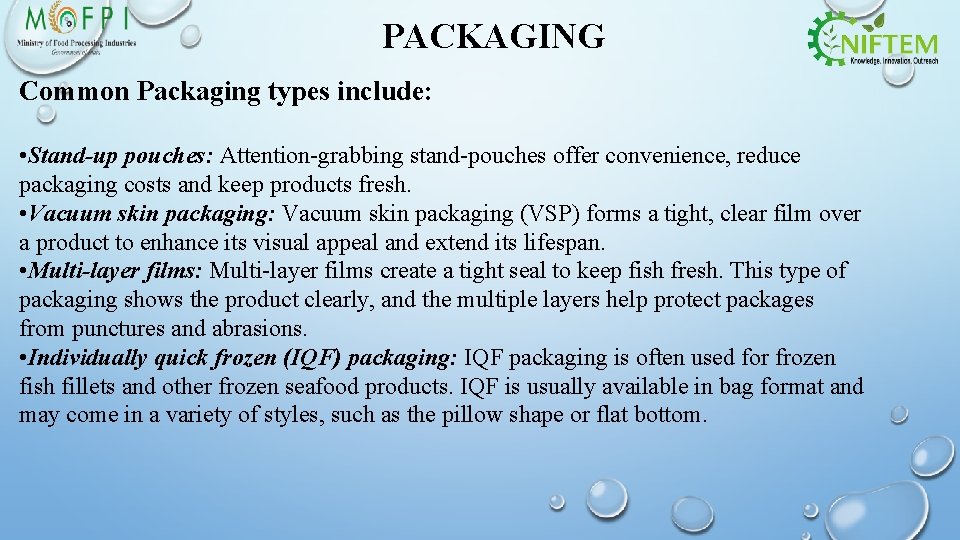
PACKAGING Common Packaging types include: • Stand-up pouches: Attention-grabbing stand-pouches offer convenience, reduce packaging costs and keep products fresh. • Vacuum skin packaging: Vacuum skin packaging (VSP) forms a tight, clear film over a product to enhance its visual appeal and extend its lifespan. • Multi-layer films: Multi-layer films create a tight seal to keep fish fresh. This type of packaging shows the product clearly, and the multiple layers help protect packages from punctures and abrasions. • Individually quick frozen (IQF) packaging: IQF packaging is often used for frozen fish fillets and other frozen seafood products. IQF is usually available in bag format and may come in a variety of styles, such as the pillow shape or flat bottom.
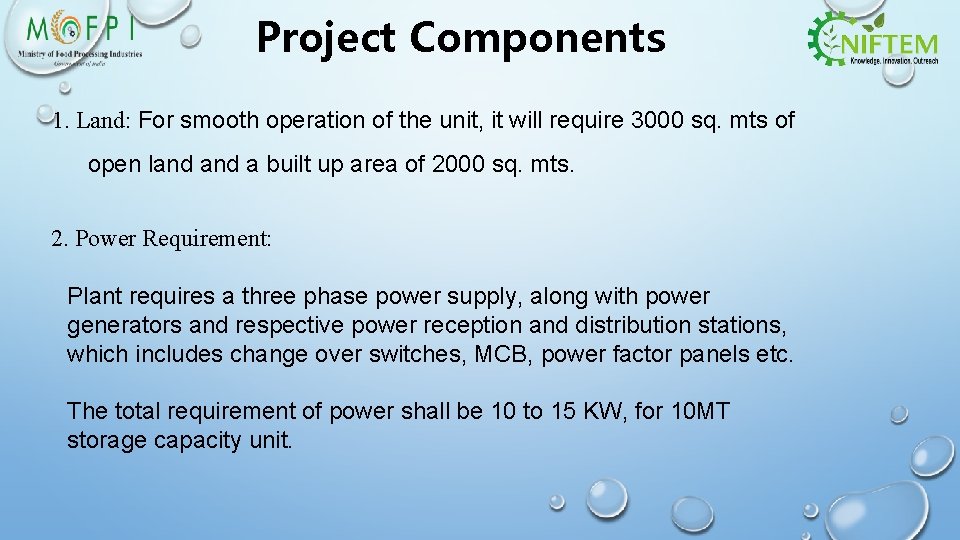
Project Components 1. Land: For smooth operation of the unit, it will require 3000 sq. mts of open land a built up area of 2000 sq. mts. 2. Power Requirement: Plant requires a three phase power supply, along with power generators and respective power reception and distribution stations, which includes change over switches, MCB, power factor panels etc. The total requirement of power shall be 10 to 15 KW, for 10 MT storage capacity unit.
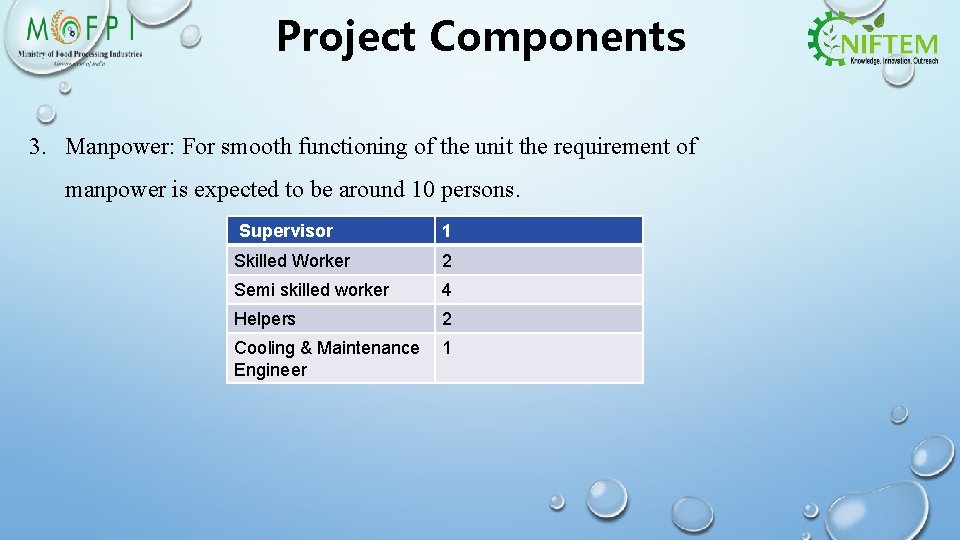
Project Components 3. Manpower: For smooth functioning of the unit the requirement of manpower is expected to be around 10 persons. Supervisor 1 Skilled Worker 2 Semi skilled worker 4 Helpers 2 Cooling & Maintenance Engineer 1
FSSAI Standards The FSSAI has prescribed comprehensive standards for canned fishery product & frozen fish. It shall be frozen in an appropriate equipment quickly to minus (-) 18º C or colder in such a way that the range of temperature of maximum crystallization is passed quickly. The quick freezing process shall not be regarded as complete unless the product temperature has reached minus (-) 18º C or colder at thermal centre after thermal stabilization.
FSSAI Standards The product shall be kept deep frozen so as to maintain the quality during transportation, storage and sale. The entire operation including processing and packaging shall ensure minimum dehydration and oxidation. The product may contain food additives permitted and listed under regulation 2. 6. 1 (3). The product shall conform to the microbiological requirement. The products shall be free from any foreign matter and objectionable odour/flavour.
THANK YOU