
Frontogenesis The generation of intensity of a front
- Slides: 25
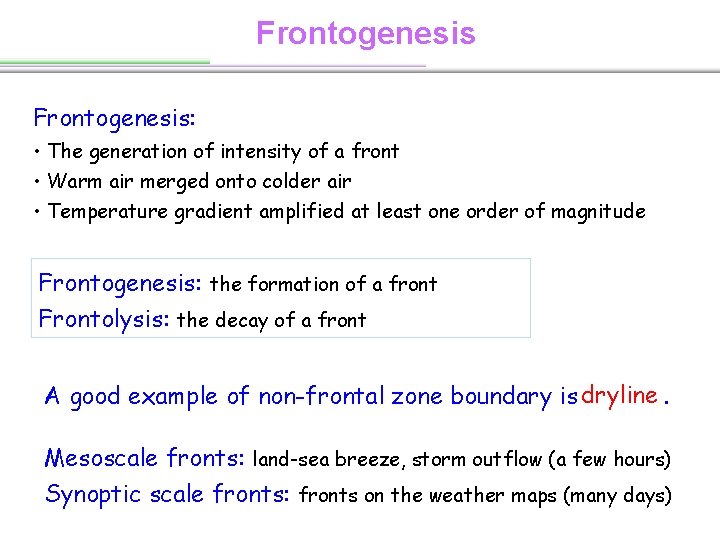
Frontogenesis: • The generation of intensity of a front • Warm air merged onto colder air • Temperature gradient amplified at least one order of magnitude Frontogenesis: the formation of a front Frontolysis: the decay of a front A good example of non-frontal zone boundary is dryline. Mesoscale fronts: land-sea breeze, storm outflow (a few hours) Synoptic scale fronts: fronts on the weather maps (many days)
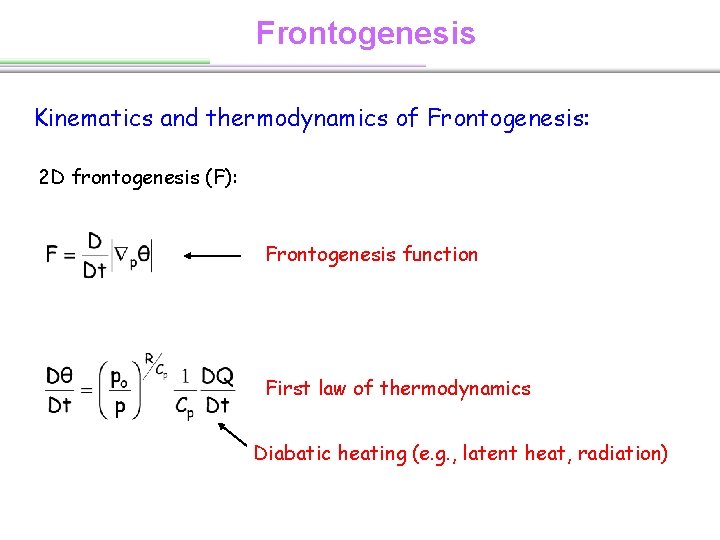
Frontogenesis Kinematics and thermodynamics of Frontogenesis: 2 D frontogenesis (F): Frontogenesis function First law of thermodynamics Diabatic heating (e. g. , latent heat, radiation)
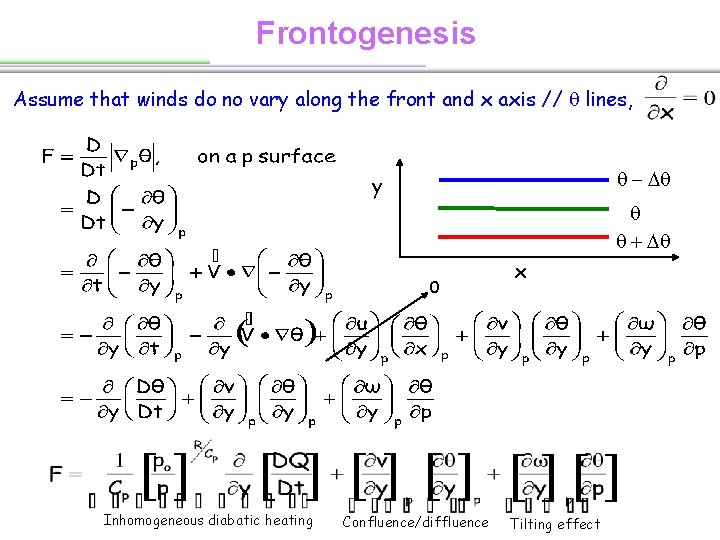
Frontogenesis Assume that winds do no vary along the front and x axis // q lines, q - Dq y q q + Dq 0 [] x [ ] [] [] [][] Inhomogeneous diabatic heating Confluence/diffluence Tilting effect
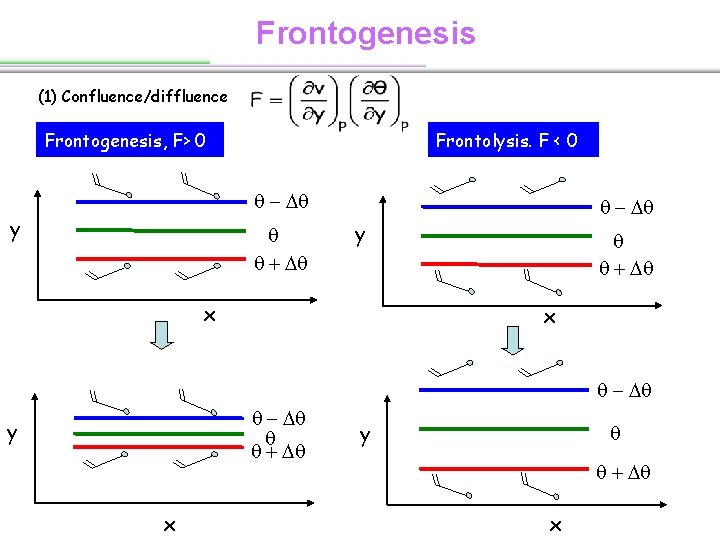
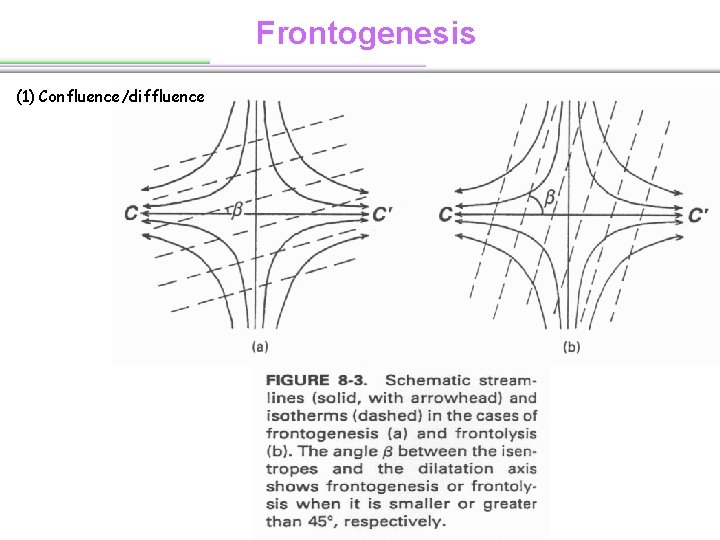
Frontogenesis (1) Confluence/diffluence Frontogenesis, F> 0 Frontolysis. F < 0 q - Dq y q q + Dq q - Dq y x q q + Dq x q - Dq q q + Dq y x y q q + Dq x
Frontogenesis (1) Confluence/diffluence
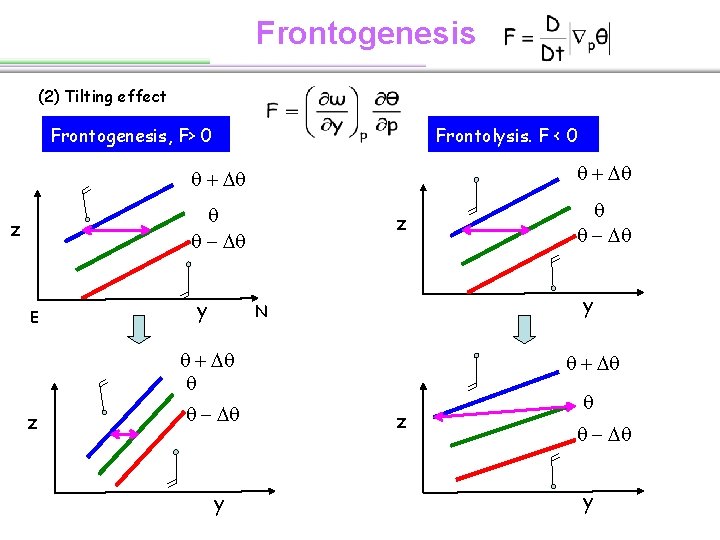
Frontogenesis (2) Tilting effect Frontogenesis, F> 0 Frontolysis. F < 0 q + Dq q q - Dq z E y z y N q + Dq q z q - Dq y q q - Dq q + Dq z q q - Dq y
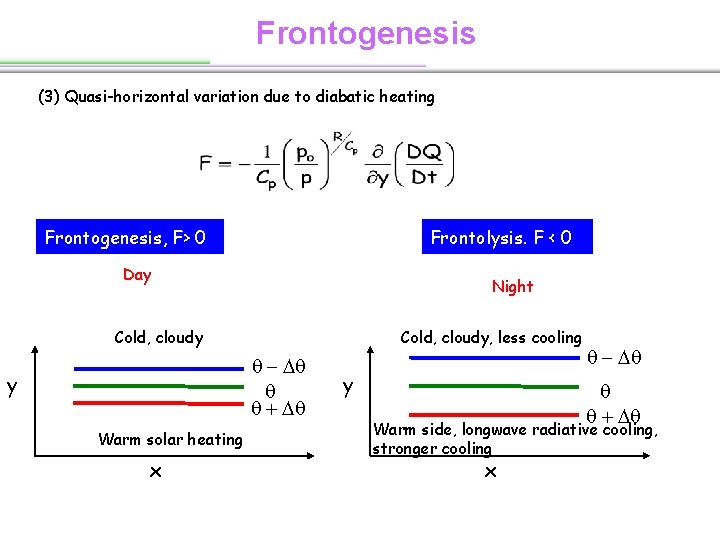
Frontogenesis (3) Quasi-horizontal variation due to diabatic heating Frontogenesis, F> 0 Frontolysis. F < 0 Day Night Cold, cloudy, less cooling q - Dq q q + Dq y Warm solar heating x y q - Dq q q + Dq Warm side, longwave radiative cooling, stronger cooling x
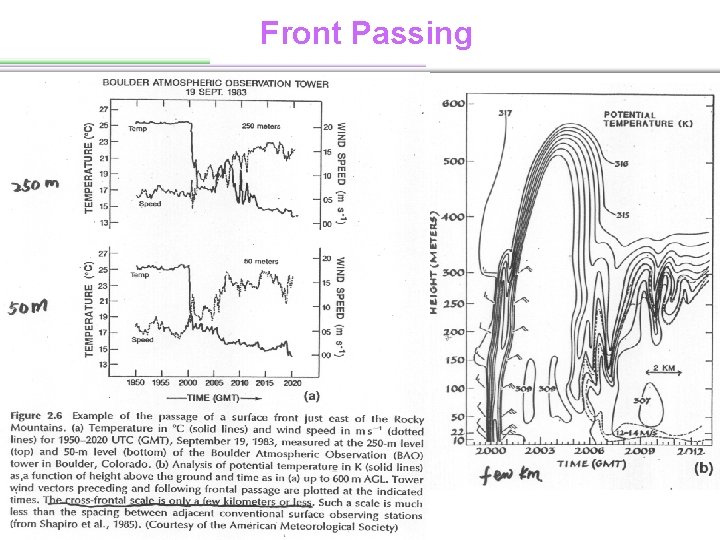
Front Passing
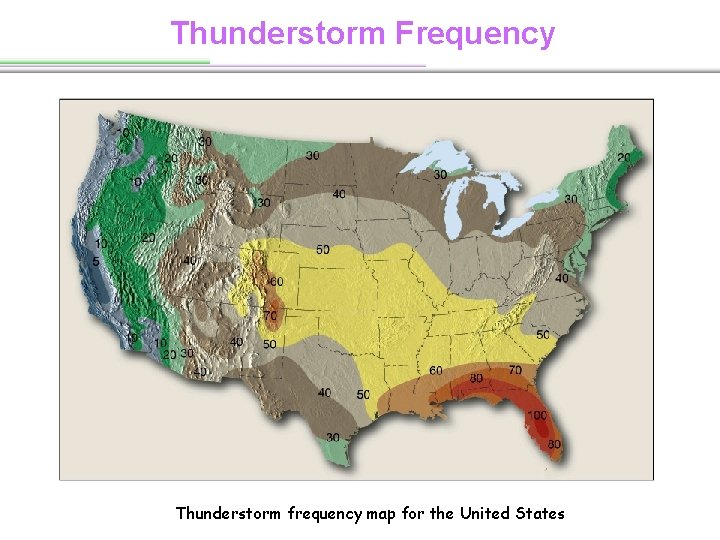
Thunderstorm Frequency Thunderstorm frequency map for the United States
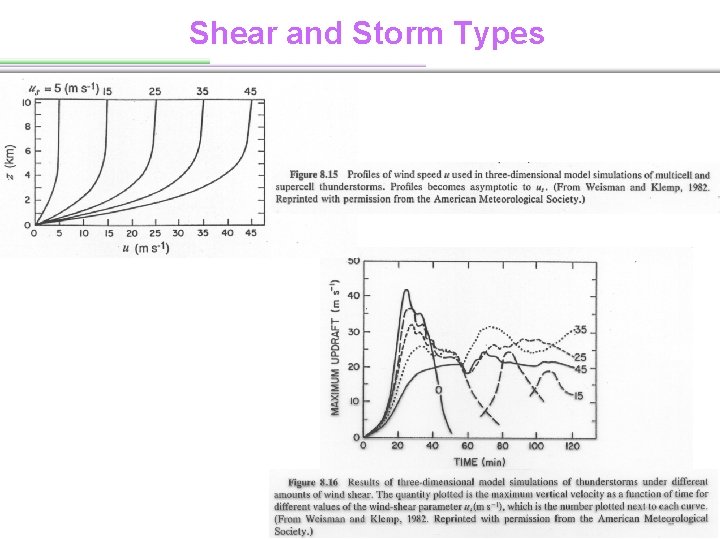
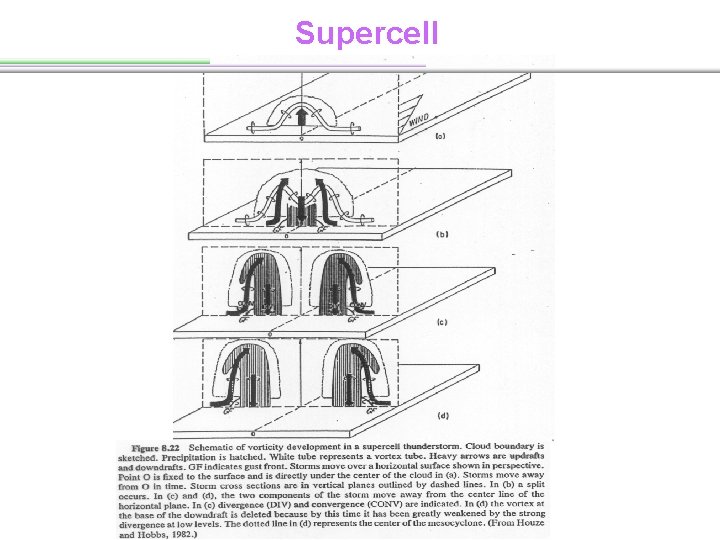
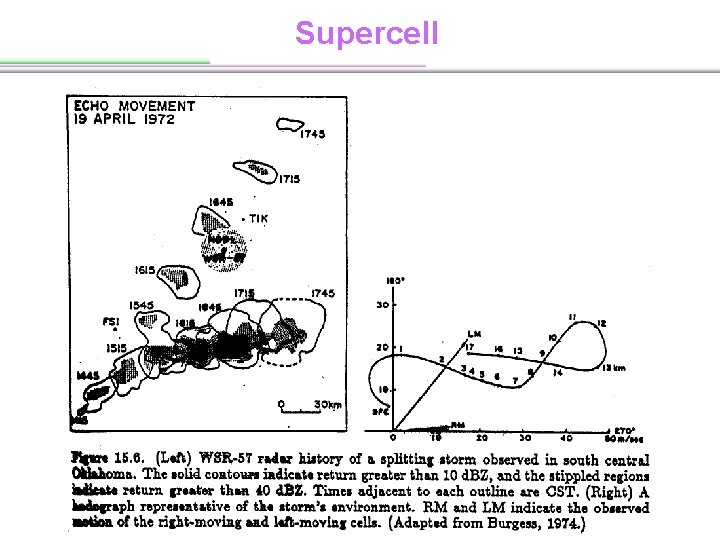
Thunderstorms The upper part usually composes ice and is spread out as anvils. Types: 1. Short-lived cell 2. Multicell 3. Suepercell or split cell (can have hails and tornados) • Short-lived cell : when shear is weak, shear < 10 ms -1 below 6 km, • Multicell : moderate shear, 10 ~ 20 ms-1, • Supercell : strong shear, shear > 20 ms-1. Storms propagation speed = mean wind speed + propagation due to new formation of cell.
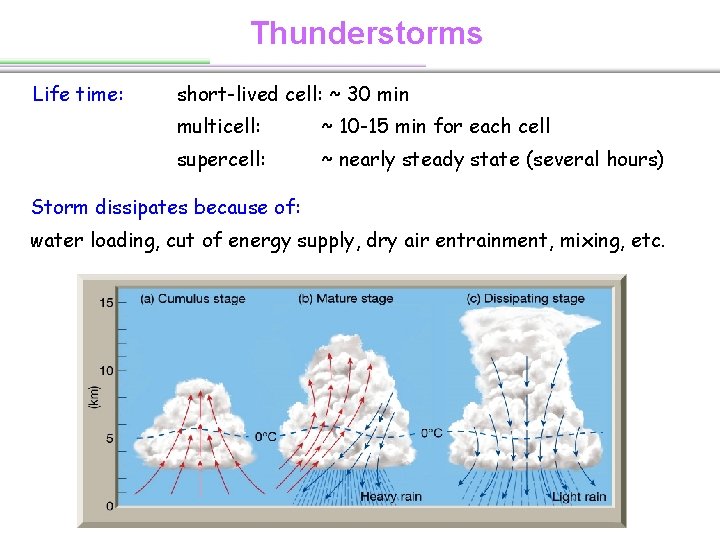
Thunderstorms Life time: short-lived cell: ~ 30 min multicell: ~ 10 -15 min for each cell supercell: ~ nearly steady state (several hours) Storm dissipates because of: water loading, cut of energy supply, dry air entrainment, mixing, etc.
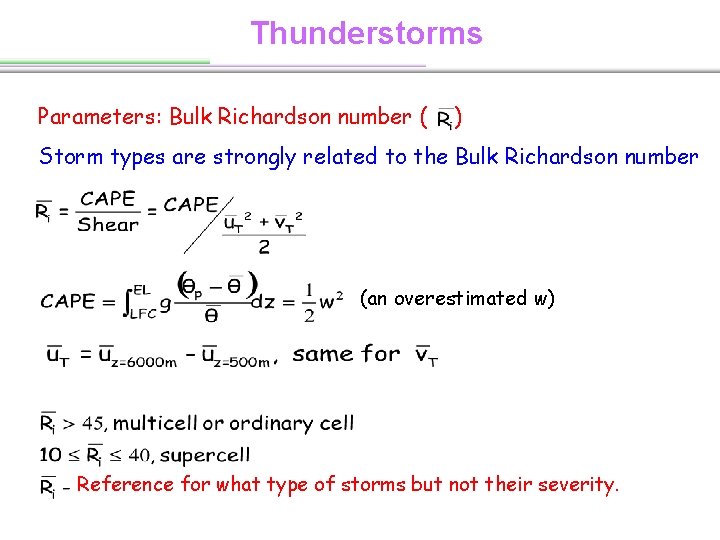
Thunderstorms Parameters: Bulk Richardson number ( ) Storm types are strongly related to the Bulk Richardson number (an overestimated w) Reference for what type of storms but not their severity.
Thunderstorms Why CAPE? Need energy to develop a storm (no help from large scales, like upper level trough to winter storms) Why shear? 1. The ability of a gust front to trigger a new cell (for multicell) 2. The ability of an updraft to interact with environment wind shear to produce an enhanced quasi-steady storm structure. (supercell)
Shear and Storm Types
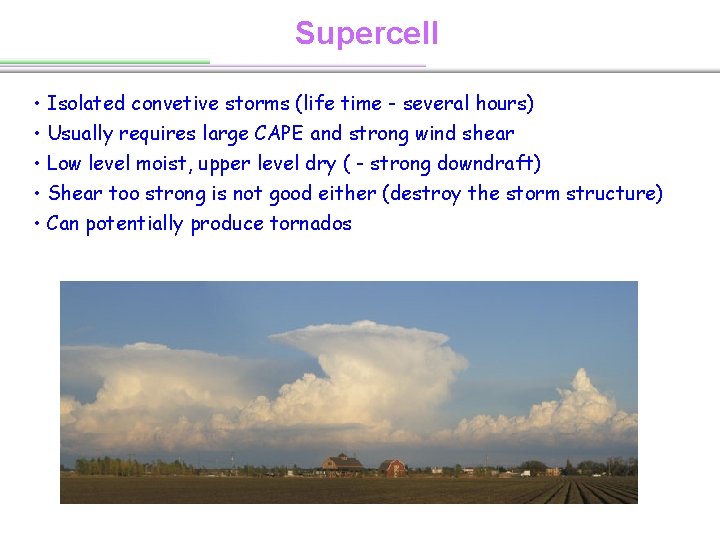
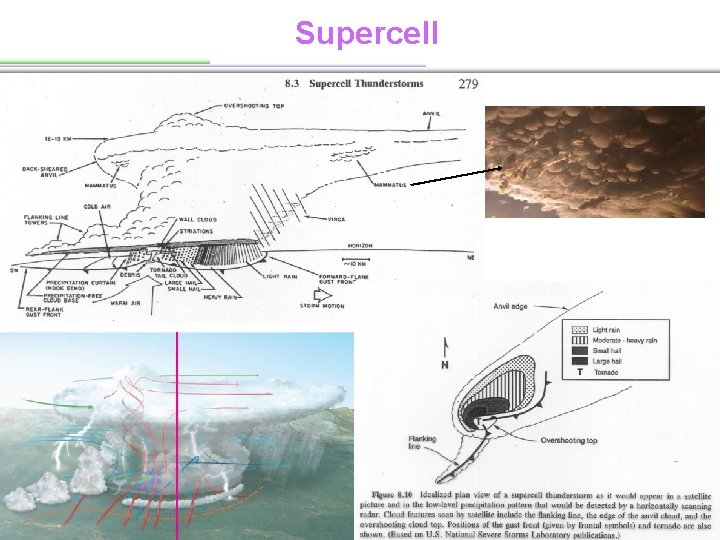
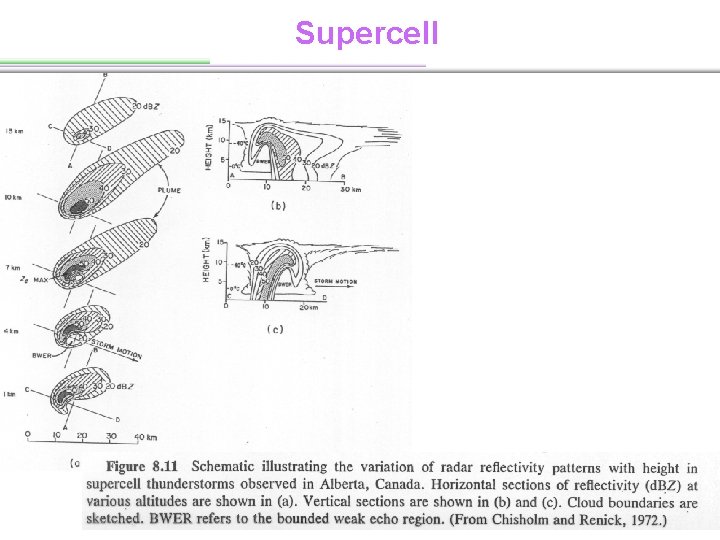
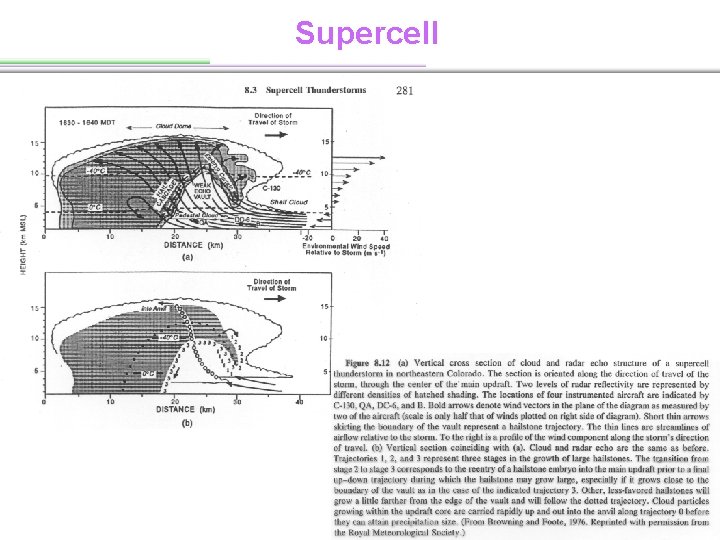
Supercell • Isolated convetive storms (life time - several hours) • Usually requires large CAPE and strong wind shear • Low level moist, upper level dry ( - strong downdraft) • Shear too strong is not good either (destroy the storm structure) • Can potentially produce tornados
Supercell
Supercell
Supercell
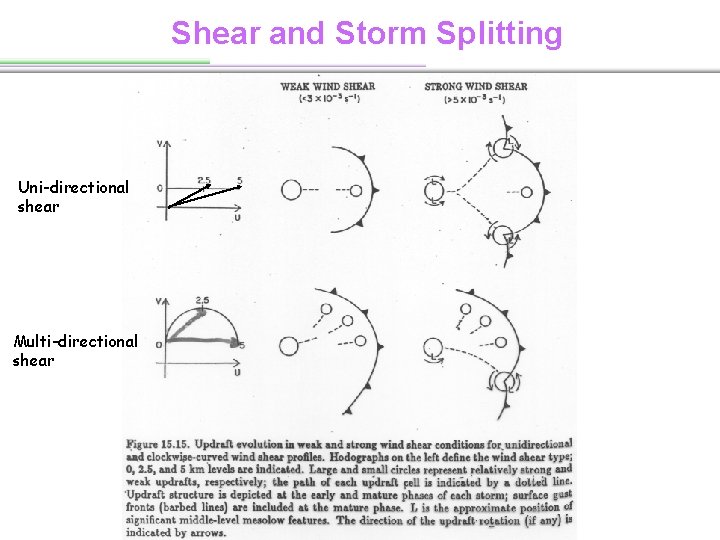
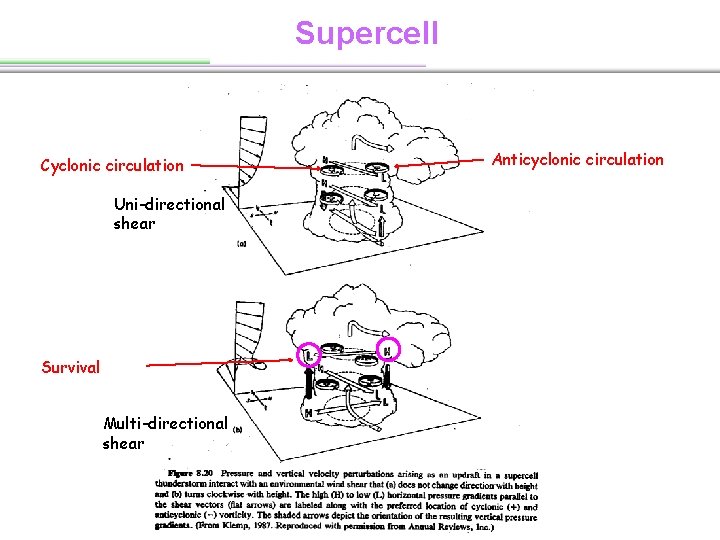
Shear and Storm Splitting Uni-directional shear Multi-directional shear
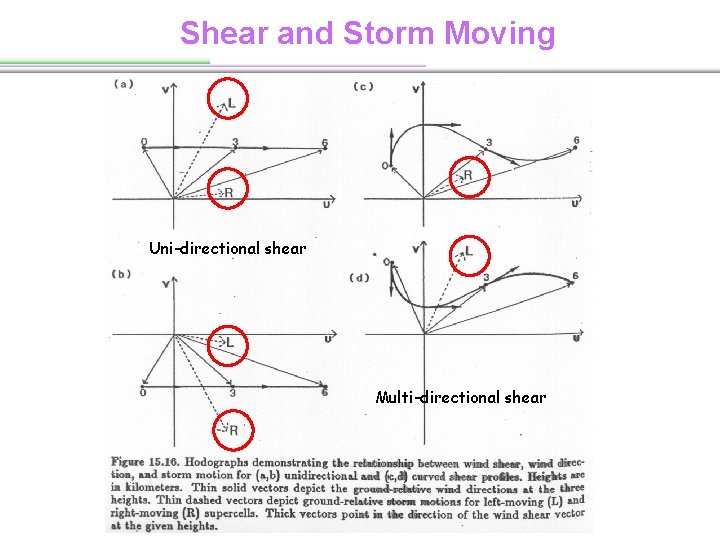
Shear and Storm Moving Uni-directional shear Multi-directional shear
Supercell
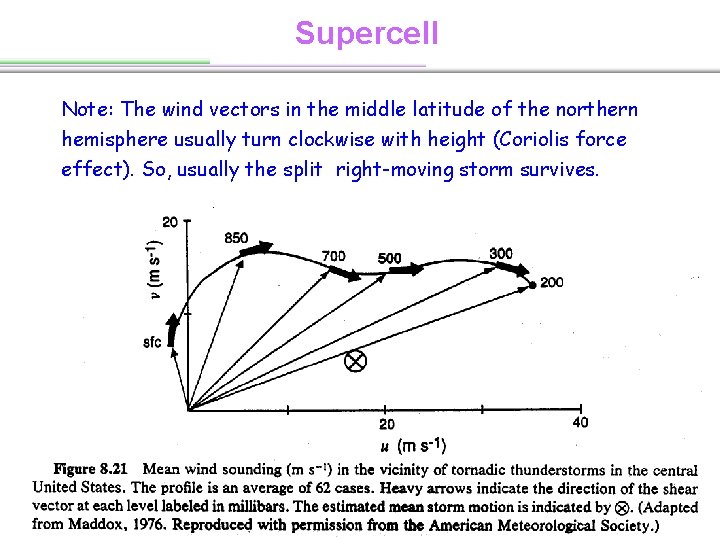
Supercell Note: The wind vectors in the middle latitude of the northern hemisphere usually turn clockwise with height (Coriolis force effect). So, usually the split right-moving storm survives.
Supercell
Supercell Cyclonic circulation Uni-directional shear Survival Multi-directional shear Anticyclonic circulation
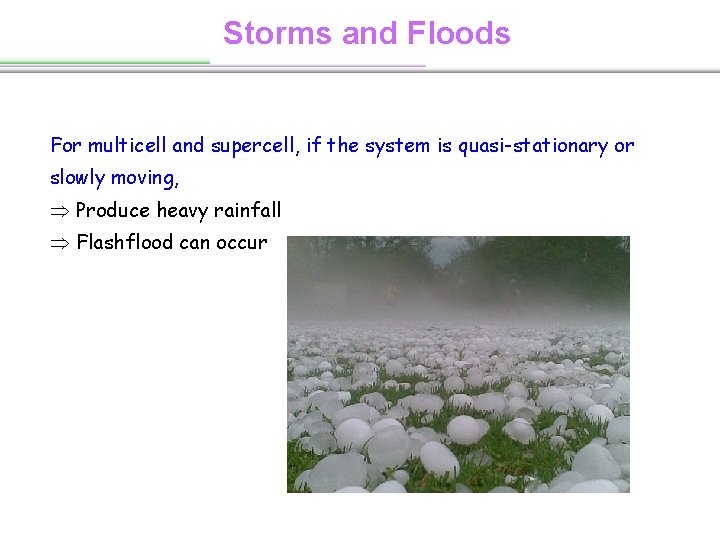
Storms and Floods For multicell and supercell, if the system is quasi-stationary or slowly moving, Þ Produce heavy rainfall Þ Flashflood can occur