
Front Office Marketing Sales Unit II 1 THE
- Slides: 36
Front Office Marketing & Sales Unit - II 1
THE ROLE OF FRONT OFFICE IN HOTEL SALES AND MARKETING • Sell rooms to guests who have not made prior reservation. • Up sell room to guest with prior reservation ie. encourage a customer to consider buying a higher- priced product or service than originally booked. • Maintain the inventory of the products- ie. the rooms. • Convey information to guests about other products available for sale at the property- for example food and beverages.
THE ROLE OF FRONT OFFICE IN HOTEL SALES AND MARKETING • The objective of front office is to sell available facilities at the hotel to the guest. Front office staff is probably the most important means of letting the guest know what services are available. • Ensure that maximum revenue is generated from the sale of rooms. • Obtain feedback.
Elements of Marketing • Product • Pricing • Promotion 4
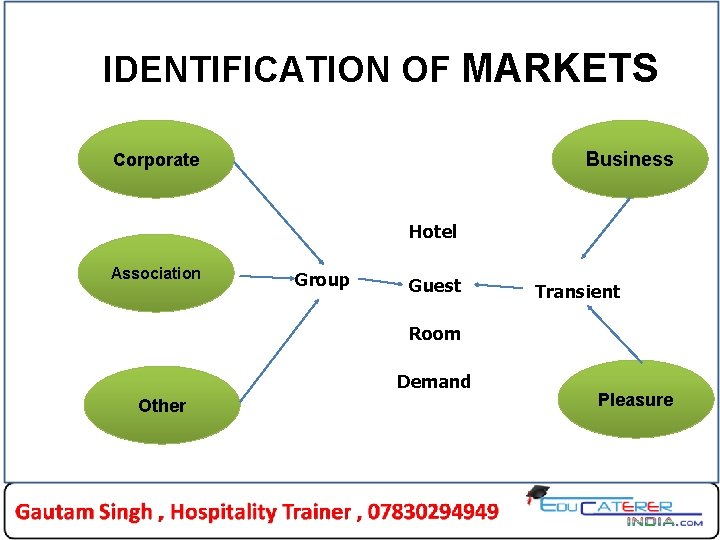
IDENTIFICATION OF MARKETS Business Corporate Hotel Association Group Guest Transient Room Demand Other Pleasure
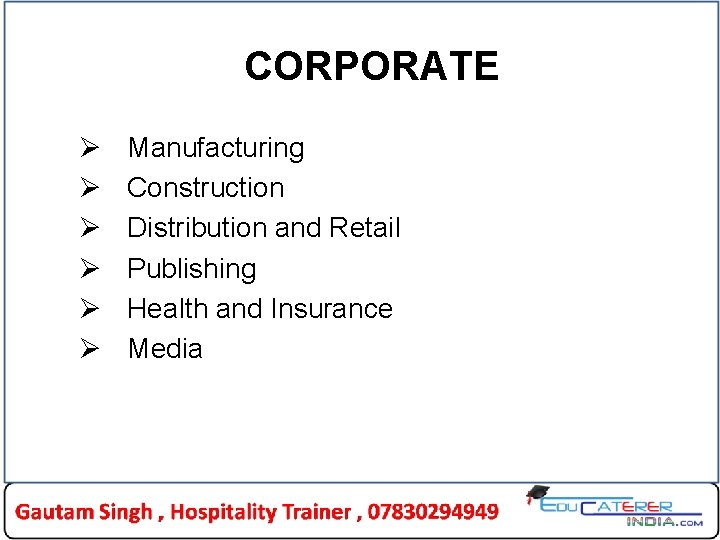
CORPORATE Ø Ø Ø Manufacturing Construction Distribution and Retail Publishing Health and Insurance Media
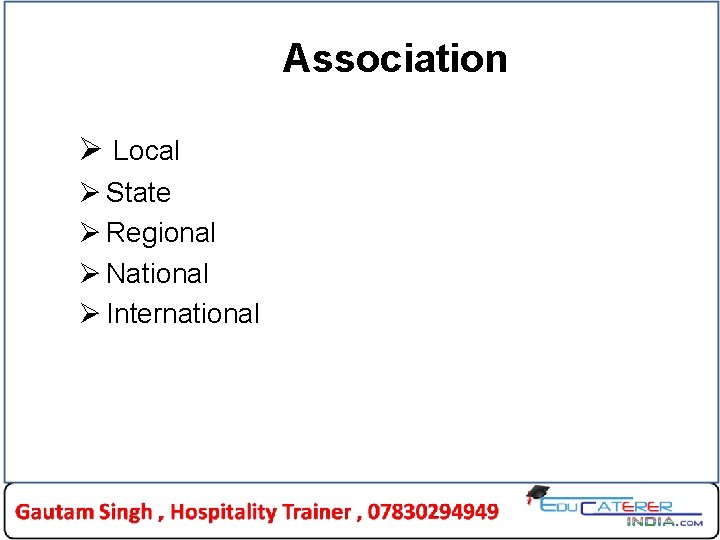
Association Ø Local Ø State Ø Regional Ø National Ø International
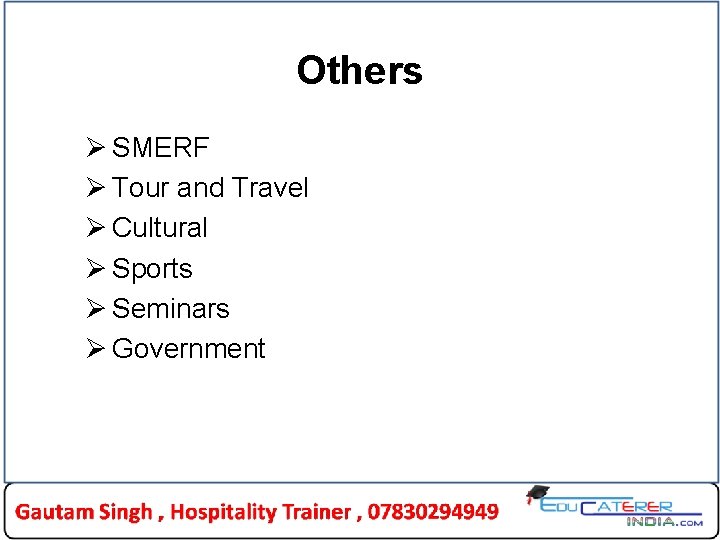
Others Ø SMERF Ø Tour and Travel Ø Cultural Ø Sports Ø Seminars Ø Government
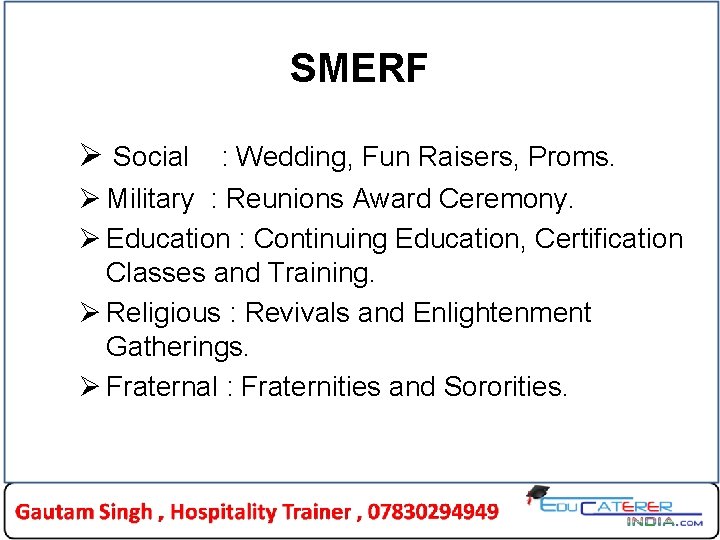
SMERF Ø Social : Wedding, Fun Raisers, Proms. Ø Military : Reunions Award Ceremony. Ø Education : Continuing Education, Certification Classes and Training. Ø Religious : Revivals and Enlightenment Gatherings. Ø Fraternal : Fraternities and Sororities.
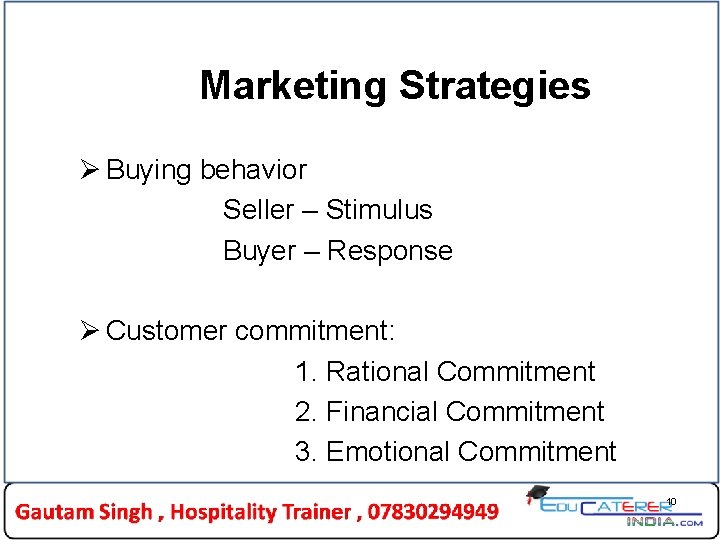
Marketing Strategies Ø Buying behavior Seller – Stimulus Buyer – Response Ø Customer commitment: 1. Rational Commitment 2. Financial Commitment 3. Emotional Commitment 10
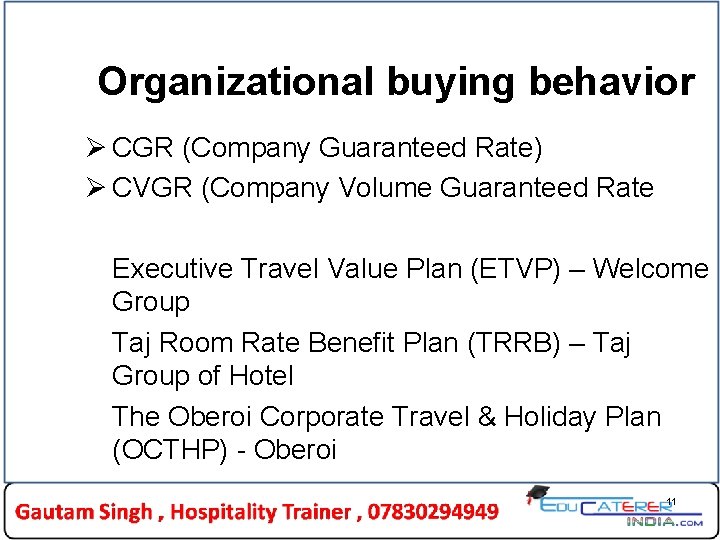
Organizational buying behavior Ø CGR (Company Guaranteed Rate) Ø CVGR (Company Volume Guaranteed Rate Executive Travel Value Plan (ETVP) – Welcome Group Taj Room Rate Benefit Plan (TRRB) – Taj Group of Hotel The Oberoi Corporate Travel & Holiday Plan (OCTHP) - Oberoi 11
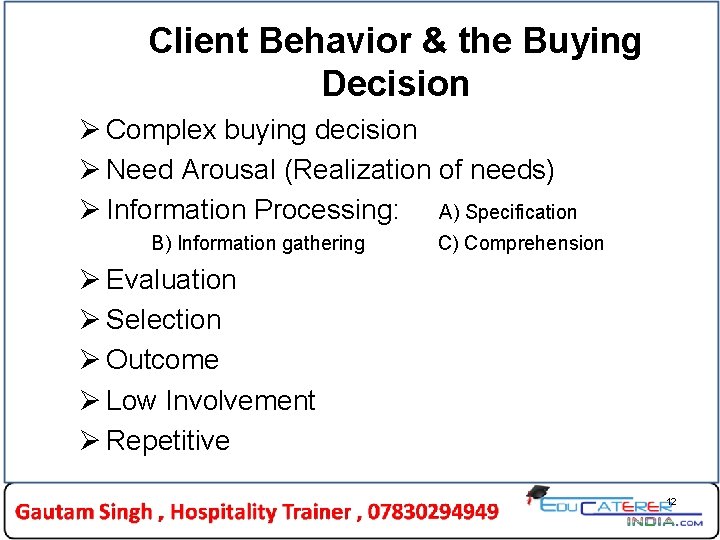
Client Behavior & the Buying Decision Ø Complex buying decision Ø Need Arousal (Realization of needs) Ø Information Processing: A) Specification B) Information gathering C) Comprehension Ø Evaluation Ø Selection Ø Outcome Ø Low Involvement Ø Repetitive 12
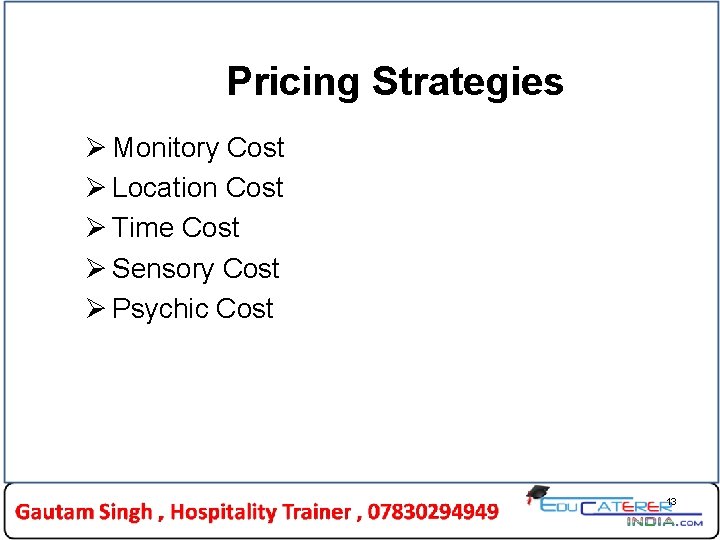
Pricing Strategies Ø Monitory Cost Ø Location Cost Ø Time Cost Ø Sensory Cost Ø Psychic Cost 13
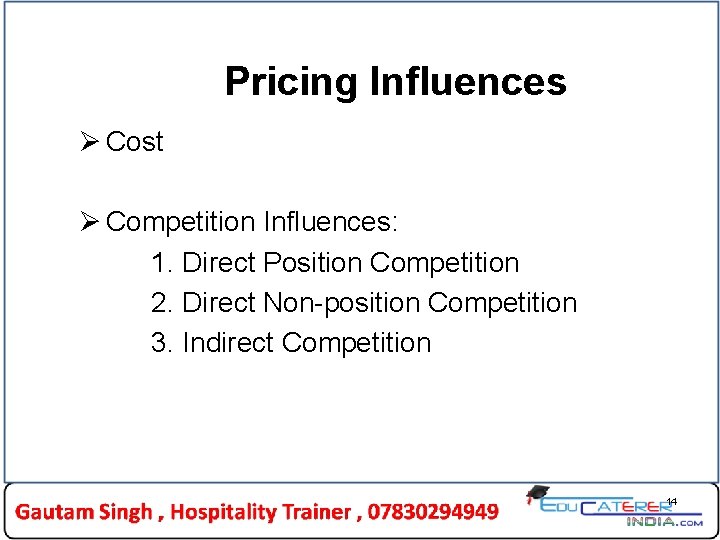
Pricing Influences Ø Cost Ø Competition Influences: 1. Direct Position Competition 2. Direct Non-position Competition 3. Indirect Competition 14
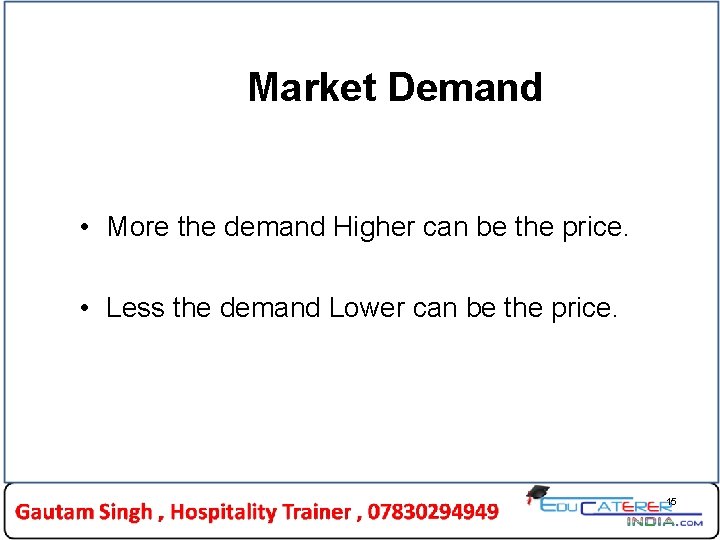
Market Demand • More the demand Higher can be the price. • Less the demand Lower can be the price. 15
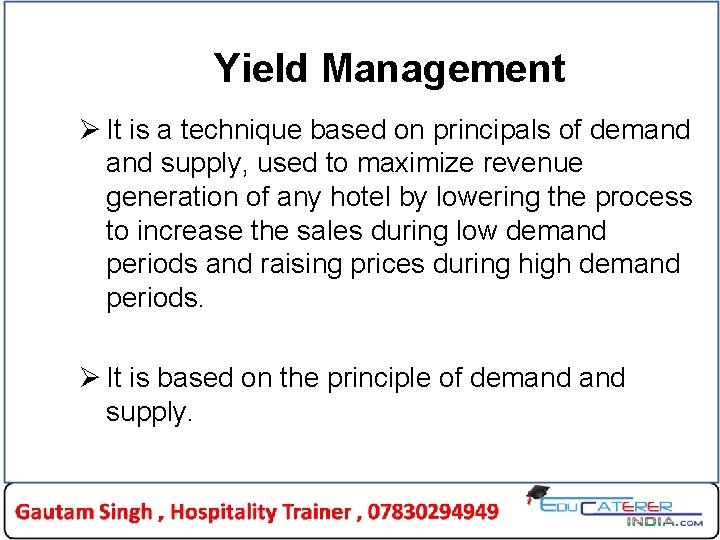
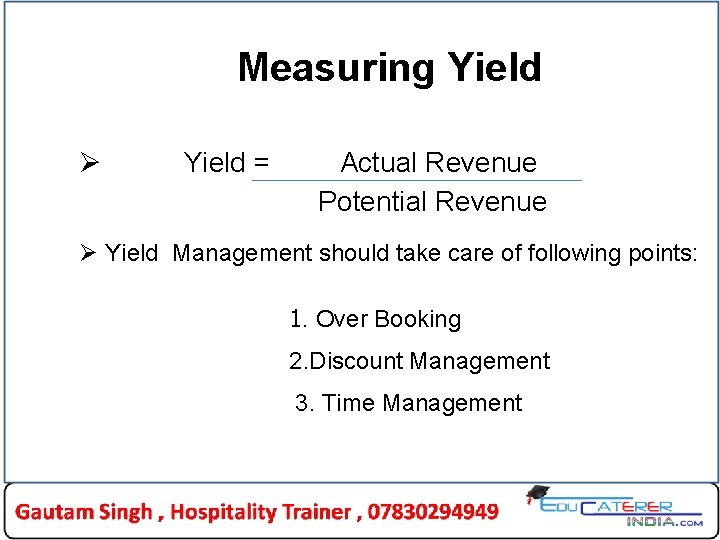
Yield Management Ø It is a technique based on principals of demand supply, used to maximize revenue generation of any hotel by lowering the process to increase the sales during low demand periods and raising prices during high demand periods. Ø It is based on the principle of demand supply.
Measuring Yield Ø Yield = Actual Revenue Potential Revenue Ø Yield Management should take care of following points: 1. Over Booking 2. Discount Management 3. Time Management
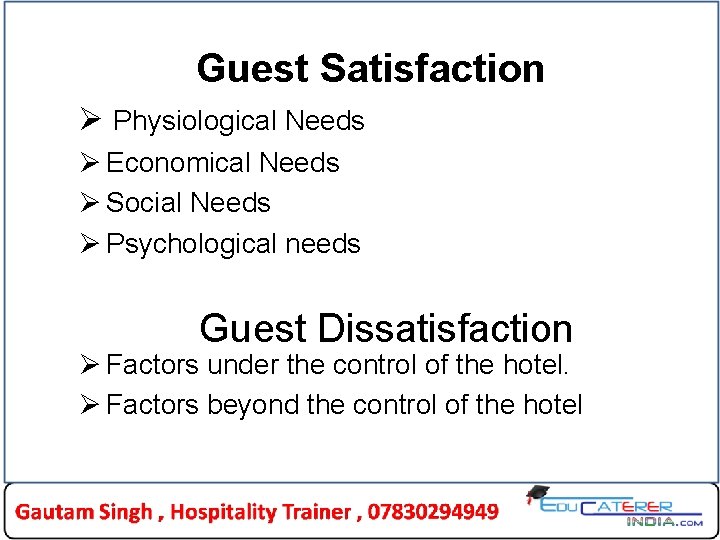
Guest Satisfaction Ø Physiological Needs Ø Economical Needs Ø Social Needs Ø Psychological needs Guest Dissatisfaction Ø Factors under the control of the hotel. Ø Factors beyond the control of the hotel
Sales Techniques Ø Personalized Selling Ø Creative Selling Ø USP identification
Qualities of a sales person Ø Recognize customers motive for buying. Ø Product Knowledge (Know what you are selling and what are the USP ). Ø Direct conversation for the sales leads. Ø Understand to whom you are selling. 20
Overview of Evaluation Process Ø Collect information Ø Compare information to expectations Ø Draw conclusions based on comparisons
Personal Selling • • Sales Preparation Knowledge of market & personality involved Establishing Rapport Determining clients needs: - Presented needs - Underlying needs - Expendable needs - Educating Clients 22
Features and Benefits • Features are the general characteristics / traits of a product. • When a features is of some use of prospective client then it is benefit to the customer. 23
Pregnant pause Ø Pregnant pause is a stage when the guest is concerned about the amount of benefits he/she is going to obtain from the features. 24
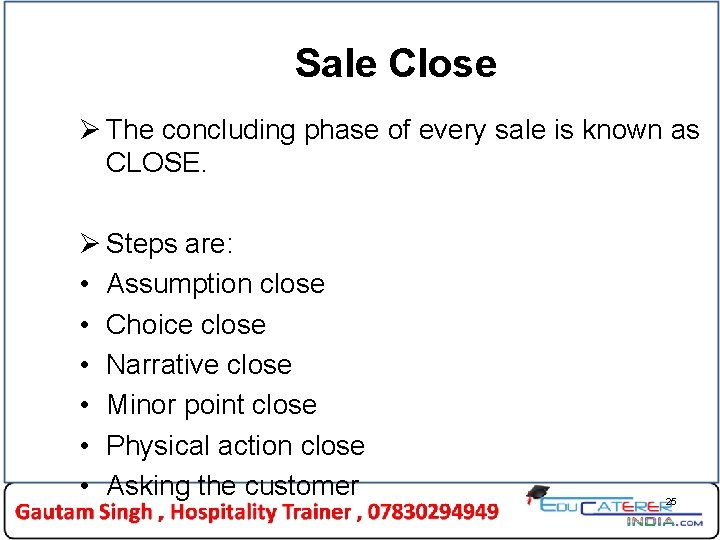
Sale Close Ø The concluding phase of every sale is known as CLOSE. Ø Steps are: • Assumption close • Choice close • Narrative close • Minor point close • Physical action close • Asking the customer 25
Sale Close Ø The concluding phase of every sale is known as CLOSE. Ø Steps are: • Assumption close • Choice close • Narrative close • Minor point close • Physical action close • Asking the customer 26
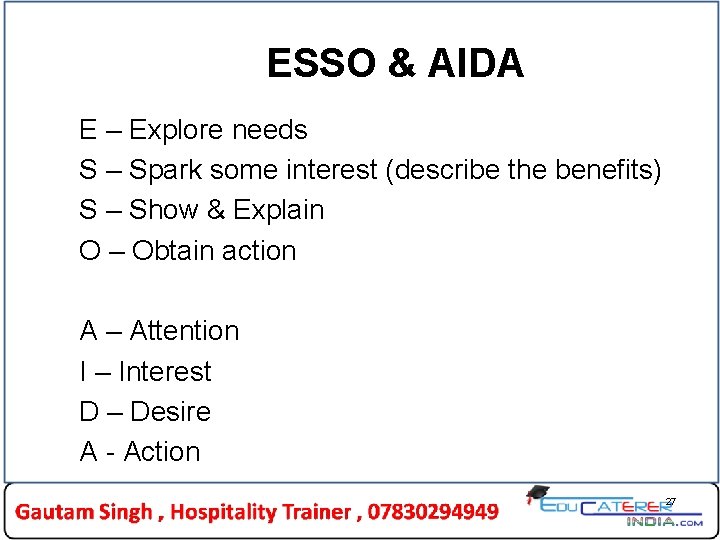
ESSO & AIDA E – Explore needs S – Spark some interest (describe the benefits) S – Show & Explain O – Obtain action A – Attention I – Interest D – Desire A - Action 27
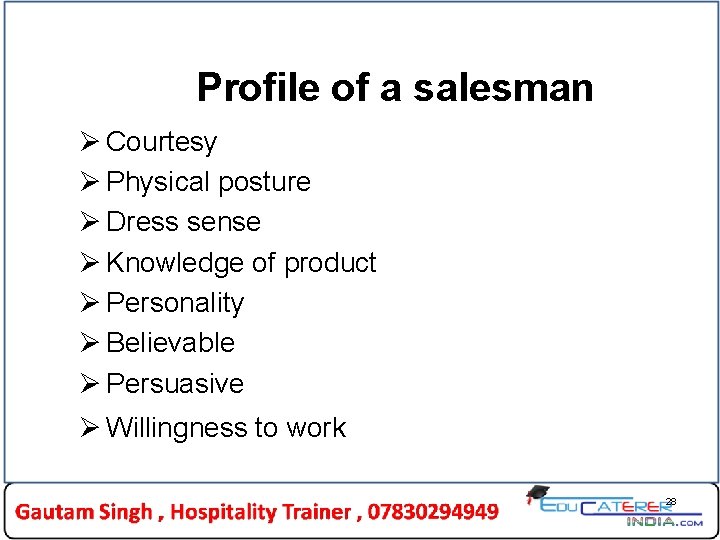
Profile of a salesman Ø Courtesy Ø Physical posture Ø Dress sense Ø Knowledge of product Ø Personality Ø Believable Ø Persuasive Ø Willingness to work 28
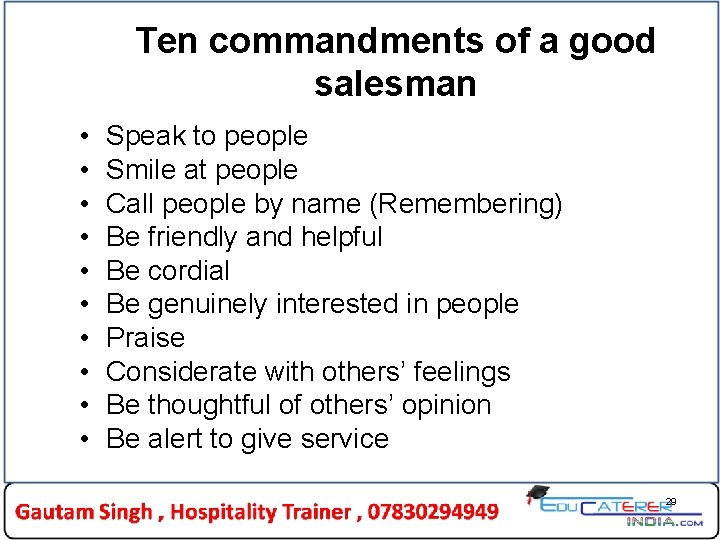
Ten commandments of a good salesman • • • Speak to people Smile at people Call people by name (Remembering) Be friendly and helpful Be cordial Be genuinely interested in people Praise Considerate with others’ feelings Be thoughtful of others’ opinion Be alert to give service 29
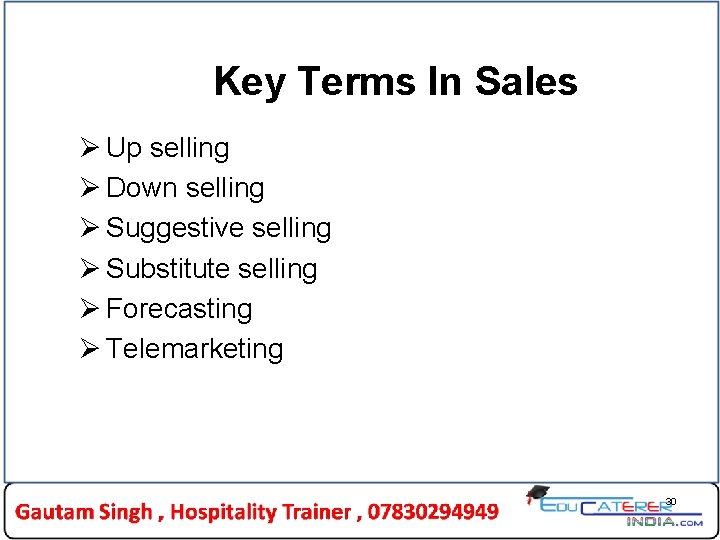
Key Terms In Sales Ø Up selling Ø Down selling Ø Suggestive selling Ø Substitute selling Ø Forecasting Ø Telemarketing 30
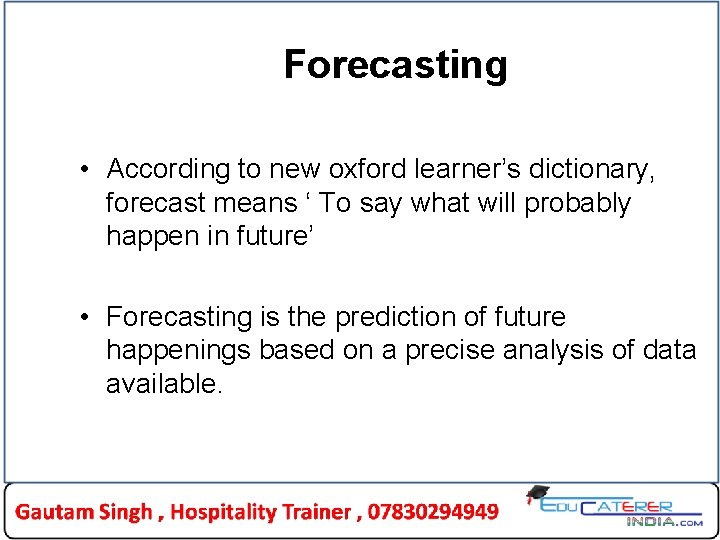
Forecasting • According to new oxford learner’s dictionary, forecast means ‘ To say what will probably happen in future’ • Forecasting is the prediction of future happenings based on a precise analysis of data available.
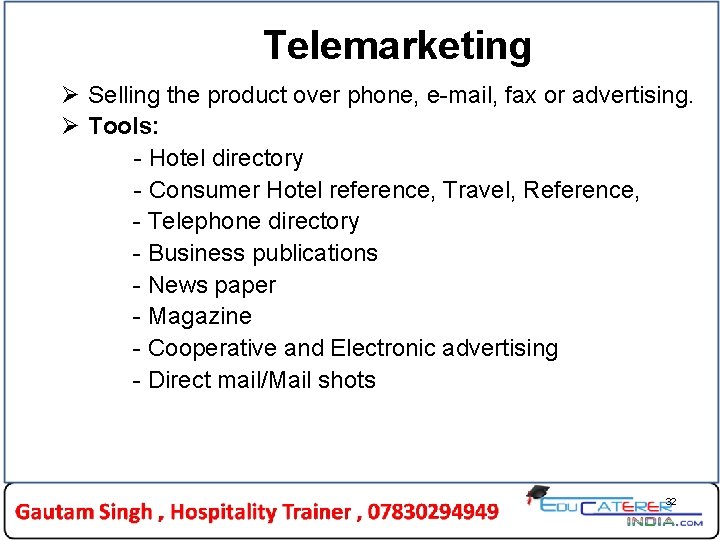
Telemarketing Ø Selling the product over phone, e-mail, fax or advertising. Ø Tools: - Hotel directory - Consumer Hotel reference, Travel, Reference, - Telephone directory - Business publications - News paper - Magazine - Cooperative and Electronic advertising - Direct mail/Mail shots 32
Training Ø Training is a method of imparting knowledge & information to the employee for improvement and up gradation of his skills, activities and potential for his own benefit as well as for the benefit of the organization.
Methods of Training Ø Lecture Method Ø Role Play Method Ø Case Study Method Ø On the job Training Ø Demonstration Ø Seminars Ø Conference Ø Project Ø Role Rotation Method Ø Management Games
Basic Steps In The Training Process Ø Defining training needs Ø Plan the training Ø Prepare the employee Ø Conduct the training Ø Evaluate the training Ø Follow through with on going coaching
BIBLIOGRAPHY Ø wwwwikianswers. com Ø www. hotelassociationofindia. com Ø wwhotelsmag. com Ø www. tourism-review. com Ø www. expresshospitality. com Ø www. hotelonline. comchapter V, Sem III. ppt Ø ww w. hospitality school. com Ø www. hotelmarketing. com Ø www. vec. ca