
From Xocolatl to Cadburys The story of chocolate
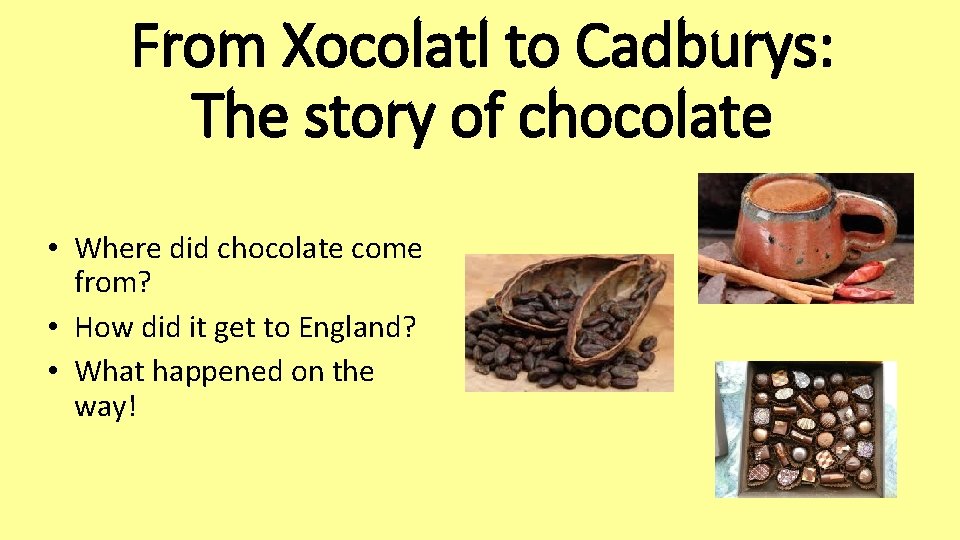
From Xocolatl to Cadburys: The story of chocolate • Where did chocolate come from? • How did it get to England? • What happened on the way!
The origins of chocolate • The journey of chocolate is a surprising one, involving ancient Mayans and Aztecs, Spanish Conquistadors, English pirates, French Kings, the industrial revolution and top secret recipes! • Play close attention to this presentation – there will be a quiz at the end with a prize for the winner!
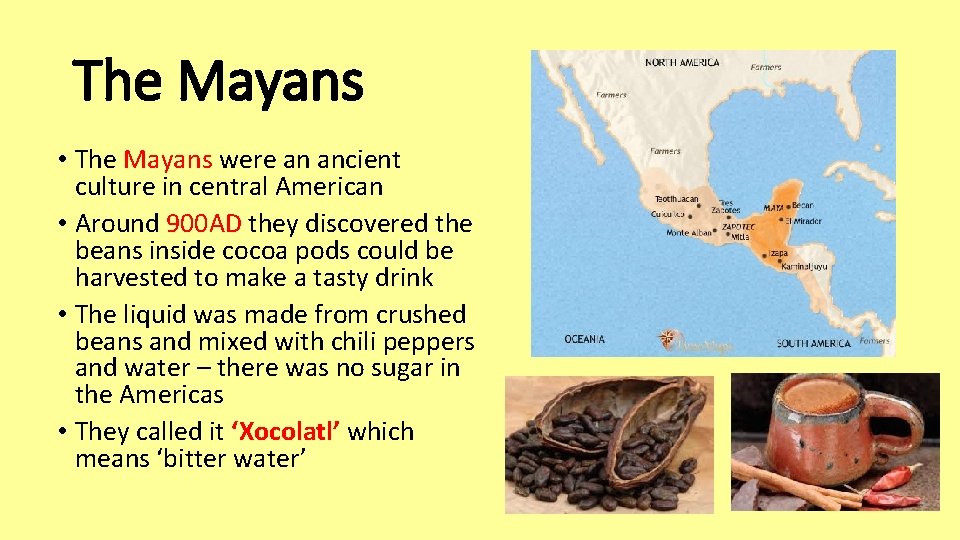
The Mayans • The Mayans were an ancient culture in central American • Around 900 AD they discovered the beans inside cocoa pods could be harvested to make a tasty drink • The liquid was made from crushed beans and mixed with chili peppers and water – there was no sugar in the Americas • They called it ‘Xocolatl’ which means ‘bitter water’
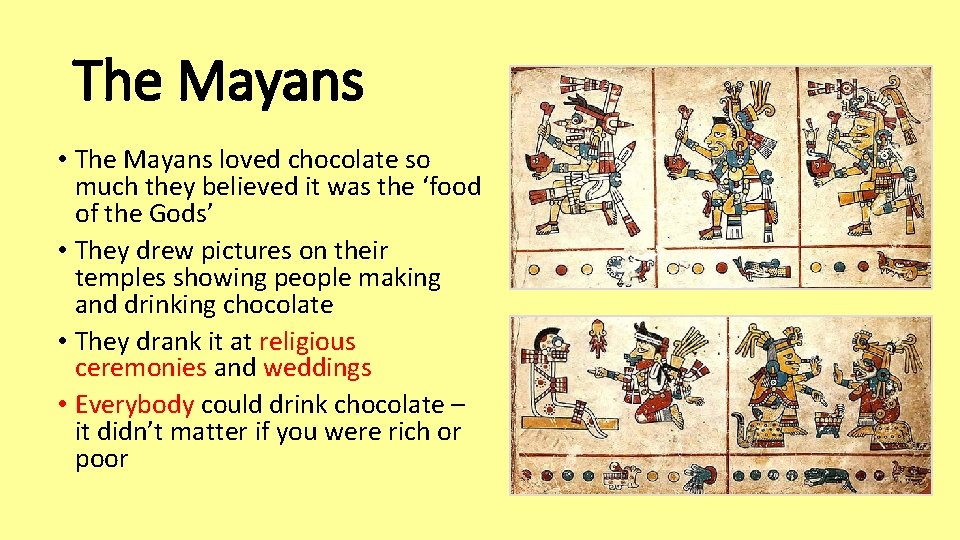
The Mayans • The Mayans loved chocolate so much they believed it was the ‘food of the Gods’ • They drew pictures on their temples showing people making and drinking chocolate • They drank it at religious ceremonies and weddings • Everybody could drink chocolate – it didn’t matter if you were rich or poor
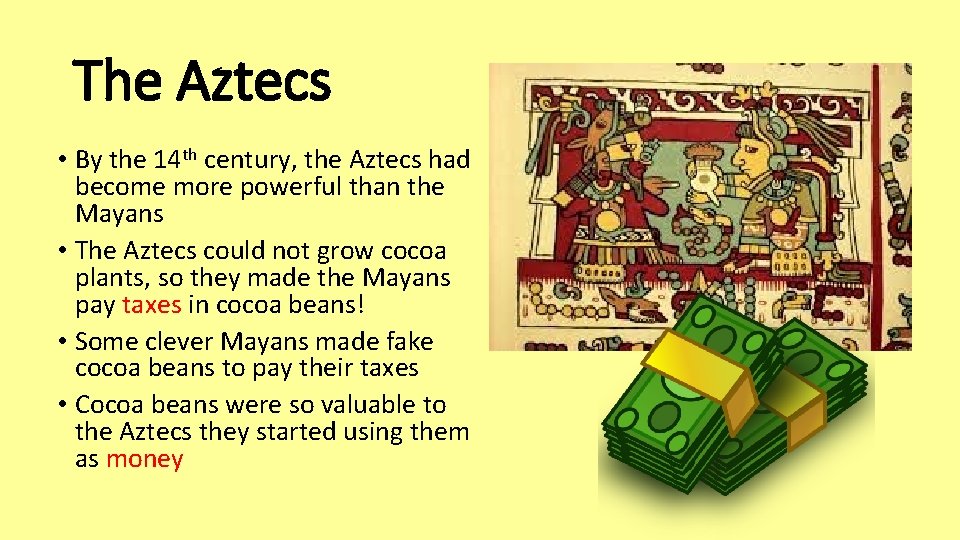
The Aztecs • By the 14 th century, the Aztecs had become more powerful than the Mayans • The Aztecs could not grow cocoa plants, so they made the Mayans pay taxes in cocoa beans! • Some clever Mayans made fake cocoa beans to pay their taxes • Cocoa beans were so valuable to the Aztecs they started using them as money
The Aztecs • Having a pocket full of beans was like having a wallet full of cash – the Aztecs paid for everything in beans • Unlike the Maya, only rich people could drink chocolate and women were forbidden to drink it • The drink was served in golden goblets which were thrown away after one use! • Apparently, King Montezuma drank 50 cups a day! Exchange rate 1 bean = 5 chili peppers or 10 tomatoes 3 beans = 1 avocado 30 beans = a juicy rabbit 65 beans = a new cape 100 beans = a fat turkey 10000 beans = a new wife
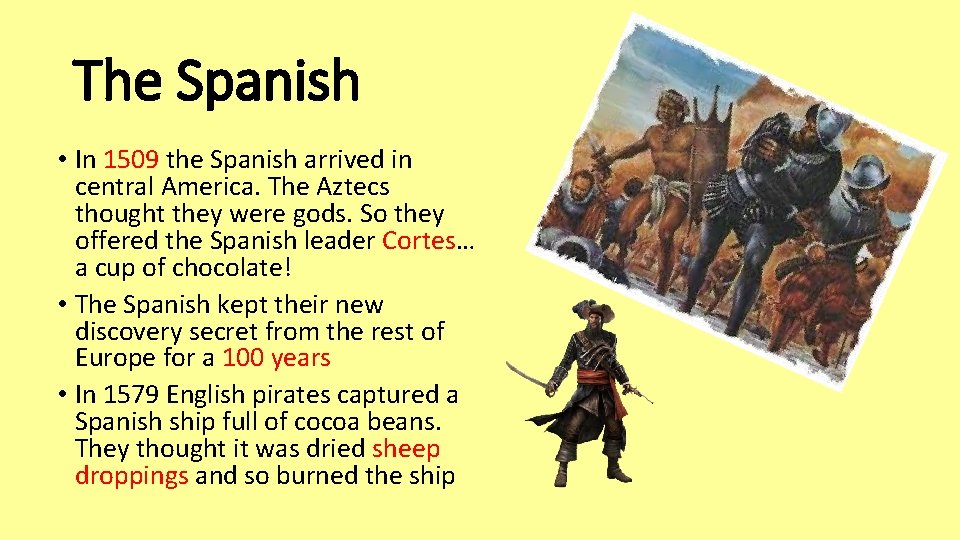
The Spanish • In 1509 the Spanish arrived in central America. The Aztecs thought they were gods. So they offered the Spanish leader Cortes… a cup of chocolate! • The Spanish kept their new discovery secret from the rest of Europe for a 100 years • In 1579 English pirates captured a Spanish ship full of cocoa beans. They thought it was dried sheep droppings and so burned the ship
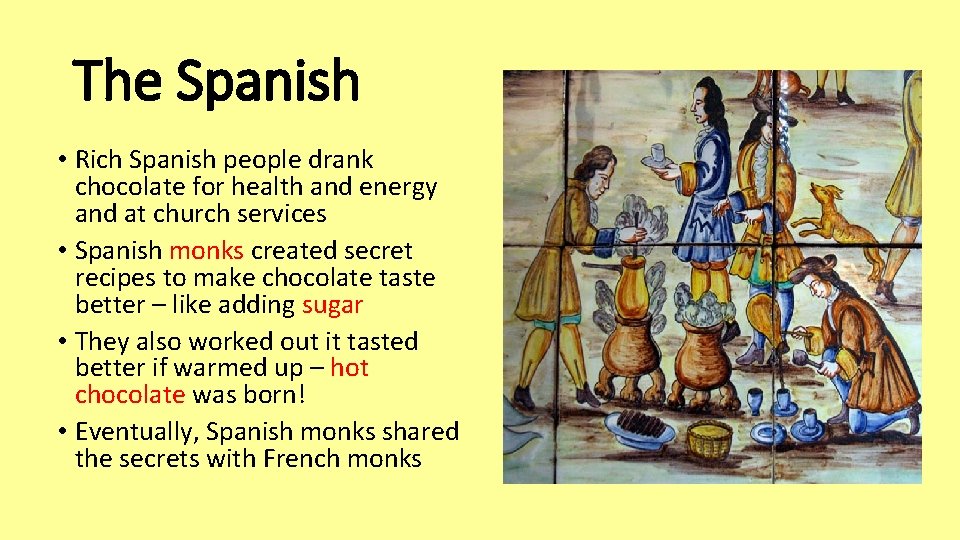
The Spanish • Rich Spanish people drank chocolate for health and energy and at church services • Spanish monks created secret recipes to make chocolate taste better – like adding sugar • They also worked out it tasted better if warmed up – hot chocolate was born! • Eventually, Spanish monks shared the secrets with French monks
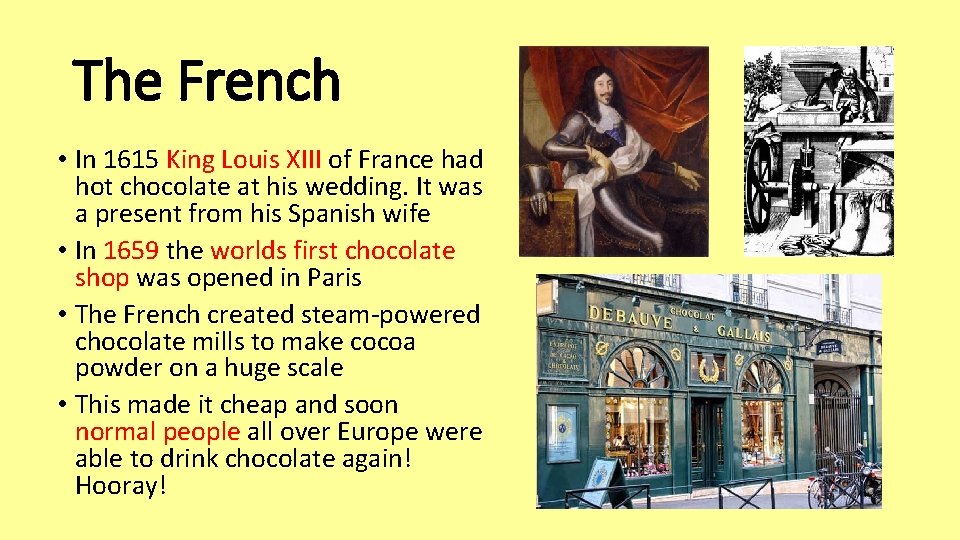
The French • In 1615 King Louis XIII of France had hot chocolate at his wedding. It was a present from his Spanish wife • In 1659 the worlds first chocolate shop was opened in Paris • The French created steam-powered chocolate mills to make cocoa powder on a huge scale • This made it cheap and soon normal people all over Europe were able to drink chocolate again! Hooray!
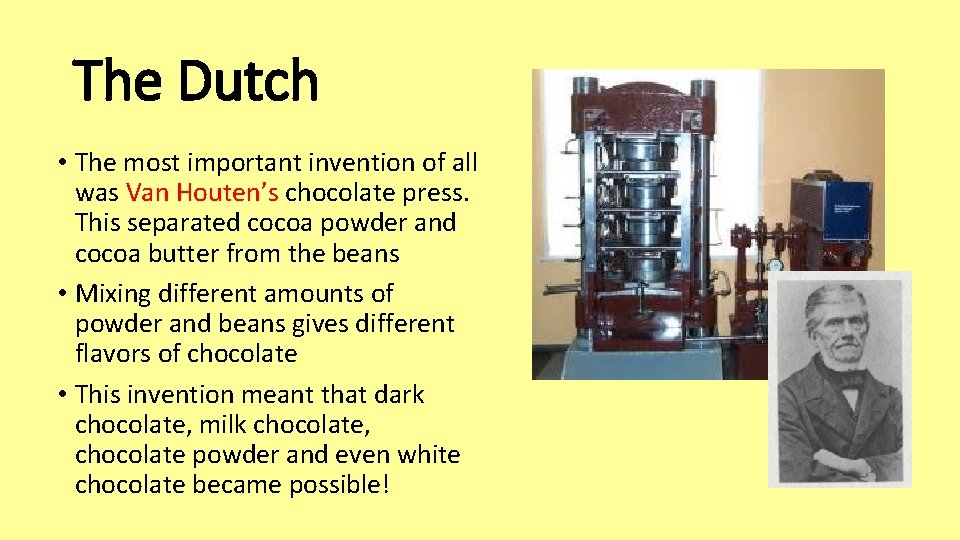
The Dutch • The most important invention of all was Van Houten’s chocolate press. This separated cocoa powder and cocoa butter from the beans • Mixing different amounts of powder and beans gives different flavors of chocolate • This invention meant that dark chocolate, milk chocolate, chocolate powder and even white chocolate became possible!
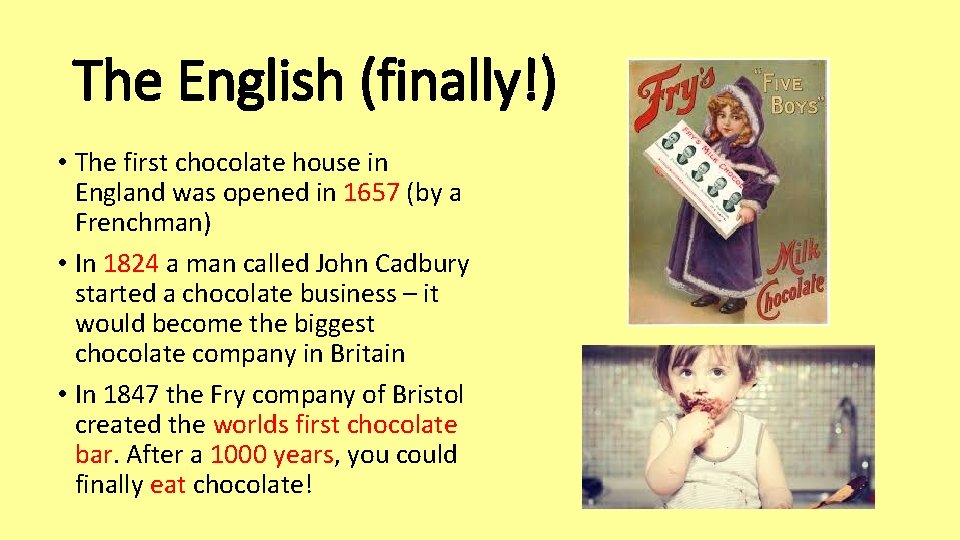
The English (finally!) • The first chocolate house in England was opened in 1657 (by a Frenchman) • In 1824 a man called John Cadbury started a chocolate business – it would become the biggest chocolate company in Britain • In 1847 the Fry company of Bristol created the worlds first chocolate bar. After a 1000 years, you could finally eat chocolate!

QUIZ!! • Complete the quiz sheet • Winner will get a prize!
Answers… 1) 2) 3) 4) 5) 6) 7) Mayans Bitter water Weddings and ceremonies Money Poor people and / or women 50 cups 30 beans TIE BREAK: there were 165 Oompa Loompas in the film (all the same actor!) 8) 100 years 9) Thought it was poo 10) Spanish monks 11) Louis XIII 12) Paris 13) Frys 14) Cadbury 15) Mayans, Aztecs, Spanish, French, Dutch, English
The Chocolate Factory - Cadbury • 1905 – Dairy Milk • 1920 – Flake • 1928 – Fruit and Nut • 1929 – Crunchie • 1933 – Whole Nut • 1938 – Roses • 1948 – Fudge • 1958 – Picnic • 1960 – Buttons • 1970 – Curly Wurly • 1971 – Crème Egg • 1976 – Double Decker • 1983 – Wispa • 1985 – Boost • 1987 – Twirl • 1998 – White Buttons • 1992 – Timeout • 1999 - Heroes
- Slides: 14