
From Whats Wrong with You to Whats Happened
- Slides: 58
From “What’s Wrong with You” to “What’s Happened to You? ” Reframing Spiritual Care through a Trauma Informed Lens David Hottinger, M. Div Manager, Spiritual Care Department Hennepin Healthcare System Minneapolis, MN David. Hottinger@hcmed. org
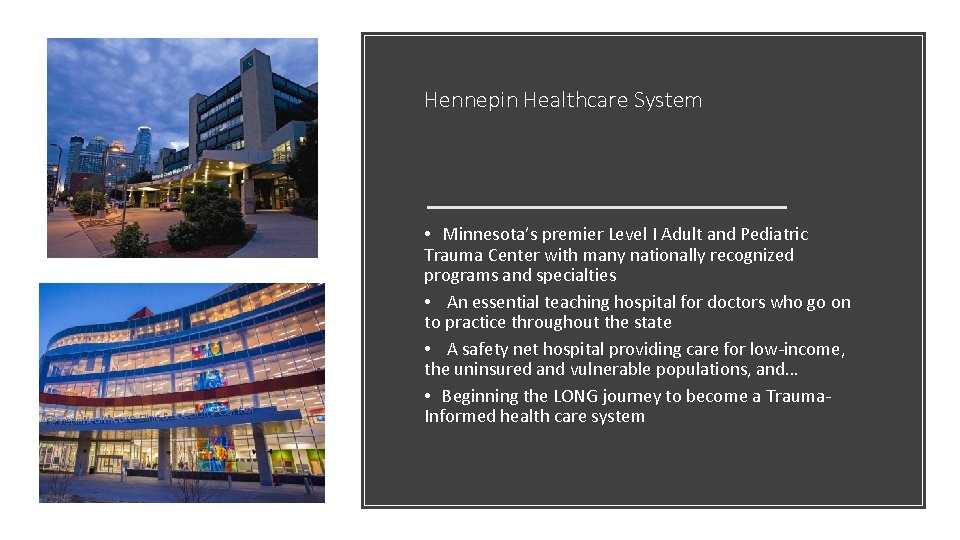
Hennepin Healthcare System • Minnesota’s premier Level I Adult and Pediatric Trauma Center with many nationally recognized programs and specialties • An essential teaching hospital for doctors who go on to practice throughout the state • A safety net hospital providing care for low-income, the uninsured and vulnerable populations, and… • Beginning the LONG journey to become a Trauma. Informed health care system
• Operating beds. . . 484 • Discharges (adults and pediatrics). . . 22, 050 • Births. . . . 1, 943 • Clinic visits. . . 628, 037 • Emergency Services visits. . . . . 111, 912 (includes Urgent Care) • Emergency Medical Services. . . . 81, 463 (ambulance runs) 2017 Stats • Surgeries. . . 10, 683 • Poison Information Center contacts. . 63, 414 • Hyperbaric chamber treatments. . . . 5, 422 • Average daily census. . . . . 333 • MVNA-Home health visits. . . 23, 610 • Hospice-Average daily census. . . 53
Helen Kim, MD and Mother-Baby Program 2016 Community Health Needs Assessment HHS Journey to Trauma. Informed Care: a Confluence of Factors Creation of a Narrative Medicine Program Emergence (2016) of a Hospital-Based Violence Intervention Program Increasing levels of work-place violence alongside heightened staff fears about safety (shooting attack on entrance of Emergency Department in 2014) Escalating patient, family, staff and community complaints about hospital protocols surrounding the admission of victims of violence High profile, police-involved shootings and community response Growing awareness among leadership and staff about institutional racism, implicit bias, racial disparities in health care System overload: 700 deaths in 2017 (a 20% increase from 2016), massive layoffs, budget woes, sense of institutional crisis
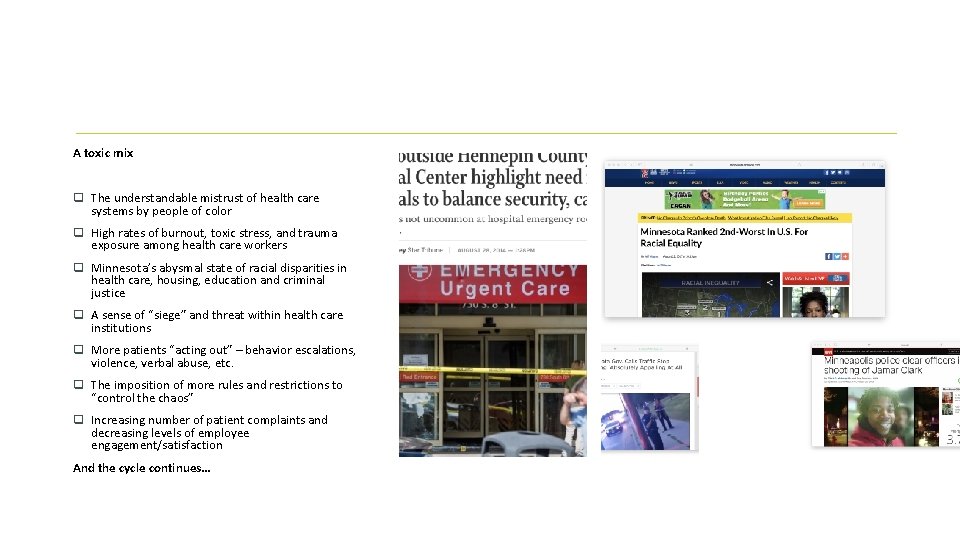
A toxic mix q The understandable mistrust of health care systems by people of color q High rates of burnout, toxic stress, and trauma exposure among health care workers q Minnesota’s abysmal state of racial disparities in health care, housing, education and criminal justice q A sense of “siege” and threat within health care institutions q More patients “acting out” – behavior escalations, violence, verbal abuse, etc. q The imposition of more rules and restrictions to “control the chaos” q Increasing number of patient complaints and decreasing levels of employee engagement/satisfaction And the cycle continues…
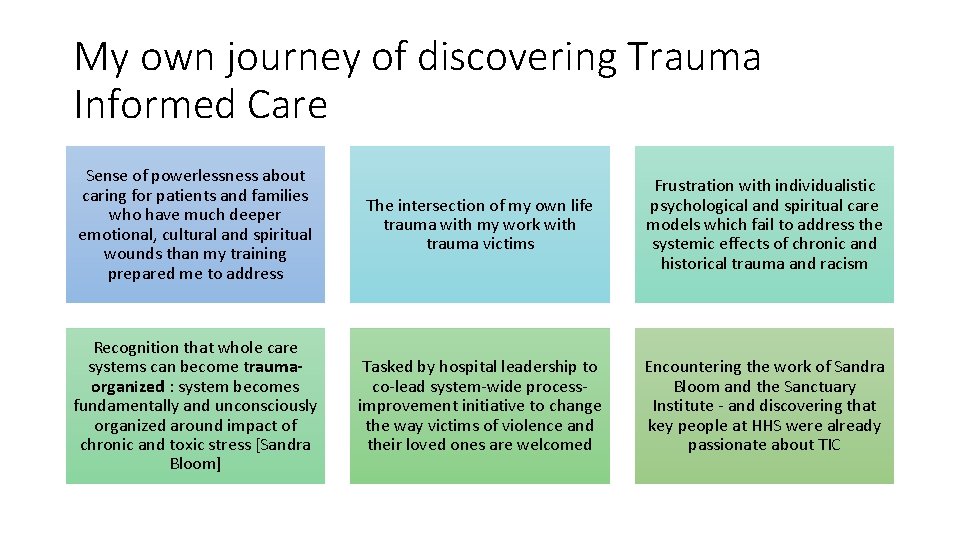
My own journey of discovering Trauma Informed Care Sense of powerlessness about caring for patients and families who have much deeper emotional, cultural and spiritual wounds than my training prepared me to address The intersection of my own life trauma with my work with trauma victims Frustration with individualistic psychological and spiritual care models which fail to address the systemic effects of chronic and historical trauma and racism Recognition that whole care systems can become traumaorganized : system becomes fundamentally and unconsciously organized around impact of chronic and toxic stress [Sandra Bloom] Tasked by hospital leadership to co-lead system-wide processimprovement initiative to change the way victims of violence and their loved ones are welcomed Encountering the work of Sandra Bloom and the Sanctuary Institute - and discovering that key people at HHS were already passionate about TIC
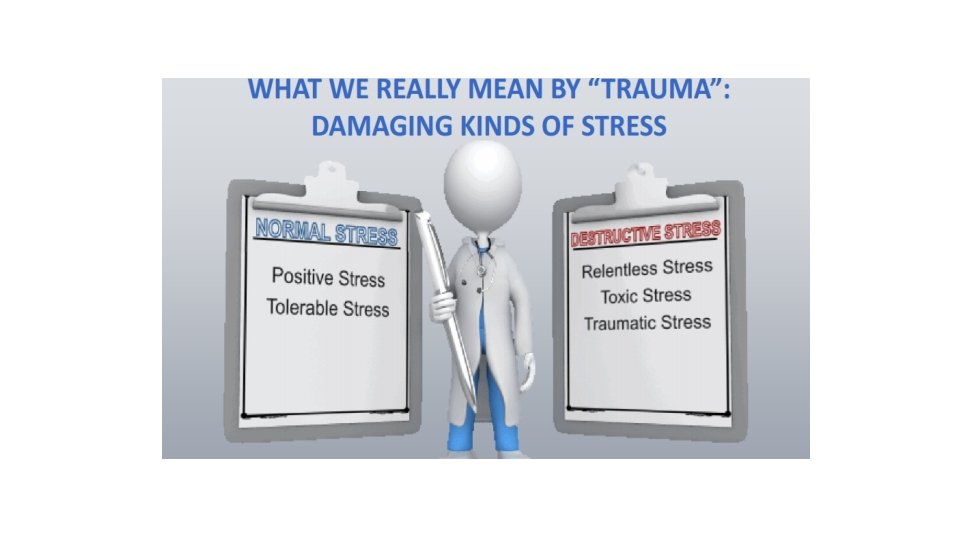
Traumatic Stress Occurs when a person experiences an event that is overwhelming, usually lifethreatening, terrifying, or horrifying in the face of helplessness (Sandra Bloom)
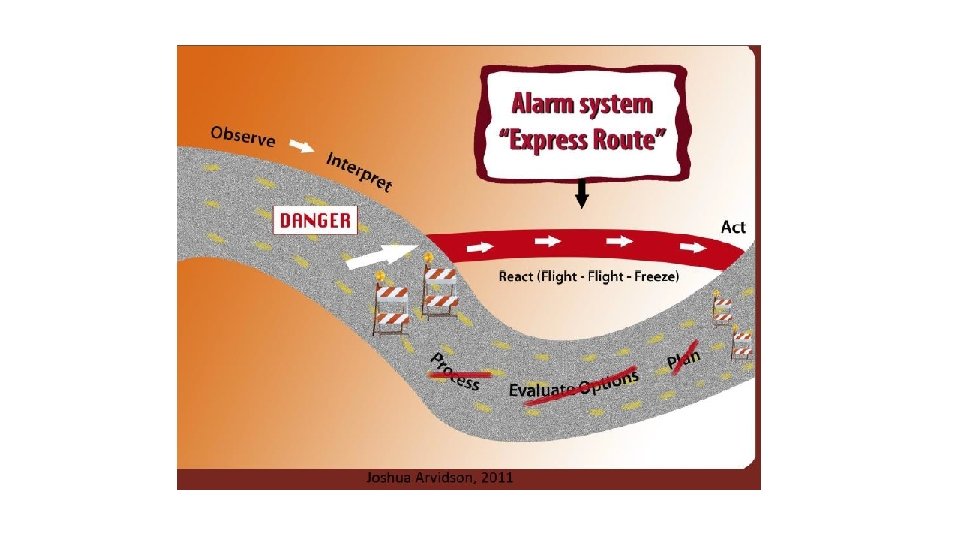
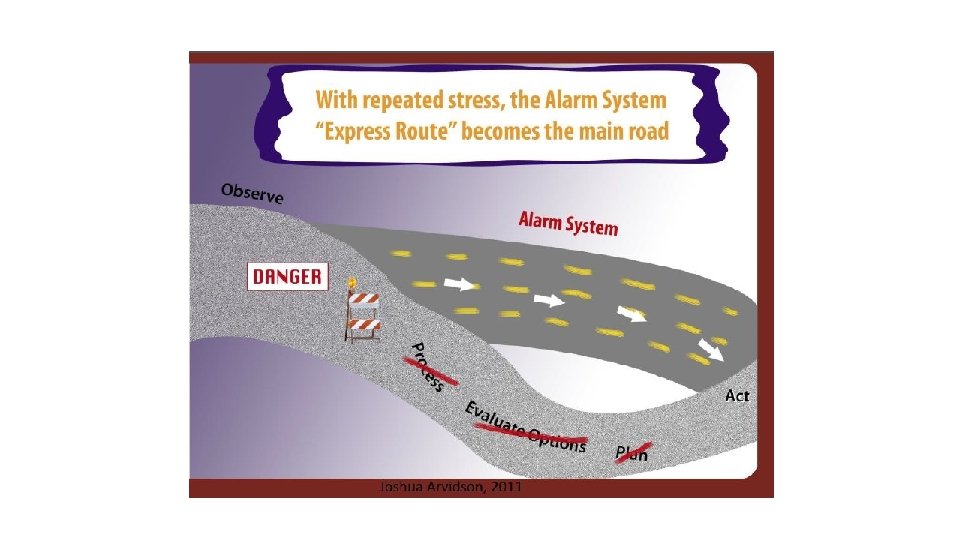
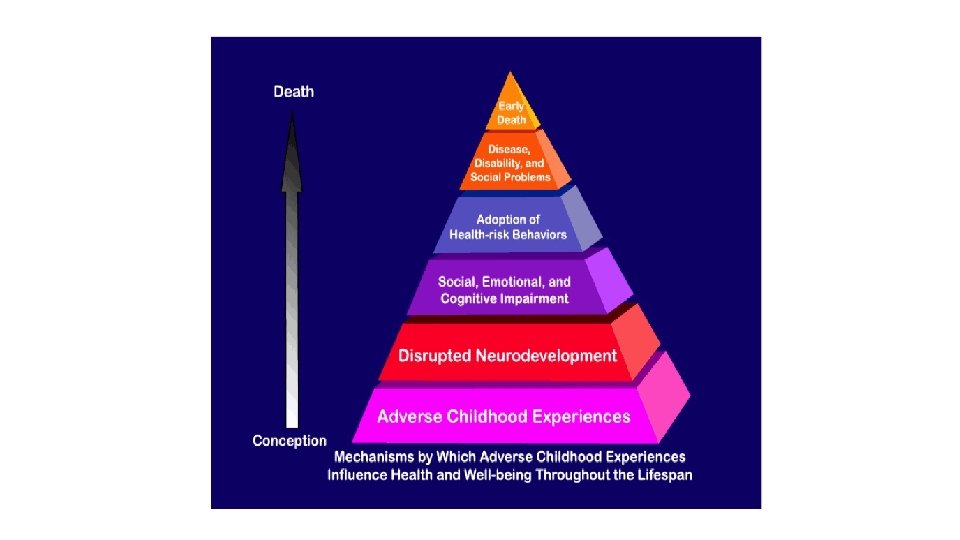
Toxic Stress Is associated with prolonged and intense activation of the body’s stress response to such an extent that it can change the way a child’s brain develops, the very architecture of the brain, with problematic long-term consequences. (Sandra Bloom) Affects how we learn, how we parent, how we react at home and at work, and what we create in our communities. It affects our children, our earning potential, and the very ideas we have about what we’re capable of. What starts out in the wiring of one brain cell to another ultimately affects all of the cells of our society, from our families to our schools to our workplaces to our jails. (Nadine Burke-Harris)
Allostatic Load The wear-and-tear on the body and brain that can be a result of conditions such as poverty, bigotry, chronic hunger, and lower socio-economic status. (Sandra Bloom)
SAMHSA Definition of Trauma “Individual trauma results from an event, series of events, or set of circumstances that is experienced by an individual as physically or emotionally harmful or life threatening and that has lasting adverse effects on the individual’s functioning and mental, physical, social, emotional, or spiritual well-being. ”
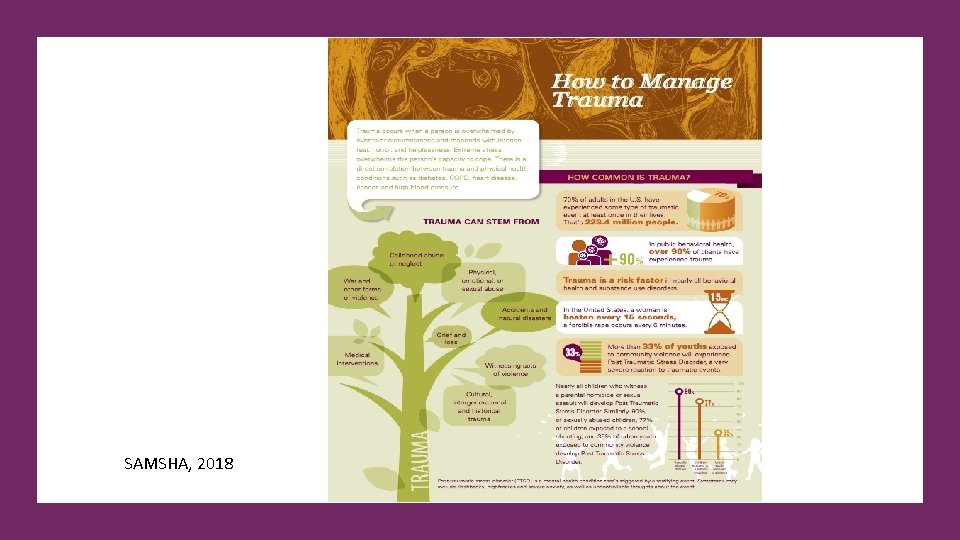
SAMSHA, 2018
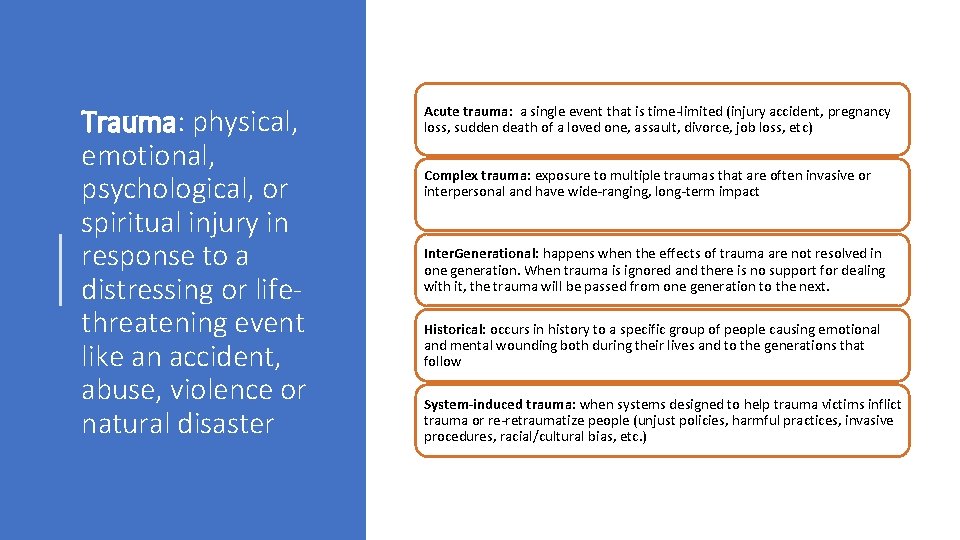
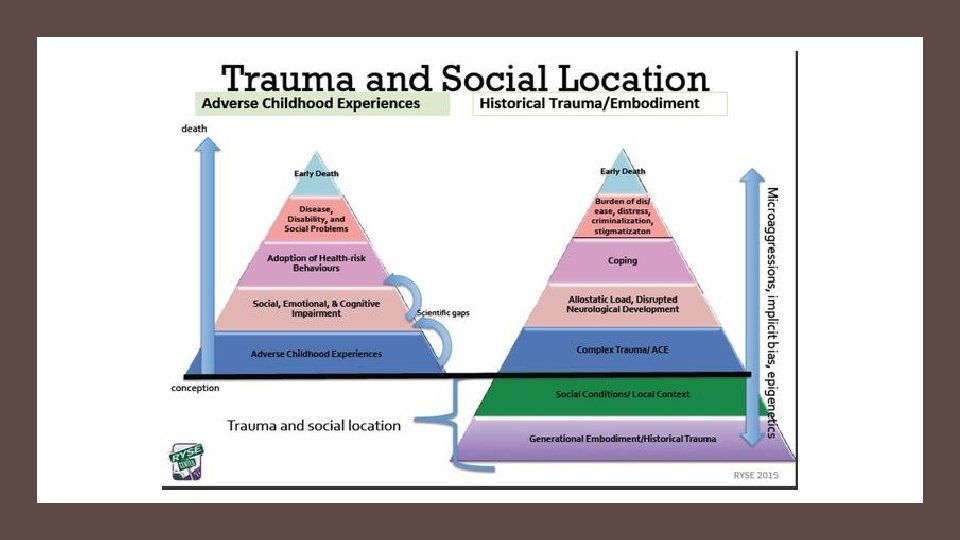
Trauma: physical, emotional, psychological, or spiritual injury in response to a distressing or lifethreatening event like an accident, abuse, violence or natural disaster Acute trauma: a single event that is time-limited (injury accident, pregnancy loss, sudden death of a loved one, assault, divorce, job loss, etc) Complex trauma: exposure to multiple traumas that are often invasive or interpersonal and have wide-ranging, long-term impact Inter. Generational: happens when the effects of trauma are not resolved in one generation. When trauma is ignored and there is no support for dealing with it, the trauma will be passed from one generation to the next. Historical: occurs in history to a specific group of people causing emotional and mental wounding both during their lives and to the generations that follow System-induced trauma: when systems designed to help trauma victims inflict trauma or re-retraumatize people (unjust policies, harmful practices, invasive procedures, racial/cultural bias, etc. )
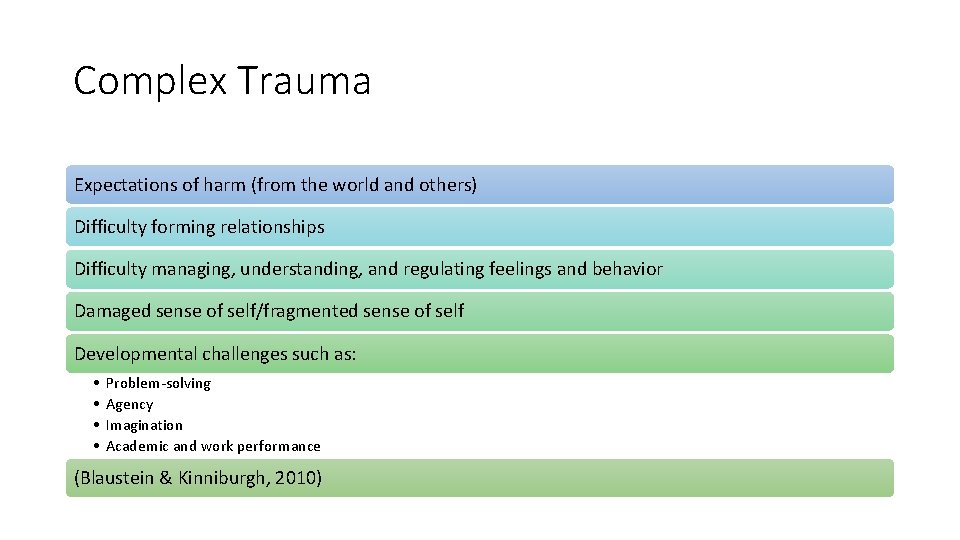
Complex Trauma Expectations of harm (from the world and others) Difficulty forming relationships Difficulty managing, understanding, and regulating feelings and behavior Damaged sense of self/fragmented sense of self Developmental challenges such as: • • Problem-solving Agency Imagination Academic and work performance (Blaustein & Kinniburgh, 2010)
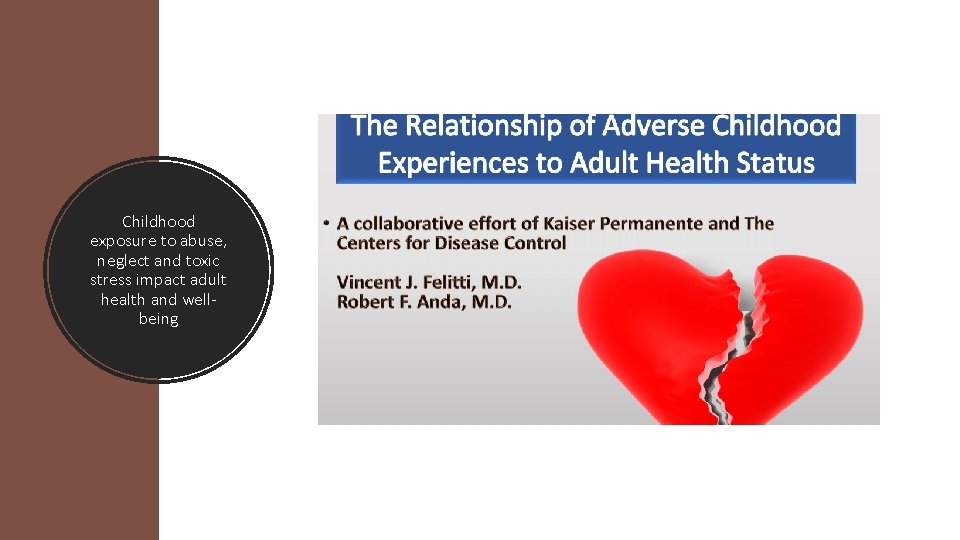
Childhood exposure to abuse, neglect and toxic stress impact adult health and wellbeing
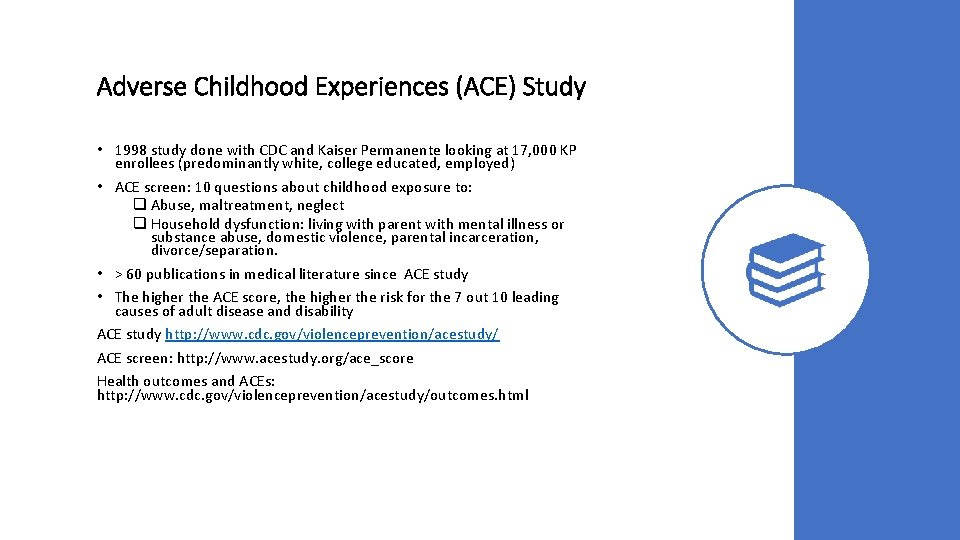
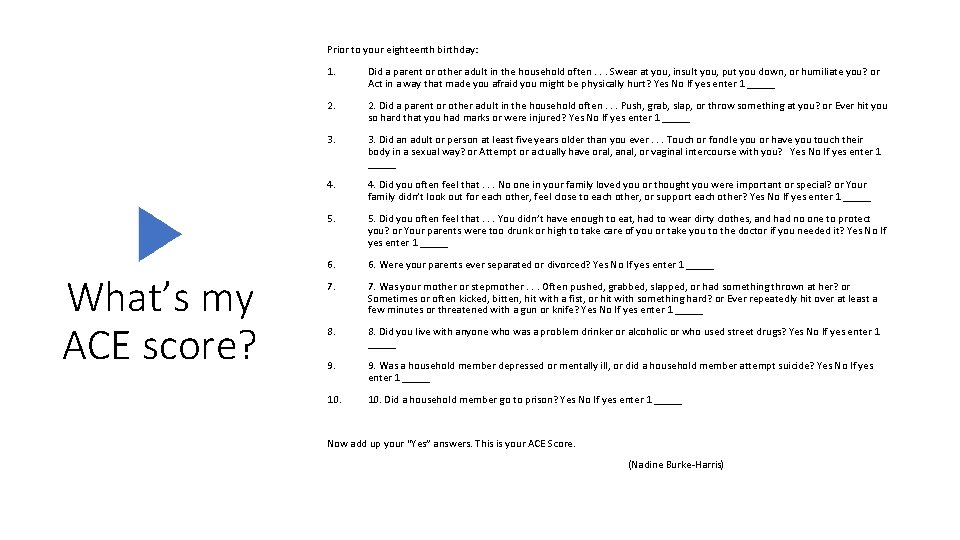
Adverse Childhood Experiences (ACE) Study • 1998 study done with CDC and Kaiser Permanente looking at 17, 000 KP enrollees (predominantly white, college educated, employed) • ACE screen: 10 questions about childhood exposure to: q Abuse, maltreatment, neglect q Household dysfunction: living with parent with mental illness or substance abuse, domestic violence, parental incarceration, divorce/separation. • > 60 publications in medical literature since ACE study • The higher the ACE score, the higher the risk for the 7 out 10 leading causes of adult disease and disability ACE study http: //www. cdc. gov/violenceprevention/acestudy/ ACE screen: http: //www. acestudy. org/ace_score Health outcomes and ACEs: http: //www. cdc. gov/violenceprevention/acestudy/outcomes. html
Prior to your eighteenth birthday: What’s my ACE score? 1. Did a parent or other adult in the household often. . . Swear at you, insult you, put you down, or humiliate you? or Act in a way that made you afraid you might be physically hurt? Yes No If yes enter 1 _____ 2. Did a parent or other adult in the household often. . . Push, grab, slap, or throw something at you? or Ever hit you so hard that you had marks or were injured? Yes No If yes enter 1 _____ 3. Did an adult or person at least five years older than you ever. . . Touch or fondle you or have you touch their body in a sexual way? or Attempt or actually have oral, anal, or vaginal intercourse with you? Yes No If yes enter 1 _____ 4. Did you often feel that. . . No one in your family loved you or thought you were important or special? or Your family didn’t look out for each other, feel close to each other, or support each other? Yes No If yes enter 1 _____ 5. Did you often feel that. . . You didn’t have enough to eat, had to wear dirty clothes, and had no one to protect you? or Your parents were too drunk or high to take care of you or take you to the doctor if you needed it? Yes No If yes enter 1 _____ 6. Were your parents ever separated or divorced? Yes No If yes enter 1 _____ 7. Was your mother or stepmother. . . Often pushed, grabbed, slapped, or had something thrown at her? or Sometimes or often kicked, bitten, hit with a fist, or hit with something hard? or Ever repeatedly hit over at least a few minutes or threatened with a gun or knife? Yes No If yes enter 1 _____ 8. Did you live with anyone who was a problem drinker or alcoholic or who used street drugs? Yes No If yes enter 1 _____ 9. Was a household member depressed or mentally ill, or did a household member attempt suicide? Yes No If yes enter 1 _____ 10. Did a household member go to prison? Yes No If yes enter 1 _____ Now add up your “Yes” answers. This is your ACE Score. (Nadine Burke-Harris)
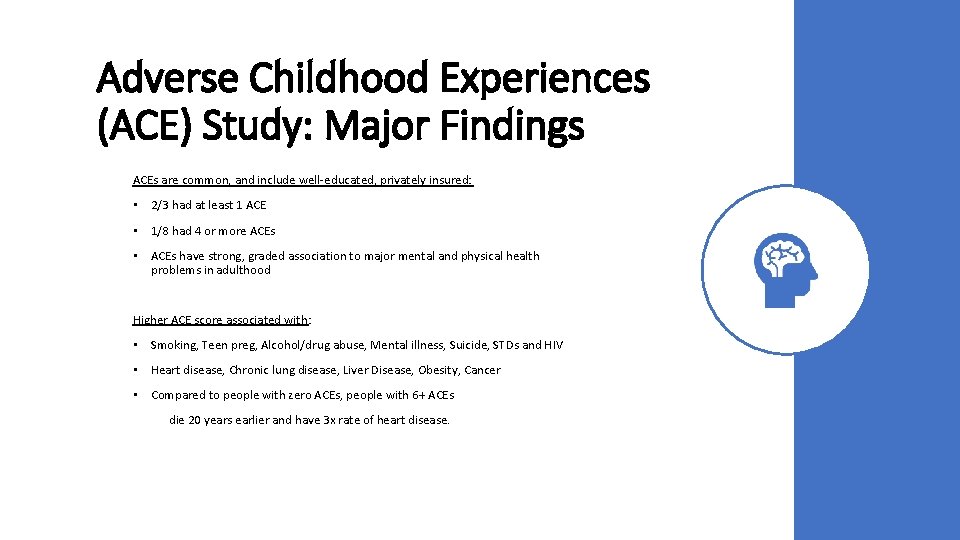
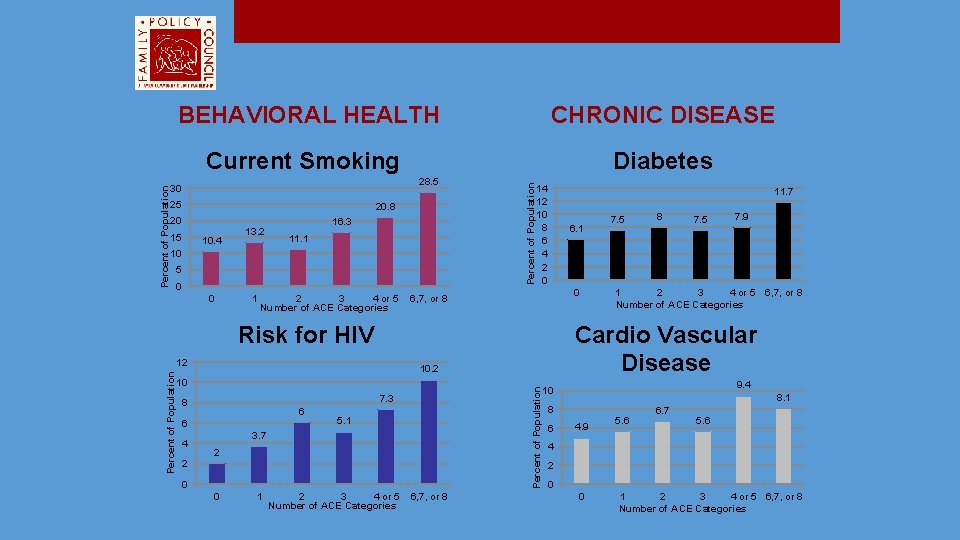
Adverse Childhood Experiences (ACE) Study: Major Findings ACEs are common, and include well-educated, privately insured: • 2/3 had at least 1 ACE • 1/8 had 4 or more ACEs • ACEs have strong, graded association to major mental and physical health problems in adulthood Higher ACE score associated with: • Smoking, Teen preg, Alcohol/drug abuse, Mental illness, Suicide, STDs and HIV • Heart disease, Chronic lung disease, Liver Disease, Obesity, Cancer • Compared to people with zero ACEs, people with 6+ ACEs die 20 years earlier and have 3 x rate of heart disease.
CHRONIC DISEASE Current Smoking Diabetes 28. 5 30 25 20. 8 20 15 10. 4 13. 2 16. 3 11. 1 10 5 0 0 1 2 3 4 or 5 Number of ACE Categories Percent of Population BEHAVIORAL HEALTH 14 12 10 8 6 4 2 0 11. 7 6. 1 0 6, 7, or 8 7. 3 8 6 6 4 Percent of Population 10. 2 10 5. 1 3. 7 2 2 0 0 1 2 3 4 or 5 Number of ACE Categories 6, 7, or 8 8 7. 5 7. 9 1 2 3 4 or 5 Number of ACE Categories 6, 7, or 8 Cardio Vascular Disease Risk for HIV 12 7. 5 9. 4 10 8. 1 8 6 4. 9 5. 6 6. 7 5. 6 4 2 0 0 1 2 3 4 or 5 6, 7, or 8 Number of ACE Categories
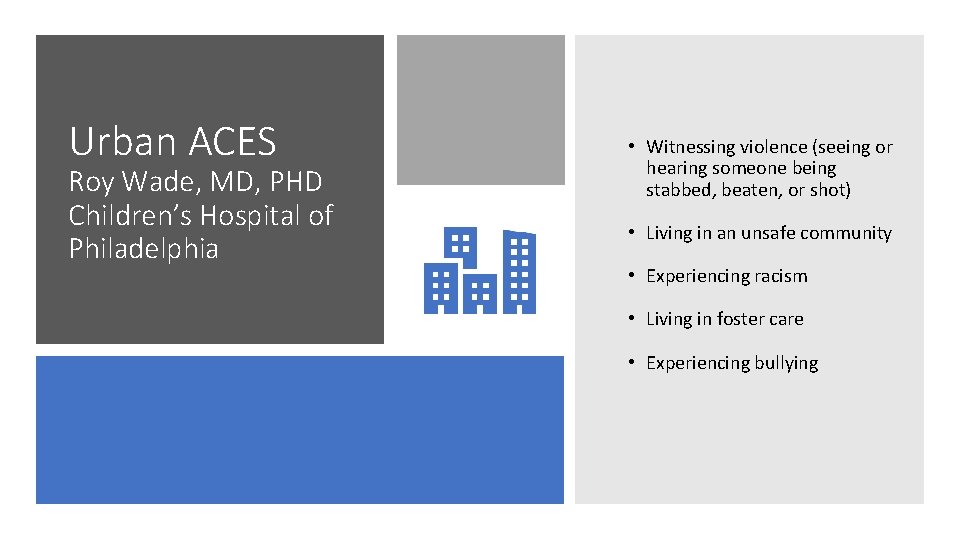
Urban ACES Roy Wade, MD, PHD Children’s Hospital of Philadelphia • Witnessing violence (seeing or hearing someone being stabbed, beaten, or shot) • Living in an unsafe community • Experiencing racism • Living in foster care • Experiencing bullying
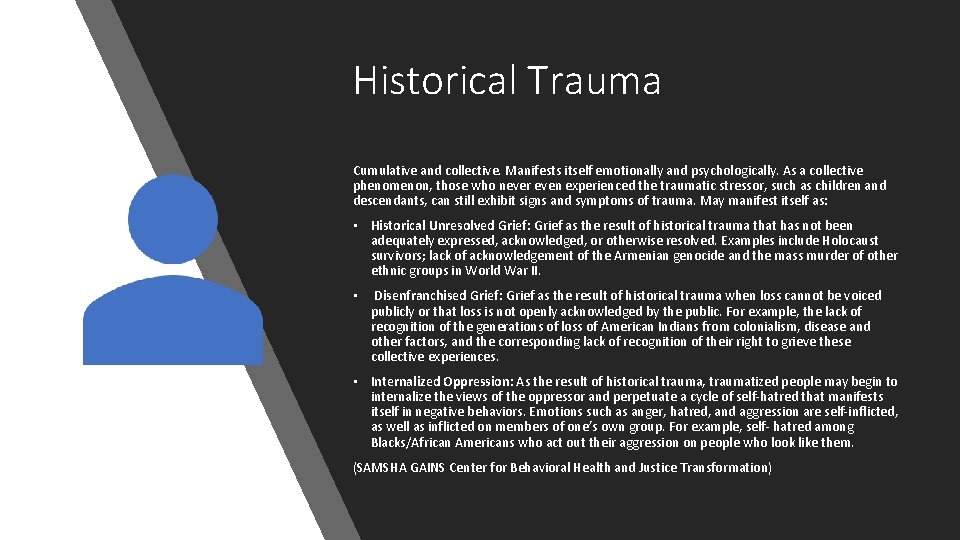
Historical Trauma Cumulative and collective. Manifests itself emotionally and psychologically. As a collective phenomenon, those who never even experienced the traumatic stressor, such as children and descendants, can still exhibit signs and symptoms of trauma. May manifest itself as: • Historical Unresolved Grief: Grief as the result of historical trauma that has not been adequately expressed, acknowledged, or otherwise resolved. Examples include Holocaust survivors; lack of acknowledgement of the Armenian genocide and the mass murder of other ethnic groups in World War II. • Disenfranchised Grief: Grief as the result of historical trauma when loss cannot be voiced publicly or that loss is not openly acknowledged by the public. For example, the lack of recognition of the generations of loss of American Indians from colonialism, disease and other factors, and the corresponding lack of recognition of their right to grieve these collective experiences. • Internalized Oppression: As the result of historical trauma, traumatized people may begin to internalize the views of the oppressor and perpetuate a cycle of self-hatred that manifests itself in negative behaviors. Emotions such as anger, hatred, and aggression are self-inflicted, as well as inflicted on members of one’s own group. For example, self- hatred among Blacks/African Americans who act out their aggression on people who look like them. (SAMSHA GAINS Center for Behavioral Health and Justice Transformation)
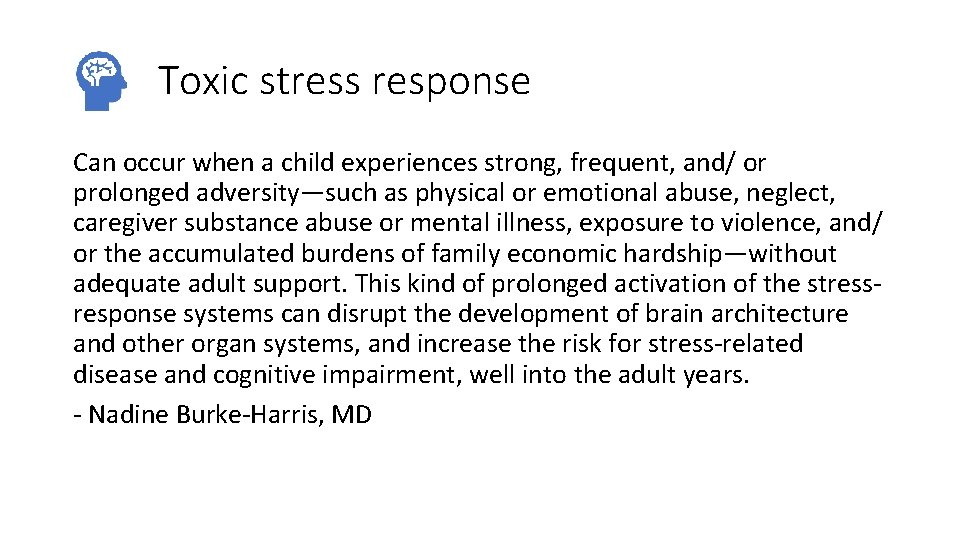
Toxic stress response Can occur when a child experiences strong, frequent, and/ or prolonged adversity—such as physical or emotional abuse, neglect, caregiver substance abuse or mental illness, exposure to violence, and/ or the accumulated burdens of family economic hardship—without adequate adult support. This kind of prolonged activation of the stressresponse systems can disrupt the development of brain architecture and other organ systems, and increase the risk for stress-related disease and cognitive impairment, well into the adult years. - Nadine Burke-Harris, MD
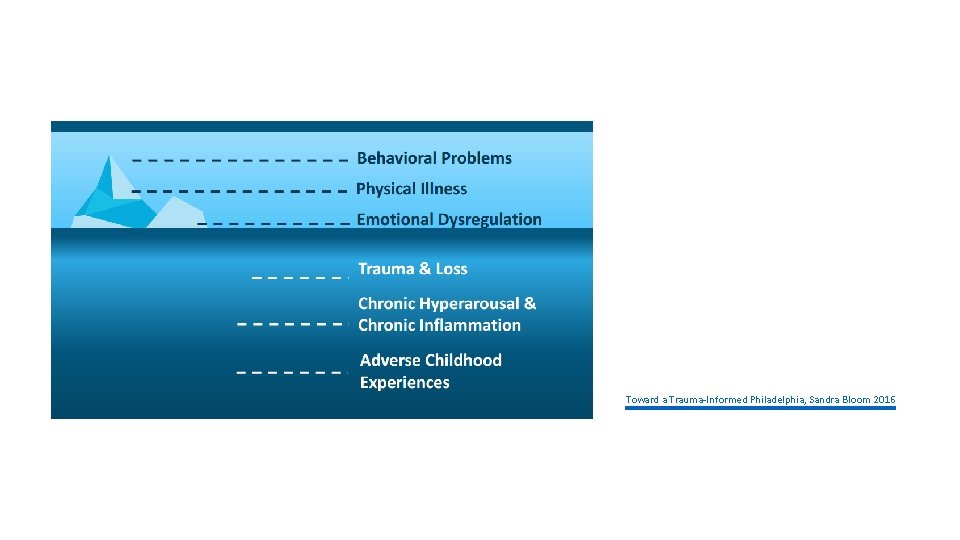
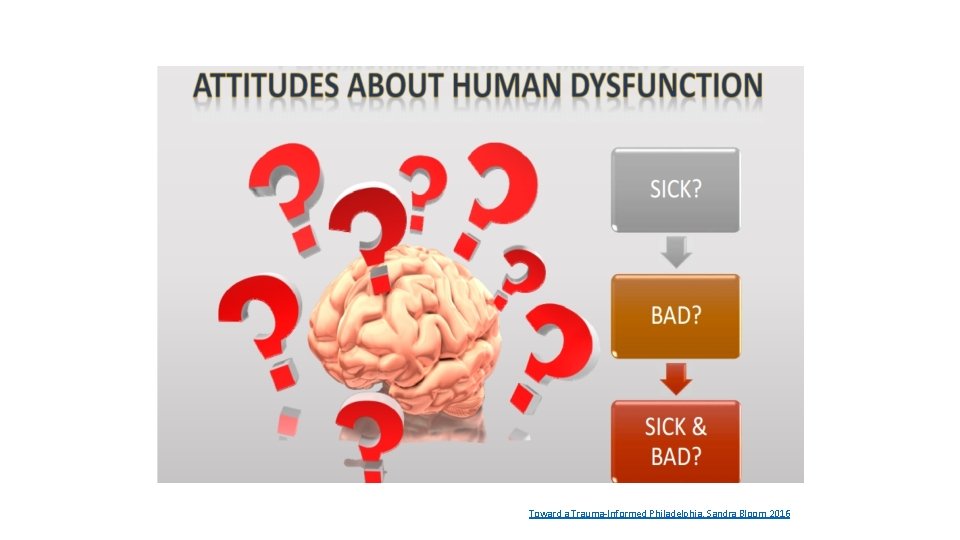
Toward a Trauma-Informed Philadelphia, Sandra Bloom 2016
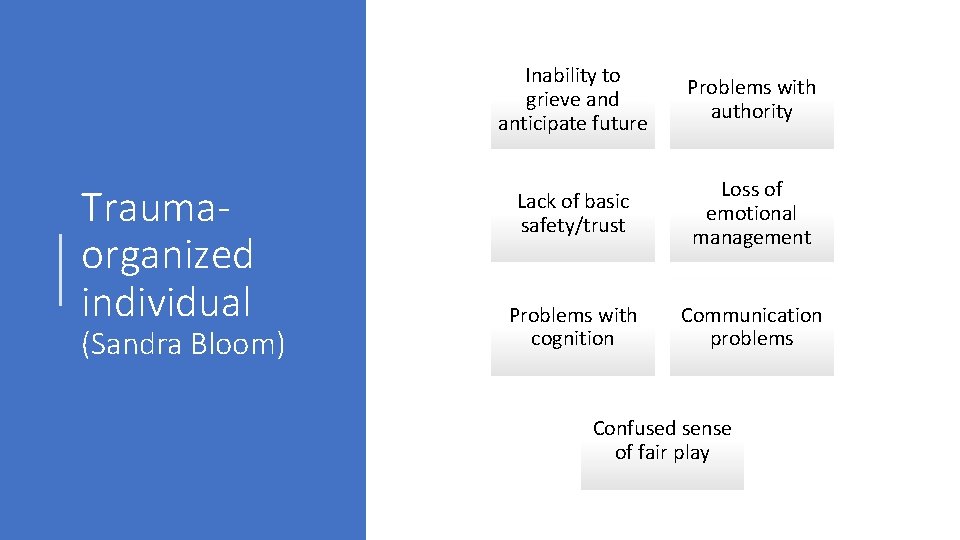
Traumaorganized individual (Sandra Bloom) Inability to grieve and anticipate future Problems with authority Lack of basic safety/trust Loss of emotional management Problems with cognition Communication problems Confused sense of fair play
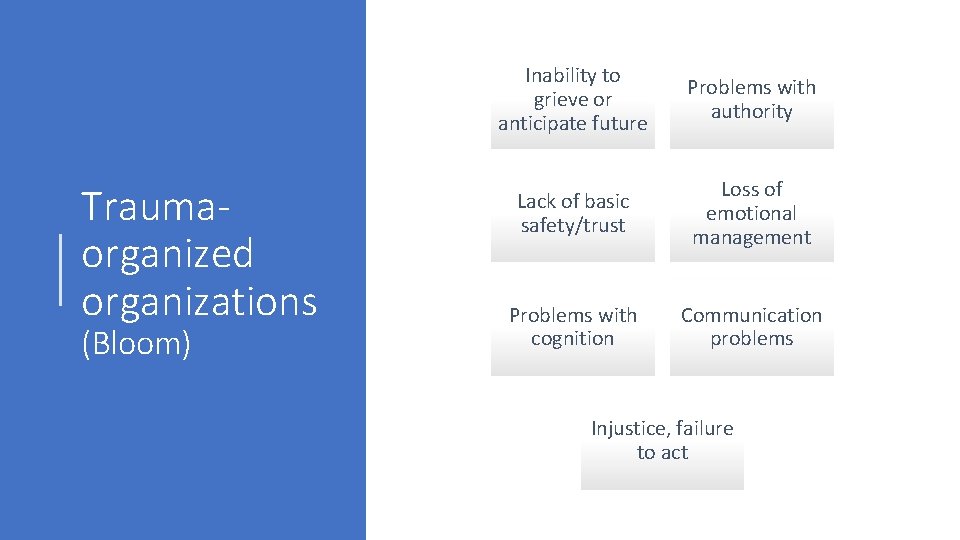
Traumaorganized organizations (Bloom) Inability to grieve or anticipate future Problems with authority Lack of basic safety/trust Loss of emotional management Problems with cognition Communication problems Injustice, failure to act
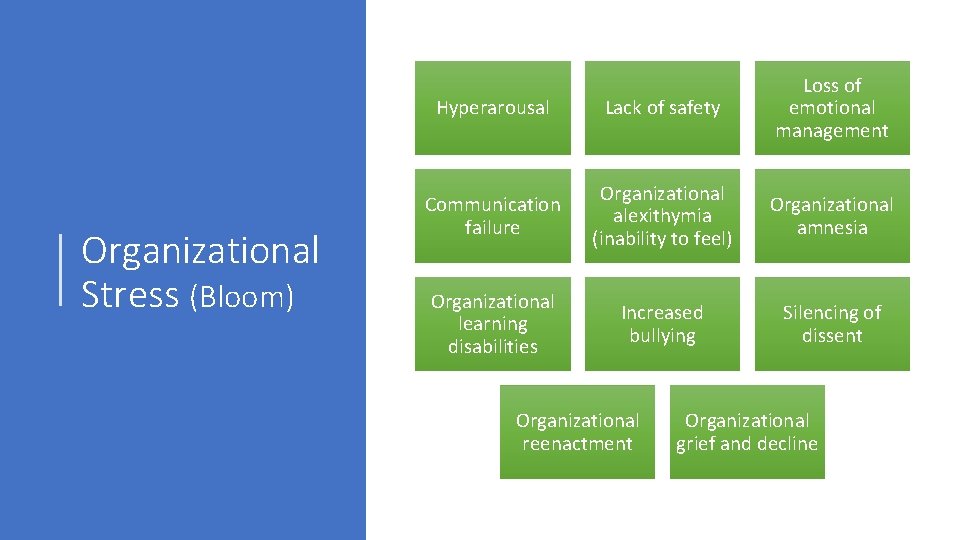
Organizational Stress (Bloom) Hyperarousal Lack of safety Loss of emotional management Communication failure Organizational alexithymia (inability to feel) Organizational amnesia Organizational learning disabilities Increased bullying Silencing of dissent Organizational reenactment Organizational grief and decline
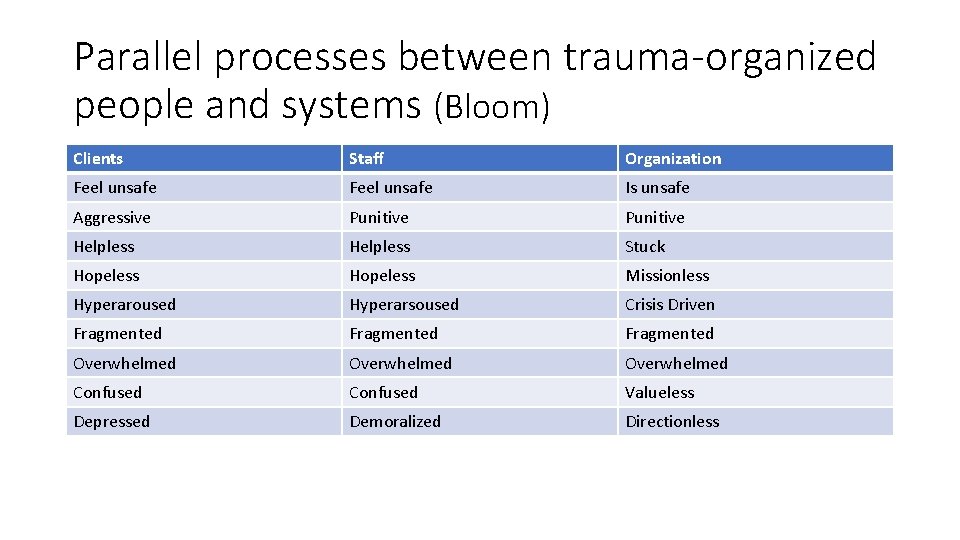
Parallel processes between trauma-organized people and systems (Bloom) Clients Staff Organization Feel unsafe Is unsafe Aggressive Punitive Helpless Stuck Hopeless Missionless Hyperaroused Hyperarsoused Crisis Driven Fragmented Overwhelmed Confused Valueless Depressed Demoralized Directionless
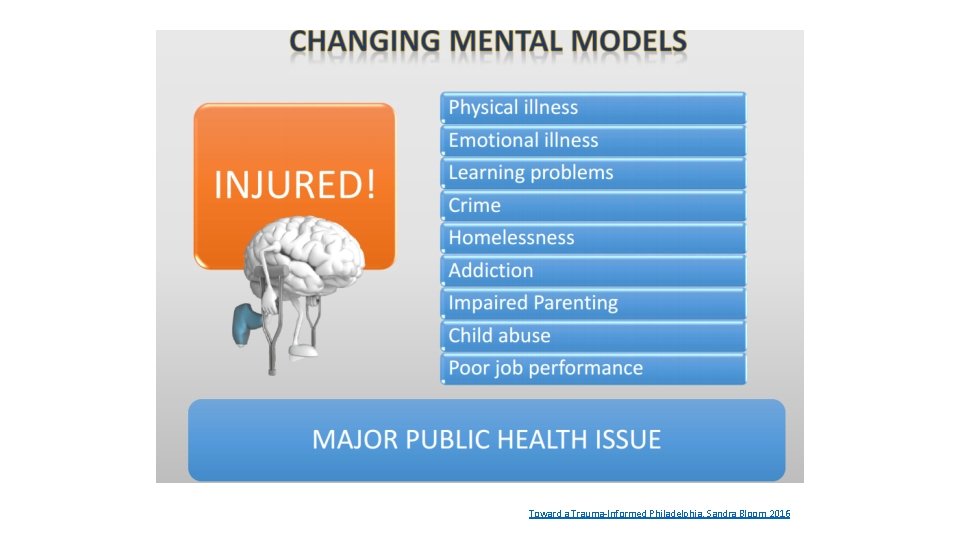
Toward a Trauma-Informed Philadelphia, Sandra Bloom 2016
Toward a Trauma-Informed Philadelphia, Sandra Bloom 2016
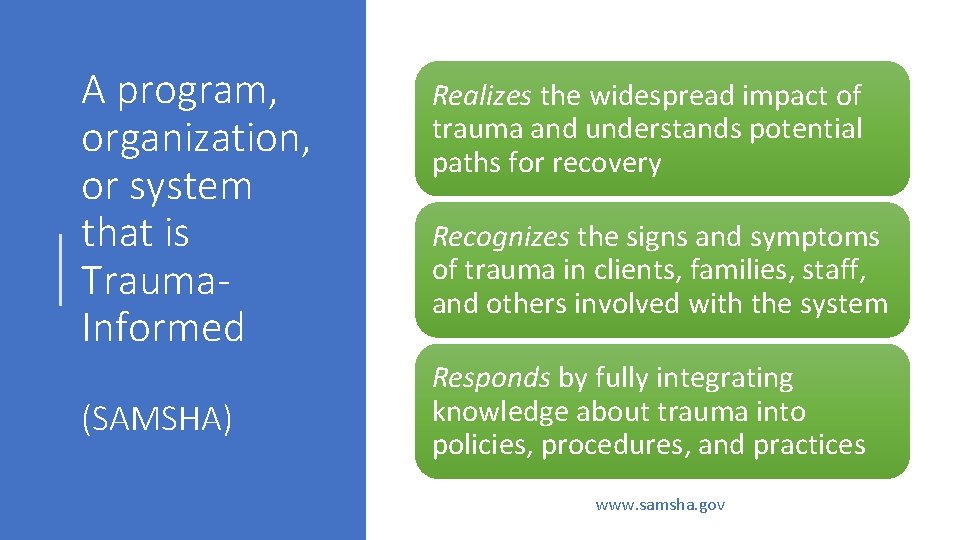
A program, organization, or system that is Trauma. Informed (SAMSHA) Realizes the widespread impact of trauma and understands potential paths for recovery Recognizes the signs and symptoms of trauma in clients, families, staff, and others involved with the system Responds by fully integrating knowledge about trauma into policies, procedures, and practices www. samsha. gov
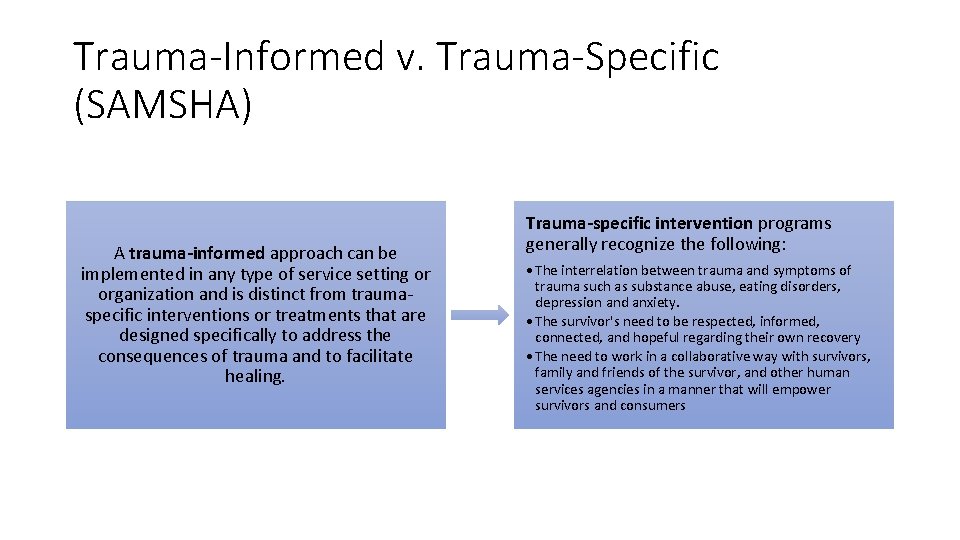
Trauma-Informed v. Trauma-Specific (SAMSHA) A trauma-informed approach can be implemented in any type of service setting or organization and is distinct from traumaspecific interventions or treatments that are designed specifically to address the consequences of trauma and to facilitate healing. Trauma-specific intervention programs generally recognize the following: • The interrelation between trauma and symptoms of trauma such as substance abuse, eating disorders, depression and anxiety. • The survivor's need to be respected, informed, connected, and hopeful regarding their own recovery • The need to work in a collaborative way with survivors, family and friends of the survivor, and other human services agencies in a manner that will empower survivors and consumers
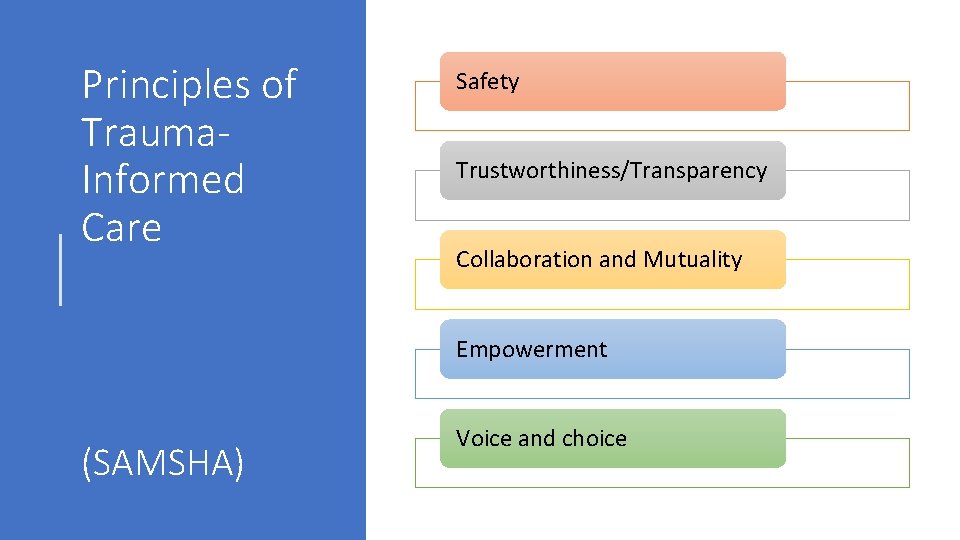
Principles of Trauma. Informed Care Safety Trustworthiness/Transparency Collaboration and Mutuality Empowerment (SAMSHA) Voice and choice
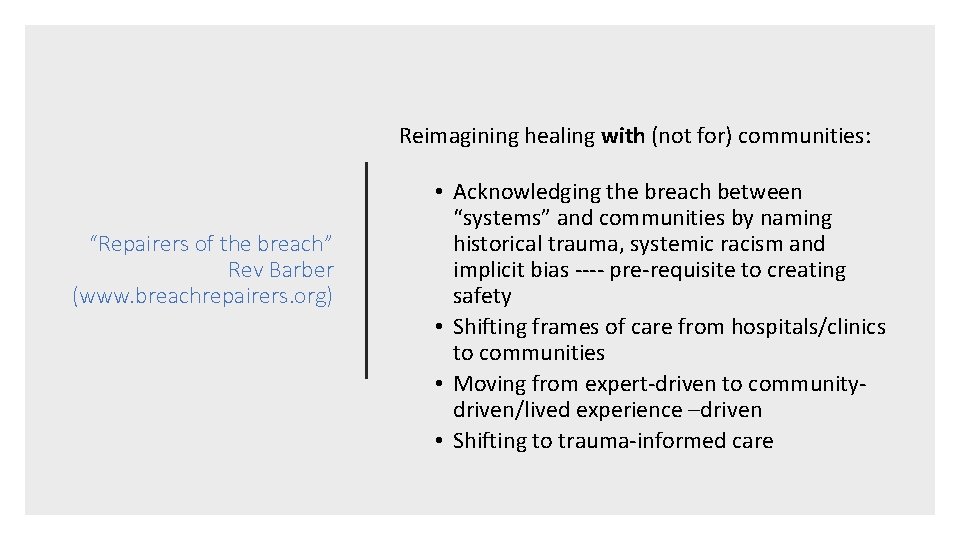
Reimagining healing with (not for) communities: “Repairers of the breach” Rev Barber (www. breachrepairers. org) • Acknowledging the breach between “systems” and communities by naming historical trauma, systemic racism and implicit bias ---- pre-requisite to creating safety • Shifting frames of care from hospitals/clinics to communities • Moving from expert-driven to communitydriven/lived experience –driven • Shifting to trauma-informed care
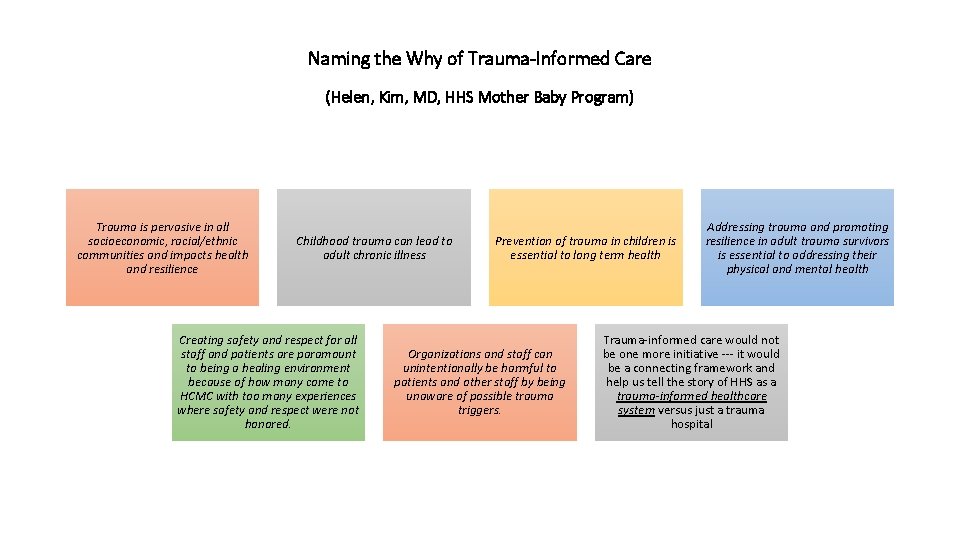
Naming the Why of Trauma-Informed Care (Helen, Kim, MD, HHS Mother Baby Program) Trauma is pervasive in all socioeconomic, racial/ethnic communities and impacts health and resilience Childhood trauma can lead to adult chronic illness Creating safety and respect for all staff and patients are paramount to being a healing environment because of how many come to HCMC with too many experiences where safety and respect were not honored. Prevention of trauma in children is essential to long term health Organizations and staff can unintentionally be harmful to patients and other staff by being unaware of possible trauma triggers. Addressing trauma and promoting resilience in adult trauma survivors is essential to addressing their physical and mental health Trauma-informed care would not be one more initiative --- it would be a connecting framework and help us tell the story of HHS as a trauma-informed healthcare system versus just a trauma hospital
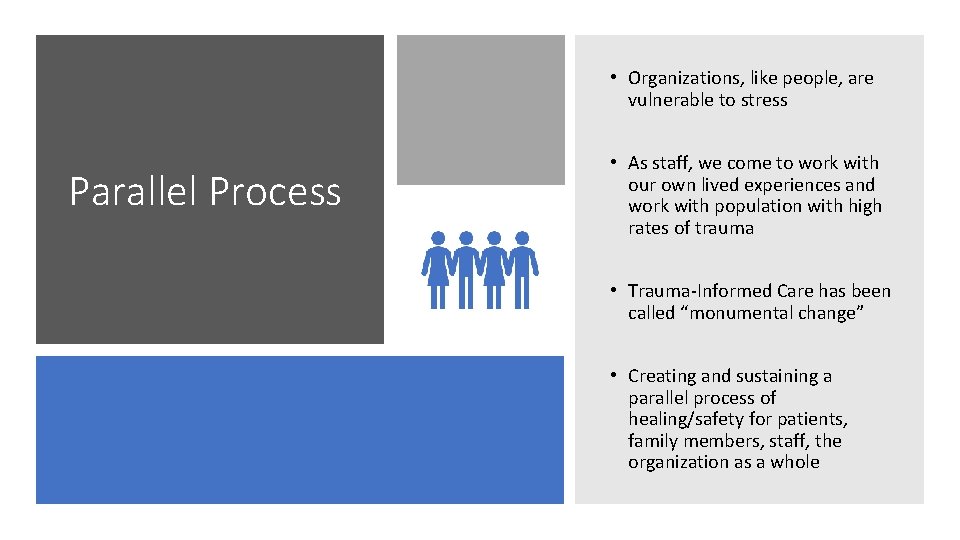
• Organizations, like people, are vulnerable to stress Parallel Process • As staff, we come to work with our own lived experiences and work with population with high rates of trauma • Trauma-Informed Care has been called “monumental change” • Creating and sustaining a parallel process of healing/safety for patients, family members, staff, the organization as a whole
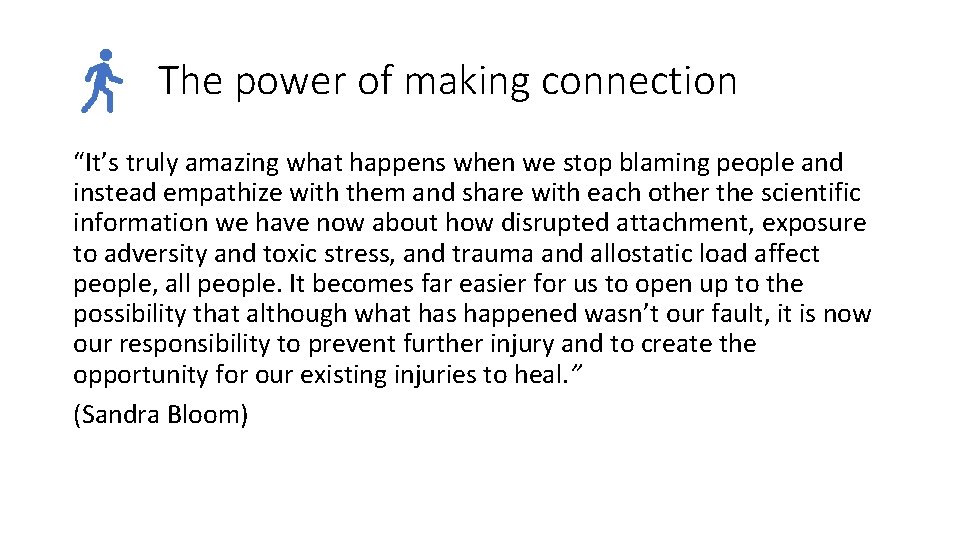
The power of making connection “It’s truly amazing what happens when we stop blaming people and instead empathize with them and share with each other the scientific information we have now about how disrupted attachment, exposure to adversity and toxic stress, and trauma and allostatic load affect people, all people. It becomes far easier for us to open up to the possibility that although what has happened wasn’t our fault, it is now our responsibility to prevent further injury and to create the opportunity for our existing injuries to heal. ” (Sandra Bloom)
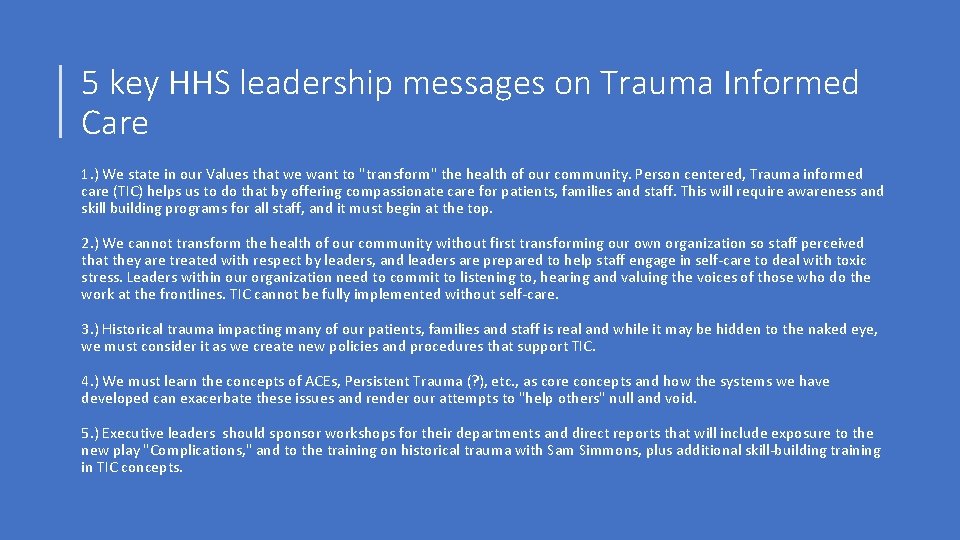
5 key HHS leadership messages on Trauma Informed Care 1. ) We state in our Values that we want to "transform" the health of our community. Person centered, Trauma informed care (TIC) helps us to do that by offering compassionate care for patients, families and staff. This will require awareness and skill building programs for all staff, and it must begin at the top. 2. ) We cannot transform the health of our community without first transforming our own organization so staff perceived that they are treated with respect by leaders, and leaders are prepared to help staff engage in self-care to deal with toxic stress. Leaders within our organization need to commit to listening to, hearing and valuing the voices of those who do the work at the frontlines. TIC cannot be fully implemented without self-care. 3. ) Historical trauma impacting many of our patients, families and staff is real and while it may be hidden to the naked eye, we must consider it as we create new policies and procedures that support TIC. 4. ) We must learn the concepts of ACEs, Persistent Trauma (? ), etc. , as core concepts and how the systems we have developed can exacerbate these issues and render our attempts to "help others" null and void. 5. ) Executive leaders should sponsor workshops for their departments and direct reports that will include exposure to the new play "Complications, " and to the training on historical trauma with Sam Simmons, plus additional skill-building training in TIC concepts.
What’s happening in 2018? • Trauma-Informed Care Steering Committee: identify, educate, and deploy champions throughout the system • 600 leaders and staff will receive 4 hours of training Historical Trauma in African-American/Native communities • Pilot projects: Trauma-Informed Response to Child Abuse Reporting, TIC Demonstration projects in one clinic and one inpatient unit • Expansion of Next Step Hospital-Based Violence Intervention Program using TIC-principles • Creation of the Center for Family Healing
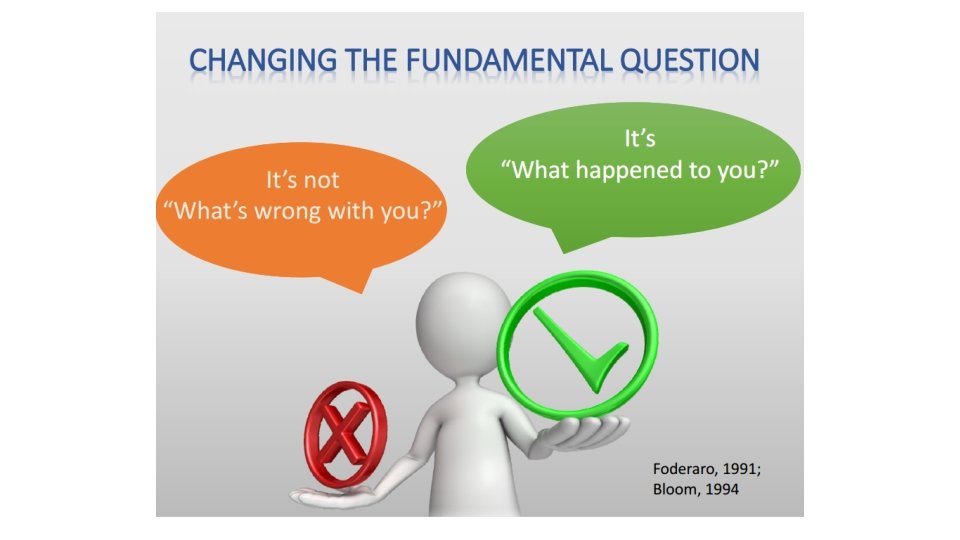
HHS Commitments to Trauma Informed Care (HHS White Paper on TIC, 2017) As responsible stewards of an outstanding healthcare resource, we at HHS are committed to healing these inequities, protecting children and families from further harm and to reframing the relationship between ourselves and our communities. Trauma-informed care will help us to do that. TIC at HHS is about holding adults and children accountable for their behaviors without shaming and blaming them and providing a safe place and time for pondering the experiences that have led to their actions. TIC involves shifting our focus to the kind of medical practice where the key question is, “What Happened to You? ” rather than, “What’s Wrong with You? ” The first question recognizes that our patients are people first, and that they have an important story that should inform everything we do with them. Since our goal is also to engage all patients more effectively in their own care -- thereby improving outcomes and reducing avoidable costs -- our commitment must be to build a TIC health system that is highly informed about the importance of a patient’s story and is prepared to meet the patient’s needs in the most healing way possible.
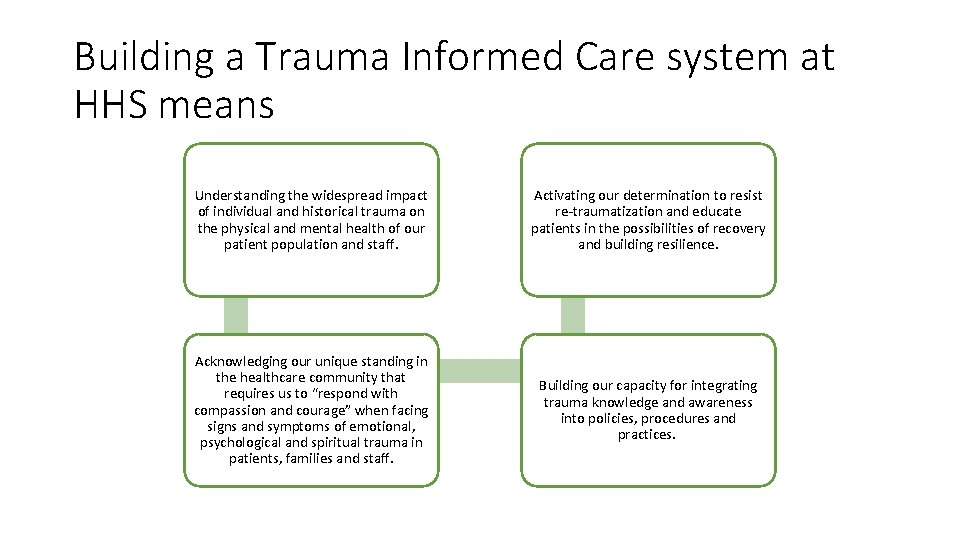
Building a Trauma Informed Care system at HHS means Understanding the widespread impact of individual and historical trauma on the physical and mental health of our patient population and staff. Activating our determination to resist re-traumatization and educate patients in the possibilities of recovery and building resilience. Acknowledging our unique standing in the healthcare community that requires us to “respond with compassion and courage” when facing signs and symptoms of emotional, psychological and spiritual trauma in patients, families and staff. Building our capacity for integrating trauma knowledge and awareness into policies, procedures and practices.
HHS Principles of Trauma Informed Care Safety First: Nothing is more basic to us than the idea that people who turn to HHS for care should experience our organization as a place of physical, emotional, psychological and spiritual safety. Transparency & Trustworthiness: Patients and families should receive clear, accurate information from us about the efficacy and cost of treatment, who is providing care and how we will provide such care. Co-Production & Collaboration: We strive to work with patients as co-equals to create desired outcomes based on their knowledge of themselves and our application of evidence-based medicine; plus, we work cross-functionally in the planning and execution of patient care, assuring that patients and practitioners are on the same page at the same time. Leveraging Patient Power: Understanding that each person brings unique strengths and assets to their care and helping them deploy those strengths in the quest for health and healing; also, approaching every patient as a distinct individual who has the right to direct his or her own treatment. Two-Generation Lens: Supporting patients as people with vital family roles – parents and caregivers – allows for an upstream approach to the health of children. In TIC, we actively partner with family caregivers to stop the intergenerational transmission of trauma and promote the health and healing of the whole family. Speaking TIC language: The words we use when talking with people and staff can be either helpful or hurtful. For example, if we say, “I’m going to see the gallbladder in Room 315, ” as some providers have done, we may reinforce a sense that the person is a “case” instead of a human being with distinct experiences, feelings and abilities.
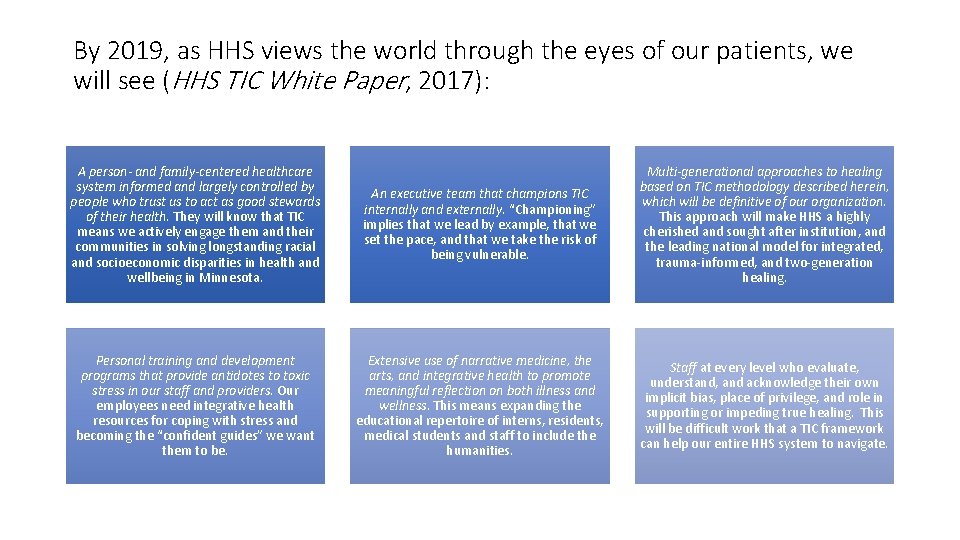
By 2019, as HHS views the world through the eyes of our patients, we will see (HHS TIC White Paper, 2017): A person- and family-centered healthcare system informed and largely controlled by people who trust us to act as good stewards of their health. They will know that TIC means we actively engage them and their communities in solving longstanding racial and socioeconomic disparities in health and wellbeing in Minnesota. An executive team that champions TIC internally and externally. “Championing” implies that we lead by example, that we set the pace, and that we take the risk of being vulnerable. Multi-generational approaches to healing based on TIC methodology described herein, which will be definitive of our organization. This approach will make HHS a highly cherished and sought after institution, and the leading national model for integrated, trauma-informed, and two-generation healing. Personal training and development programs that provide antidotes to toxic stress in our staff and providers. Our employees need integrative health resources for coping with stress and becoming the “confident guides” we want them to be. Extensive use of narrative medicine, the arts, and integrative health to promote meaningful reflection on both illness and wellness. This means expanding the educational repertoire of interns, residents, medical students and staff to include the humanities. Staff at every level who evaluate, understand, and acknowledge their own implicit bias, place of privilege, and role in supporting or impeding true healing. This will be difficult work that a TIC framework can help our entire HHS system to navigate.
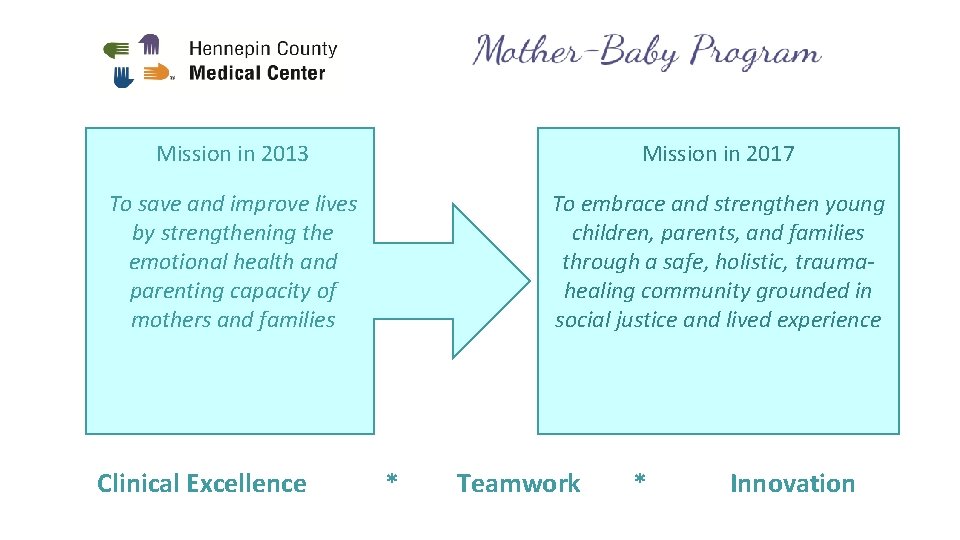
Mission in 2013 Mission in 2017 To save and improve lives by strengthening the emotional health and parenting capacity of mothers and families To embrace and strengthen young children, parents, and families through a safe, holistic, traumahealing community grounded in social justice and lived experience Clinical Excellence * Teamwork * Innovation
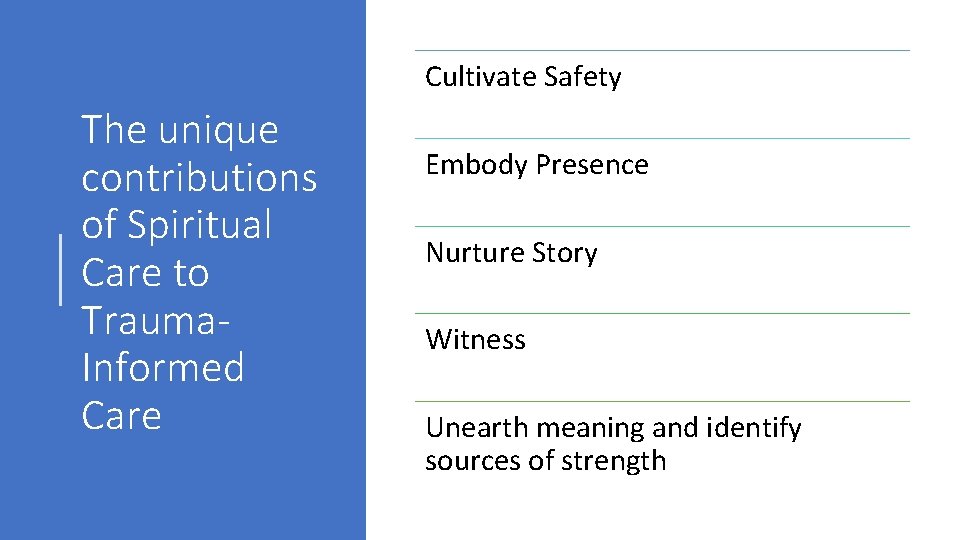
Cultivate Safety The unique contributions of Spiritual Care to Trauma. Informed Care Embody Presence Nurture Story Witness Unearth meaning and identify sources of strength
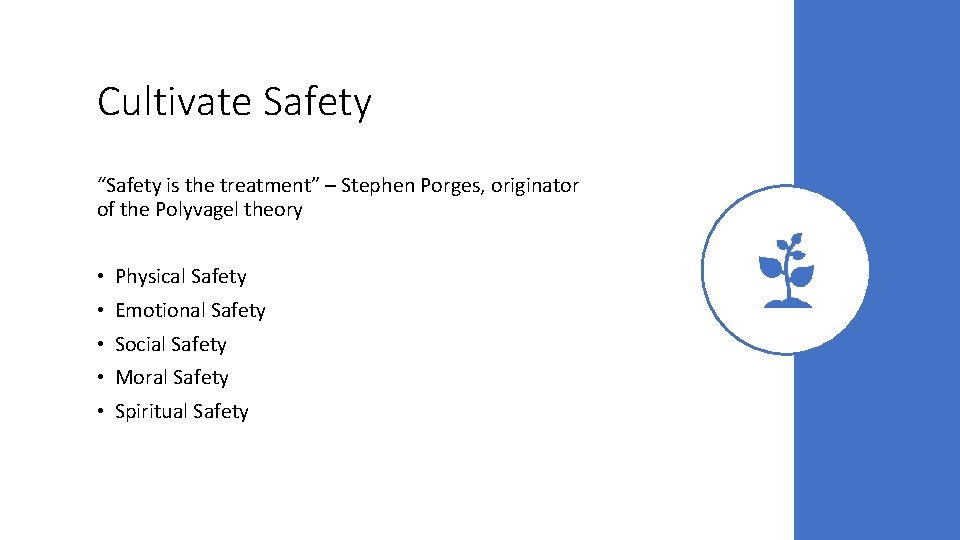
Cultivate Safety “Safety is the treatment” – Stephen Porges, originator of the Polyvagel theory • Physical Safety • Emotional Safety • Social Safety • Moral Safety • Spiritual Safety
Embody Presence . . We all need groups of support that are dedicated to just being present to one another. . . whether it’s two people getting together, whether it’s ten people getting together. . . there is a sense in our bodies that we’re really just here for one another and that we can hold whatever it is that arises in that moment. . We are meant to be interdependent through our entire lives. ” Bonnie Badenoch
Nurture Story When violence leads to physical and mental injury, it also engenders a healing response. One aspect of this is the trauma story, whose function is not only to heal the survivor, but also to teach and guide the listener—and by extension, society —in healing and survival. – Richard F. Mollica M. D. , Healing Invisible Wounds
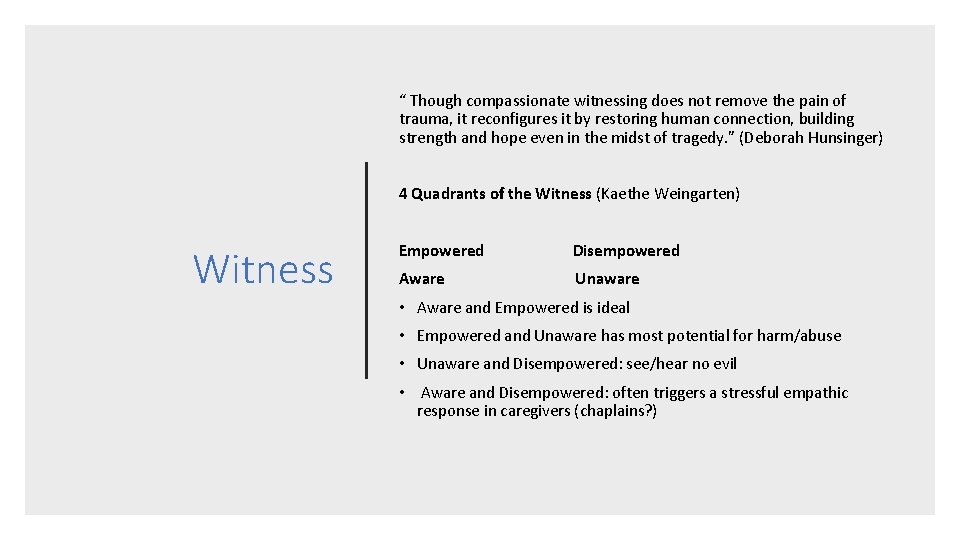
“ Though compassionate witnessing does not remove the pain of trauma, it reconfigures it by restoring human connection, building strength and hope even in the midst of tragedy. ” (Deborah Hunsinger) 4 Quadrants of the Witness (Kaethe Weingarten) Witness Empowered Disempowered Aware Unaware • Aware and Empowered is ideal • Empowered and Unaware has most potential for harm/abuse • Unaware and Disempowered: see/hear no evil • Aware and Disempowered: often triggers a stressful empathic response in caregivers (chaplains? )
Unearth meaning and identify sources of strength • Post-traumatic growth • “to hope is to adopt an existential stance. The grounds for hoping do not lie in the facts of reality but rather in the meaning we ascribe to reality. Hence hoping is an active process of making meaning. . . While hope is founded in our capacity to make sense of suffering, we need more than the power of our reasoning to sustain it… we need more than the head; we need the heart. ” – Jon Allen, MD • Viktor Frankl: Man is not destroyed by suffering; he is destroyed by suffering without meaning. ”
Putting Trauma-Informed Care into Action: an example from Hennepin Healthcare From: Security Huddle To: Patient Transition Conference
The Sanctuary Model, Dr. Sandra Bloom www. sanctuaryweb. com National Child Traumatic Stress Network http: //www. nctsn. org/resources/topics/creating-trauma-informed-systems SAMHSA https: //www. samhsa. gov/topics/trauma-violence/samhsas-traumainformed-approach Adverse Childhood Experiences (ACE) study https: //www. cdc. gov/violenceprevention/acestudy/ Resources Bonnie Badenoch, The Heart of Trauma: Healing the Embodied Brain in the Context of Relationships, 2018 Nadine Burke Harris, The Deepest Well: Healing the Long-Term Effects of Childhood Adversity, 2017 Judith Herman, Trauma and Recovery: The Aftermath of Violence – from Political Terrorr to Domestic Abuse, 1992 Stephen Joseph: What Doesn’t Kill Us: The New Psychology of Traumatic Growth, 2013 Bessel van der kolk : The Body Keeps the Score: Brain, Mind and Body in the Healing of Trauma, 2015