
From Transition to Transformation students shaping their experience

- Slides: 21
From Transition to Transformation: students shaping their experience and their institutions. Dr Marco Angelini, UCL Transition Manager 13 September 2011, S W I T Symposium , NTU
UCL Transition Programme Main aims and history of the programme The Transition Phase Pre-enrolment engagement Induction week activities Social and academic development-terms 1 and 2
“Transformation” as: 1. Ethos 2. Process 3. Outcome
Student as “metron” A “Student Centre”, or putting students AT the centre? As critical practitioners/learners. taking mentoring with you As the measure of all things (Protagoras). gaining mastery through the student experience
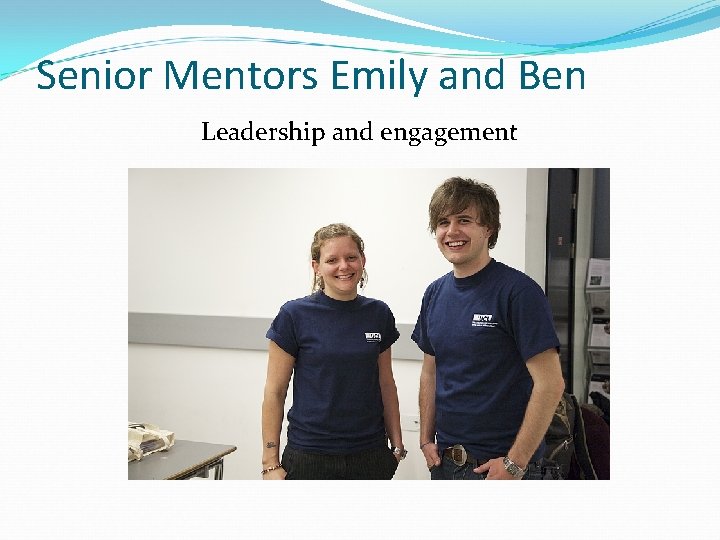
Senior Mentors Emily and Ben Leadership and engagement
Transition is in the detail Prepare, Do and Review: critical reflection leads to agency. PAL and participation: student agency affects T & L strategies. Does PAL have an epistemology? Students as practitioners: taking responsibility for the academy.
Adding it all up How do you know when it’s working (has worked)? How do you keep convincing the institution? Praxis-oriented approaches keep developing.
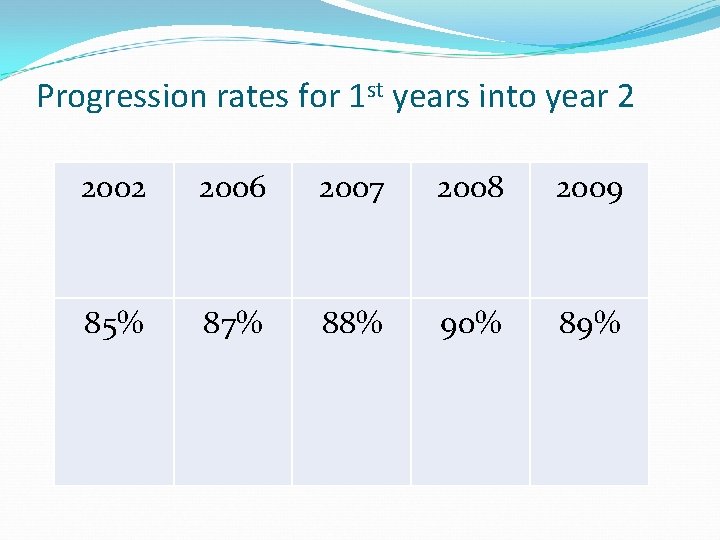
Progression rates for 1 st years into year 2 2006 2007 2008 2009 85% 87% 88% 90% 89%
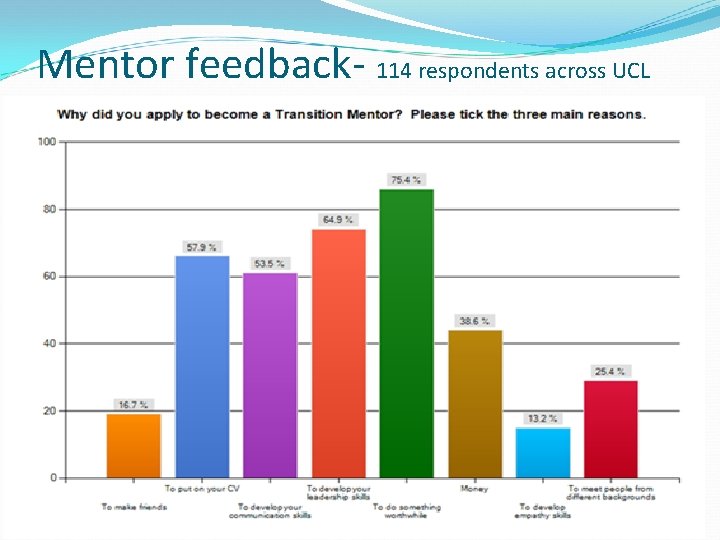
Mentor feedback- 114 respondents across UCL
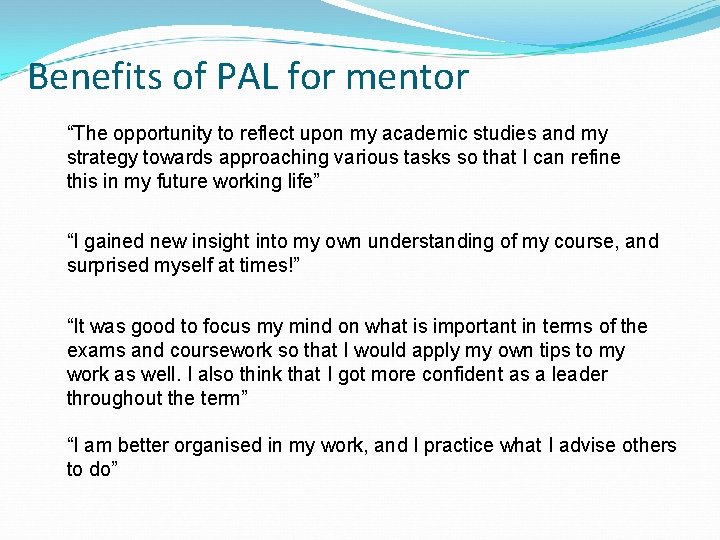
Benefits of PAL for mentor “The opportunity to reflect upon my academic studies and my strategy towards approaching various tasks so that I can refine this in my future working life” “I gained new insight into my own understanding of my course, and surprised myself at times!” “It was good to focus my mind on what is important in terms of the exams and coursework so that I would apply my own tips to my work as well. I also think that I got more confident as a leader throughout the term” “I am better organised in my work, and I practice what I advise others to do”
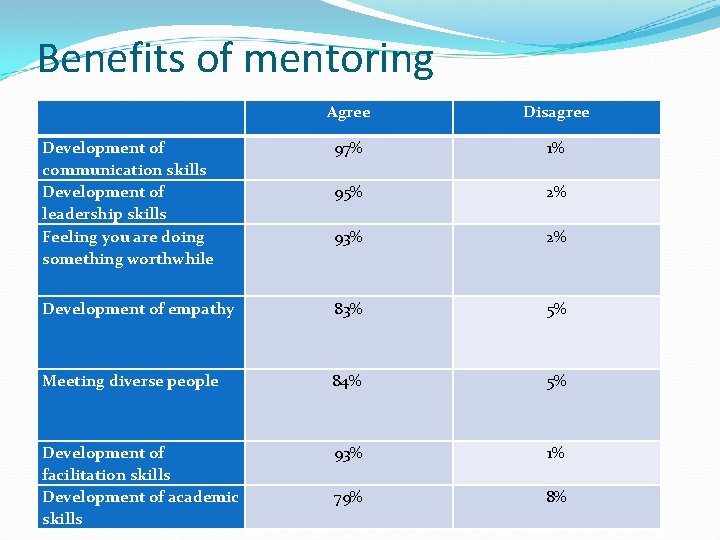
Benefits of mentoring Agree Disagree Development of communication skills Development of leadership skills Feeling you are doing something worthwhile 97% 1% 95% 2% 93% 2% Development of empathy 83% 5% Meeting diverse people 84% 5% Development of facilitation skills Development of academic skills 93% 1% 79% 8%
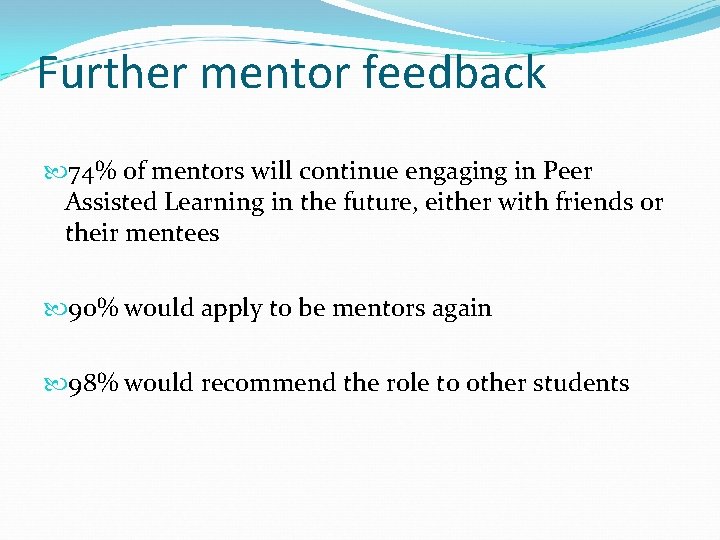
Further mentor feedback 74% of mentors will continue engaging in Peer Assisted Learning in the future, either with friends or their mentees 90% would apply to be mentors again 98% would recommend the role to other students
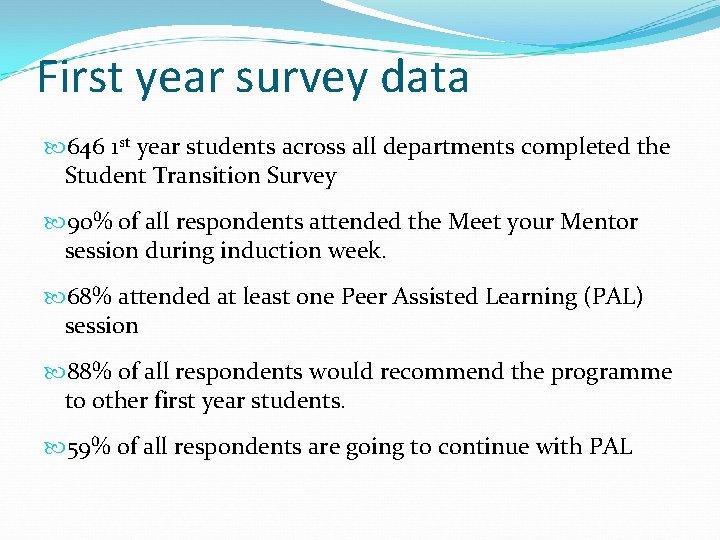
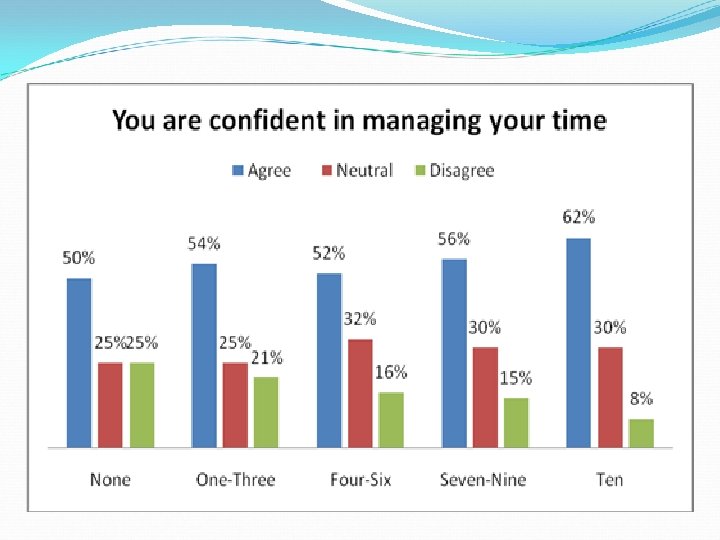
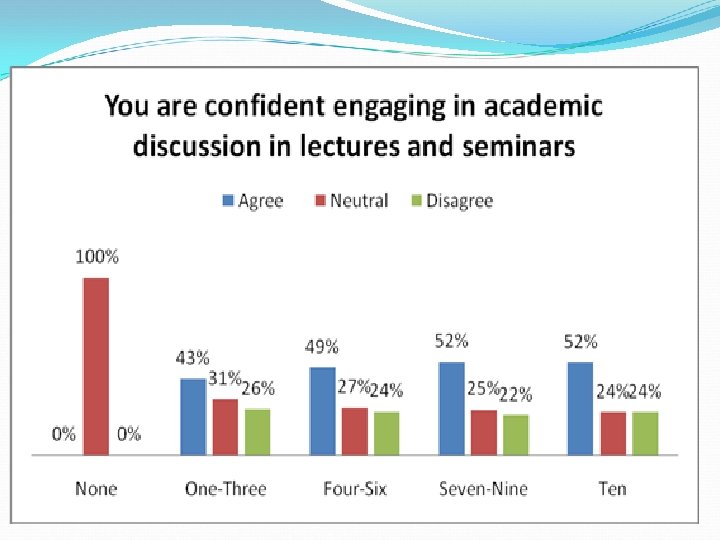
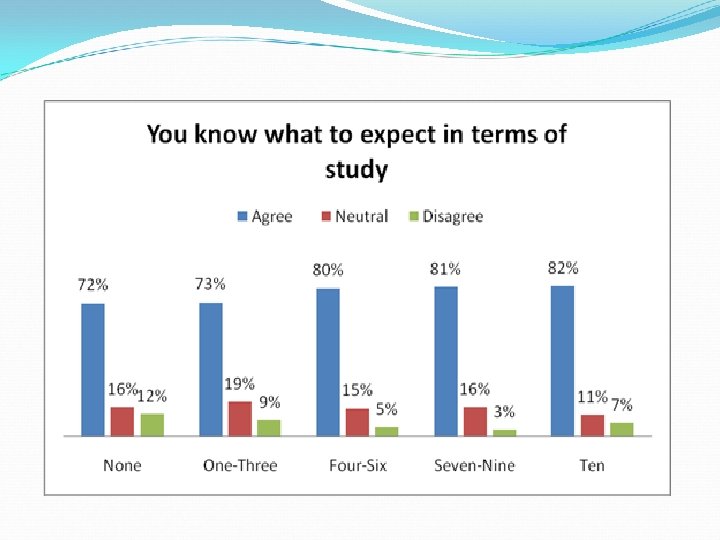
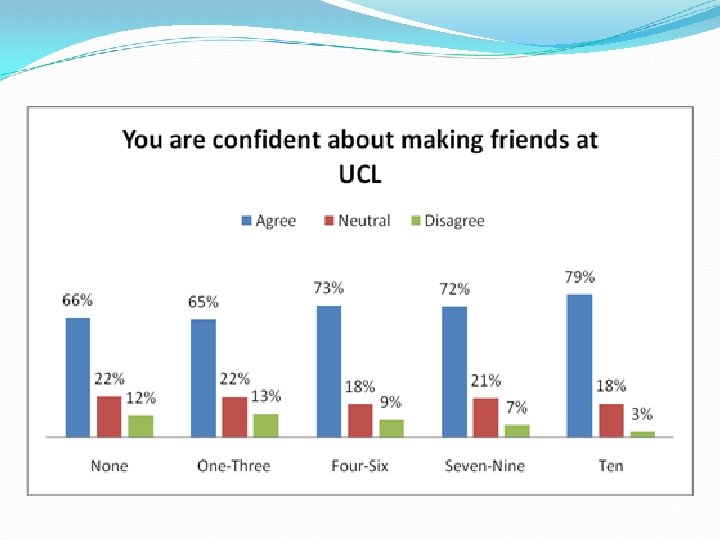
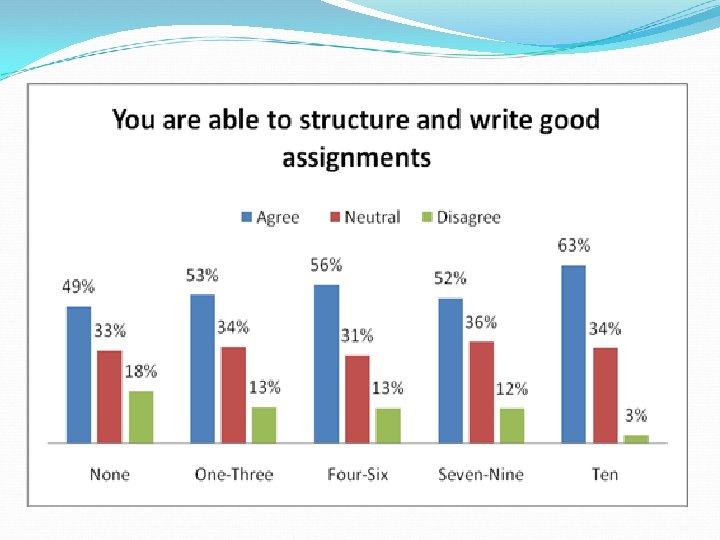
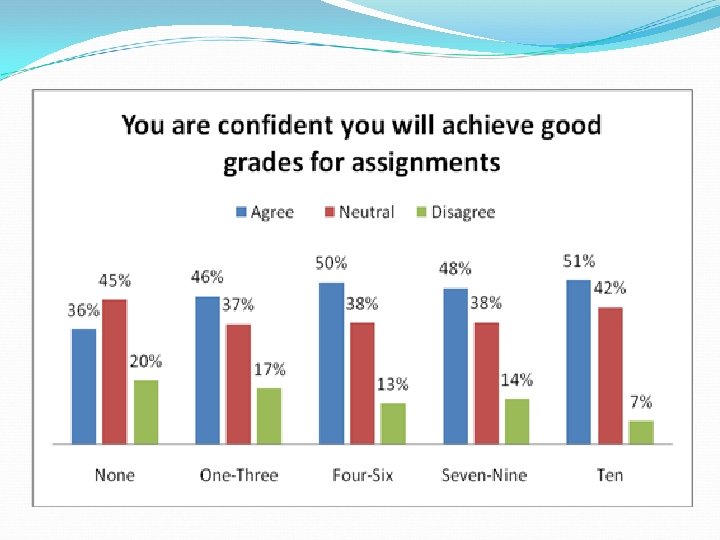
First year survey data 646 1 st year students across all departments completed the Student Transition Survey 90% of all respondents attended the Meet your Mentor session during induction week. 68% attended at least one Peer Assisted Learning (PAL) session 88% of all respondents would recommend the programme to other first year students. 59% of all respondents are going to continue with PAL
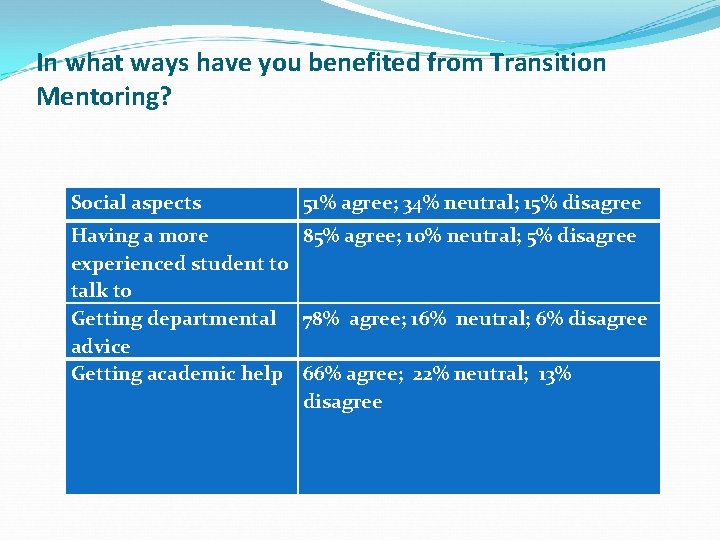
In what ways have you benefited from Transition Mentoring? Social aspects 51% agree; 34% neutral; 15% disagree Having a more 85% agree; 10% neutral; 5% disagree experienced student to talk to Getting departmental 78% agree; 16% neutral; 6% disagree advice Getting academic help 66% agree; 22% neutral; 13% disagree
Summary Collaboration is central- strategically, ethically, pedagogically. (Does this amount to a model? ) Student engagement teams are the engine of institutional change. Students can transform themselves, their academic disciplines, the communities they move into.