
From Toxic Stress to Health Hope and Resilience

- Slides: 20
From Toxic Stress to Health, Hope and Resilience Screening and Community Moderated by: Conversation Allison Logan BS-ED, MS Stratford, CT Executive Director, Bridgeport Prospers alogan@unitedwaycfc. org January 22, 2019 860 -681 -6195
We envision an America where all children can grow up. . . We are not there now…
We envision a nation where all children are reading at grade level, measured at the 3 rd grade We are not there yet…
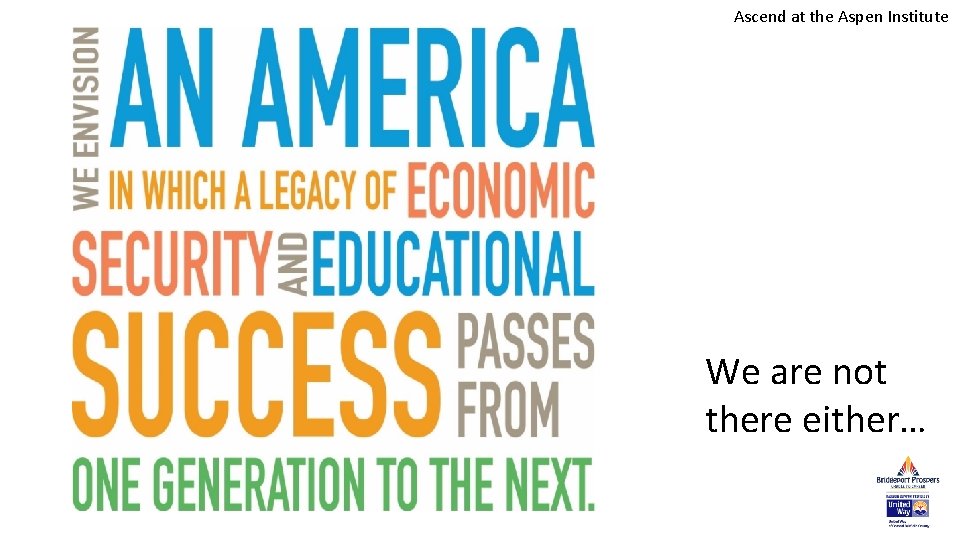
Ascend at the Aspen Institute We are not there either…
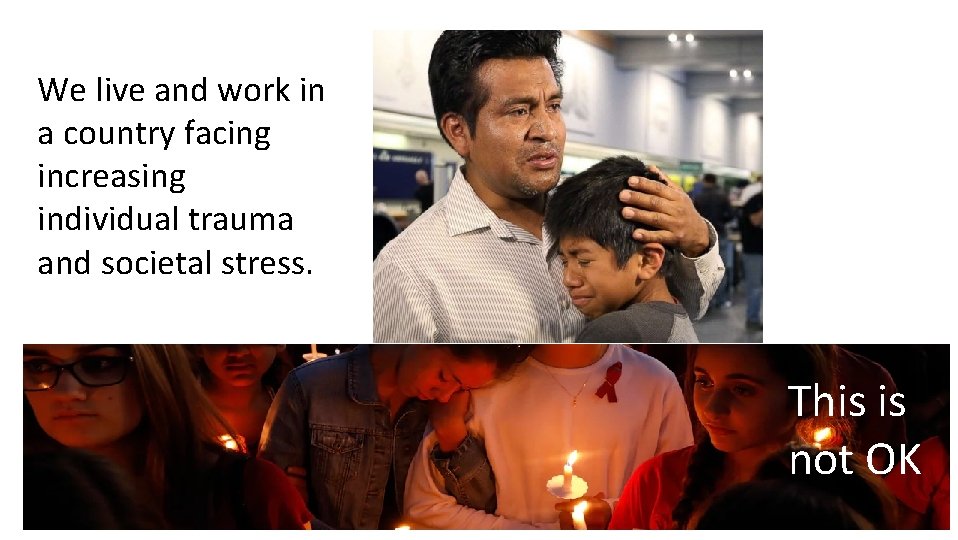
We live and work in a country facing increasing individual trauma and societal stress. This is not OK
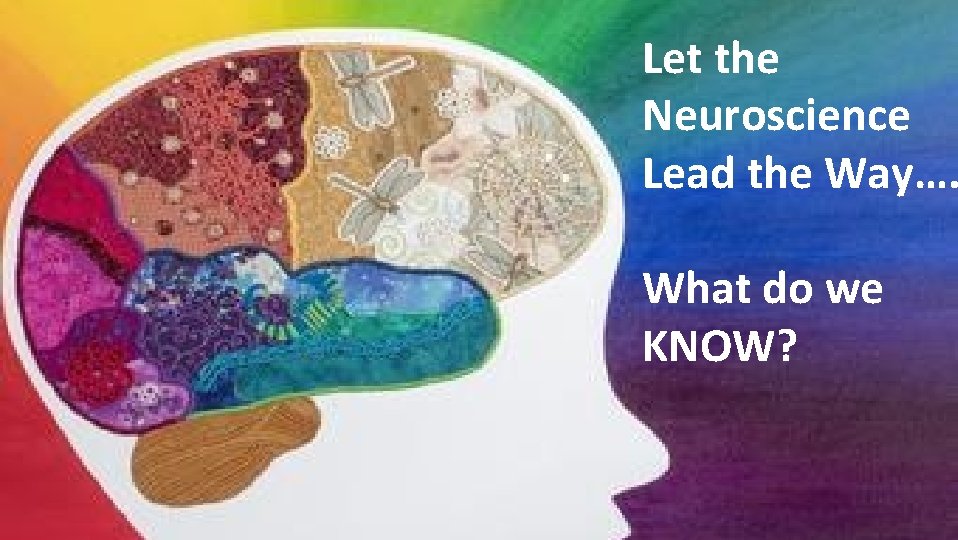
Let the Neuroscience Lead the Way…. What do we KNOW?
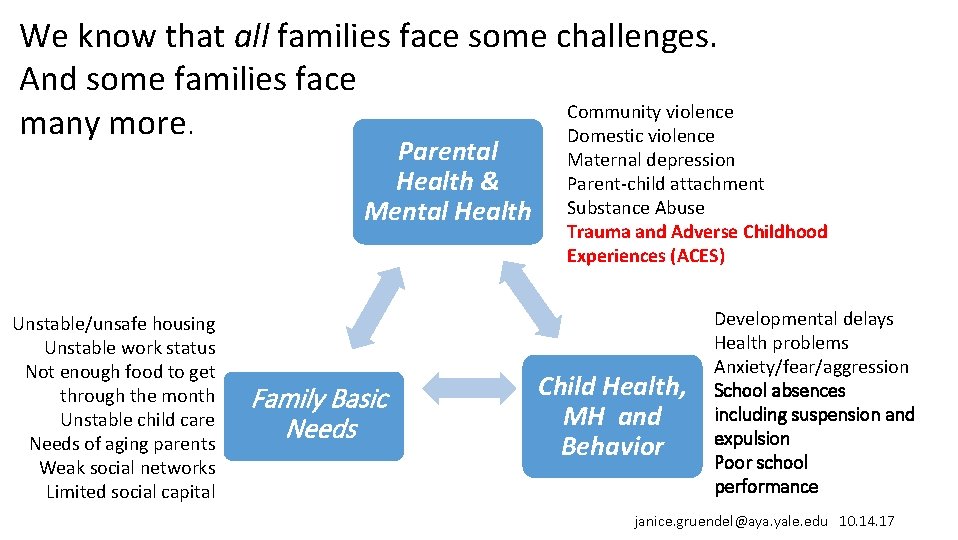
We know that all families face some challenges. And some families face Community violence many more. Domestic violence Parental Health & Mental Health Unstable/unsafe housing Unstable work status Not enough food to get through the month Unstable child care Needs of aging parents Weak social networks Limited social capital Family Basic Needs Maternal depression Parent-child attachment Substance Abuse Trauma and Adverse Childhood Experiences (ACES) Child Health, MH and Behavior Developmental delays Health problems Anxiety/fear/aggression School absences including suspension and expulsion Poor school performance janice. gruendel@aya. yale. edu 10. 14. 17
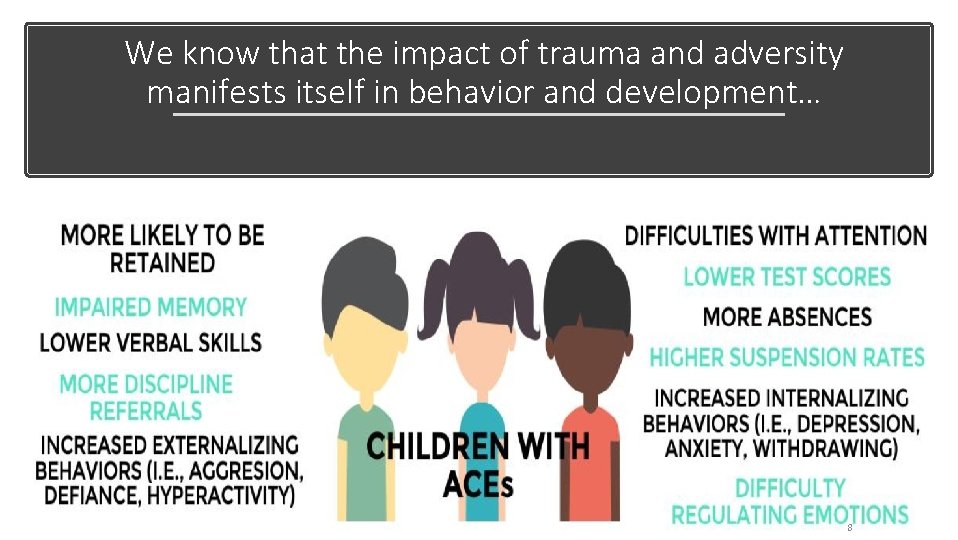
We know that the impact of trauma and adversity manifests itself in behavior and development… 8
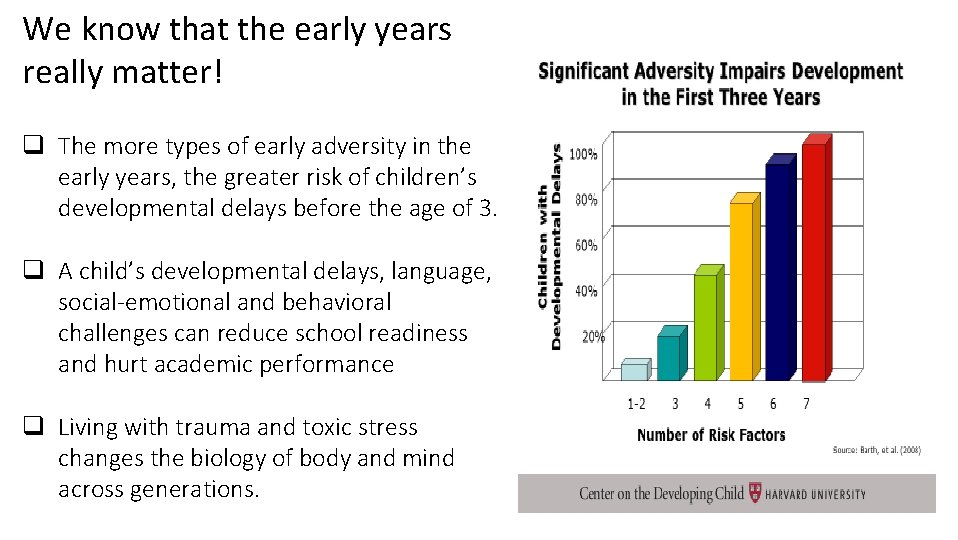
We know that the early years really matter! q The more types of early adversity in the early years, the greater risk of children’s developmental delays before the age of 3. q A child’s developmental delays, language, social-emotional and behavioral challenges can reduce school readiness and hurt academic performance q Living with trauma and toxic stress changes the biology of body and mind across generations.
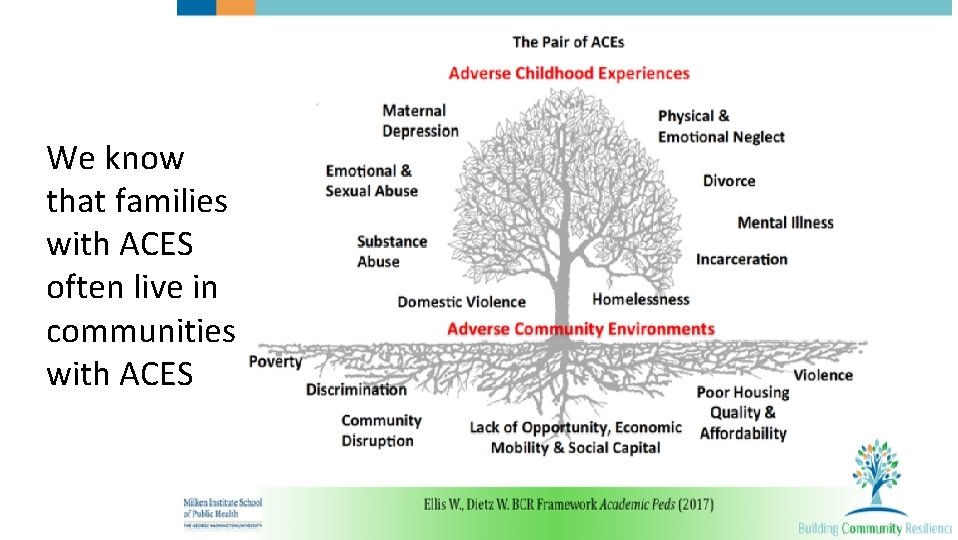
We know that families with ACES often live in communities with ACES
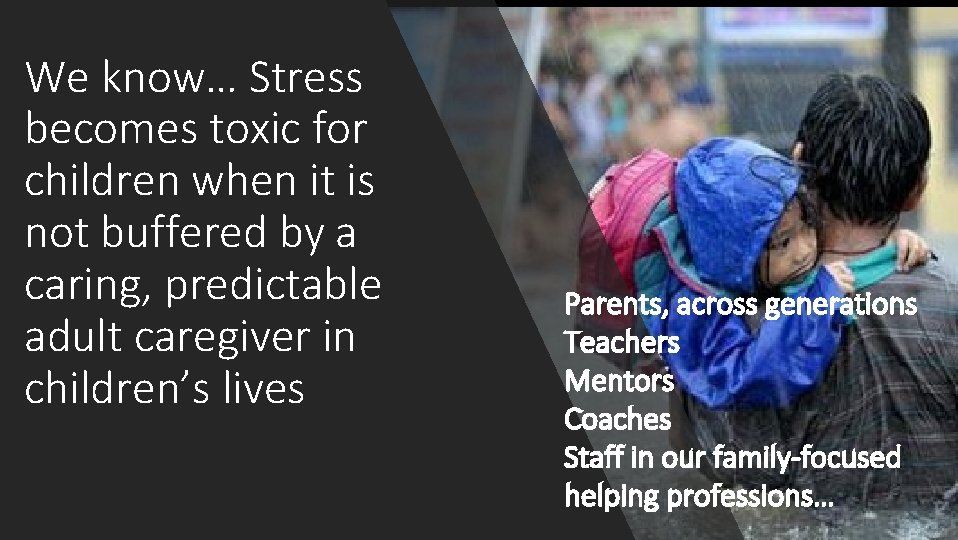
We know… Stress becomes toxic for children when it is not buffered by a caring, predictable adult caregiver in children’s lives Parents, across generations Teachers Mentors Coaches Staff in our family-focused helping professions…
And finally…. . WE KNOW communities all over the country are creating very wise actions to move from Trauma to Resilience. We Can Build It…. the first step is awareness.
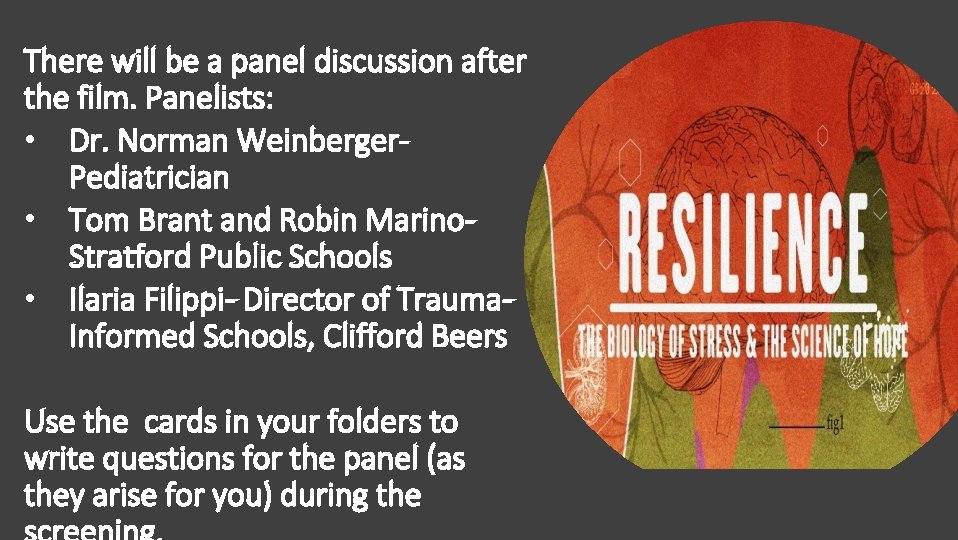
There will be a panel discussion after the film. Panelists: • Dr. Norman Weinberger. Pediatrician • Tom Brant and Robin Marino. Stratford Public Schools • Ilaria Filippi- Director of Trauma. Informed Schools, Clifford Beers Use the cards in your folders to write questions for the panel (as they arise for you) during the
Watch and listen with humility… because everybody has a story… This film may surface personal emotions. If you need to speak with someone after the film, a list of local resources is provided for you in your folder. Also, there are several clinicians here tonight to provide immediate guidance if needed.
Breathe…
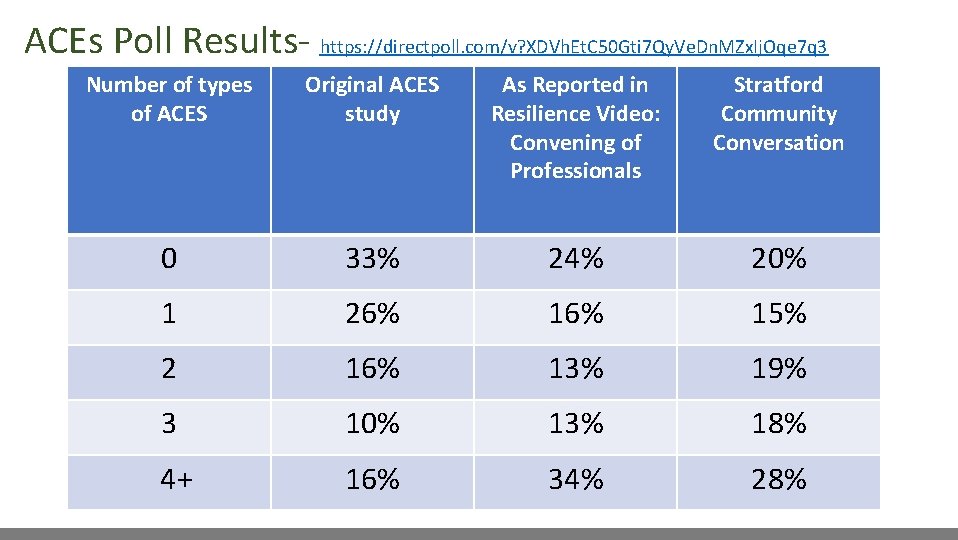
What is your ACE Score? Real-Time Poll Participation is voluntary and anonymous. • Find the ACES Questionnaire in your folder. • Determine total your number. • Go to your web browser on your smart device: Type in etc. ch/id. Mi (case sensitive) After…Please pass your question cards to folks in the aisles
ACEs Poll Results- https: //directpoll. com/v? XDVh. Et. C 50 Gti 7 Qy. Ve. Dn. MZx. Ij. Oqe 7 q 3 Number of types of ACES Original ACES study As Reported in Resilience Video: Convening of Professionals Stratford Community Conversation 0 33% 24% 20% 1 26% 15% 2 16% 13% 19% 3 10% 13% 18% 4+ 16% 34% 28%
Panel Discussion
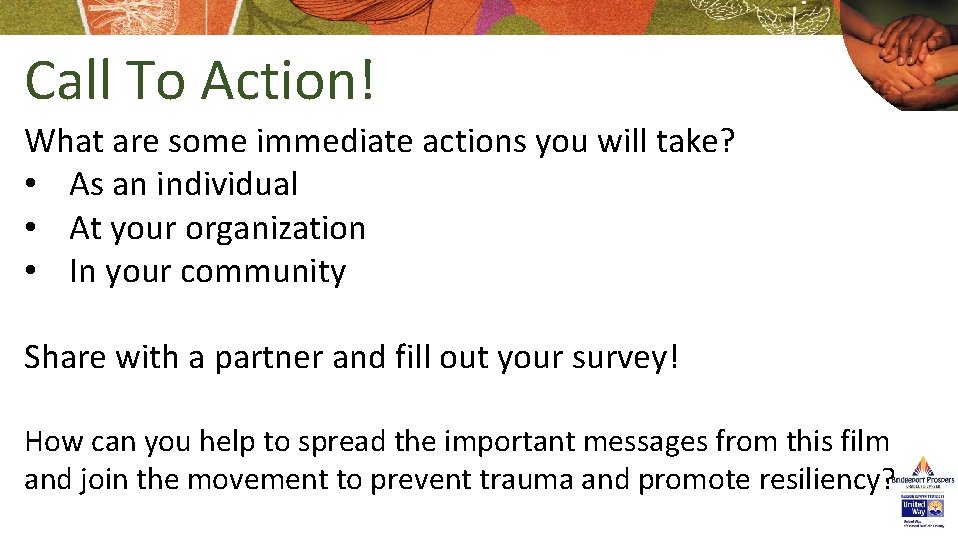
Call To Action! What are some immediate actions you will take? • As an individual • At your organization • In your community Share with a partner and fill out your survey! How can you help to spread the important messages from this film and join the movement to prevent trauma and promote resiliency?
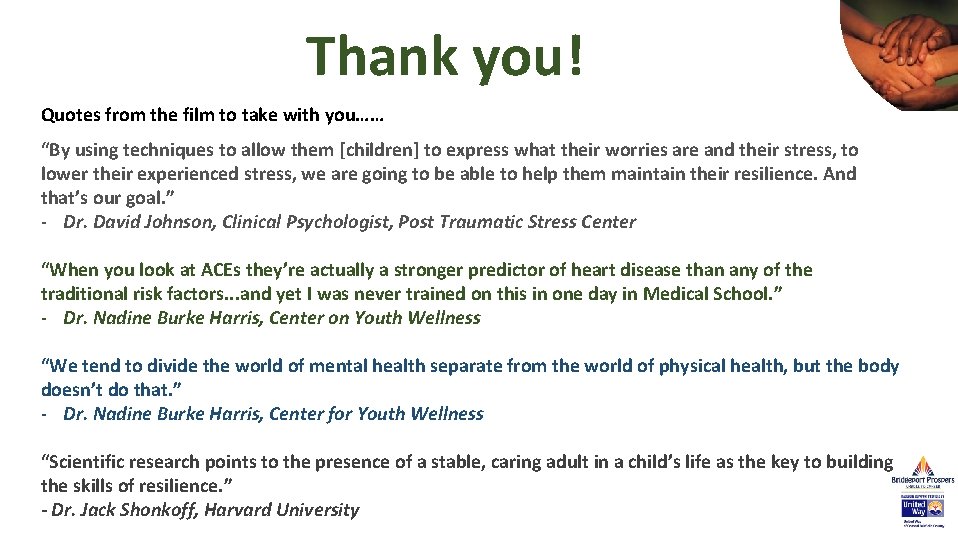
Thank you! Quotes from the film to take with you…… “By using techniques to allow them [children] to express what their worries are and their stress, to lower their experienced stress, we are going to be able to help them maintain their resilience. And that’s our goal. ” - Dr. David Johnson, Clinical Psychologist, Post Traumatic Stress Center “When you look at ACEs they’re actually a stronger predictor of heart disease than any of the traditional risk factors. . . and yet I was never trained on this in one day in Medical School. ” - Dr. Nadine Burke Harris, Center on Youth Wellness “We tend to divide the world of mental health separate from the world of physical health, but the body doesn’t do that. ” - Dr. Nadine Burke Harris, Center for Youth Wellness “Scientific research points to the presence of a stable, caring adult in a child’s life as the key to building the skills of resilience. ” - Dr. Jack Shonkoff, Harvard University