
From Topics to Questions Multimedia Writing and Rhetoric
- Slides: 20
From Topics to Questions Multimedia Writing and Rhetoric Fall 2019
Questions, Questions “The best way to find out what you do not know about a topic is to barrage it with questions. First ask the predictable ones of your field. For example, a historian’s first questions about the Alamo stories would concern their sources, development, and accuracy. Also ask the standard journalistic questions who, what, when, and where, but focus on how and why. Finally, you can systematically ask four kinds of analytical questions, about the composition, history, categorization, and values of your topic. ” Craft of Research, 46
Identify the Parts and How They Interrelate 1. What are the parts of your topic, and how do they relate to one another? 2. How is your topic part of a larger system?
Identify the Parts and How They Interrelate 1. What are the parts of your topic, and how do they relate to one another? In stories about the Alamo, what are themes, the plot structure, the main characters? How do the characters relate to the plot, the plot to the actual battle, the battle to the characters, the characters to one another? 2. How is your topic part of a larger system? How have politicians used the story? What role does it have in Mexican history? What role does it have in U. S. history? Who told the stories? Who listened? How does their nationality affect the story?
Trace Its Own History and Its Role in a Larger History 3. How and why has your topic changed through time, as something with its own history? 4, How and why is your topic an episode in a larger history?
Trace Its Own History and Its Role in a Larger History 3. How and why has your topic changed through time, as something with its own history? How have the stories developed? How have different stories developed differently? How have audiences changed? How have the storytellers changed? How have their motives to tell the stories changed? 4. How and why is your topic an episode in a larger history? How do the stories fit into a historical sequence of events? What caused them to change? How did they affect national identity in the United States? In Mexico? Why have they endured so long?
Identify its Characteristics and the Categories that Include it 5. What kind of thing is your topic? What is its range of variation? How are instances of it similar to and different from one another? 6. To what larger categories can your topic be assigned? How does that help us understand it?
Identify its Characteristics and the Categories that Include it 5. What kind of thing is your topic? What is its range of variation? How are instances of it similar to and different from one another? What is the most typical story? How do others differ? Which is most different? How do the written and oral stories differ from the movie versions? How are Mexican stories different from those told in the States? 6. To what larger categories can your topic be assigned? How does that help us understand it? What other stories in U. S. history are like the story of the Battle of the Alamo? In Mexican history? How do the stories compare to other mythic battle stories? What other societies produce similar stories?
Determine its Value 7. What values does your topic reflect? What values does it support? Contradict? 8. How good or bad is your topic? Is it useful?
Determine its Value 7. What values does your topic reflect? What values does it support? Contradict? What moral lesson does the story teach, if any? Whose purposes does each story serve? Who is praised? Who blamed? Why? 8. How good or bad is your topic? Is it useful? Are some stories better than others? More sophisticated than others? What version is the best one? The worst one? Which parts are most accurate? Which least?
Map out 1. Topic: I am studying 2. Question: because I want to find out what/why/how , 3. Significance: in order to help my reader understand.
Summarizing “Writing a good summary means not just representing an author’s view accurately, but doing so in a way that fit’s your own agenda as a writer. . It requires a balance between what someone else has said and your own interests as a writer…A summary has to have a slant or spin that prepares the way for your own claims. ” They Say/I Say, 36
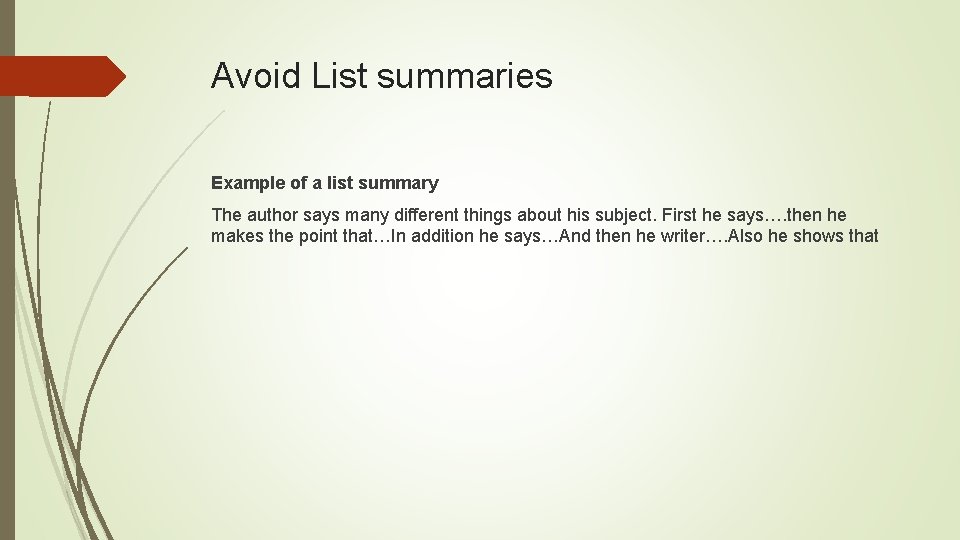
Avoid List summaries Example of a list summary The author says many different things about his subject. First he says…. then he makes the point that…In addition he says…And then he writer…. Also he shows that
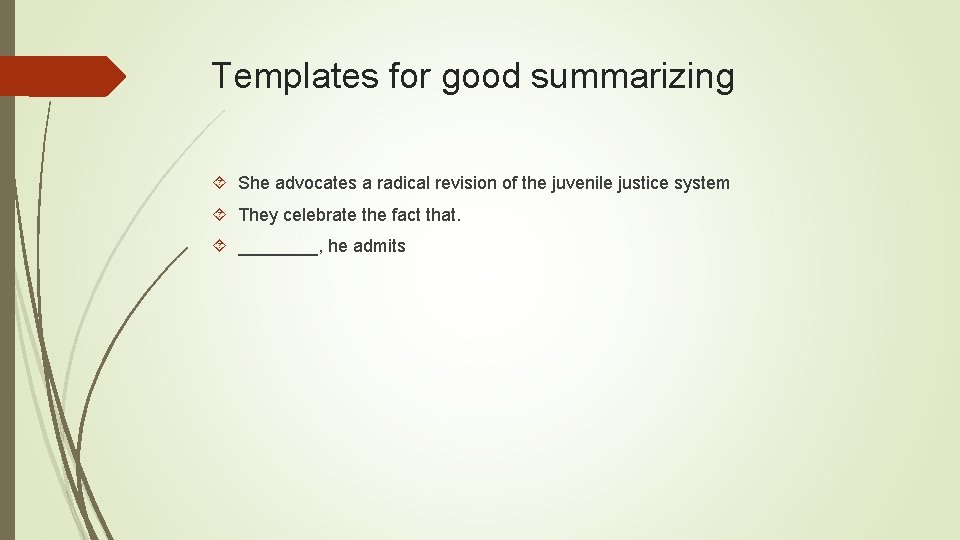
Templates for good summarizing She advocates a radical revision of the juvenile justice system They celebrate the fact that. ____, he admits
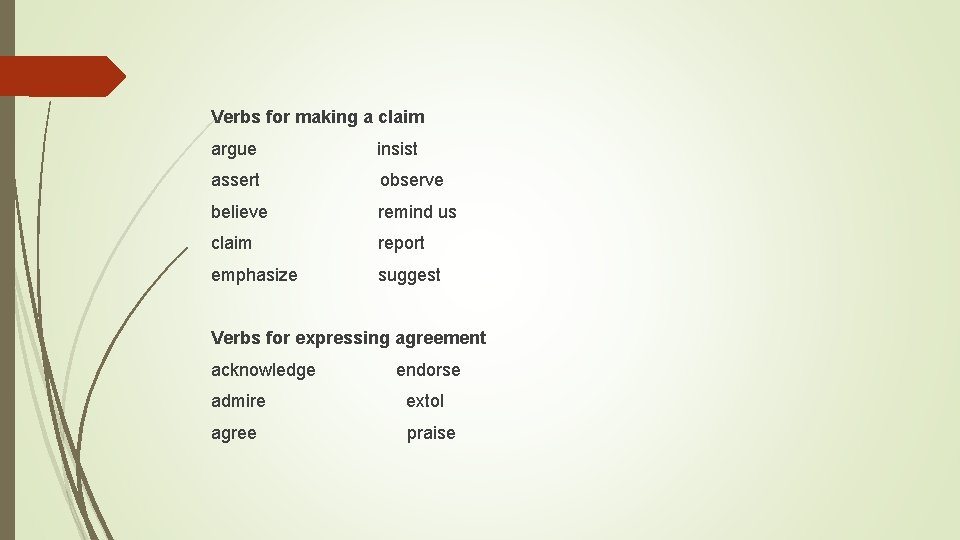
Verbs for making a claim argue insist assert observe believe remind us claim report emphasize suggest Verbs for expressing agreement acknowledge endorse admire extol agree praise
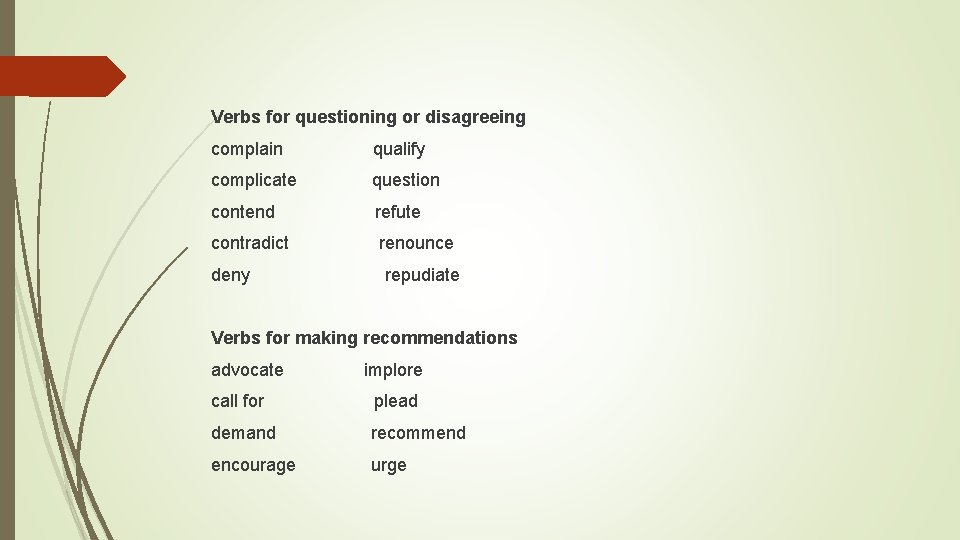
Verbs for questioning or disagreeing complain qualify complicate question contend refute contradict renounce deny repudiate Verbs for making recommendations advocate implore call for plead demand recommend encourage urge
Summarizing David Zinzenko’s article, “Don’t Blame the Eater, ” is nothing more than an angry rant in which he accuses the fast-food companies of an evil conspiracy to make people fat. I disagree because these companies have to make money. They Say/ I Say 32
Summarizing In his article “Don’t Blame the Eater, ” David Zinczenko blames the fast-food industry for fueling today’s so-called obesity epidemic, not only by failing to provide adequate warning labels on its high-calorie foods but also by filling the nutritional void in children’s lives left by their overtaxed working parents. With many parents working long hours and unable to supervise what their children eat, Zinczenko claims, children today are easily victimized by the low-cost, calorie-laden foods that the fast-food chains are all too eager to supply” They Say/ I Say, 34
Summarizing The writer David Zinczenko wrote an article on this topic. The fast-food industry has fueled today’s so-called obesity epidemic, not only by failing to provide adequate warning labels on its high-calorie foods but also by filling the nutritional void in children’s lives left by their overtaxed working parents. With many parents working long hours and unable to supervise what their children eat, children today are easily victimized by the low-cost, calorie-laden foods that the fast-food chains are all too eager to supply.
Summarizing Attribution The action of ascribing a work or remark to a particular author, artist, or person.