
From the Perspective of Combatants Exploration 3 B
From the Perspective of Combatants Exploration 3 B Ms. Ripley
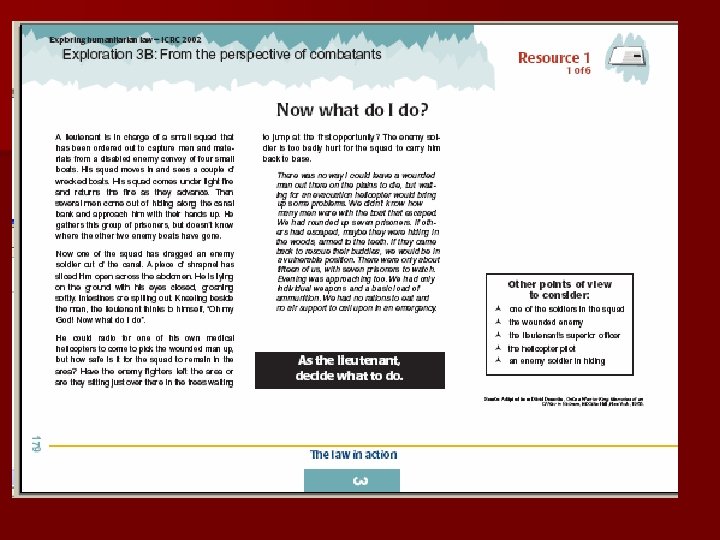
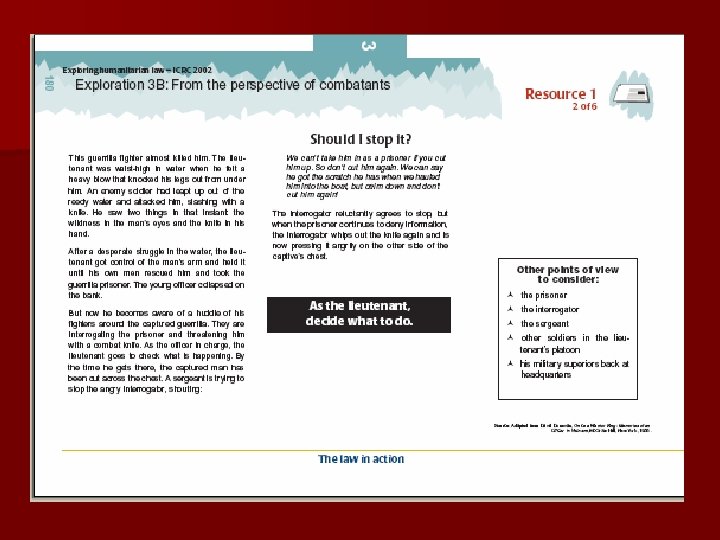
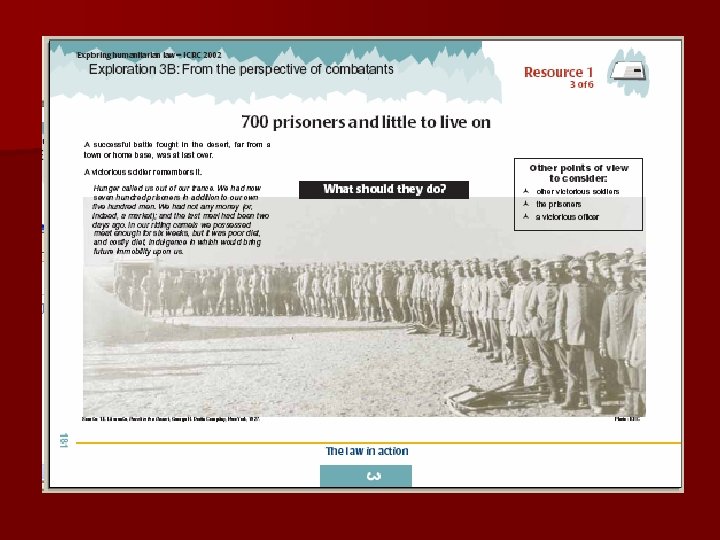
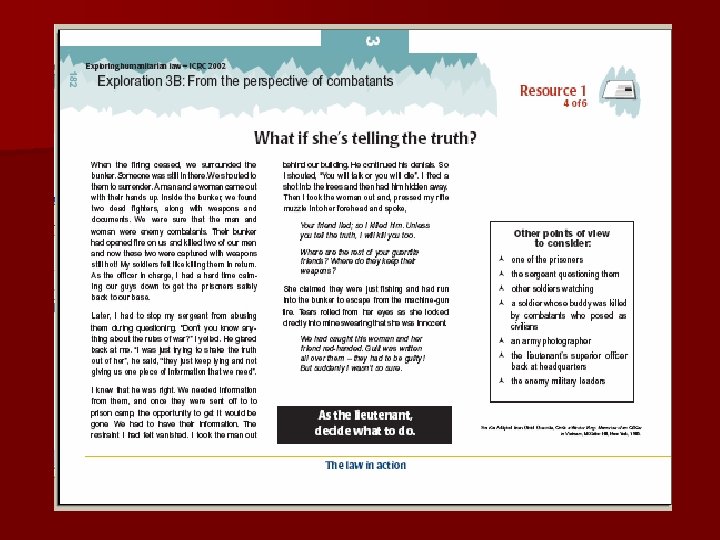
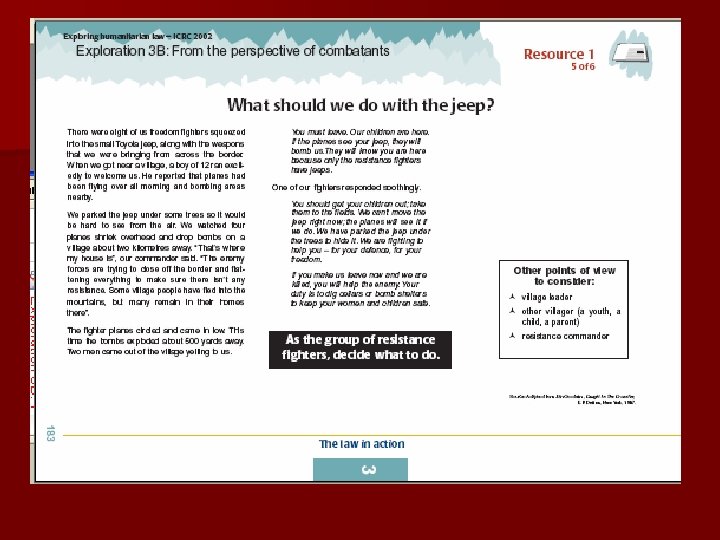
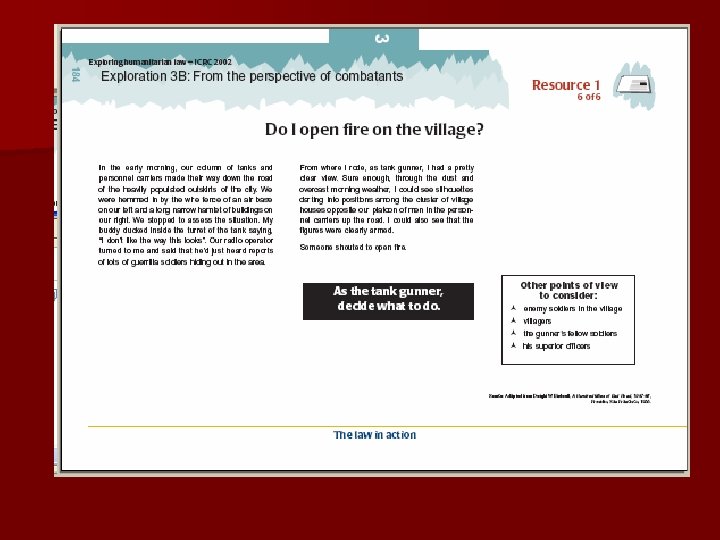
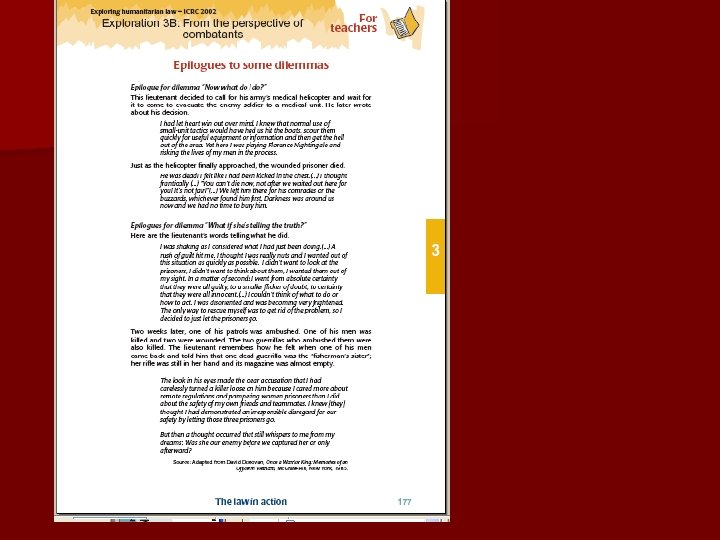
Dilemma Scenarios n n n n Read one of the dilemma’s Possible Questions/Considerations A variety of possible actions The possible consequences of each action Humanitarian goals and what IHL requires The variety of people involved and their points of view How emotions and attitudes could affect consequences Conditions that affect their choices (such as time pressures, danger of the surroundings and relative levels of authority or influence of the other people involved)
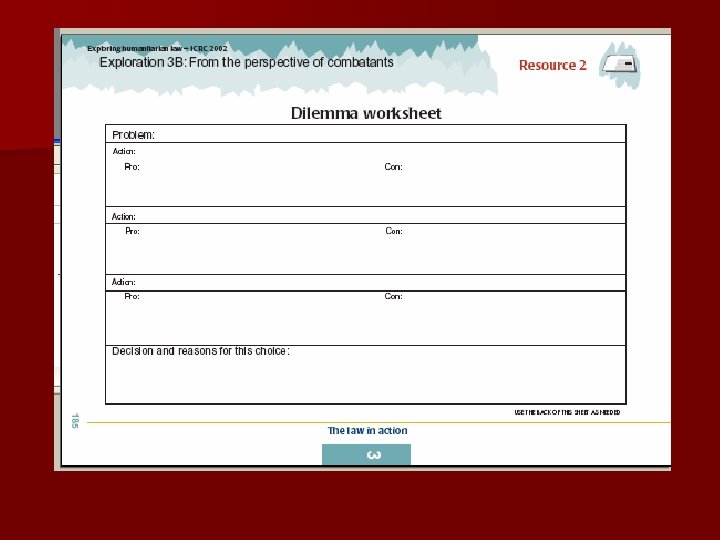
Report Dilemma Decisions n n Which action did you take? Why did you choose this action? Part II n Outline the dilemma situation they faced in trying to uphold IHL n Refer to any IHL rule that applies to the situation n Indicate the action that you decided to take n Give your reasons for that choice
The distinction between civilian and combatant n Article 48 of Protocol I additional to the Geneva Conventions Possible Questions/Considerations n Who would be considered a civilian in armed conflict n What would be a civilian object and what would be a military objective
Article 48 Protocol I additional to the Geneva conventions, 1977 n In order to ensure respect for and protection of the civilian population and civilian objects, the Parties to the conflict shall at all times distinguish between the civilian population and combatants and between civilian objects and military objectives and accordingly shall direct their operations only against military objectives.
Article 50 Protocol I additional to the Geneva conventions, 1977 n When in doubt whether a person is a civilian, that person shall be considered to be a civilian
A Soldier Remembers n We learned to trust no one, not even children. All beer or soft drink cans had to be crushed – if the cans were left whole, the guerrillas would buy them from the local kids and use them as casings for hand-grenades. We survived by being suspicious.
A Soldier Remembers n One day people are running up to you and hugging you, and the next day a little kid is throwing a grenade at you. What are you supposed to decide from that? What are you supposed to feel? I don’t know.
Closing Questions n n n What are the consequences of not knowing who is a civilian? What further consequences could these lead to? What are some other factors that make humanitarian behavior in armed conflict difficult? What are some reasons for civilians being treated as enemy combatants? How can combatants affect how their civilians are treated in armed warfare? What are the responsibilities of both sides in a conflict?
Key Ideas n n Following the rules of IHL in situations of armed conflict sometimes involves dilemmas. Many dilemmas result from the difficulty of distinguishing between combatants and civilians. Sometimes people blur the distinction intentionally, and sometimes it is blurred when fighting takes place in residential areas. In case of doubt whether a person is a civilian, that person shall be considered a civilian.
Extension Activity History of civilian involvement in war n In connection with your study of history, examine how civilians have been viewed as people have gone to war. How has guerrilla warfare affected civilians? How has changes in battle strategy and technological advances affected their status as civilians and the distinction between civilian and combatant.
Extension Activity Role Playing n Prepared dramatized versions of one of the dilemmas. In addition to the role of the decision -maker, roles include those listed in the “other points of view to consider” as well as any others you may think of. For example, in a dilemma that involved a group of soldiers, people can play the roles of different soldiers as well as officers to whom the decision-maker would have to report.
- Slides: 20