
FROM THE HARLEM RENAISSANCE TO THE BLACK ARTS
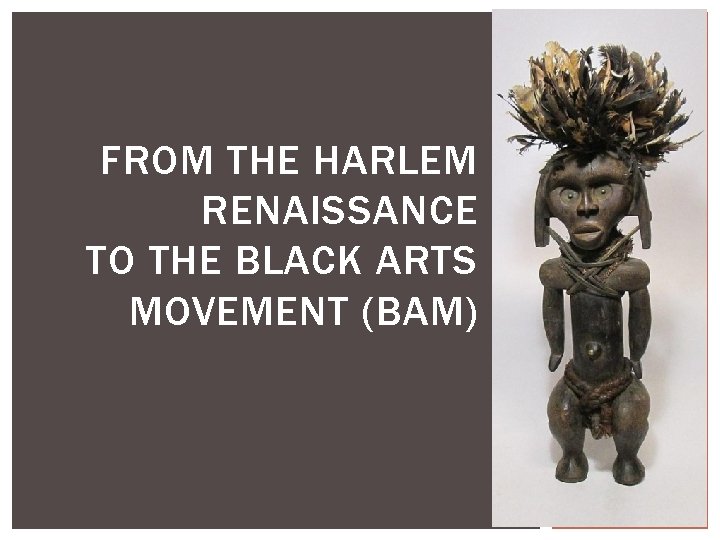
FROM THE HARLEM RENAISSANCE TO THE BLACK ARTS MOVEMENT (BAM)
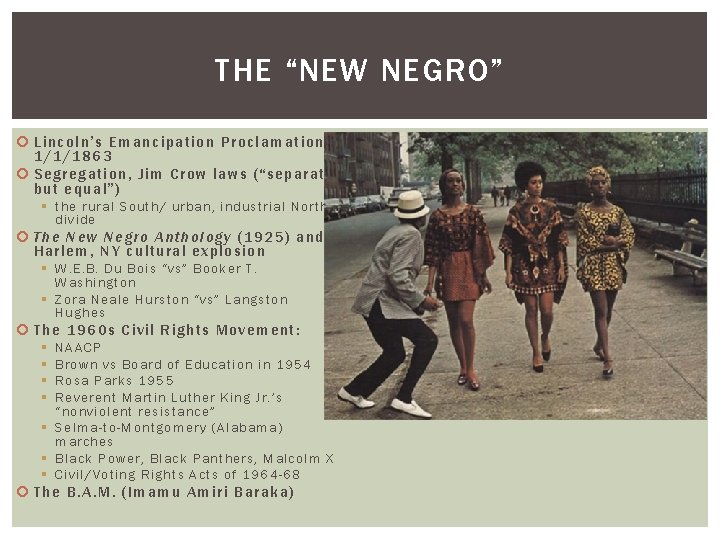
THE “NEW NEGRO” Lincol n’s E mancipation Proclamation 1/1/1863 Seg re gat ion , Jim Crow laws ( “separate but e qual”) § the rural South/ urban, industrial North divide The N ew N egro Anthology (1925) and Har lem , NY cultural explosion § W. E. B. Du Bois “vs” Booker T. Washington § Zora Neale Hurston “vs” Langston Hughes The 1960 s Civil Rights Movement: § NAACP § Brown vs Board of Education in 1954 § Rosa Parks 1955 § Reverent Martin Luther King Jr. ’s “nonviolent resistance” § Selma-to-Montgomery (Alabama) marches § Black Power, Black Panthers, Malcolm X § Civil/Voting Rights Acts of 1964 -68 The B. A. M. (Imamu Amiri Baraka)
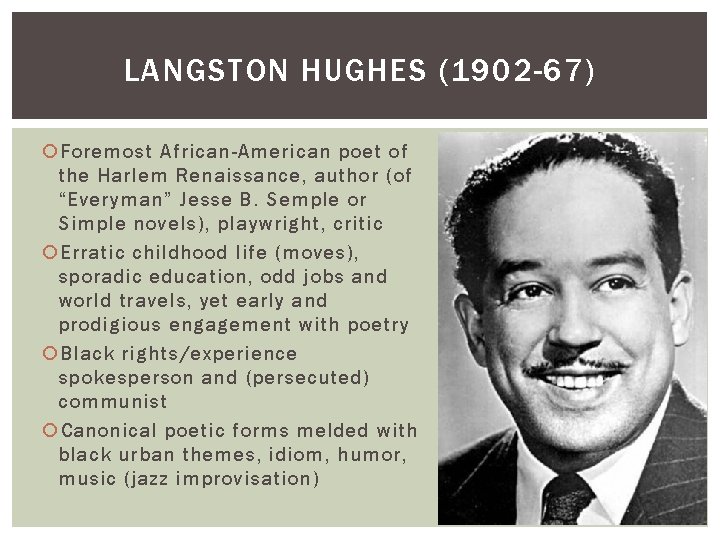
LANGSTON HUGHES (1902 -67) Foremost African-American poet of the Harlem Renaissance, author (of “Everyman” Jesse B. Semple or Simple novels), playwright, critic Erratic childhood life (moves), sporadic education, odd jobs and world travels, yet early and prodigious engagement with poetry Black rights/experience spokesperson and (persecuted) communist Canonical poetic forms melded with black urban themes, idiom, humor, music (jazz improvisation)
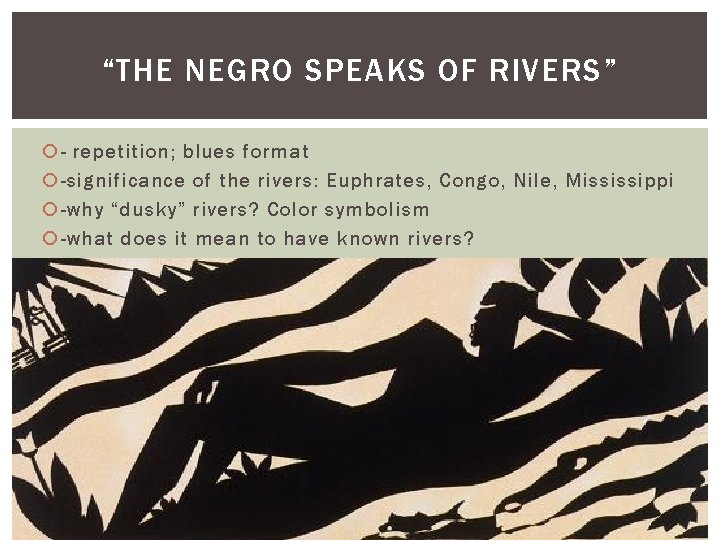
“THE NEGRO SPEAKS OF RIVERS” - repetition; blues format -significance of the rivers: Euphrates, Congo, Nile, Mississippi -why “dusky” rivers? Color symbolism -what does it mean to have known rivers?
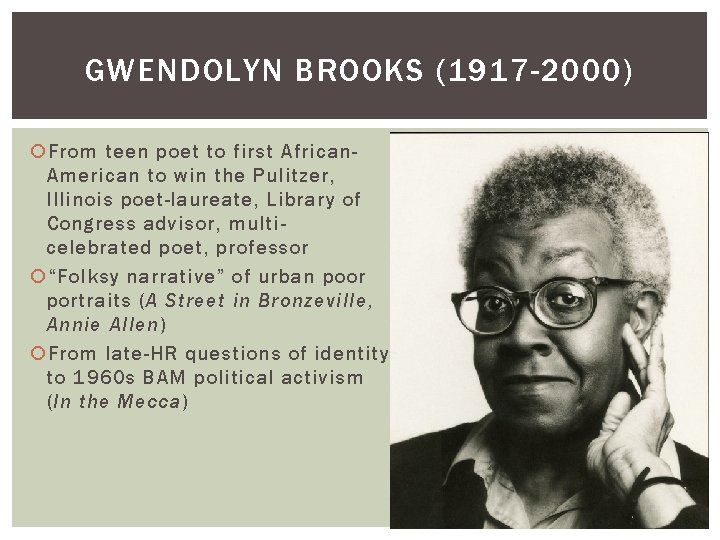
GWENDOLYN BROOKS (1917 -2000) From teen poet to first African. American to win the Pulitzer, Illinois poet-laureate, Library of Congress advisor, multicelebrated poet, professor “Folksy narrative” of urban poor portraits (A Street in Bronzeville, Annie Allen) From late-HR questions of identity to 1960 s BAM political activism (In the Mecca)
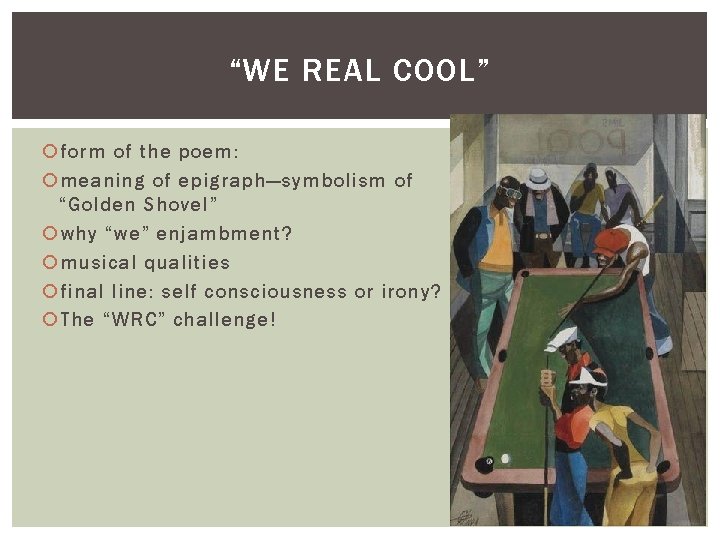
“WE REAL COOL” form of the poem: meaning of epigraph—symbolism of “Golden Shovel” why “we” enjambment? musical qualities final line: self consciousness or irony? The “WRC” challenge!
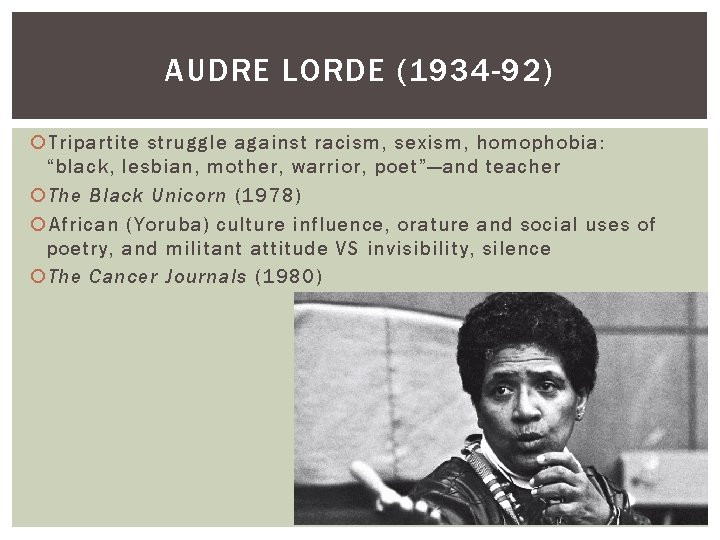
AUDRE LORDE (1934 -92) Tripartite struggle against racism, sexism, homophobia: “black, lesbian, mother, warrior, poet”—and teacher The Black Unicorn (1978) African (Yoruba) culture influence, orature and social uses of poetry, and militant attitude VS invisibility, silence The Cancer Journals (1980)
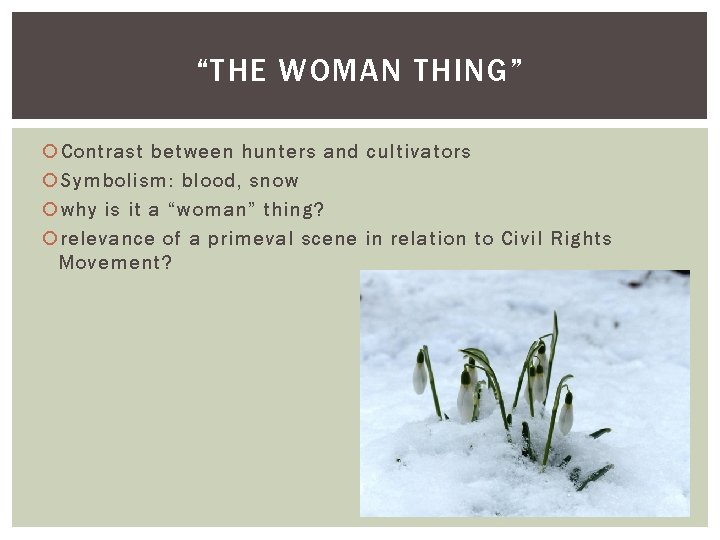
“THE WOMAN THING” Contrast between hunters and cultivators Symbolism: blood, snow why is it a “woman” thing? relevance of a primeval scene in relation to Civil Rights Movement?
- Slides: 8