
From the Four Greek Elements to Modern Physics

- Slides: 23
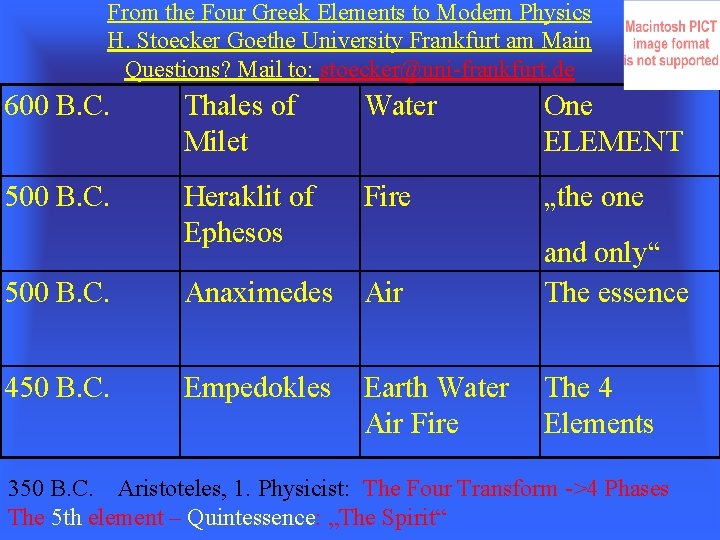
From the Four Greek Elements to Modern Physics H. Stoecker Goethe University Frankfurt am Main Questions? Mail to: stoecker@uni-frankfurt. de 600 B. C. Thales of Milet Water One ELEMENT 500 B. C. Heraklit of Ephesos Fire „the one 500 B. C. Anaximedes Air and only“ The essence 450 B. C. Empedokles Earth Water Air Fire The 4 Elements 350 B. C. Aristoteles, 1. Physicist: The Four Transform ->4 Phases The 5 th element – Quintessence: „The Spirit“
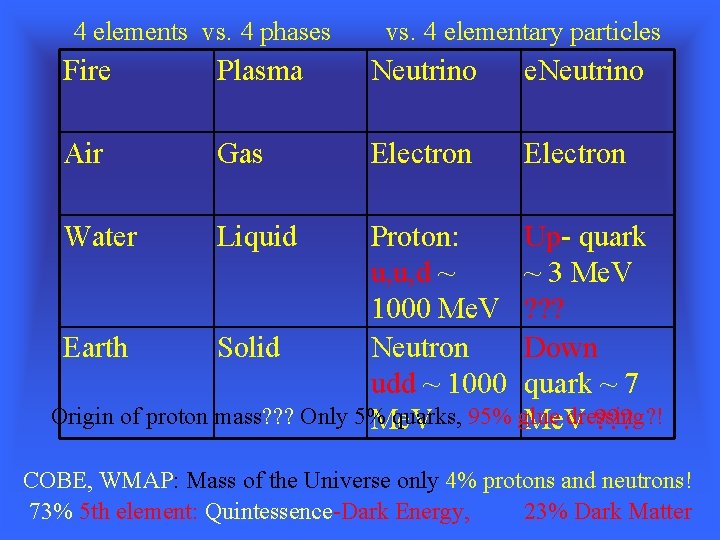
4 elements vs. 4 phases vs. 4 elementary particles Fire Plasma Neutrino e. Neutrino Air Gas Electron Water Liquid Proton: Up- quark u, u, d ~ ~ 3 Me. V 1000 Me. V ? ? ? Earth Solid Neutron Down udd ~ 1000 quark ~ 7 Origin of proton mass? ? ? Only 5% quarks, 95% glue dressing? ! Me. V ? ? ? COBE, WMAP: Mass of the Universe only 4% protons and neutrons! 73% 5 th element: Quintessence-Dark Energy, 23% Dark Matter
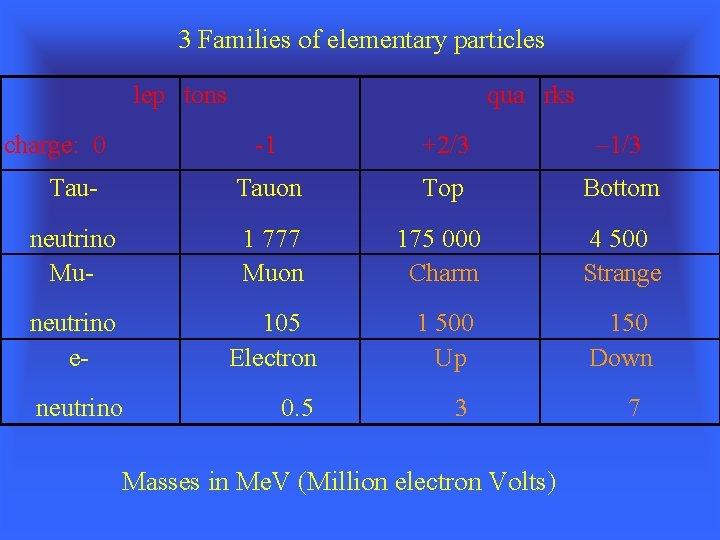
3 Families of elementary particles lep tons charge: 0 qua rks -1 +2/3 – 1/3 Tau- Tauon Top Bottom neutrino Mu- 1 777 Muon 175 000 Charm 4 500 Strange neutrino e- 105 Electron 1 500 Up 150 Down neutrino 0. 5 3 Masses in Me. V (Million electron Volts) 7
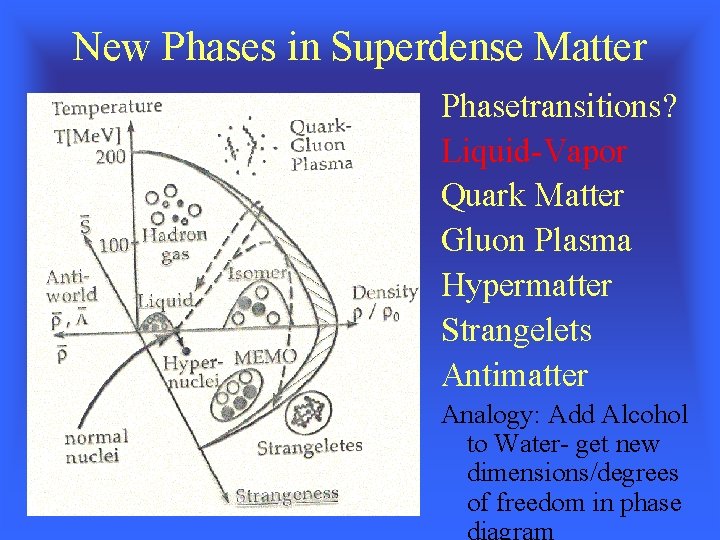
New Phases in Superdense Matter Phasetransitions? Liquid-Vapor Quark Matter Gluon Plasma Hypermatter Strangelets Antimatter Analogy: Add Alcohol to Water- get new dimensions/degrees of freedom in phase diagram
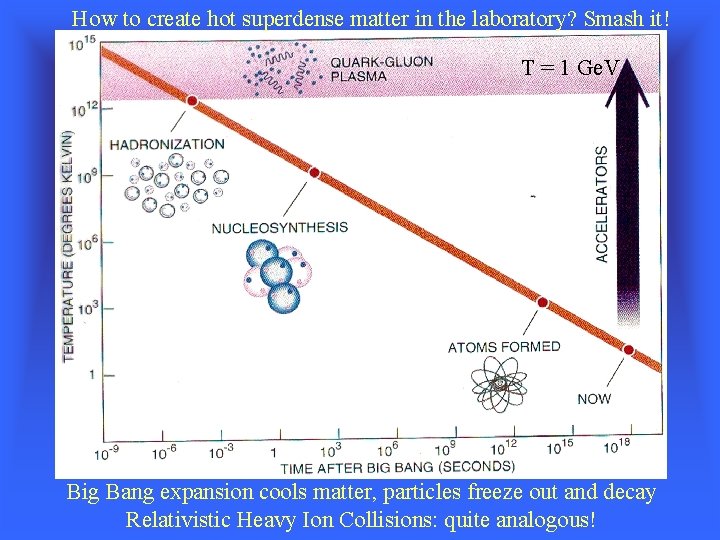
How to create hot superdense matter in the laboratory? Smash it! T = 1 Ge. V Big Bang expansion cools matter, particles freeze out and decay Relativistic Heavy Ion Collisions: quite analogous!
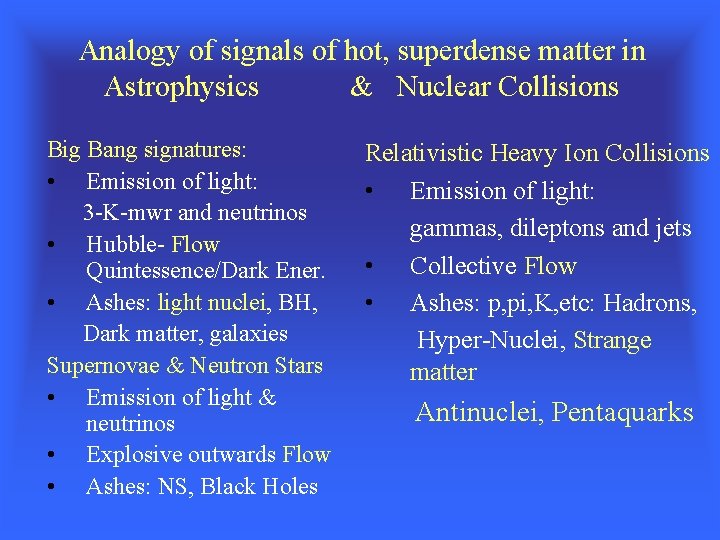
Analogy of signals of hot, superdense matter in Astrophysics & Nuclear Collisions Big Bang signatures: • Emission of light: 3 -K-mwr and neutrinos • Hubble- Flow Quintessence/Dark Ener. • Ashes: light nuclei, BH, Dark matter, galaxies Supernovae & Neutron Stars • Emission of light & neutrinos • Explosive outwards Flow • Ashes: NS, Black Holes Relativistic Heavy Ion Collisions • Emission of light: gammas, dileptons and jets • Collective Flow • Ashes: p, pi, K, etc: Hadrons, Hyper-Nuclei, Strange matter Antinuclei, Pentaquarks
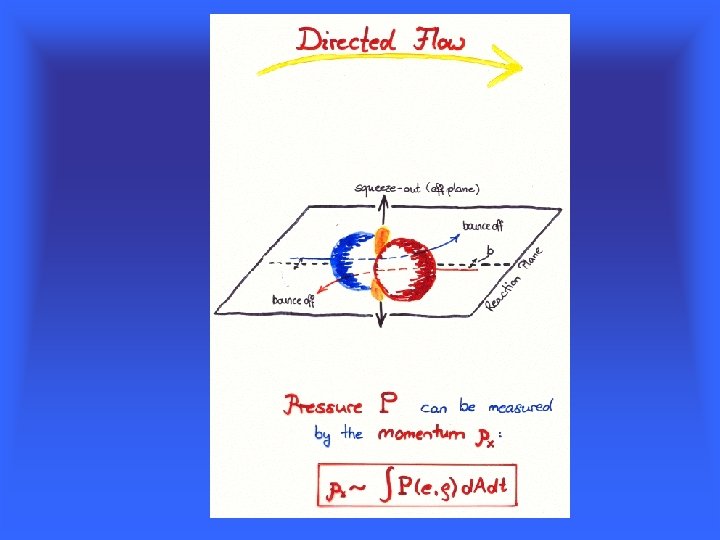
Relativistic Heavy Ion Collisions (RHIC) major ideas to probe hot dense nuclear matter E. Teller, Chapl: Thermal Delta Matter @T=140 Me. V W. Greiner: Hydro-flow & Shockwaves: 5 x density T. D. Lee: massless particles & hot vacuum H. Bethe, Siemens: isotropic flow HST: Coll. Flow & Squeeze-Out as Barometers E. Shuryak: Quark Gluon Plasma, Dileptons Koch, Rafelski, Müller: Strangeness enhanced C. Greiner, Koch, HST: Strange Matter Matsui, Satz: c-cbar J/Psi Suppression Gyulassy, Wang: Jet- Supprission • 19731978 • 1982 • 1986 • 1997
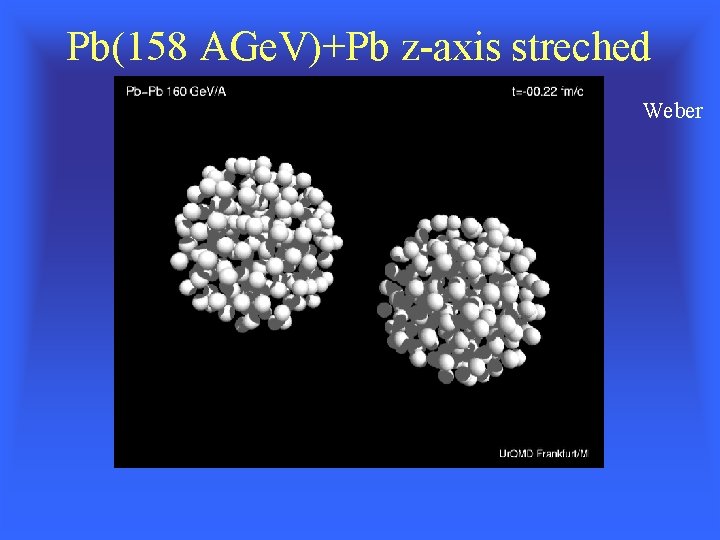
Pb(158 AGe. V)+Pb z-axis streched Weber
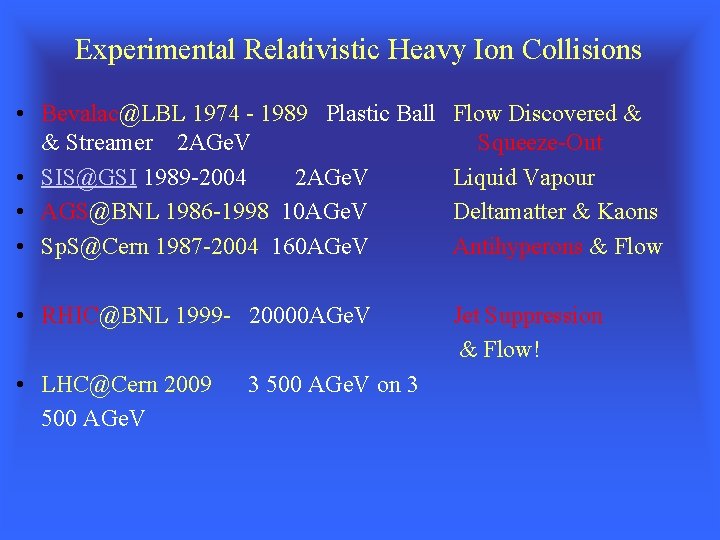
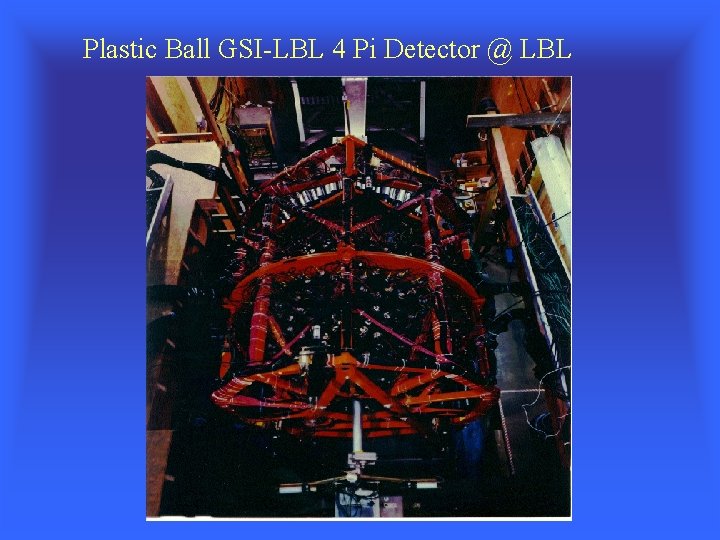
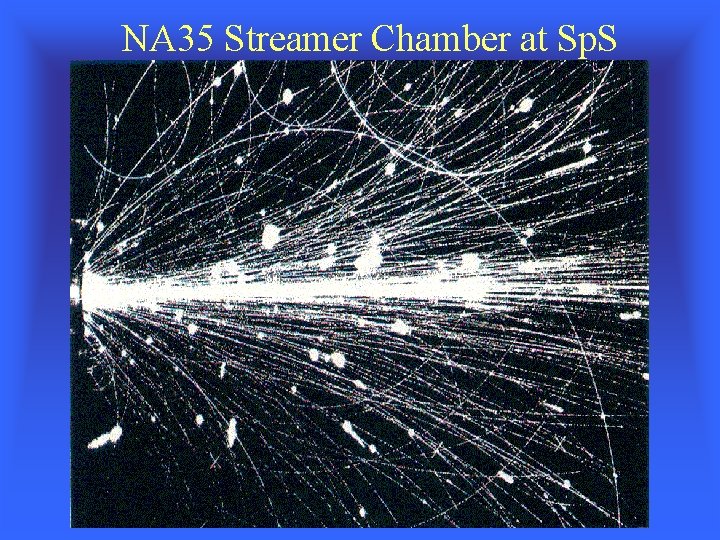
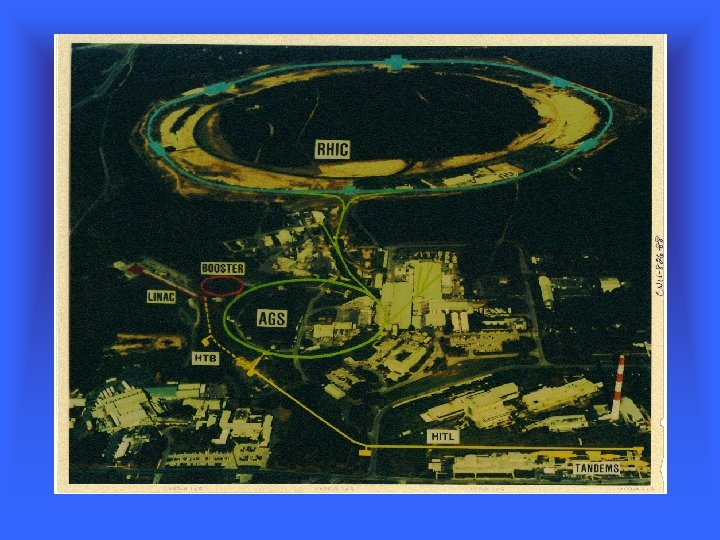
Experimental Relativistic Heavy Ion Collisions • Bevalac@LBL 1974 - 1989 Plastic Ball & Streamer 2 AGe. V • SIS@GSI 1989 -2004 2 AGe. V • AGS@BNL 1986 -1998 10 AGe. V • Sp. S@Cern 1987 -2004 160 AGe. V Flow Discovered & Squeeze-Out Liquid Vapour Deltamatter & Kaons Antihyperons & Flow • RHIC@BNL 1999 - 20000 AGe. V Jet Suppression & Flow! • LHC@Cern 2009 500 AGe. V 3 500 AGe. V on 3
Plastic Ball GSI-LBL 4 Pi Detector @ LBL
NA 35 Streamer Chamber at Sp. S
Au + Au at 200 Ge. V Weber
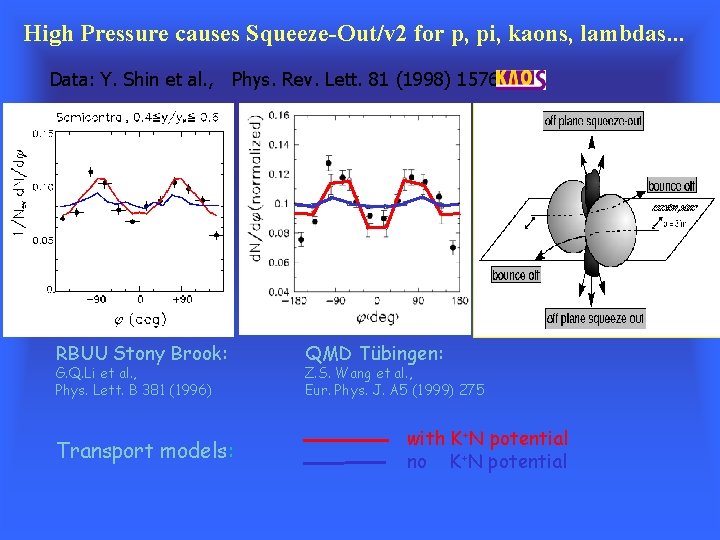
High Pressure causes Squeeze-Out/v 2 for p, pi, kaons, lambdas. . . Data: Y. Shin et al. , Phys. Rev. Lett. 81 (1998) 1576 RBUU Stony Brook: G. Q. Li et al. , Phys. Lett. B 381 (1996) Transport models: QMD Tübingen: Z. S. Wang et al. , Eur. Phys. J. A 5 (1999) 275 with K+N potential no K+N potential
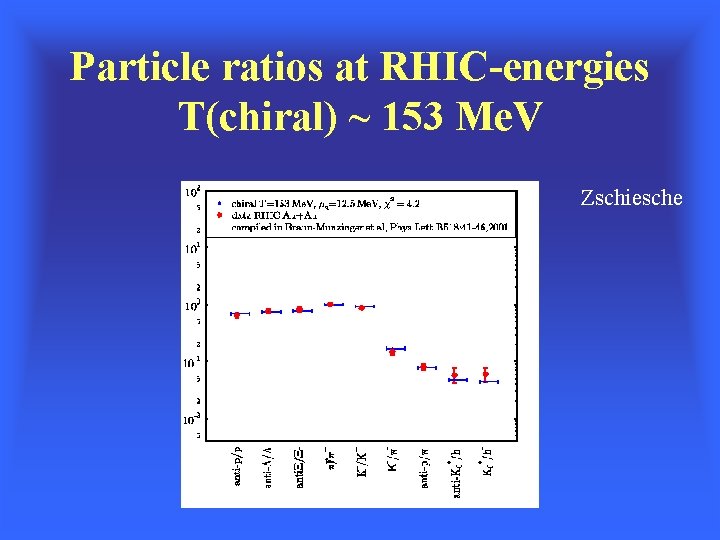
Particle ratios at RHIC-energies T(chiral) ~ 153 Me. V Zschiesche
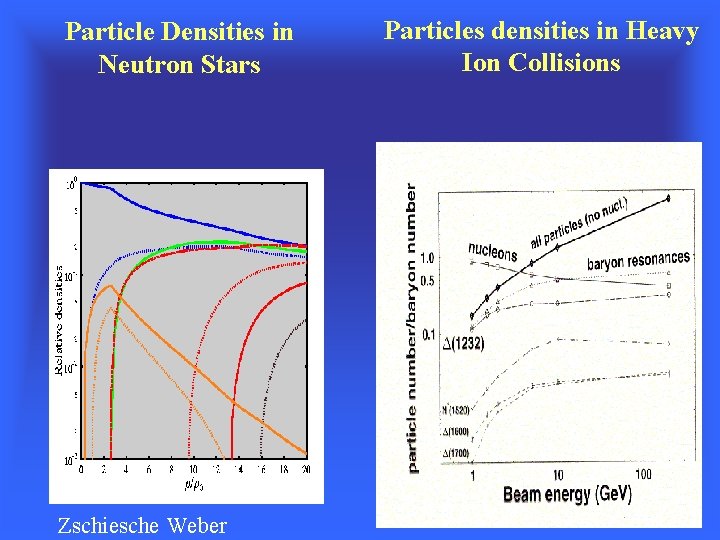
Particle Densities in Neutron Stars Zschiesche Weber Particles densities in Heavy Ion Collisions
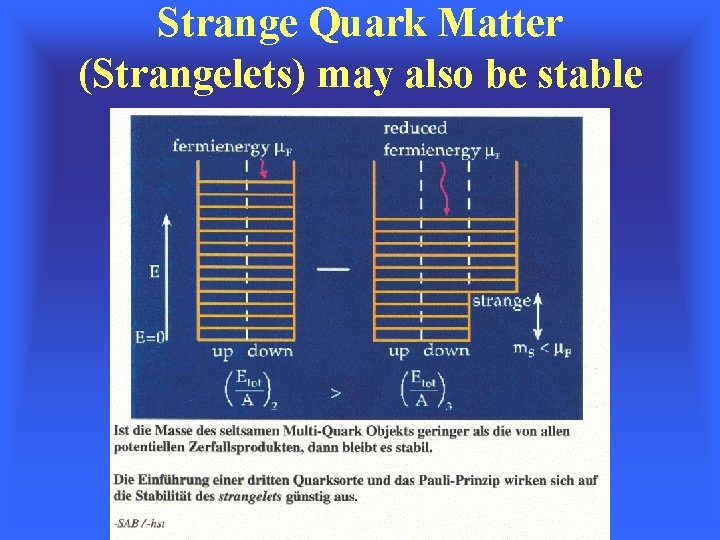
Strange Quark Matter (Strangelets) may also be stable
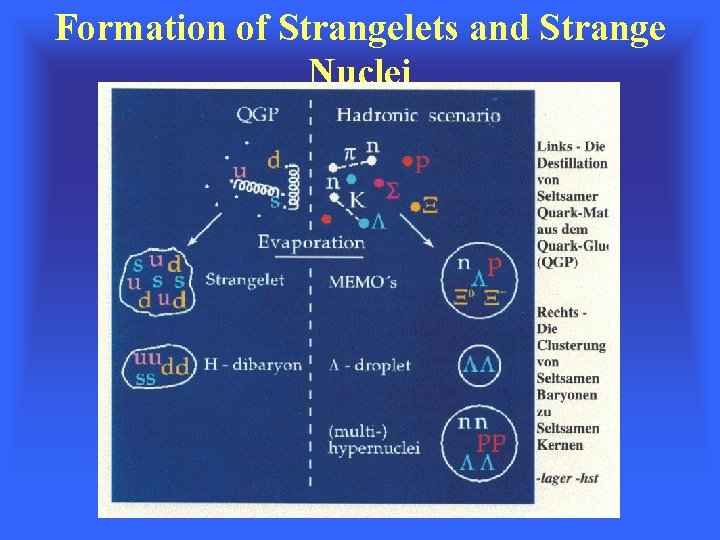
Formation of Strangelets and Strange Nuclei
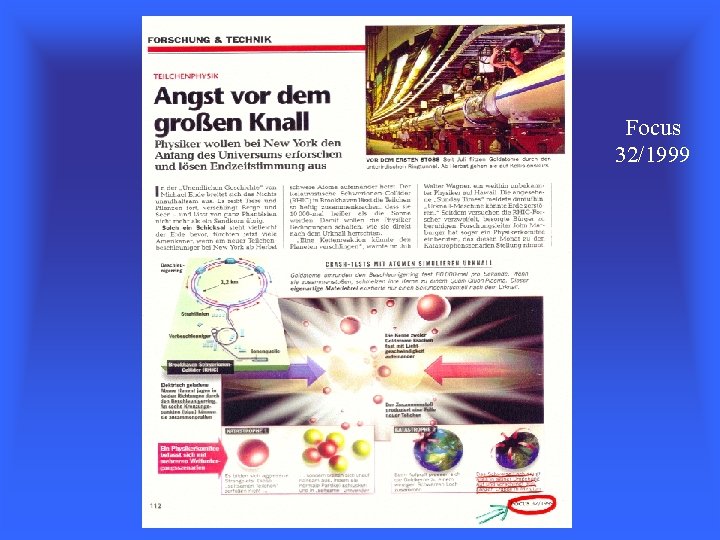
Focus 32/1999
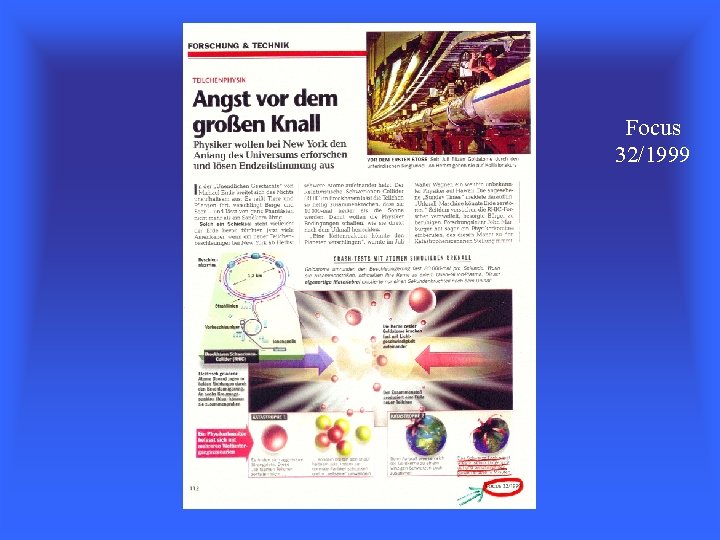
Focus 32/1999
Observables