
From the Big Bang to the Nobel Prize
From the Big Bang to the Nobel Prize: Cosmic Background Explorer (COBE) and Beyond Goddard Space Flight Center Lecture John Mather Nov. 21, 2006
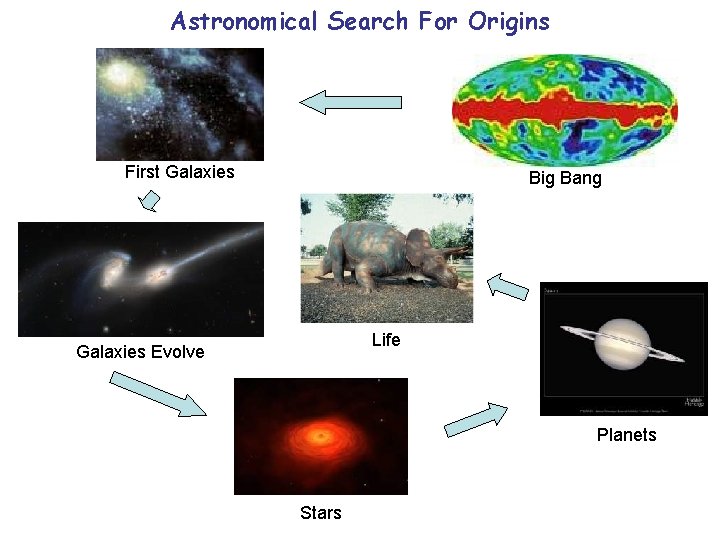
Astronomical Search For Origins First Galaxies Big Bang Life Galaxies Evolve Planets Stars
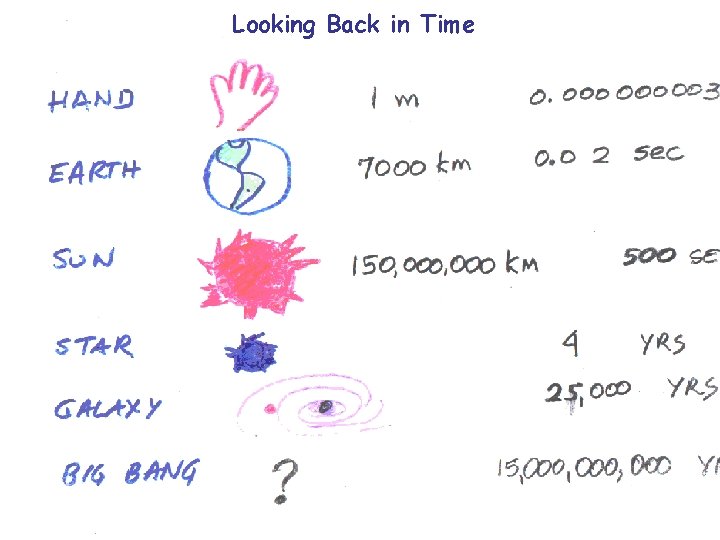
Looking Back in Time
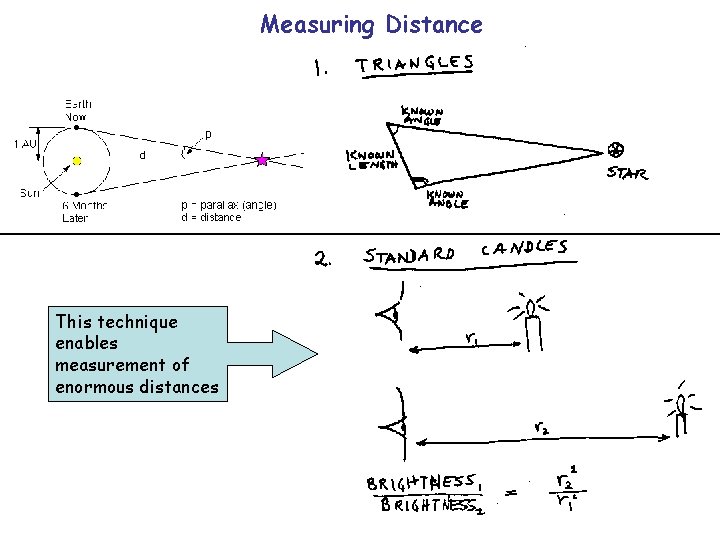
Measuring Distance This technique enables measurement of enormous distances
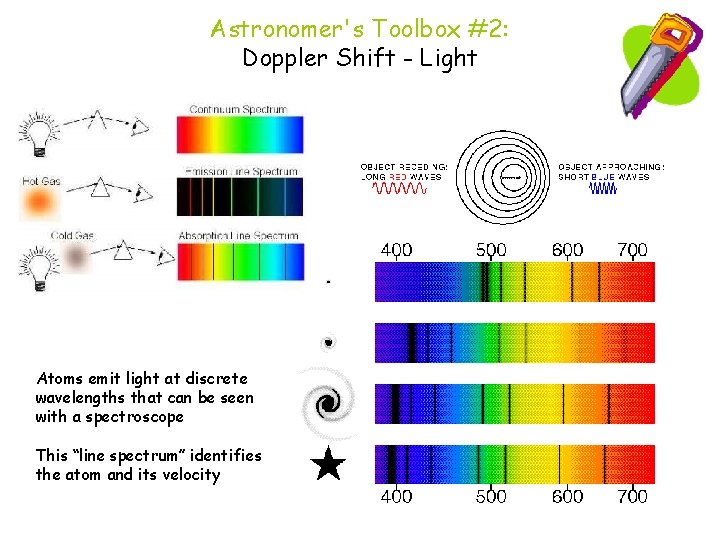
Astronomer's Toolbox #2: Doppler Shift - Light Atoms emit light at discrete wavelengths that can be seen with a spectroscope This “line spectrum” identifies the atom and its velocity
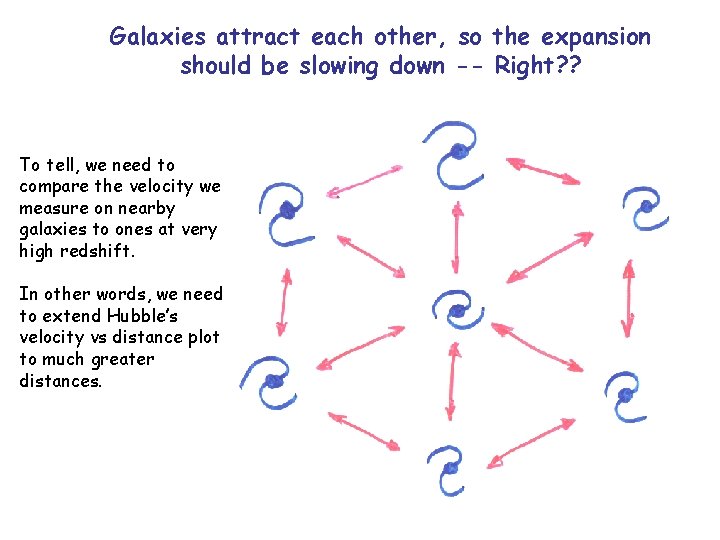
Galaxies attract each other, so the expansion should be slowing down -- Right? ? To tell, we need to compare the velocity we measure on nearby galaxies to ones at very high redshift. In other words, we need to extend Hubble’s velocity vs distance plot to much greater distances.
Nobel Prize Press Release The Royal Swedish Academy of Sciences has decided to award the Nobel Prize in Physics for 2006 jointly to John C. Mather, NASA Goddard Space Flight Center, Greenbelt, MD, USA, and George F. Smoot, University of California, Berkeley, CA, USA "for their discovery of the blackbody form and anisotropy of the cosmic microwave background radiation".
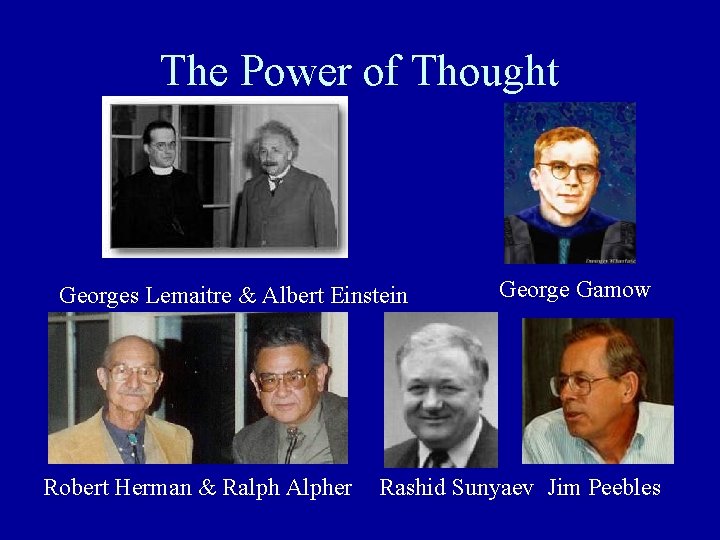
The Power of Thought Georges Lemaitre & Albert Einstein Robert Herman & Ralph Alpher George Gamow Rashid Sunyaev Jim Peebles
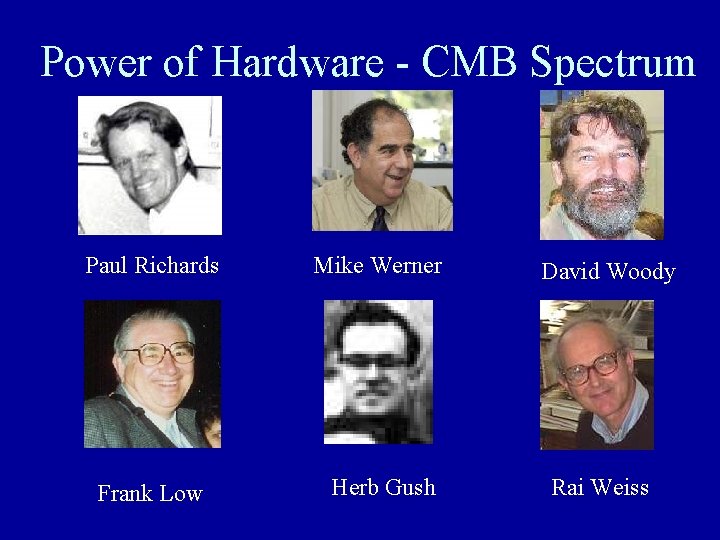
Power of Hardware - CMB Spectrum Paul Richards Mike Werner Frank Low Herb Gush David Woody Rai Weiss
Brief COBE History • 1965, CMB announced - Penzias & Wilson; Dicke, Peebles, Roll, & Wilkinson • 1974, NASA AO for Explorers: ~ 150 proposals, including: – JPL anisotropy proposal (Gulkis, Janssen…) – Berkeley anisotropy proposal (Alvarez, Smoot…) – Goddard/MIT/Princeton COBE proposal (Hauser, Mather, Muehlner, Silverberg, Thaddeus, Weiss, Wilkinson)
COBE History (2) • 1976, Mission Definition Science Team selected by HQ (Nancy Boggess, Program Scientist); PI’s chosen • ~ 1979, decision to build COBE in-house at GSFC • 1982, approval to construct for flight • 1986, Challenger explosion, start COBE redesign for Delta launch • 1989, Nov. 18, launch • 1990, first spectrum results; helium ends in 10 mo • 1992, first anisotropy results • 1994, end operations • 1998, major cosmic IR background results
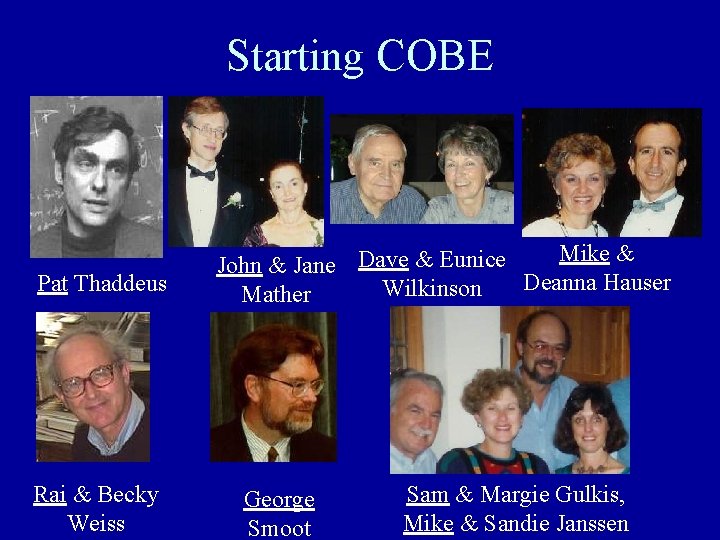
Starting COBE Pat Thaddeus Rai & Becky Weiss Mike & John & Jane Dave & Eunice Deanna Hauser Wilkinson Mather George Smoot Sam & Margie Gulkis, Mike & Sandie Janssen
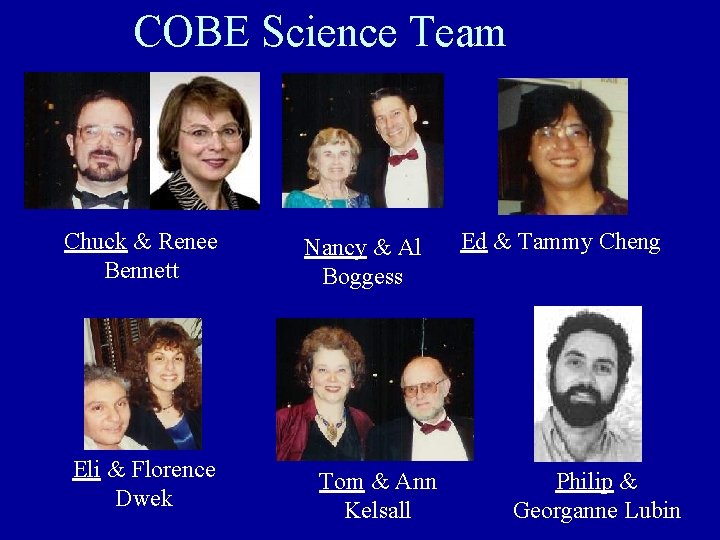
COBE Science Team Chuck & Renee Bennett Eli & Florence Dwek Nancy & Al Boggess Tom & Ann Kelsall Ed & Tammy Cheng Philip & Georganne Lubin
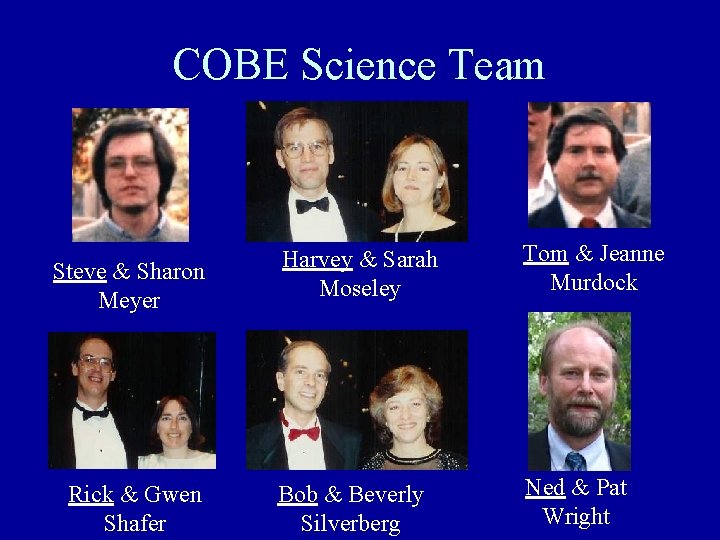
COBE Science Team Steve & Sharon Meyer Rick & Gwen Shafer Harvey & Sarah Moseley Tom & Jeanne Murdock Bob & Beverly Silverberg Ned & Pat Wright
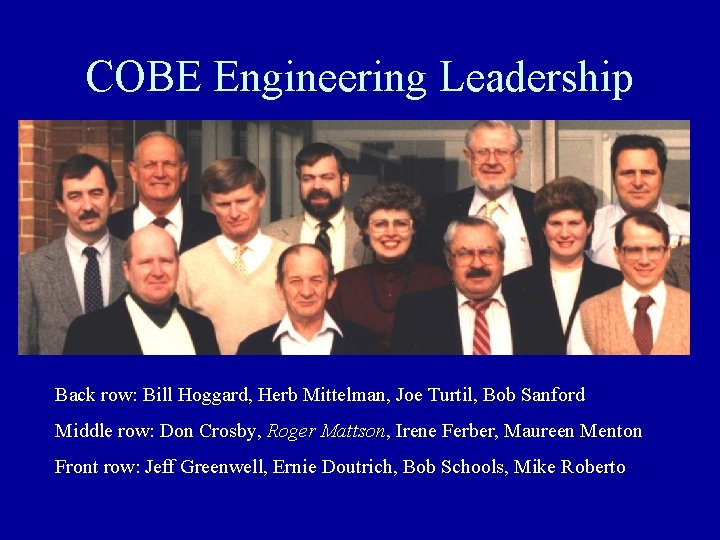
COBE Engineering Leadership Back row: Bill Hoggard, Herb Mittelman, Joe Turtil, Bob Sanford Middle row: Don Crosby, Roger Mattson, Irene Ferber, Maureen Menton Front row: Jeff Greenwell, Ernie Doutrich, Bob Schools, Mike Roberto
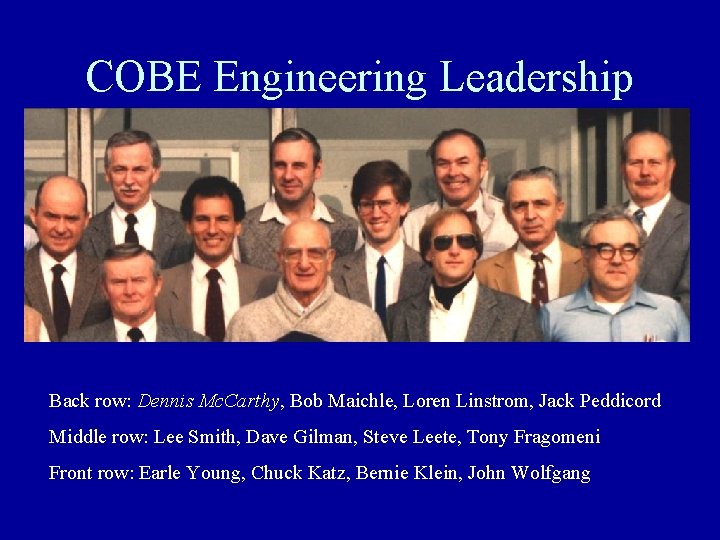
COBE Engineering Leadership Back row: Dennis Mc. Carthy, Bob Maichle, Loren Linstrom, Jack Peddicord Middle row: Lee Smith, Dave Gilman, Steve Leete, Tony Fragomeni Front row: Earle Young, Chuck Katz, Bernie Klein, John Wolfgang
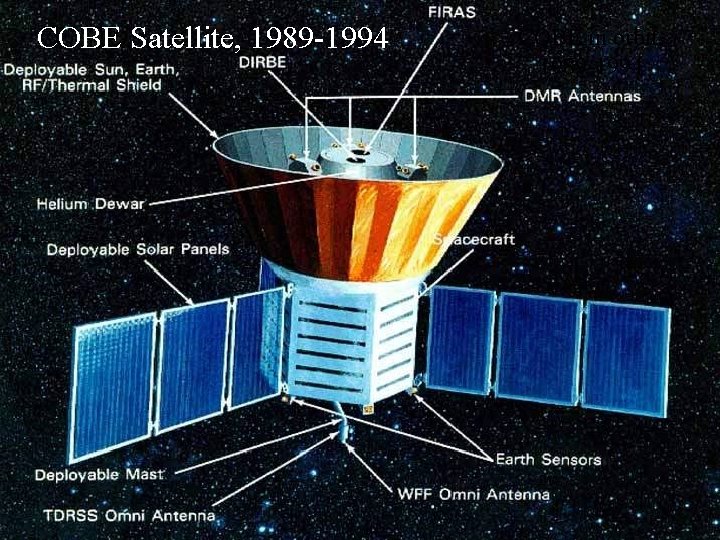
COBE Satellite, 1989 -1994 COBE in orbit, 1989 -1994
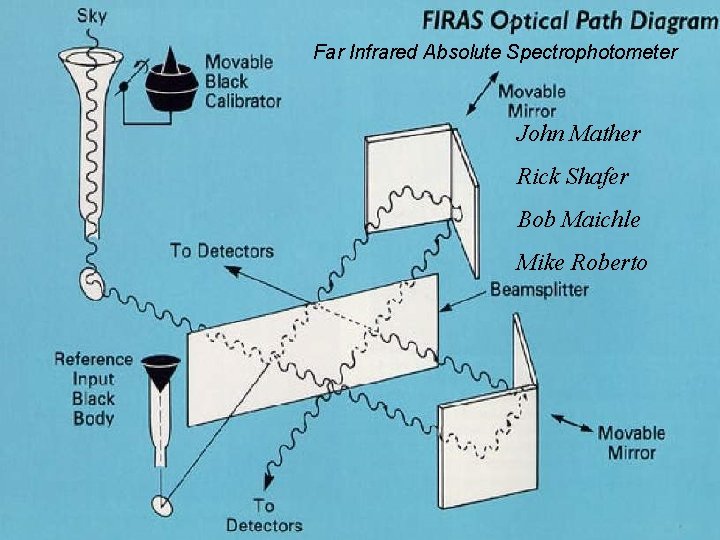
Far Infrared Absolute Spectrophotometer John Mather Rick Shafer Bob Maichle Mike Roberto
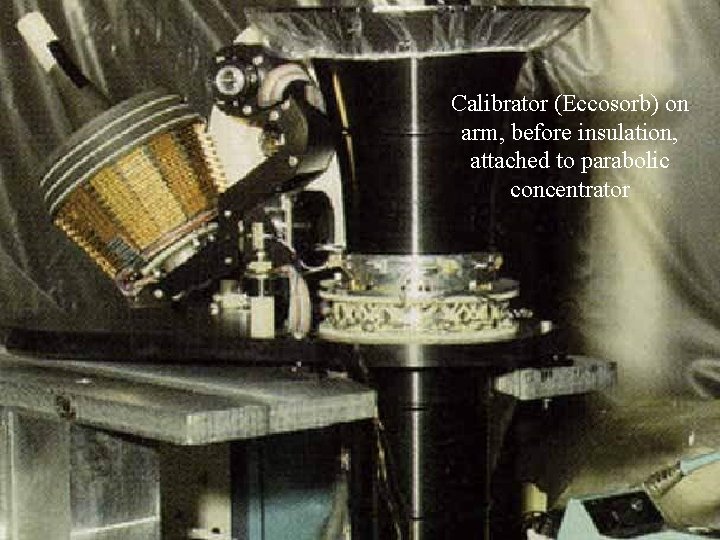
Calibrator (Eccosorb) on arm, before insulation, attached to parabolic concentrator
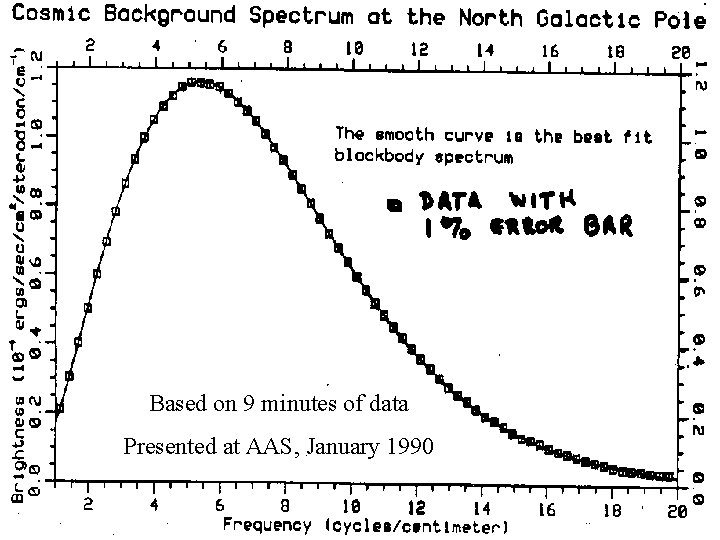
Based on 9 minutes of data Presented at AAS, January 1990
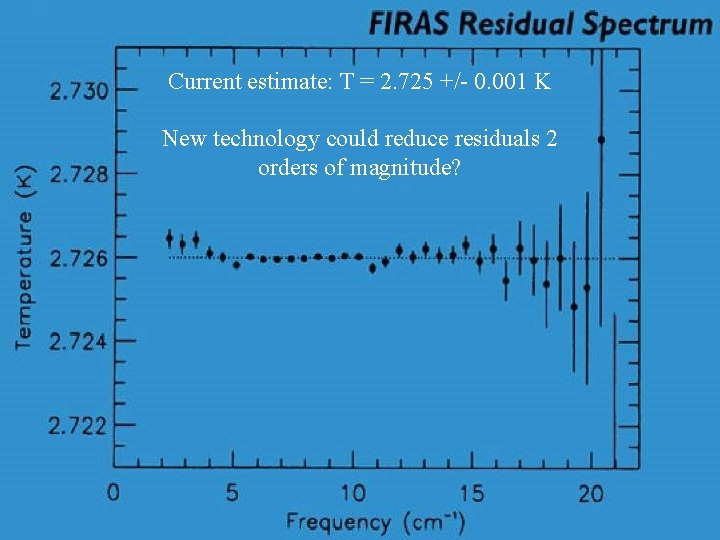
Current estimate: T = 2. 725 +/- 0. 001 K New technology could reduce residuals 2 orders of magnitude?
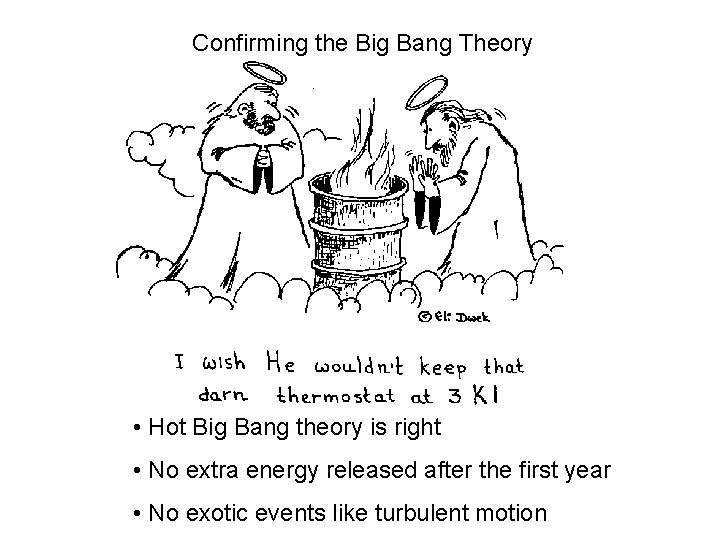
Confirming the Big Bang Theory • Hot Big Bang theory is right • No extra energy released after the first year • No exotic events like turbulent motion
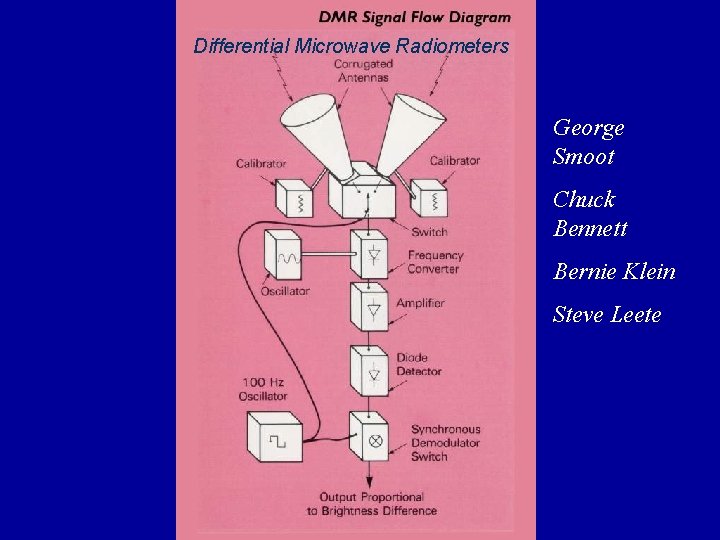
Differential Microwave Radiometers George Smoot Chuck Bennett Bernie Klein Steve Leete
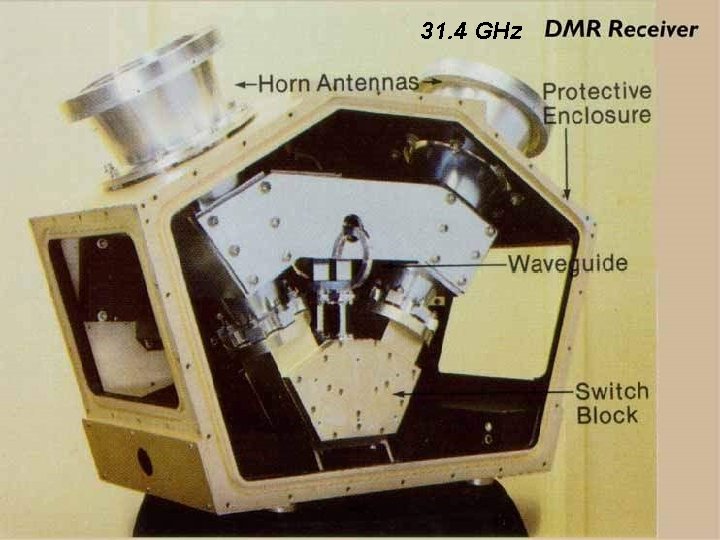
31. 4 GHz
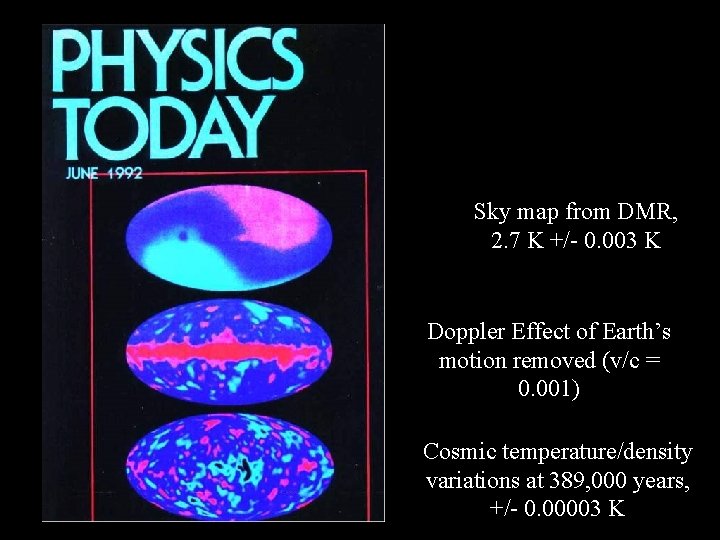
Sky map from DMR, 2. 7 K +/- 0. 003 K Doppler Effect of Earth’s motion removed (v/c = 0. 001) Cosmic temperature/density variations at 389, 000 years, +/- 0. 00003 K
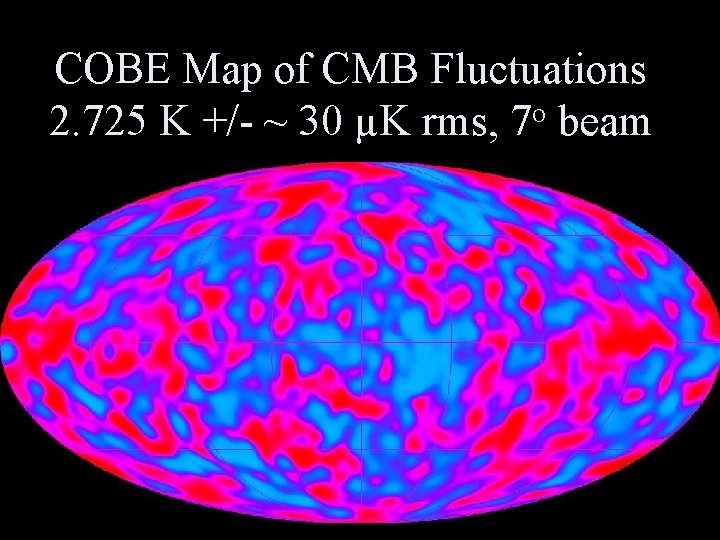
COBE Map of CMB Fluctuations 2. 725 K +/- ~ 30 µK rms, 7 o beam
DIRBE (Diffuse Infrared Background Experiment) • Map entire sky in 10 bands from 1. 2 to 240 µm • Measure, understand, and subtract for zodiacal and galactic foregrounds • Determine small residual from early universe, primeval galaxies, etc. • Requires absolute calibration
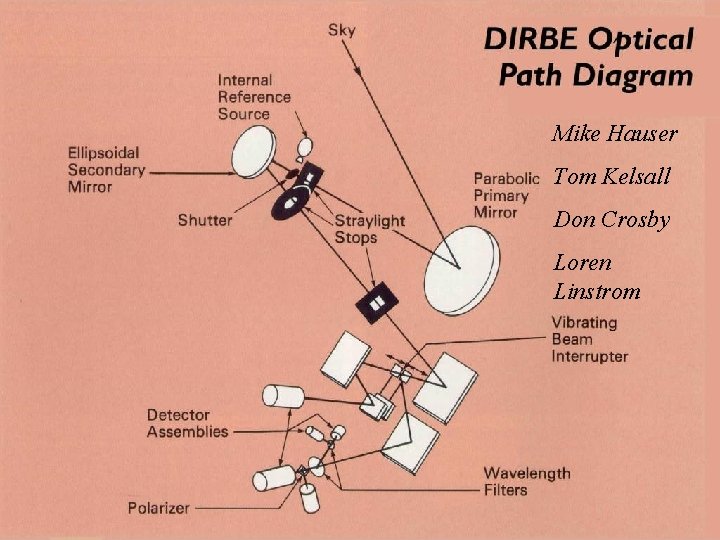
Mike Hauser Tom Kelsall Don Crosby Loren Linstrom
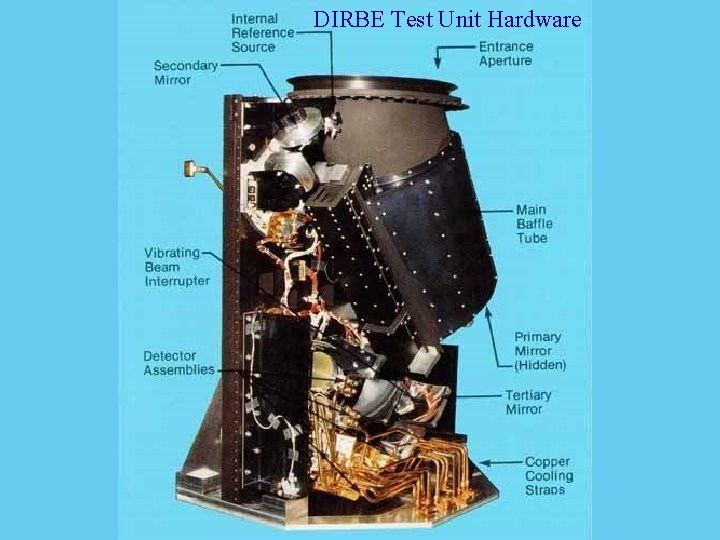
DIRBE Test Unit Hardware
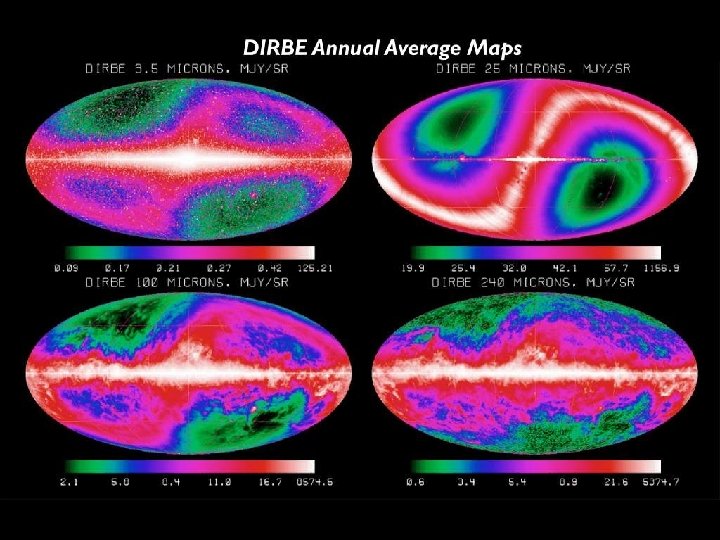
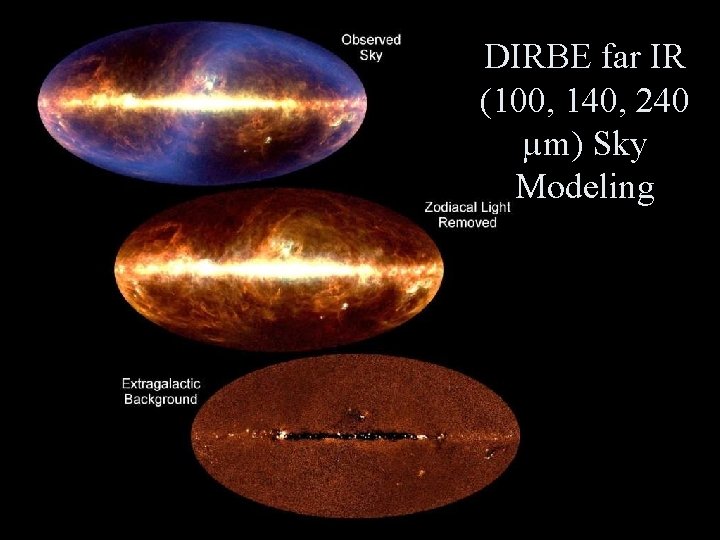
DIRBE far IR (100, 140, 240 µm) Sky Modeling
COBE Cosmology • CMB has blackbody spectrum, F/Fmax <50 ppm. Strong limits, about 0. 01%, on energy conversion (from turbulence, unstable particles, etc. ) after t = 1 year. No good explanation besides Hot Big Bang. • CMB has spatial structure, 0. 001% on scales > 7 o, consistent with scale-invariant predictions and inflation, dark matter and dark energy or constant, and formation of galaxies and clusters by gravity. • CIBR has 2 parts, near (few microns) and far (few hundred microns), each with brightness comparable to the known luminosity of visible & near IR galaxies: L of universe is ~ double expected value.
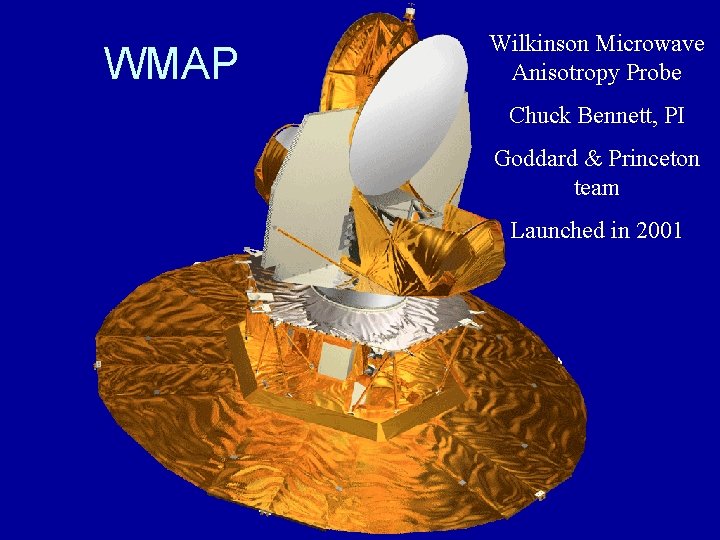
WMAP Wilkinson Microwave Anisotropy Probe Chuck Bennett, PI Goddard & Princeton team Launched in 2001
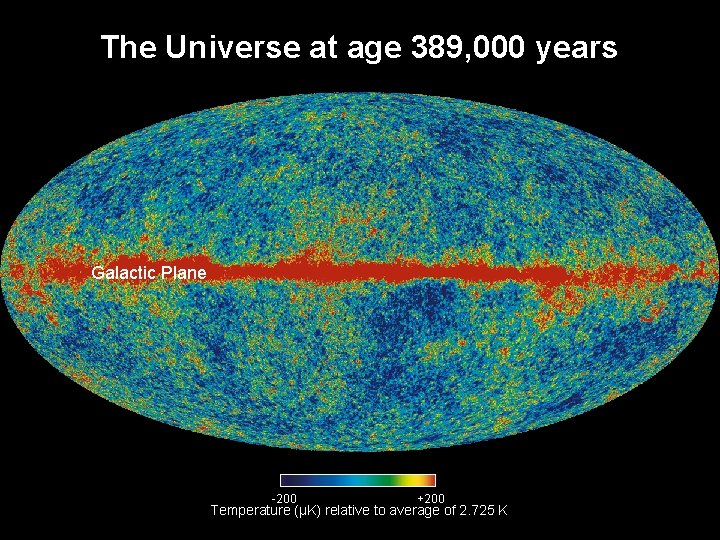
The Universe at age 389, 000 years Galactic Plane -200 +200 Temperature (µK) relative to average of 2. 725 K
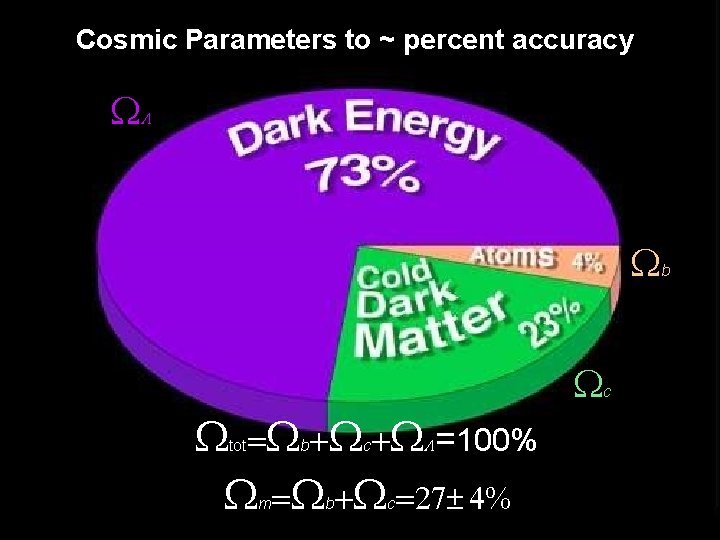
Cosmic Parameters to ~ percent accuracy WL W W W =W +W +W =100% W =W +W =27± 4% tot b m L c b c c b
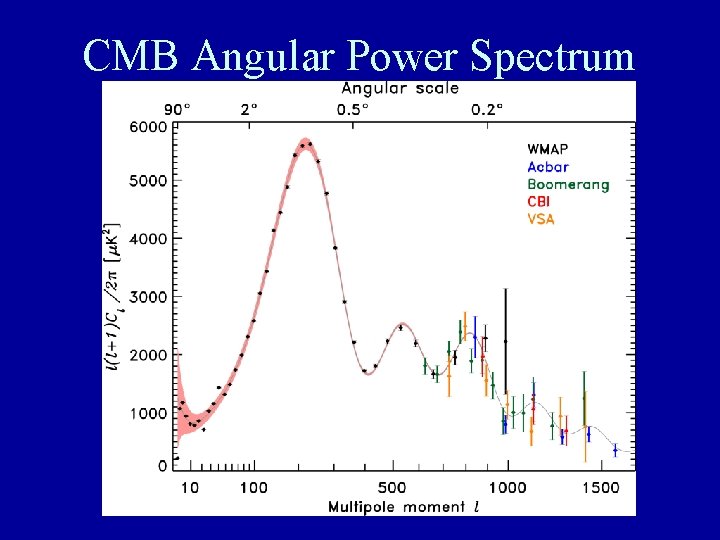
CMB Angular Power Spectrum
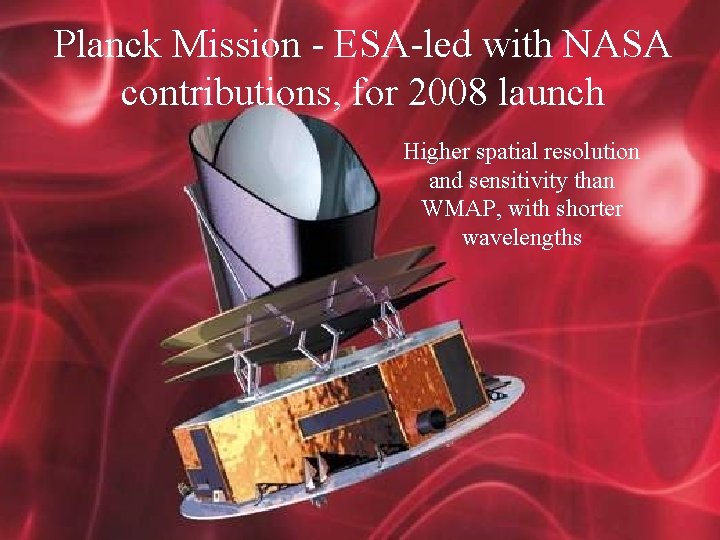
Planck Mission - ESA-led with NASA contributions, for 2008 launch Higher spatial resolution and sensitivity than WMAP, with shorter wavelengths
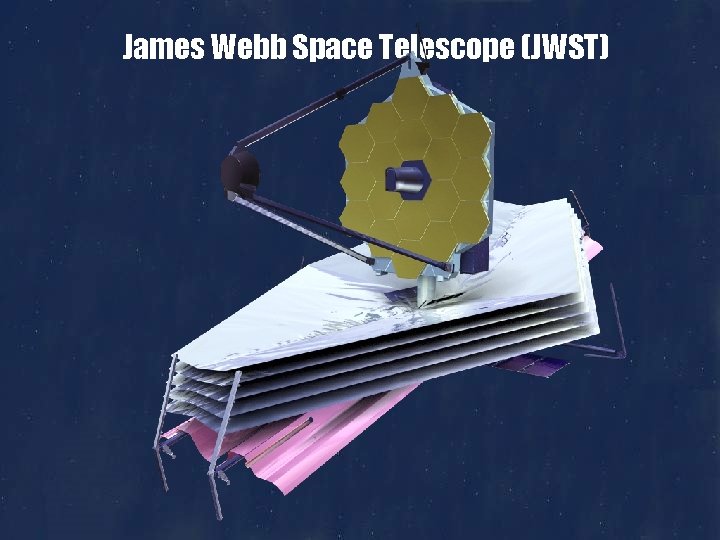
James Webb Space Telescope (JWST) 39
Summary of JWST § Deployable infrared telescope with 6. 5 meter diameter segmented adjustable primary mirror § Cryogenic temperature telescope and 4 instruments for infrared performance, covering 0. 6 to 29 µm § Launch June 2013 on an ESA-supplied Ariane 5 rocket to Sun-Earth L 2: 1. 5 million km away in deep space (needed for cooling) § 5 -year science mission (10 -year goal)
James Webb Space Telescope § § Mission Lead: Goddard Space Flight Center International collaboration with ESA & CSA Prime Contractor: Northrop Grumman Space Technology Instruments: § Near Infrared Camera (NIRCam) – Univ. of Arizona § Near Infrared Spectrograph (NIRSpec) – ESA § Mid-Infrared Instrument (MIRI) – JPL/ESA § Fine Guidance Sensor (FGS) – CSA § Operations: Space Telescope Science Institute
Four Scientific Themes • First objects formed after Big Bang – Super-stars? – Super-supernovae? – Black holes? • Assembly of galaxies (from small pieces? ) • Formation of stars and planetary systems – Hidden in dust clouds • Planetary systems and conditions for life
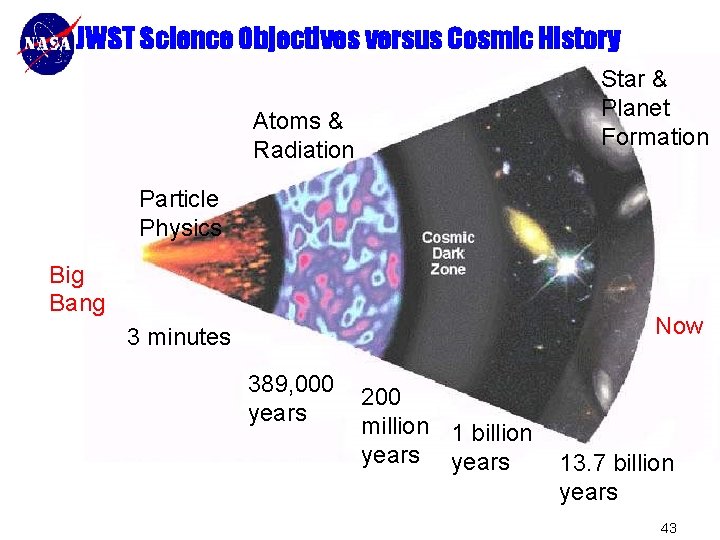
JWST Science Objectives versus Cosmic History Star & Planet Formation Atoms & Radiation Particle Physics Big Bang Now 3 minutes 389, 000 years 200 million 1 billion years 13. 7 billion years 43
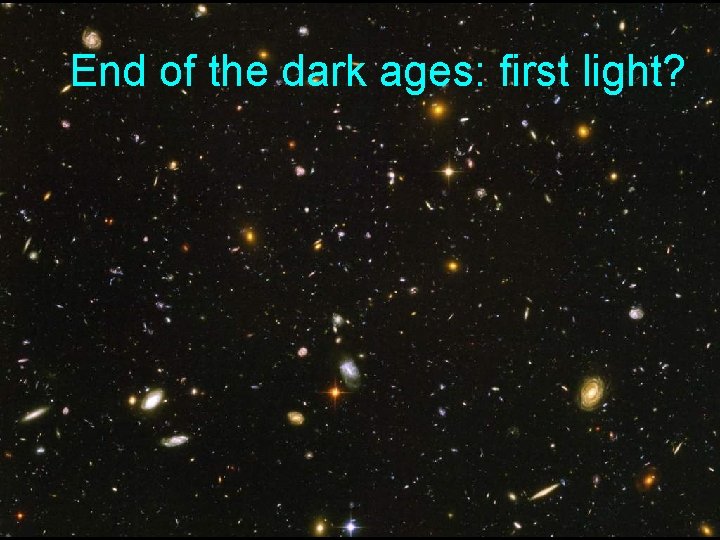
End of the dark ages: first light?
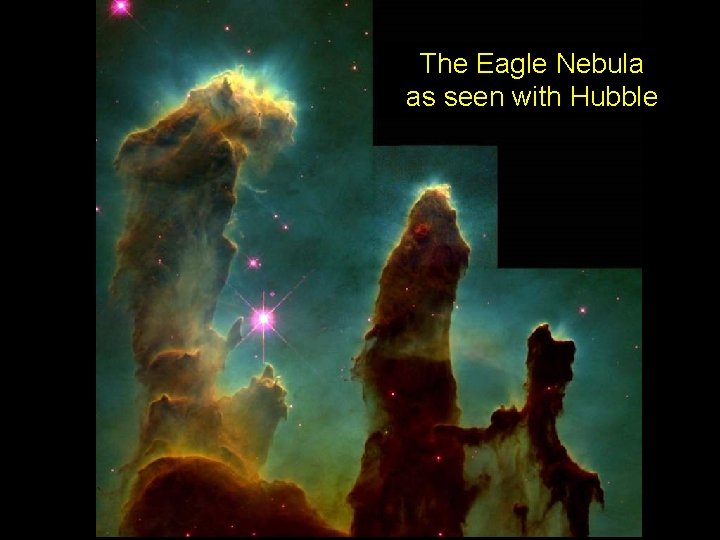
The Eagle Nebula as seen with Hubble The Eagle Nebula as seen by HST
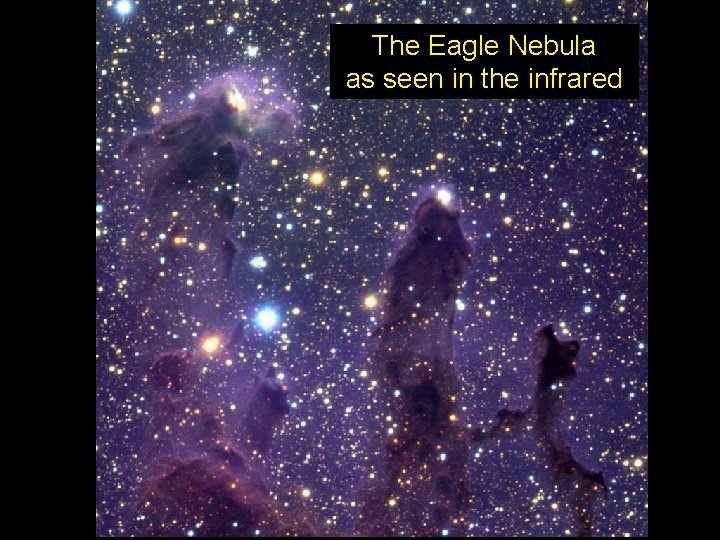
The Eagle Nebula as seen in the infrared
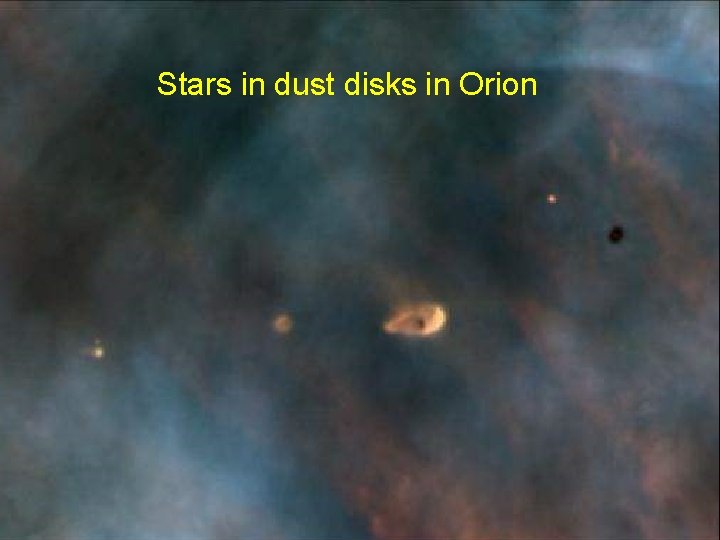
Birth of stars and Stars in dust disks in Orion protoplanetary systems
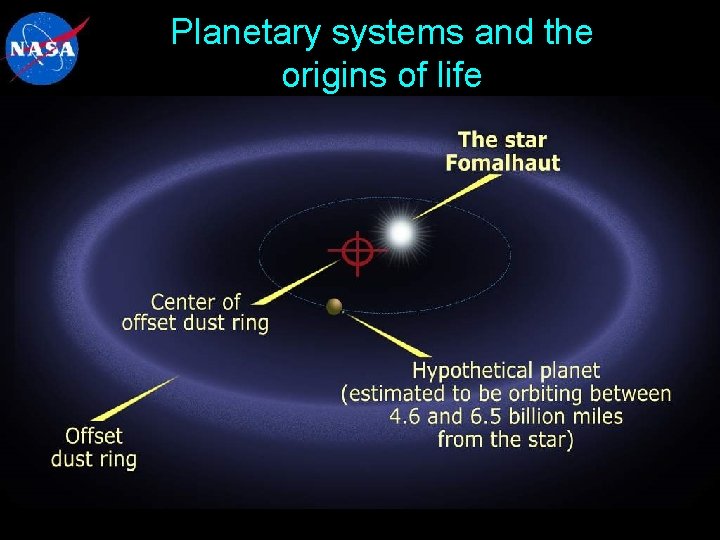
Planetary systems and the origins of life
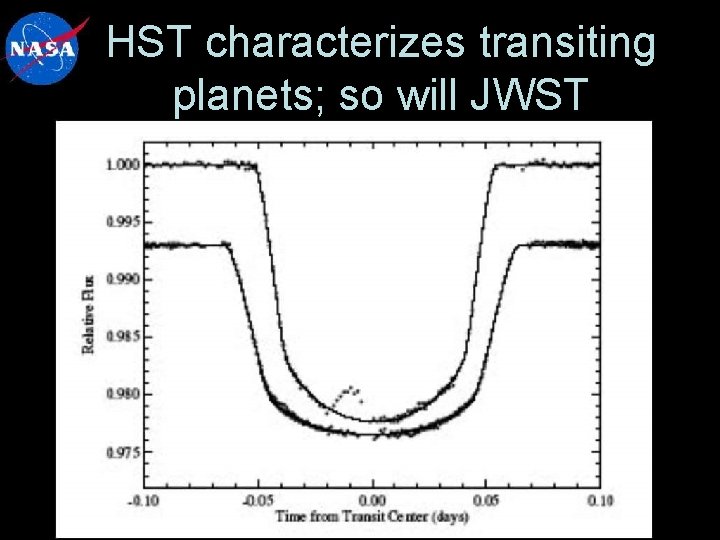
HST characterizes transiting planets; so will JWST HST: planet transits star
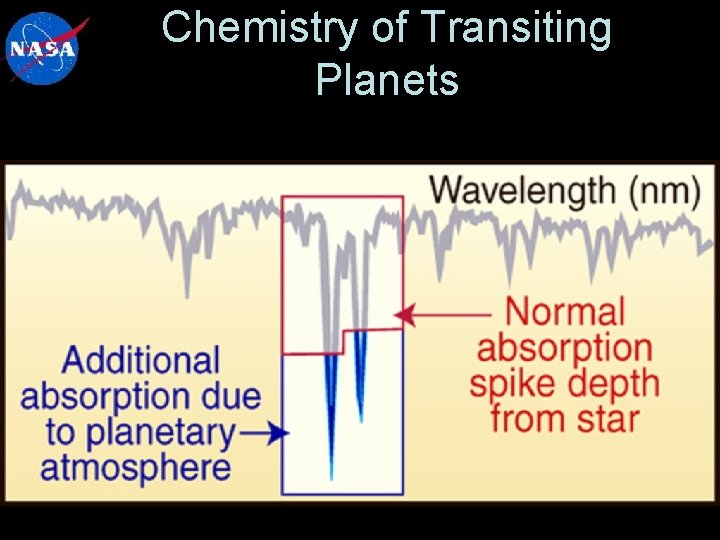
Chemistry of Transiting Planets
What happened before the Big Bang? What’s at the center of a black hole? How did we get here? What is our cosmic destiny? What are space and time? … Big Questions, Ripe to Answer
- Slides: 51