
From the Big Bang to the Nobel Prize
From the Big Bang to the Nobel Prize and the End of the Universe John C. Mather Senior Project Scientist, James Webb Space Telescope, NASA’s Goddard Space Flight Center Mar. 22, 2010 OLLI 2010 Mather 1
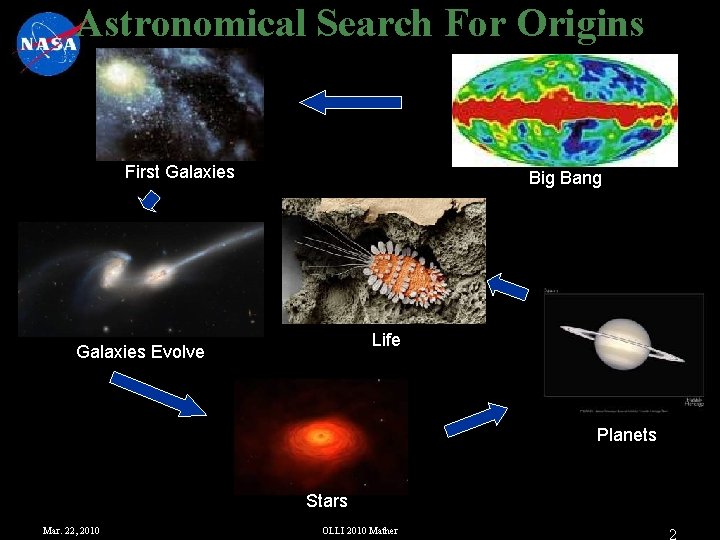
Astronomical Search For Origins First Galaxies Big Bang Life Galaxies Evolve Planets Stars Mar. 22, 2010 OLLI 2010 Mather 2
Can you imagine? Your chin is made of exploded stars! Mar. 22, 2010 OLLI 2010 Mather 3
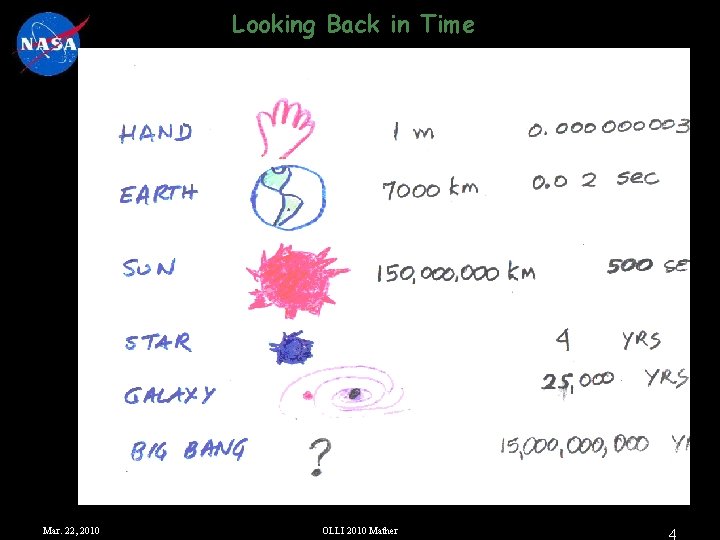
Looking Back in Time Mar. 22, 2010 OLLI 2010 Mather 4
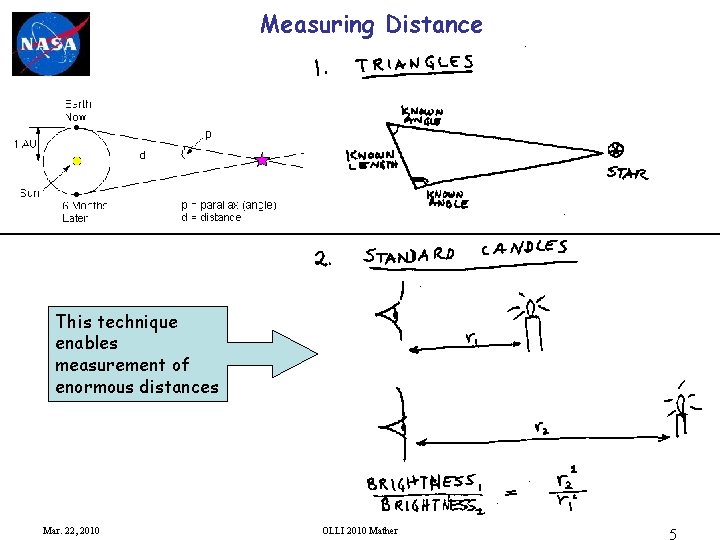
Measuring Distance This technique enables measurement of enormous distances Mar. 22, 2010 OLLI 2010 Mather 5

Astronomer's Toolbox #2: Doppler Shift - Light Atoms emit light at discrete wavelengths that can be seen with a spectroscope This “line spectrum” identifies the atom and its velocity Mar. 22, 2010 OLLI 2010 Mather 6
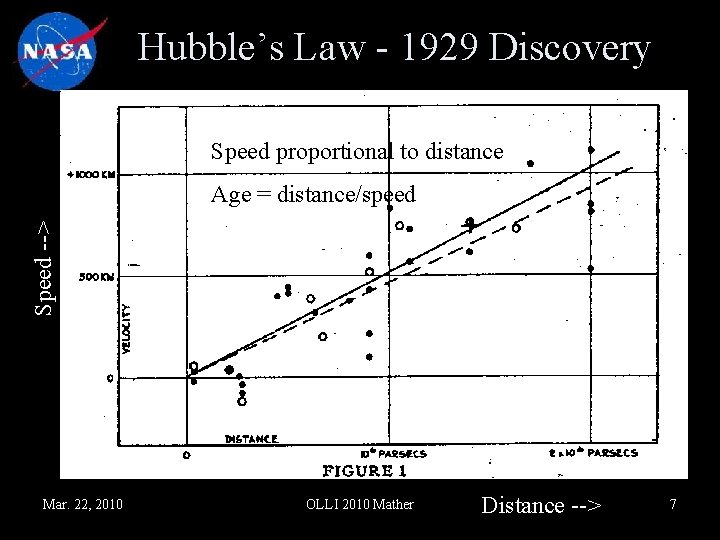
Hubble’s Law - 1929 Discovery Speed proportional to distance Speed --> Age = distance/speed Mar. 22, 2010 OLLI 2010 Mather Distance --> 7
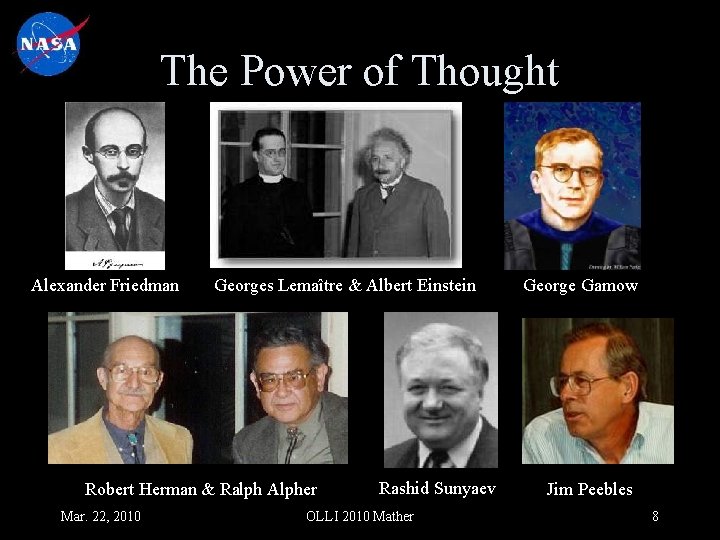
The Power of Thought Alexander Friedman Georges Lemaître & Albert Einstein Robert Herman & Ralph Alpher Mar. 22, 2010 Rashid Sunyaev OLLI 2010 Mather George Gamow Jim Peebles 8
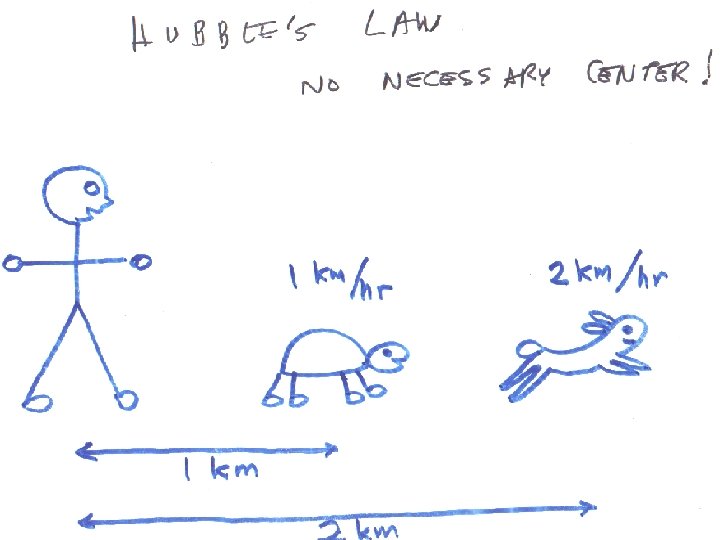
Mar. 22, 2010 OLLI 2010 Mather 9
Big Bang - Cosmic Explosion 13. 7 billion years ago IMPOSSIBLE TO DRAW A PICTURE! Mar. 22, 2010 OLLI 2010 Mather 10
So what happened? • Primordial material, possibly infinite in every dimension • Small piece of it (10 cm in size? ) does something quantum mechanical with unknown physics • Rapid expansion, faster than light can keep up with, stretches this little bit into whole observable universe (cosmic inflation) Mar. 22, 2010 OLLI 2010 Mather 11
How did the whole observable universe fit into that little ball? • Space is mostly empty - stars are very far apart • Atoms are mostly empty - atomic nuclei are very tiny compared to size of atoms • Squeeze very hard, and compression can create antimatter and rip quarks apart inside protons and neutrons • Higher temperatures fit more particles into given volume • Inflation turns “false vacuum” energy into real particles • Squeeze even harder, and the known laws of physics no longer apply - space and time may mix into higher dimensions? Mar. 22, 2010 OLLI 2010 Mather 12
How did a smooth Big Bang make complicated things like us? • Gravity is long range attractive force – Matter distribution is unstable • Remove heat, and system heats up more • Makes condensed objects (stars, galaxies, etc. ) • Gravitational energy flows support complexity • Stars release heat from nuclear reactions – Heat & light received by Earth support complexity, from weather to photosynthesis Mar. 22, 2010 OLLI 2010 Mather 13
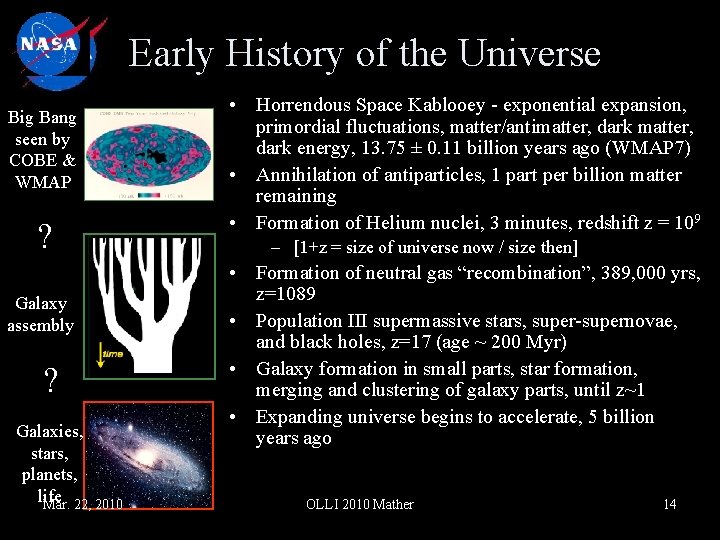
Early History of the Universe Big Bang seen by COBE & WMAP ? Galaxy assembly ? Galaxies, stars, planets, life Mar. 22, 2010 • Horrendous Space Kablooey - exponential expansion, primordial fluctuations, matter/antimatter, dark energy, 13. 75 ± 0. 11 billion years ago (WMAP 7) • Annihilation of antiparticles, 1 part per billion matter remaining • Formation of Helium nuclei, 3 minutes, redshift z = 109 – [1+z = size of universe now / size then] • Formation of neutral gas “recombination”, 389, 000 yrs, z=1089 • Population III supermassive stars, super-supernovae, and black holes, z=17 (age ~ 200 Myr) • Galaxy formation in small parts, star formation, merging and clustering of galaxy parts, until z~1 • Expanding universe begins to accelerate, 5 billion years ago OLLI 2010 Mather 14
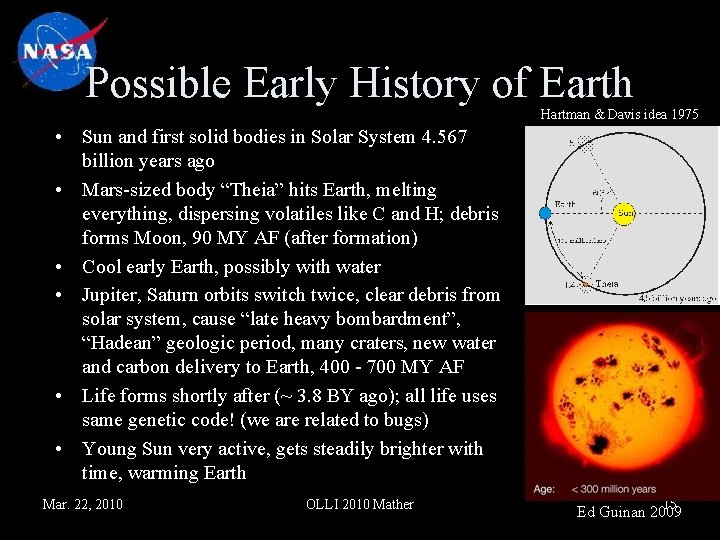
Possible Early History of Earth Hartman & Davis idea 1975 • Sun and first solid bodies in Solar System 4. 567 billion years ago • Mars-sized body “Theia” hits Earth, melting everything, dispersing volatiles like C and H; debris forms Moon, 90 MY AF (after formation) • Cool early Earth, possibly with water • Jupiter, Saturn orbits switch twice, clear debris from solar system, cause “late heavy bombardment”, “Hadean” geologic period, many craters, new water and carbon delivery to Earth, 400 - 700 MY AF • Life forms shortly after (~ 3. 8 BY ago); all life uses same genetic code! (we are related to bugs) • Young Sun very active, gets steadily brighter with time, warming Earth Mar. 22, 2010 OLLI 2010 Mather 15 Ed Guinan 2009
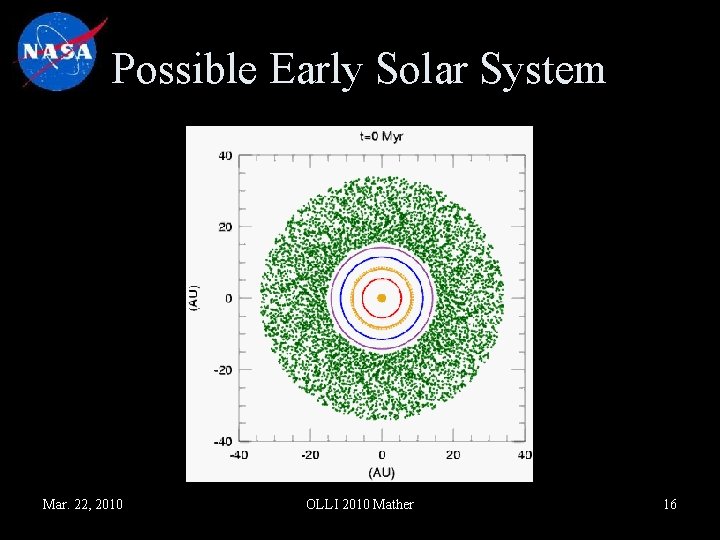
Possible Early Solar System Mar. 22, 2010 OLLI 2010 Mather 16
Continents Floating and Moving • Huge volcanic effects on atmospheric composition (CO 2, H 2 S, etc. fluctuate) • Vaalbara, 3. 3 -3. 6 billion years ago • Rodinia, 1100 – 750 million years ago, split into proto-Laurasia, proto-Gondwana, and Congo Craton “Re-unite Gondwanaland” • Pangaea, 250 MY ago • Atlantic Ocean opens, ~ 100 MY ago Mar. 22, 2010 OLLI 2010 Mather 17
Ice Ages, Heat Ages, and Extinctions • Huronian Ice Age, 2. 7 – 2. 3 BYA • Cryogenian, 850 – 630 MYA, possible “snowball Earth” • Volcanism releases CO 2, warms Earth, enables Cambrian explosion of life, 530 MYA • Andean-Saharan Ice Age, 460 – 430 MYA (an extinction event) • Coal formation, 354 to 290 MYA • Heat extinction event, 250 MYA, life retreats to Antarctica • Dinosaur extinction, coincides with (multiple? ) meteor events, 65 MYA – Chicxulub impact on the Yucatan Peninsula off Mexico? – Volcanic activity in Deccan Traps in India? • Current Ice Age, 2. 58 MYA, ending 10, 000 YA – Riss, 180, 000 – 130, 000 YA (when Homo Sapiens developed in Africa? ) – Wurm, 70, 000 – 10, 000 YA (begin modern civilization) Mar. 22, 2010 OLLI 2010 Mather 18
Civilization and the Future • • • Galileo’s telescope 1609 (2009 International Year of Astronomy) 2012, nothing happens! Possible far future: all the CO 2 goes into rocks, BIG FREEZE 1 BY in future, sun is brighter, Earth gets too hot for us 5 BY, sun becomes red giant, and Andromeda Nebula collides with Milky Way • 7. 6 BY, sun goes out • Accelerating universe continues, galaxies recede, stars go out: dark! Mar. 22, 2010 OLLI 2010 Mather 19
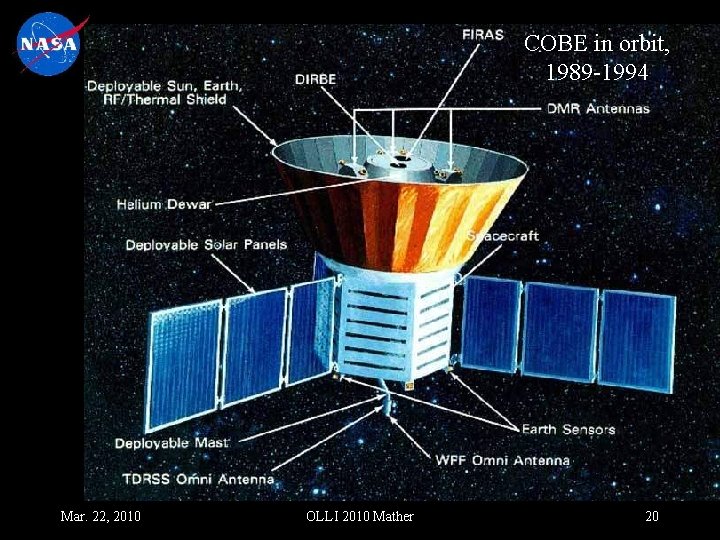
COBE in orbit, 1989 -1994 Mar. 22, 2010 OLLI 2010 Mather 20
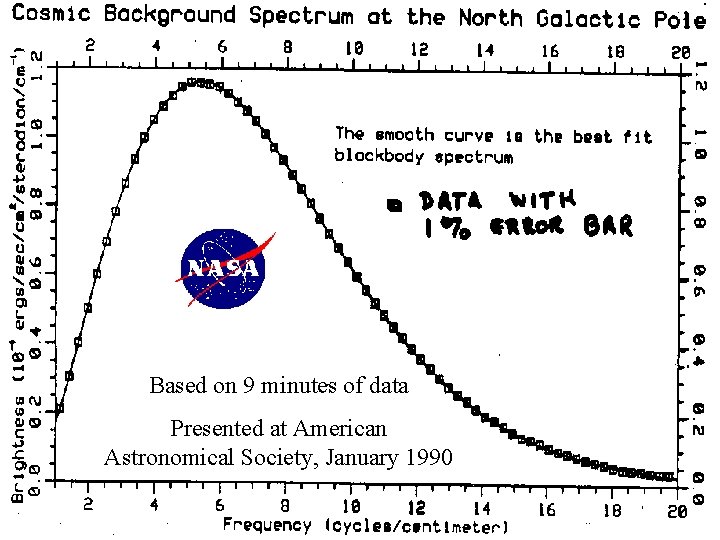
Based on 9 minutes of data Presented at American Astronomical Society, January 1990 Mar. 22, 2010 OLLI 2010 Mather 21
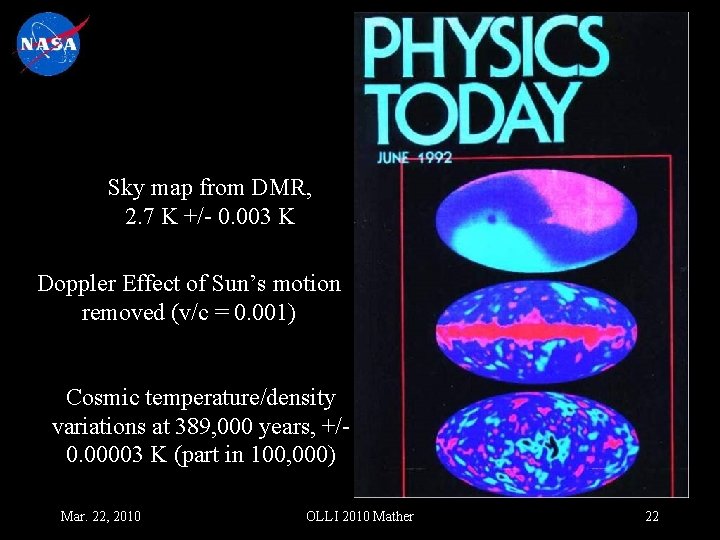
Sky map from DMR, 2. 7 K +/- 0. 003 K Doppler Effect of Sun’s motion removed (v/c = 0. 001) Cosmic temperature/density variations at 389, 000 years, +/0. 00003 K (part in 100, 000) Mar. 22, 2010 OLLI 2010 Mather 22
Nobel Prize Press Release The Royal Swedish Academy of Sciences has decided to award the Nobel Prize in Physics for 2006 jointly to John C. Mather, NASA Goddard Space Flight Center, Greenbelt, MD, USA, and George F. Smoot, University of California, Berkeley, CA, USA "for their discovery of the blackbody form and anisotropy of the cosmic microwave background radiation". Mar. 22, 2010 OLLI 2010 Mather 23
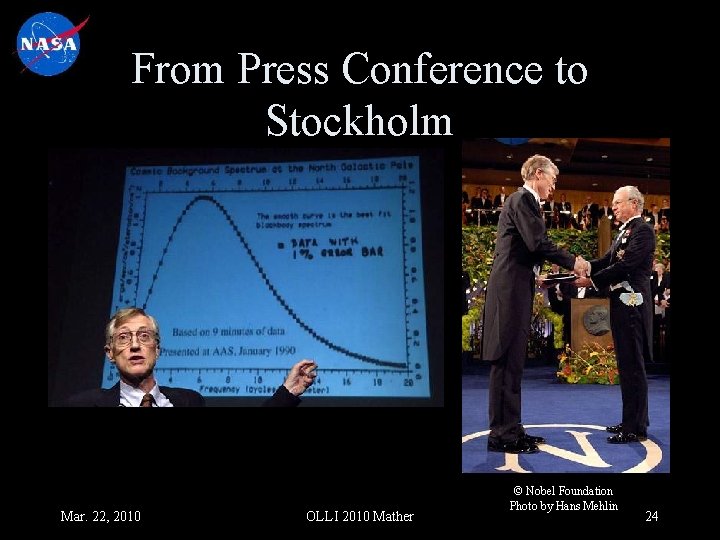
From Press Conference to Stockholm Mar. 22, 2010 OLLI 2010 Mather © Nobel Foundation Photo by Hans Mehlin 24
Mar. 22, 2010 OLLI 2010 Mather 25
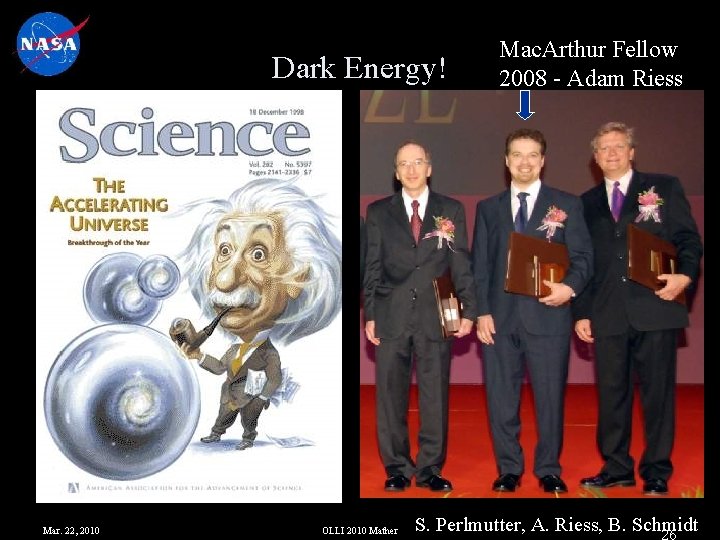
Dark Energy! Mar. 22, 2010 OLLI 2010 Mather Mac. Arthur Fellow 2008 - Adam Riess S. Perlmutter, A. Riess, B. Schmidt 26
A few big mysteries… • • • Why is there matter and no antimatter? What is dark energy? Was Einstein right about relativity? How did we get here? – Formation of stars, chemical elements, galaxies, planets, … • Are we alone? – How did Earth become habitable? – Any other places that could support life? • What happens next? Mar. 22, 2010 OLLI 2010 Mather 27
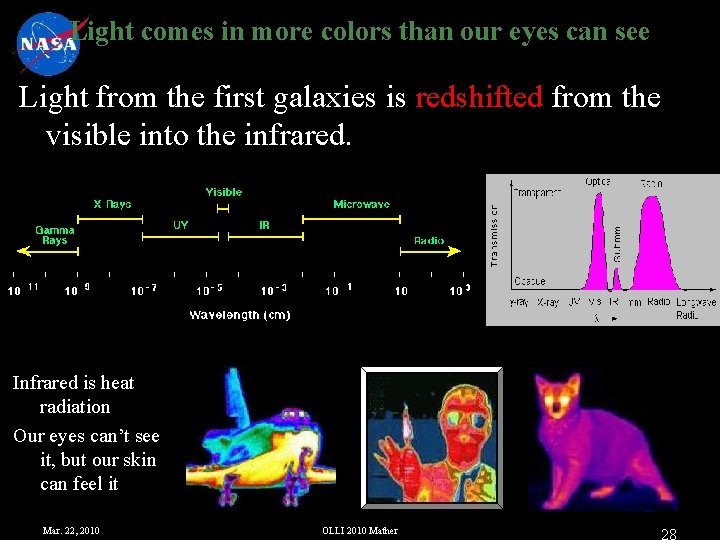
Light comes in more colors than our eyes can see Light from the first galaxies is redshifted from the visible into the infrared. Infrared is heat radiation Our eyes can’t see it, but our skin can feel it Mar. 22, 2010 OLLI 2010 Mather 28
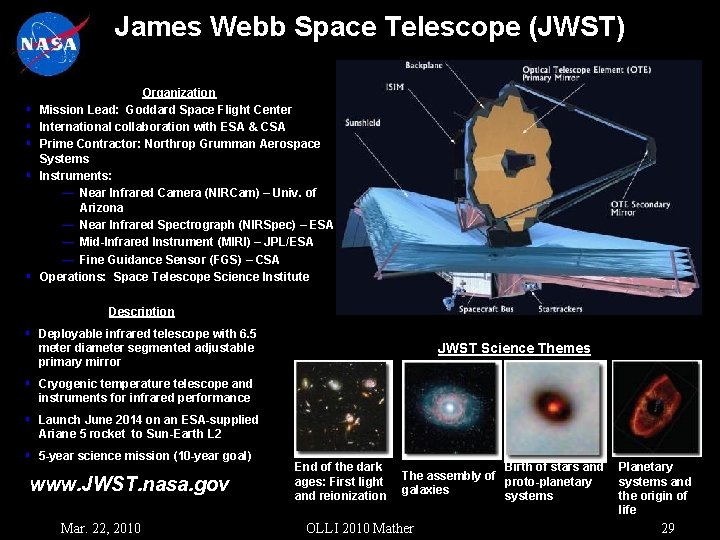
James Webb Space Telescope (JWST) § § § Organization Mission Lead: Goddard Space Flight Center International collaboration with ESA & CSA Prime Contractor: Northrop Grumman Aerospace Systems Instruments: ― Near Infrared Camera (NIRCam) – Univ. of Arizona ― Near Infrared Spectrograph (NIRSpec) – ESA ― Mid-Infrared Instrument (MIRI) – JPL/ESA ― Fine Guidance Sensor (FGS) – CSA Operations: Space Telescope Science Institute Description § Deployable infrared telescope with 6. 5 meter diameter segmented adjustable primary mirror JWST Science Themes § Cryogenic temperature telescope and instruments for infrared performance § Launch June 2014 on an ESA-supplied Ariane 5 rocket to Sun-Earth L 2 § 5 -year science mission (10 -year goal) www. JWST. nasa. gov Mar. 22, 2010 End of the dark ages: First light and reionization Birth of stars and The assembly of proto-planetary galaxies systems OLLI 2010 Mather Planetary systems and the origin of life 29
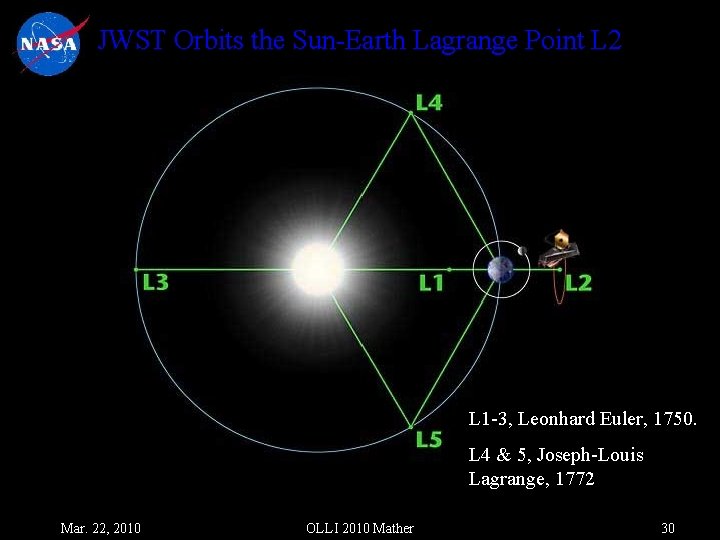
JWST Orbits the Sun-Earth Lagrange Point L 2 L 1 -3, Leonhard Euler, 1750. L 4 & 5, Joseph-Louis Lagrange, 1772 Mar. 22, 2010 OLLI 2010 Mather 30
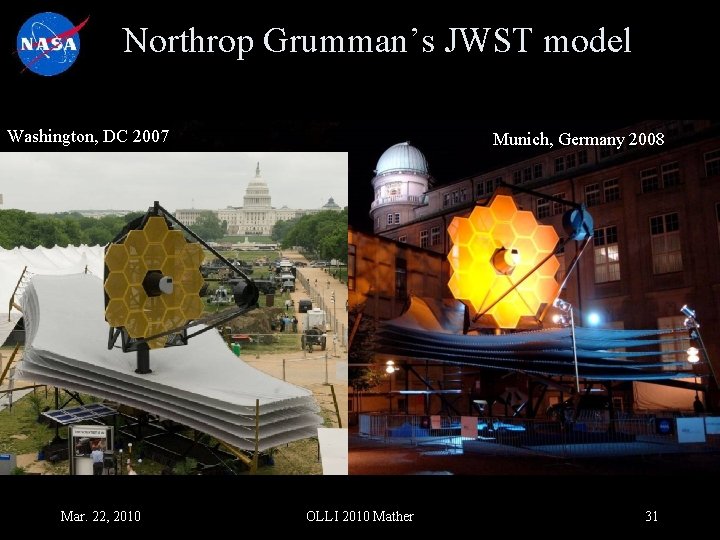
Northrop Grumman’s JWST model Washington, DC 2007 Mar. 22, 2010 Munich, Germany 2008 OLLI 2010 Mather 31
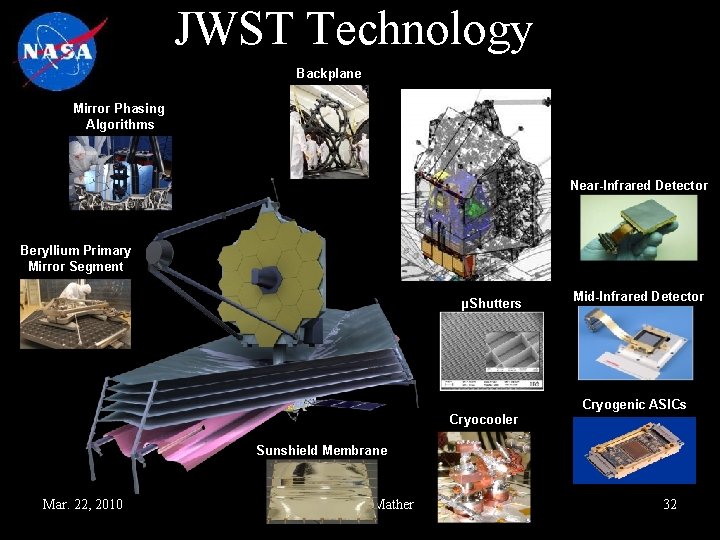
JWST Technology Backplane Mirror Phasing Algorithms Near-Infrared Detector Beryllium Primary Mirror Segment μShutters Mid-Infrared Detector Cryogenic ASICs Cryocooler Sunshield Membrane Mar. 22, 2010 OLLI 2010 Mather 32
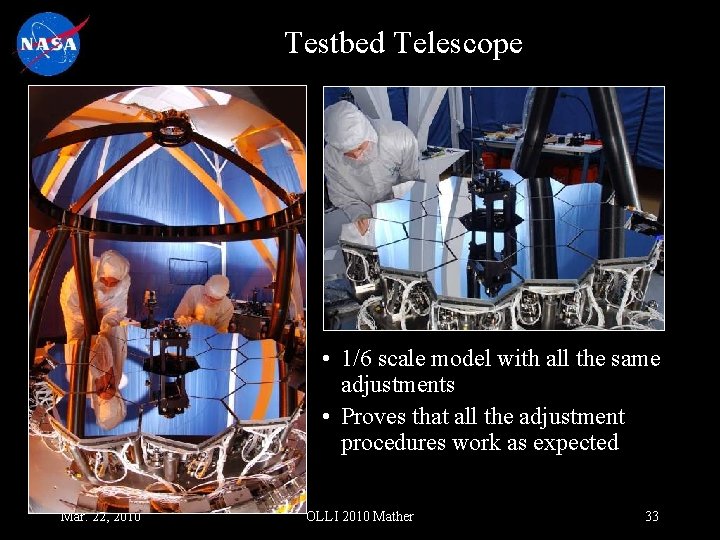
Testbed Telescope • 1/6 scale model with all the same adjustments • Proves that all the adjustment procedures work as expected Mar. 22, 2010 OLLI 2010 Mather 33
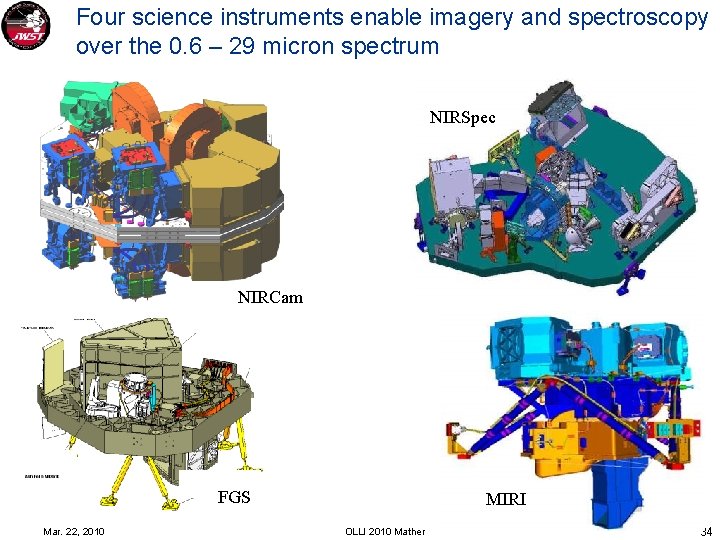
Four science instruments enable imagery and spectroscopy over the 0. 6 – 29 micron spectrum NIRSpec NIRCam FGS Mar. 22, 2010 MIRI OLLI 2010 Mather 34
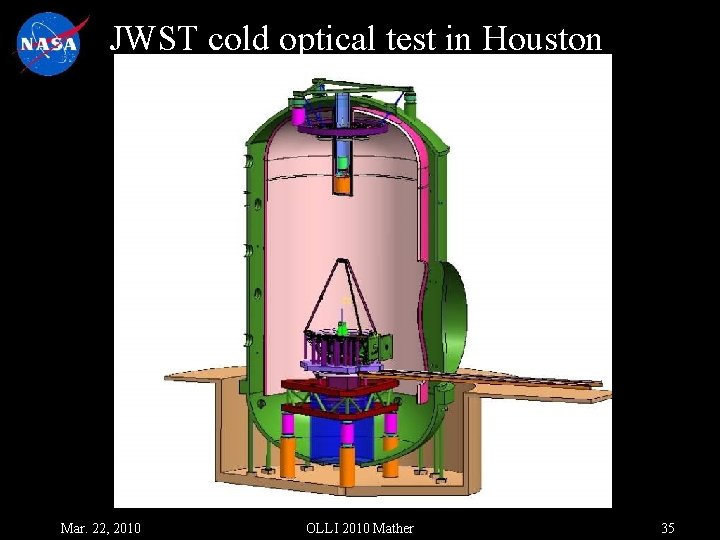
JWST cold optical test in Houston Mar. 22, 2010 OLLI 2010 Mather 35
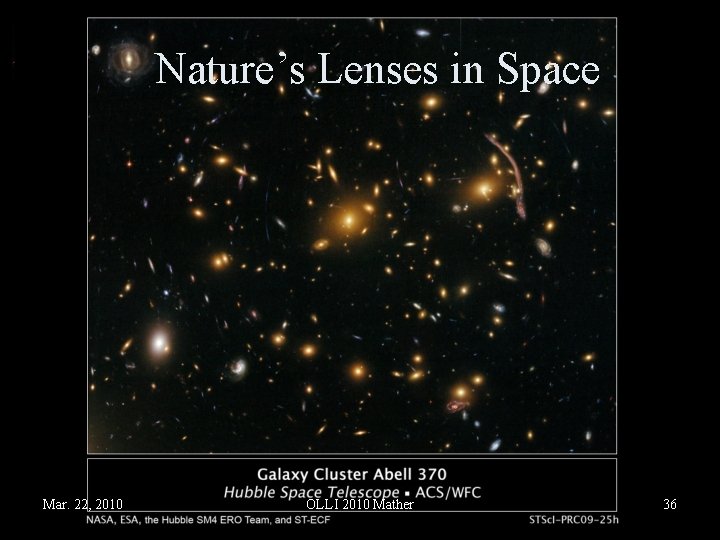
Nature’s Lenses in Space Mar. 22, 2010 OLLI 2010 Mather 36
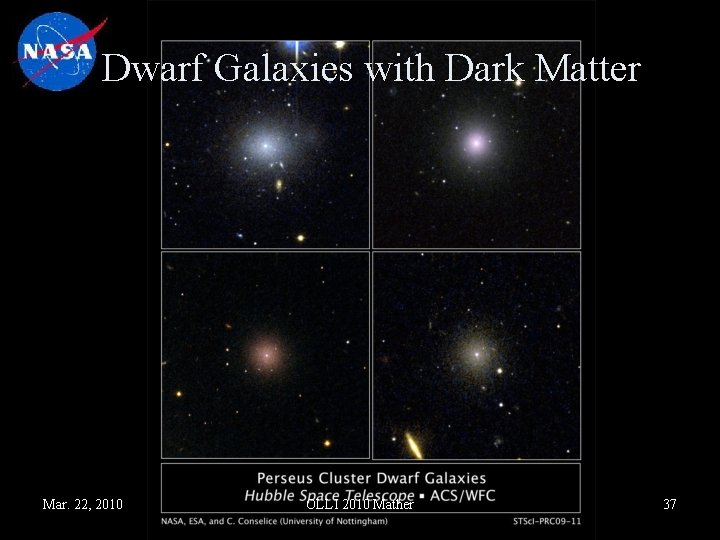
Dwarf Galaxies with Dark Matter Mar. 22, 2010 OLLI 2010 Mather 37
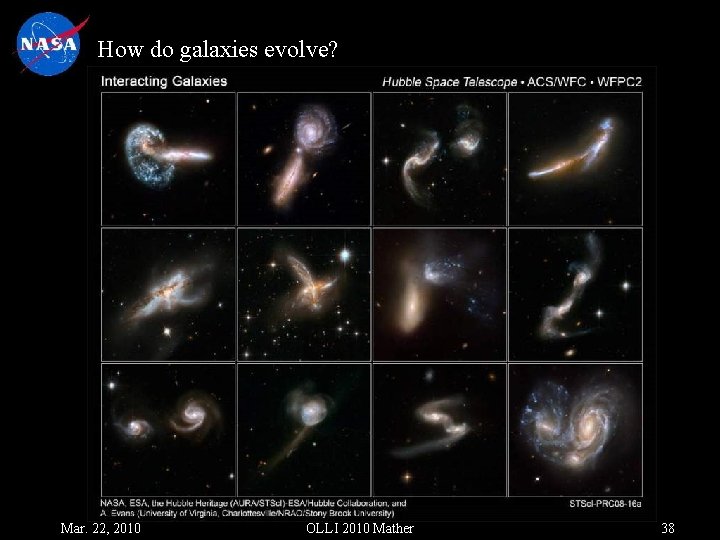
How do galaxies evolve? Mar. 22, 2010 OLLI 2010 Mather 38
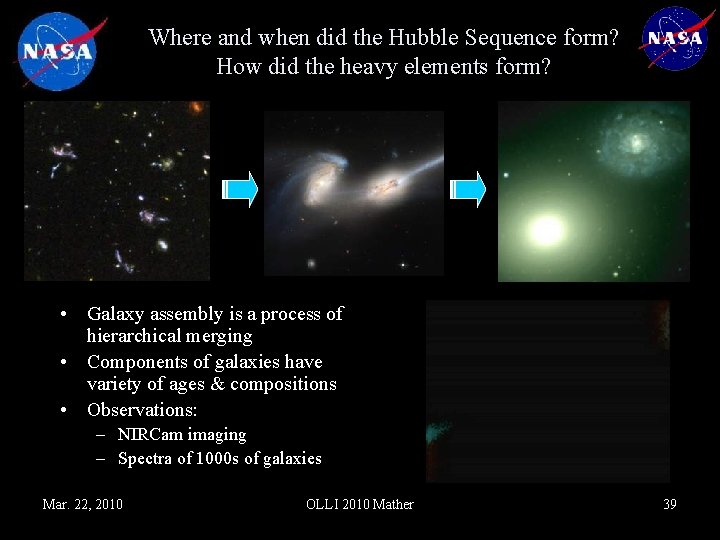
Where and when did the Hubble Sequence form? How did the heavy elements form? • Galaxy assembly is a process of hierarchical merging • Components of galaxies have variety of ages & compositions • Observations: – NIRCam imaging – Spectra of 1000 s of galaxies Mar. 22, 2010 OLLI 2010 Mather 39
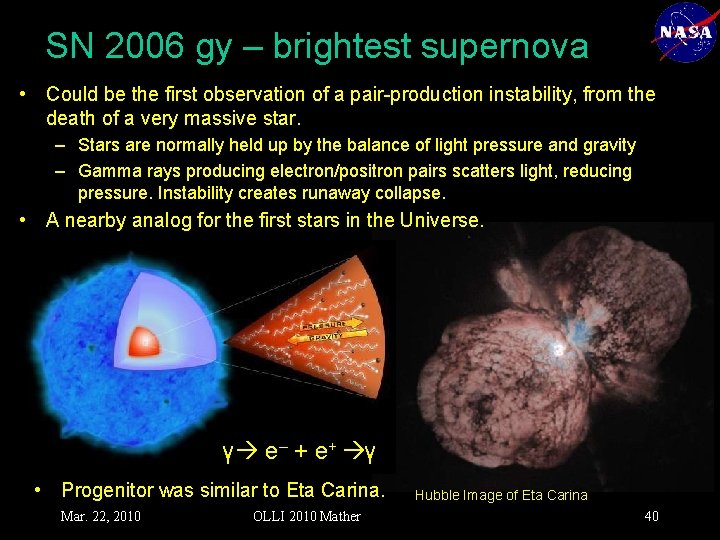
SN 2006 gy – brightest supernova • Could be the first observation of a pair-production instability, from the death of a very massive star. – Stars are normally held up by the balance of light pressure and gravity – Gamma rays producing electron/positron pairs scatters light, reducing pressure. Instability creates runaway collapse. • A nearby analog for the first stars in the Universe. γ e– + e+ γ • Progenitor was similar to Eta Carina. Mar. 22, 2010 OLLI 2010 Mather Hubble Image of Eta Carina 40
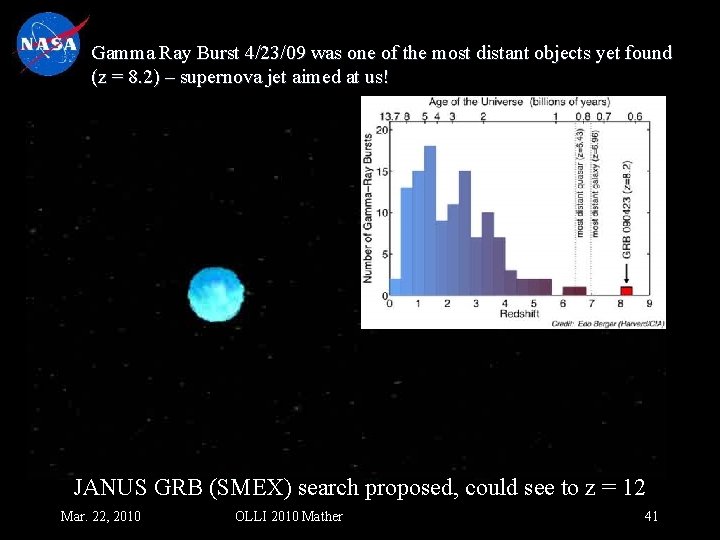
Gamma Ray Burst 4/23/09 was one of the most distant objects yet found (z = 8. 2) – supernova jet aimed at us! JANUS GRB (SMEX) search proposed, could see to z = 12 Mar. 22, 2010 OLLI 2010 Mather 41
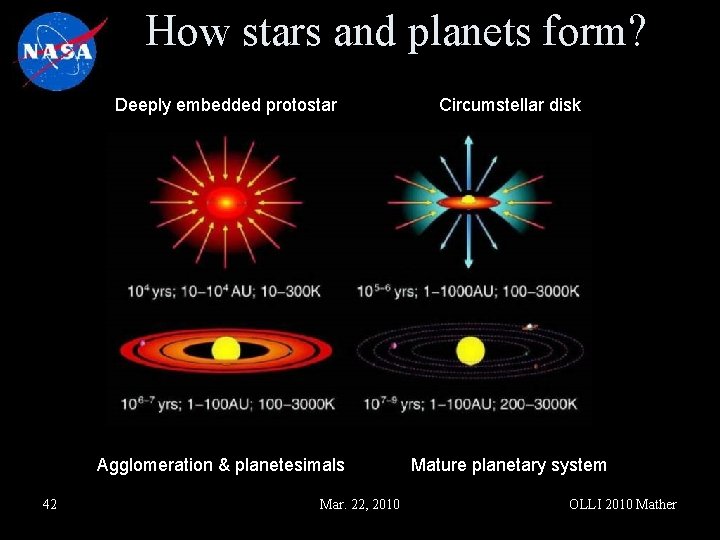
How stars and planets form? 42 Deeply embedded protostar Circumstellar disk Agglomeration & planetesimals Mature planetary system Mar. 22, 2010 OLLI 2010 Mather
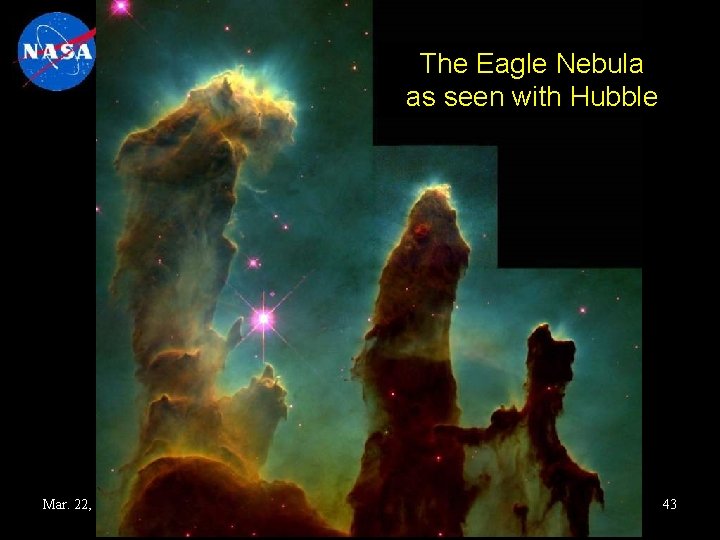
The Eagle Nebula as seen with Hubble Mar. 22, 2010 The Eagle Nebula as seen HST OLLI 2010 by Mather 43
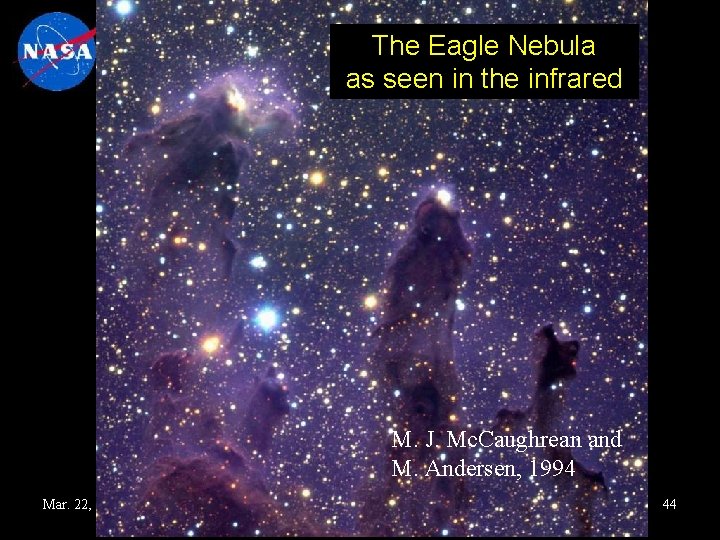
The Eagle Nebula as seen in the infrared M. J. Mc. Caughrean and M. Andersen, 1994 Mar. 22, 2010 OLLI 2010 Mather 44
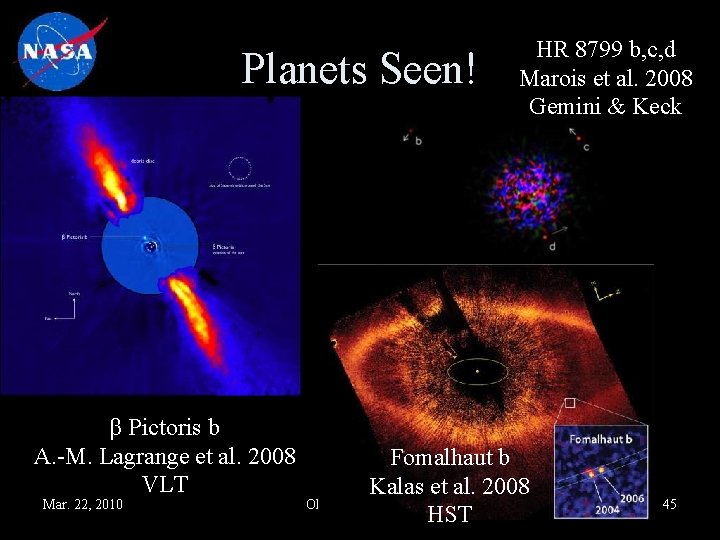
Planets Seen! β Pictoris b A. -M. Lagrange et al. 2008 VLT Mar. 22, 2010 HR 8799 b, c, d Marois et al. 2008 Gemini & Keck Fomalhaut b Kalas et al. 2008 OLLI 2010 Mather HST 45
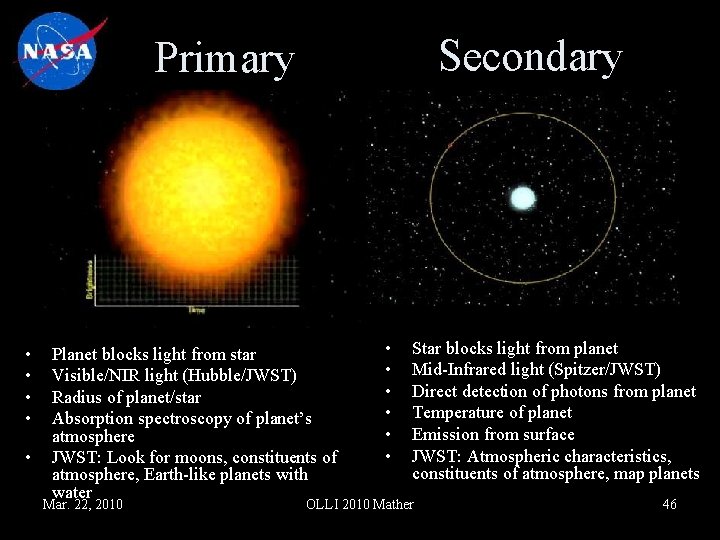
Secondary Primary • • • Planet blocks light from star Visible/NIR light (Hubble/JWST) Radius of planet/star Absorption spectroscopy of planet’s atmosphere JWST: Look for moons, constituents of atmosphere, Earth-like planets with water Mar. 22, 2010 • • • Star blocks light from planet Mid-Infrared light (Spitzer/JWST) Direct detection of photons from planet Temperature of planet Emission from surface JWST: Atmospheric characteristics, constituents of atmosphere, map planets OLLI 2010 Mather 46
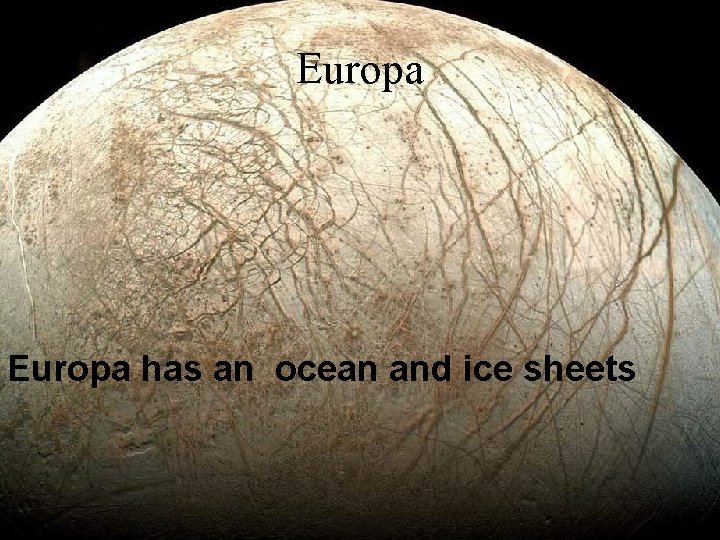
Europa has an ocean and ice sheets Mar. 22, 2010 OLLI 2010 Mather 47
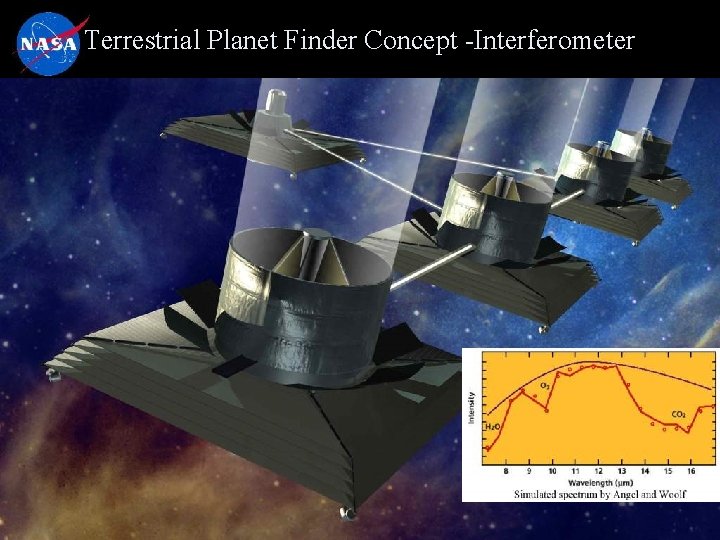
Terrestrial Planet Finder Concept -Interferometer Mar. 22, 2010 OLLI 2010 Mather 48
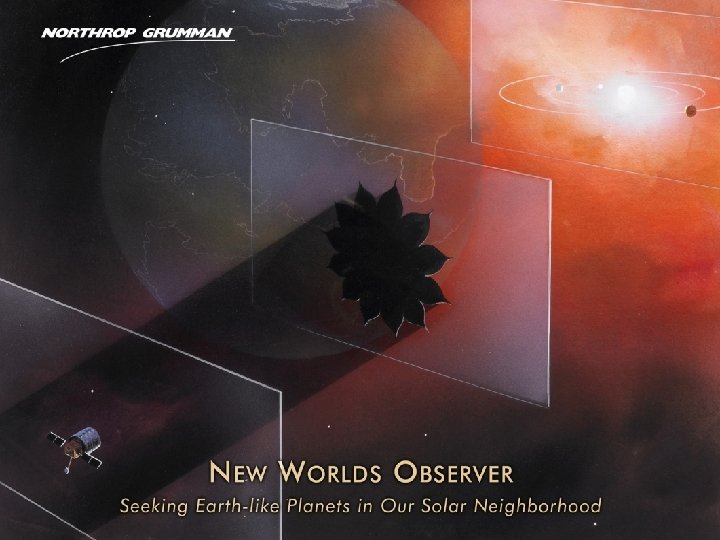
JWST
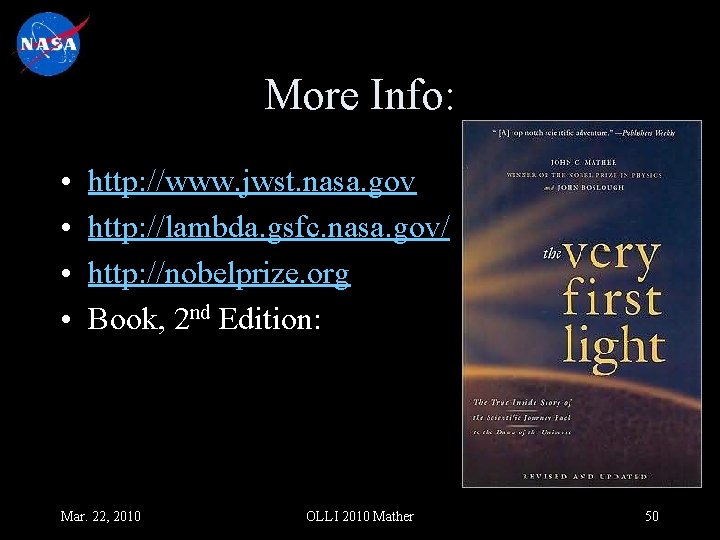
More Info: • • http: //www. jwst. nasa. gov http: //lambda. gsfc. nasa. gov/ http: //nobelprize. org Book, 2 nd Edition: Mar. 22, 2010 OLLI 2010 Mather 50
The End And the beginning! Mar. 22, 2010 OLLI 2010 Mather 51
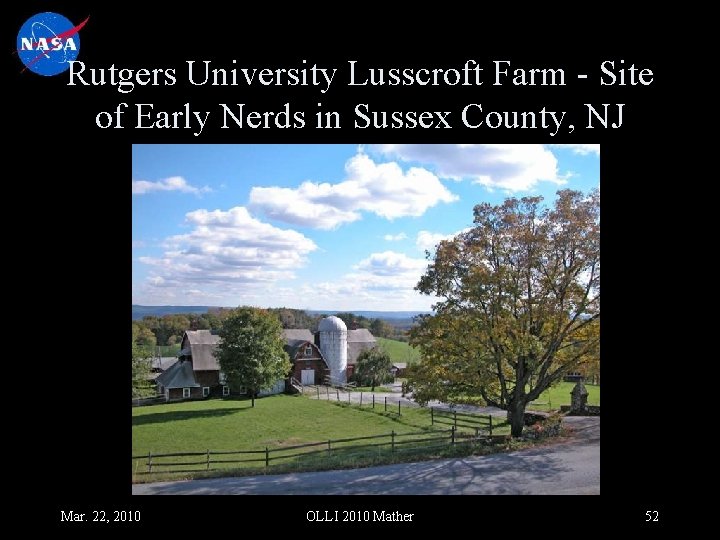
Rutgers University Lusscroft Farm - Site of Early Nerds in Sussex County, NJ Mar. 22, 2010 OLLI 2010 Mather 52
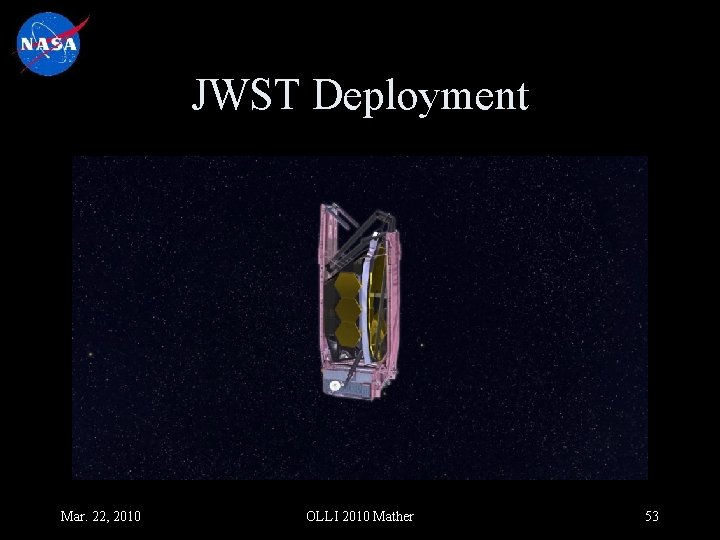
JWST Deployment Mar. 22, 2010 OLLI 2010 Mather 53
- Slides: 53