
From Tests to Rubrics Strategies for Assessing Information
From Tests to Rubrics: Strategies for Assessing Information Literacy at Three Institutions
Welcome! Cynthia Kane Instruction and Assessment Librarian, Emporia State University Kathy Clarke First-Year Librarian, James Madison University Carolyn Caffrey Gardner Interim Director of Assessment in Academic Affairs & Information Literacy Coordinator, California State University Dominguez Hills Carolyn Radcliff Information Literacy Librarian, Carrick Enterprises
Information Literacy Information literacy is the set of integrated abilities encompassing the reflective discovery of information, the understanding of how information is produced and valued, and the use of information in creating new knowledge and participating ethically in communities of learning. Association of College and Research Libraries Information Literacy Framework for Higher Education 2015
Evidence for Benefits of Information Literacy Instruction ● For students in their first year ● For students in general education courses ● Lasting improvement in academic performance for undergraduate students Association of College and Research Libraries. Academic Library Impact on Student Learning and Success: Findings from Assessment in Action Team Projects. Prepared by Karen Brown with contributions by Kara J. Malenfant. Chicago: Association of College and Research Libraries, 2017
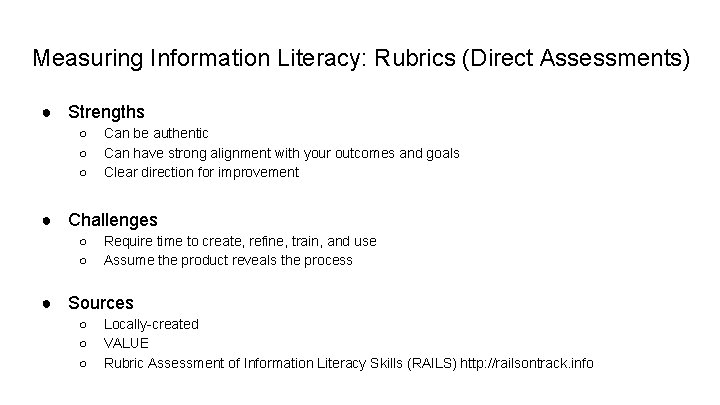
Measuring Information Literacy: Rubrics (Direct Assessments) ● Strengths ○ ○ ○ Can be authentic Can have strong alignment with your outcomes and goals Clear direction for improvement ● Challenges ○ ○ Require time to create, refine, train, and use Assume the product reveals the process ● Sources ○ ○ ○ Locally-created VALUE Rubric Assessment of Information Literacy Skills (RAILS) http: //railsontrack. info
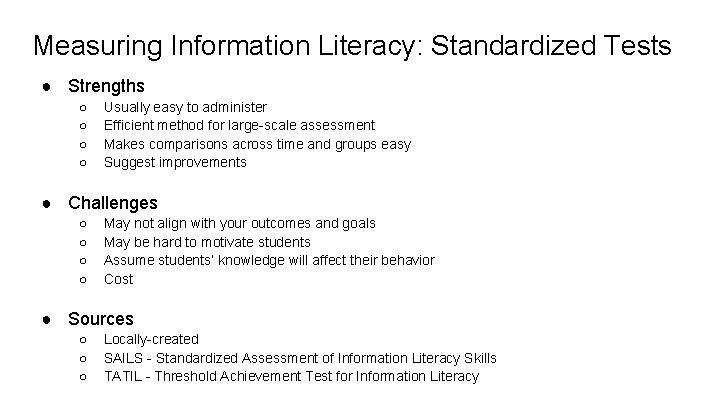
Measuring Information Literacy: Standardized Tests ● Strengths ○ ○ Usually easy to administer Efficient method for large-scale assessment Makes comparisons across time and groups easy Suggest improvements ● Challenges ○ ○ May not align with your outcomes and goals May be hard to motivate students Assume students’ knowledge will affect their behavior Cost ● Sources ○ ○ ○ Locally-created SAILS - Standardized Assessment of Information Literacy Skills TATIL - Threshold Achievement Test for Information Literacy
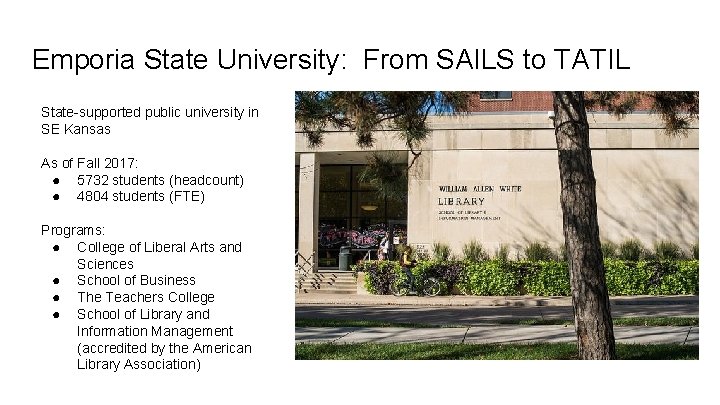
Emporia State University: From SAILS to TATIL State-supported public university in SE Kansas As of Fall 2017: ● 5732 students (headcount) ● 4804 students (FTE) Programs: ● College of Liberal Arts and Sciences ● School of Business ● The Teachers College ● School of Library and Information Management (accredited by the American Library Association)
Information Literacy at Emporia State University Mainly accomplished by: ● Tiered library instruction sessions in English Composition I and English Composition II ● Individual library instruction sessions in discipline-specific undergraduate and graduate courses ● UL 100 - Research Skills, Information, and Technology (our focus for today’s presentation!)
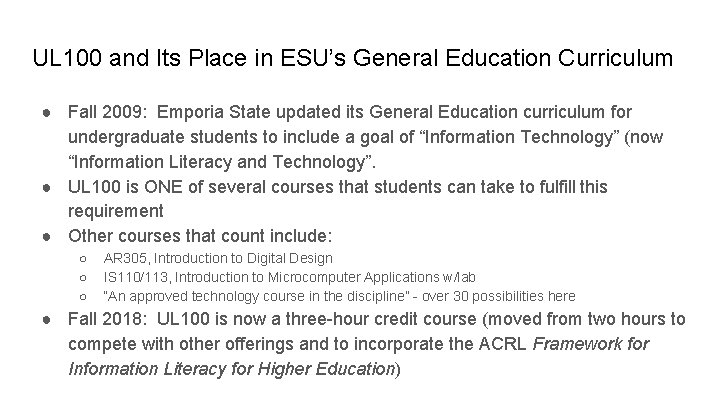
UL 100 and Its Place in ESU’s General Education Curriculum ● Fall 2009: Emporia State updated its General Education curriculum for undergraduate students to include a goal of “Information Technology” (now “Information Literacy and Technology”. ● UL 100 is ONE of several courses that students can take to fulfill this requirement ● Other courses that count include: ○ ○ ○ AR 305, Introduction to Digital Design IS 110/113, Introduction to Microcomputer Applications w/lab “An approved technology course in the discipline” - over 30 possibilities here ● Fall 2018: UL 100 is now a three-hour credit course (moved from two hours to compete with other offerings and to incorporate the ACRL Framework for Information Literacy for Higher Education)
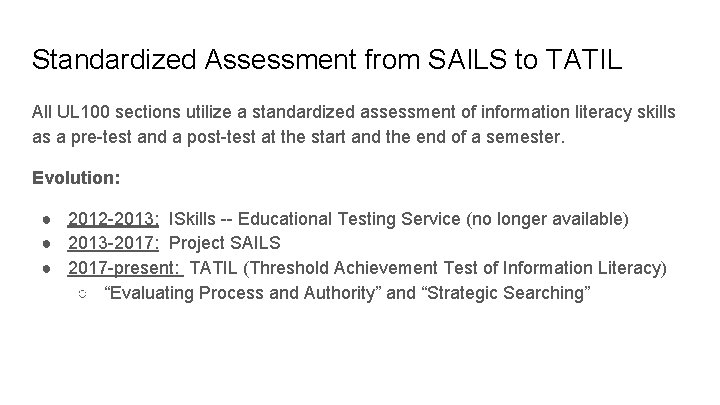
Standardized Assessment from SAILS to TATIL All UL 100 sections utilize a standardized assessment of information literacy skills as a pre-test and a post-test at the start and the end of a semester. Evolution: ● 2012 -2013: ISkills -- Educational Testing Service (no longer available) ● 2013 -2017: Project SAILS ● 2017 -present: TATIL (Threshold Achievement Test of Information Literacy) ○ “Evaluating Process and Authority” and “Strategic Searching”
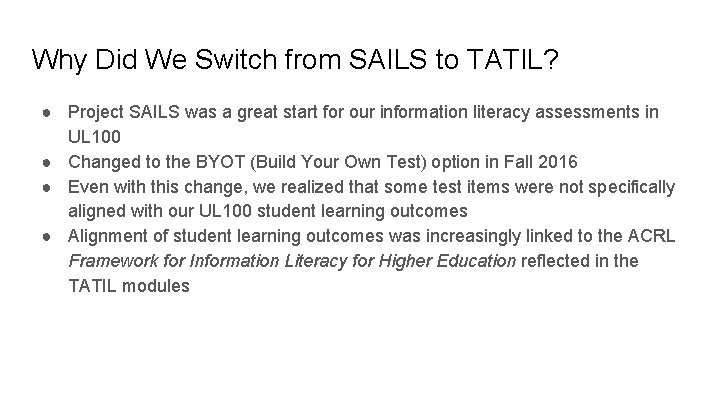
Why Did We Switch from SAILS to TATIL? ● Project SAILS was a great start for our information literacy assessments in UL 100 ● Changed to the BYOT (Build Your Own Test) option in Fall 2016 ● Even with this change, we realized that some test items were not specifically aligned with our UL 100 student learning outcomes ● Alignment of student learning outcomes was increasingly linked to the ACRL Framework for Information Literacy for Higher Education reflected in the TATIL modules
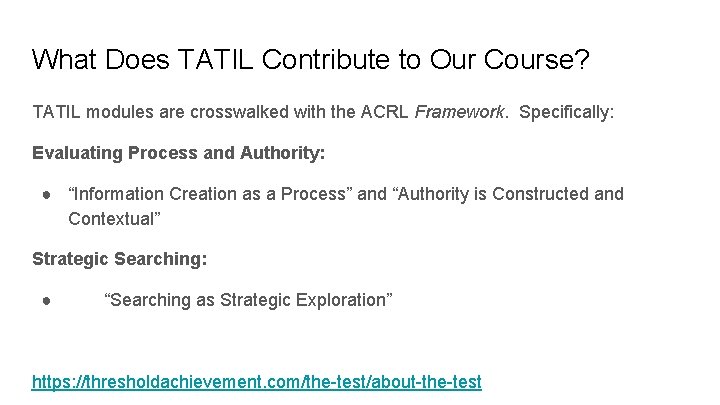
What Does TATIL Contribute to Our Course? TATIL modules are crosswalked with the ACRL Framework. Specifically: Evaluating Process and Authority: ● “Information Creation as a Process” and “Authority is Constructed and Contextual” Strategic Searching: ● “Searching as Strategic Exploration” https: //thresholdachievement. com/the-test/about-the-test
TATIL Experiences Thus Far ● Spring 2017: TATIL pilot project with two UL 100 sections taught by the same instructor (Strategic Searching module) ○ 27 students took the module as both a pre-test and post-test ● Fall 2017: TATIL launched with all UL 100 sections (Evaluating Process and Authority, and Strategic Searching as pre-tests and post-tests) ○ ○ ○ Fall 2017: 94 students completed Evaluating Process and Authority as pre-test and post-test; 97 students completed Strategic Searching as pre-test and post-test Spring 2018: 79 students completed Evaluating Process and Authority and Strategic Searching as pre-test and post-test Fall 2018 (thus far): 89 students completed the Evaluating Process and Authority pre-test and 88 students completed the Strategic Searching pre-test
Future IL Assessments at Emporia State NSSE (National Survey of Student Engagement) -- sent every other year to all ESU first-year undergraduate students and all seniors ● Spring 2018: Topical module, Experiences with Information Literacy, was also part of NSSE: ○ http: //nsse. indiana. edu/pdf/modules/2017/NSSE_2017_Experiences_with_Information_Literac y_Module. pdf Continue with TATIL “Evaluating Process and Authority” and “Strategic Searching” with UL 100 students ● Potential University-wide discussion: Administering these TATIL modules as pre-tests and post-tests in other General Education courses?
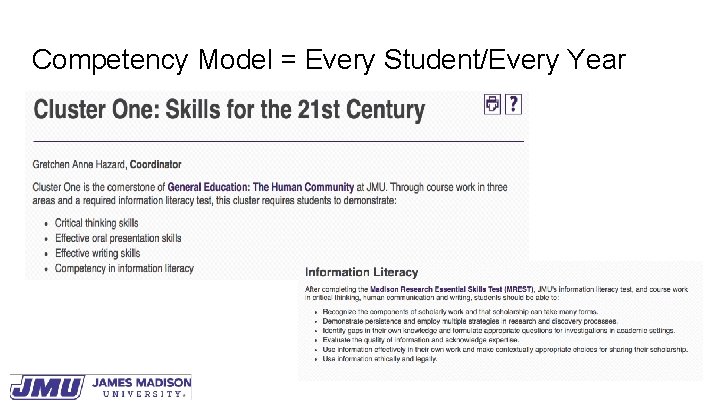
Competency Model = Every Student/Every Year
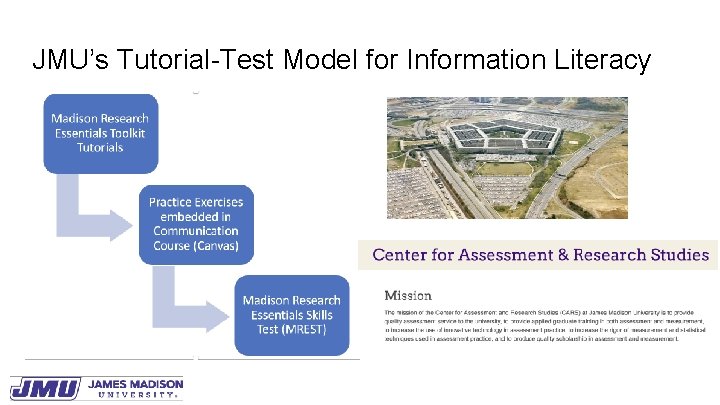
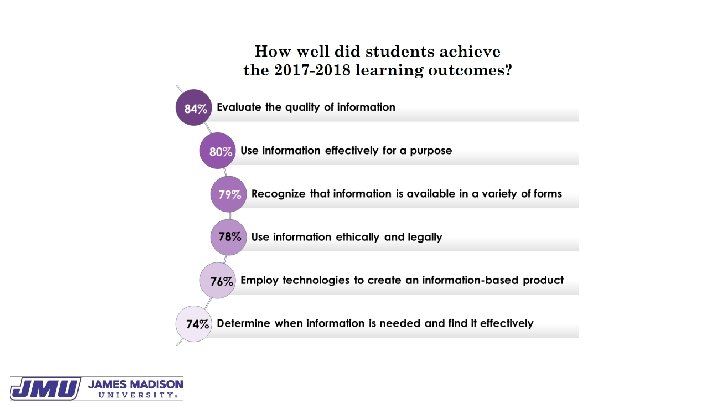
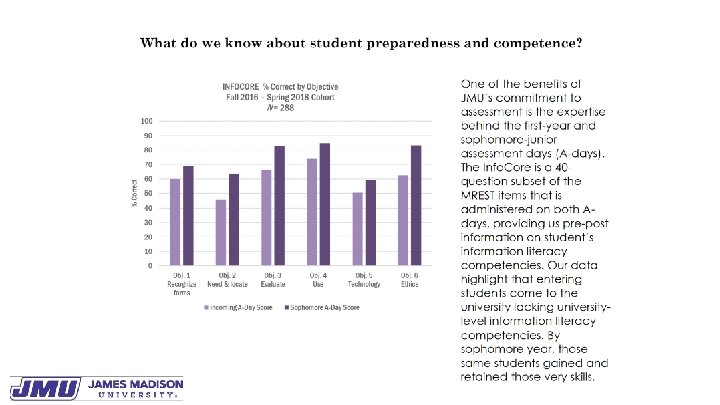
JMU’s Tutorial-Test Model for Information Literacy
Rubrics in the Disciplines Institutional Context: ● ~15 k, Public CSU, HSI ● Dormant information literacy program + upcoming accreditation visit ● A GE program without many signature assignments or standardized curriculum ● More than half of the library’s instruction takes place in upper-division courses in the majors ---Re-imagine, re-vision, re-invigorate,
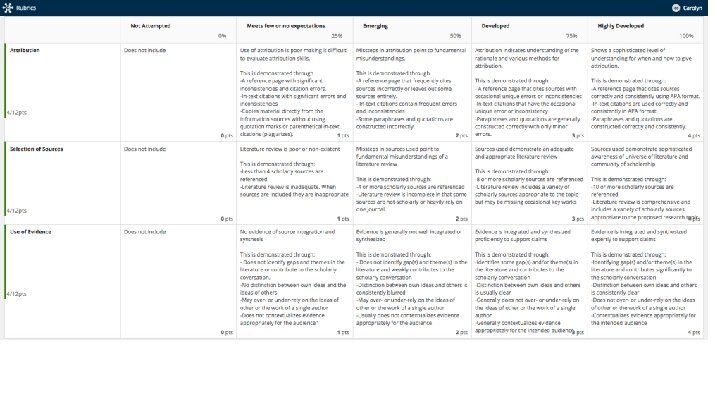
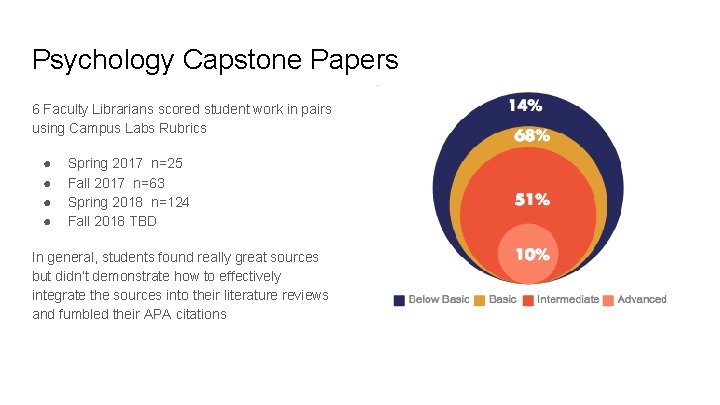
Psychology Capstone Papers 6 Faculty Librarians scored student work in pairs using Campus Labs Rubrics ● ● Spring 2017 n=25 Fall 2017 n=63 Spring 2018 n=124 Fall 2018 TBD In general, students found really great sources but didn’t demonstrate how to effectively integrate the sources into their literature reviews and fumbled their APA citations
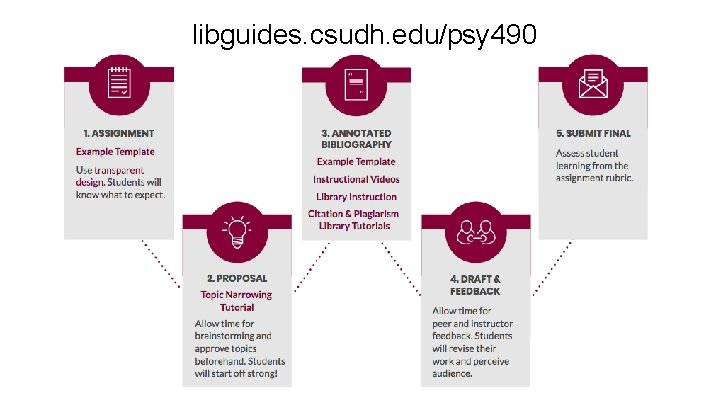
libguides. csudh. edu/psy 490
What’s next for us? ● Instructors are submitting their assignments and teaching activities for inclusion into the toolkit ● Rubric assessment is spreading! We just scored papers for Biology and are working with other departments on the creation and use of their own rubrics ● Toolkits are spreading! ● Adding on the NSSE module for information literacy and other IL assessments ● We’re growing and so is our program - potential GE curriculum revision opportunities
In your group, review the institutional information and assessment goal. Decide which assessment tool you would use. Then review the sample results and develop ideas about outcomes improvement based on those results. Take notes about your discussion to share at the end of the session.
- Slides: 25