
From Syntax to Semantics How to get from
- Slides: 24
From Syntax to Semantics How to get from Form to Meaning in Two different ways
What is meaning? Ø Connection (grounding) in something outside itself Ø Mental concept (ideas) Ø Objects and events in the world (true/false) Ø Some combination of the above Ø Ultimately – the success of the program in which it is embedded
Principle of Compositionality Ø The meaning of the whole is derived from the meaning of the parts and the manner of their combination Ø {John, kiss, Sally} Ø John kissed Sally. Ø Sally kissed John.
Semantics -- For our purposes Ø Formal representational language that represents the “manner of combination” Ø Lexicon that connects lexical items with some externally grounded object, the “meaning of the parts”
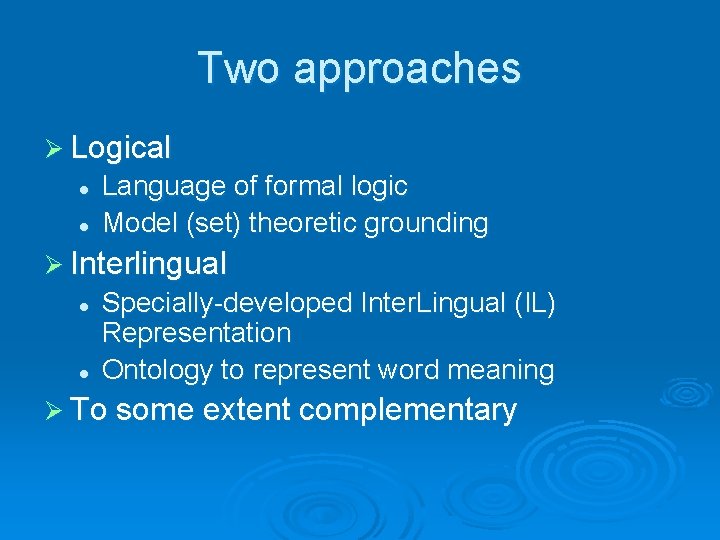
Two approaches Ø Logical l l Language of formal logic Model (set) theoretic grounding Ø Interlingual l l Specially-developed Inter. Lingual (IL) Representation Ontology to represent word meaning Ø To some extent complementary
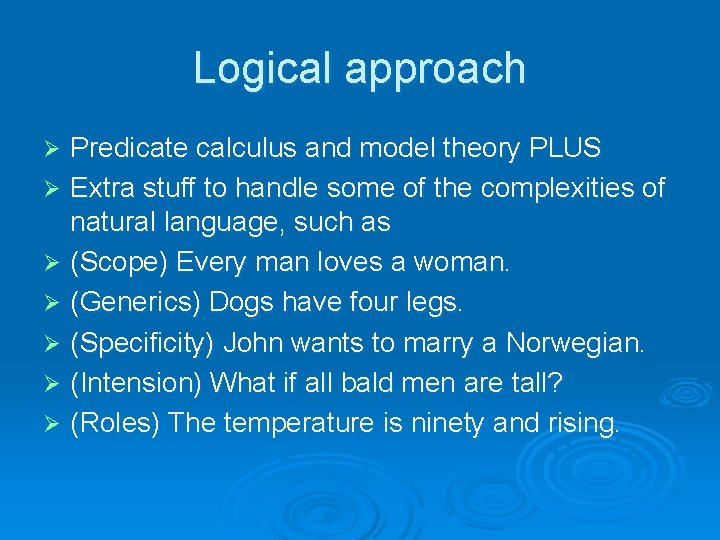
Logical approach Predicate calculus and model theory PLUS Ø Extra stuff to handle some of the complexities of natural language, such as Ø (Scope) Every man loves a woman. Ø (Generics) Dogs have four legs. Ø (Specificity) John wants to marry a Norwegian. Ø (Intension) What if all bald men are tall? Ø (Roles) The temperature is ninety and rising. Ø
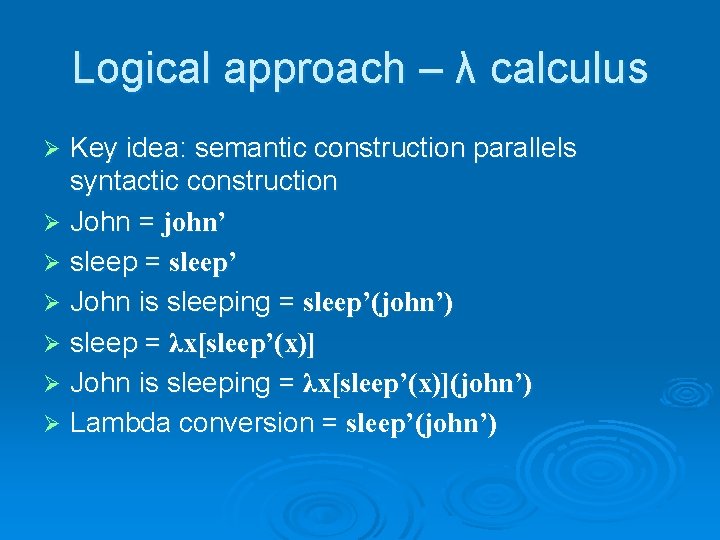
Logical approach – λ calculus Key idea: semantic construction parallels syntactic construction Ø John = john’ Ø sleep = sleep’ Ø John is sleeping = sleep’(john’) Ø sleep = λx[sleep’(x)] Ø John is sleeping = λx[sleep’(x)](john’) Ø Lambda conversion = sleep’(john’) Ø
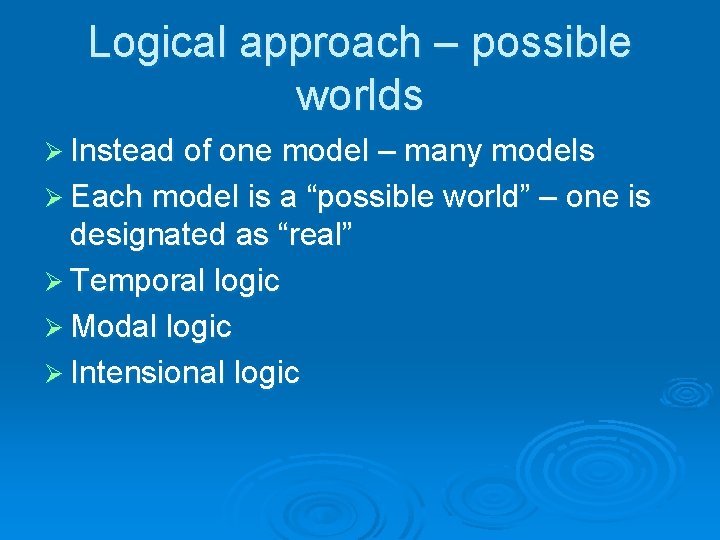
Logical approach – possible worlds Ø Instead of one model – many models Ø Each model is a “possible world” – one is designated as “real” Ø Temporal logic Ø Modal logic Ø Intensional logic
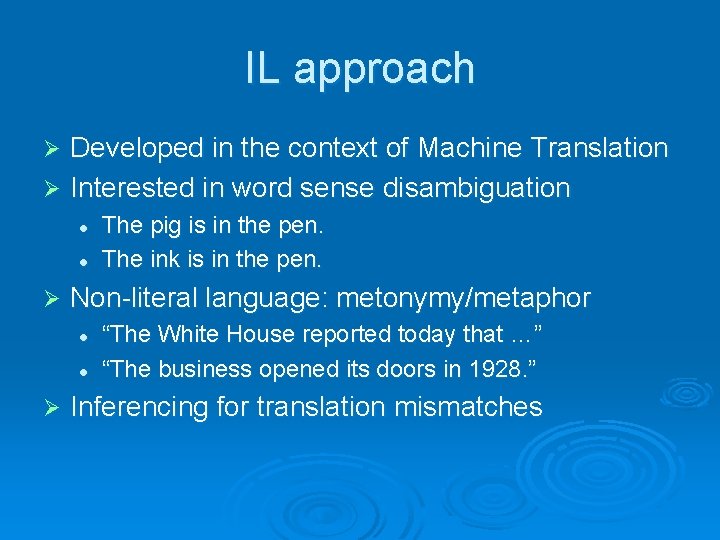
IL approach Developed in the context of Machine Translation Ø Interested in word sense disambiguation Ø l l Ø Non-literal language: metonymy/metaphor l l Ø The pig is in the pen. The ink is in the pen. “The White House reported today that …” “The business opened its doors in 1928. ” Inferencing for translation mismatches
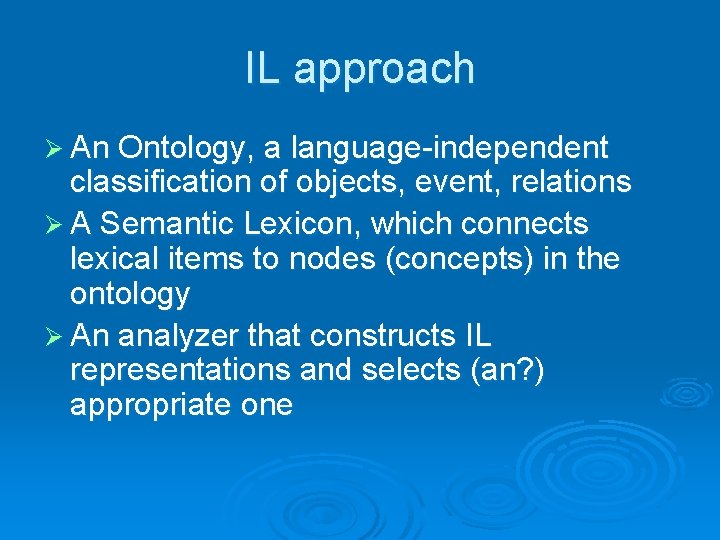
IL approach Ø An Ontology, a language-independent classification of objects, event, relations Ø A Semantic Lexicon, which connects lexical items to nodes (concepts) in the ontology Ø An analyzer that constructs IL representations and selects (an? ) appropriate one
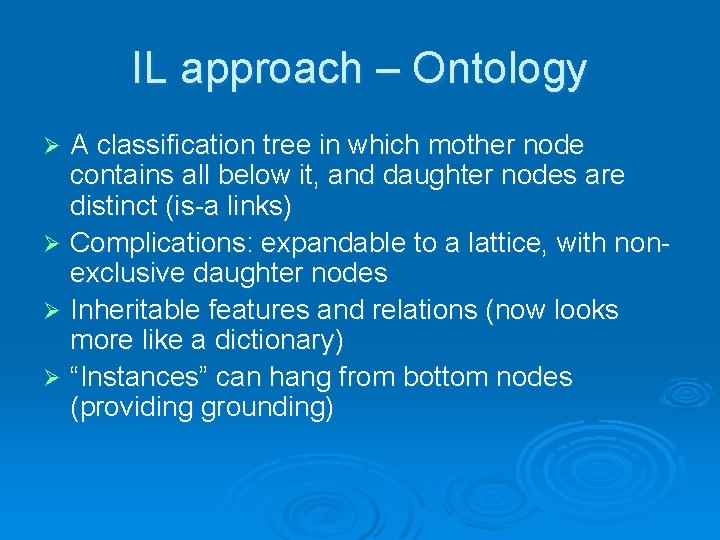
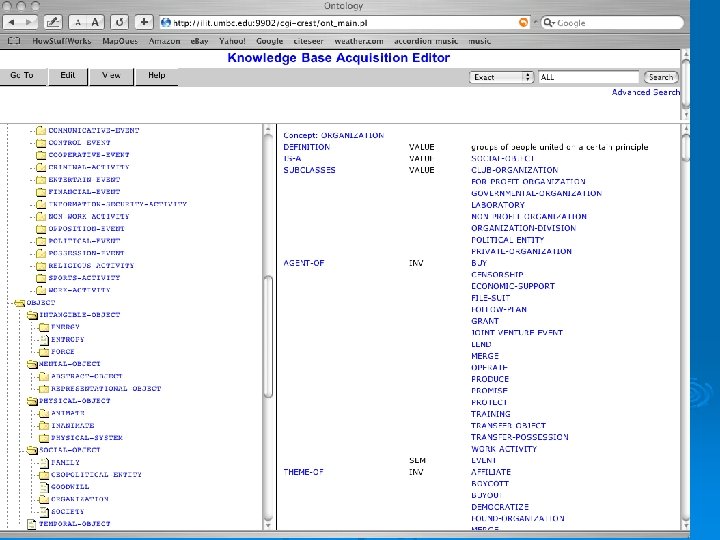
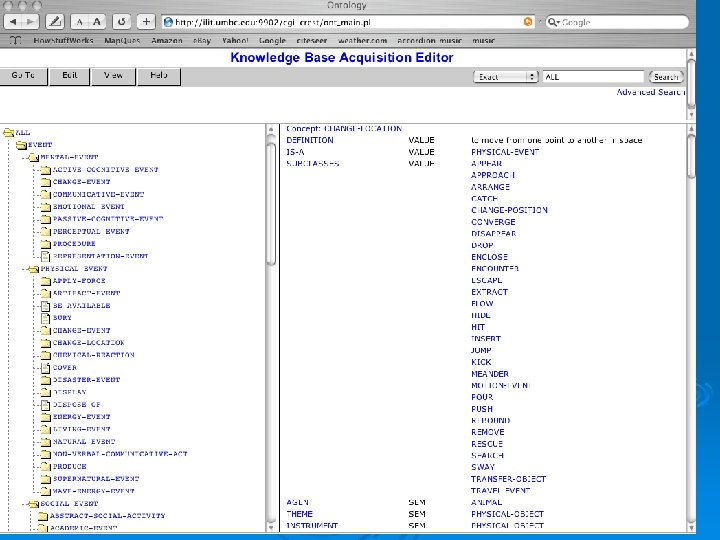
IL approach – Ontology A classification tree in which mother node contains all below it, and daughter nodes are distinct (is-a links) Ø Complications: expandable to a lattice, with nonexclusive daughter nodes Ø Inheritable features and relations (now looks more like a dictionary) Ø “Instances” can hang from bottom nodes (providing grounding) Ø
Semantic lexicon Ø Provides a syntactic context for the appearance of the lexical item Ø Provides a mapping for the lexical item to a node in the ontology Ø Or more complex associations Ø Also providing connections from syntactic context to semantic roles Ø And constraints on these roles
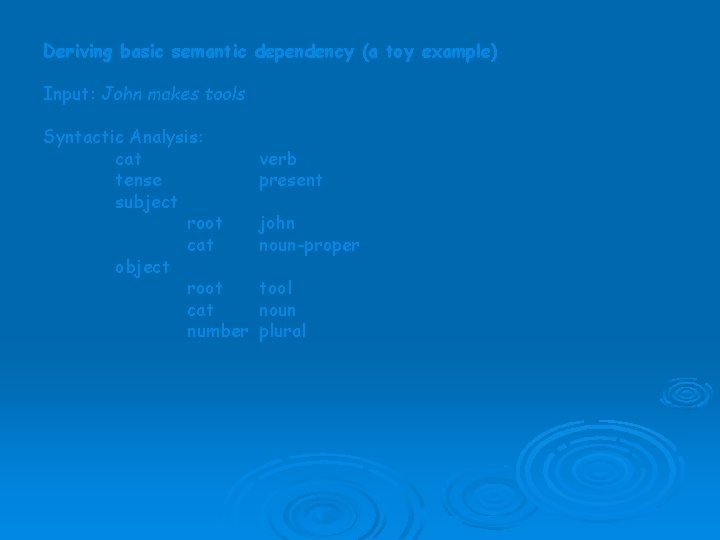
Deriving basic semantic dependency (a toy example) Input: John makes tools Syntactic Analysis: cat tense subject root cat object root cat number verb present john noun-proper tool noun plural
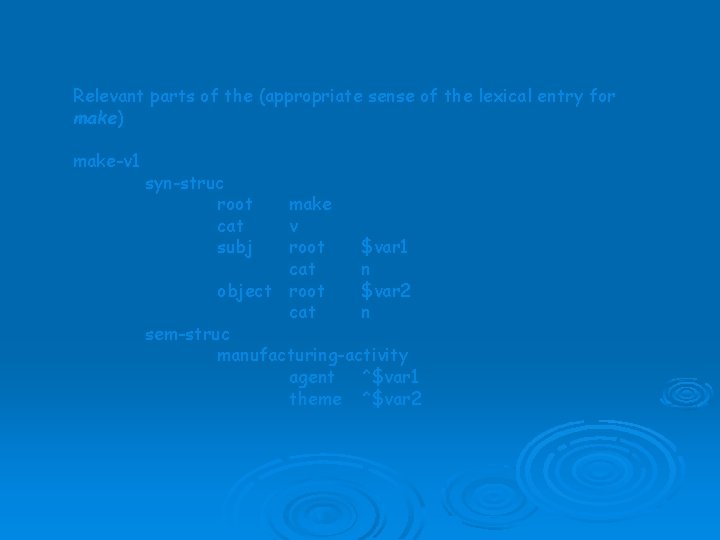
Relevant parts of the (appropriate sense of the lexical entry for make) make-v 1 syn-struc root cat subj make v root $var 1 cat n object root $var 2 cat n sem-struc manufacturing-activity agent ^$var 1 theme ^$var 2
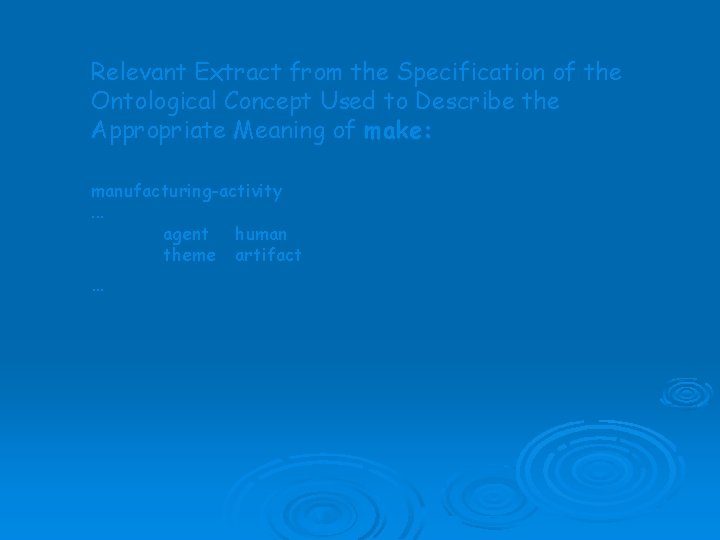
Relevant Extract from the Specification of the Ontological Concept Used to Describe the Appropriate Meaning of make: manufacturing-activity. . . agent human theme artifact …
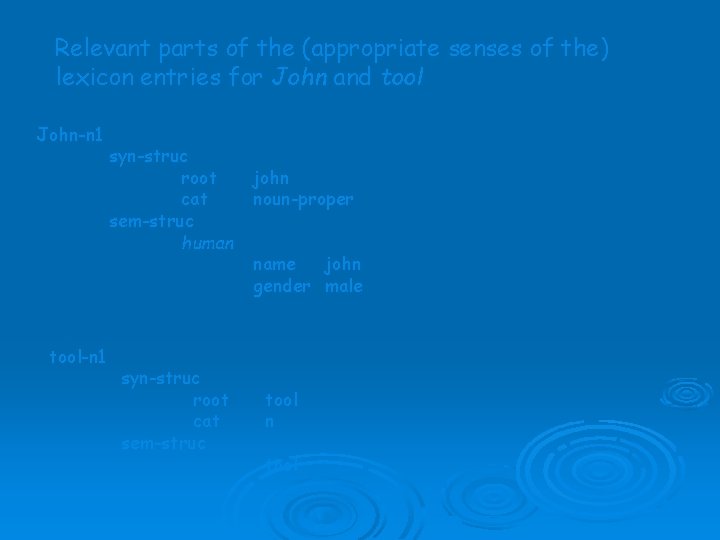
Relevant parts of the (appropriate senses of the) lexicon entries for John and tool John-n 1 tool-n 1 syn-struc root cat sem-struc human syn-struc root cat sem-struc john noun-proper name john gender male tool n tool
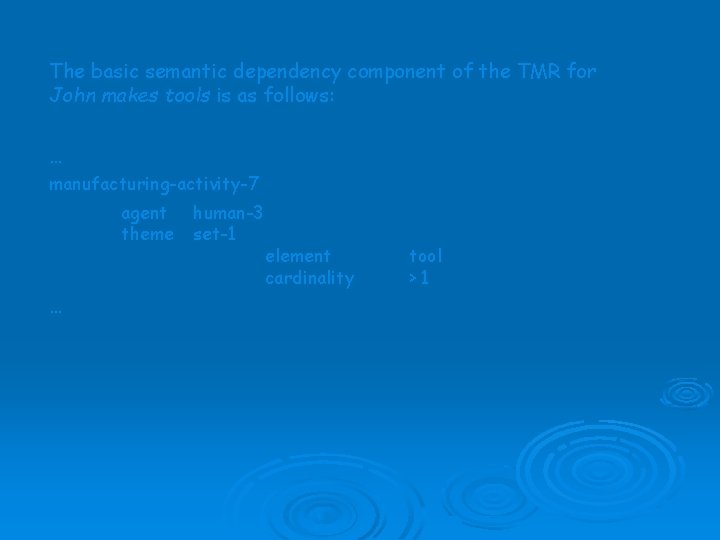
The basic semantic dependency component of the TMR for John makes tools is as follows: … manufacturing-activity-7 agent theme … human-3 set-1 element cardinality tool >1
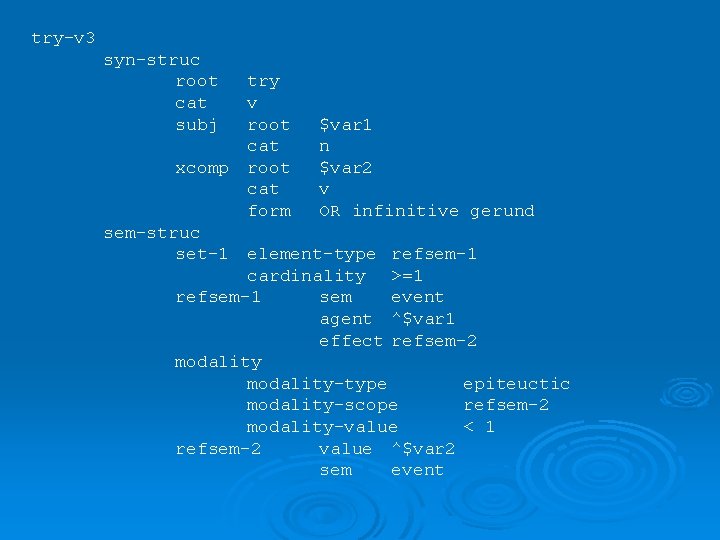
try-v 3 syn-struc root cat subj try v root $var 1 cat n xcomp root $var 2 cat v form OR infinitive gerund sem-struc set-1 element-type refsem-1 cardinality >=1 refsem-1 sem event agent ^$var 1 effect refsem-2 modality-type epiteuctic modality-scope refsem-2 modality-value < 1 refsem-2 value ^$var 2 sem event
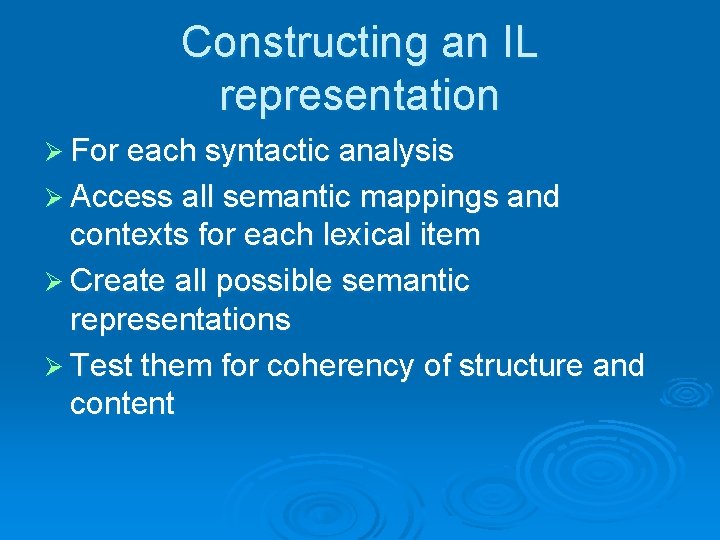
Constructing an IL representation Ø For each syntactic analysis Ø Access all semantic mappings and contexts for each lexical item Ø Create all possible semantic representations Ø Test them for coherency of structure and content
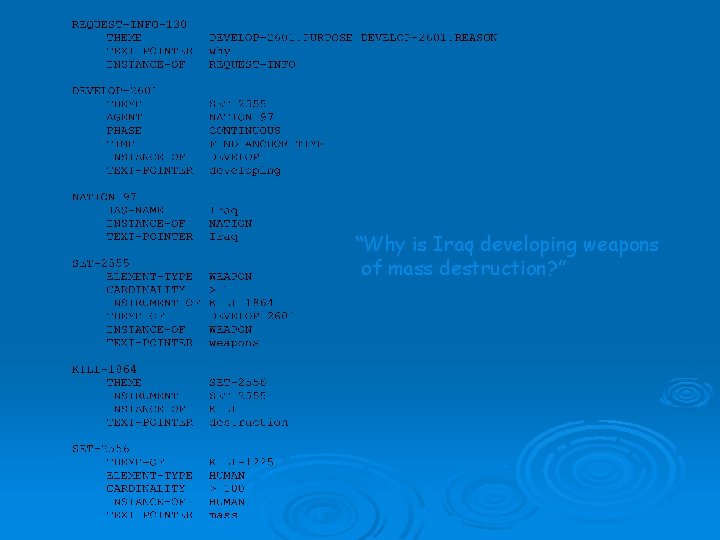
“Why is Iraq developing weapons of mass destruction? ”
Concluding question Ø Is all this really necessary? Ø Do we need it to do – Machine Translation, IR, IE, Q/A, summarization? Ø Can we “ground” the symbols of language without a special representation of the “meaning”?
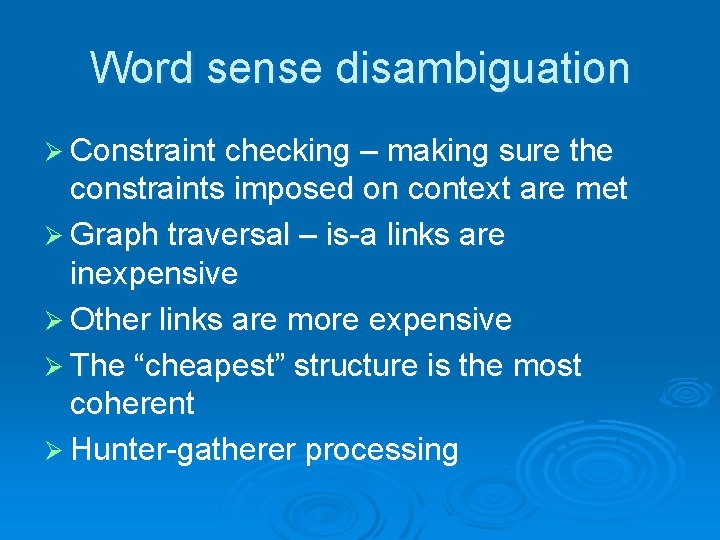
Word sense disambiguation Ø Constraint checking – making sure the constraints imposed on context are met Ø Graph traversal – is-a links are inexpensive Ø Other links are more expensive Ø The “cheapest” structure is the most coherent Ø Hunter-gatherer processing