
FROM SUPER TO HOLLAND TO KRUMBOLTZ APPLYING HISTORICAL
FROM SUPER TO HOLLAND TO KRUMBOLTZ: APPLYING HISTORICAL AND CONTEMPORARY THEORIES OF CAREER DEVELOPMENT MONA PATEL: CAREER COUNSELOR AND CAREER CENTER DIRECTOR-MIRAMAR COLLEGE KELLIE CORBISIERO: CAREER COUNSELOR- SOUTHWESTERN COLLEGE AND CONNECT CAREER CONSULTING
“Career counseling is the process of assisting individuals in the development of a life-career with focus on the definition of the worker role and how that role interacts with other life roles. ” NCDA
PRESENTATION OVERVIEW 1. Traditional Approach to Career Selection 2. Self-Concept Theory: Donald Super 3. Personality Theory: John Holland 4. Happenstance Theory: John Krumboltz 5. Generational Focus 6. 5 minute Assessment 7. Career Coaching vs. Career Counseling 8. Career Theoretical and Coaching Training Resources
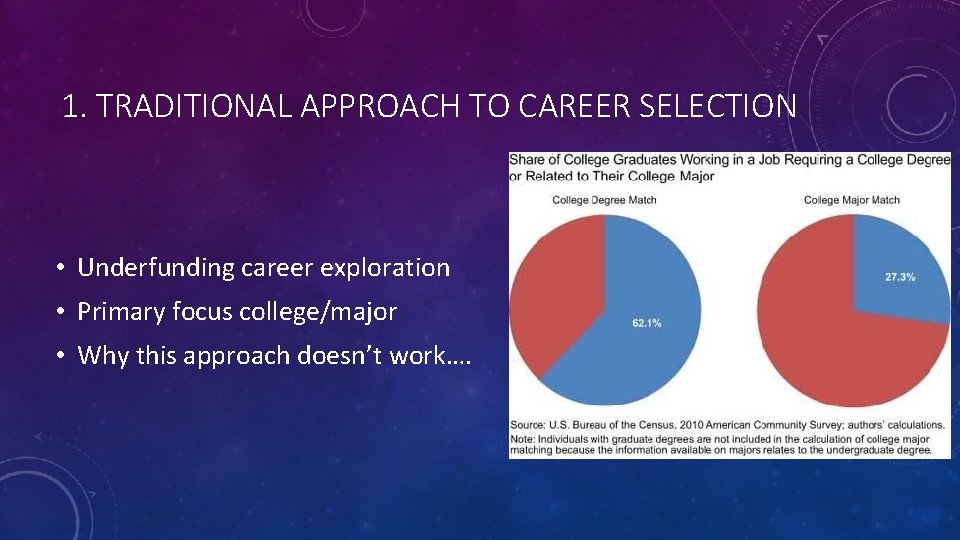
1. TRADITIONAL APPROACH TO CAREER SELECTION • Underfunding career exploration • Primary focus college/major • Why this approach doesn’t work….
2. SELF CONCEPT THEORY: DONALD SUPER • • • Stage 1: Growth Age 0– 14 Stage 2: Exploration Age 15– 24 Stage 3: Establishment Age 25– 44 Stage 4: Maintenance Age 45 -64 Stage 5: Decline Age 65+
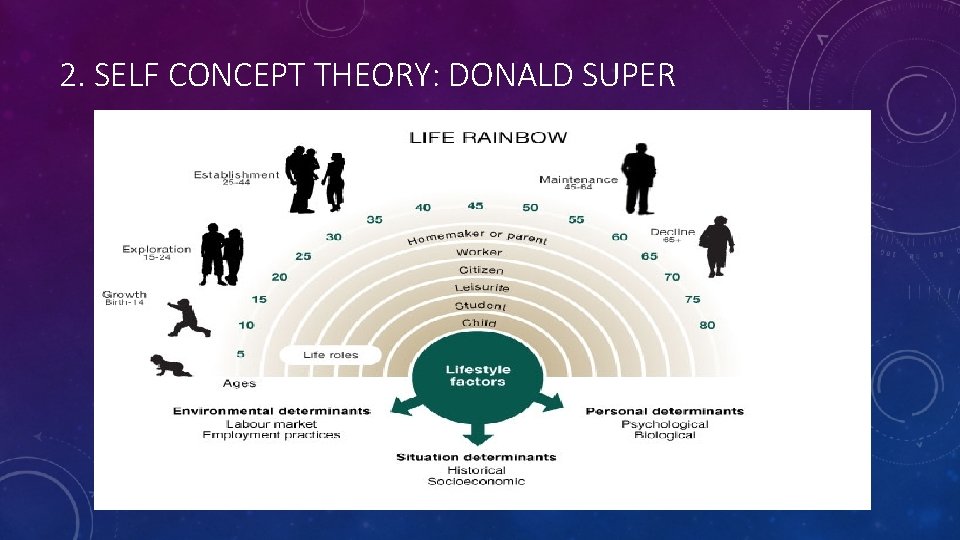
2. SELF CONCEPT THEORY: DONALD SUPER
3. PERSONALITY THEORY: JOHN HOLLAND • Dr. Holland reasoned that people work best in work environments that match their preferences. • Holland Codes are a set of personality types developed by psychologist John L. Holland in the 1970 s.
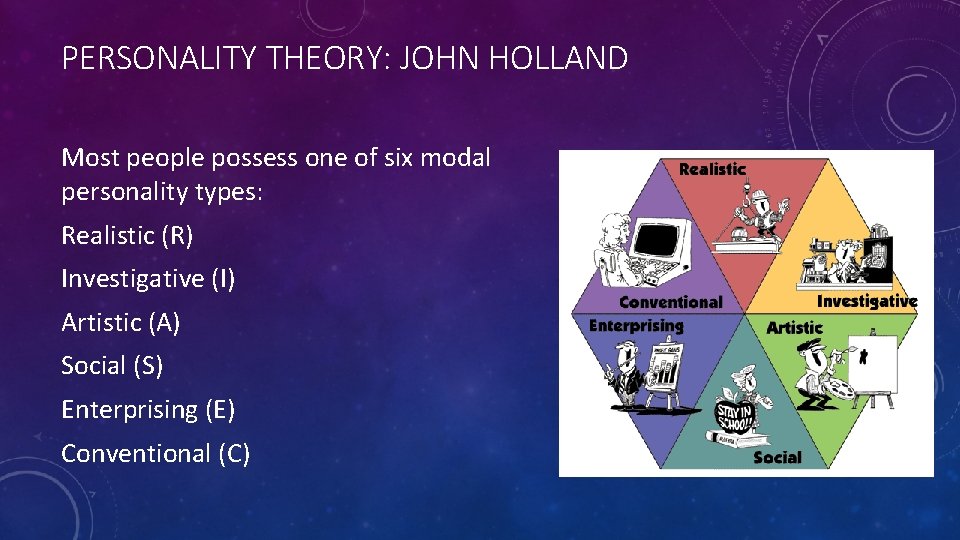
PERSONALITY THEORY: JOHN HOLLAND Most people possess one of six modal personality types: Realistic (R) Investigative (I) Artistic (A) Social (S) Enterprising (E) Conventional (C)
4. HAPPENSTANCE THEORY- JOHN KRUMBOLTZ “Career counselors can teach their clients to act in ways that generate a higher frequency of beneficial chance events on which clients can capitalize. ” (Mitchell/Levin/Krumboltz 1999) o Curiosity: exploring new learning opportunities o Persistence: exerting effort despite setbacks o Flexibility: changing attitudes and circumstances o Optimism: viewing new opportunities as possible and attainable o Risk Taking: taking action in the face of uncertain outcomes
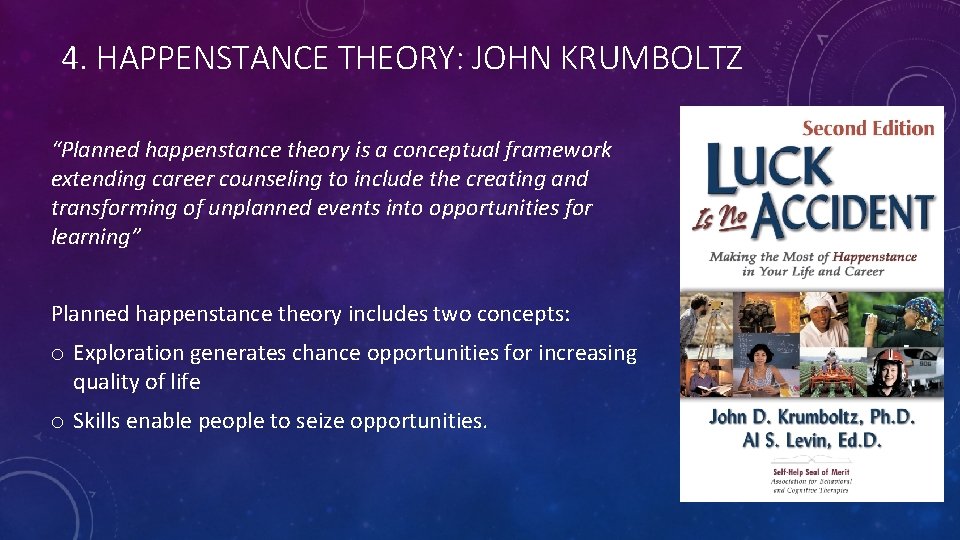
4. HAPPENSTANCE THEORY: JOHN KRUMBOLTZ “Planned happenstance theory is a conceptual framework extending career counseling to include the creating and transforming of unplanned events into opportunities for learning” Planned happenstance theory includes two concepts: o Exploration generates chance opportunities for increasing quality of life o Skills enable people to seize opportunities.
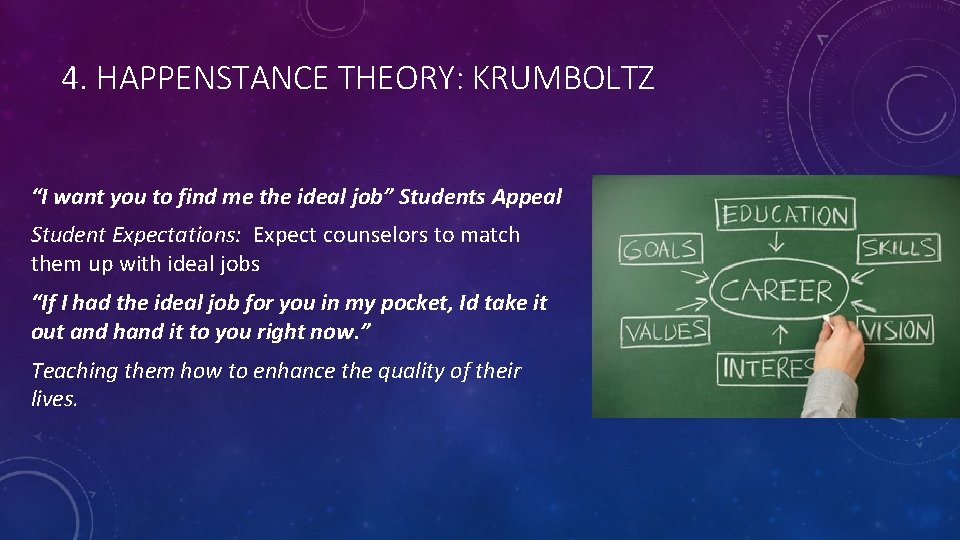
4. HAPPENSTANCE THEORY: KRUMBOLTZ “I want you to find me the ideal job” Students Appeal Student Expectations: Expect counselors to match them up with ideal jobs “If I had the ideal job for you in my pocket, Id take it out and hand it to you right now. ” Teaching them how to enhance the quality of their lives.
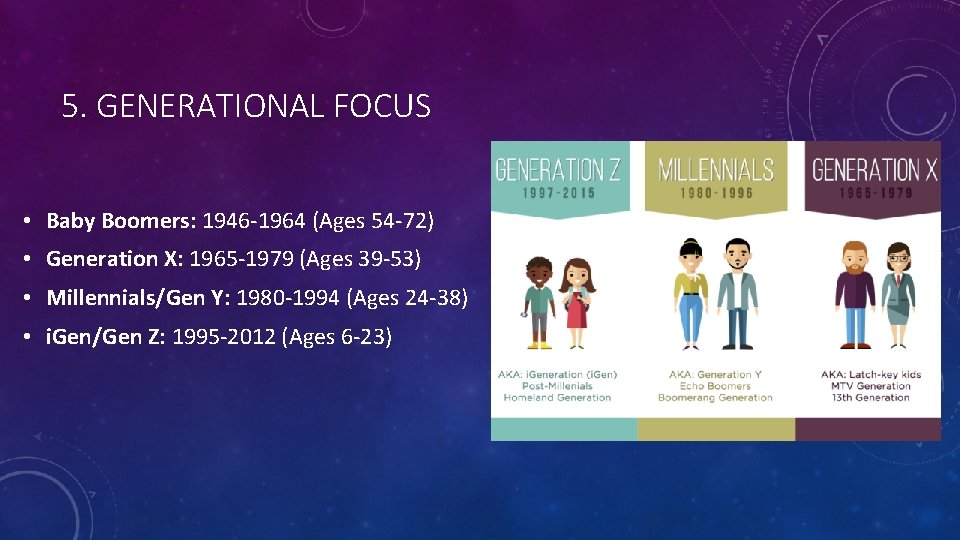
5. GENERATIONAL FOCUS • Baby Boomers: 1946 -1964 (Ages 54 -72) • Generation X: 1965 -1979 (Ages 39 -53) • Millennials/Gen Y: 1980 -1994 (Ages 24 -38) • i. Gen/Gen Z: 1995 -2012 (Ages 6 -23)
6. 5 MINUTE ASSESSMENT Undecided Student: Let’s consider a career field and remove the major factor. • Are there any career fields that interest you? • Are you truly unsure of career options? Decided Student: That’s great that you have a major. Do you have any ideas about what you could do with that major? Do you have some careers in mind? • What do you know about the careers in the field? • Do you know anyone that does that job?
7. CAREER COACHING VS. CAREER COUNSELING Career Coaching: Similar to an athletic coach. Career Coaching—Focuses on solutions and skills needed in the job search. Career Counseling: A holistic approach Career Counseling—Focuses on utilizing resources to understand make a career decision
8. CAREER THEORETICAL AND COACHING TRAINING • Career Theory Training (For Counselors): • Connect Career Consulting: www. connectwithcareers. com • Career Coaching Options: • NCDA: Facilitating Career Development Training • UCSD extension: Career Advising Certificate • NACE: Career Coaching • Career Counseling Programs: • California State University, Sacramento • Additional Training Recommendations: • MBTI Training- See Consulting Psychologist Press (CPP) for approved providers • GS Consultants offers fully online option

QUESTIONS
- Slides: 16