
From small municipalities to the regional government and


- Slides: 37
From small municipalities to the regional government and more…: a process of SBI integration into Friuli – Venezia Giulia health policy Dr Pierluigi Struzzo Regional Centre for the Training in PHC Monfalcone, IT
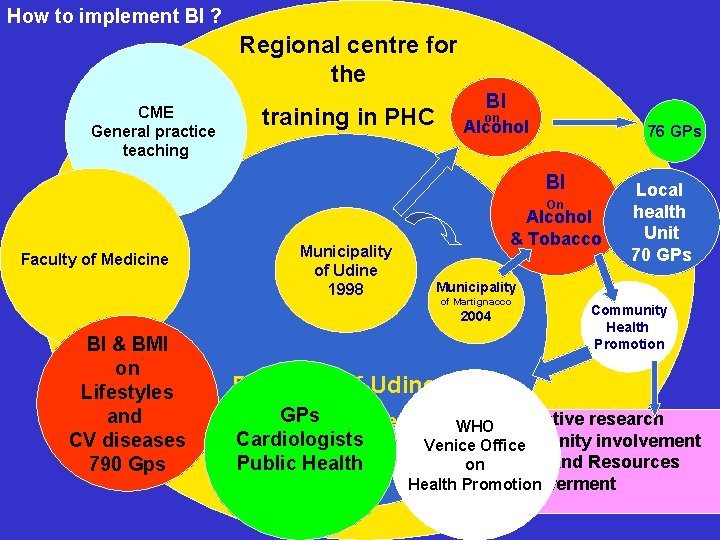
How to implement BI ? Regional centre for the CME General practice teaching BI training in PHC on Alcohol 76 GPs BI On Faculty of Medicine Municipality of Udine 1998 Alcohol & Tobacco Municipality of Martignacco 2004 BI & BMI on Lifestyles and CV diseases 790 Gps Local health Unit 70 GPs Community Health Promotion Province of Udine 32 GPs Municipalities Cardiologists Public Health -Qualitative research WHO -Community involvement Venice Office on -Needs and Resources Health Promotion -Empowerment
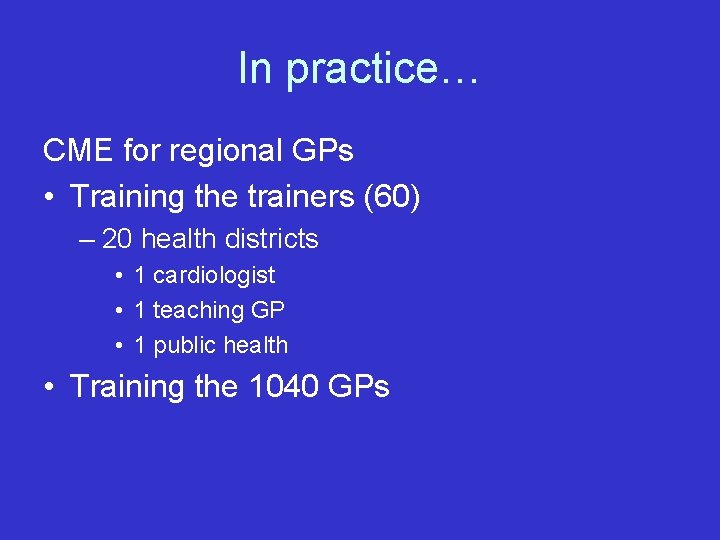
In practice… CME for regional GPs • Training the trainers (60) – 20 health districts • 1 cardiologist • 1 teaching GP • 1 public health • Training the 1040 GPs
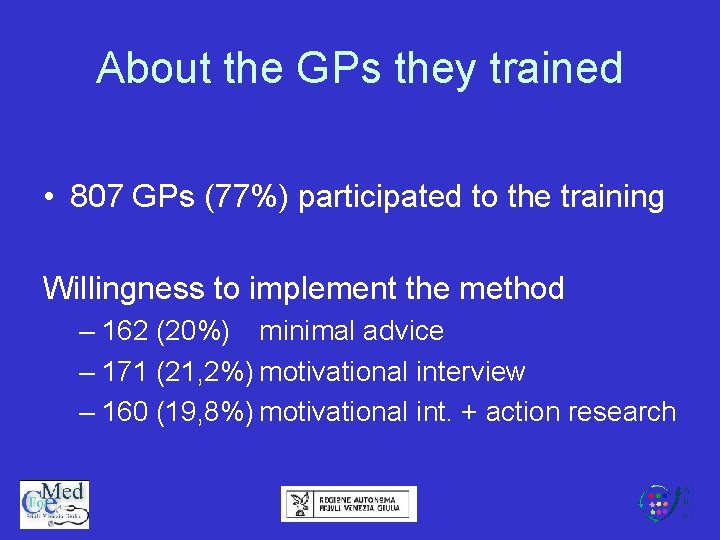
About the GPs they trained • 807 GPs (77%) participated to the training Willingness to implement the method – 162 (20%) minimal advice – 171 (21, 2%) motivational interview – 160 (19, 8%) motivational int. + action research
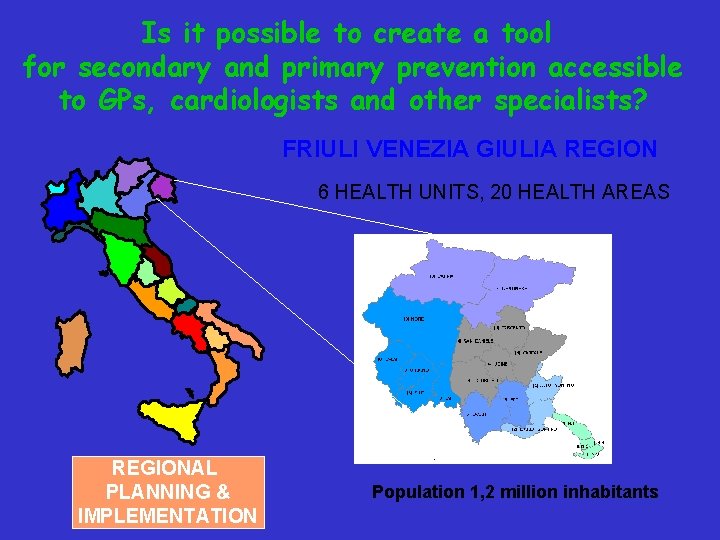
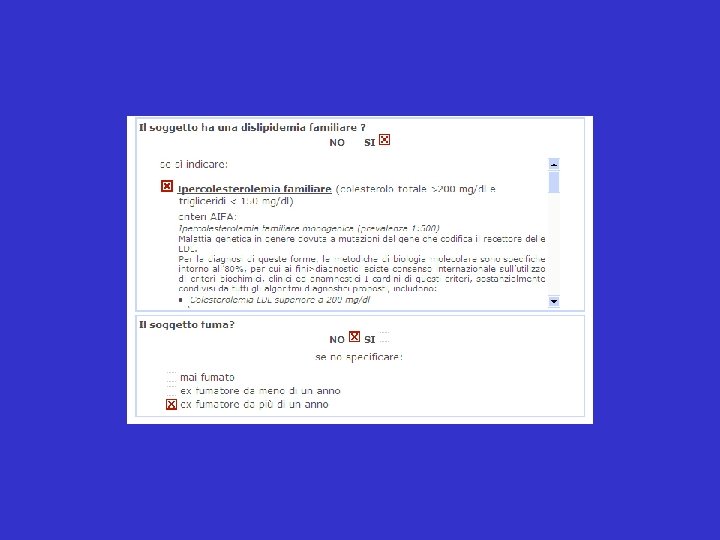
Is it possible to create a tool for secondary and primary prevention accessible to GPs, cardiologists and other specialists? FRIULI VENEZIA GIULIA REGION 6 HEALTH UNITS, 20 HEALTH AREAS REGIONAL PLANNING & IMPLEMENTATION . Population 1, 2 million inhabitants
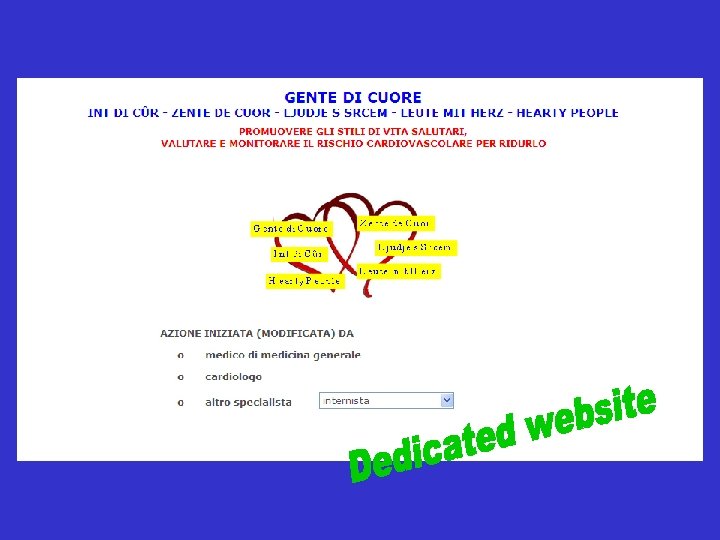
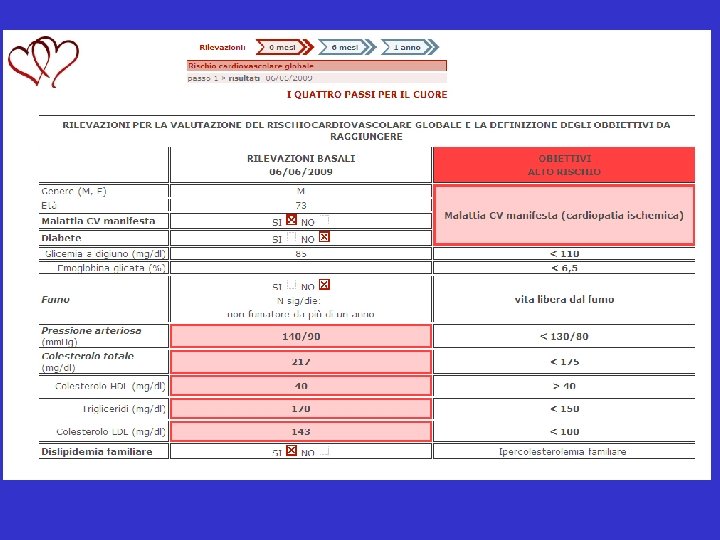
Gente di Cuore Int di Cûr Hearty People Zente de Cuor Ljudje s Srcem Leute mit Herz Promoting healthy lifestyles, evaluating and monitoring cardiovascular risk to reduce it
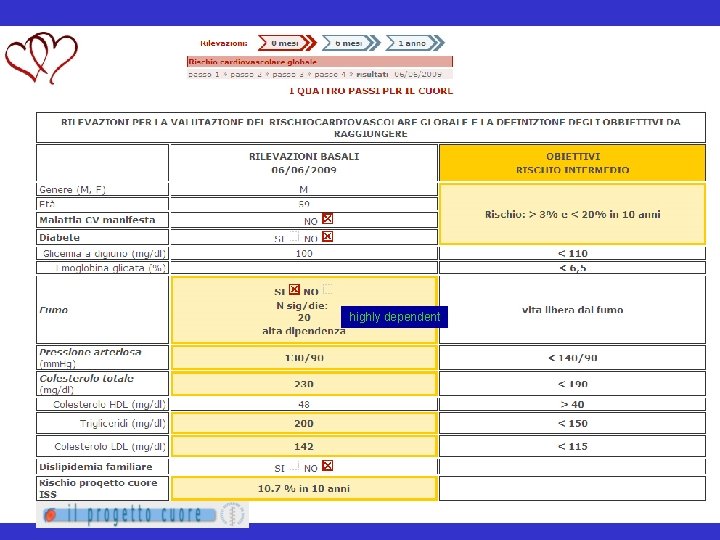
How many cigarettes a day do you smoke? How soon after you wake up do you smoke your first cigarette?
highly dependent
78 179 24
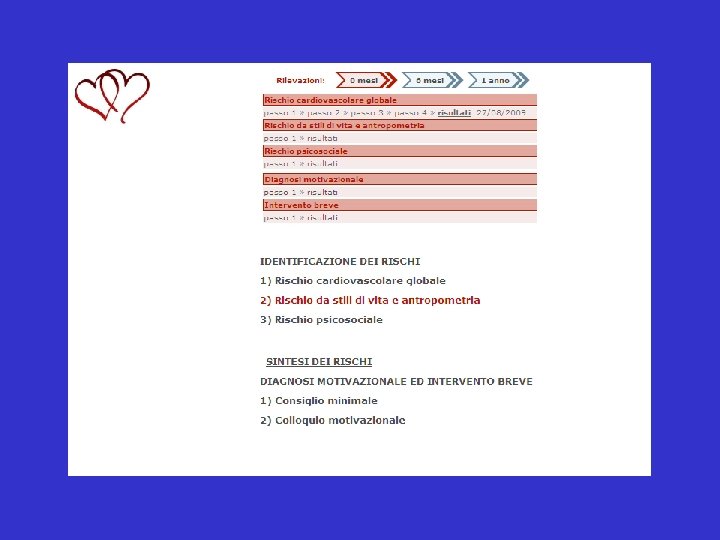
k s i r l cia Ps o ych
a m i n i M e c i v l ad
l a n o i t a iv g t o M n f i e w i e i Br v e Int
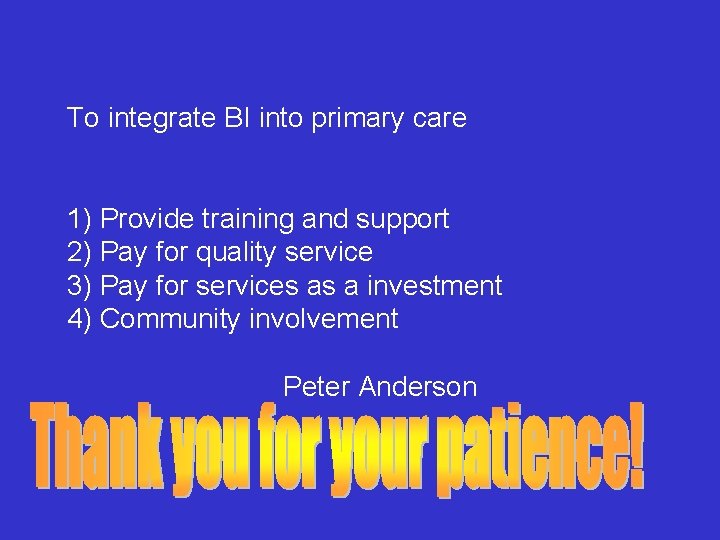
To integrate BI into primary care 1) Provide training and support 2) Pay for quality service 3) Pay for services as a investment 4) Community involvement Peter Anderson
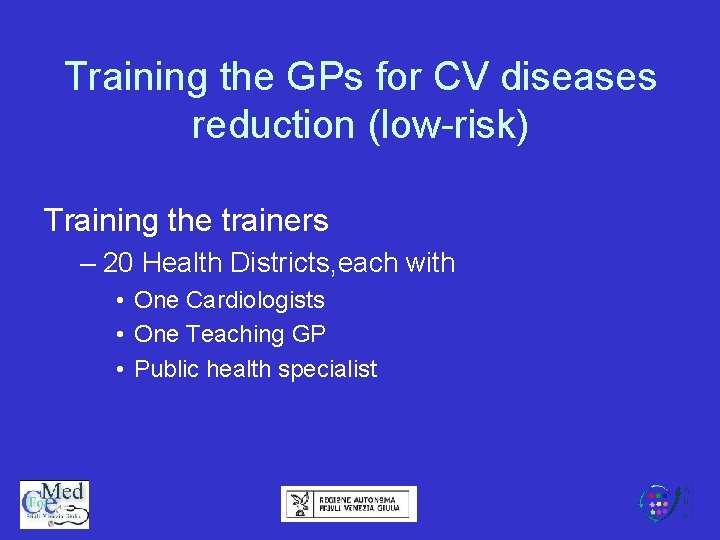
Training the GPs for CV diseases reduction (low-risk) Training the trainers – 20 Health Districts, each with • One Cardiologists • One Teaching GP • Public health specialist
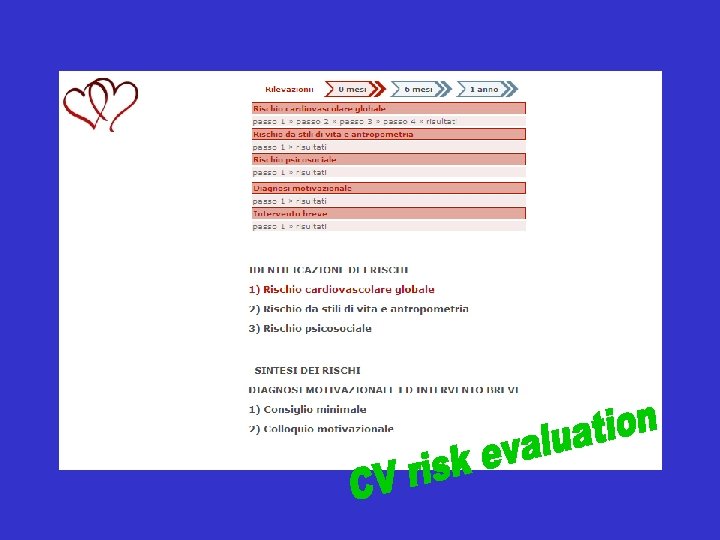
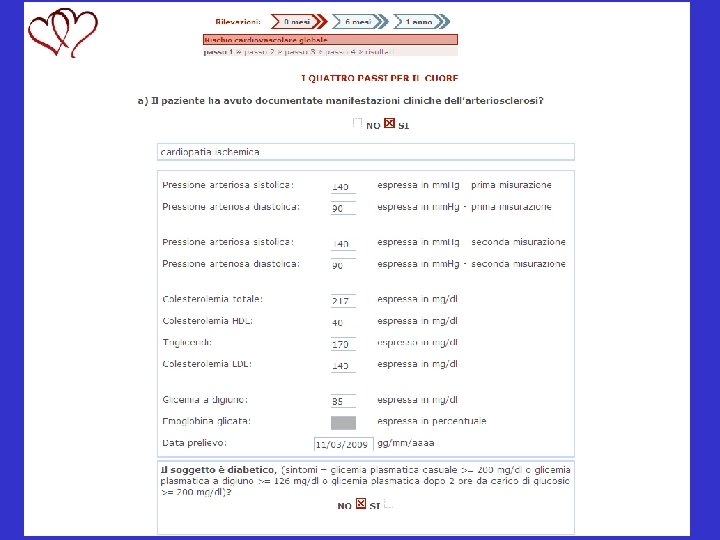
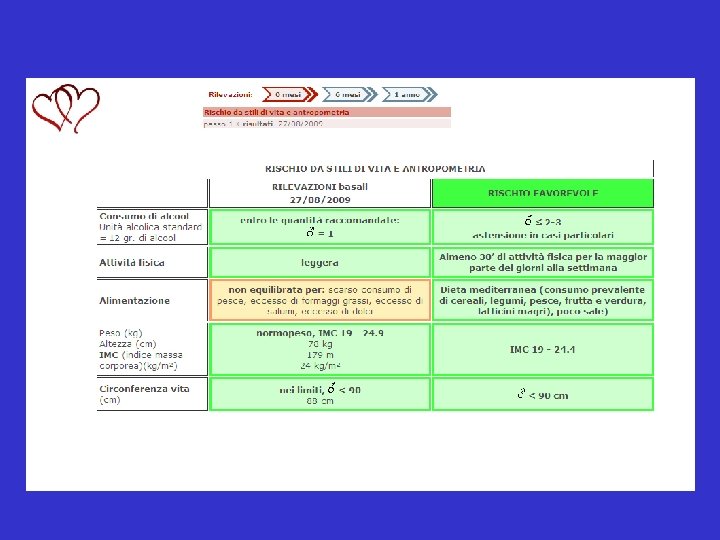
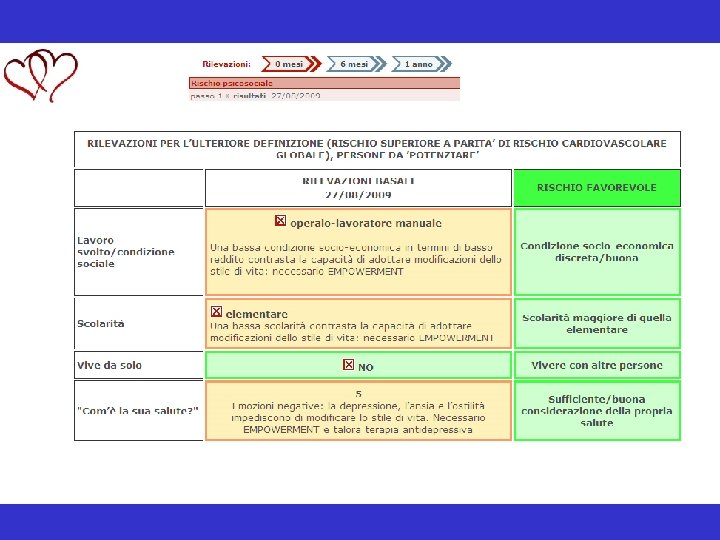
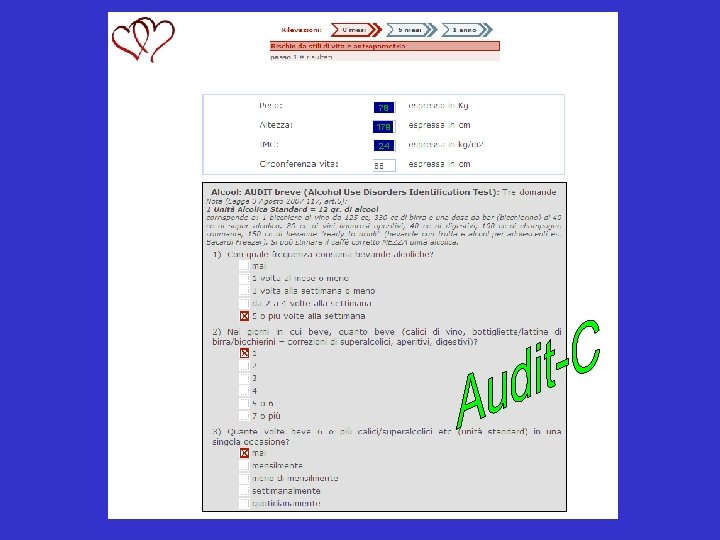
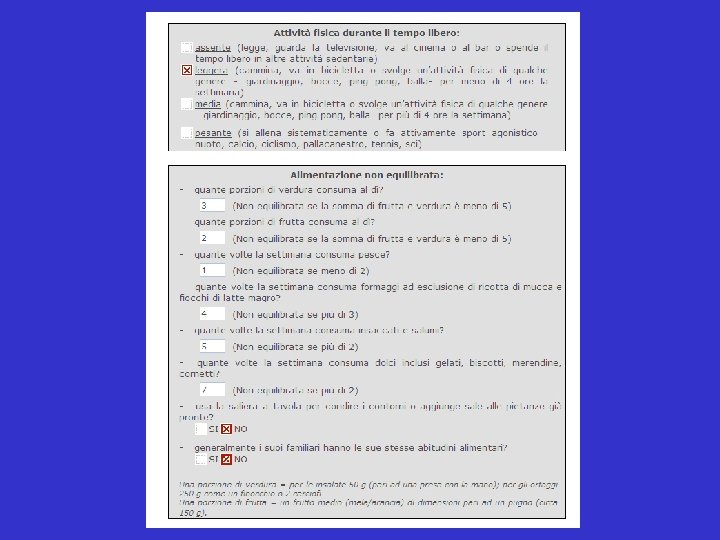
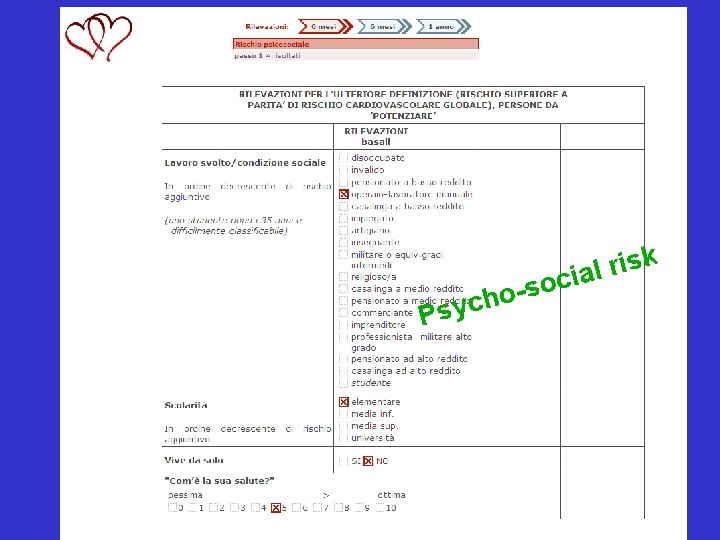
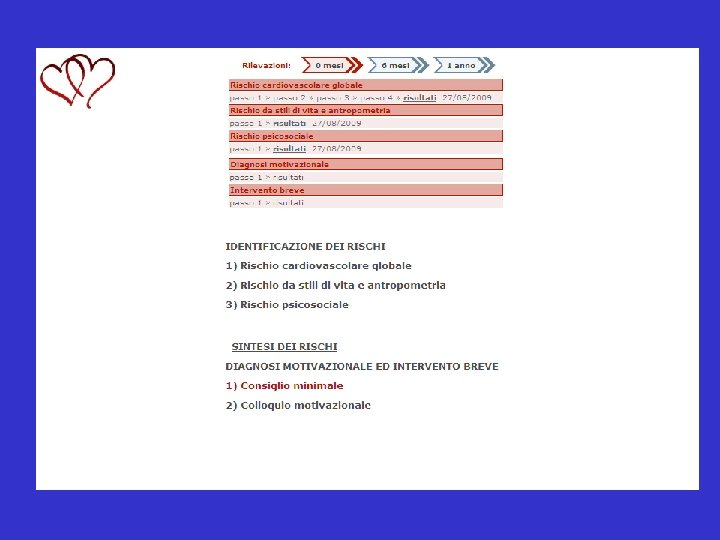
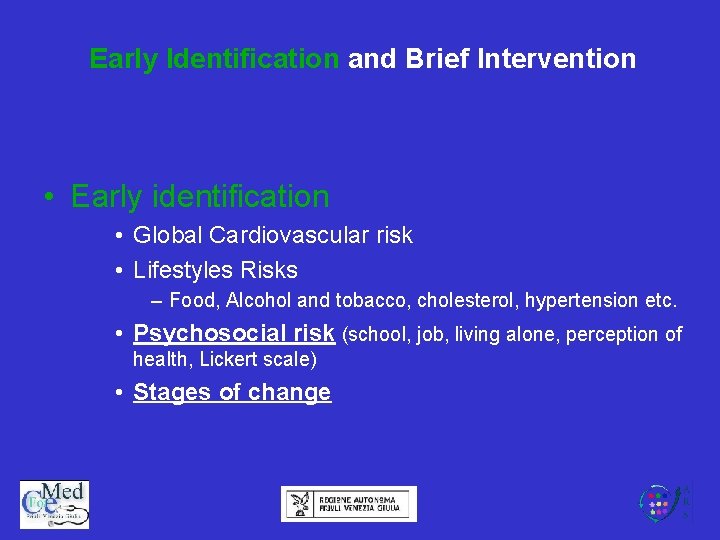
Early Identification and Brief Intervention • Early identification • Global Cardiovascular risk • Lifestyles Risks – Food, Alcohol and tobacco, cholesterol, hypertension etc. • Psychosocial risk (school, job, living alone, perception of health, Lickert scale) • Stages of change
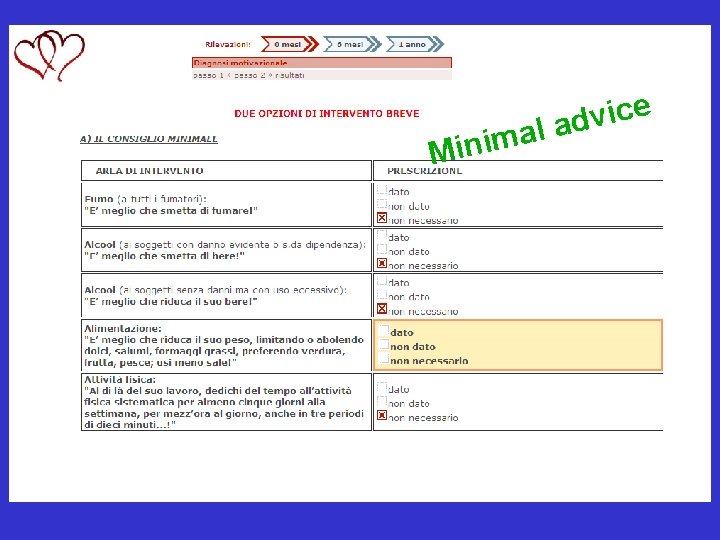
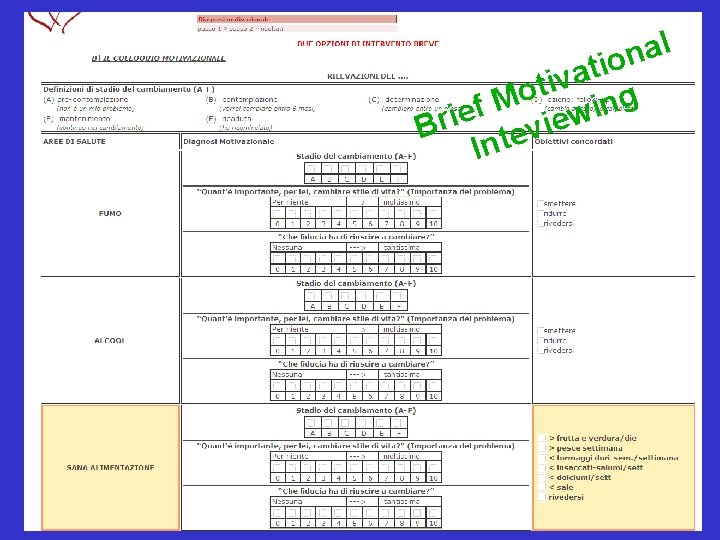
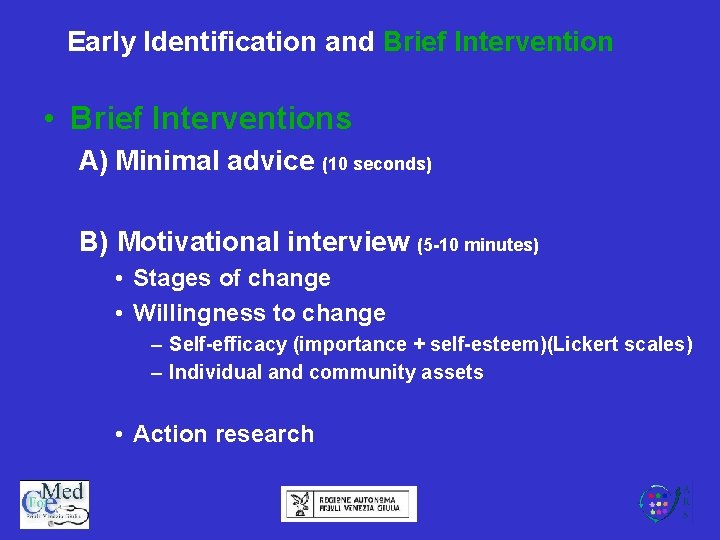
Early Identification and Brief Intervention • Brief Interventions A) Minimal advice (10 seconds) B) Motivational interview (5 -10 minutes) • Stages of change • Willingness to change – Self-efficacy (importance + self-esteem)(Lickert scales) – Individual and community assets • Action research
Training the trainers Two days of training 57 experts participating – 20 Cardiologists – 20 Teaching GPs – 17 Public health experts
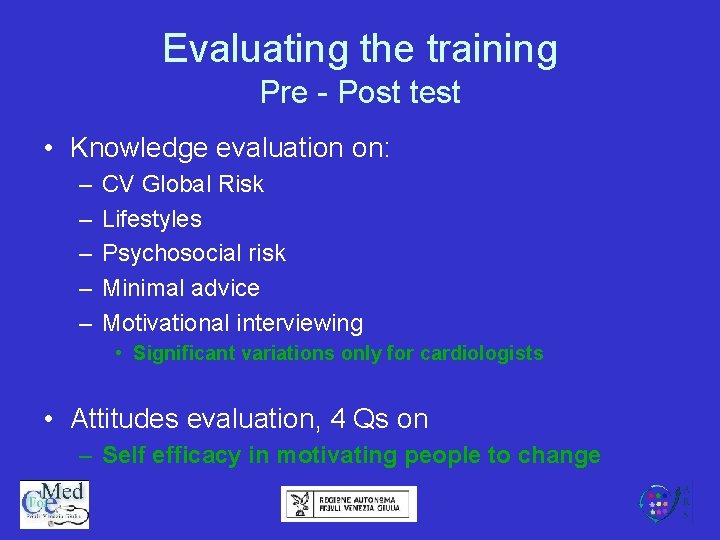
Evaluating the training Pre - Post test • Knowledge evaluation on: – – – CV Global Risk Lifestyles Psychosocial risk Minimal advice Motivational interviewing • Significant variations only for cardiologists • Attitudes evaluation, 4 Qs on – Self efficacy in motivating people to change
Pre-post test self efficacy n. s.
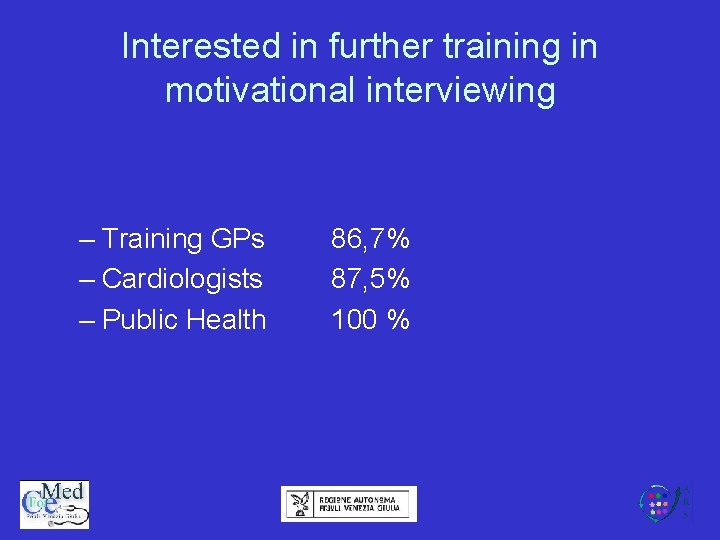
Interested in further training in motivational interviewing – Training GPs – Cardiologists – Public Health 86, 7% 87, 5% 100 %
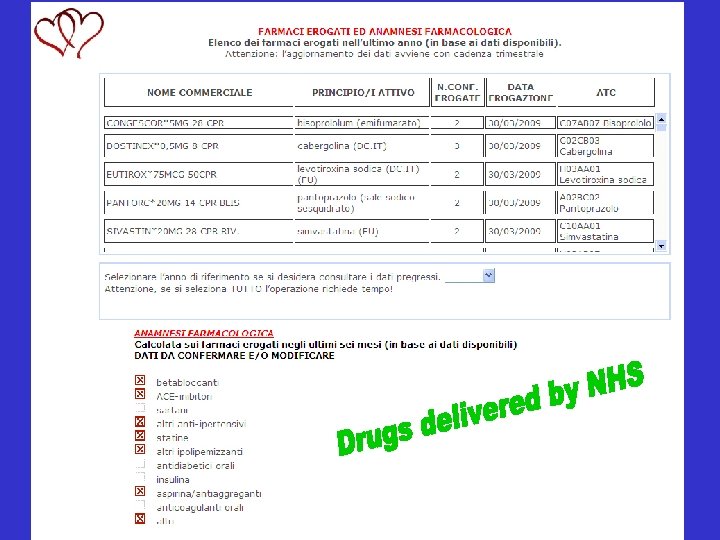
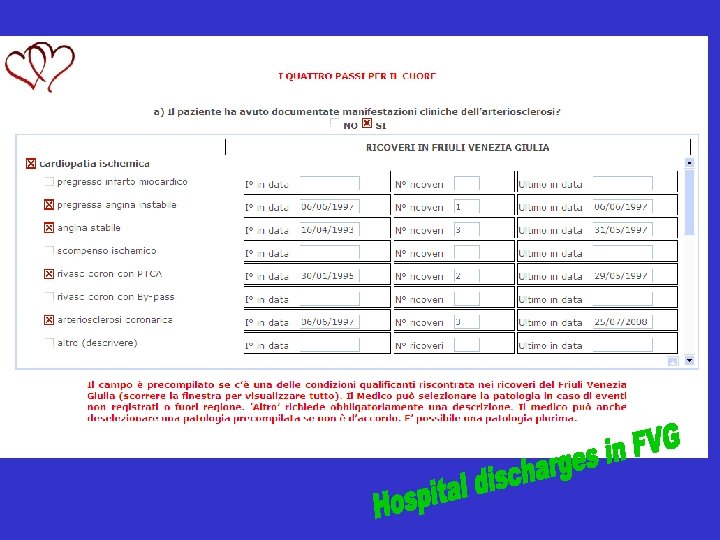
Where are we now? • BI included into regional social and health policies • BI is considered a tool to empower patients and doctors • BI closely linked to health promotion and community research • Regional start-up incentives and web connection with National Health Institute in Rome with online real time data
Customization • Alcohol only • Alcohol, tobacco & other lifestyles • From identification of health risks to the understanding of the conditions that create risks • From health needs to health assets (Empw) • Cardiovascular risk • Health policy
Why was this possible? • Brief intervention is a flexible instrument – Good for the patient – Good for the doctor – Good for public health – Good for health promotion