
From Problem to Prevention EvidenceBased Public Health February
From Problem to Prevention: Evidence-Based Public Health February 26, 2020 Sarah Levin-Lederer, MPH Outreach and Education Coordinator National Network of Libraries of Medicine-New England Region
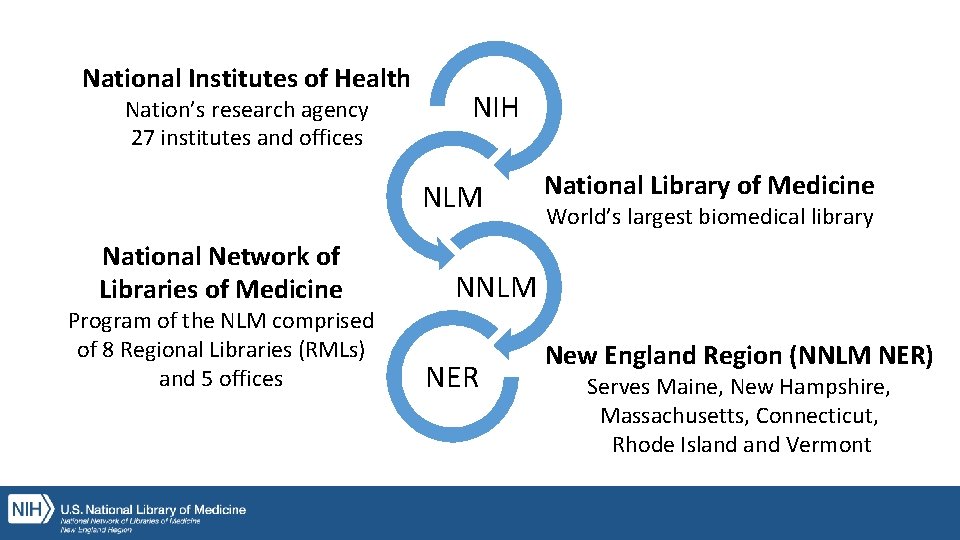
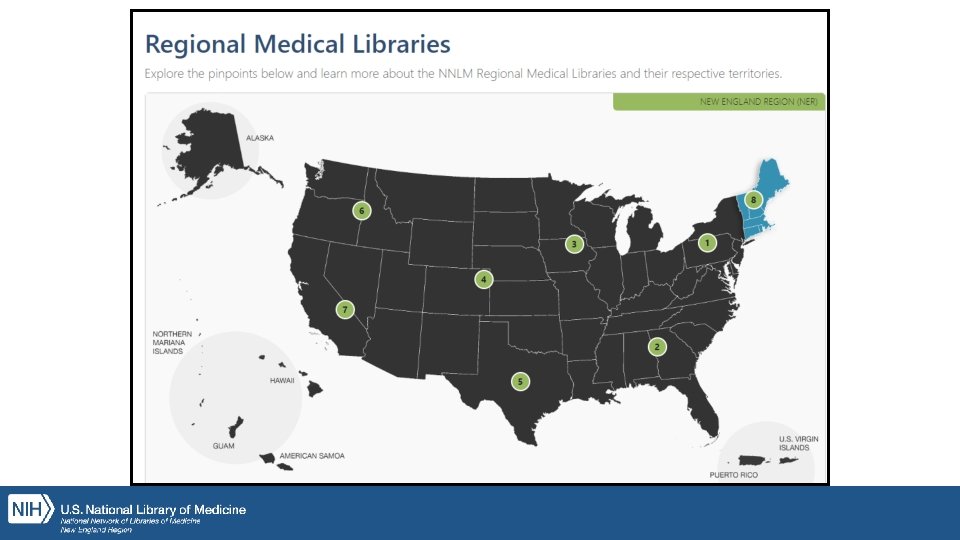
National Institutes of Health Nation’s research agency 27 institutes and offices NIH NLM National Network of Libraries of Medicine Program of the NLM comprised of 8 Regional Libraries (RMLs) and 5 offices National Library of Medicine World’s largest biomedical library NNLM NER New England Region (NNLM NER) Serves Maine, New Hampshire, Massachusetts, Connecticut, Rhode Island Vermont
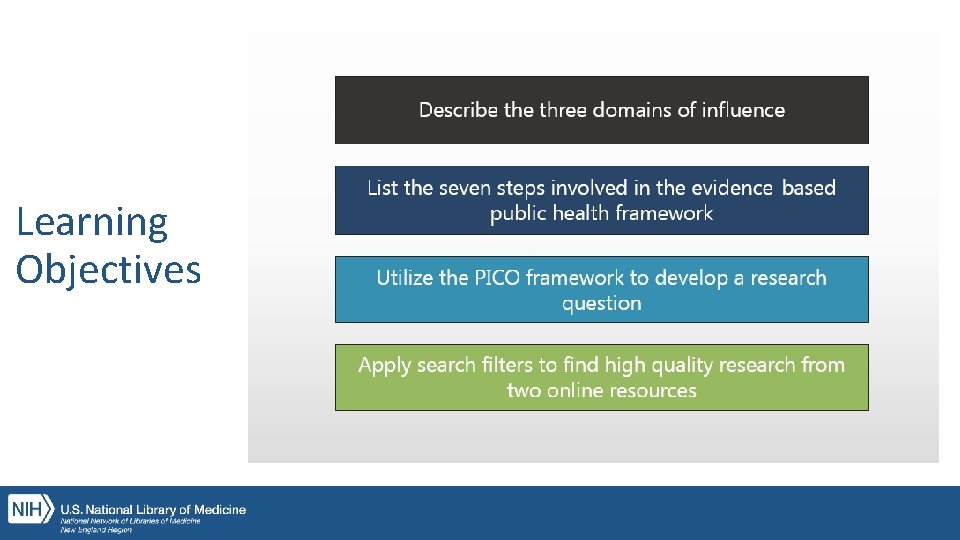
Learning Objectives
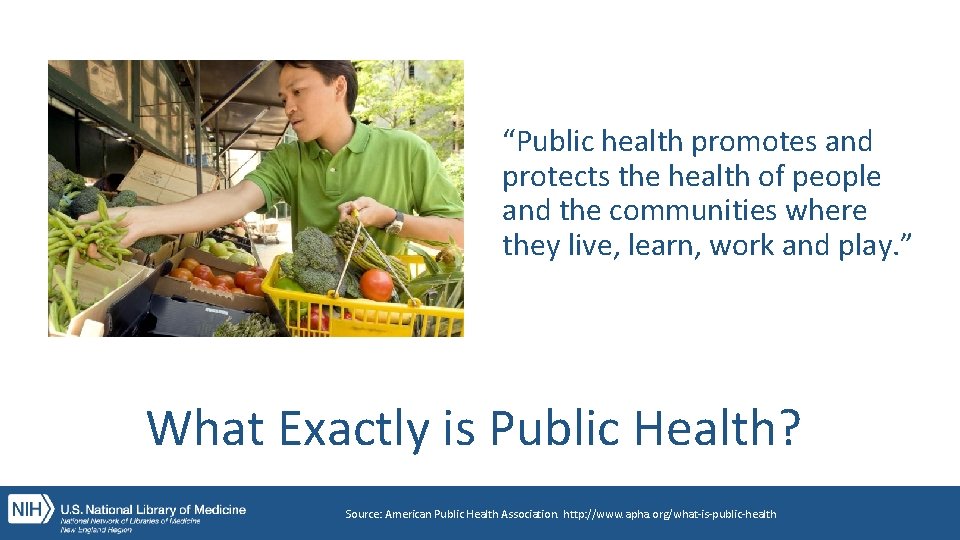
“Public health promotes and protects the health of people and the communities where they live, learn, work and play. ” What Exactly is Public Health? Source: American Public Health Association. http: //www. apha. org/what-is-public-health
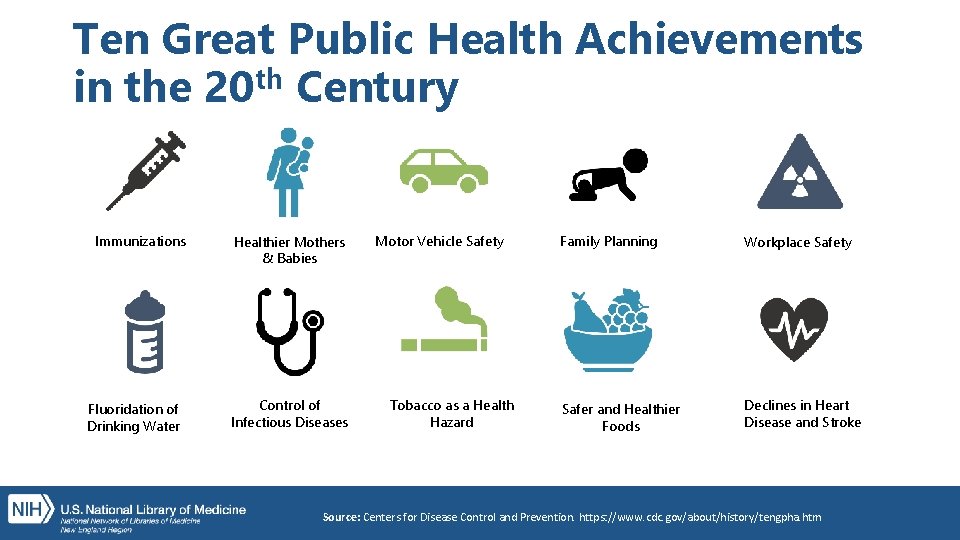
Ten Great Public Health Achievements in the 20 th Century Immunizations Fluoridation of Drinking Water Healthier Mothers & Babies Control of Infectious Diseases Motor Vehicle Safety Tobacco as a Health Hazard Family Planning Workplace Safety Safer and Healthier Foods Declines in Heart Disease and Stroke Source: Centers for Disease Control and Prevention. https: //www. cdc. gov/about/history/tengpha. htm
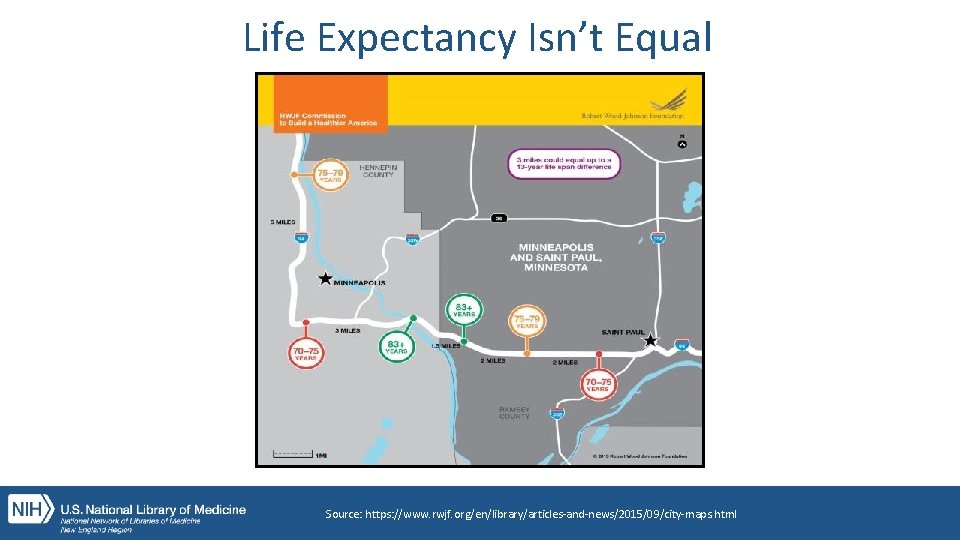
Life Expectancy Isn’t Equal Source: https: //www. rwjf. org/en/library/articles-and-news/2015/09/city-maps. html
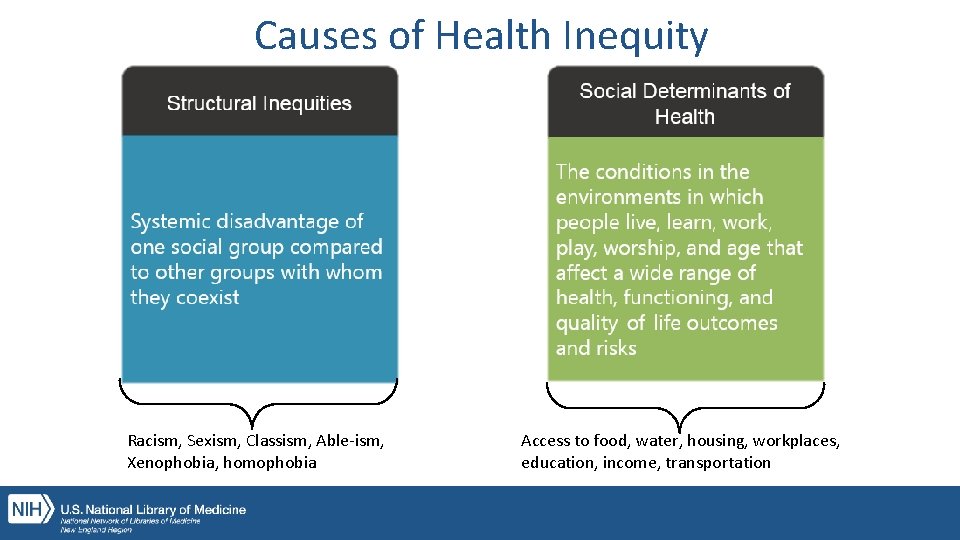
Causes of Health Inequity Racism, Sexism, Classism, Able-ism, Xenophobia, homophobia Access to food, water, housing, workplaces, education, income, transportation
Taking Action with EBPH • Evidence-based public health is: • “The development, implementation, and evaluation of effective programs and policies in public health through application of principles of scientific reasoning. ”
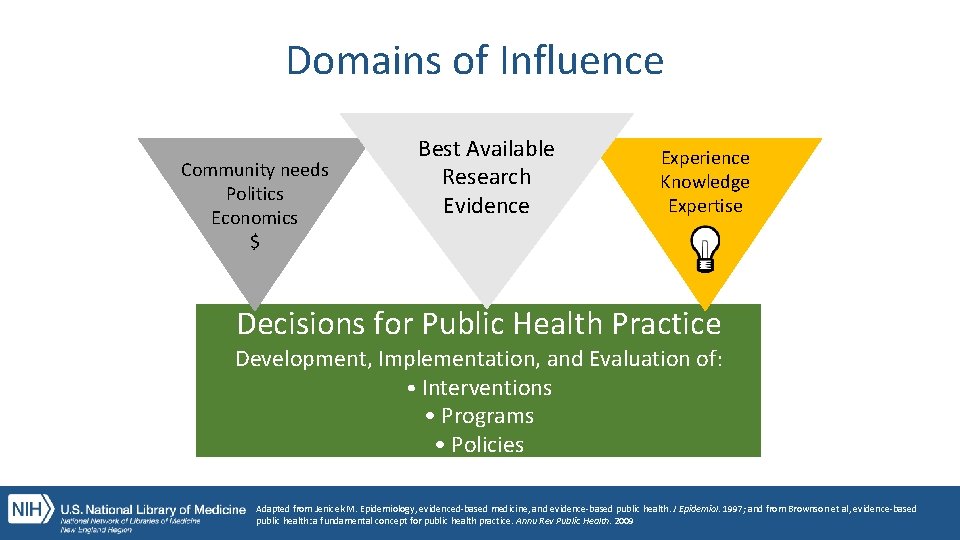
Domains of Influence Community needs Politics Economics $ Best Available Research Evidence Experience Knowledge Expertise Decisions for Public Health Practice Development, Implementation, and Evaluation of: • Interventions • Programs • Policies Adapted from Jenicek M. Epidemiology, evidenced-based medicine, and evidence-based public health. J Epidemiol. 1997; and from Brownson et al, evidence-based public health: a fundamental concept for public health practice. Annu Rev Public Health. 2009
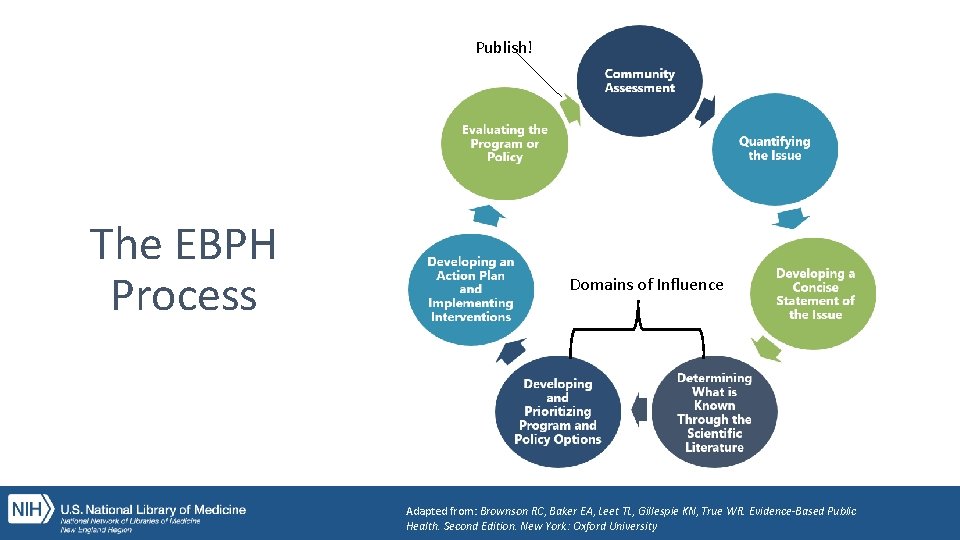
Publish! The EBPH Process Domains of Influence Adapted from: Brownson RC, Baker EA, Leet TL, Gillespie KN, True WR. Evidence-Based Public Health. Second Edition. New York: Oxford University
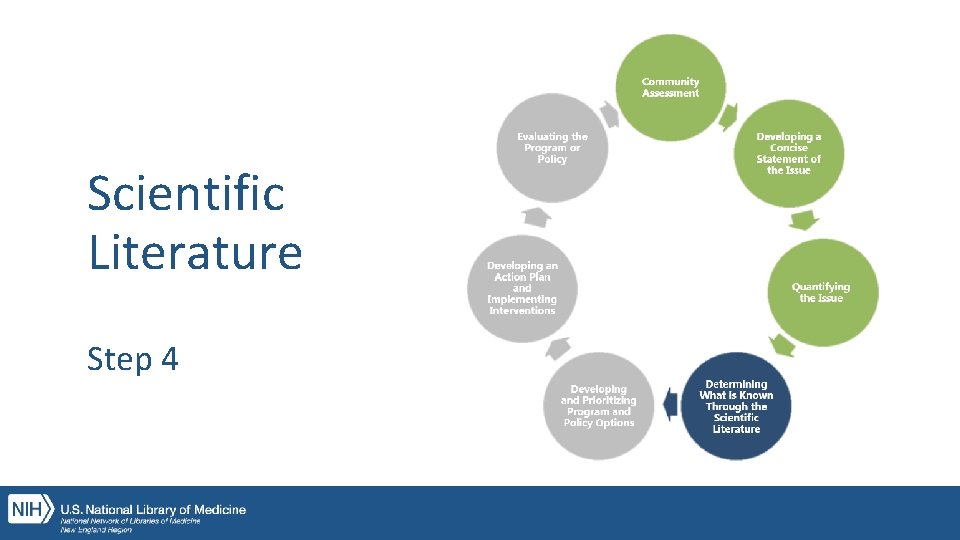
Scientific Literature Step 4
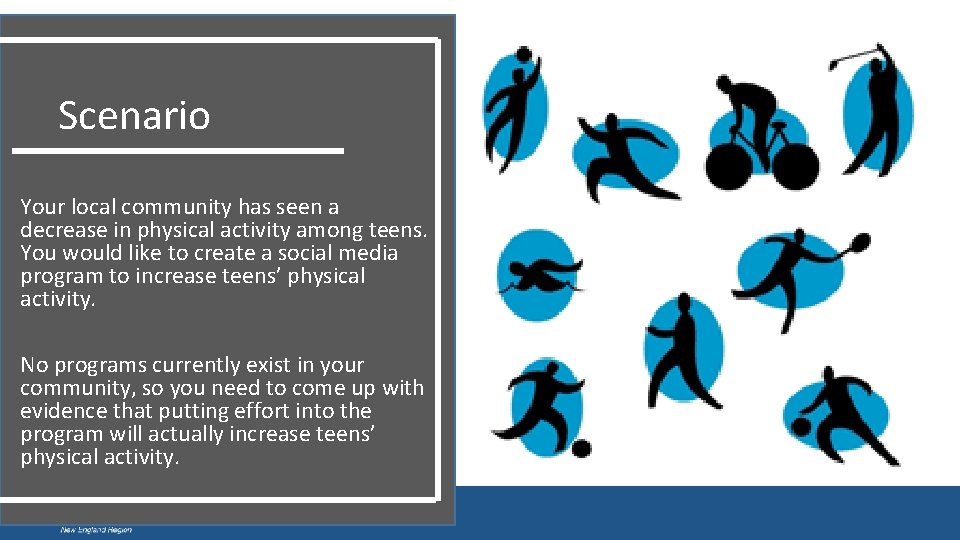
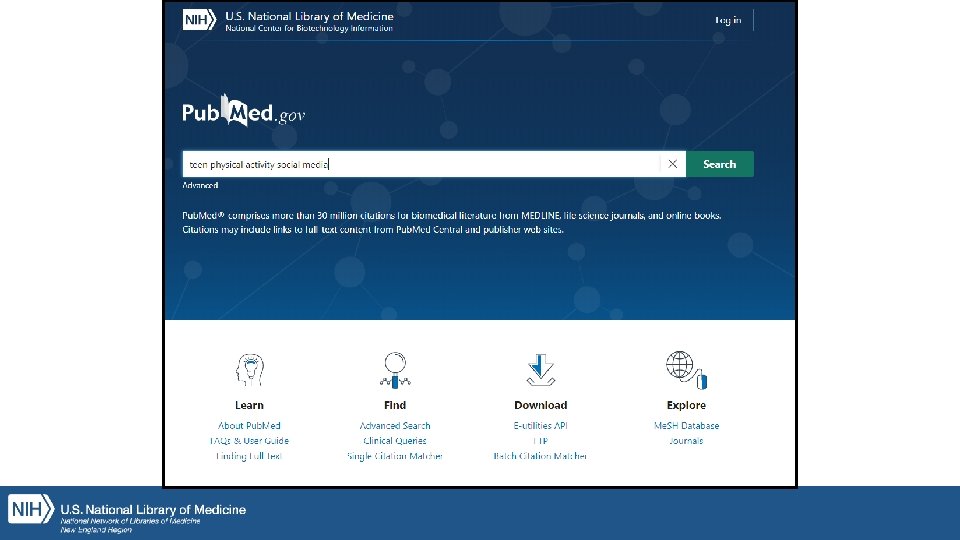
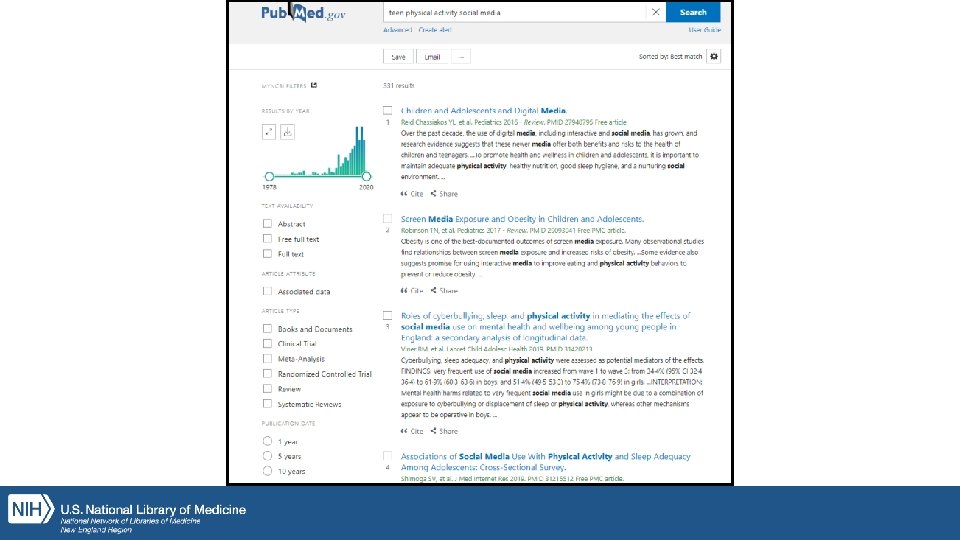
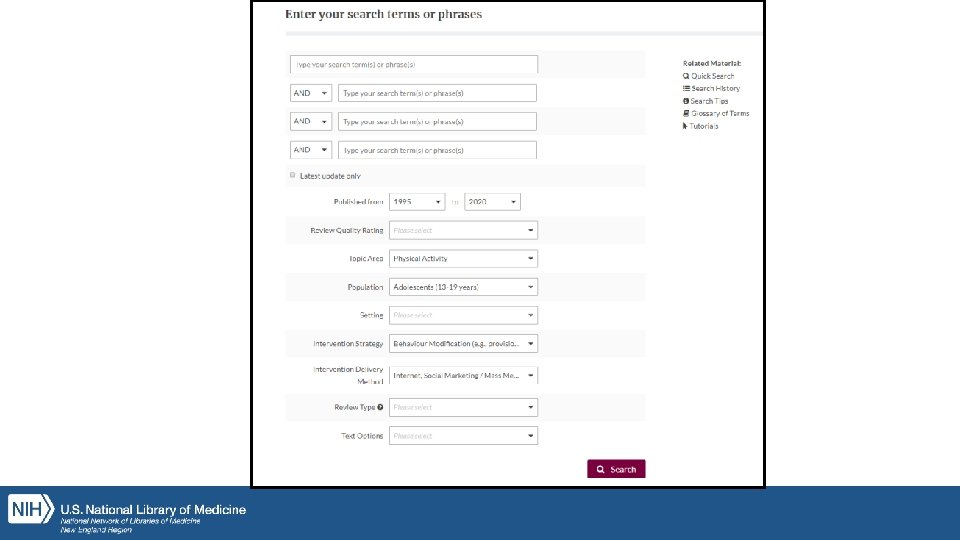
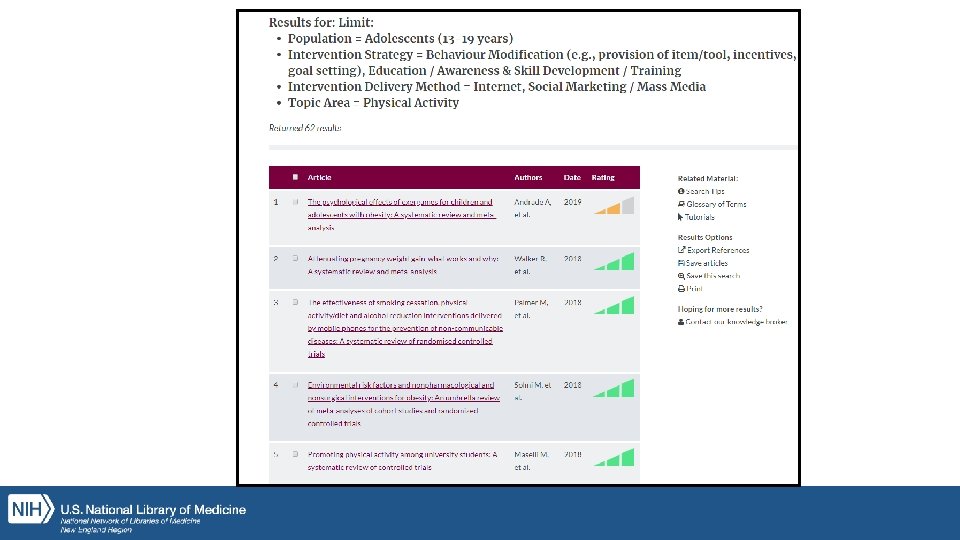
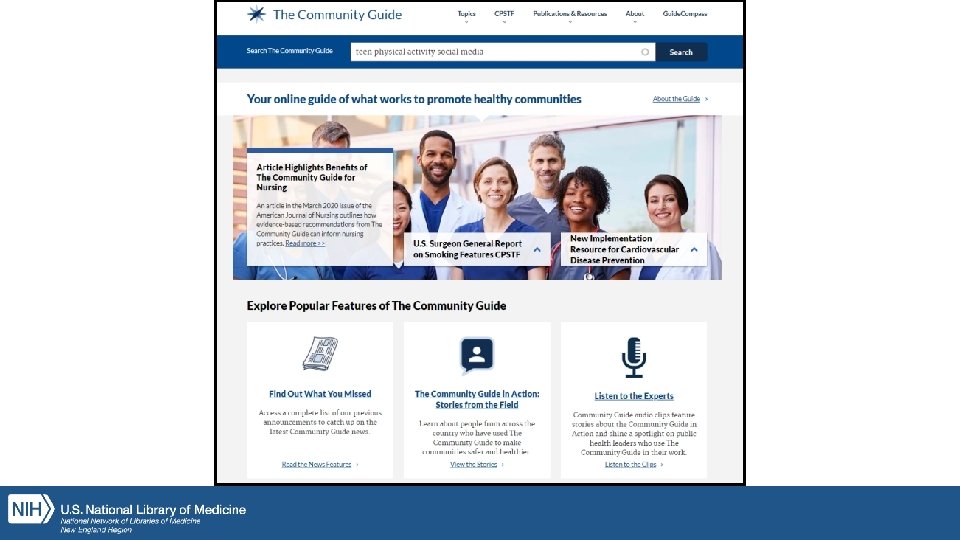
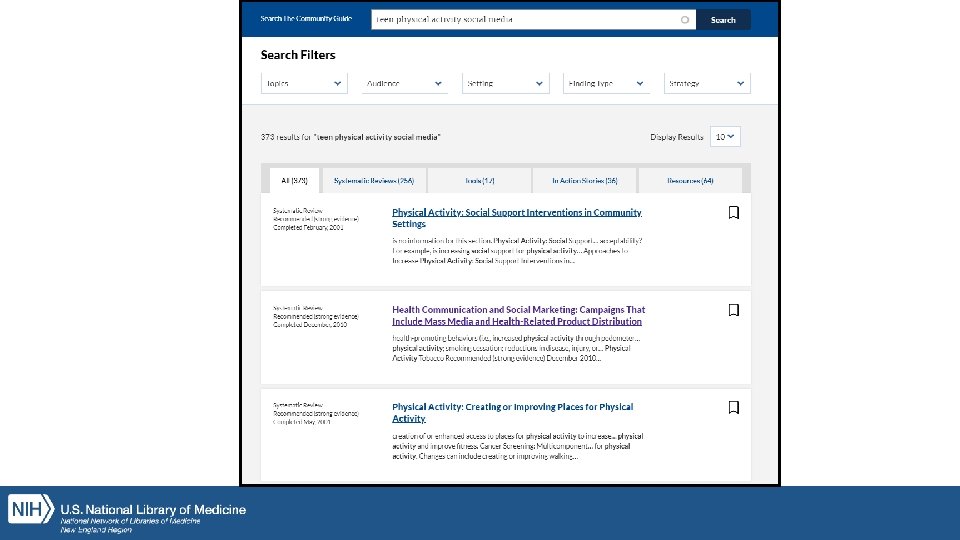
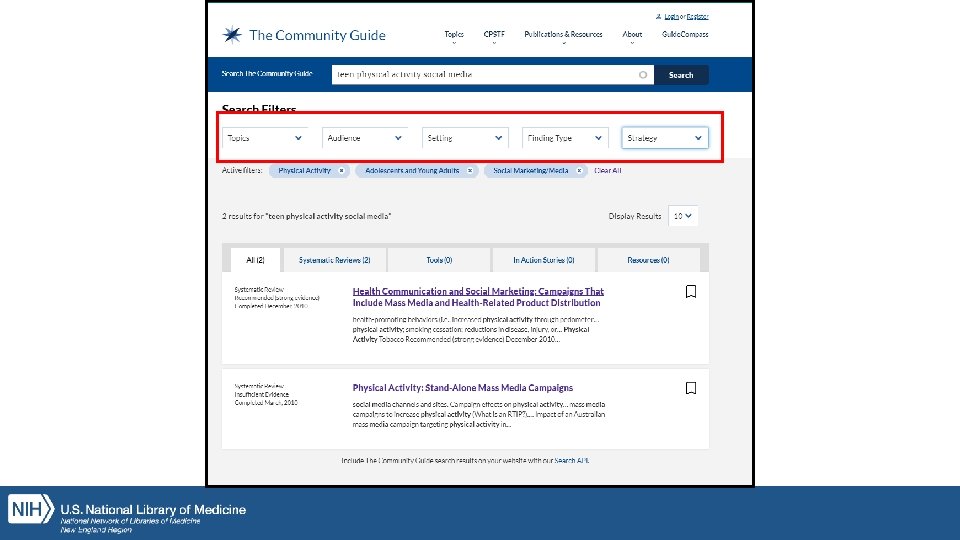
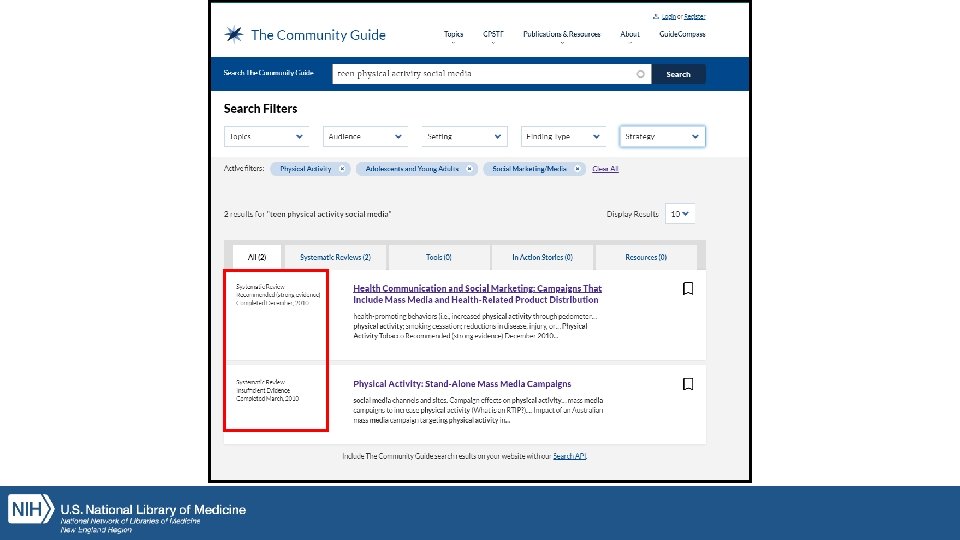
Scenario Your local community has seen a decrease in physical activity among teens. You would like to create a social media program to increase teens’ physical activity. No programs currently exist in your community, so you need to come up with evidence that putting effort into the program will actually increase teens’ physical activity. This Photo by Unknown Author is licensed under CC BY-NC-ND
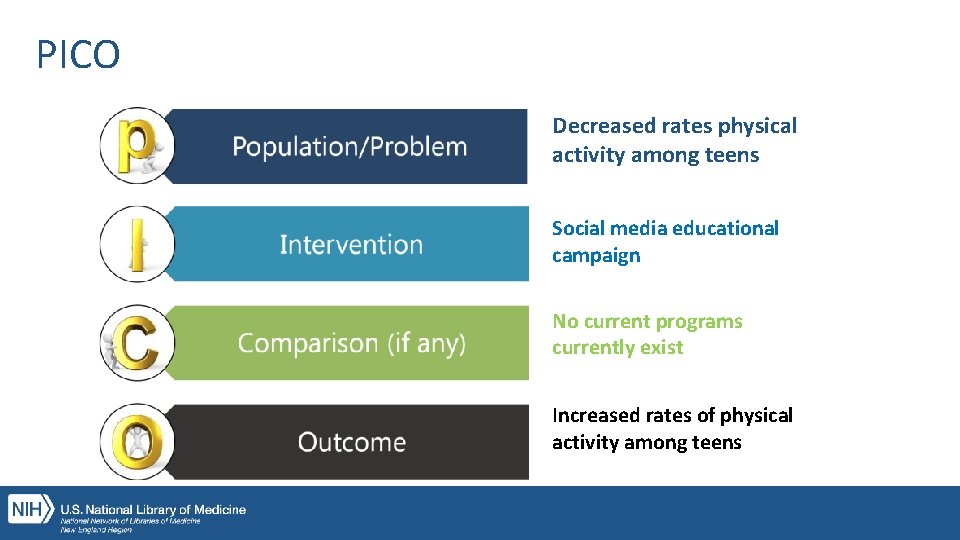
PICO Decreased rates physical activity among teens Social media educational campaign No current programs currently exist Increased rates of physical activity among teens
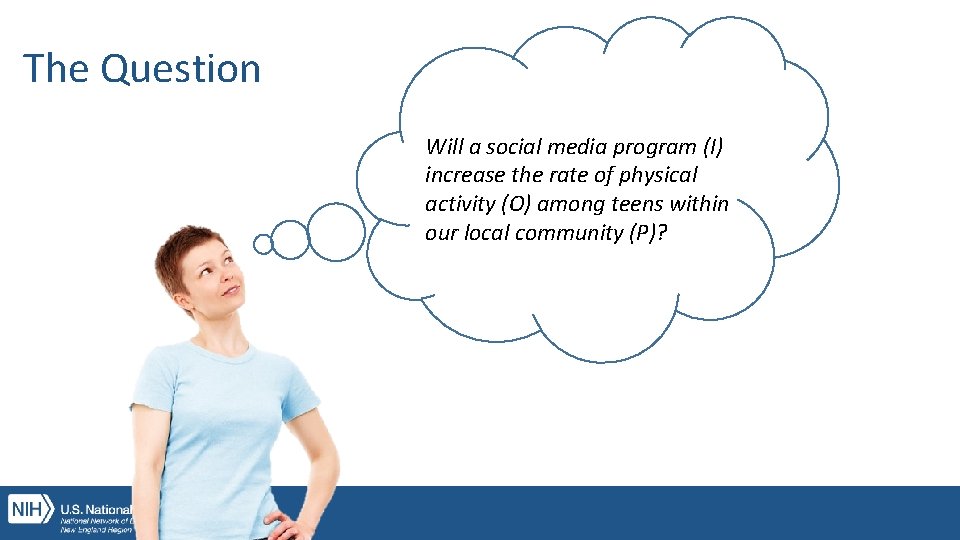
The Question Will a social media program (I) increase the rate of physical activity (O) among teens within our local community (P)?
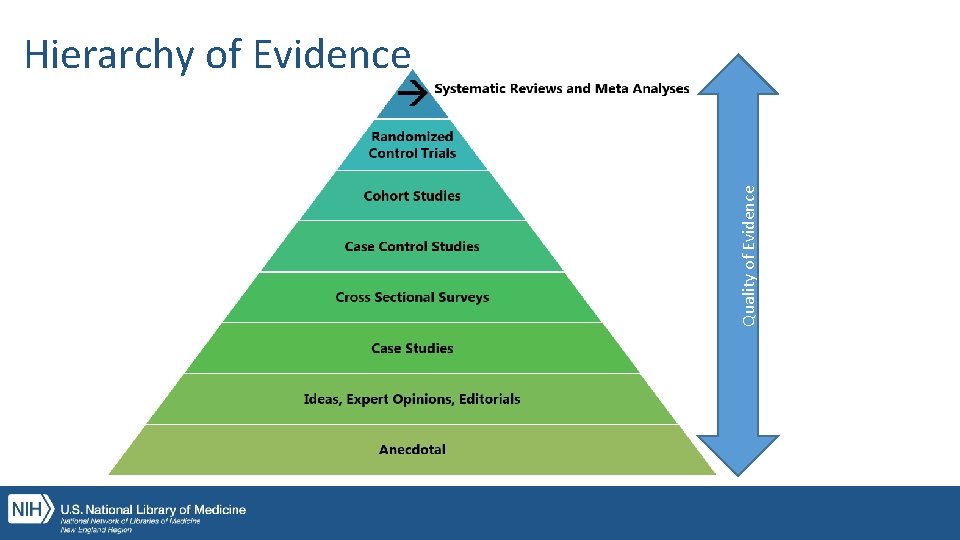
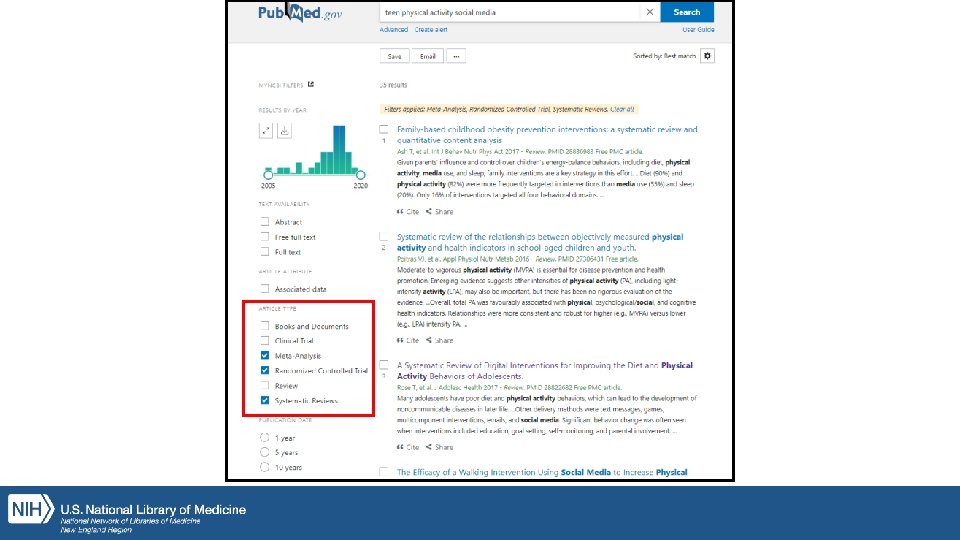
Quality of Evidence Hierarchy of Evidence
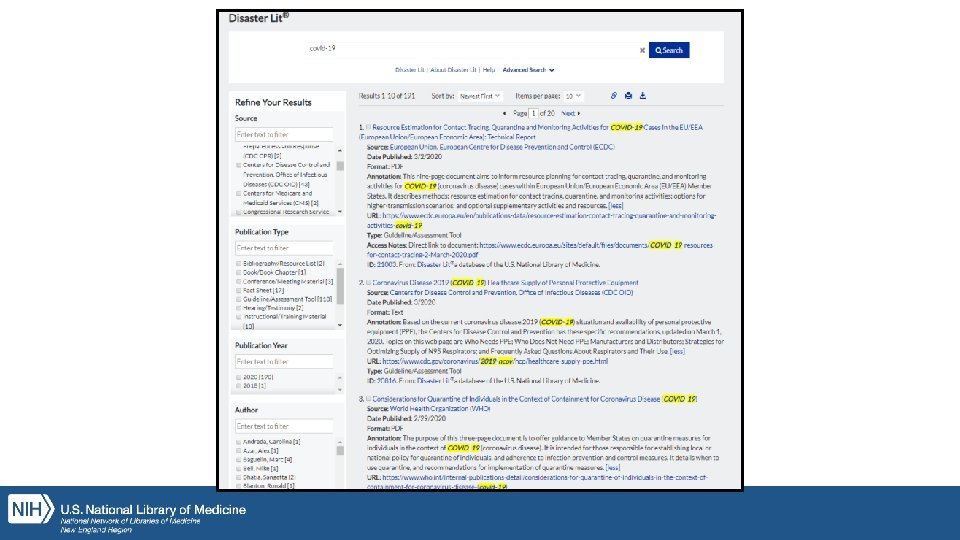
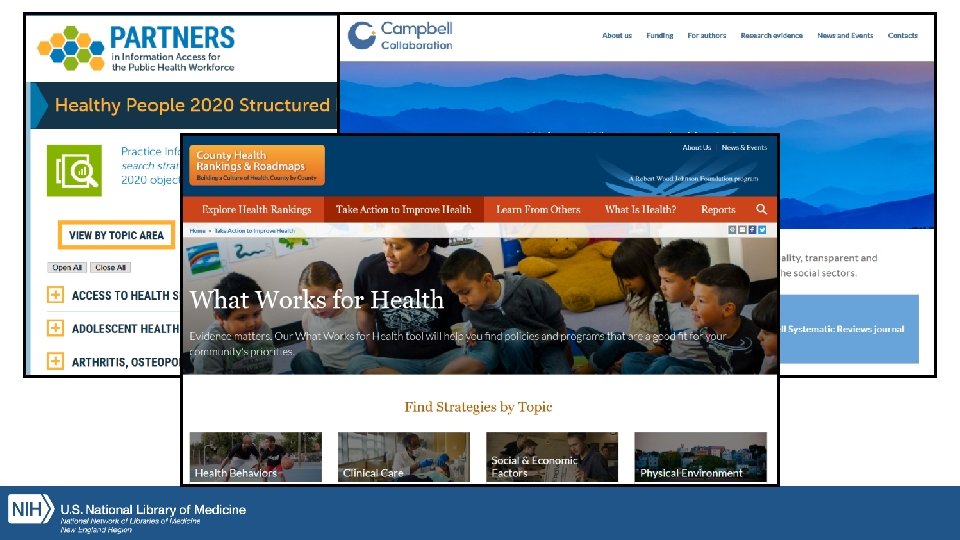
Demos
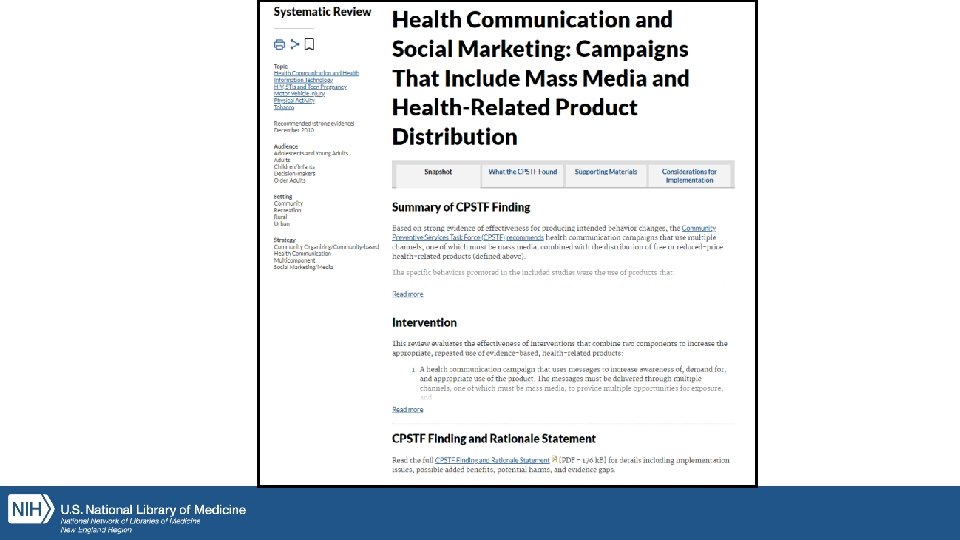
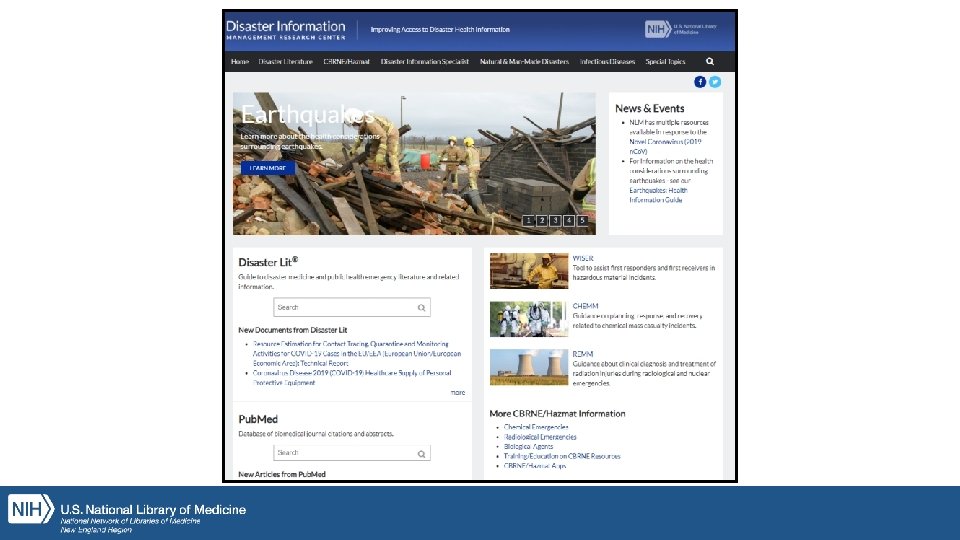
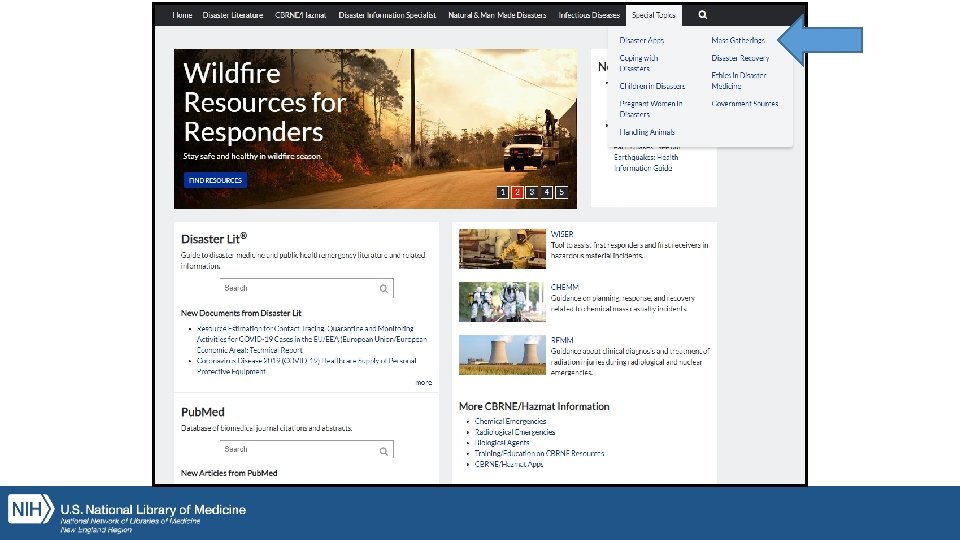
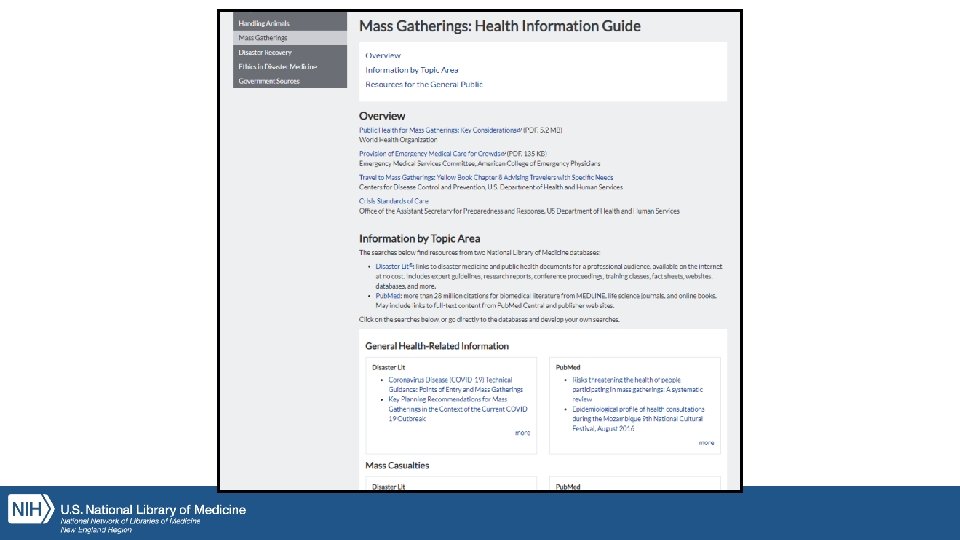
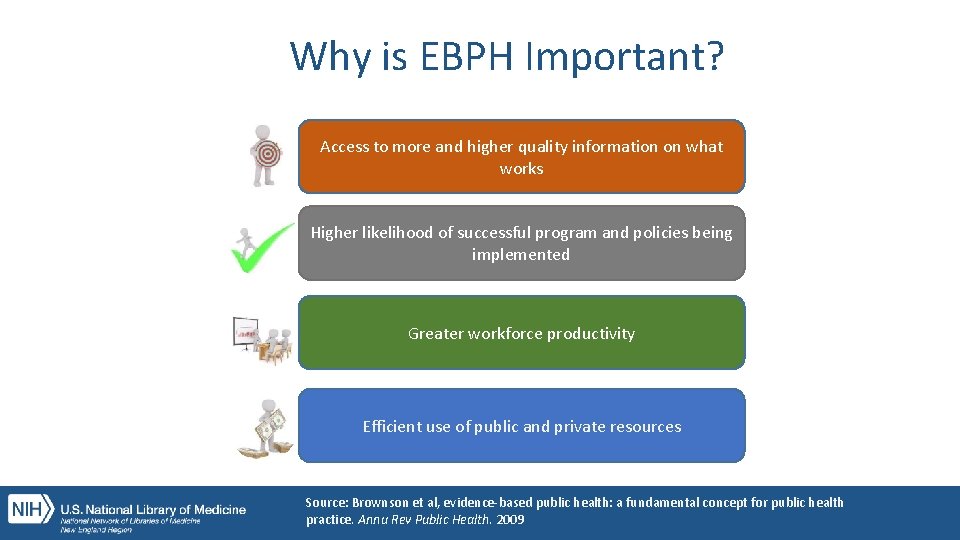
Why is EBPH Important? Access to more and higher quality information on what works Higher likelihood of successful program and policies being implemented Greater workforce productivity Efficient use of public and private resources Source: Brownson et al, evidence-based public health: a fundamental concept for public health practice. Annu Rev Public Health. 2009
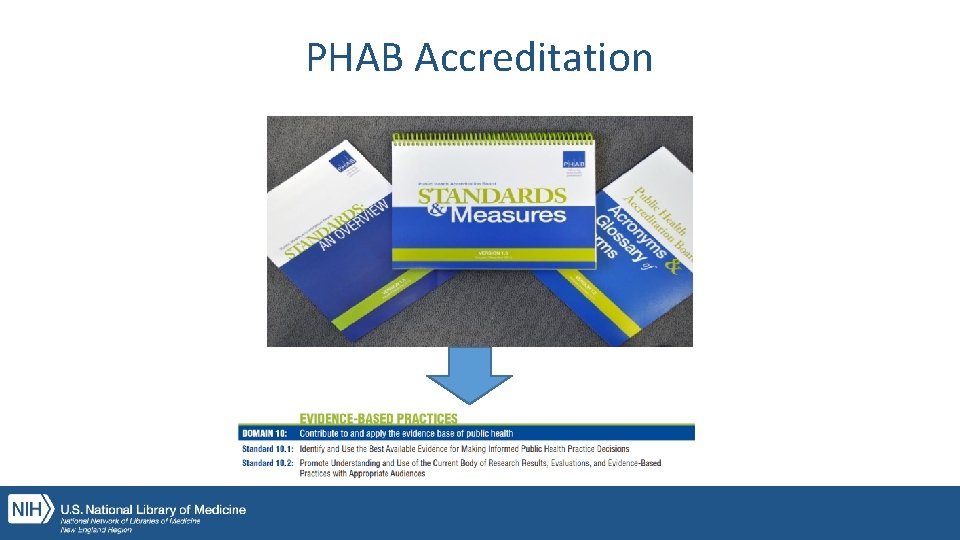
PHAB Accreditation
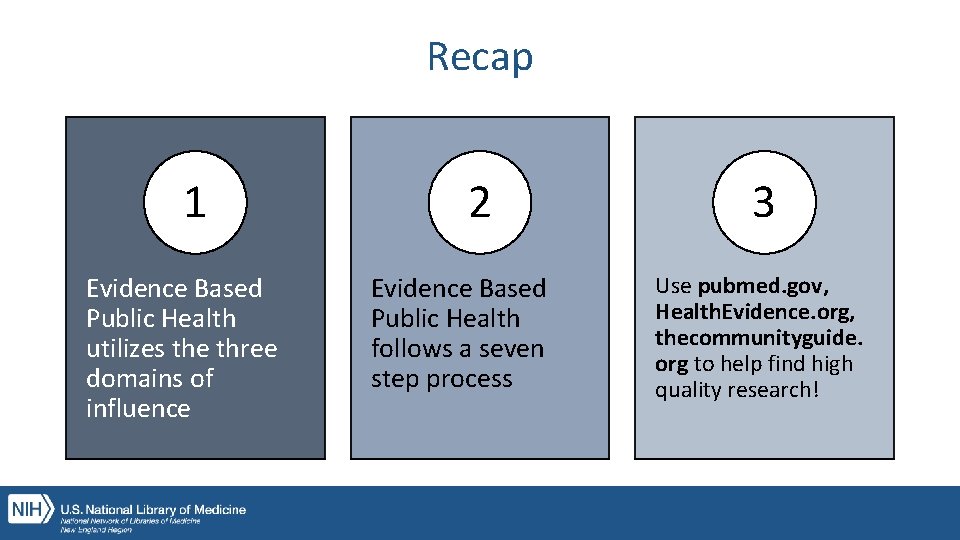
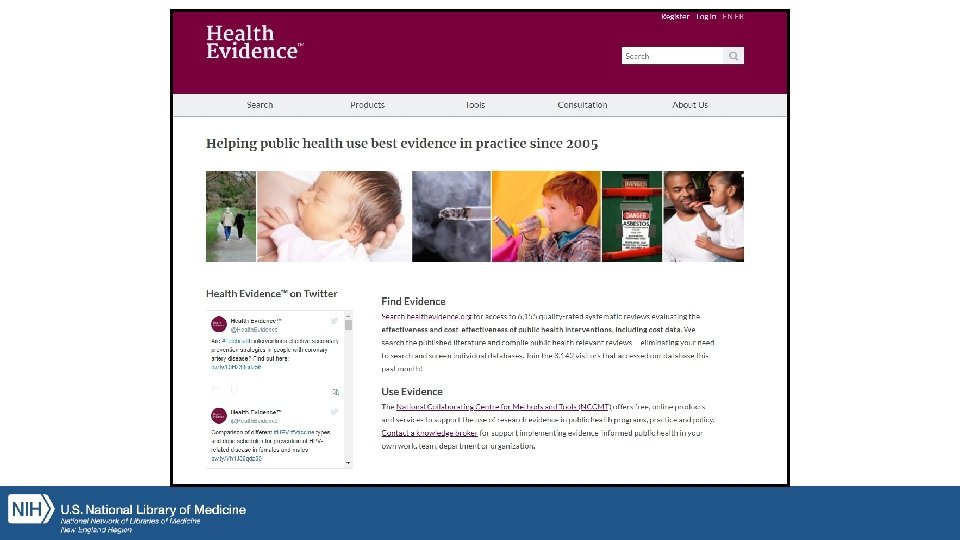
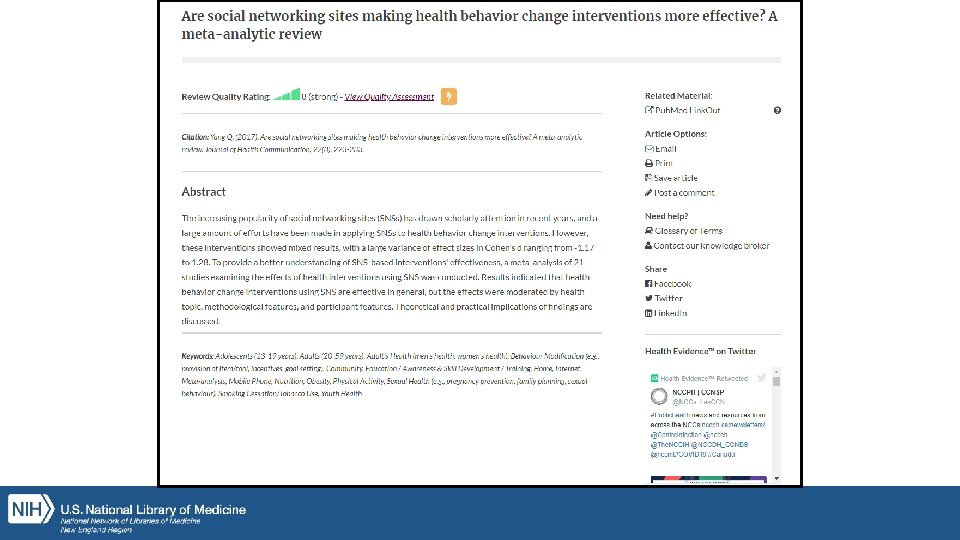
Recap 1 Evidence Based Public Health utilizes the three domains of influence 2 Evidence Based Public Health follows a seven step process 3 Use pubmed. gov, Health. Evidence. org, thecommunityguide. org to help find high quality research!
Contact NNLM NER Web site: http: //nnlm. gov/ner Serving Connecticut, Maine, Massachusetts, New Hampshire, Rhode Island, Vermont For questions regarding the content of this presentation or to request training please contact: Sarah Levin-Lederer, MPH Outreach and Education Coordinator Sarah. levinlederer@umassmed. edu This project is funded by the National Library of Medicine, National Institutes of Health, Department of Health and Human Services, under Cooperative Agreement Number UG 4 LM 012347 with the University of Massachusetts Medical School, Worcester.
- Slides: 38