
From Novice to Knowing A Primer on PCOS



- Slides: 61
From Novice to Knowing: A Primer on PCOS Kay M. Czaplewski, BSN, RN, BC, CDE, NHA Press to begin
What is PCOS? PCOS (polycystic ovary disease) is a condition most often characterized by irregular or absent periods; abnormal hair growth; obesity and insulin resistance. It affects 5 -10% of women of reproductive age, without regard to ethnicity (Legro, 2007) PCOS can lead to long term complications like diabetes, endometrial cancer, dyslipidemia and cardiovascular disease, if left untreated (Mayo. Clinic, 2007; Hill, 2003) NEXT SLIDE
Why do we Care? Nurses need to understand the basic physiology and treatment modalities of PCOS in order provide education, guidance, and support. Patients chief concerns with PCOS may change over time, and many will seek advice from different health care providers, including nurses. Nurses need to understand how PCOS is managed and the potential health risks associated with this common condition. next, please
(There’s no place like ) HOME PAGE This tutorial will focus on four aspects of PCOS (click on an area of interest) Menstrual Dysfunction Anovulation/Infertility Hyperandrogen Insulin Resistance (click here for a refresher on normal menstrual function) Click here for pathophysiology of PCOS Or press next
How do we know what is abnormal until we know normal? Menstruation 101 TAKE ME ON A QUICK REVIEW NO TIME FOR REVIEW, JUST TELL ME ABOUT PCOS AND MENSTRUAL DYSFUNCTION Back to home page next
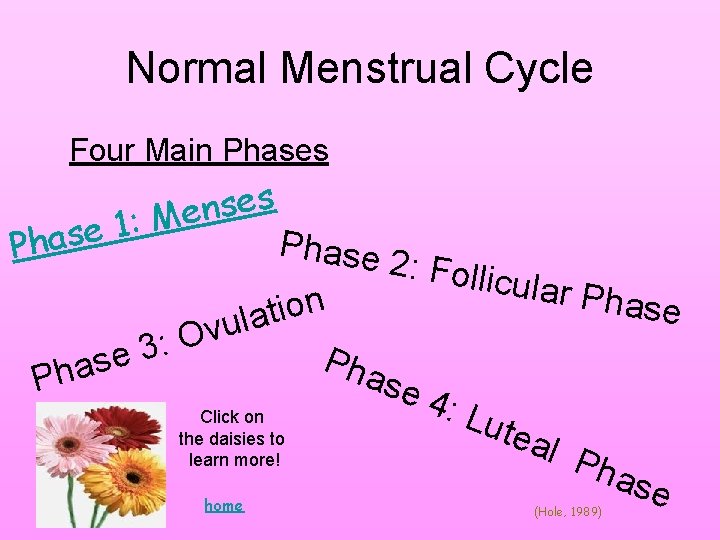
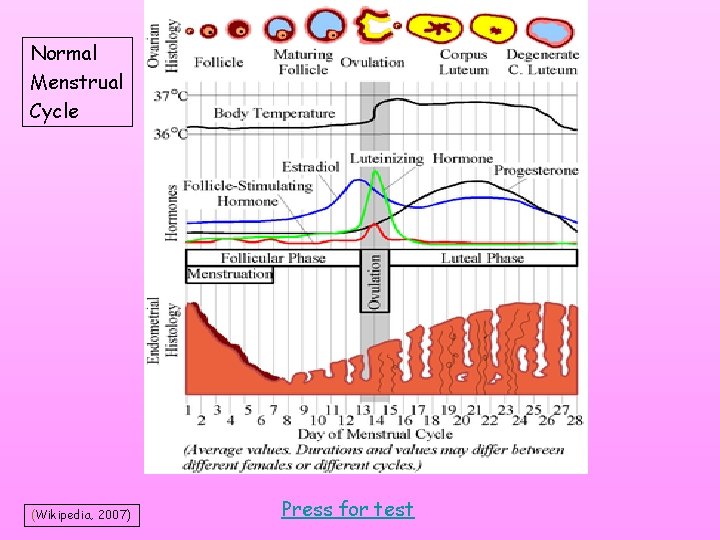
Normal Menstrual Cycle Four Main Phases Phase s n 1: Me Phase 2: Folli cular P n o i t la u v O : 3 e P s has a Ph e Click on the daisies to learn more! home hase 4: L ute al P has e (Hole, 1989)
Phase 1 Day 1 -5 Shedding of endometrium Average blood shed 10 -80 ml Plasmin enzyme released by endometrium inhibits clotting Take me to phase 2! (Hole, 1989) home
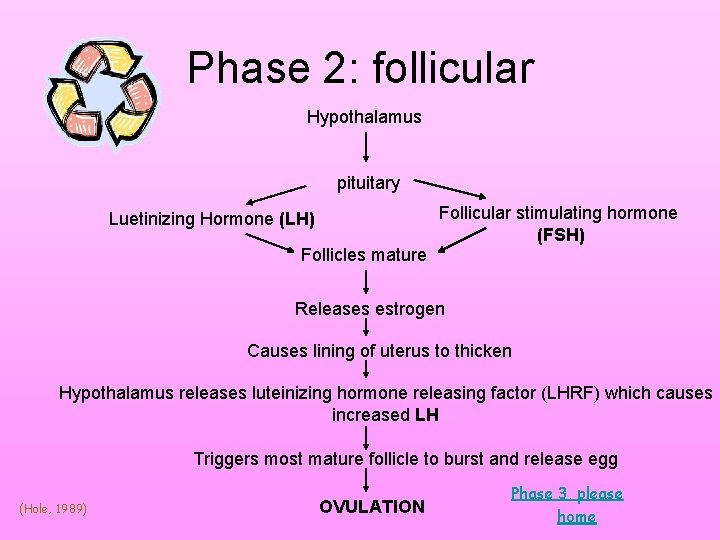
Phase 2: follicular Hypothalamus pituitary Follicular stimulating hormone (FSH) Luetinizing Hormone (LH) Follicles mature Releases estrogen Causes lining of uterus to thicken Hypothalamus releases luteinizing hormone releasing factor (LHRF) which causes increased LH Triggers most mature follicle to burst and release egg (Hole, 1989) OVULATION Phase 3, please home
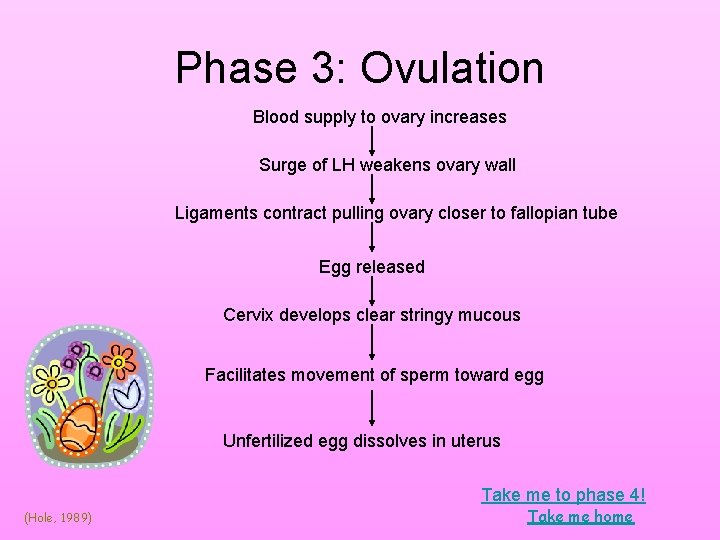
Phase 3: Ovulation Blood supply to ovary increases Surge of LH weakens ovary wall Ligaments contract pulling ovary closer to fallopian tube Egg released Cervix develops clear stringy mucous Facilitates movement of sperm toward egg Unfertilized egg dissolves in uterus Take me to phase 4! (Hole, 1989) Take me home
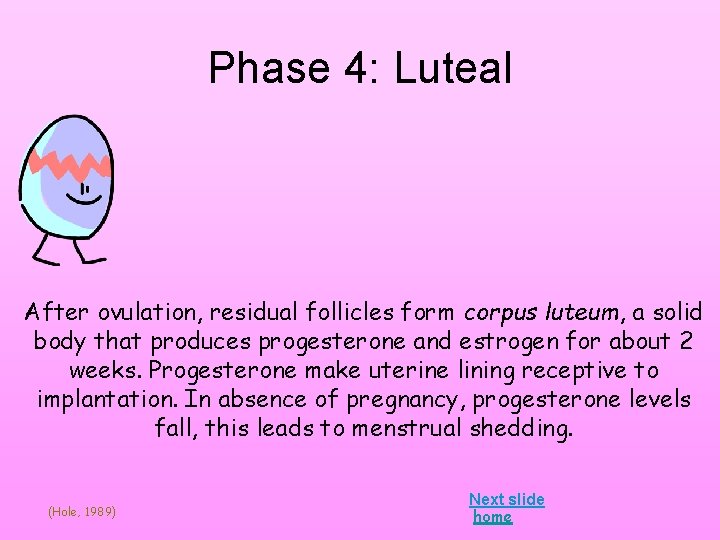
Phase 4: Luteal After ovulation, residual follicles form corpus luteum, a solid body that produces progesterone and estrogen for about 2 weeks. Progesterone make uterine lining receptive to implantation. In absence of pregnancy, progesterone levels fall, this leads to menstrual shedding. (Hole, 1989) Next slide home
For a summary of menstruation in graph form, Please press me! Kay, RN Otherwise, proceed With test
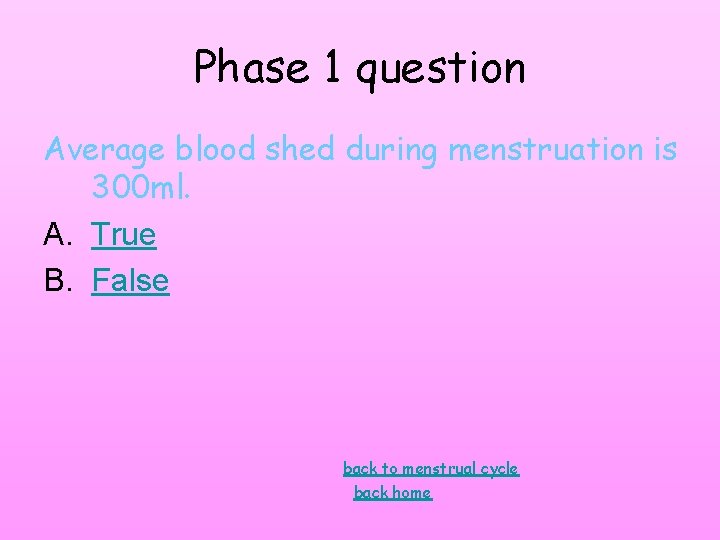
Phase 1 question Average blood shed during menstruation is 300 ml. A. True B. False back to menstrual cycle back home
That’s Correct! • The average blood loss is 10 -80 ml (Wikipedia, 2007) Back to test Take me to question 2 home
Oops! Try again • Blood shed in that amount may be detrimental! Let me try again!
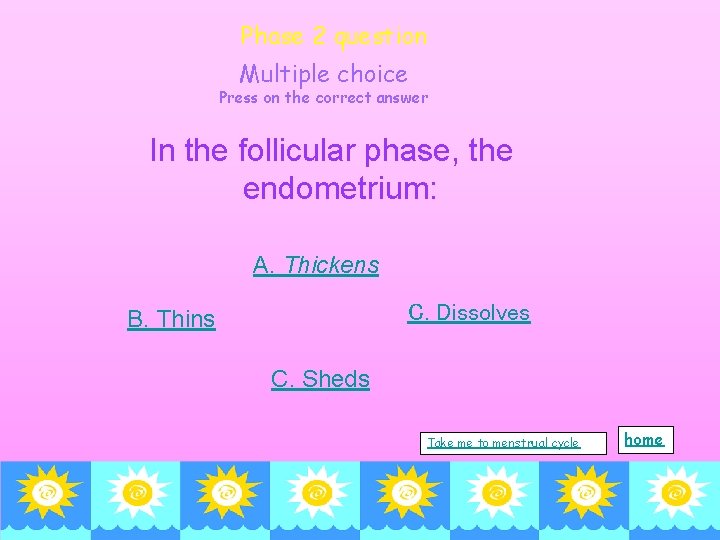
Phase 2 question Multiple choice Press on the correct answer In the follicular phase, the endometrium: A. Thickens C. Dissolves B. Thins C. Sheds Take me to menstrual cycle home
Correct! Increasing levels of estrogen would produce thickening of endometrium in preparation of a potential fertilized egg. (Hole, 1989) Back to test Phase 3 question
no… A dissolving endometrium That’s just silly Ha…ha…ha… Return to test Next question
no… thinning would be Menstruation!!! (Hole, 1989) Back to test
No… shedding Would be menstruation Back to test (Hole, 1989)
Phase 3 Question During Ovulation Egg is released No egg released home Menstrual cycle
correct Under the influence of FSH secreted by the anterior pituitary, the follicle matures, a rush of LH cases the mature follicle to rupture. This is called ovulation (Tabers, 2006). Next question Back to test home
Not quite… Remember, during ovulation, the mature egg is released. Back to test question home
Phase 4 Question • After ovulation, what do the follicles form? 1. Corpus luteum 2. Corpus Christi
Yes… After ovulation residual follicles form corpus luteum, a solid body that produces progesterone and estrogen for about 2 weeks. Progesterone makes the uterine lining receptive to implantation. In absence of pregnancy progesterone levels fall, this leads to menstrual shedding (Hole, 1989). Next home
No Ya…all… Back to test
h g u o r h t g n , i e t l t c e y g c l n a o u b r t o j s n t e t a u e m o l b a Gr a m r k l o a n t e s ’ t th e l w no … S O C P Next slide home
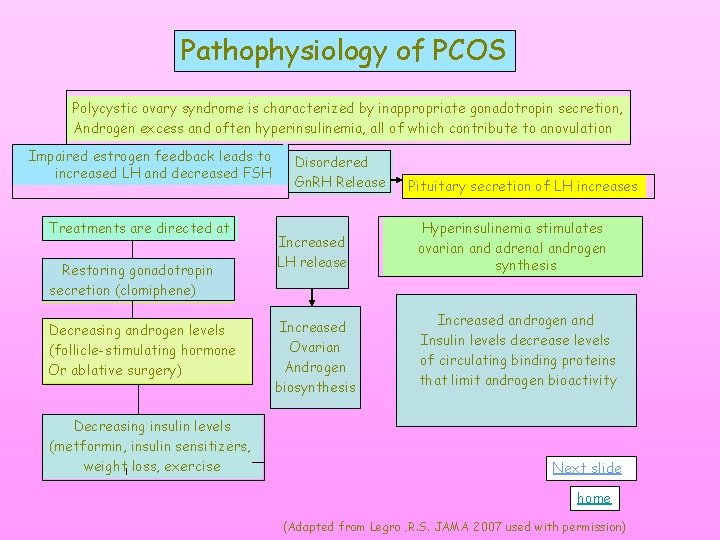
Pathophysiology of PCOS Polycystic ovary syndrome is characterized by inappropriate gonadotropin secretion, Androgen excess and often hyperinsulinemia, all of which contribute to anovulation Impaired estrogen feedback leads to increased LH and decreased FSH Treatments are directed at Restoring gonadotropin secretion (clomiphene) Decreasing androgen levels (follicle-stimulating hormone Or ablative surgery) Decreasing insulin levels (metformin, insulin sensitizers, weight loss, exercise Disordered Gn. RH Release Increased LH release Increased Ovarian Androgen biosynthesis Pituitary secretion of LH increases Hyperinsulinemia stimulates ovarian and adrenal androgen synthesis Increased androgen and Insulin levels decrease levels of circulating binding proteins that limit androgen bioactivity Next slide home (Adapted from Legro , R. S. JAMA 2007 used with permission)
Menstrual Dysfunction • Problem: Endometrium is in an unopposed estrogen state resulting in anovulation. This results in suppression of FSH and increase of LH leading to endometrium proliferation. (Hill, 2003) Press here for a refresher on normal menstrual function next home
Bonus question… What is the problem with endometrial Proliferation? answer home Previous
Endometrial Cancer • For women with PCOS, chronic unopposed estrogen is a risk factor for endometrial carcinoma. • Four menses per year are recommended to to help control this risk. Sheehan, 2004 continue home
Treatment of Menstrual Dysfunction Oral contraceptives and progesterone withdrawal Lifestyle modification/weight loss Metformin (Barbieri & Ehrmann, 2007) continue home
Oral Contraceptives and Progesterone Withdrawal Oral contraceptives (OCs) affect the ovary by maintaining a constant level of estrogen and progesterone. This prevents fluctuation of estrogen and progesterone. Thus OCs manage oligomenorrhea and reduce the risk of endometrial cancer (Kelly, 2003). Provera (progesterone withdrawal) results in menses. Four menses per year are recommended to decrease risk of development of uterine cancer from endometrial proliferation. (Sheehan, 2004, Hill, 2003) Next page home
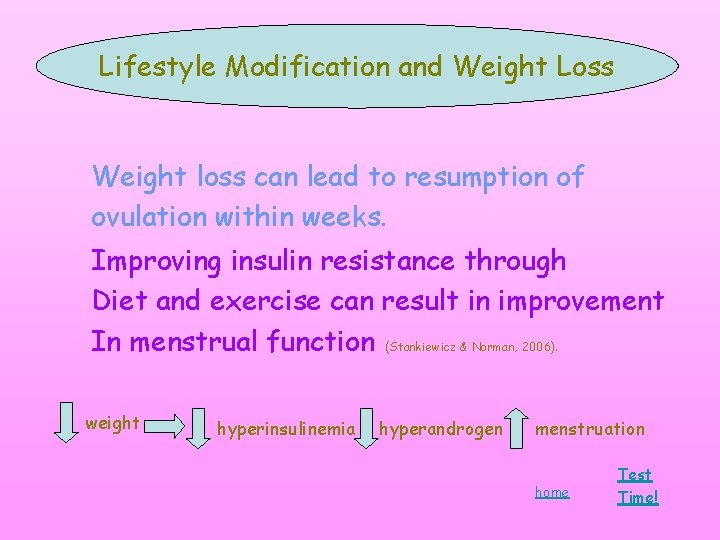
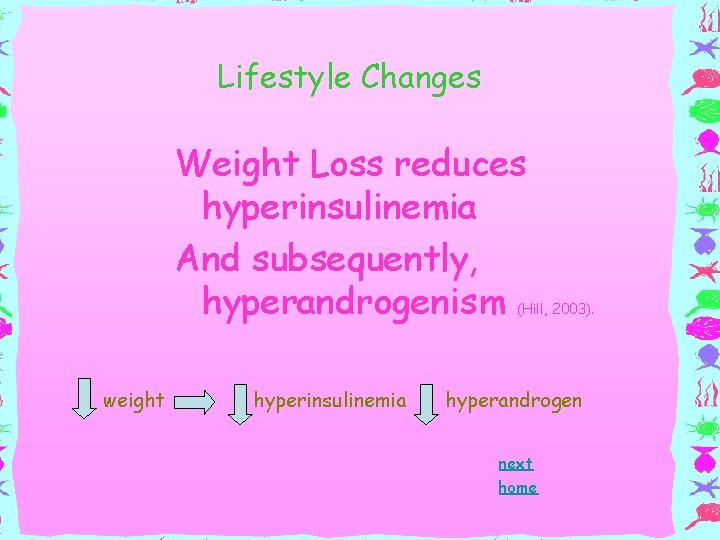
Lifestyle Modification and Weight Loss Weight loss can lead to resumption of ovulation within weeks. Improving insulin resistance through Diet and exercise can result in improvement In menstrual function (Stankiewicz & Norman, 2006). weight hyperinsulinemia hyperandrogen menstruation home Test Time!
Test Time The purpose of a progesterone withdrawal is to cause A. No Menses B. Menses
C-o-r-r-e-c-t • Progesterone levels are elevated during the luteal phase of the menstrual cycle. As they fall, menstrual shedding occurs. • For a woman with PCOS, it is necessary to induce menstrual shedding for the prevention of cervical cancer. This done with progesterone withdrawal course, taken about four times per year. (Barbieri & Ehrmann, 2007) next home Back to test
Ooops!…try again (hint…it’s just the opposite!) Back to question Back to menstrual dysfunction Back to home
Anovulation and Infertility Normally in the follicular phase, follicles in the ovary begin developing under the influence of a complex interplay of hormones, and after several days, the dominant follicle releases an egg in an event known as ovulation. (Hole, 1989). In PCOS, LH remains elevated, ovulation cannot occur (Sheehan, 2004). home next
Treatment of Anovulation and Infertility In most patients, Clomiphene and extended release metformin are used alone or together to induce ovulation. (Legro, Barnhardt, Schlaff, Carr, Diabmond, et al, 2007) Next page
Lifestyle Changes Weight Loss reduces hyperinsulinemia And subsequently, hyperandrogenism (Hill, 2003). weight hyperinsulinemia hyperandrogen next home
Treatment of Anovulation and Infertility Metformin… …decreases hepatic glucose production thus reducing the need for insulin secretion. This helps suppress androgen production and improves ovulation AND …decreases intestinal absorption of glucose and improves insulin resistance (Legro, Barnhardt, Schlaff, Carr, Diamond, et al, 2007) back TEST TIME! home
Anovulation and Infertility For practical purposes, anovulation and infertility are the same thing. • True • False Next slide home
For practical purposes, true When the egg has matured, it secretes enough estradiol to trigger the release of LH. The surge of LH matures the egg and weakens the wall of the follicle in the ovary. This process leads to ovulation. (Wikipedia, 2007) A woman must ovulate to be fertile. (Hole, 1989) Back to test Next slide home
Normal Menstrual Cycle (Wikipedia, 2007) Press for test
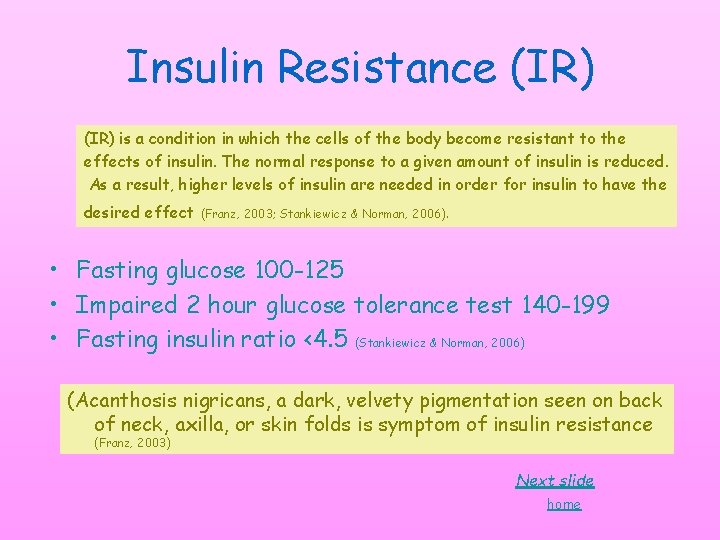
Insulin Resistance (IR) is a condition in which the cells of the body become resistant to the effects of insulin. The normal response to a given amount of insulin is reduced. As a result, higher levels of insulin are needed in order for insulin to have the desired effect (Franz, 2003; Stankiewicz & Norman, 2006). • Fasting glucose 100 -125 • Impaired 2 hour glucose tolerance test 140 -199 • Fasting insulin ratio <4. 5 (Stankiewicz & Norman, 2006) (Acanthosis nigricans, a dark, velvety pigmentation seen on back of neck, axilla, or skin folds is symptom of insulin resistance (Franz, 2003) Next slide home
Treatment of Insulin Resistance METFORMIN decreases hepatic glucose production thus reducing the need for insulin secretion. This helps suppress androgen production and improves ovulation. Metformin also decreases intestinal absorption of glucose and improves insulin resistance (Legro, Barnhardt, Schlaff, Carr, Diamond, et al, 2007). Next slide
Treatment of Insulin Resistance Metformin also lowers fatty acid concentrations, thus reducing gluconeogenesis (The formation of glucose, especially by the liver, from noncarbohydrate sources, such as amino acids and the glycerol portion of fats) (Barbieir & Ehrmann, 2007; Franz, 2003) Test time!
Test-time What is glyconeogenesis? The first book of the bible? The formation of glucose from non-carbohydrate sources? The formation of free fatty acids? Previous slide Home
Yes, genesis is the first book in the bible No, genesis is not gluconeogenesis Back to test
You are a rock star!! As you know, gluconeogenesis is the formation of glucose, especially by the liver, from noncarbohydrate sources, such as amino acids and the glycerol portions of fats (Barbieri & Ehrmann, 2007) Back to test Back home next
Close, but no cigar! Free fatty acids are an important source of fuel for many tissues since they can yield relatively large quantities of energy. Many cell types can use either glucose or fatty acids for this purpose (Franz, 2003). Metformin inhibits this process (Barbieir & Ehrmann, 2007). Back to test
Hyperandrogen Hirsutism is one bothersome aspect of PCOS, often seen as Distribution of hair on the face, chest, abdomen, back, thumbs Or toes. It is also seen as male-pattern balding or thinning hair. The goals of medication therapy are to lower androgen levels, increase sex hormone binding globulin (SHBG) levels to allow less circulating testosterone, and if the patient wants, hair removal. (Hill, 2003) next home
Q. How does circulating androgens contribute to hirsutism? A. The anagen (growth) phase of the hair cycle is prolonged in hyperandrogenic states, resulting in increased male pattern hair distribution (Hill, 2003) next
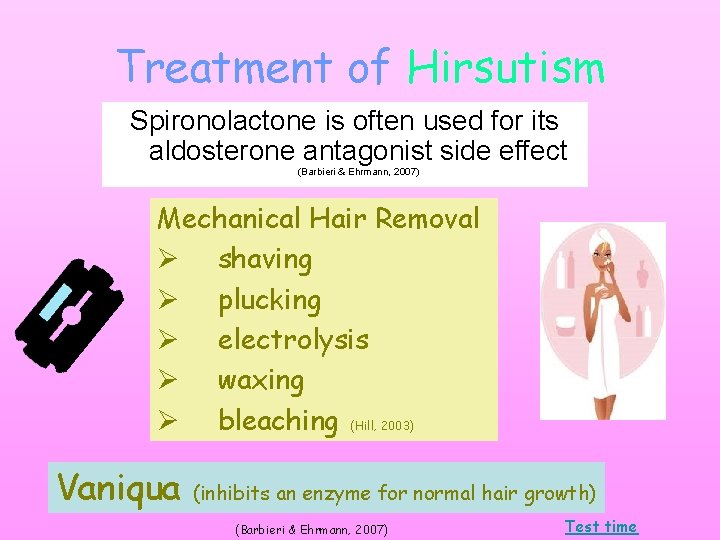
Treatment of Hirsutism Spironolactone is often used for its aldosterone antagonist side effect (Barbieri & Ehrmann, 2007) Mechanical Hair Removal Ø shaving Ø plucking Ø electrolysis Ø waxing Ø bleaching (Hill, 2003) Vaniqua (inhibits an enzyme for normal hair growth) (Barbieri & Ehrmann, 2007) Test time
s a t c e ’s eff it r o f d e s u s i r) e e w n s o n a olact rrect n co o e r i h t p n OS, s press o In PC ( 1. Ald ostero ne antag onist 2. Aldosterone protagonist Next slide, please
yo ou r it’s y r, rn e He yl ea Spironolactone inhibits the effect of aldosterone by competing for intracellular aldosterone receptors. next Spironolactone has anti-androgen activity by binding to the androgen receptor and thus preventing it to interact with dihydrotestosterone. This blocks the action of testosterone and reduces hirsutism (Sheehan, 2004; Hill, 2003, Wikipedia, 2007)
Not quite… We want to decrease androgen secretion and action Back to test
Summary PCOS is a chronic condition, most often characterized by irregular or absent periods; abnormal hair growth; obesity and insulin resistance. It affects 5 -10% of women of reproductive age (Legro, 2007). PCOS can lead to long term complications like diabetes, endometrial cancer, dyslipidemia and cardiovascular disease, if left untreated (Mayo. Clinic, 2007; Hill, 2003). Next slide
Summary Treatment of PCOS is focused on areas that cause the patient the most distress, however, as nurses, we need to be familiar with the complexity of PCOS and potential health risks associated with this common condition, to better help our patients. home next
I would like to thank Kimberly Woyach, MSN, APNP, CDE for inspiring me with her knowledge and passion of PCOS Start tutorial over references home
References Barbieri, R. L. , Erhmann, D. A. (2007) Patient information: Treatment of polycystic ovary syndrome. Retrieved February 4, 2007 from Up. To. Date, licensed by the Medical College of Wisconsin, Milwaukee, WI. Franz, M. J. (Ed. ). (2003). A core curriculum for diabetes educators, fifth edition: Diabetes in the life cycle. American Association of Diabetes Educators. Chicago: American Association of Diabetes Educators. Hill, K. M. (2003). Update: The pathogenesis and treatment of PCOS. The nurse practitioner. 28 (7): 8 -23 Hole, J. W. (1989). Essentials of human anatomy and physiology (3 rd ed. ). Dubuque, IA: Wm. C. Brown Legro, R. S. (2007) A 27 -year-old woman with a diagnosis of polycystic ovary syndrome. JAMA. 297 (5): 509 -519 Legro, R. S. , Barnhardt, H. X. , Schlaff, W. D. , Carr, B. R. , Diabmond, M. P. , Carson, et al (2007) Clomiphene, metformin, or both for infertility in the polycystic ovary syndrome. The new england journal of medicine. 346 (6): 551 -566. Mayo. Clinic (nd) Women's health: Polycystic ovary syndrome. Retrieved February 18, 2007 from http: www. mayoclinic. com/health/polycystic-ovary-syndrome/DSS 00423/DSCETION=6 next
References Stankiewicz, M. , Norman, R. (2006) Diagnosis and management of polycystic ovary disease: A practical guide. Drugs 2006. 66 (7): 903 -912 Sheehan, M. T. (2004). Polycystic ovary syndrome: Diagnosis and management. Clinical medicine & research. 2 (1): 13 -27. Taber’s cyclopedic medical dictionary (20 th ed) (2005). Philadelphia. F. A. Davis company. Wikipedia: The free encyclopedia. (2006) FL: Wikimedia Foundation, Inc. Retrieved February 14, 2007 from http. www. wikipedia. org Womenshealth. gov (2007) Polycystic ovarian syndrome. retrieved February 2, 2007 from http: //www. 4 woman. gov/faq/pcos. htm Start tutorial again