
From measurements to curves How to construct growth
- Slides: 16
“From measurements to curves” How to construct growth charts Tim Cole MRC Centre of Epidemiology for Child Health UCL Institute of Child Health
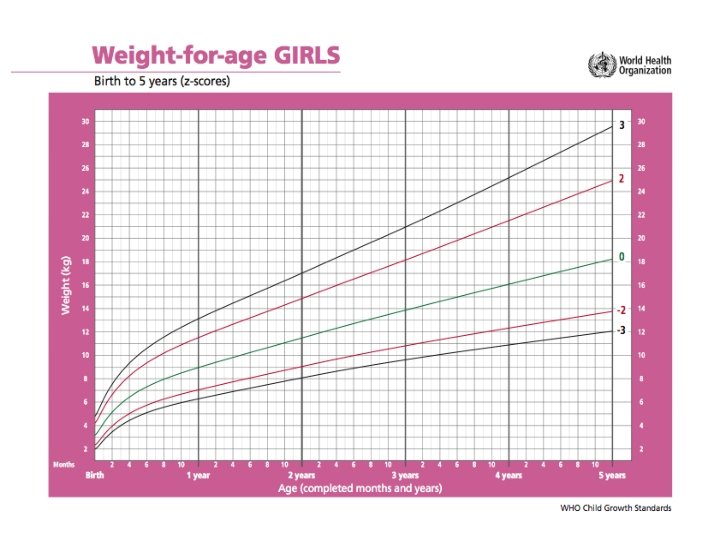
Methods of growth chart construction • Many different methods developed over 50 years • LMS method now widely used –British 1990 –Dutch 1997 –US CDC 2000 –WHO 2006 Cole TJ, Green PJ. Smoothing reference centile curves: the LMS method and penalized likelihood. Stat Med 1992; 11: 1305 -19.
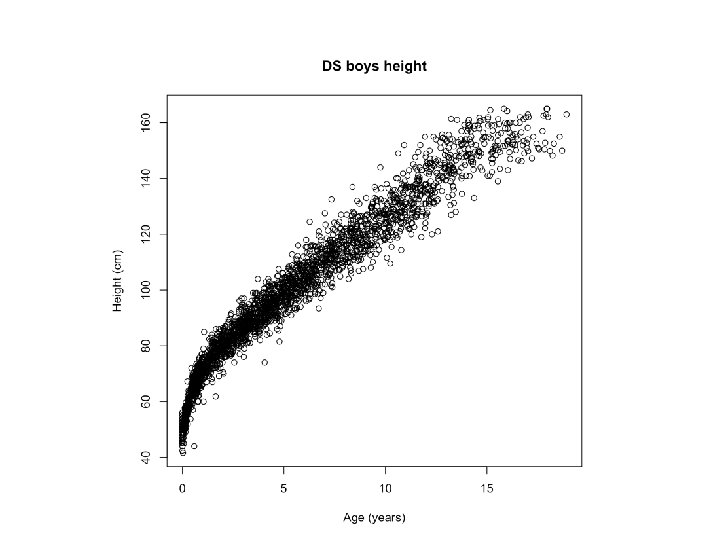
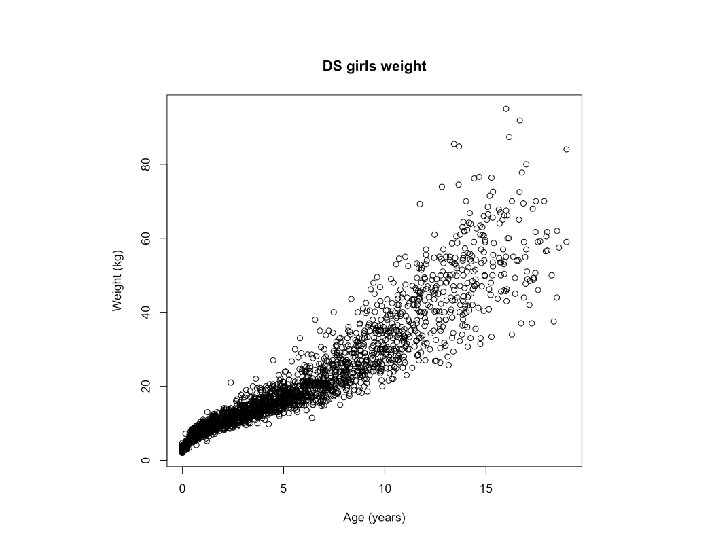
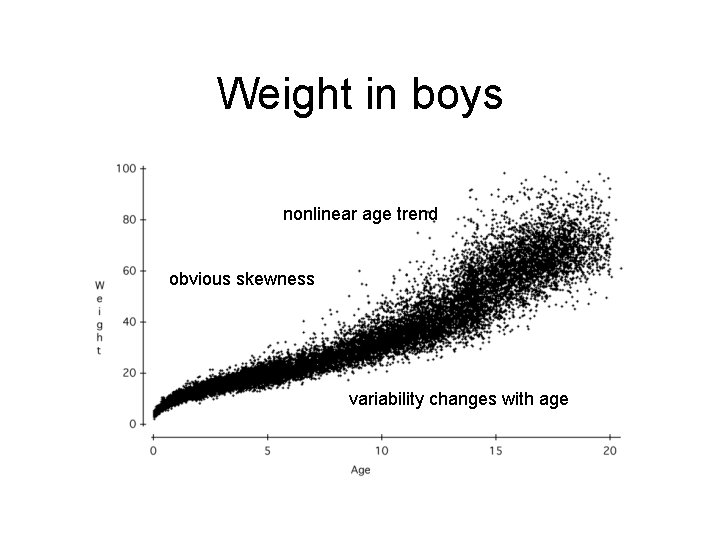
Weight in boys nonlinear age trend obvious skewness variability changes with age
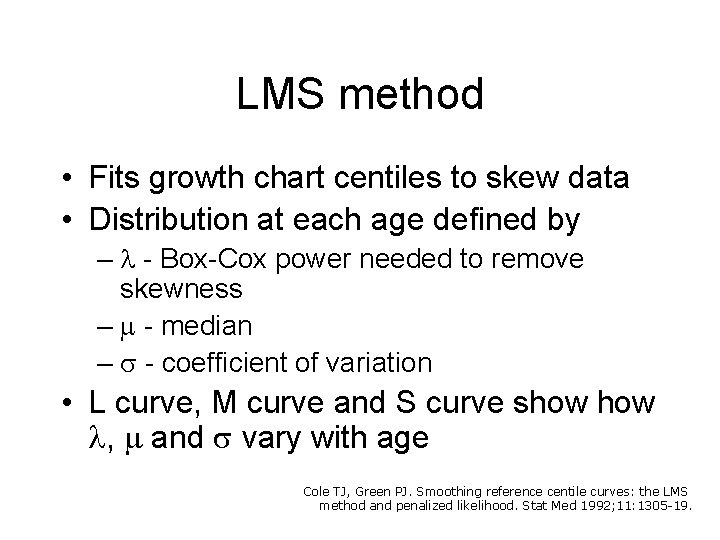
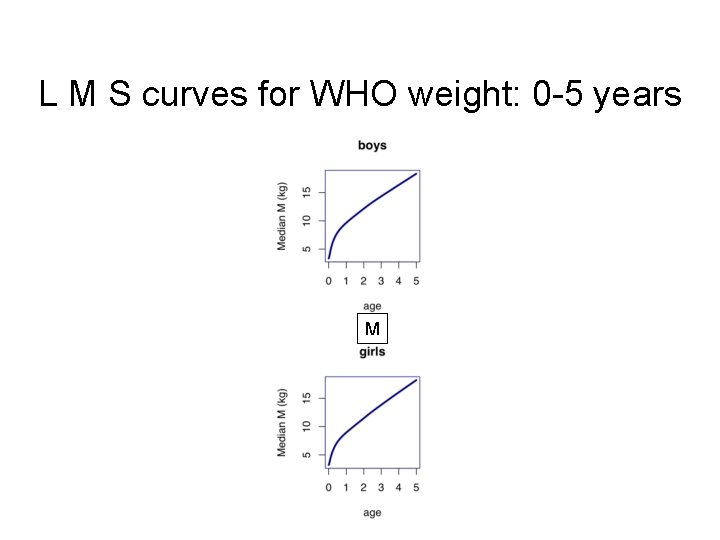
LMS method • Fits growth chart centiles to skew data • Distribution at each age defined by – - Box-Cox power needed to remove skewness – - median – - coefficient of variation • L curve, M curve and S curve show , and vary with age Cole TJ, Green PJ. Smoothing reference centile curves: the LMS method and penalized likelihood. Stat Med 1992; 11: 1305 -19.
L M S curves for WHO weight: 0 -5 years L M S
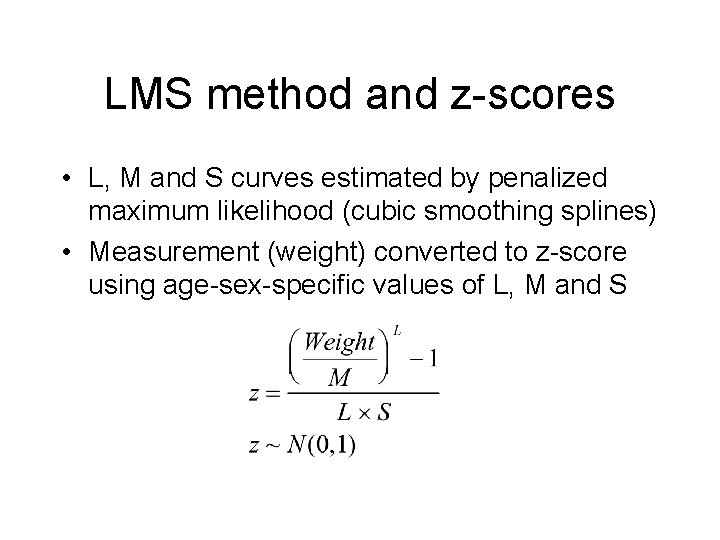
LMS method and z-scores • L, M and S curves estimated by penalized maximum likelihood (cubic smoothing splines) • Measurement (weight) converted to z-score using age-sex-specific values of L, M and S
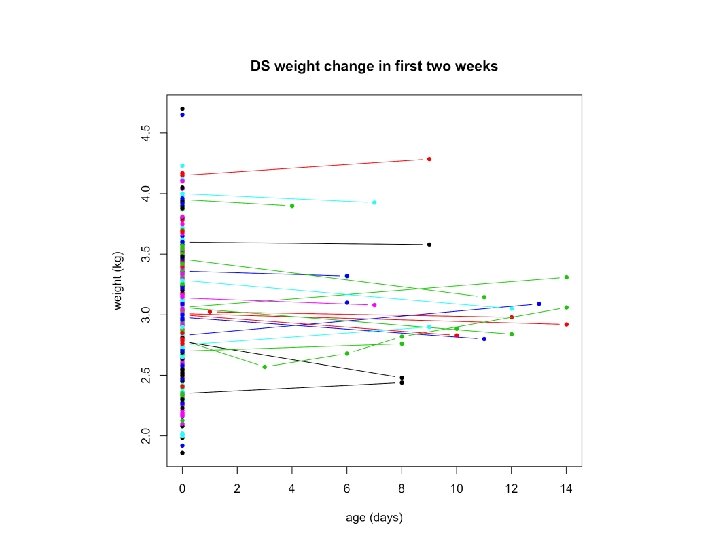
When do DS infants regain bwt? • Suggestion that DS infants take longer to regain birthweight • Use weight data to investigate • Need evidence-based statement for instructions
Regaining birthweight • Not enough information to be sure • Final wording: – “Most babies lose some weight after birth, a loss up to 10% is considered acceptable. For those with Down syndrome early losses may be more than 10% and it often takes longer than 2 weeks to regain birthweight. ”
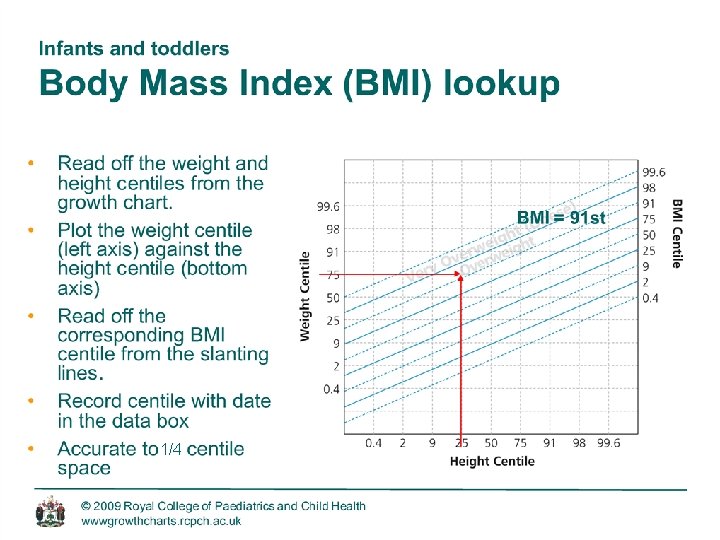
BMI in DS children • DS children more prone to overweight • BMI lookup on PCHR needs adjusting for Down Syndrome
1/4
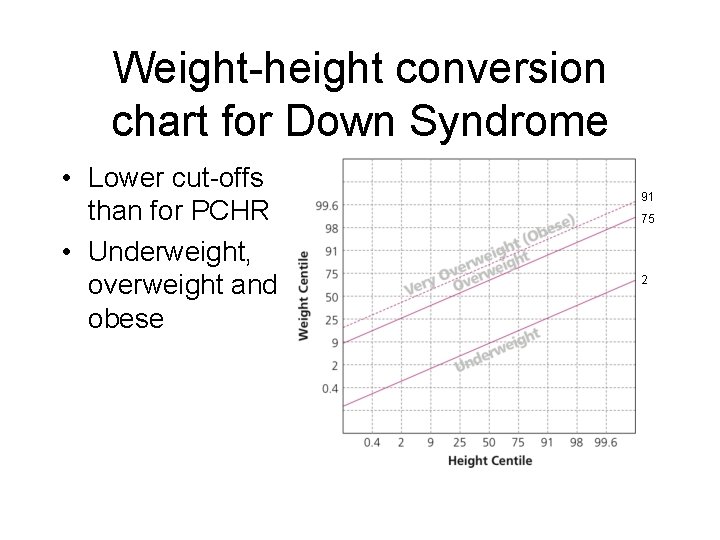
Weight-height conversion chart for Down Syndrome • Lower cut-offs than for PCHR • Underweight, overweight and obese 91 75 2
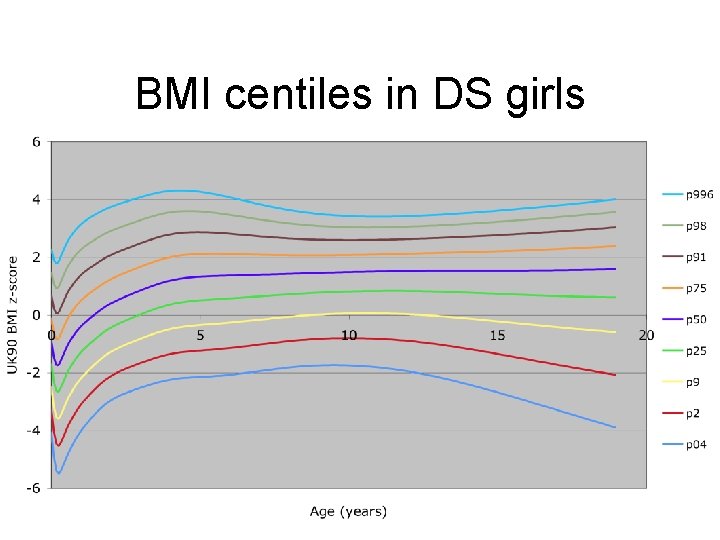
BMI centiles in DS girls