
From inputs and processes to outputs and outcomes
- Slides: 12
From inputs and processes to outputs and outcomes Dr Pietro Micheli Associate Professor of Organizational Performance Warwick Business School
Agenda • Why measure outcomes? • Case study • A different performance management approach?
Why measure outcomes?
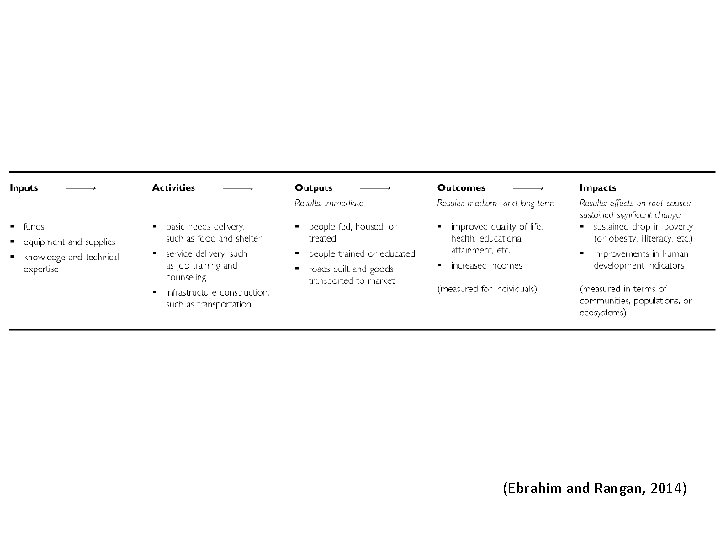
(Ebrahim and Rangan, 2014)
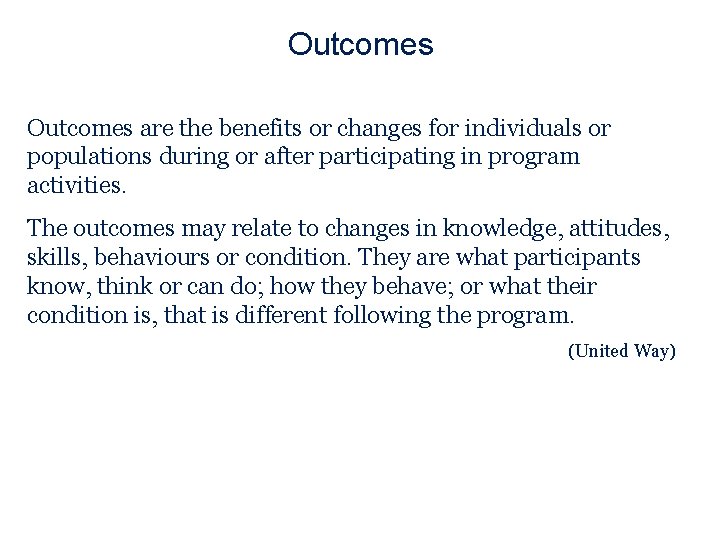
Outcomes are the benefits or changes for individuals or populations during or after participating in program activities. The outcomes may relate to changes in knowledge, attitudes, skills, behaviours or condition. They are what participants know, think or can do; how they behave; or what their condition is, that is different following the program. (United Way)
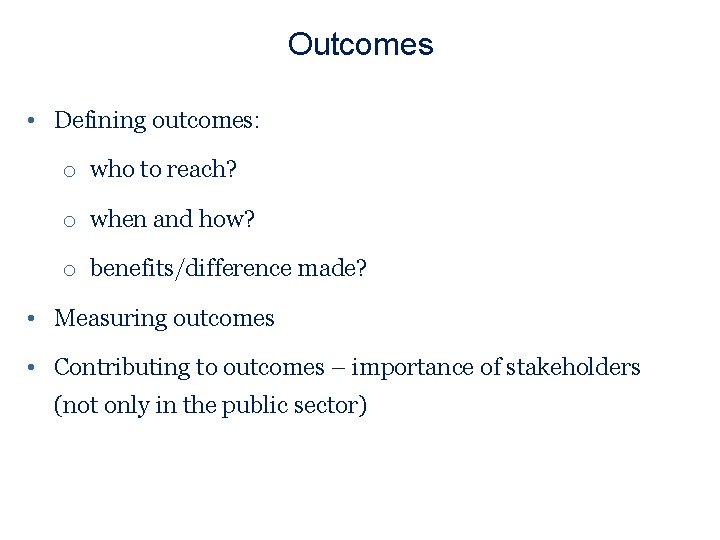
Outcomes • Defining outcomes: o who to reach? o when and how? o benefits/difference made? • Measuring outcomes • Contributing to outcomes – importance of stakeholders (not only in the public sector)
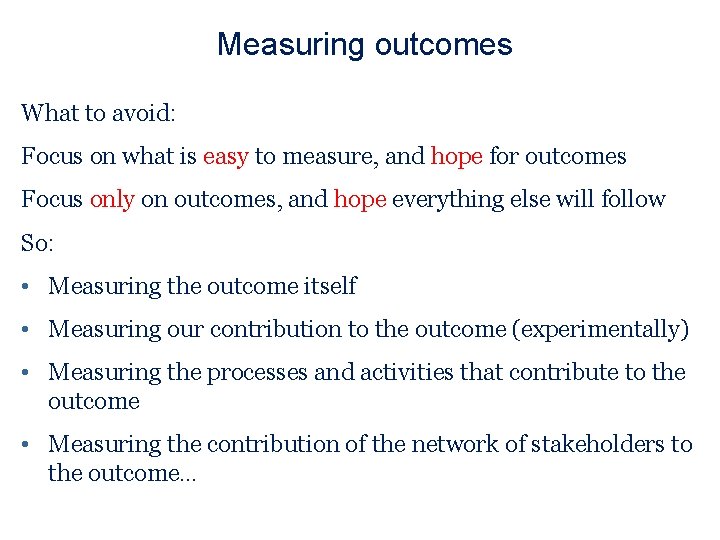
Measuring outcomes What to avoid: Focus on what is easy to measure, and hope for outcomes Focus only on outcomes, and hope everything else will follow So: • Measuring the outcome itself • Measuring our contribution to the outcome (experimentally) • Measuring the processes and activities that contribute to the outcome • Measuring the contribution of the network of stakeholders to the outcome…
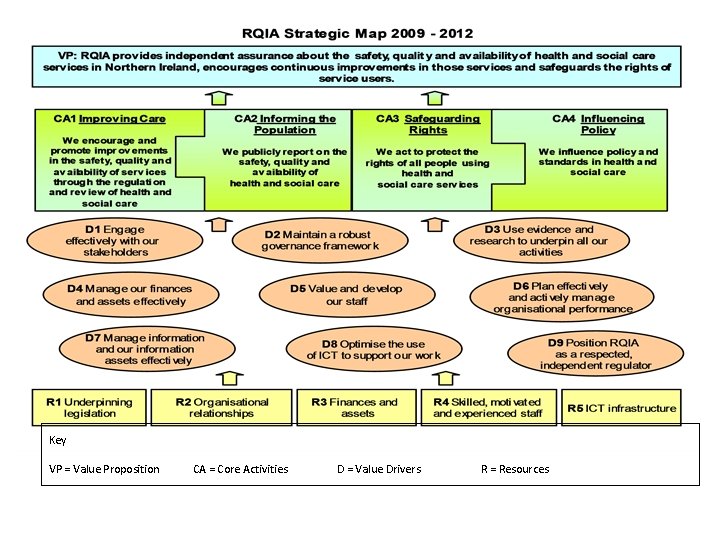
Key VP = Value Proposition CA = Core Activities D = Value Drivers R = Resources
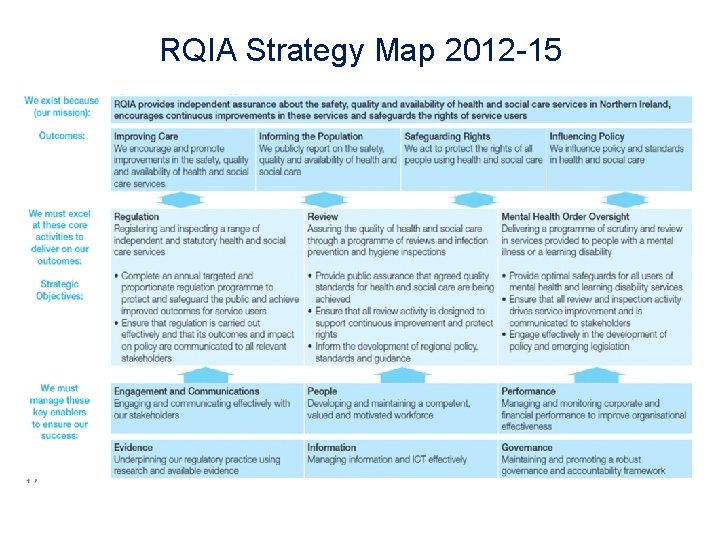
RQIA Strategy Map 2012 -15
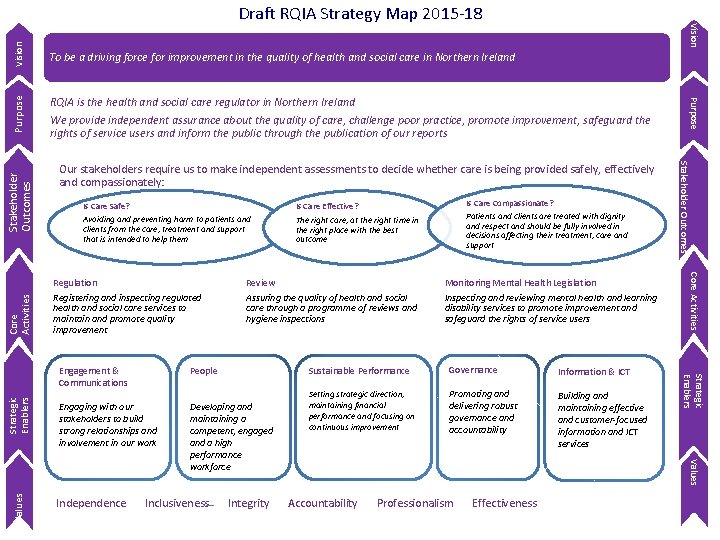
Vision Core Activities Is Care Effective? Avoiding and preventing harm to patients and clients from the care, treatment and support that is intended to help them The right care, at the right time in the right place with the best outcome Patients and clients are treated with dignity and respect and should be fully involved in decisions affecting their treatment, care and support Regulation Review Monitoring Mental Health Legislation Registering and inspecting regulated health and social care services to maintain and promote quality improvement Assuring the quality of health and social care through a programme of reviews and hygiene inspections Inspecting and reviewing mental health and learning disability services to promote improvement and safeguard the rights of service users People Engaging with our stakeholders to build strong relationships and involvement in our work Developing and maintaining a competent, engaged and a high performance workforce Independence Inclusiveness Integrity Sustainable Performance Governance Information & ICT Setting strategic direction, maintaining financial performance and focusing on continuous improvement Promoting and delivering robust governance and accountability Building and maintaining effective and customer-focused information and ICT services Values Engagement & Communications Strategic Enablers Is Care Compassionate? Is Care Safe? Core Activities Values Our stakeholders require us to make independent assessments to decide whether care is being provided safely, effectively and compassionately: Stakeholder Outcomes RQIA is the health and social care regulator in Northern Ireland We provide independent assurance about the quality of care, challenge poor practice, promote improvement, safeguard the rights of service users and inform the public through the publication of our reports Purpose To be a driving force for improvement in the quality of health and social care in Northern Ireland Purpose Vision Draft RQIA Strategy Map 2015 -18 Accountability Professionalism Effectiveness
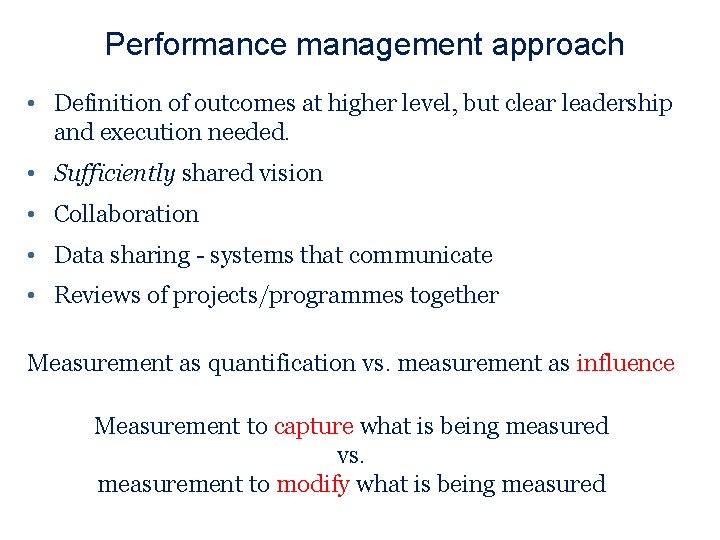
Performance management approach • Definition of outcomes at higher level, but clear leadership and execution needed. • Sufficiently shared vision • Collaboration • Data sharing - systems that communicate • Reviews of projects/programmes together Measurement as quantification vs. measurement as influence Measurement to capture what is being measured vs. measurement to modify what is being measured
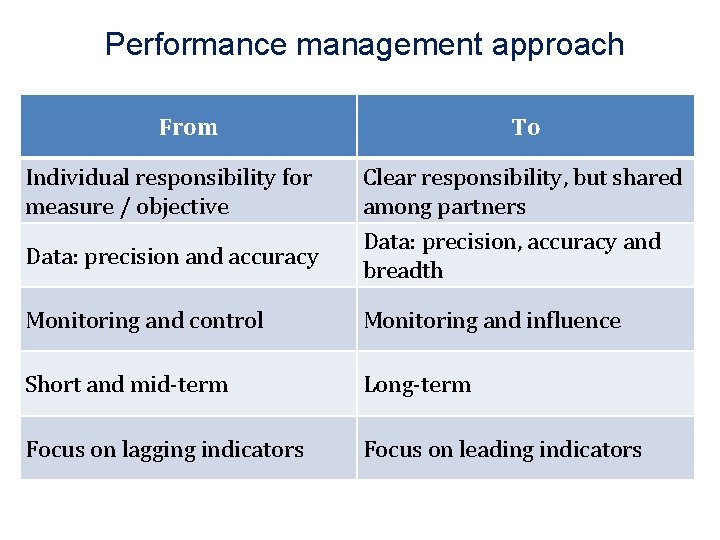
Performance management approach From Individual responsibility for measure / objective Data: precision and accuracy To Clear responsibility, but shared among partners Data: precision, accuracy and breadth Monitoring and control Monitoring and influence Short and mid-term Long-term Focus on lagging indicators Focus on leading indicators