
From Handouts to HandsOn Brett Brown Olivia Burley
From Handouts to Hands-On… Brett Brown, Olivia Burley, Emily Le. Maire, & Shelly Maitrejean
Apple Activity Pretend you have no prior experience with this object. Assume you just landed on the planet and have never seen one of these before. Write down what you can observe with your senses. We know it’s a fruit, it has seeds, it’s juicy based on prior knowledge but for this exercise we are going to avoid inferences. Only write down what you can observe.
Real Apple. Make a list of words that: Describe what you see. Describe what you feel. Describe what you hear. Describe what you smell. Describe what you taste.
Model of an apple Cross out those words that you can no longer use to describe the apple.

Cross out those words that you can no longer use to describe the apple.
apple From the left over words from your list, cross out those that you can’t use when you read the word “apple”
Apple Activity The apple experience reveals the differences in instruction when the following models of instructional delivery are used: Concrete (real apple) Representational (model of apple) Pictorial (picture) Symbolic (word “apple”)
NAEYC: National Association for the Education of Young Children “dedicated to improving the well-being of all young children, with particular focus on the quality of educational and developmental services for all children from birth through age 8. NAEYC is committed to becoming an increasingly high performing and inclusive organization. ” Developmentally Appropriate Practice Local Affiliates: LAEYC and BRAEYC www. naeyc. org
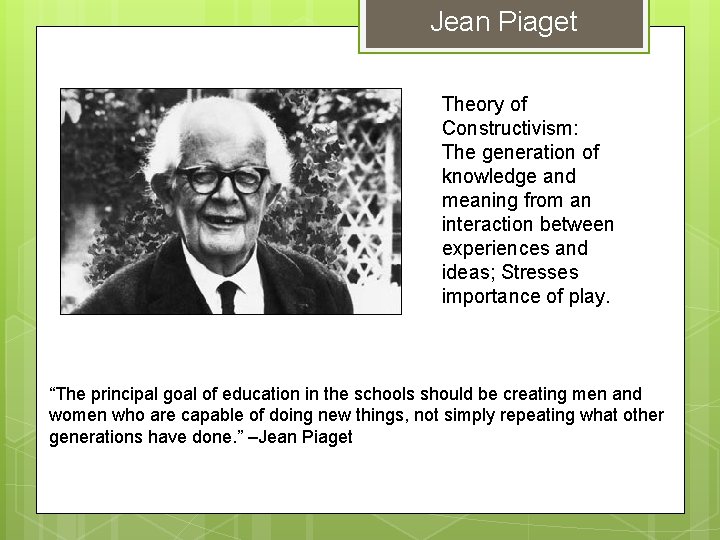
Jean Piaget Theory of Constructivism: The generation of knowledge and meaning from an interaction between experiences and ideas; Stresses importance of play. “The principal goal of education in the schools should be creating men and women who are capable of doing new things, not simply repeating what other generations have done. ” –Jean Piaget
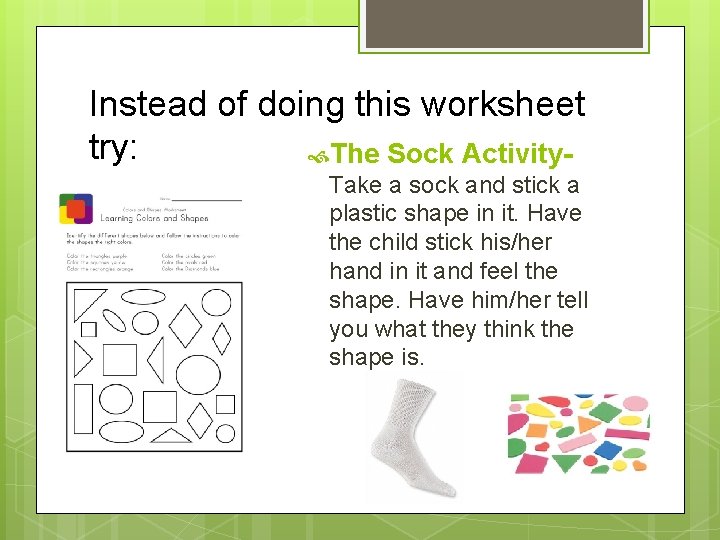
Instead of doing this worksheet try: The Sock Activity. Take a sock and stick a plastic shape in it. Have the child stick his/her hand in it and feel the shape. Have him/her tell you what they think the shape is.
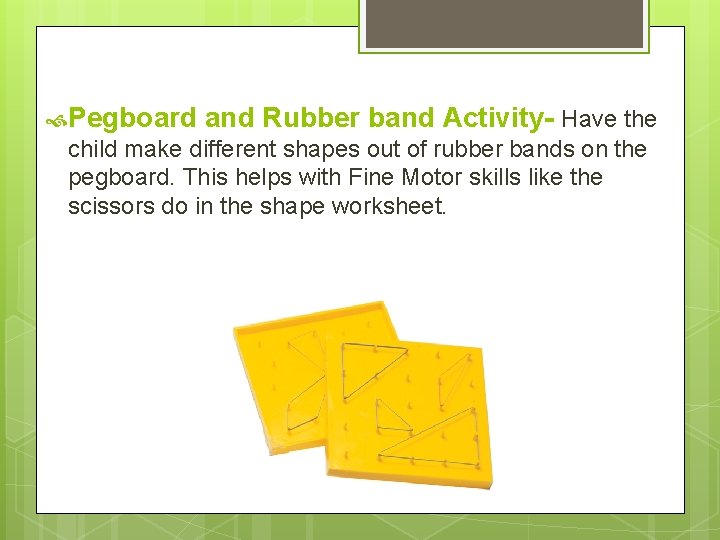
Pegboard and Rubber band Activity- Have the child make different shapes out of rubber bands on the pegboard. This helps with Fine Motor skills like the scissors do in the shape worksheet.
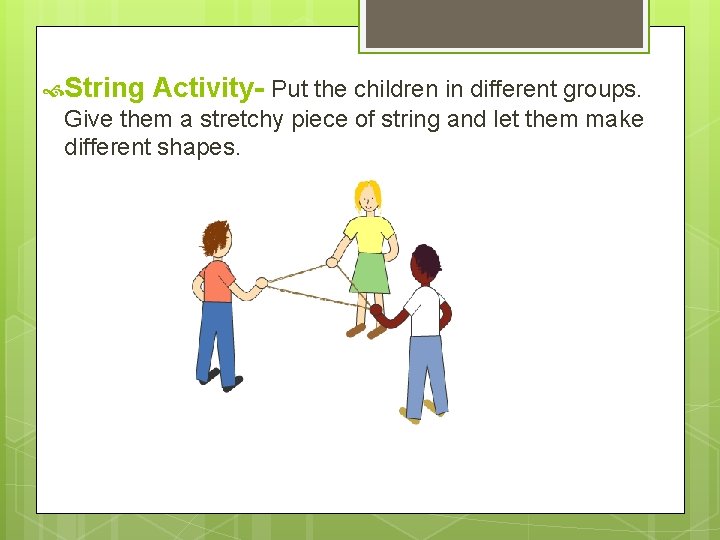
String Activity- Put the children in different groups. Give them a stretchy piece of string and let them make different shapes.
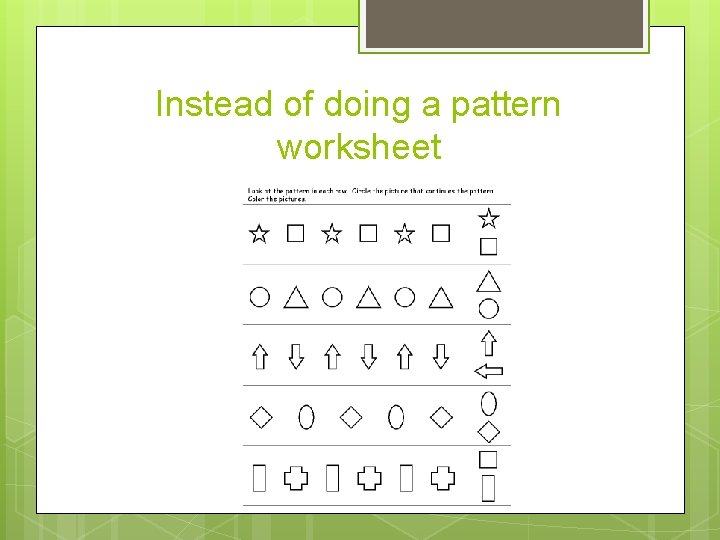
Instead of doing a pattern worksheet
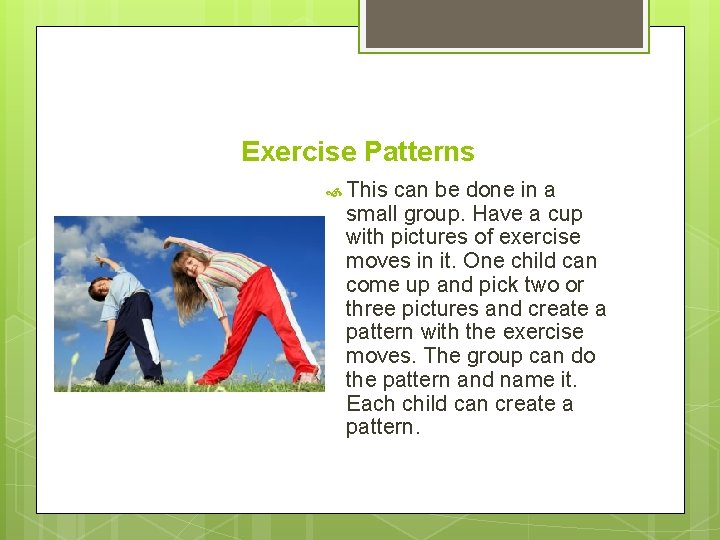
Exercise Patterns This can be done in a small group. Have a cup with pictures of exercise moves in it. One child can come up and pick two or three pictures and create a pattern with the exercise moves. The group can do the pattern and name it. Each child can create a pattern.
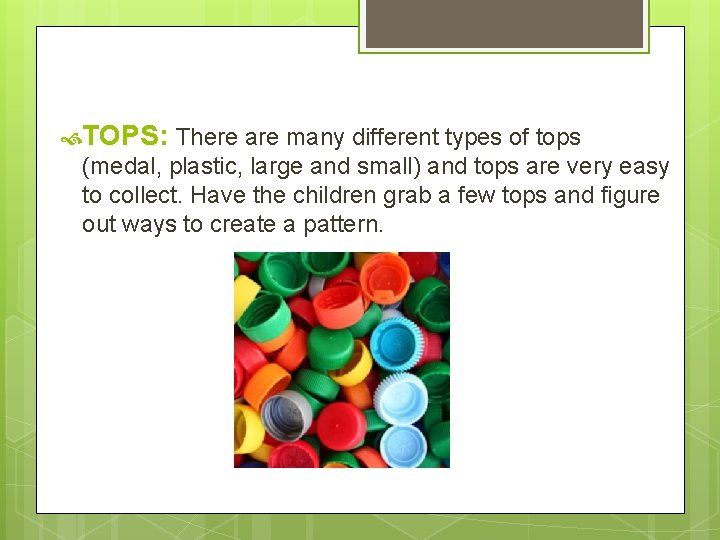
TOPS: There are many different types of tops (medal, plastic, large and small) and tops are very easy to collect. Have the children grab a few tops and figure out ways to create a pattern.
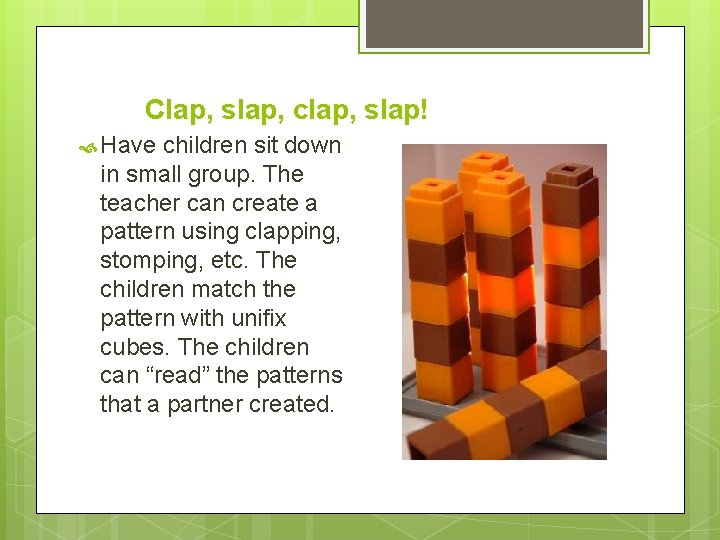
Clap, slap, clap, slap! Have children sit down in small group. The teacher can create a pattern using clapping, stomping, etc. The children match the pattern with unifix cubes. The children can “read” the patterns that a partner created.
Addition and Subtraction. . The FUN way! This worksheet to the left is NOT the only way to teach children addition! There are many ways to teach addition without ever using a worksheet!
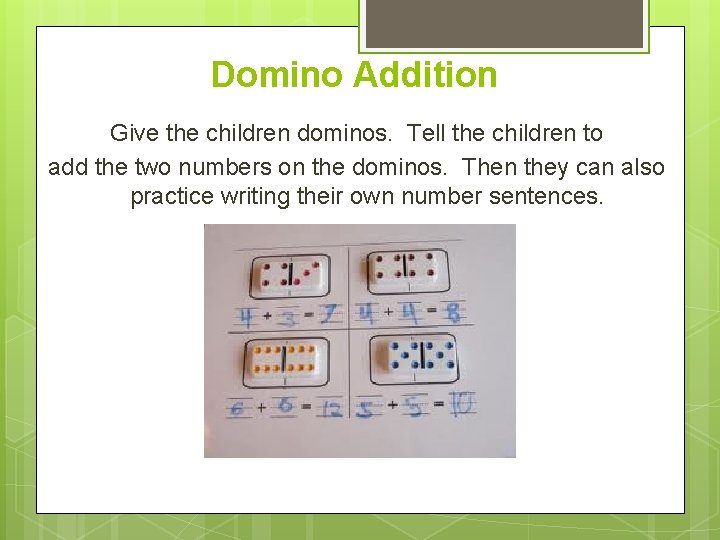
Domino Addition Give the children dominos. Tell the children to add the two numbers on the dominos. Then they can also practice writing their own number sentences.
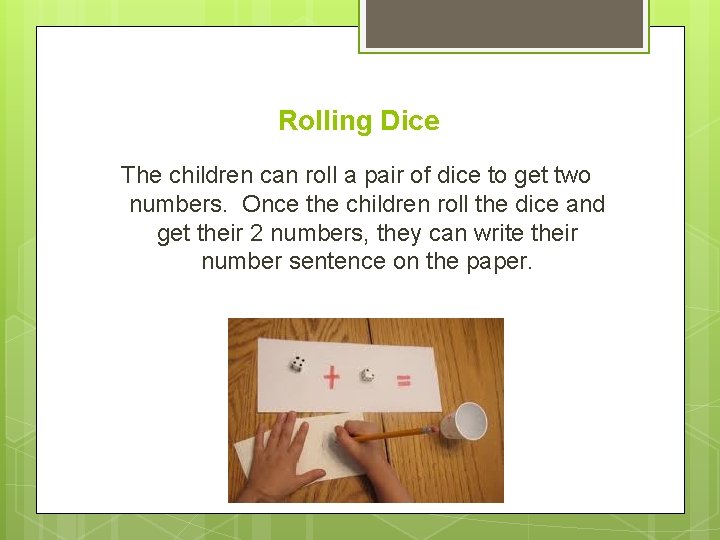
Rolling Dice The children can roll a pair of dice to get two numbers. Once the children roll the dice and get their 2 numbers, they can write their number sentence on the paper.
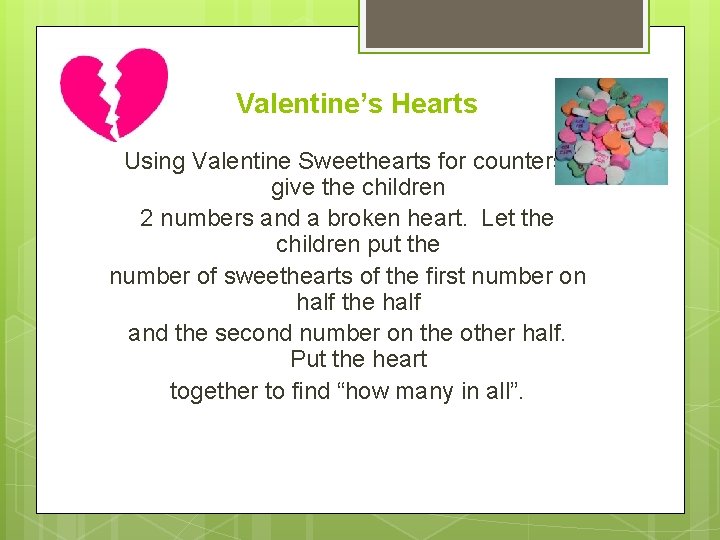
Valentine’s Hearts Using Valentine Sweethearts for counters, give the children 2 numbers and a broken heart. Let the children put the number of sweethearts of the first number on half the half and the second number on the other half. Put the heart together to find “how many in all”.
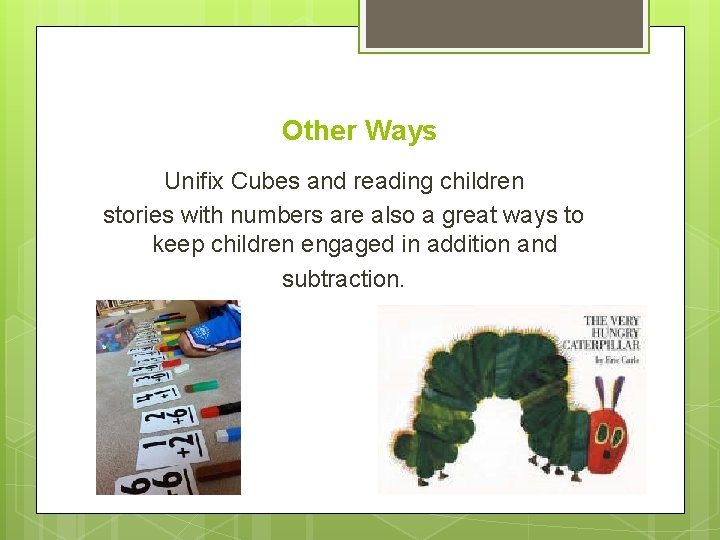
Other Ways Unifix Cubes and reading children stories with numbers are also a great ways to keep children engaged in addition and subtraction.
- Slides: 21