
From Germany to Hungary to Russia Gayla Ohlhauser















- Slides: 47
From Germany to Hungary to Russia Gayla Ohlhauser Gray & Carolyn Schott
Agenda n Germany to Hungary • When • Where n Hungary to Russia • • • n n Why When Where How to research Germans from Hungary Photos from German village in Hungary - Gyönk, Schwäbische Türkei
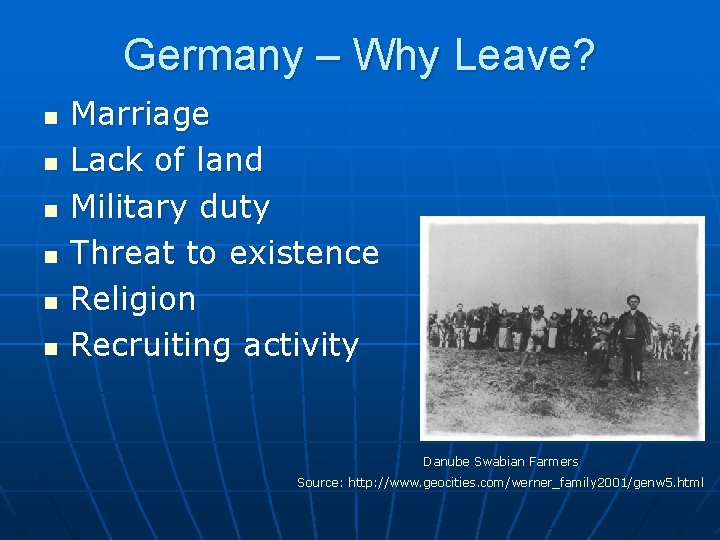
Germany – Why Leave? n n n Marriage Lack of land Military duty Threat to existence Religion Recruiting activity Danube Swabian Farmers Source: http: //www. geocities. com/werner_family 2001/genw 5. html
Why Hungary? n n n n Early immigrants recruited Travel stipends Loans for seeds, implements, and tools Houses in master-planned villages Fields allotted in farmlands surrounding the villages Freedom from serfdom Initial exemption from taxes
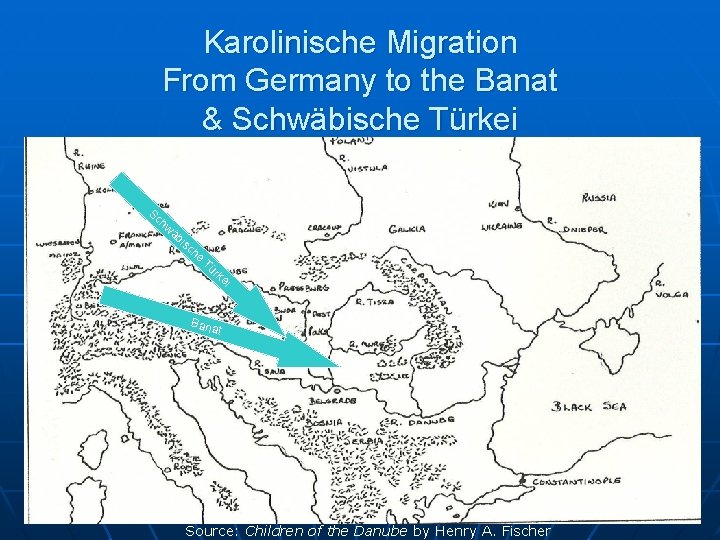
Leave Germany – When? n The Great Swabian Trek – 3 phases • 1718– 1737 - Karolinische Ansiedlung n n n Lands were recently liberated from the Turks; goal was to create a buffer area Officially limited to Catholics Unofficially Karl welcomed Protestants and promised freedom of religion Banat – Crown land, travel costs subsidized Schwäbische Türkei – Private estates, travel costs not subsidized (but more open to Protestants than Banat) Mostly from Hessen • 1744– 1772 - Maria Theresianische Ansiedlung n n n 75, 000 Germans rebuilt what was destroyed by Turks in the Banat Settled in Banat and eastern Batschka Restricted to Roman Catholics Source: Children of the Danube by Henry A. Fischer
Karolinische Migration From Germany to the Banat & Schwäbische Türkei Sc hw äb isc he Tü rk ei Ban at Source: Children of the Danube by Henry A. Fischer
Maria Theresianische Migration From Germany to the Banat Ban at Source: Children of the Danube by Henry A. Fischer
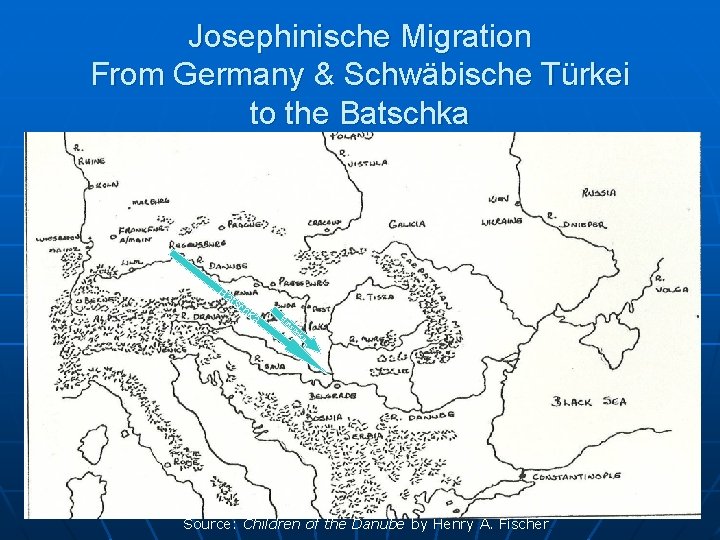
Leave Germany – When? n The Great Swabian Trek – 3 phases • 1782 -1787 - Josephinische Ansiedlung n n Emperor Joseph issued Edict of Toleration in 1781 Officially open to both Protestants and Catholics Settled primarily in the Batschka, some new settlement in the Banat Settlers came from Germany and other areas within Hungary • After 1789 – government sponsored colonization closed n 500 Guilders cash needed to resettle • More than 1, 000 German villages established in Southern Hungary (Source: Children of the Danube by Henry A. Fischer)
Josephinische Migration From Germany & Schwäbische Türkei to the Batschka Ba tsc hk a Ba t sc hk a Source: Children of the Danube by Henry A. Fischer
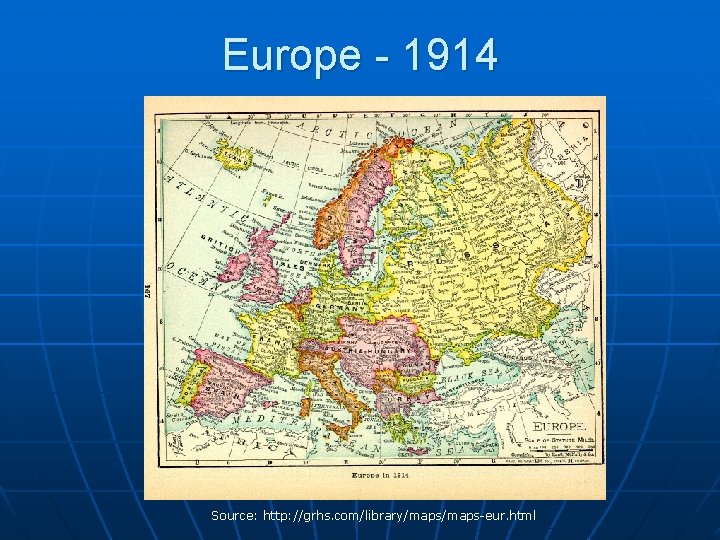
Europe - 1914 Source: http: //grhs. com/library/maps-eur. html
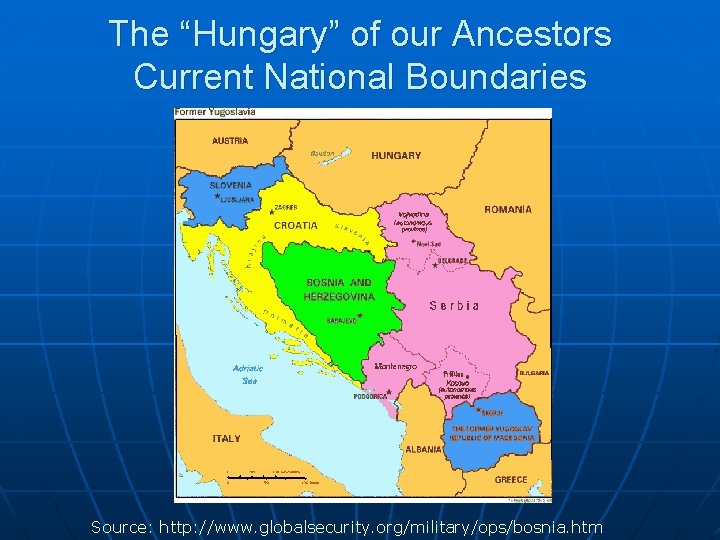
The “Hungary” of our Ancestors Current National Boundaries Source: http: //www. globalsecurity. org/military/ops/bosnia. htm
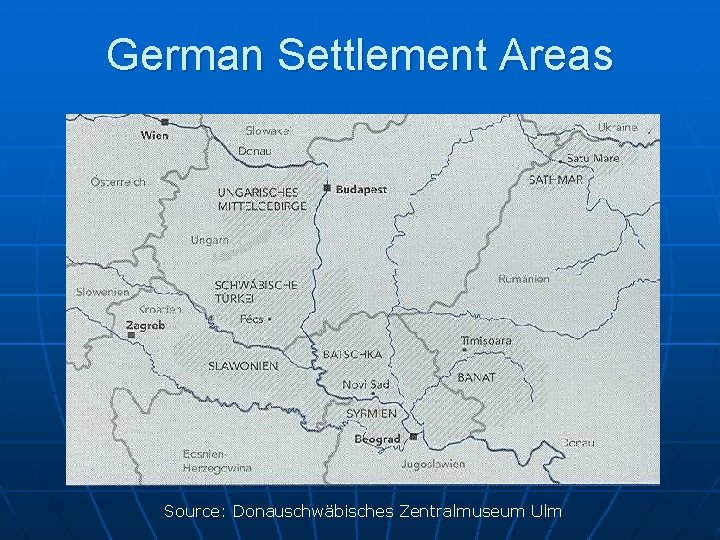
German Settlement Areas Source: Donauschwäbisches Zentralmuseum Ulm
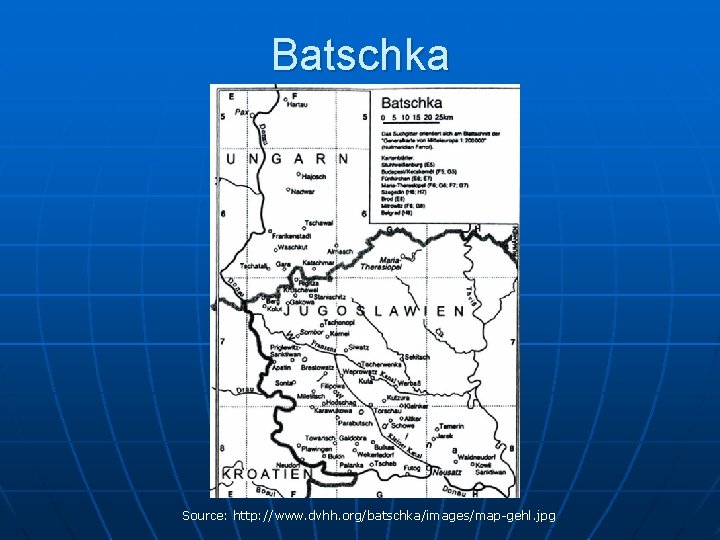
Batschka Source: http: //www. dvhh. org/batschka/images/map-gehl. jpg
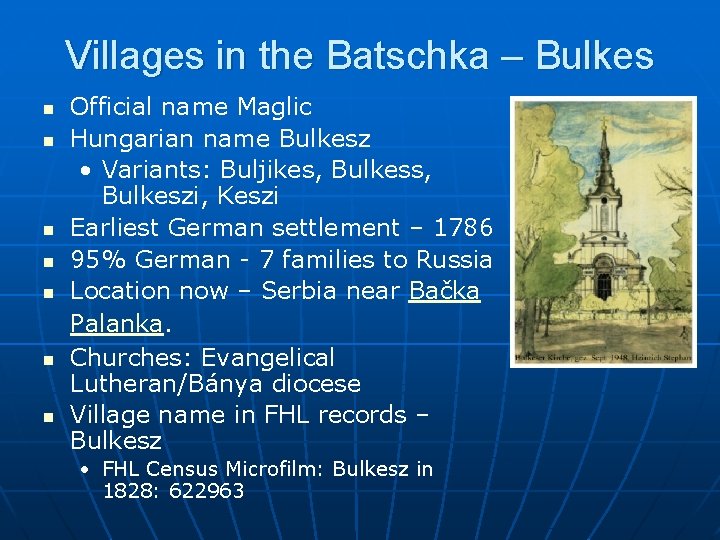
Villages in the Batschka – Bulkes n n n n Official name Maglic Hungarian name Bulkesz • Variants: Buljikes, Bulkeszi, Keszi Earliest German settlement – 1786 95% German - 7 families to Russia Location now – Serbia near Bačka Palanka. Churches: Evangelical Lutheran/Bánya diocese Village name in FHL records – Bulkesz • FHL Census Microfilm: Bulkesz in 1828: 622963
Villages in the Batschka - Kleinker n Official name Backo Dorbo Polje • German variants: Kleinker, Kischker, Klein Keer • Hungarian variant Kiskér • Other variants include Mali Ker, Pribicevo n n n n Earliest German settlement - 1787 98% German – 26 families to Russia Location now - West Bačka District of Vojvodina, Serbia near Kula Population in 1880 was 2, 848 Churches: Evangelical Lutheran/Bánya diocese FHL Census Microfilm: Kis-Ker in 1828: 622965 Kleinker was the location of a prisoner camp for Germans held by Partisans during World War II
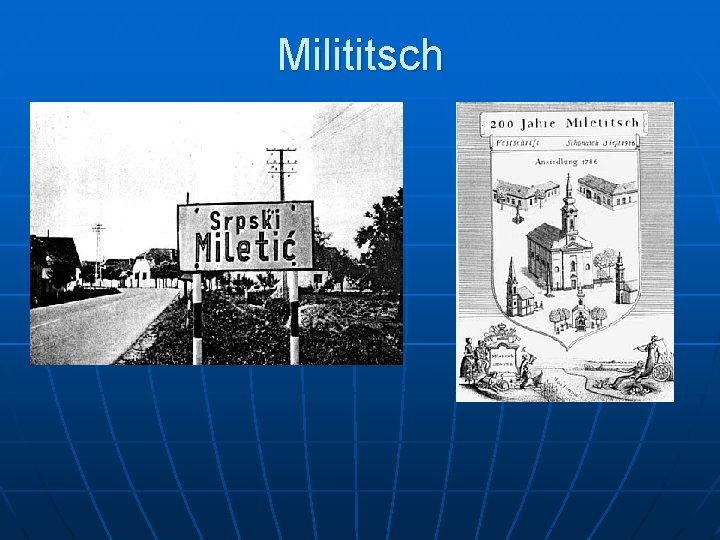
Villages in the Batschka - Milititsch n Official name Srpski-Miletic • German variant Berauersheim • Hungarian variants Militics, Nemesmilitics, Ráczmilitics • Other variants: Svetozar Miletic, Rac-Milititsch, Srpski. Militic, Millitics n n Earliest German settlement - 1786 Churches: Roman Catholic/Kalocsa diocese Location now - West Bäcka District of Serbia near Sombor Population in 1880 was 2, 896
Villages in the Batschka - Milititsch n n Village name in FHL records: Roman Catholic Church: Nemetmilitics or Racs Militics Church records available at FHL: 1826 – 1895, 1826 – 1895; FHL Microfilm Nr. : 638204 – 638208; 638188 – 638191; FHL Census Microfilm: Nemes Militics in 1828: 622966, FHL Census Microfilm: Ratz Milits in 1828: 622968 Milititsch was the location of a prisoner camp for Germans held by Partisans during World War II
Milititsch
Villages in the Batschka – Neu Werbass n Official name Novi Vrbas • German variant Neu-Werbass • Hungarian variant Ujverbász n n n Earliest German settlement - 1784 Evangelical from area of Upper Rhine Location now - South Bačka District in the province of Vojvodina 75% German – 22 families to Russia Population in 1880 was 5, 050 Churches • Roman Catholic/Kalocsa diocese • Evangelical Lutheran/Bánya diocese • Reformed/Dunnamellék diocese
Villages in the Batschka – Neu Werbass n Village name in FHL records is Ujverbasz • Church records are available at FHL for 1875 -1895, FHL Microfilm # 639140. FHL Census Microfilm Neu Verbacz in 1828 is 622966
Villages in the Batschka – Sekitsch n Official name Lovcenac • Hungarian dialect Szeghegy • Other variants Winkelsberg, Szegegyhaz, and Sekics n n n Earliest German settlement – 1786 95% German – 14 families to Russia Source: http: //en. wikipedia. org/ Location now - North Bačka District near Topola Population in 1880 was 3, 395 Churches: Evangelical Lutheran/Bánya diocese
Sekitsch Lutheran (German) Church until 1946
Villages in the Batschka – Tscherwenka n Official name Crvenka • German variant Rotweil • Hungarian name Cservenka • Other variants Cervenka n n n Earliest German settlement -1784 Protestants from area between Mosel & Rhine 80% German – 35 families to Russia Location now - West Bačka District of Serbia Population in 1880 was 7, 025 Churches: Evangelical Lutheran/Bánya diocese, Reformed/Dunamellek diocese
Villages in the Batschka – Torschau n Official name Torza • Hungarian name Torzsa • Variants: Savino, Selo, Torscha, Thorzateleke, and Tharcsa n n n The earliest German settlement – 1784 All Evangelical from Rhine Palatinate & Zweibrücken 70% German – 22 families to Russia The population in 1880 was 3, 068 Location now - West Bačka District in Serbia Churches: Evangelical Lutheran/Bánya diocese, Reformed/Dunamellék diocese
Other Villages in the Batschka n n n Apatin – now in West Bačka District of Serbia • Web site: http: //www. dvhh. org/abthausen/ Jarek – now in South Bačka District of Serbia • Web site: http: //www. feldenzer. com/jarek. htm Neu-Schove • 90% German – 8 families to Russia Neu-Siwatz - West Bačka District/Vojvodina, Serbia • 98% German – 2 families to Russia Palanka – now in Serbia • Web site: http: //www. feldenzer. com/palanka. htm
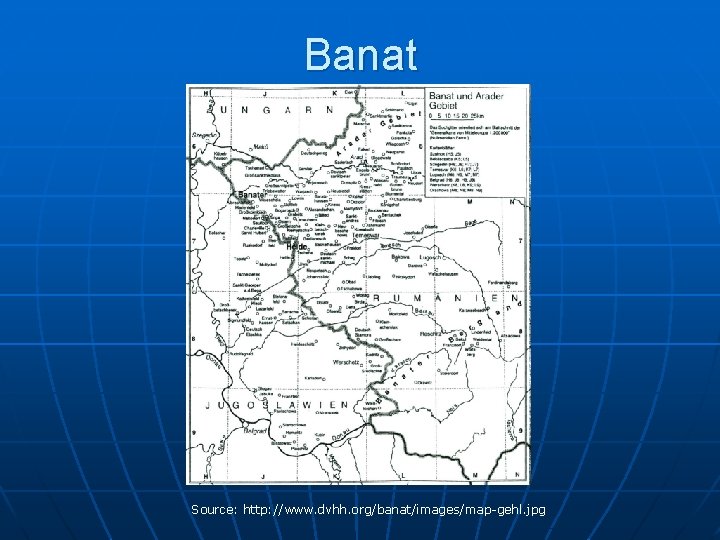
Banat Source: http: //www. dvhh. org/banat/images/map-gehl. jpg
Villages in the Banat – Franzfeld n Official name Kacarevo, Kraljevicevo, Banatsko Kraljevicevo • Hungarian dialect Francfold, Ferencfalva, Ferenchalom n Location now - Yugoslavia 10 km N of Pantschowa Founded in 1792 - mainly Evangelic The population in 1921 was 4, 450 (97. 7% Germans) Some of the settlers continued their migration to the Ukrainian village of Franzfeld Source: http: //www. franzfelder. de / n n n
Villages in the Banat – Franzfeld n n Village name in FHL records: Franzfeld, Francfold, Ferencfalva. Church records available at FHL • Christenings 1793 -1835 • Marriages 1793 -1835 • Deaths 1793 -1835 • films also contain approximately 86 pages of christening records of original settlers. FHL Microfilm Nr. 1190286, 1190287
Franzfeld, Banat Source: http: //www. franzfelder. de/
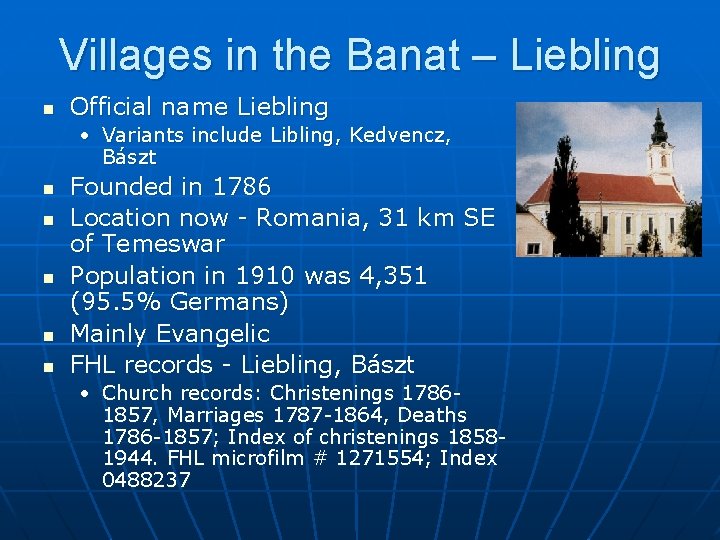
Villages in the Banat – Liebling n Official name Liebling • Variants include Libling, Kedvencz, Bászt n n n Founded in 1786 Location now - Romania, 31 km SE of Temeswar Population in 1910 was 4, 351 (95. 5% Germans) Mainly Evangelic FHL records - Liebling, Bászt • Church records: Christenings 17861857, Marriages 1787 -1864, Deaths 1786 -1857; Index of christenings 18581944. FHL microfilm # 1271554; Index 0488237
Why Leave Hungary? n n Living conditions not favorable Hard feudal service “The first encounters death, the second need, only the third has bread” Stumpp pg 103 -104 • escaped by climbing over 9 ft. wall middle of night • False documents • About 240 families departed
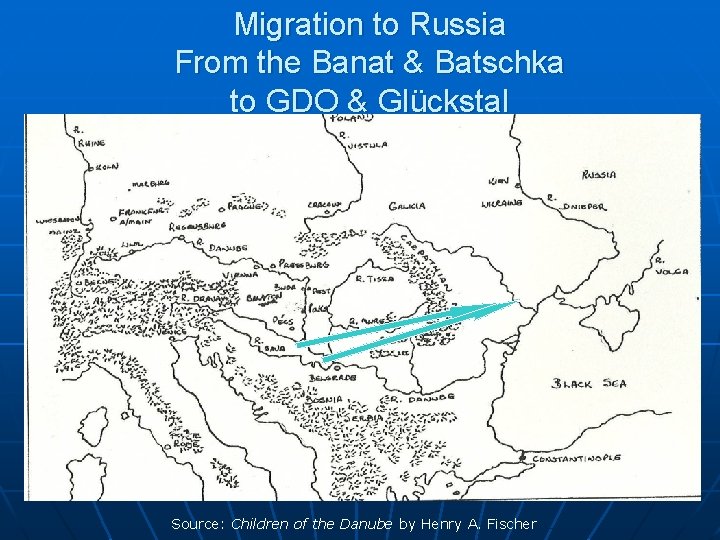
Migration to Russia From the Banat & Batschka to GDO & Glückstal Source: Children of the Danube by Henry A. Fischer
Emigrant Families n Odessa = 184 families • Alexanderhilf – 21 Families • Freudental – 78 Families • Güldendorf – 3 families • Josefstal – 7 families • Neuburg – 29 families • Peterstal – 5 families • Bergdorf – 1 family • Glückstal – 27 families • Hoffnungstal – 1 family • Neudorf – 11 families • Katharinental – 1 family
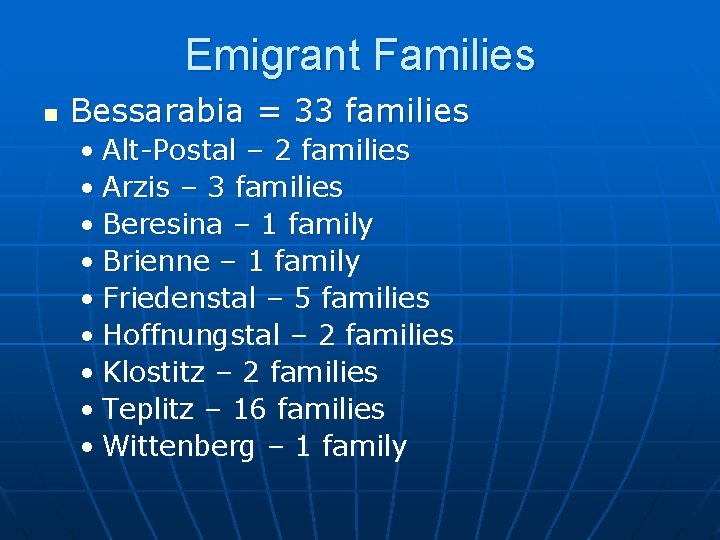
Emigrant Families n Bessarabia = 33 families • Alt-Postal – 2 families • Arzis – 3 families • Beresina – 1 family • Brienne – 1 family • Friedenstal – 5 families • Hoffnungstal – 2 families • Klostitz – 2 families • Teplitz – 16 families • Wittenberg – 1 family
How to Research Germans from Hungary? n n n n GDO RIG Web site – Gayla’s Korner • http: //www. grhs. org/rig/gdo/gaylaskorner. htm Donauschwaben Villages Helping Hands • http: //www. dvhh. org/glance/index. htm Donauschwaben Genealogical & Historical Records • http: //www. genealogienetz. de/reg/ESE/dsrec. html AKd. FF • http: //www. genealogienetz. de/vereine/AKd. FF/ortsfamilienbuec her. htm Hungary Gen. Web • http: //www. rootsweb. com/~wghungar/ Roots. Web Hungary Archives • http: //lists. rootsweb. com/index/intl/HUN/ Reading Hungarian church records • http: //www. bmi. net/jjaso/index. html Donauschwäbisches Zentralmuseum Ulm • http: //www. dzm-museum. de
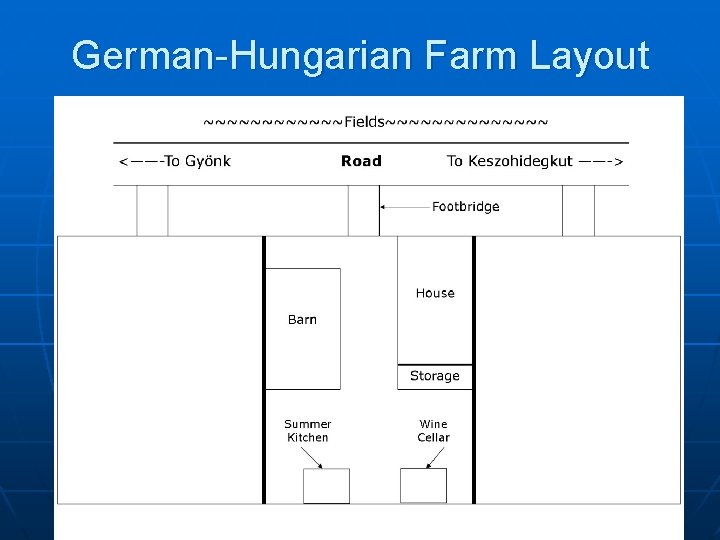
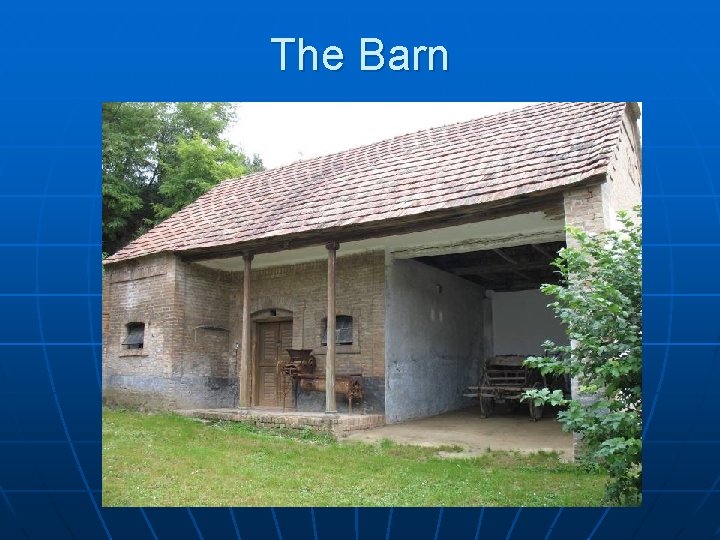
German-Hungarian Farm Layout
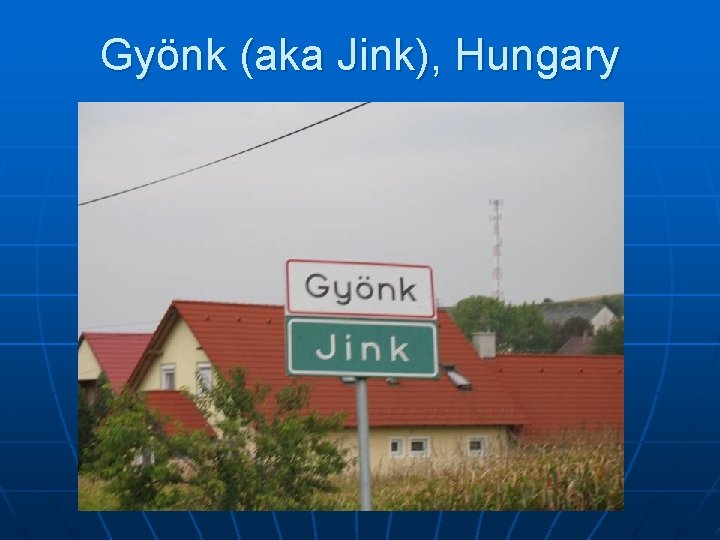
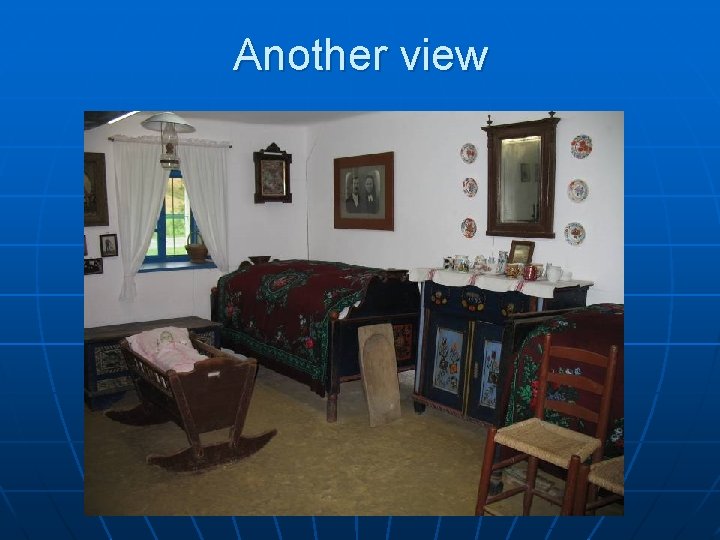
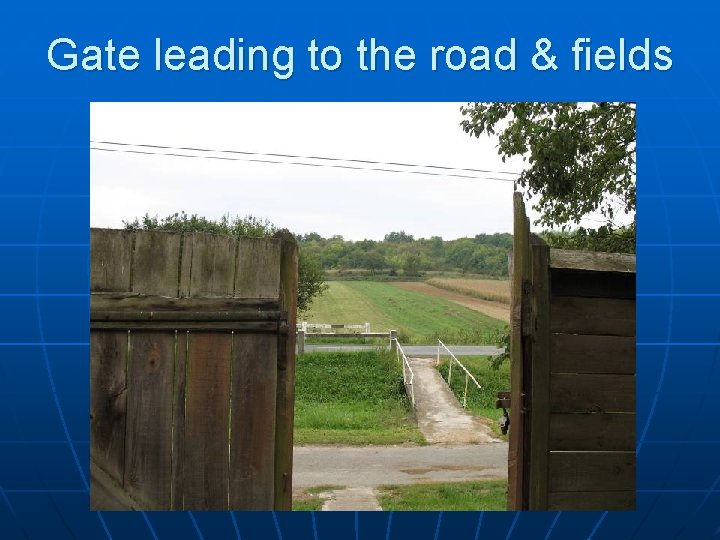
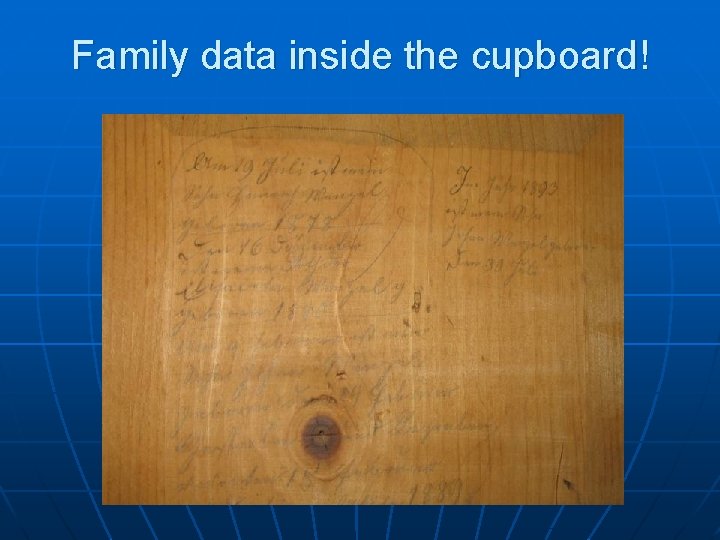
Gyönk (aka Jink), Hungary
Gyönk (aka Jink), Hungary
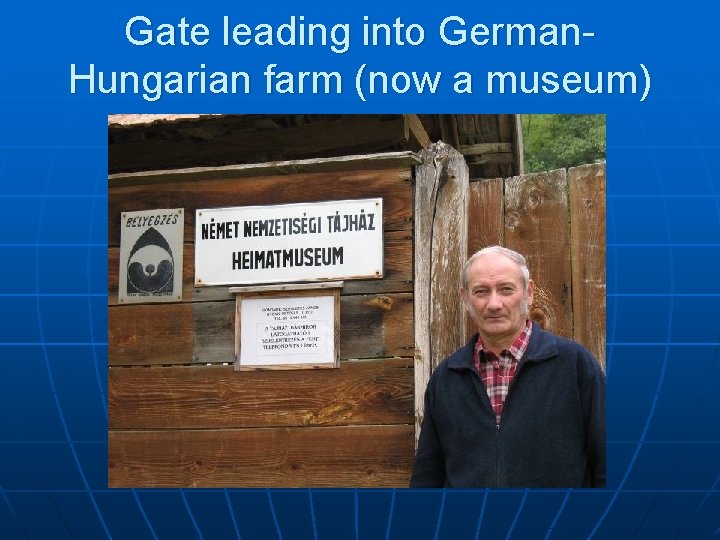
Gate leading into German. Hungarian farm (now a museum)
German-Hungarian Farm The House
The Kitchen
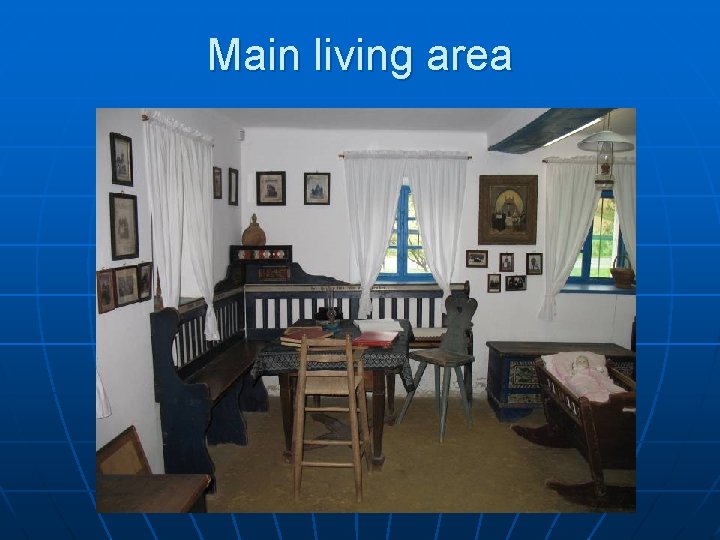
Main living area
Another view
The Barn
The Summer Kitchen
Gate leading to the road & fields
Family data inside the cupboard!