
From Genotype to Phenotype PTC Taster Lab October

From Genotype to Phenotype PTC Taster Lab October 2015
Bringing DNA science to more places 1
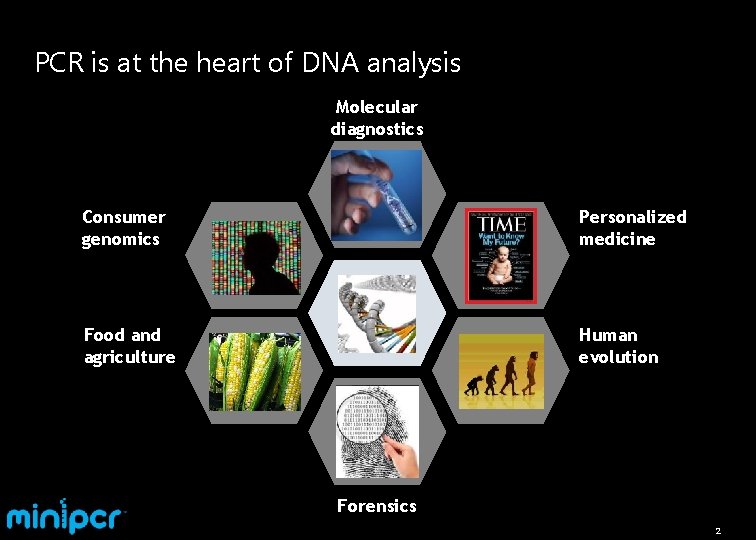
PCR is at the heart of DNA analysis Molecular diagnostics Text Personalized medicine Consumer genomics Text Food and agriculture PCR Text Human evolution Text Forensics 2
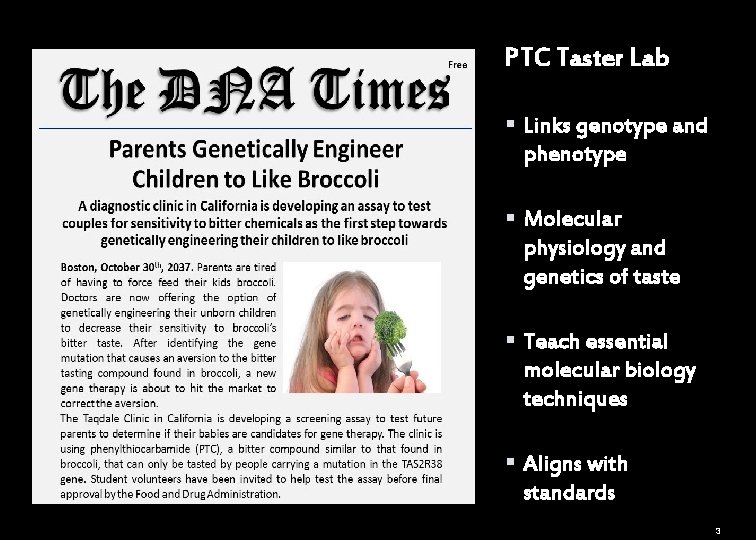
PTC Taster Lab § Links genotype and phenotype § Molecular physiology and genetics of taste § Teach essential molecular biology techniques § Aligns with standards 3
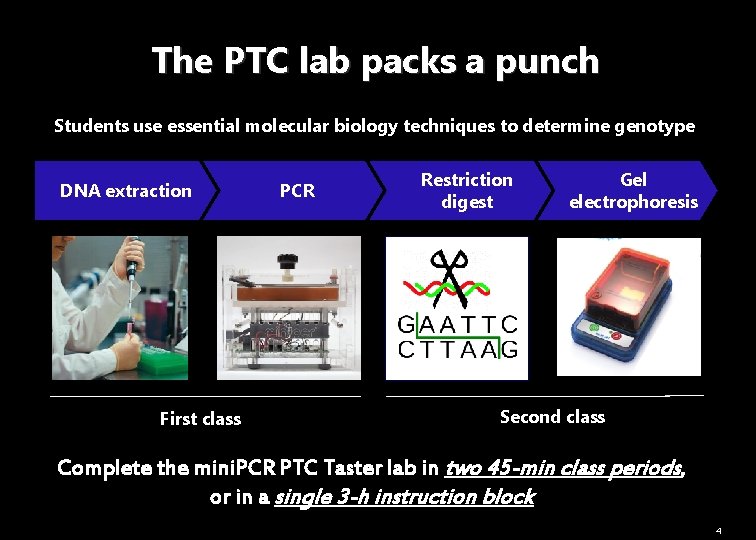
The PTC lab packs a punch Students use essential molecular biology techniques to determine genotype DNA extraction First class PCR Restriction digest Gel electrophoresis Second class Complete the mini. PCR PTC Taster lab in two 45 -min class periods, or in a single 3 -h instruction block 4
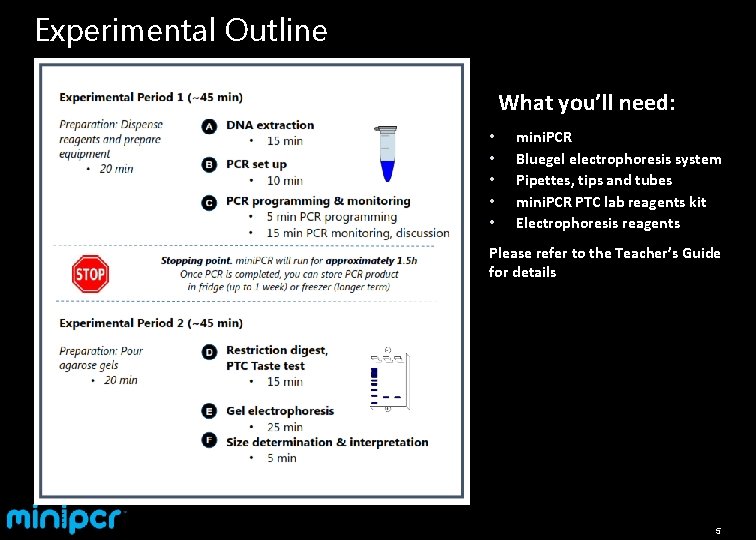
Experimental Outline What you’ll need: • • • mini. PCR Bluegel electrophoresis system Pipettes, tips and tubes mini. PCR PTC lab reagents kit Electrophoresis reagents Please refer to the Teacher’s Guide for details 5
Sense of Taste 6
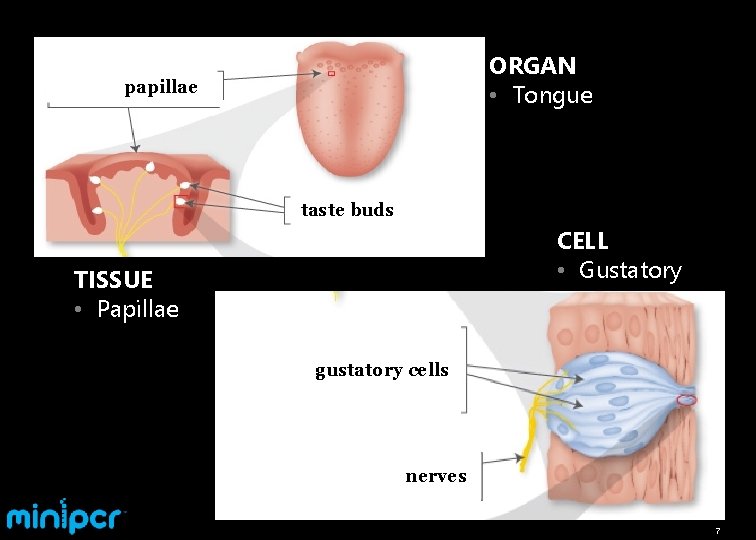
ORGAN • Tongue papillae taste buds CELL • Gustatory TISSUE • Papillae gustatory cells nerves 7
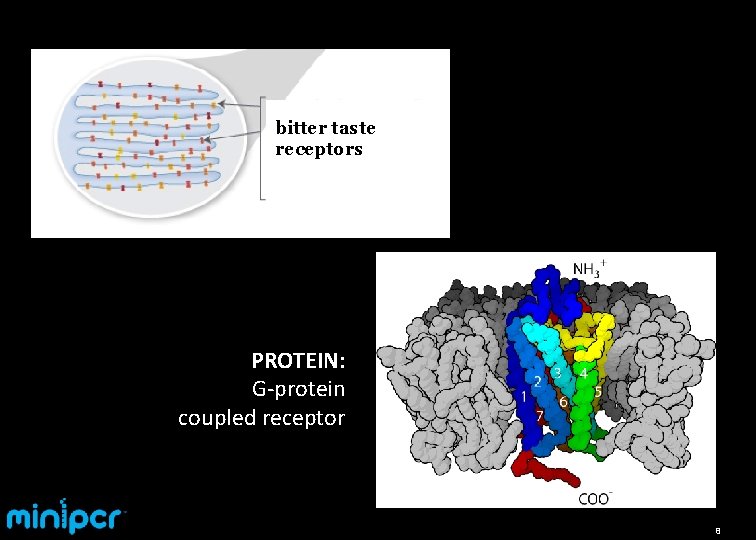
bitter taste receptors PROTEIN: G-protein coupled receptor 8
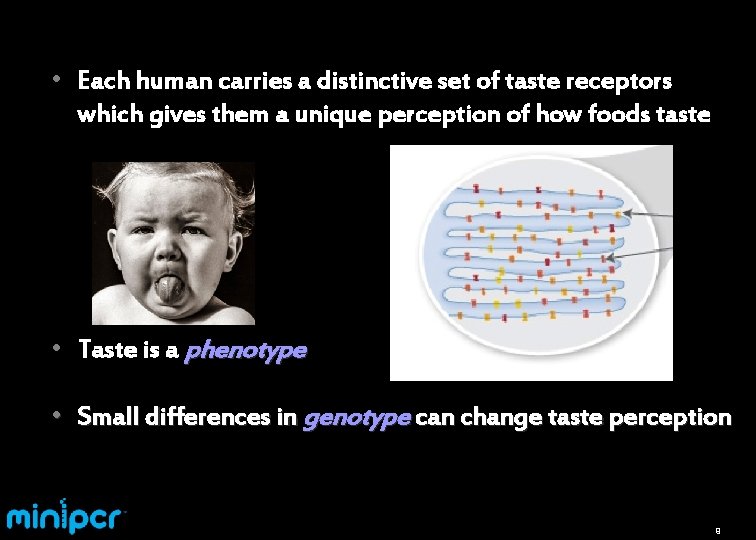
• Each human carries a distinctive set of taste receptors which gives them a unique perception of how foods taste • Taste is a phenotype • Small differences in genotype can change taste perception 9
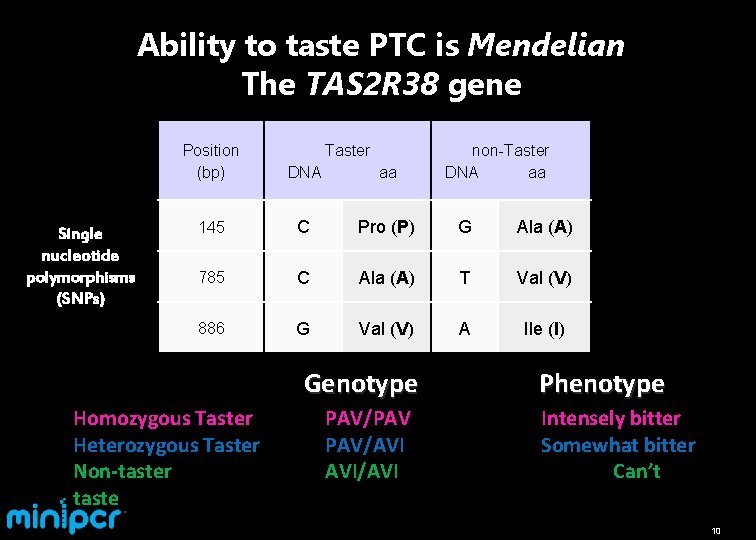
Ability to taste PTC is Mendelian The TAS 2 R 38 gene Single nucleotide polymorphisms (SNPs) Position (bp) Taster DNA aa 145 C Pro (P) G Ala (A) 785 C Ala (A) T Val (V) 886 G Val (V) A Ile (I) Genotype Homozygous Taster Heterozygous Taster Non-taster taste PAV/PAV PAV/AVI AVI/AVI non-Taster DNA aa Phenotype Intensely bitter Somewhat bitter Can’t 10
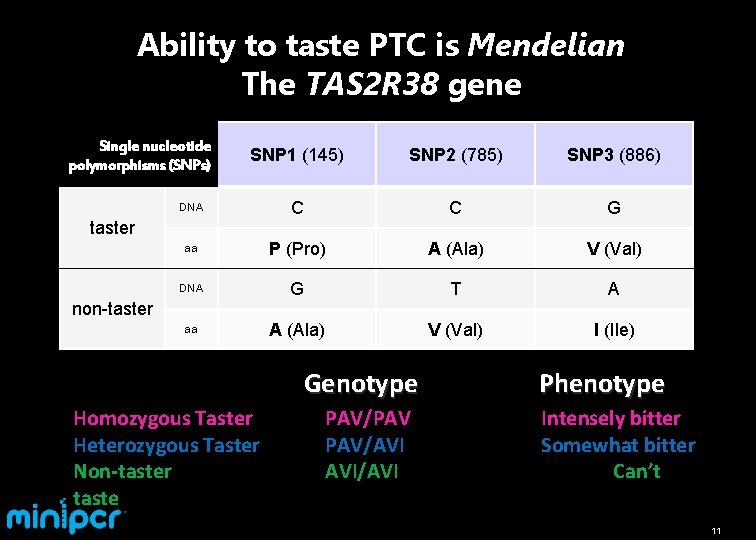
Ability to taste PTC is Mendelian The TAS 2 R 38 gene Single nucleotide polymorphisms (SNPs) SNP 1 (145) SNP 2 (785) SNP 3 (886) DNA C C G aa P (Pro) A (Ala) V (Val) DNA G T A aa A (Ala) V (Val) I (Ile) taster non-taster Genotype Homozygous Taster Heterozygous Taster Non-taster taste PAV/PAV PAV/AVI AVI/AVI Phenotype Intensely bitter Somewhat bitter Can’t 11
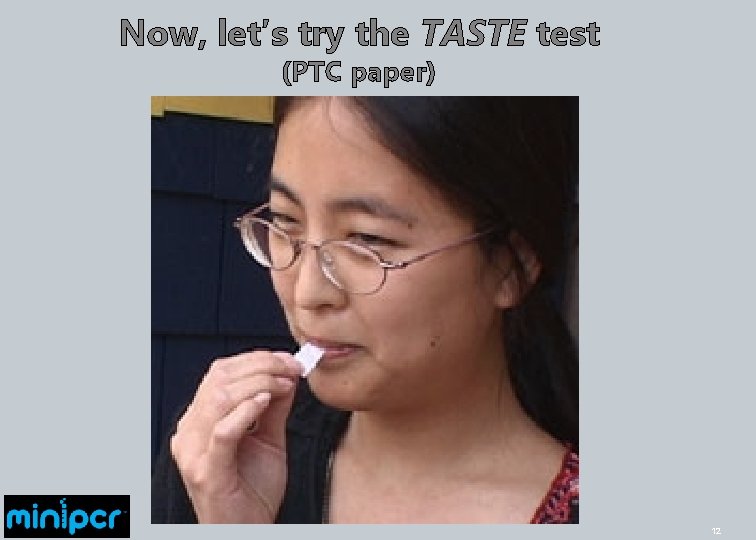
Now, let’s try the TASTE test (PTC paper) 12
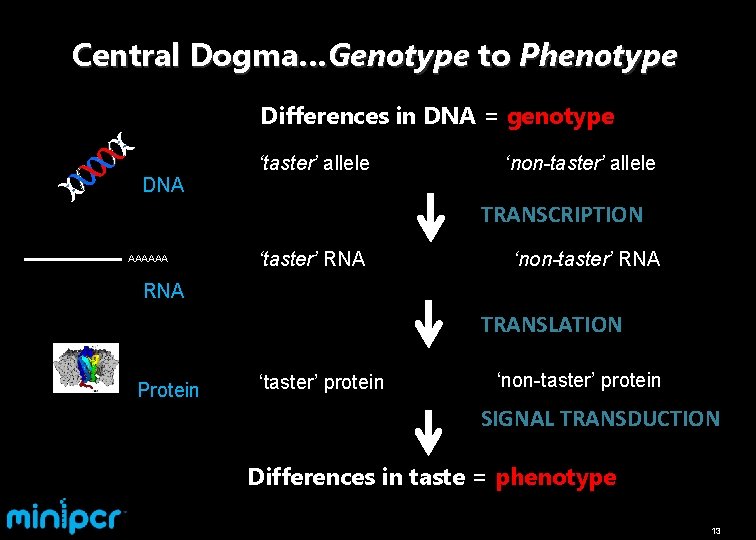
Central Dogma…Genotype to Phenotype Differences in DNA = genotype DNA ‘taster’ allele ‘non-taster’ allele TRANSCRIPTION AAAAAA ‘taster’ RNA ‘non-taster’ RNA TRANSLATION Protein ‘taster’ protein ‘non-taster’ protein SIGNAL TRANSDUCTION Differences in taste = phenotype 13

Extract DNA From Cheek Cells Rub gently 5 -6 times with a flathead toothpick 14
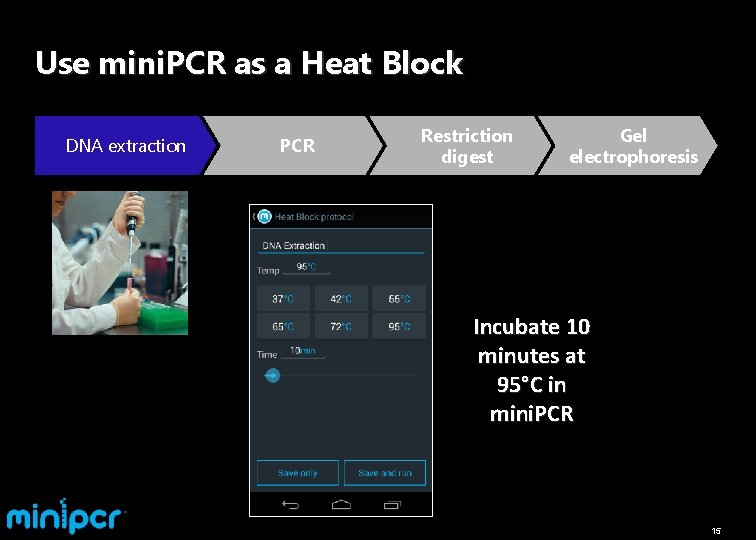
Use mini. PCR as a Heat Block DNA extraction PCR Restriction digest Gel electrophoresis Incubate 10 minutes at 95°C in mini. PCR 15
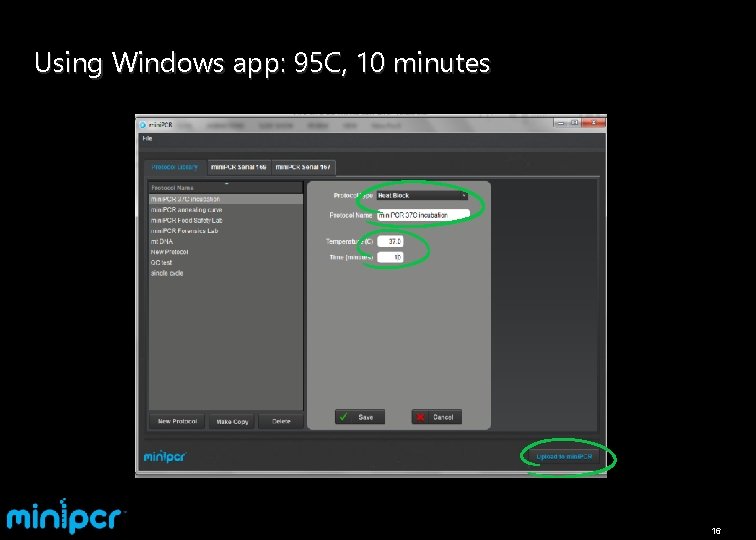
Using Windows app: 95 C, 10 minutes 16
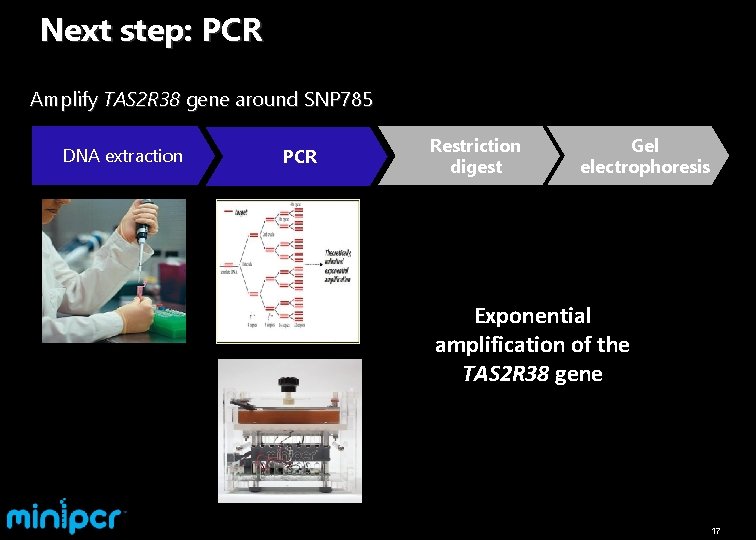
Next step: PCR Amplify TAS 2 R 38 gene around SNP 785 DNA extraction PCR Restriction digest Gel electrophoresis Exponential amplification of the TAS 2 R 38 gene 17
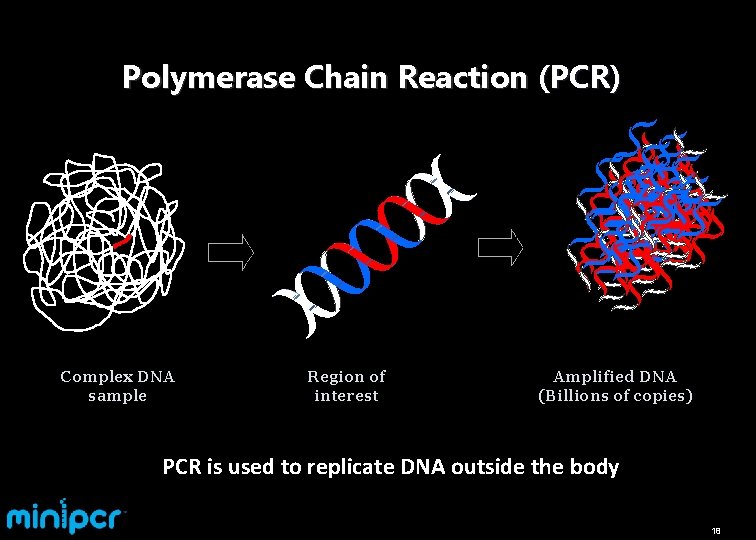
Polymerase Chain Reaction (PCR) Complex DNA sample Region of interest Amplified DNA (Billions of copies) PCR is used to replicate DNA outside the body 18
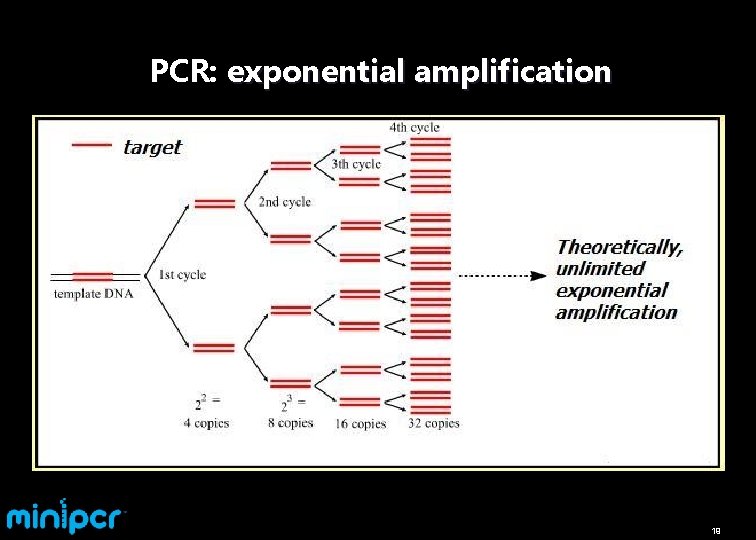
PCR: exponential amplification 19
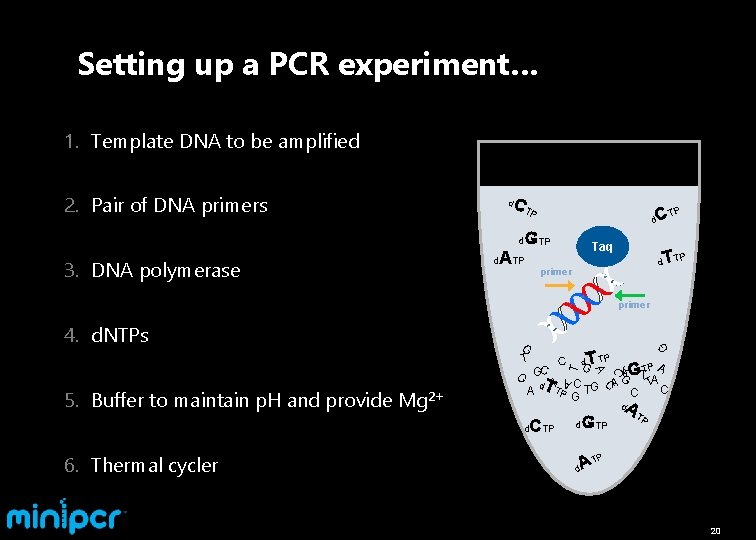
Setting up a PCR experiment… 1. Template DNA to be amplified 2. Pair of DNA primers CTP d GTP d ATP 3. DNA polymerase d Taq TTP d primer d A C TG TP CTP d 6. Thermal cycler G TP A Gd. GT A C C T T TP d G C A C C Mg 2+ GC A G 5. Buffer to maintain p. H and provide G T A 4. d. NTPs G primer AT d GTP d P ATP d 20
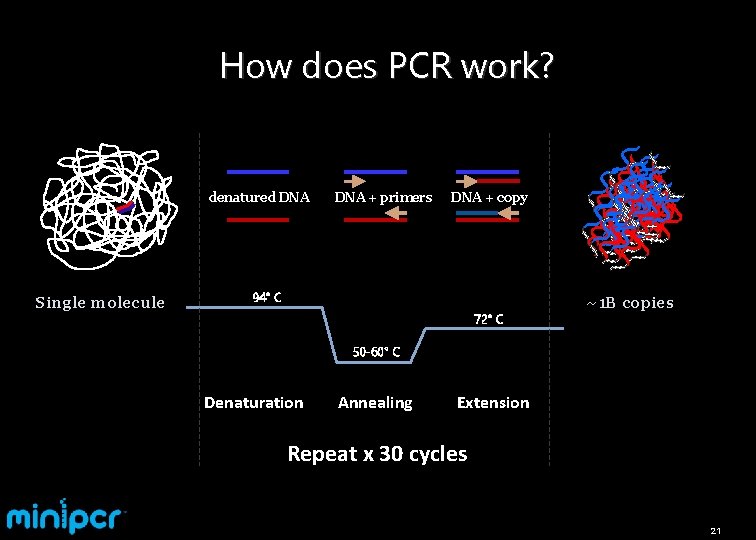
How does PCR work? denatured DNA Single molecule DNA + primers DNA + copy 94° C 72° C ~1 B copies 50 -60° C Denaturation Annealing Extension Repeat x 30 cycles 21
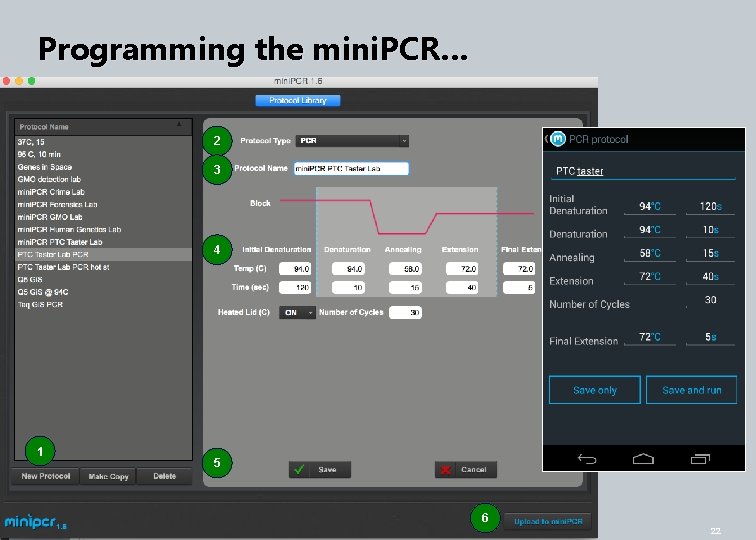
Programming the mini. PCR… 2 3 4 1 5 6 22
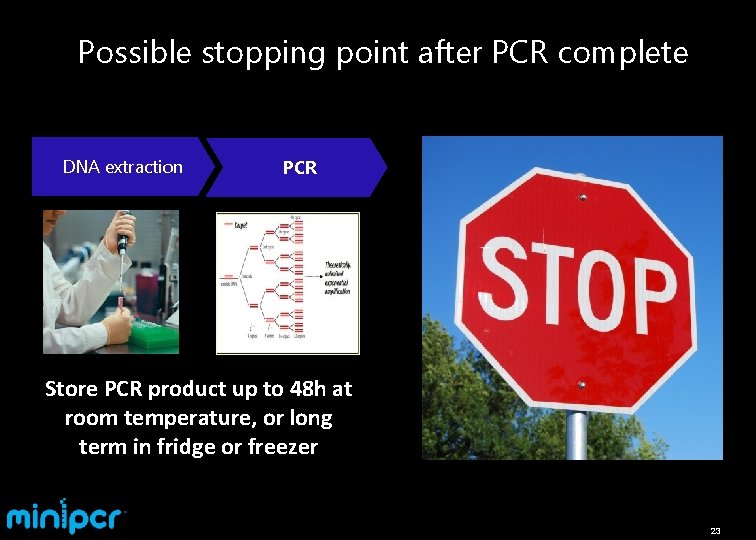
Possible stopping point after PCR complete DNA extraction PCR Store PCR product up to 48 h at room temperature, or long term in fridge or freezer 23
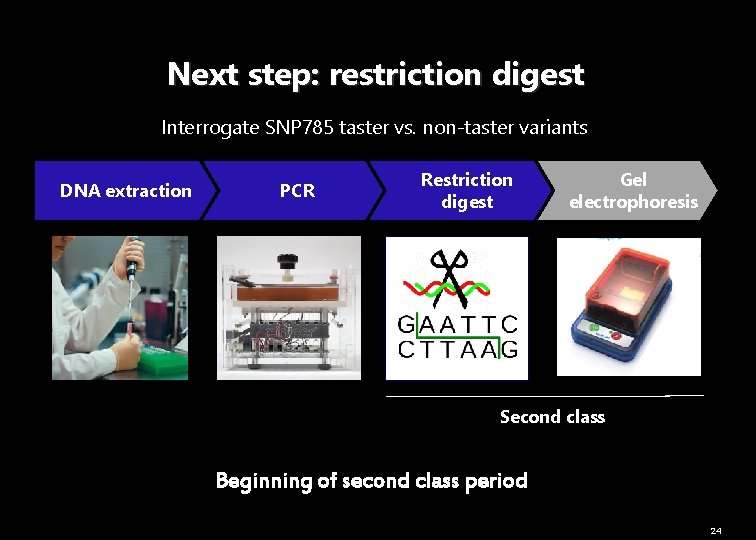
Next step: restriction digest Interrogate SNP 785 taster vs. non-taster variants DNA extraction PCR Restriction digest Gel electrophoresis Second class Beginning of second class period 24
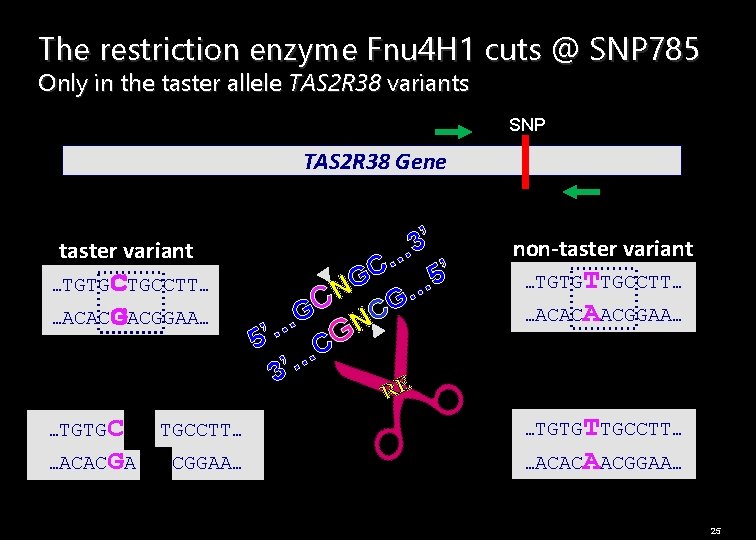
The restriction enzyme Fnu 4 H 1 cuts @ SNP 785 Only in the taster allele TAS 2 R 38 variants SNP TAS 2 R 38 Gene taster variant CTGCCTT… …ACACGACGGAA… …TGTG 3’ … ’ C 5 G N G… C G NC 5’… CG 3’… non-taster variant TTGCCTT… …ACACAACGGAA… …TGTG RE C …ACACGA …TGTG TGCCTT… CGGAA… TTGCCTT… …ACACAACGGAA… …TGTG 25
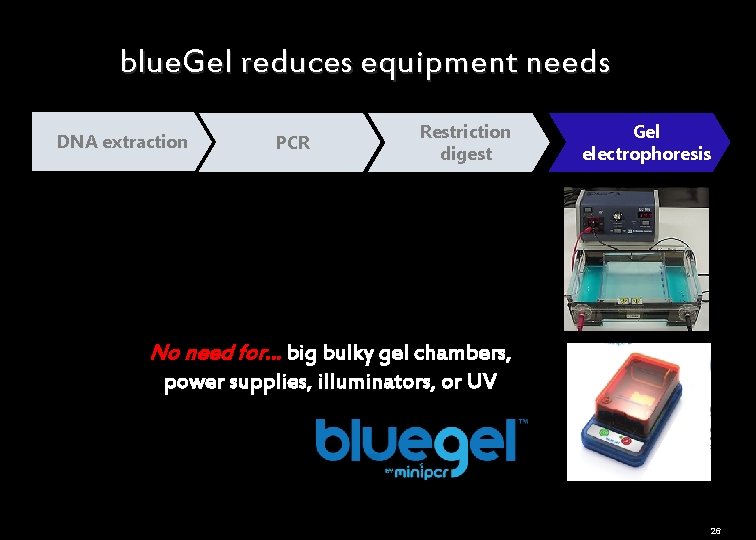
blue. Gel reduces equipment needs DNA extraction PCR Restriction digest Gel electrophoresis No need for… big bulky gel chambers, power supplies, illuminators, or UV 26
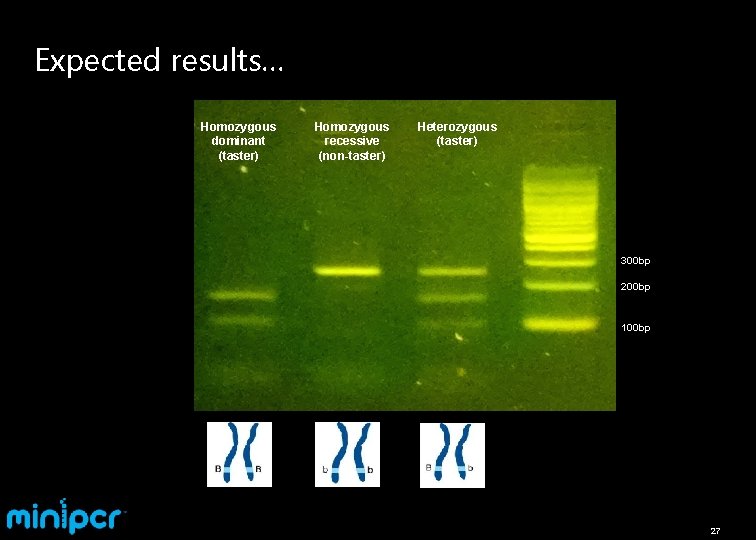
Expected results… Homozygous dominant (taster) Homozygous recessive (non-taster) Heterozygous (taster) 300 bp 200 bp 100 bp 27
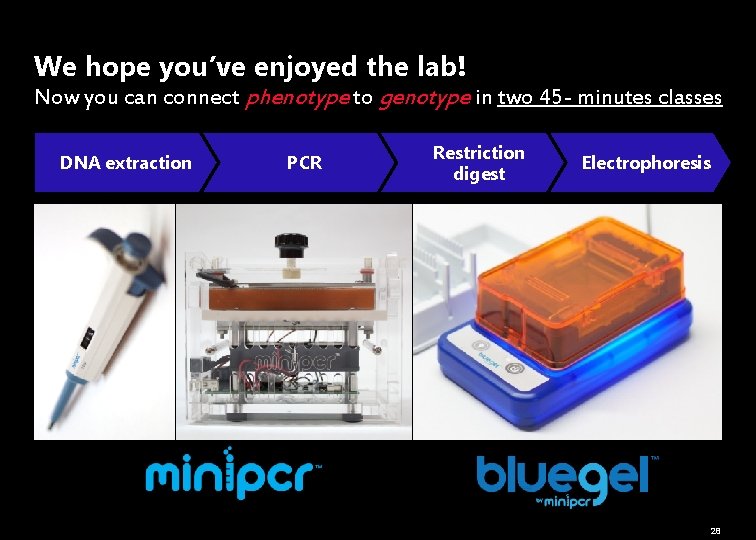
We hope you’ve enjoyed the lab! Now you can connect phenotype to genotype in two 45 - minutes classes DNA extraction PCR Restriction digest Electrophoresis 28
29
Contact mini. PCR with feedback or questions www. minipcr. com @mini. PCR Facebook. com/mini. PCR team@minipcr. com 30
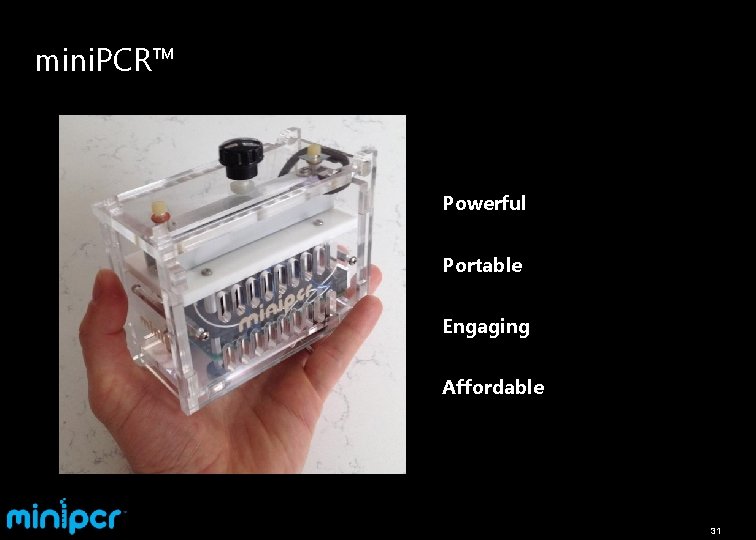
mini. PCR™ Powerful Portable Engaging Affordable 31
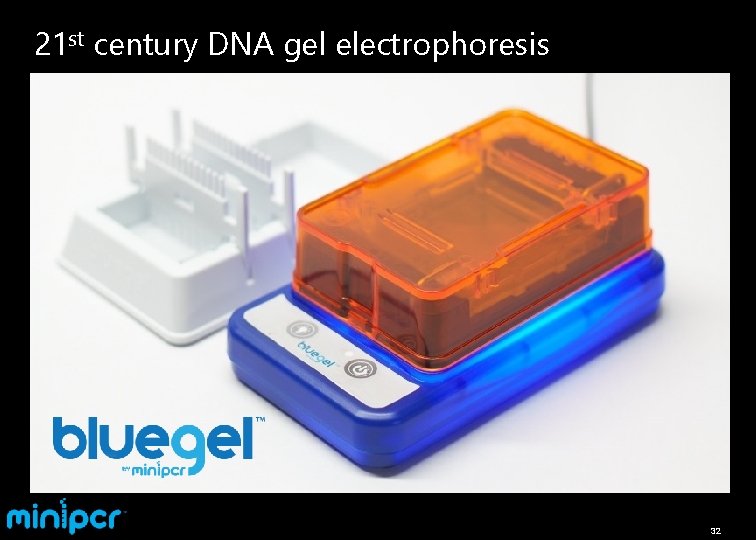
21 st century DNA gel electrophoresis 32
- Slides: 33