
From Gene to Protein Genes code for Proteins
- Slides: 38
From Gene to Protein
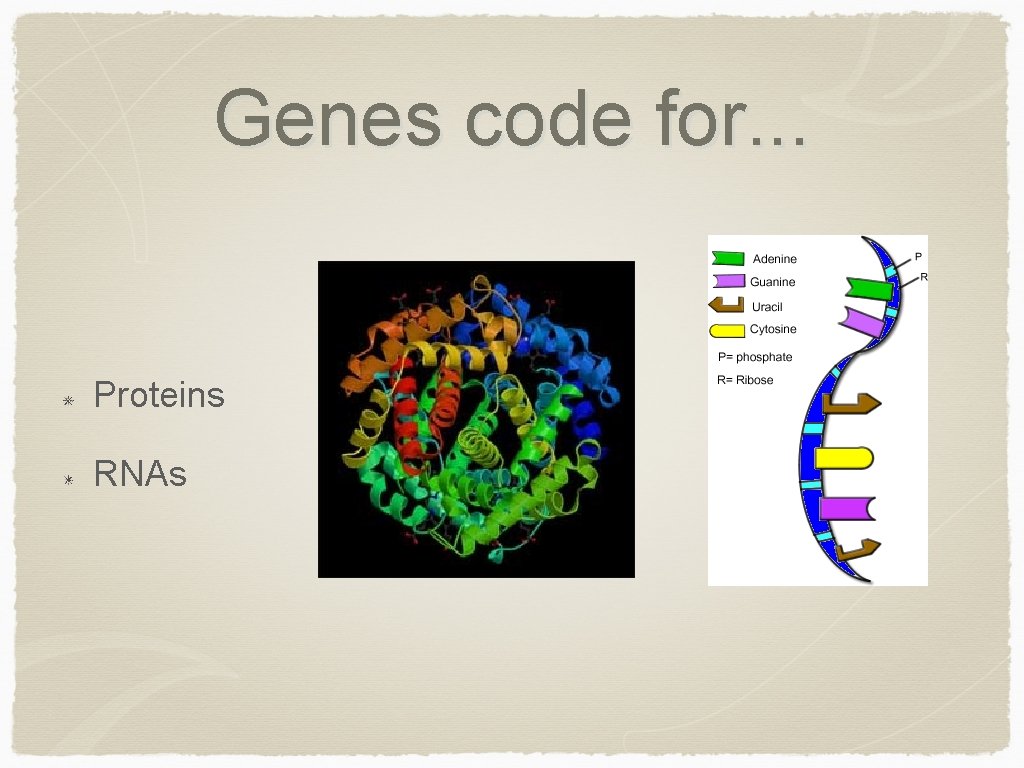
Genes code for. . . Proteins RNAs
Remember. . . a protein is made of monomers called amino acids bond together to form a polypeptide - the primary structure of a protein
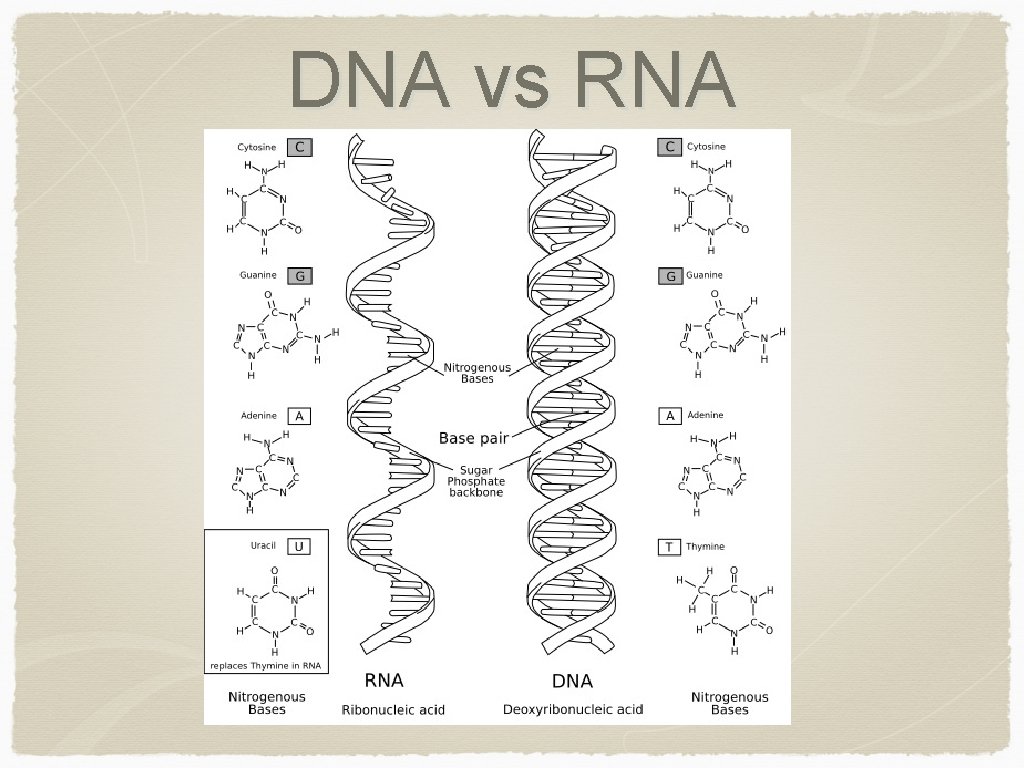
DNA vs RNA
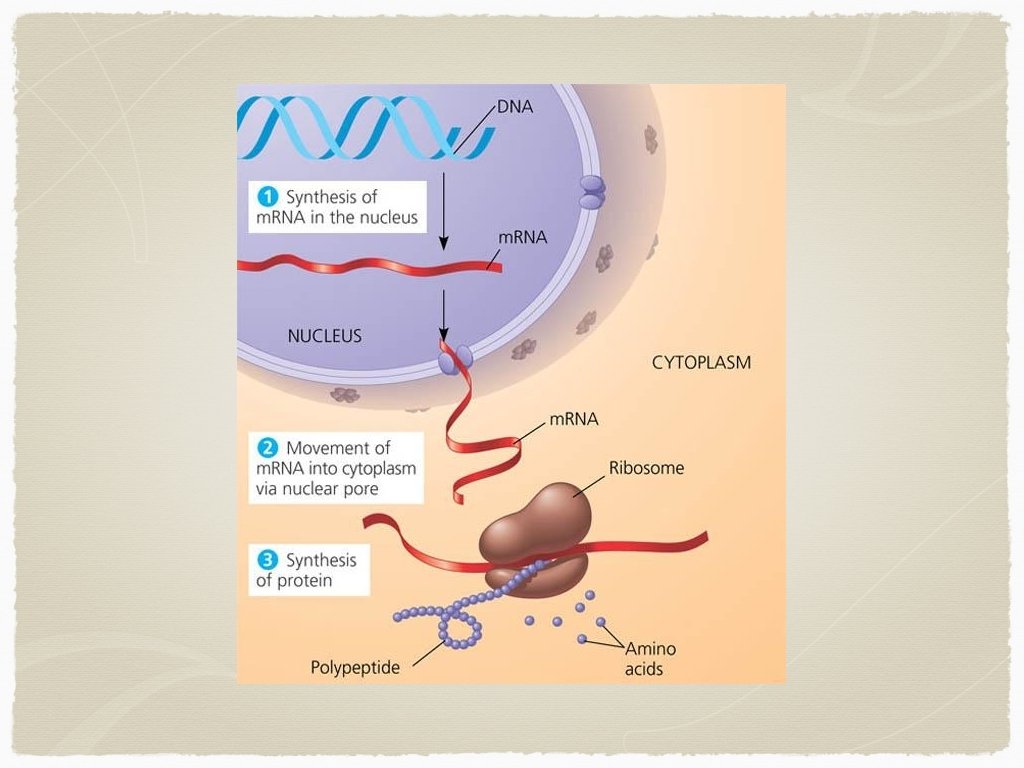
Gene expression is accomplished through two basic processes. . . Transcription = DNA to m. RNA Translation = m. RNA to a polypeptide
Some of the RNAs involved in gene expression. . . m. RNA (messenger) t. RNA (transfer) r. RNA (ribosomal)
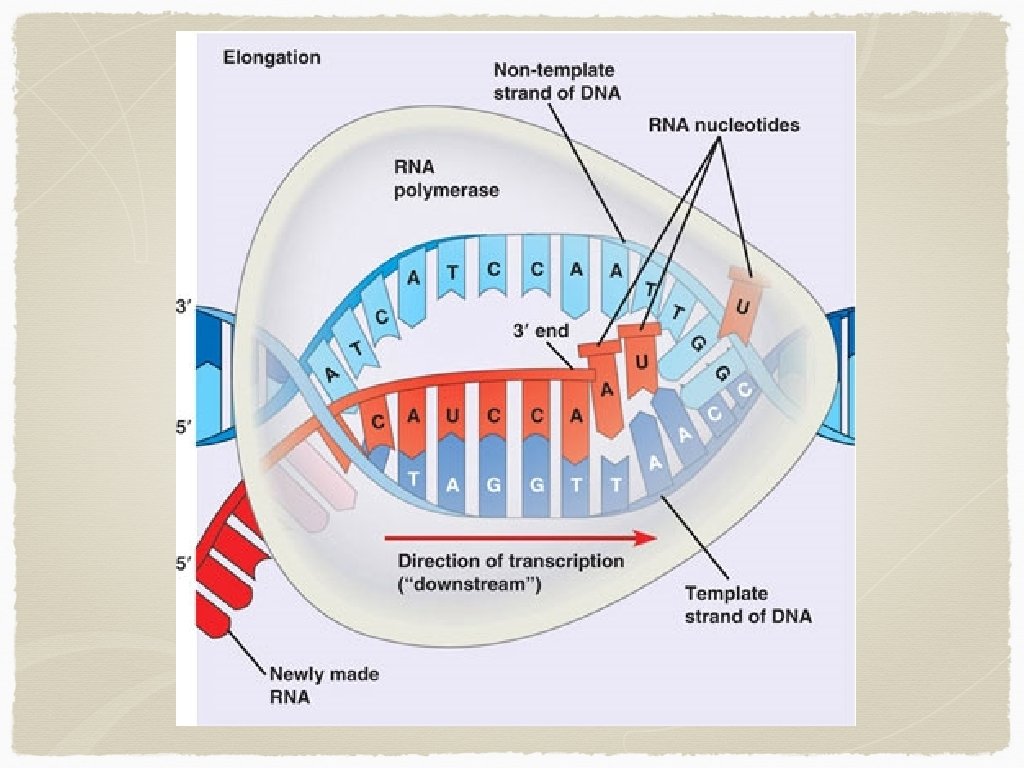
Transcription factors bind to the TATA box on the DNA strand RNA polymerase pries the two strands of DNA apart RNA polymerase joins RNA nucleotides together that are complementary to the DNA template RNA polymerase works only in the 5' to 3' direction just like DNA polymerase
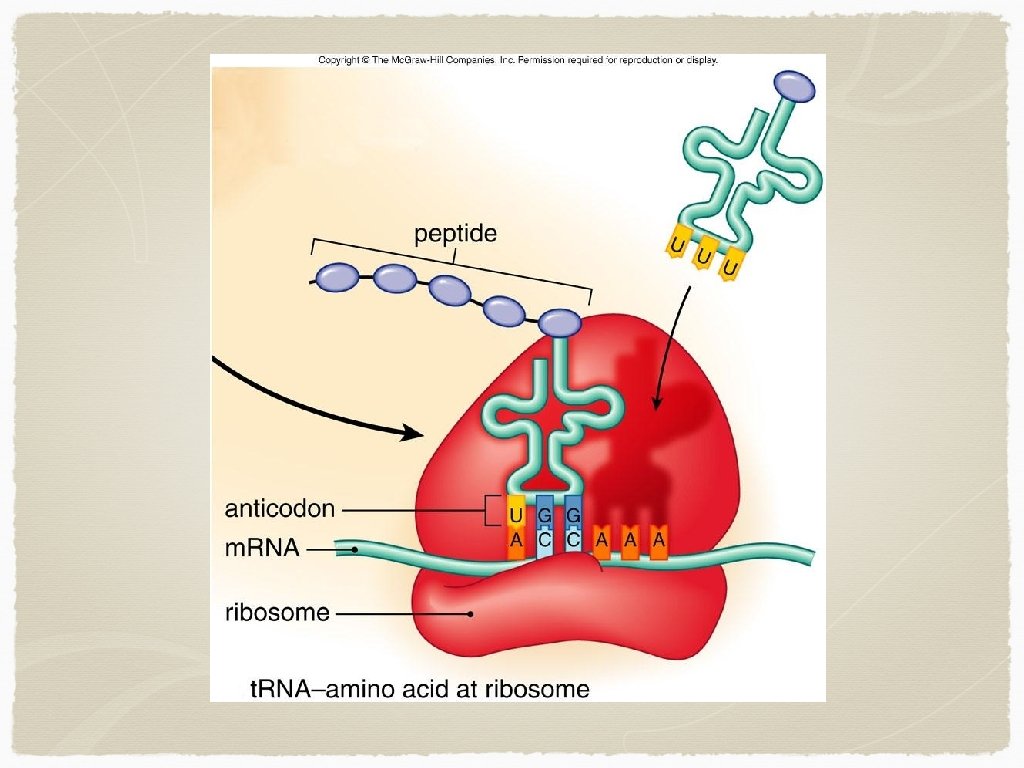
Translation m. RNA transcript is brought to the ribosome Initiation = the r. RNA, m. RNA transcript, and t. RNA carrying methionine bind together Elongation = amino acids are added one by one to create the polypeptide Termination = when a stop codon is reached on the m. RNA
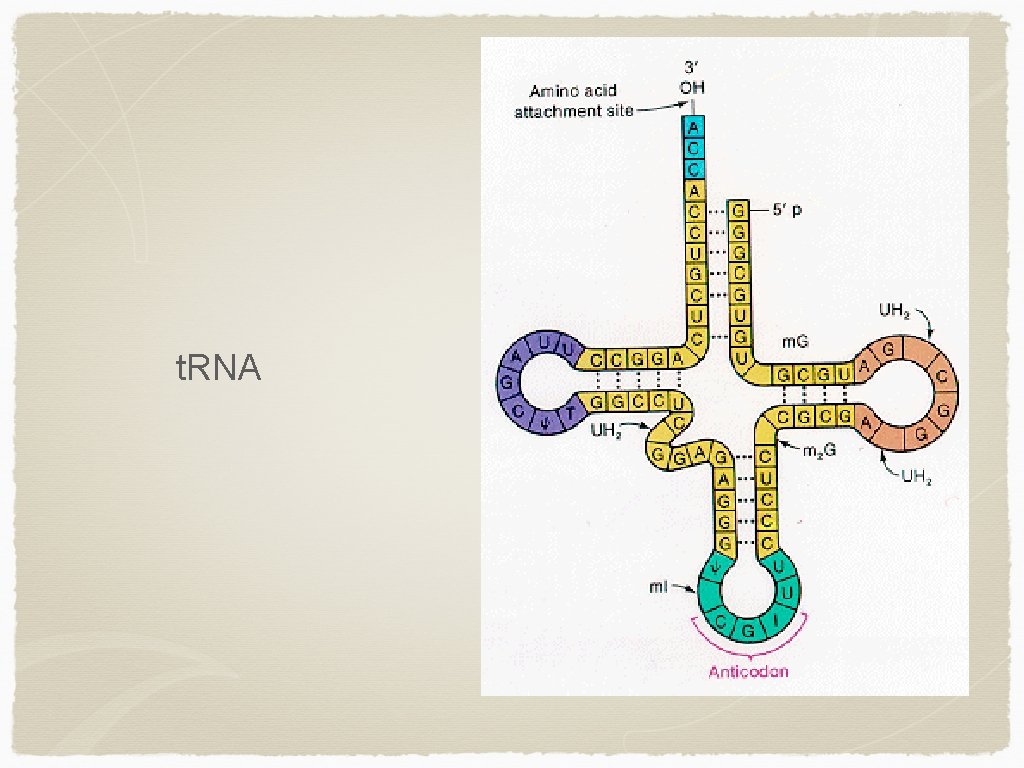
t. RNA
What two processes ensure that the correct amino acid is added to a growing polypeptide chain?
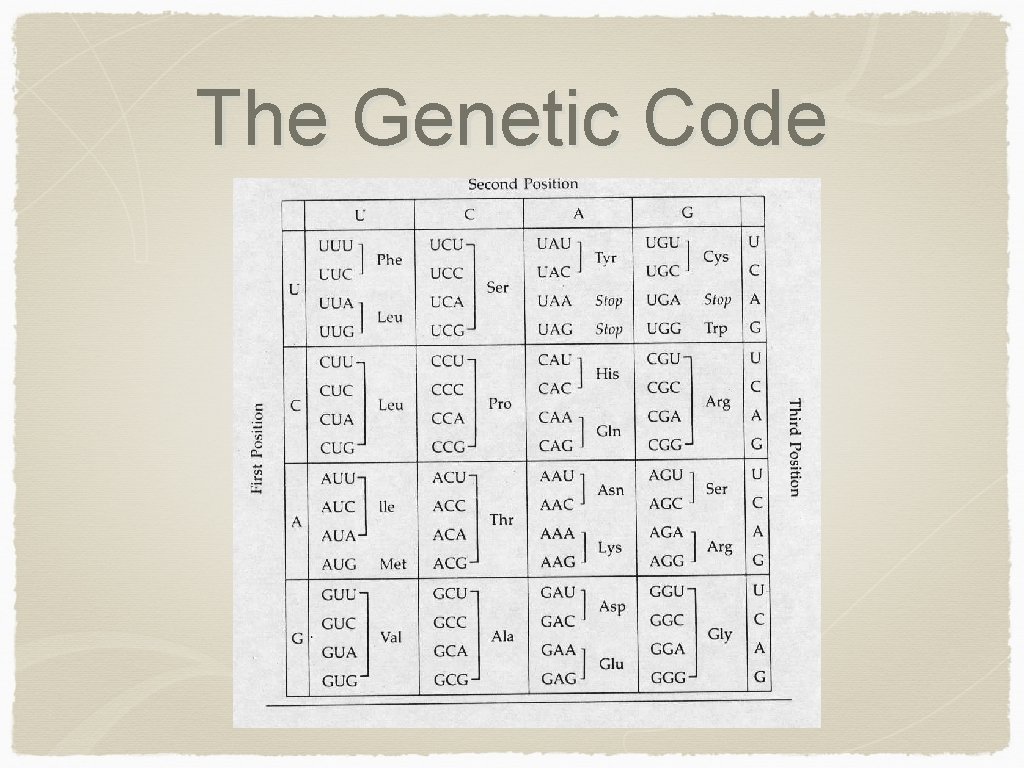
There are 64 codons. Three are stop codons, so we can say there are 61 amino acid coding codons. However, there are only 45 t. RNA molecules that exist. How is this possible?
The need for molecular recognition. . . Pairing of the t. RNA anticodon and m. RNA codon, but wobble allows for some mistakes Pairing of the t. RNA with the amino acid, accomplished by aminoacyl-t. RNA synthetases
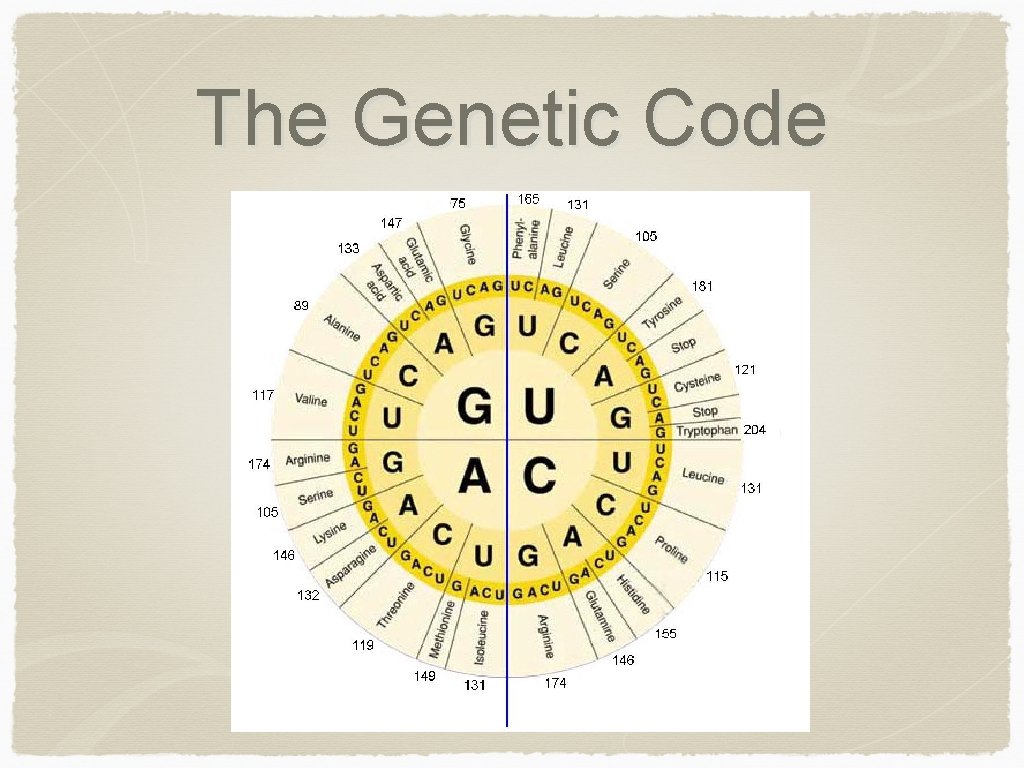
The Genetic Code m. RNA is read three bases at a time 3 m. RNA bases = a codon
The Genetic Code
The Genetic Code
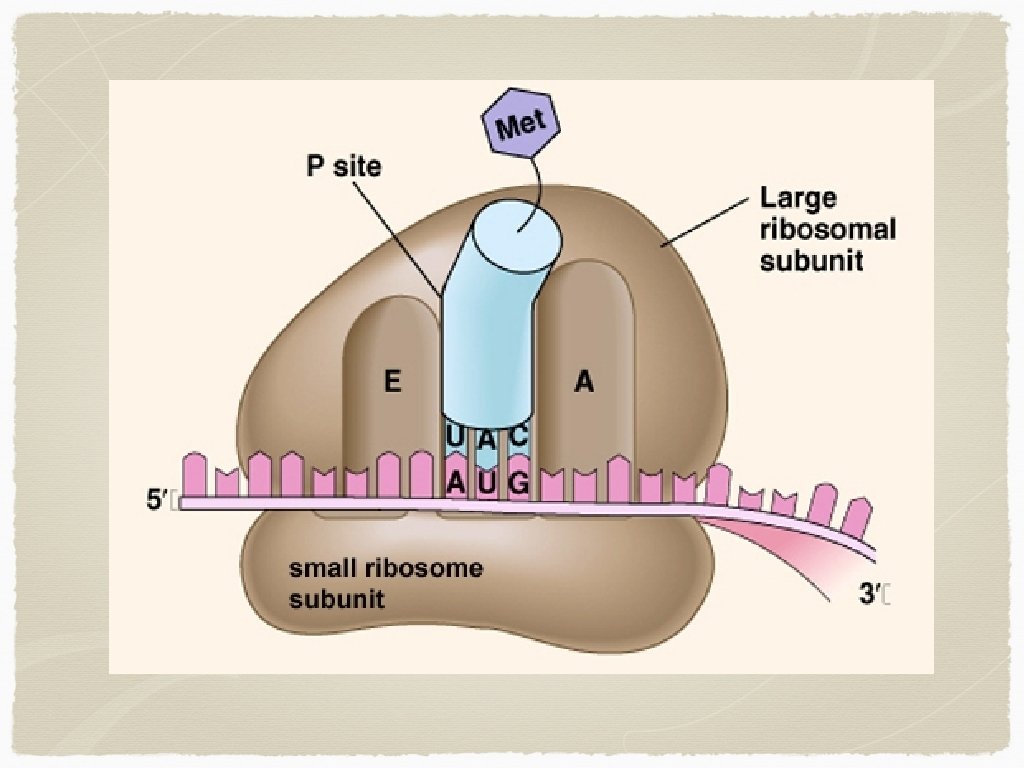
Ribosomes Bring m. RNA and t. RNAs together 3 sites = A, P, and E P= holds the t. RNA that is attached to the growing polypeptide chain A = holds the t. RNA carrying the next amino acid to be added to the chain E = is where discharged t. RNAs leave the ribosome
How can human cells make 75, 000 - 100, 000 different proteins, given that there about 20, 000 human genes?
Transcript Processing
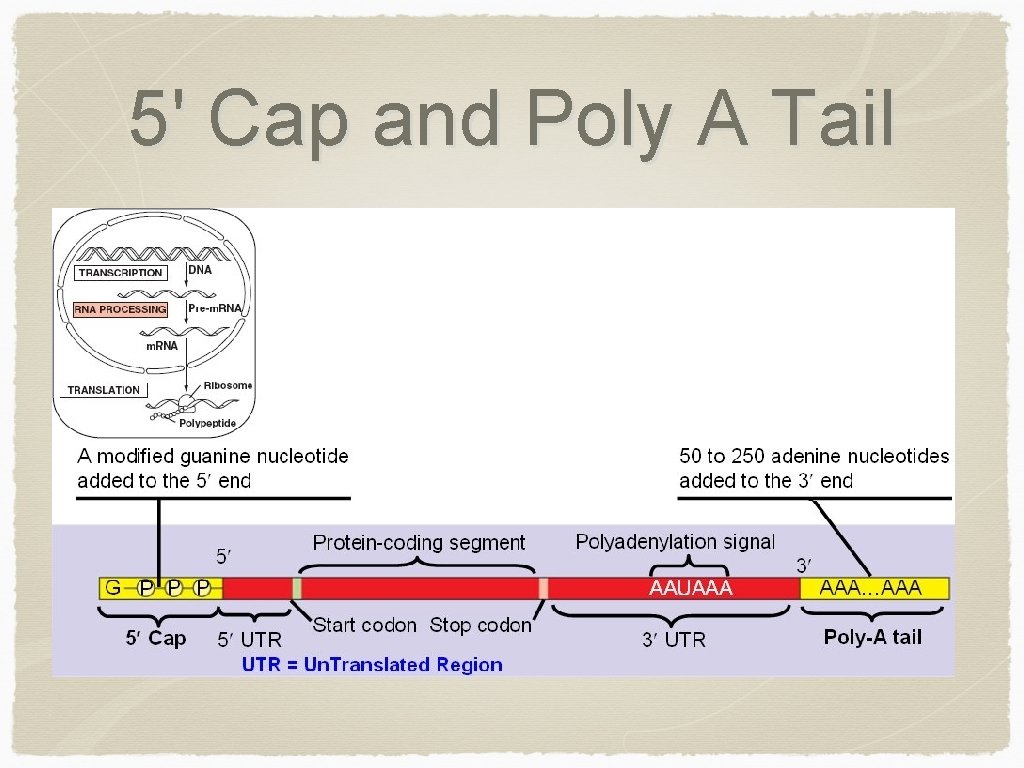
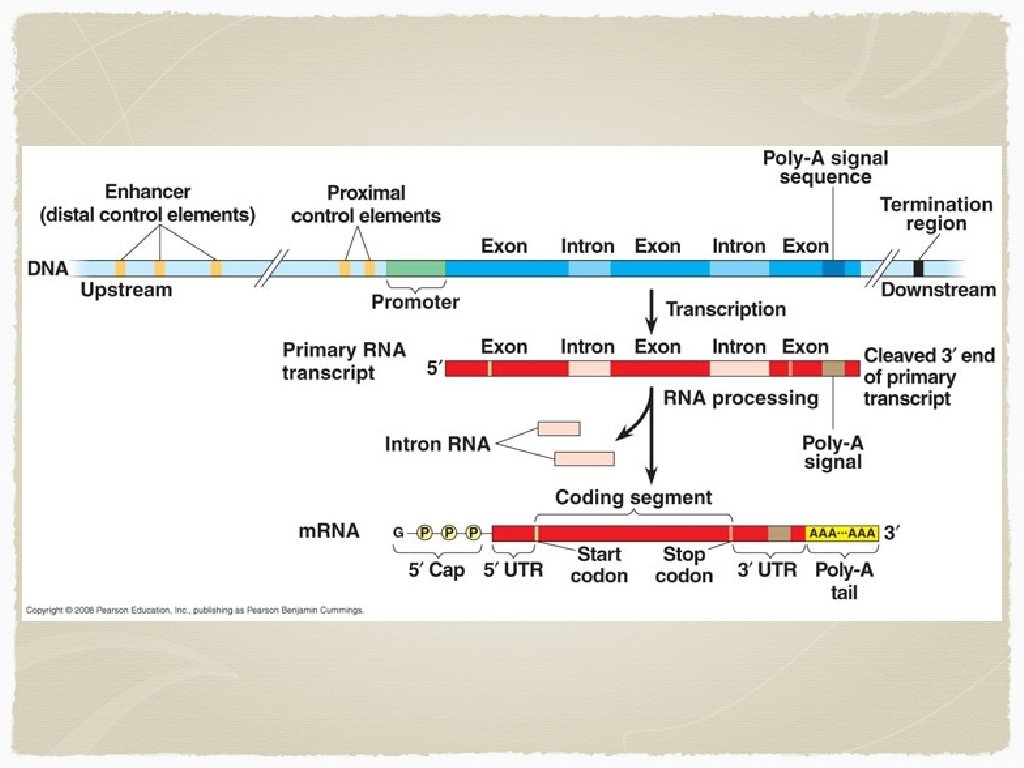
5' Cap and Poly A Tail
5' Cap and Poly A tail Facilitate the export on m. RNA from the nucleus Help protect the m. RNA from degradation from hydrolysis enzymes in the cytoplasm Help ribosomes attach to the 5' end of the m. RNA prior to translation
RNA Splicing The average transcription unit is 27, 000 bases long. The average protein is 400 amino acids long, requiring only 1, 200 RNA bases. This means that most m. RNA transcripts are initially too long and contain a lot of non-coding segments.
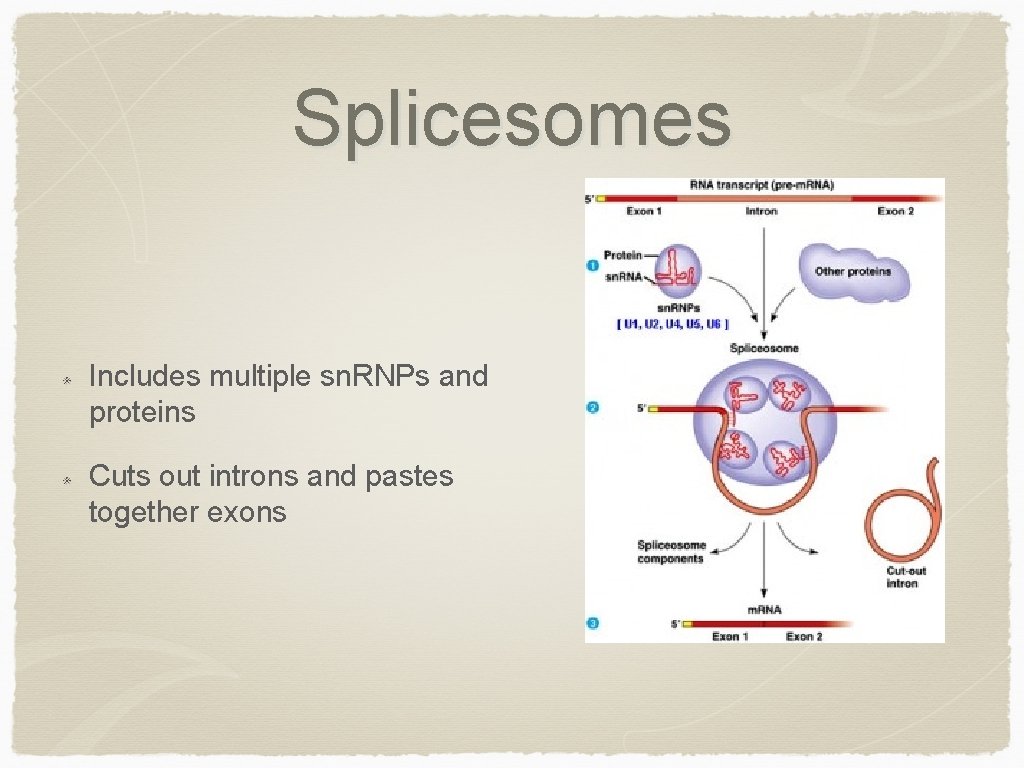
RNA Splicing continued. . . Non-coding segments (introns) of the m. RNA transcript are dispersed among the coding segments (exons) Introns are removed from the m. RNA transcript prior to it leaving the nucleus. This forms a m. RNA transcript with a continuous coding sequence
RNA Splicing continued. . . The signal for RNA splicing is a short nucleotide sequence at each end of an intron sn. RNPs (small nuclear ribonucleoproteins) recognize these sequences
Splicesomes Includes multiple sn. RNPs and proteins Cuts out introns and pastes together exons
A Note. . . A single gene can code for more than one type of polypeptide This is because of alternative RNA splicing Whether m. RNA segments are treated as introns or exons depends on the polypeptide product being expressed For this reason the number of protein products an organism produces can be much greater than its number of genes
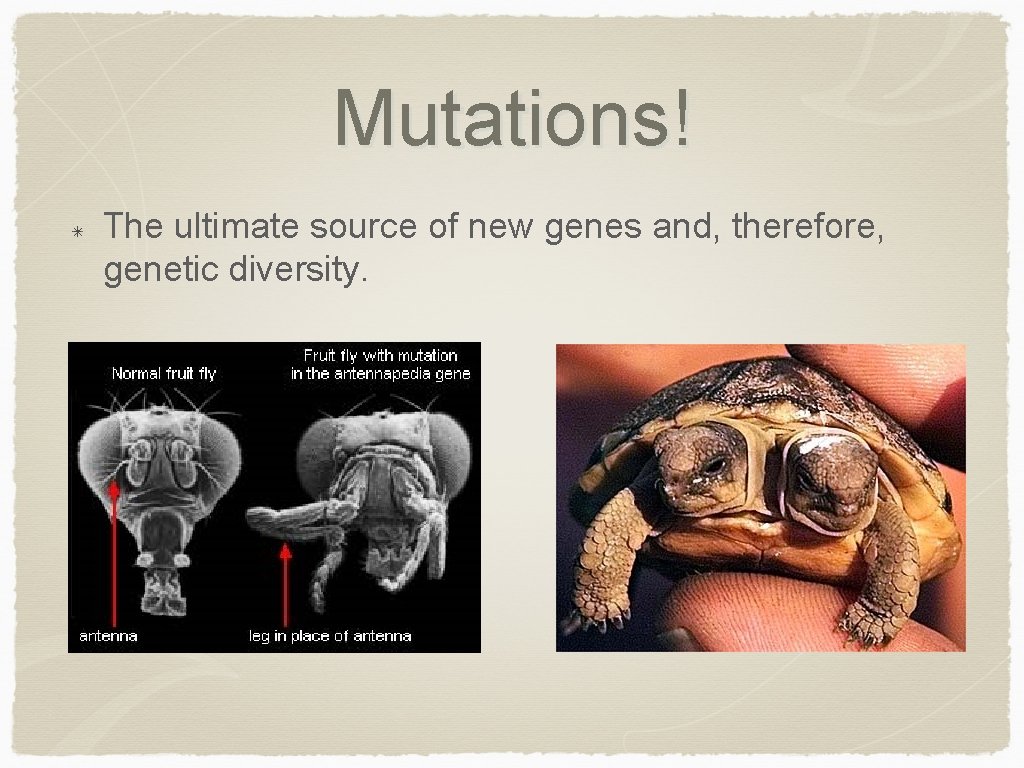
Mutations! The ultimate source of new genes and, therefore, genetic diversity.
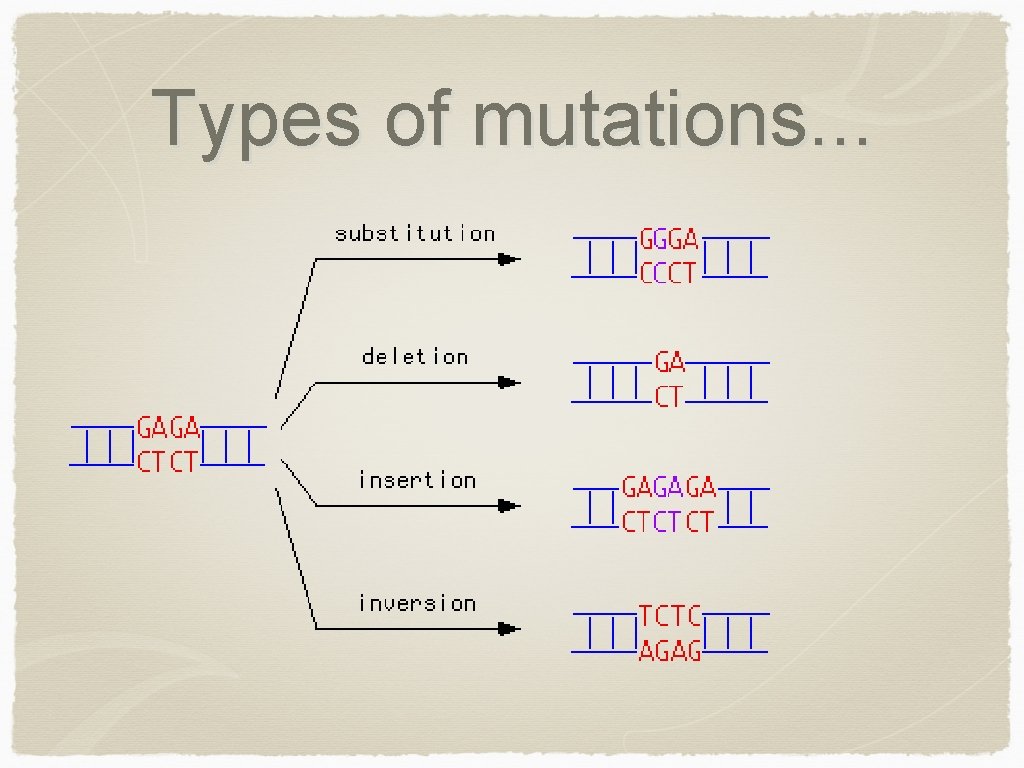
Types of mutations. . .
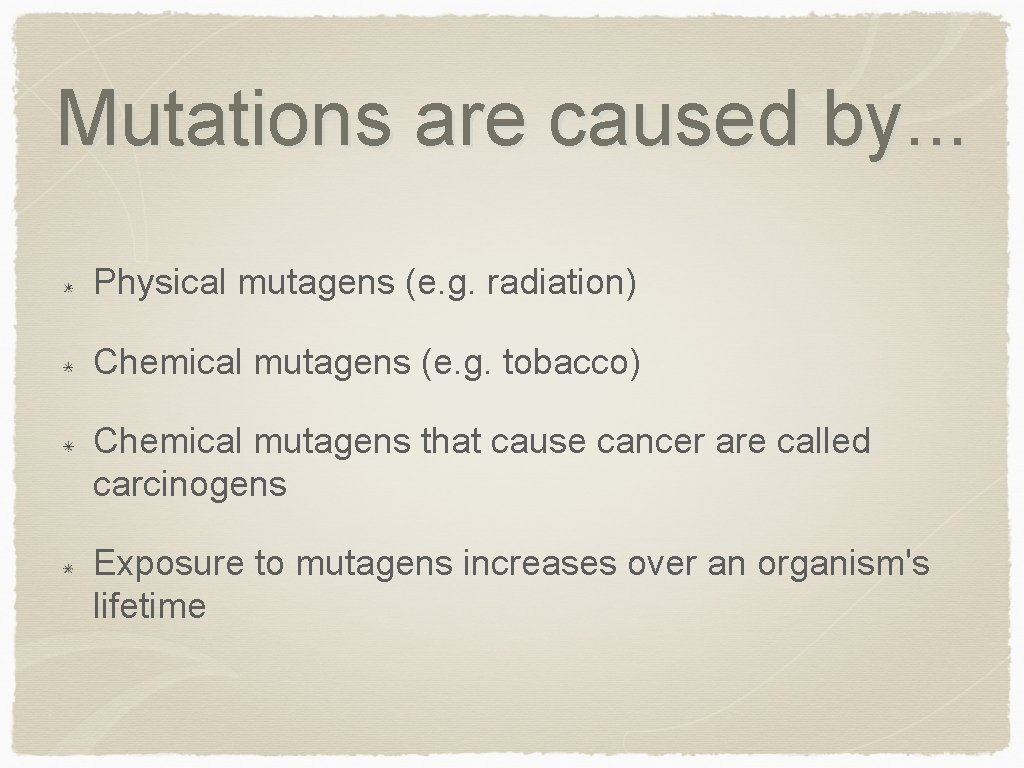
Mutations are caused by. . . Physical mutagens (e. g. radiation) Chemical mutagens (e. g. tobacco) Chemical mutagens that cause cancer are called carcinogens Exposure to mutagens increases over an organism's lifetime
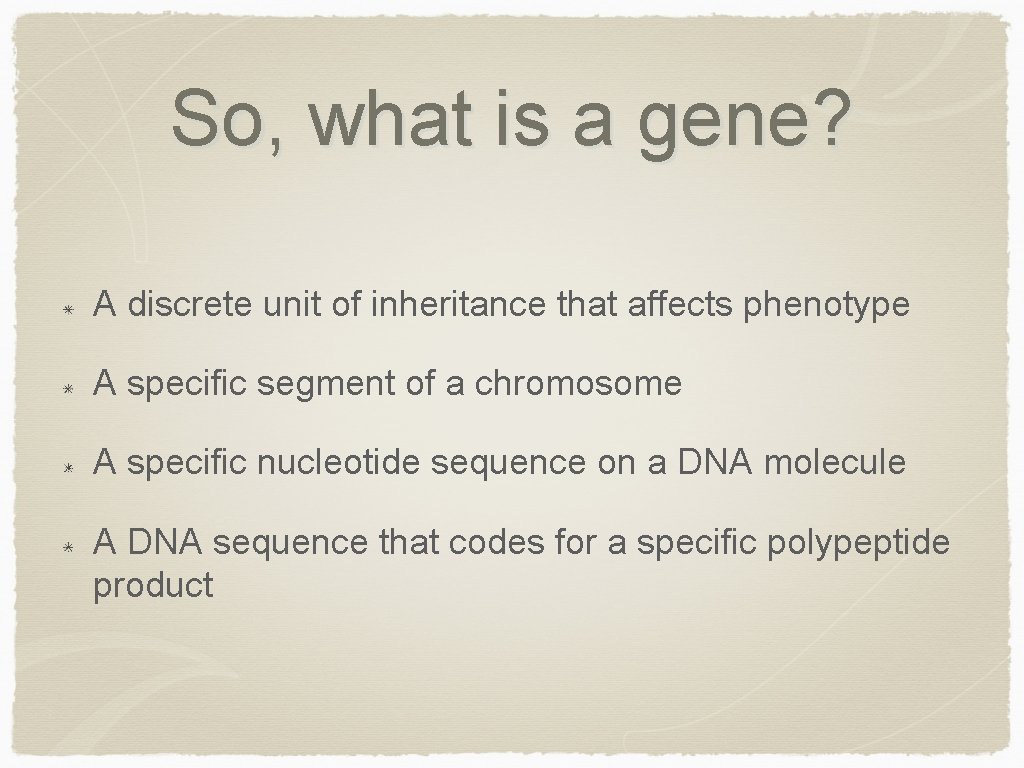
So, what is a gene? A discrete unit of inheritance that affects phenotype A specific segment of a chromosome A specific nucleotide sequence on a DNA molecule A DNA sequence that codes for a specific polypeptide product
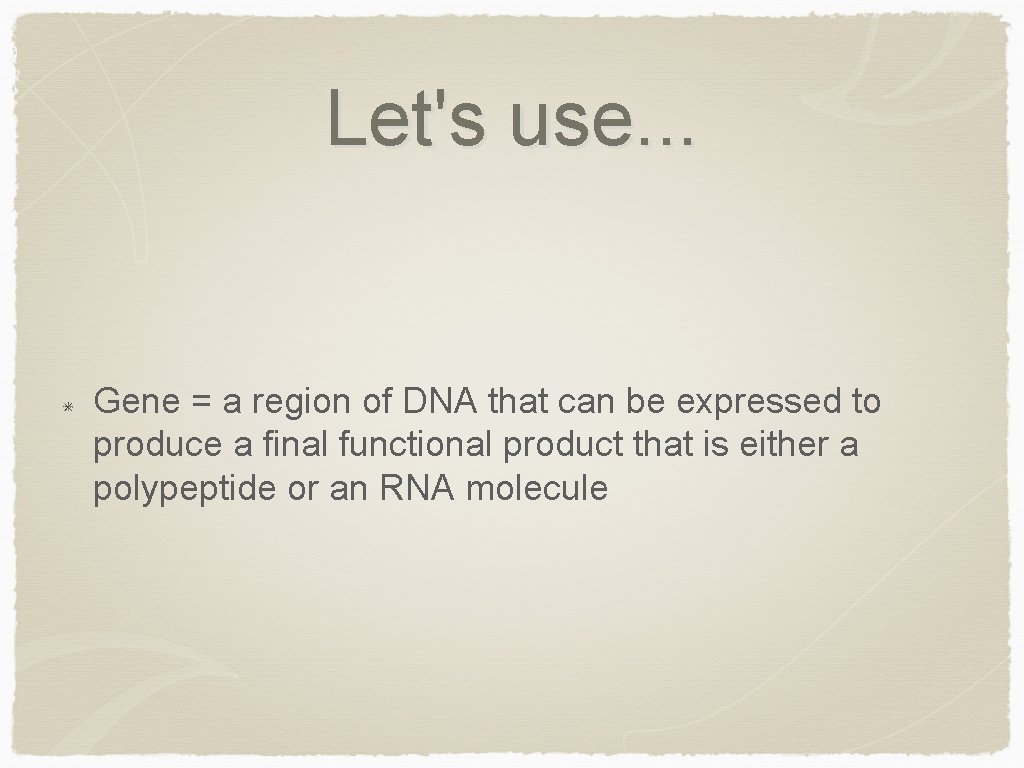
Let's use. . . Gene = a region of DNA that can be expressed to produce a final functional product that is either a polypeptide or an RNA molecule
Mutations Silent mutations do not change what the gene expresses Frameshift mutations can change what, if anything, the gene expresses
Exit Slip How are transcription and translation similar? How are they different?